Matthias Friedrich is affiliated with the Department of Prehistoric and Historical Archaeology at the University of Vienna. He teaches courses such as Sensory Archaeology in Prehistory and Historical Archaeology, Premodern Material Culture and the Senses, and Art and Archaeology in Late Antiquity and the Early Middle Ages. His research focuses on sensory experiences in material culture, early medieval and late antique studies, Germanic cultural categories, and archaeological chronology. He has published extensively on topics including Merovingian period chronology, visual culture, and burial practices in Southern Germany. Key research interests include the intersection of sensory perception and material objects, the reinterpretation of 'Germanic' identity in historical contexts, and the application of chronology frameworks to early medieval artifacts. His work bridges archaeological theory with empirical analysis, particularly in funerary archaeology and regional studies.
Prof. Laura Leal-Taixé is an Associate Professor at the Technical University of Munich (TUM) leading the Dynamic Vision and Learning group. She holds the Rudolf Mößbauer Tenure Track Chair, promoted from a 2017 Tenure Track Assistant Professorship. Her work focuses on advancing computer vision and machine learning, particularly in video analysis, multi-object tracking, and autonomous systems. She received a Sofja Kovalevskaja Award (2017) for her project socialMaps, which integrates dynamic social data into traffic modeling. Education: B.Sc./M.Sc. in Telecommunications Engineering, Technical University of Catalonia (UPC), Barcelona Ph.D. in Information Processing, Leibniz University Hannover (2014) Postdoc at ETH Zurich (2014–2016), and Senior Researcher at TUM’s Computer Vision Group (2016–2019) Research Interests: Multi-object tracking and segmentation in videos Motion analysis and semantic segmentation for autonomous driving Deep learning for video understanding Social dynamics modeling in urban environments Awards & Grants: €1.65M Sofja Kovalevskaja Award (Humboldt Foundation, 2017) DAAD Australia-German Joint Research Scheme (2017) Multiple travel grants from CVPR and Women in Computer Vision Labs & Collaborations: Dynamic Vision and Learning Group at TUM Collaborations with ETH Zurich, Northeastern University, and NVIDIA
Michael A. Cohen is an Assistant Professor in the Department of Psychology and Program in Neuroscience at Amherst College, and a Research Scientist at MIT’s McGovern Institute for Brain Research and Department of Brain and Cognitive Sciences. His research explores the boundaries of perception, memory, and cognition using fMRI, EEG, psychophysics, and computational modeling. Cohen completed his PhD at Harvard University under Ken Nakayama and George Alvarez, following a postdoctoral fellowship at MIT with Nancy Kanwisher. His undergraduate work at Tufts University was under Daniel Dennett. Research interests focus on neural mechanisms of visual awareness, perceptual limits, and cognitive processes. Notable work challenges computational theories of consciousness and demonstrates early specialization in infant visual pathways. Methodologically, he combines empirical and theoretical approaches, including task-optimized neural networks to explain brain specialization. Recent studies highlight graded perceptual awareness and predictive simulations in the brain’s ‘physics engine’. His articles frequently address foundational questions in perception and consciousness, with contributions to debates over integrated information theory and the role of attention. Though no formal grants or awards are listed, his cross-institutional collaborations reflect active engagement in cognitive neuroscience research. Labs/Teams: Affiliated with Amherst College Psychology Department labs and MIT’s McGovern Institute, focusing on human brain imaging and developmental neuroscience studies.
Dr. Carolyn Berryman is a Senior Research Fellow at the University of South Australia, based in the Allied Health and Human Performance Unit within the Innovation, Implementation and Clinical Translation (IIMPACT) in Health group. She is actively engaged in research on chronic pain, particularly in pediatric and neurological contexts, and serves as a Research Degree Supervisor. Research Interests: Her work spans chronic pain, cognitive flexibility, complex regional pain syndrome (CRPS), interhemispheric brain interactions, and patient-centered care models. She investigates how pain affects cognition and sensorimotor function, and how healthcare services can be co-created with patients for better outcomes. The recent publications (2024–2025) show a strong trend toward interdisciplinary, patient-engaged research in pediatric chronic pain, implementation of high-value physiotherapy, and neurophysiological underpinnings of pain disorders. Her work frequently employs systematic reviews, observational studies, and collaborative knowledge generation. Scientific Awards and Fellowships: Australia Harvard Fellowship Grants and Funding: Her research is supported by NHMRC grants including NHMRC 1178444 and NHMRC 1127155, indicating sustained competitive funding. She is involved in advising and collaborative research, though specific student names are not listed in the provided texts. Labs and Teams: She is a key member of the IIMPACT in Health research group at UniSA, collaborating with national and international institutions including Harvard University, University of Adelaide, and Curtin University.
Kartic Subr is a Senior Lecturer (equivalent to Associate Professor) in the School of Informatics at the University of Edinburgh, where he conducts research at the intersection of computer graphics, machine learning, and robotics. He is affiliated with the Institute of Perception, Action and Behaviour and leads an active research group in physics-aware simulation and AI for scientific discovery. His research interests span Computer Graphics , Monte Carlo Rendering , Physics-based Simulation , Machine Learning , Robotics , and Computational Biology . He has made significant contributions to rendering theory, light transport analysis, BRDF modeling, and simulation of fluids and fractures. Recently, his group has applied deep learning to protein design, achieving notable success in international competitions. The recent publications reflect a strong trend toward interdisciplinary research, combining computer graphics with AI and biology. Key themes include explainable AI for physics-aware interfaces (e.g., CueTip), neural rendering (NeRF), protein design with CNNs, and reward learning in robotics. His group regularly publishes in top venues such as SIGGRAPH, NeurIPS, and IEEE RA-L. Royal Society University Research Fellowship (2014–2024) Lead, GCRF Impact Accelerator (2019) Lead, EPSRC First Grant (2017) Royal Society Challenge Grant (2016) Royal Society Newton International Fellow (2010) Marie-Curie Visitor (2006) Best Paper Honorable Mention, I3D 2012 Best Paper, I3D 2011 Kartic Subr actively supervises PhD students and postdocs, including Leonardo Castorina, Zhiyuan Zhang, and Kevin Denamganaï. Former students have gone on to positions at DeepMind, University of Edinburgh, and industry. He has secured multiple grants, including from the Royal Society and EPSRC. His research group collaborates across disciplines, particularly with biological sciences on protein design. He leads projects on approximate physics for robotics, protein design via deep learning, and interactive rendering systems. The group has developed frameworks like TIMED for de novo protein design and tools for explainable physics-aware assistants.
Prof. Dr. Christian Römmelt is a Professor of Art and its Didactics at Weingarten University of Education , where he has served since 2024. He also served as a Vertretung Professur (interim professor) at the same institution in 2024 and was an Akademischer Oberrat (Academic Councilor) at LMU Munich until 2024. His career spans roles as a primary school art teacher, researcher, and academic leader, emphasizing the integration of empirical research with art education practice . Current Role: Professor of Art and its Didactics, Weingarten University of Education Previous Roles: Akademischer Oberrat at LMU Munich (2021–2024), lecturer at Universities of Bamberg and Munich (2007–2021) Education: PhD in Art Education (2016, LMU Munich), Magister Artium (2008) Römmelt's research focuses on empirical studies in art education , particularly how aesthetic learning impacts personality and competence development. His work bridges global art education with local practice, emphasizing transculturality and inclusion . He has explored topics like visually representing sustainability , queering art education , and systematic skill development in primary classrooms. His publications include a monograph on empirical animation studies (2017) and co-edited volumes on Global South art education (2025). Recent articles examine: Transnational art curricula (Ghana/Deutschland collaboration) Animated comics for visual storytelling Postcolonial perspectives on African art Gender and identity through visual media Empirical methods in art didactics Römmelt is actively involved in academic societies, including: BDK e.V. (Art Education Association) Deutscher Hochschulverband (German Academic Association) Exploring Visual Cultures (EVC) expert panel He has presented at conferences in Germany, Ghana, and South Africa, addressing themes like crisis and wellbeing in art education and drag-influenced pedagogy . His work emphasizes empirical rigor and practical relevance , aiming to connect art education with broader didactic frameworks.
Parag Khanna is a Doctoral Student at the Division of Robotics, Perception and Learning , KTH Royal Institute of Technology. His work focuses on Human-Robot Interaction (HRI) , particularly in developing adaptive techniques for robot-human handovers. University: KTH Royal Institute of Technology Department: Robotics, Perception and Learning Khanna's research explores physical and social aspects of HRI . He studies human-human handovers to improve robotic grip release strategies and object weight adaptation. His work also delves into non-touch modalities like EEG and gaze tracking for intention detection. His recent publications highlight advancements in data-driven control , failure explanations , and multimodal datasets for HRI. Notable works include the REFLEX Dataset and studies on adaptive grip release in human-robot collaborations. Key Research Areas: Human-Robot Handovers Machine Learning for Robotics EEG and Gaze-Based Intention Detection Failure Communication in Social HRI Khanna is affiliated with the Digital Futures - Advanced Adaptive Intelligent Systems project, aiming to empower elderly and disabled individuals through autonomous robotics.
Javier García is a faculty member at the University Carlos III of Madrid, affiliated with the Department of Computer Science within the School of Engineering. His research lies at the intersection of artificial intelligence, reinforcement learning, and robotics, with a strong emphasis on safety, transferability, and real-world applications. His research interests include: Safe and robust reinforcement learning Transfer and multi-task learning in AI Adversarial attacks and defenses in deep RL Automated planning and decision-making under uncertainty Applications in social assistive robotics and financial systems The recent trend in his publications shows a focus on formalizing similarity between decision-making tasks, improving robustness against corrupted rewards and adversarial policies, and applying AI techniques to domains such as geriatric care and automated market making. His work often involves collaboration with Fernando Fernández and other researchers in Spain. He has contributed significantly to frameworks like CLARC for comprehensive geriatric assessment using robots, and has developed tools such as TIMIPLAN for transportation tasks. His research bridges theoretical AI with practical deployment in cognitive robotics and business simulators. Notable scientific contributions include a comprehensive survey on safe reinforcement learning (JMLR 2015), foundational work on policy reuse, and the development of taxonomies for MDP similarity. He has secured research funding through collaborative projects, though specific grants are not detailed in the provided text. He has advised several students and junior researchers, evident from co-authored publications, though specific names are not listed. He is part of research teams working on lifelong learning technologies and cognitive robot systems.
Dr. Ceridwen Dovey is a Research Fellow at Macquarie University's School of Communication, Society and Culture, where she investigates intersections between space science, anthropology, and creative practice. She co-founded the Archival Futures Collective and is an Artistic Associate at Powerhouse Museum. Education : PhD in Creative Arts from Western Sydney University, MA in Social Anthropology from NYU, and BA in Anthropology/Visual & Environmental Studies from Harvard Her research explores space environmentalism, planetary ethics , and interdisciplinary storytelling , combining science writing with experimental film. Recent work focuses on exoplanet visualization and cosmic kinship . Scientific output shows 15+ years of space anthropology publications across literary fiction , science journalism , and experimental media . Key awards include: Australian Museum Eureka Award (2020) UNSW Press Bragg Prizes for Science Writing Pariscience International Science Film Festival selection (2023) VCE Literature curriculum inclusion (2014) Collaborations include climate change storytelling at Australian Museum and the Animal Allegories creative partnership with Associate Professor Zoë Sadokierski.
Professor Petra Wieler is a distinguished academic at the Freie Universität Berlin, where she serves as C4-Professor for Primary School Education/Learning Area German in the Department of Education and Psychology. Her academic career spans over four decades, with significant contributions to German didactics, literacy development, and children's media reception. Her research interests focus on reading and media socialization, linguistic enculturation, literary learning, and teaching research, with particular emphasis on multilingual education contexts. Professor Wieler's work bridges theoretical frameworks with practical classroom applications, examining how children interact with literature and media across different linguistic and cultural contexts. Her extensive publication record reveals consistent research trajectories centered on picture book reception, literacy development in multilingual children, family literacy practices, and the intersection of media and narrative construction. The publications demonstrate increasing attention to multilingual contexts and digital media influences on children's literacy development over time. Professor Wieler actively supervises graduate students through her Master's thesis colloquia and maintains an active research agenda through projects like the Nightingale Berlin mentorship program for children with migration backgrounds. She has developed numerous courses on multilingualism in early childhood education, literacy development, and children's literature. Her laboratory work centers around the 'Medienrezeption und Narration' research project examining how elementary school children process book and media stories through conversation and storytelling, conducted at the intersection of language acquisition research, psychological reception studies, and educational methodology.
Niko Soininen is Professor of Environmental Law at the University of Eastern Finland's Law School and a leading researcher at the Center for Climate Change, Energy and Environmental Law (CCEEL). His work focuses on the intersection of law, sustainability transitions, and complex systems, with specializations in water law, marine environmental law, and adaptive governance frameworks. Primary Affiliation: University of Eastern Finland, Law School Research Groups: CCEEL, Sustainability Law, Water and Marine Environmental Law Key Projects: RELIEF (2023-2026), SusHydro (2020-2024) His research synthesizes legal theory with practical governance challenges, particularly in: Sustainability law and transformation Hydropower and offshore wind regulation Marine spatial planning Legal interpretation in environmental contexts Resilience of legal systems His recent publications analyze the tension between renewable energy expansion and ecological protection in EU law, with a focus on hydropower's legal trade-offs (2024), adaptive governance models (2023), and water-security frameworks (2023). He has contributed extensively to journals like Environmental Innovation and Societal Transitions , Transnational Environmental Law , and Science of the Total Environment .
Stephen Hoskins is Professor of Fine Print and Founder of the Centre for Fine Print Research (CFPR) at the University of the West of England, Bristol, based at the Bower Ashton Campus within the College of Arts, Creative Industries and Education. His academic career spans decades of pioneering work bridging traditional printmaking techniques with cutting-edge digital technologies. Hoskins' research philosophy centers on the physical artifact, primarily predicated in print, with a focus on the relationship between technology and making from a practitioner perspective. His primary research areas include the potential of 3D printing and related digital technologies for the arts, and the tactile surface of printed artifacts and its consequences for digital technology. He has developed a unique position of understanding digital and new media technologies while always relating them to physical output and creativity. His publications reveal a consistent focus on the intersection of historical printmaking techniques with contemporary digital fabrication methods, particularly exploring the tactile qualities of printed surfaces, ceramic applications of 3D printing, and the sustainability of art-making practices. The research trajectory shows increasing sophistication in merging 19th century photomechanical processes with 21st century digital technologies. Hoskins has maintained an exceptional record of industry collaboration, working with major partners including Hewlett Packard (for whom he held a sponsored Professorial Chair from 2004 to 2014), Renishaw PLC, Burleigh Pottery, Denby Pottery, Dycem, and Viridis3D. His approach emphasizes interdisciplinary understanding and practical application of research findings. As a practicing printmaker and author of three books including '3D Printing for Artists, Designers and Makers' (Bloomsbury), 'Water based Screenprinting,' and 'Inks,' plus over 40 peer-reviewed papers and three patents, Hoskins has established himself as a leading authority in the field of fine print research and digital fabrication for artists.
Ettore Ambrosini is an Associate Professor at the Department of Neuroscience, University of Padova. His research focuses on executive functions, object perception, semantic representation, and the neural mechanisms underlying the perception of others' goal-directed actions. He employs methodologies such as psychophysics, eye tracking, transcranial magnetic stimulation (TMS), and electroencephalography (EEG), and is recognized for his expertise in experimental design and data analysis. Education: B.Sc. in Psychology (2009) and Ph.D. in Neuroimaging (2013) from G. d’Annunzio University of Chieti Previous roles: Post-doctoral researcher at G. d’Annunzio University (2013) and University of Padova (2013–2017) His academic contributions include approximately 40 peer-reviewed publications and an h-index of 14. He serves as Review Editor for Frontiers in Psychology and contributes as an ad-hoc reviewer for international journals in cognitive neuroscience. Ettore also mentors trainees and students, co-supervises a PhD candidate, and teaches neuropsychology. Awards: Recipient of multiple research honors (specifics not listed).
Sabine Dullin is a Professor of History at Sciences Po Paris and a leading historian of modern Russia and the USSR. As head of the History Department since 2017, she specializes in: Political History of the Soviet State Transnational Dimensions of communism Decolonization in Soviet and Russian contexts Climate Change intersections with historical sovereignty Baltic and Eastern European historical relations Her interdisciplinary research explores sovereignty transitions in the Soviet-Russain empire, focusing on substate actors' autonomy during imperial collapse. Current projects examine survival and sovereignty in Yakutia-Sakha , analyzing permafrost melting's historical implications. She co-edits the bilingual journal Monde(s). Histoire, espaces, relations and leads a Columbia World Projects working group on barriers and borders. Key supervision projects include: Rasmi BINOY - Cold War-era Kerala book culture Alexandra KOROLEVA - Soviet academic periphery Isabelle LINAIS - Postwar Central Asian hajj practices Yuqing QIU - Mao's Famine information networks Her recent publications analyze Soviet military structure, border dynamics, and revolutionary transnationalism, with a focus on Asian contexts. She contributes to historical methodology through archival analysis and material culture studies.
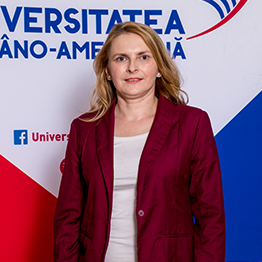
Lavinia Stănică Justina is a university lecturer at the Faculty of Managerial Informatics, Romanian-American University (URA), with 18 years of teaching experience in software programming and e-learning domains. Holding a PhD in Cybernetics and Economic Statistics since 2011, she teaches courses in Romanian and English at both bachelor's and master's degree programs. Her research focuses on ICT's role in innovation, educational technologies, and data analysis for energy consumption, with over 30 publications and multiple coordinated research projects. Faculty: Managerial Informatics University: Romanian-American University Academic Rank: Lecturer Teaching Experience: 18 years PhD: Cybernetics and Economic Statistics (2011) Her research interests include: e-Learning systems and technology integration Artificial Intelligence applications in education ICT's impact on innovation performance Mathematical content modeling Energy consumption data analysis Internet of Things implementations Fractal techniques in imaging Recent publications highlight trends in: Comparative innovation-ICT readiness analysis AI education accessibility Smart energy systems Competitive programming metrics Neural network energy forecasting IoT cloud solutions Modular educational software As Erasmus coordinator since 2013 and Institutional Erasmus Coordinator since 2020, she actively promotes internationalization efforts and academic collaboration with partner universities across Europe.