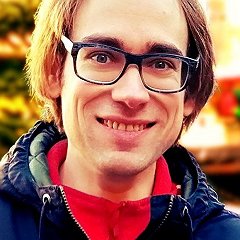
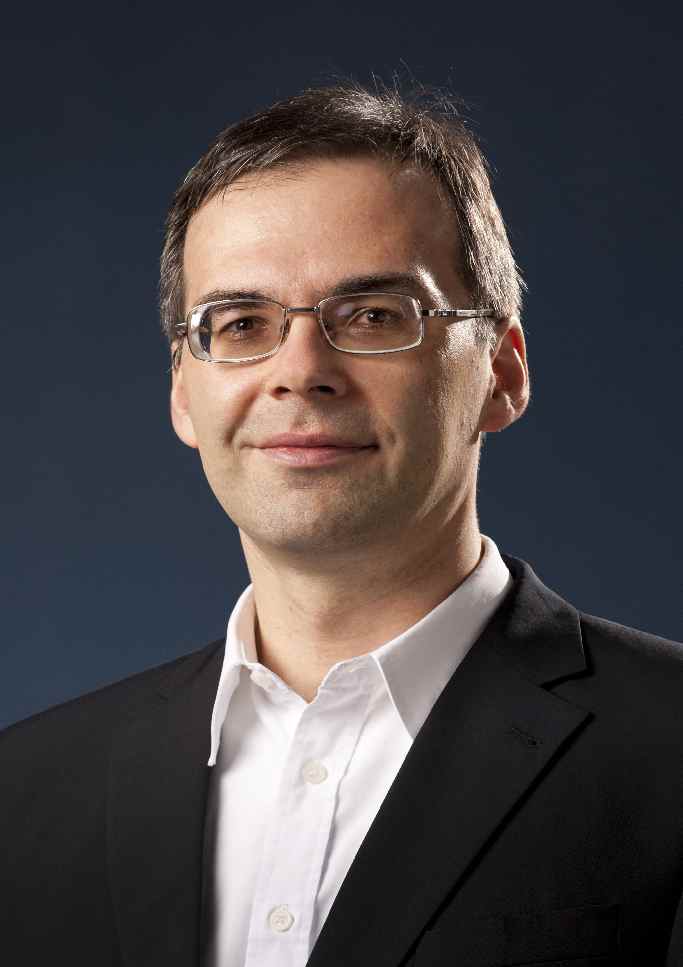
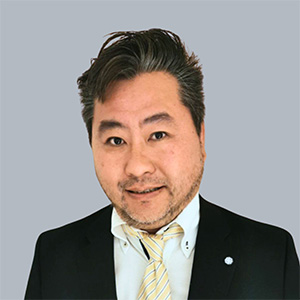
Pascal Weisenburger is a researcher at the School of Computer Science , University of St. Gallen. His work focuses on programming languages for distributed systems , emphasizing multitier programming, reactive paradigms, and type-driven placement reasoning. Research Themes : Multitier programming languages, CRDTs, dynamic placement type systems, reactive microservices, compiler correctness, and domain-specific scheduling. Recent Articles : Explored E-graphs for disequality reasoning (POPL 2025), array type duality in functional languages (ECOOP 2024), and formal verification of CRDTs (PLDI 2023). Committee Roles : Participated in program/steering committees for ECOOP, SPLASH, APLAS, and IEEE BigData conferences. Key Contributions : Developed the ScalaLoci language for multitier systems, proposed Propel for algebraic property verification, and introduced Dyno for static reasoning in dynamic placement scenarios.
J. Frederico Marques is a Professor of Psychology at the University of Lisbon's Faculty of Psychology. He holds leadership roles such as Head of the Scientific Council (2010–present) and previously served as Department Coordinator (2007–2009). Educated at the University of Lisbon, he earned a PhD (1997, Summa Cum Laude) and MA (1993, Honors) in Psychology. His research focuses on semantic memory organization , including conceptual knowledge and object categorization, numerical cognition , and price perception . He also studies teaching methodologies in psychology. His work integrates behavioral experiments, neuroimaging (fMRI), and computational modeling to explore semantic hierarchies, feature sharedness, and executive function roles in conceptual processing. Marques has authored over 30 publications since 2002, with recent articles emphasizing visual object recognition (e.g., dorsal stream contributions to grasp preparation) and neural bases of semantic processing (e.g., fronto-parietal regions in sentence comprehension). His grants include FCT-funded projects on semantic categories and object recognition. Awards : 2009 Fellow of the Association for Psychological Science. Teaching : Courses include Cognitive Psychology, Memory Studies, and Consumer Psychology. Grants : Principal investigator on FCT grants PTDC/PSI-PCO/118148/2010 and PTDC/PSI-PCO/114822/2009. His research bridges cognitive neuroscience and neuropsychology, addressing how structural features (e.g., form-function correlations) and executive demands shape semantic knowledge representation and retrieval.
Professor Michalis Vazirgiannis is affiliated with the Informatics Department at Athens University of Economics and Business (AUEB). He holds a PhD in Informatics from the National and Kapodistrian University of Athens (1994), with prior degrees in Physics, Robotics, and Knowledge-Based Systems. His research focuses on data mining, machine learning, clustering algorithms, and web mining. He has led EU-funded projects like SQO-OSS and NGWeMiS, and contributed to initiatives like DB-GLOBE and I-KnowUMine. Awards include ERCIM Post-Doctoral Scholarship (2001) and Marie Curie Fellowship (2006). He serves on editorial boards (e.g., IDA Journal) and program committees for conferences like IEEE/ICDM and ECML/PKDD. His work spans theoretical advancements and practical applications in distributed systems, semantic networks, and temporal graph analysis. Education: BSc Physics, NKUA (1986) MSc Robotics, NKUA (1988) MSc Knowledge-Based Systems, Heriot-Watt University (1989) PhD Informatics, NKUA (1994) Research interests include semi-supervised learning, page ranking, and distributed feature selection. His publications address clustering frameworks, peer-to-peer systems, and normalized PageRank for evolving graphs. He has contributed to patents and held visiting researcher positions at INRIA, Fraunhofer, Max Planck, and IBM India.
Roger King is a seasoned researcher with over 40 years of contributions to computer science, particularly in database systems, software engineering, and data integration. His work spans heterogeneous database management, semantic modeling, and distributed systems, often collaborating with leading institutions like University of Colorado and Springer. 1987: Co-authored foundational paper on semantic database modeling in ACM Computing Surveys 1992: Developed FaceKit database interface design toolkit 1994: Pioneered DIRECT query facility for multiple databases Research Interests: King's work focuses on database integration , semantic interoperability , and self-adaptive systems . Notable projects include Sybil for database evolution, Cactis for object-oriented databases, and COIL mediator definition language. Key Trends: His 15 most recent publications (2024-1999) address challenges in smart data systems , autonomous systems performance , and microgrid control , reflecting sustained expertise in data semantics and system architecture.
Caleb Herman Perl serves as a Senior Lecturer in the School of Philosophy within the Faculty of Theology and Philosophy, focusing on foundational questions in moral and political philosophy. His institutional affiliation demonstrates deep integration within theological-philosophical academic structures. Perl's research centers on metaethical challenges to moral realism, particularly through moral error theory and rule consequentialism frameworks. He critically examines moral epistemology from naturalist perspectives and investigates political liberalism's practical foundations, often bridging semantics with normative theory. His work consistently addresses how metaethical commitments impact normative reasoning and political justification. Analysis of his 2015-2023 publications reveals sustained engagement with moral semantics and epistemology. Key trajectories include reformulating error theory (2022), solving deontic logic puzzles (2021), and developing contextualist approaches to epistemics (2017). His Oxford Studies contributions demonstrate particular influence in political philosophy and metaethics, with recurring themes of moral intuition reliability and hybrid semantic frameworks.
Ralf Lämmel is Professor and Head of the Software Languages group at the University of Koblenz. His research spans software language engineering, model-driven development, and semantic web technologies. He specializes in API analysis, data validation (SHACL constraints), and variability management for software systems. Recent work focuses on AI-assisted workflows for archaeology and trust analysis in large language models. Publications demonstrate growing interest in knowledge graph validation and semantic web applications. He has developed tools like the Virtual Platform for software variability and ProGS for property graph validation. Service includes program committee memberships for software engineering conferences and editorial roles. He leads research groups exploring API evolution and RDF validation techniques.
C. Robert Bob Carlson is a Professor of Information Technology and Management at the Illinois Institute of Technology (IIT), College of Computing. His research focuses on software engineering methodologies, design patterns, database systems, and IT entrepreneurship. He holds a Ph.D. in Computer Science from the University of Iowa. Prof. Carlson has co-authored numerous influential papers, including award-winning work on design patterns and software maturity models. His research contributions include the Testing Maturity Model (TMM) adopted as an international standard and the Business Innovation Maturity Model (BIMM). He has also contributed to foundational database theory and curriculum development in computer science education. Education: Ph.D., Computer Science, University of Iowa M.S., Computer Science, University of Iowa B.S., Mathematics and Accounting, Augustana College Professional Affiliations: Association for Computing Machinery (ACM) Association of Information Technology Professionals (AITP) His work bridges theoretical software engineering with practical applications in industry, emphasizing patterns-based design, curriculum innovation, and scalable software systems. Notable contributions include the first-class connectors concept in design patterns and the integration of maturity models for testing and innovation processes. Awards: SIGITE/RIIT Best Research Paper 2013 ("Design Patterns as First Class Connectors") ACM SIGITE/RIIT Conference Best Paper Award (2013) Grants & Projects: Co-developed the Testing Maturity Model (TMM) with Dr. Ilene Burnstein Contributed to curriculum assessment frameworks used at several universities Involved in Department of Defense database design projects via Argonne National Labs Labs & Teams: Collaborations include work with Bell Laboratories on view integration tools and Argonne National Labs on DOD database projects.
María Fernández López is an Assistant Professor (Ajudant Doctor/A) at Universitat de València's Faculty of Psychology and Speech Therapy, affiliated with the Department of Basic Psychology and the ERI Reading Research institute. Her research focuses on cognitive neuroscience of reading, particularly orthographic processing and visual word recognition mechanisms. She completed her PhD in 2022 at Universitat de València with the thesis "How literacy shapes orthographic processing" , supervised by Dr. Manuel Perea Lara, Dr. Marta Vergara Martínez, and Dr. Ana Marcet. Research Interests: Dr. López investigates how the brain processes written language using experimental methods like masked priming, lexical decision tasks, and ERP measurements. Key themes include: Resilience of reading systems to distortions (rotated/replaced letters, accents, case-mixing) Neural mechanisms of word recognition and priming effects Impact of literacy on orthographic processing Visual similarity and positional coding in lexical access Her recent publications (2020-2025) predominantly explore: Sandwich priming dynamics and temporal processing windows ERP correlates of letter degradation and rotation tolerance Top-down feedback in visual word recognition Specialized processing of logotypes and city names She leads/co-leads the READit Cognitive Neuroscience and Reading research group, focusing on experimental psycholinguistics and neurocognitive approaches to reading.
Frank de Boer is a researcher at Centrum Wiskunde & Informatica (CWI), Amsterdam , focusing on formal methods , concurrency theory , and software verification . His work bridges theoretical foundations with practical applications in object-oriented programming and parallel systems. Key research areas: Separation logic for heap reasoning Behavioral subtyping and history-based verification Active objects and actor models Concurrency and deadlock analysis Selected scientific recognition: Best Paper (ESSOC 2017) Bronzen Achievement Award (Trust4All 2008) Forum-Architectuurprijs (Archimate 2008) Recent publications (2025–2021) emphasize footprint logic, history-based reasoning, and formal verification of concurrent systems. Collaborations span institutions in The Netherlands, Germany, and China, with applications to Java collections, multicore memory systems, and transition system models.
Prof. Dr. Bernhard Beckert is a faculty member at the Karlsruhe Institute of Technology (KIT) , affiliated with the Department of Informatics and the Institute of Information Security and Dependability (KASTEL) . His research focuses on formal verification of software systems, particularly through logic-based methods, security and dependability analysis, automated deduction in classical and non-classical logics, and applications to voting algorithms, industrial automation, and scientific software. Email: beckert@kit.edu Office: Building 50.34, Room 224, KASTEL, Am Fasanengarten 5, 76131 Karlsruhe, Germany He develops and applies the KeY system for deductive verification of object-oriented software, with applications in Java, PLCs, and safety-critical systems. His work addresses challenges in regression verification, information flow security, and multi-phase verification for robotic surgery. Recent publications focus on equivalence analysis of control software variants, program slicing, loop bound computation, and formalization of voting rules using bounded model checking. Key contributions include integrating design and verification workflows, dynamic logic extensions for concurrency, and tools for security-sensitive software engineering.
Dietmar Roehm is a Professor at the Department of Linguistics, Faculty of Social Sciences, University of Salzburg. He serves as Head of Department and Deputy Curriculum Chair, specializing in Psycholinguistics, Clinical Linguistics, and Neurolinguistics. His research focuses on language processing mechanisms using electrophysiological methods (EEG/ERP), with a particular emphasis on syntactic reanalysis, semantic prediction, and the role of brain oscillations. Current research group: Sign Language studies Key methodologies: ERP, EEG frequency analysis, fMRI/ERP integration Leadership roles: 55+ Representative, IT Representative His publications highlight interdisciplinary work bridging Linguistics, Neuroscience, and Cognitive Science, particularly analyzing N400 components and theta/alpha rhythms. No scientific awards or student advisement details are explicitly mentioned in the provided text.
Bethwyn Evans is a faculty member at the Australian National University (ANU), affiliated with the Evolution of Cultural Diversity research group. She serves as part of the executive leadership team alongside Nicholas (Nick) Evans, Kim Sterelny, and other prominent scholars, contributing to the strategic direction of this interdisciplinary research initiative. Dr. Evans specializes in historical and comparative linguistics, with particular expertise in how language serves as a window into both linguistic and non-linguistic past. Her research integrates linguistic evidence with archaeological and population genetic data to reconstruct the histories of ethnolinguistic groups and understand broader processes of linguistic and social change. Her current research program centers on the history of linguistic diversification and contact among Austronesian- and Papuan-speaking groups of Bougainville in Papua New Guinea. A major component involves the documentation and description of endangered languages from southern Bougainville, including Nasioi, Torau, and Nagovisi. This work contributes to understanding Island Melanesia after Lapita and explores transdisciplinarity, narrative construction, detecting remote historical signals, Holocene revolutions, local diversification, and cultural transitions. Dr. Evans' publication record demonstrates consistent scholarly output across multiple venues, with a clear trajectory from detailed language-specific studies toward broader theoretical contributions in historical linguistics. Her recent work shows increasing engagement with interdisciplinary methodologies, particularly the integration of genetic evidence with linguistic data to reconstruct population histories in Oceania. Her research on Bougainville languages has made significant contributions to understanding linguistic diversity in one of the world's most complex linguistic regions. As an active researcher, Dr. Evans collaborates with scholars across disciplines including anthropology, archaeology, and genetics, reflecting the transdisciplinary nature of her work and the growing recognition of integrated approaches to understanding human history.
Andre Borrmann is Professor and Chair of Computing in Civil and Building Engineering at the Technical University of Munich (TUM), where he leads cutting-edge research at the intersection of computer science and construction engineering. His work spans over two decades with consistent publication output since 2003, demonstrating sustained academic leadership in computational methods for the built environment. His research focuses on: Building Information Modeling (BIM) and its advanced applications Digital Twin development for infrastructure management Point cloud processing and semantic enrichment Artificial intelligence integration in construction workflows Construction automation and robotics systems Analysis of his 2023-2025 publications shows a clear trend toward sophisticated AI applications in construction engineering, with increasing emphasis on graph neural networks, transformer models, and large language models. His work bridges theoretical computer science with practical construction challenges, particularly in model automation, code compliance checking, and digital documentation of existing structures. Scientific recognition includes: Konrad Zuse Medal (2024) Professor Borrmann leads multiple significant research initiatives including AM2PM (Additive to Predictive Manufacturing for Multistorey Construction), AI4CADCAM (AI-based CAD processing), and BauPuls360 (a public service platform for the construction industry). His research group maintains extensive international collaborations across academia and industry, contributing to UN Sustainable Development Goals related to sustainable cities, industry innovation, and climate action through their technological advancements in construction engineering.
Dong Jin Song is a full Professor at the National University of Singapore's School of Computing, Department of Computer Science. He joined NUS in 1998 and was promoted to Professor in 2016 after serving as Associate Professor (2005) and Assistant Professor. He has held various leadership roles including Deputy Head of CS Department (2023-2024), NUS Senate Member (2020-current), and Assistant Dean (Graduate Office, SoC). PhD, University of Queensland, Australia (1993-1995) BInfTech with First Class Honours, University of Queensland, Australia (1989-1992) - Major in Software Engineering Professor Dong's research spans formal methods, safety and security systems, probabilistic reasoning, sports analytics, and trusted machine learning. He is best known for co-founding the PAT verification system which has attracted thousands of registered users from over 150 countries and won the 20-year ICFEM Most Influential System Award in 2018. He also co-founded 'Silas: Trusted Machine Learning' and the Dependable Intelligence company. His work bridges formal verification with practical applications in security, AI, and even sports analytics where he developed Markov Decision Process models for tennis strategy analysis. His recent publications show a strong trend toward integrating formal methods with modern AI systems, particularly focusing on trustworthy AI, LLM verification, and security applications. The research spans multiple high-impact venues including ICML, NeurIPS, IEEE Transactions, and top security conferences like USENIX Security, reflecting his interdisciplinary approach that combines formal verification with machine learning, security, and practical applications. Professor Dong has received numerous honors including the ACM SIGSOFT Distinguished Paper Award for ICSE 2020, the 20-Year ICFEM Most Influential System Award (2018), and being named a Fellow of the Institute of Engineers Australia (2018). His awards reflect both theoretical contributions to formal methods and practical impact on software engineering. ACM SIGSOFT Distinguished Paper Award for ICSE 2020 NUS Research Recognition Award (2020) Fellow of Institute of Engineers Australia (2018) 20-Year ICFEM Most Influential System Award (2018) Best Paper Award at ICECCS (2015 and 2012) Professor Dong has successfully supervised 33 PhD students, many of whom have become tenured faculty members at leading universities worldwide including The University of Auckland, Aston University, Singapore Management University, and Monash University. His students have gone on to successful careers in both academia and industry at organizations like Google, Apple, HP Research Lab, and IBM. He has served on the editorial boards of prestigious journals including ACM Transactions on Software Engineering and Methodology and has been active in numerous conference organizing committees. Through his research group and commercial ventures (Dependable Intelligence), Professor Dong has built a strong team focused on formal verification, trusted AI systems, and practical applications of model checking. His work has evolved from foundational formal methods research to cutting-edge applications in AI safety and security, maintaining a consistent thread of rigorous verification throughout his career.
Professor Guy Fletcher is a prominent academic in the School of Philosophy, Psychology and Language Sciences at the University of Edinburgh. He specializes in meta-ethics, ethics, political philosophy, and value theory. Previously, he served as a British Academy postdoctoral fellow at Edinburgh and taught at Exeter College, Oxford. His current research focuses on well-being, including a forthcoming book and revisions to his 2016 introduction to the philosophy of well-being. He supervises PhD students in practical philosophy, metaethics, normative ethics, and value theory, with a particular interest in well-being-related projects. Teaching responsibilities include 'Morality and Value' (Year 1) and 'Advanced Topics in Political Philosophy' (Year 4). He is currently on research leave for 2024/25. His work bridges theoretical philosophy and interdisciplinary applications, particularly in the social sciences. Recent publications emphasize holistic approaches to well-being, prudential discourse, and critiques of contextualist theories. Supervised PhD students include Dylan Balfour and Declan O'Gara, with past advisees such as Giles Howdle and Chad M Stevenson. Research interests span meta-normative theory, the history of ethics, and value theory, with a focus on integrating philosophical analysis with empirical research methodologies. His work often addresses debates about well-being measurement, moral psychology, and the normativity of self-interested actions.