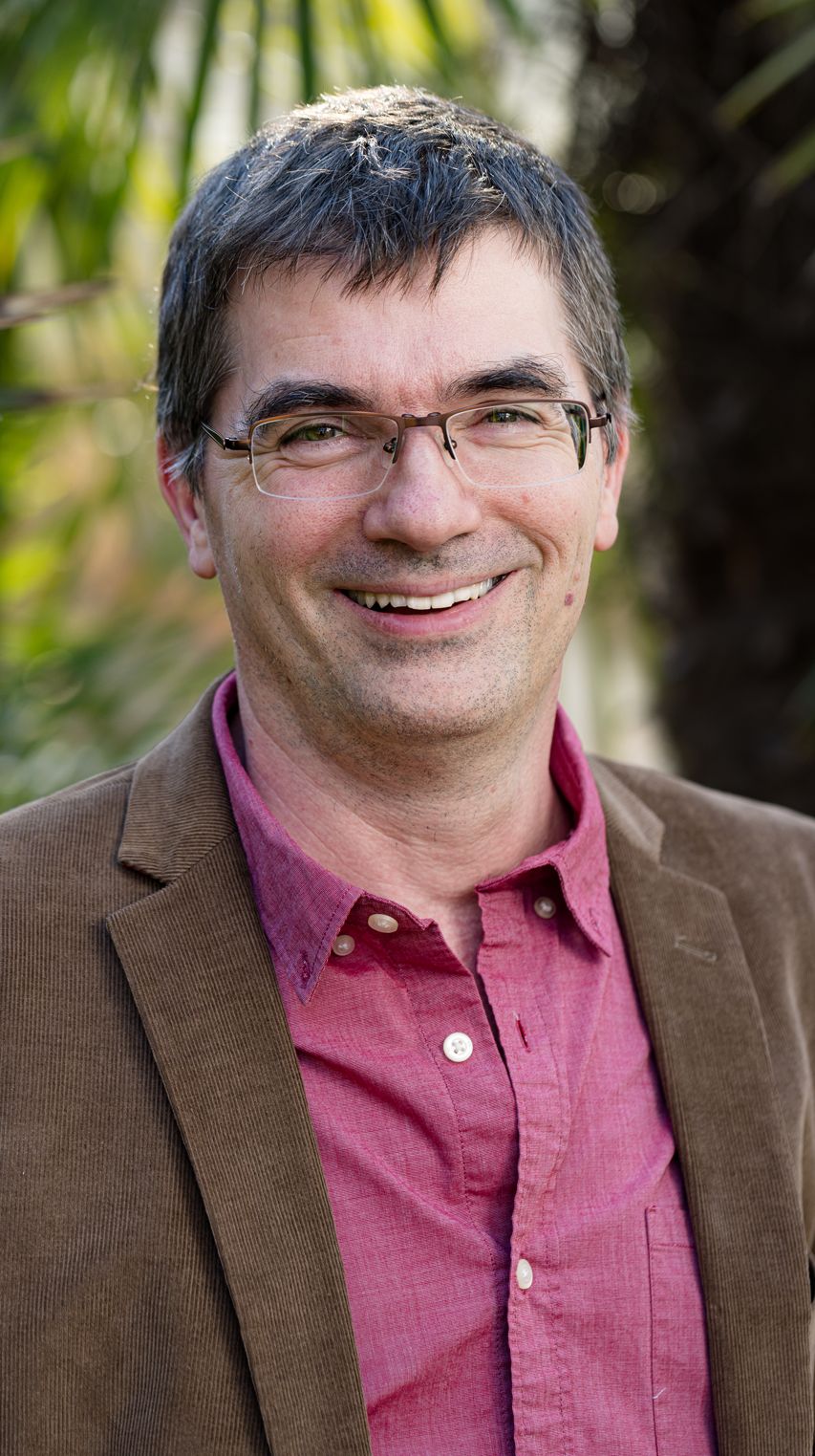
Eléonore HAMAIDE-JAGER is a Senior Lecturer in French Literature at the School of Letters and Arts , Université d’Artois , since 2010. Her academic work bridges children’s literature and Shoah representation , with a focus on intertextuality , visual analysis , and Oulipo influences in contemporary texts. Research Interests: Intertextual and intericonic dynamics in picture books Shoah and war narratives for youth audiences Oulipo constraints in children’s literature Transfictional structures and digital adaptations Cartographic and spatial representations in youth media Genre hybridity and pedagogical implications Her publications emphasize photographic imagiers , pop-up temporality , and ethical storytelling about historical trauma. She co-edits the Strenae journal and contributes to editorial committees for Cahiers Georges Perec and Cahiers Robinson . She has organized international symposia on documentary youth literature and children's book mediation , serving as a scientific expert in European research programs.
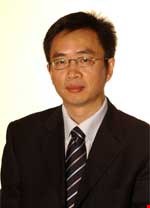
Dr. Qingping Yang is a Reader (Associate Professor) in the Department of Mechanical and Aerospace Engineering at Brunel University London, affiliated with the College of Engineering, Design and Physical Sciences. He directs the Brunel Quality Engineering and Smart Technology (QUEST) and Robotics and Automation Research Groups, focusing on sensor systems, AI, and industrial metrology. Education: PhD in Engineering, Brunel University London (1992) BEng in Instrumentation and Measurement Technology, Chengdu Aeronautical Polytechnic (1983) Research Interests: Dr. Yang integrates measurement systems, quality engineering, and smart technologies (AI/robotics). His work spans industrial metrology, IoT-driven manufacturing optimization, renewable energy forecasting, medical diagnostics, and autonomous inspection systems. Key methodologies include machine learning, Bayesian risk modeling, and non-destructive evaluation. Publication Trends: Recent articles emphasize AI applications in manufacturing (defect detection, robotic path planning), IoT-based monitoring (3D printing, building safety), and healthcare analytics (COVID-19 diagnosis). Methodological innovations include graph theory optimization, computer vision, and ontology-driven quality frameworks. Awards: Three Brunel University Performance Bonuses Marquis Who's Who in the World (1998) Marquis Who's Who in Science and Engineering (2000) Advising & Grants: Supervised 39+ PhD/MPhil students (23 as primary supervisor). Secured £2.7M as PI and £1.2M as Co-I across 18 projects (EU/UK industry/government-funded). Current PhD projects include AI for non-destructive testing and sustainable manufacturing. Leadership: Heads QUEST and Robotics research groups. Former EU research coordinator and MSc program director. Editor-in-Chief of the International Journal of Metrology and Quality Engineering .
Florentin Wörgötter is a faculty member at the Department for Computational Neuroscience , Georg August University of Göttingen, Germany. His research bridges robotics , computational neuroscience , and machine learning , focusing on action prediction, neural networks, and human-robot interaction. Key Research Areas : Action segmentation, semantic decomposition of manipulation sequences, 3D object reconstruction, and sensor fusion for infant movement classification. Recent Trends : Combining task-dependent learning with optimal path search, using foundation models for graph-based action recognition, and improving CNN interpretability through influence functions. He collaborates extensively with researchers like Minija Tamosiunaite , Tomas Kulvicius , and Poramate Manoonpong , contributing to journals such as NeuroImage , Robotics and Autonomous Systems , and IEEE Transactions on Neural Networks . His work often integrates deep learning , semantic reasoning , and biologically inspired models for robotic applications.
Xiangyang Xue is a Professor at Fudan University in Shanghai, China, with an extensive research portfolio spanning computer vision, machine learning, and artificial intelligence. His work demonstrates significant contributions to object-centric representation learning, 3D reconstruction, person re-identification, and semantic segmentation. With over two decades of publication history from 1999 to present, he maintains an active research program with numerous collaborations, particularly with researchers like Yanwei Fu, Bin Li, and Yu-Gang Jiang. Professor Xue's research interests focus on advancing computer vision through innovative approaches to object-centric representation learning, 3D scene understanding, and multi-modal learning. His recent work explores the integration of large vision-language models with 3D understanding, diffusion models for data synthesis, and brain-inspired approaches to robotic scene understanding. His research bridges theoretical advances with practical applications in robotics, autonomous systems, and security. Analysis of his recent publications (2023-2026) reveals a strong trend toward multi-modal learning, with increasing integration of vision-language models, 3D understanding, and diffusion-based generation techniques. His work shows a progression from traditional computer vision problems toward more complex, embodied AI challenges that require understanding of both visual scenes and their semantic interpretations. Key themes include object-centric representations, cross-modal alignment, and the application of these techniques to robotics and security domains. Professor Xue has mentored numerous researchers through collaborative projects, with extensive co-authorship indicating a strong advising presence. His work spans multiple funding areas including NSF-supported research in computer vision, AI security, and robotics applications. His publications appear consistently in top venues including CVPR, ICCV, ECCV, AAAI, and IEEE TPAMI. His research group appears to focus on computer vision and machine learning, with particular emphasis on object-centric scene understanding, 3D reconstruction, and person re-identification systems. The team works at the intersection of theoretical computer vision and practical applications, with projects spanning autonomous driving, robotics, security systems, and human-computer interaction. Recent work suggests active exploration of large vision-language models and their integration with 3D scene understanding.
Kevin Lu is a Teaching Professor and Associate Dean for Undergraduate Studies at the Charles V. Schaefer, Jr. School of Engineering and Science at Stevens Institute of Technology . He holds a D.Sc. in Systems Science and Mathematics from Washington University in St. Louis and has over 40 years of experience in telecommunications R&D, academia, and standards development. Lu's career spans roles at Bellcore/Telcordia, Broadcom, and Stevens Institute of Technology. IEEE Life Senior Member since 1980 2018 transition from industry to academia after 28 years at Bellcore/Telcordia 2024 recipient of IEEE Standards Association Distinguished Service Award Research Interests: Focus on optical networks , telecommunications infrastructure , and Internet of Things education. His work explores network survivability , data integrity in AI systems , and passive optical network deployment . Current teaching includes courses on Digital System Design and Internet of Things . Standards Leadership: Lu chairs the IEEE Standards Board Industry Connections Committee and has served on multiple IEEE SA committees since 2005. His 2024 award recognized governance leadership in industry-standard development processes. Academic Contributions: Lu transitioned to full-time academia in 2018 after serving as Adjunct Professor at Stevens since 2015. His teaching philosophy emphasizes lifelong learning and soft skill development alongside technical knowledge. He received Stevens' Henry Morton Distinguished Teaching Professor Award and departmental teaching/service awards.
Chao Zhang is an Associate Professor at the Department of Chemistry-Ångström Laboratory, Uppsala University, specializing in computational electrochemistry and multi-scale modeling of electrolyte materials. His research bridges atomistic simulations with machine learning approaches to address challenges in energy storage and conversion systems. Education: Dr. rer. nat. from RWTH Aachen University (2013); Docent from Uppsala University (2020) Appointments: Postdoctoral researcher at the University of Cambridge (prior to joining Uppsala in 2017) His group develops finite-field methods for computational electrochemistry and investigates electrified solid-liquid interfaces. Recent research trends include neural rendering for underwater SLAM systems (2025), robust path-following control in marine robotics, and event-based localization in LiDAR-integrated environments. Scientific Awards: ERC Starting Grant (2020) Junior Research Fellowship, Wolfson College (2015) Jülich Excellence Prize for Young Scientists (2013)
Azim Ahmadzadeh serves as an Assistant Professor in the Department of Computer Science at the University of Missouri–St. Louis within the College of Arts and Sciences. Holding a Ph.D. in Computer Science from Georgia State University (2021), he maintains office hours in 329 ESH on Mondays and Wednesdays from 5:00-6:30 PM via Zoom or in person, with flexible scheduling options for students. Education: Ph.D. Computer Science, Georgia State University, 2021 Dr. Ahmadzadeh's research pioneers machine learning applications for space weather forecasting, specializing in solar flare prediction through innovative time series analysis and computer vision techniques. His work systematically addresses critical challenges including extreme class imbalance in solar datasets, temporal coherence requirements, and data scarcity through novel algorithmic developments. Key contributions include advanced similarity metrics for multivariate time series, synthetic data generation frameworks, and anomaly detection systems specifically designed for solar observations. His publication trajectory (2022-2025) reveals a strategic focus on operationalizing machine learning for heliophysics, with significant output in solar filament detection systems (Elements, MAGFILO), time series analysis innovations (Multiscale Dubuc, Ts-miou), and practical guides for scientific data annotation. This work bridges theoretical machine learning with real-world space weather forecasting needs, evidenced by roadmap documents for SEP monitoring and solar research cyberinfrastructure. Dr. Ahmadzadeh actively develops open resources for the solar physics community including manually annotated datasets, standardized annotation protocols, and ML-ready data pipelines. His research program demonstrates strong interdisciplinary collaboration potential with space agencies and observatories, particularly through contributions to white papers on solar research infrastructure and operational forecasting requirements.
Kristian Muri Knausgård is a Lecturer at the Department of Engineering Sciences , University of Agder , Norway. He teaches courses in embedded systems, software development, and robotics. Current courses: MAS245 (Embedded Computer Systems), MAS417 (Software Development), MAS418 (Robotics Programming) Previous courses: MAS218 (Electrical Circuits), MAS234 (Embedded Systems) His research focuses on embedded systems , real-time systems , and technical cybernetics , with applications in artificial intelligence , computer vision , and systems engineering . He contributes to the university's research groups on Robotics and Automation and Systems Engineering and Modeling . Recent publications show a strong emphasis on: Autonomous systems (robotics, docking algorithms) Deep learning applications in marine ecology 3D reconstruction and computer vision techniques Fish detection/classification using neural networks Industrial automation for aquaponic systems His work bridges theoretical research with practical implementations in mechatronic systems and environmental monitoring.
David Martins de Matos is an Associate Professor at Instituto Superior Técnico (IST), Universidade de Lisboa , and a senior researcher at INESC-ID Lisbon within the Human Language Technology Lab . With a career spanning over three decades, he has taught subjects such as Compilers and Object-Oriented Programming since 1993. His research focuses on Natural Language Engineering , Automatic Natural Language Generation , Music Information Retrieval , and Machine Learning Applications in Healthcare . Education: B.Sc. in Electrical and Computer Engineering (IST, 1990) M.Sc. in Electrical and Computer Engineering (IST, 1995) on object-oriented programming in distributed systems Ph.D. in Systems and Computer Science (IST, 2005) on automatic natural language generation Research Interests: His work bridges Natural Language Processing and Computational Music Analysis , with applications in Health Informatics . He investigates semantic frame induction, dialog act recognition, and multimodal systems for chronic pain assessment, Alzheimer's detection, and music generation. His recent articles explore cross-modal retrieval, deep learning for pain narratives, and embodied semantics via fMRI. Scientific Contributions: He has published over 161 works, including 15 recent articles on chronic pain datasets, dialog act recognition, and music-language correlations. His awards include Senior Member status in ACM (SIGMM, SIGIR) and IEEE (Signal Processing Society, Computer Society) , and membership in the Order of Portuguese Engineers . Advising & Collaborations: He has supervised 111 doctoral and master's theses, mentoring students in topics like Visual Story Generation , Music Summarization , and Health Informatics . He collaborates with institutions such as IBM Research , Northwestern University's Feinberg School , and Universidade de Lisboa .
Víctor Manuel Brea Sánchez is an Associate Professor at the Research Center on Intelligent Technologies (CiTIUS) within the University of Santiago de Compostela (Spain). His work focuses on hardware implementations for computer vision and CMOS-3D technologies . Research Areas : Computer Vision, Electronic Design, Low-Power Embedded Systems Projects : AZOR (Search, Location, Rescue), Power Management Unit Chip for Energy Harvesting His recent publications emphasize CMOS-based vision sensors , analog computing-in-memory , and spatio-temporal feature extraction . Trends include deep learning acceleration, event cameras, and hardware for real-time object detection. Scientific contributions include the Best Paper Award at the 2003 European Conference on Circuit Theory and Design. Collaborations with researchers like Manuel Mucientes and Paula López highlight interdisciplinary efforts in AI-driven hardware design.
Geir Johnsen is a Professor at the Department of Biology, Norwegian University of Science and Technology (NTNU), with a part-time research position (Prof II) at the University Centre on Svalbard (UNIS). He is also a co-founder of the NTNU spin-off company Ecotone, which develops optical techniques for marine environmental mapping. Currently, he is on a one-year research stay at the University of Hawaii at Manoa, focusing on spectral bioluminescence in marine taxa and coral reef monitoring. University: Norwegian University of Science and Technology (NTNU) Department: Department of Biology Additional Roles: Prof II at UNIS, Co-founder of Ecotone Research Areas: Marine ecology, bio-optics, photosynthesis, pigment chemotaxonomy, underwater robotics, and sensor development for in situ identification of marine biogeochemical objects. His work integrates autonomous systems for Arctic polar night studies, coral reef mapping, and microplastics analysis. Scientific Output: Over 130 peer-reviewed papers, book co-editorships, and leadership in the Centre of Excellence (AMOS) for autonomous marine systems. Key 2025-2024 publications address climate change in the Arctic, hyperspectral marine mapping, microplastics detection, and photophysiological studies in polar regions. Advising: 3 MSc and 5 PhD students (total 47 MSc and 17 PhD advisees) Outreach: Public articles on deep-sea mining ethics, light pollution in the Arctic, and marine robotics.
Martin Fischer is a Research Professor in the Department of Chemistry and Physics at Duke University, with a Faculty Network Membership at the Duke Institute for Brain Sciences. He directs the Advanced Light Imaging and Spectroscopy (ALIS) facility at Duke, where he leads cutting-edge research in nonlinear optical microscopy and its applications in biomedical imaging, nanomaterials characterization, and art conservation science. Education: Ph.D., University of Texas, Austin (2001) M.A., University of Texas, Austin (1993) Dr. Fischer's research focuses on developing novel nonlinear optical contrast mechanisms for molecular imaging. His work centers on ultrafast laser pulse shaping techniques that enhance measurement sensitivity for previously inaccessible molecular interactions. These methods enable non-invasive, high-resolution 3D imaging in highly scattering environments such as biological tissue. His research spans multiple disciplines, with significant applications in early melanoma detection, characterization of nanomaterials like graphene and gold nanoparticles, and non-destructive analysis of historic artwork. His innovative approaches have opened new pathways for both medical diagnostics and cultural heritage preservation. Analysis of Dr. Fischer's recent publications reveals a strong focus on pump-probe microscopy applications across two primary domains: biomedical imaging (particularly for melanoma diagnosis) and art conservation science. His work demonstrates how nonlinear optical techniques can provide molecular-specific contrast without requiring exogenous labels. The publications show an increasing trend toward translational research, with several studies directly addressing clinical needs in cancer diagnosis and public health applications like face mask efficacy testing during the pandemic. Scientific Awards: Optica Fellow, Optica (formerly Optical Society of America) - 2024 Imaging Scientist Award, Chan Zuckerberg Initiative - 2019 Outstanding Dissertation Award in Physics, The University of Texas at Austin - 2001 Dr. Fischer has secured substantial research funding through multiple competitive grants that support his work in both biomedical imaging and cultural heritage science. His current projects include developing next-generation microscopy techniques for early-stage metastatic melanoma detection (2024-2025), investigating missed metastases in early-stage melanomas (2023-2026), and advancing optical contrast methods for biological tissue and cultural heritage objects (2021-2024). His collaborative approach is evident in projects like the OP: Multimodal Molecular Spectroscopy and Imaging initiative (2016-2019) that bridged biomedical and art conservation applications. As director of the Advanced Light Imaging and Spectroscopy (ALIS) facility, Dr. Fischer oversees a state-of-the-art research infrastructure that serves multiple departments at Duke University. The facility supports interdisciplinary research in nonlinear optics, with applications spanning physics, chemistry, biomedical engineering, and art conservation. His team collaborates with clinicians for melanoma research and with art conservation experts to develop non-invasive techniques for analyzing historic paintings.
Prof. Dr.-Ing. Gerd-Jürgen Giefing serves as Professor of Information and Communication Technology at Georg Agricola University of Applied Sciences since 2003, concurrently leading the Electrical and Information Engineering Master's Program, Digital Signal Processing Laboratory, and serving as Deputy Head of the Software Engineering Laboratory. His academic foundation includes: Electrical engineering studies with data processing focus at University of Karlsruhe and Technical University of Munich (1983-1988) Doctorate in neuroinformatics and technical vision from Ruhr University Bochum (1988-1993) Research spans cognitive robotics with emphasis on behavior-oriented scene analysis and distributed communication frameworks, augmented reality systems, and traffic telematics applications including driver face recognition. His foundational work in biologically inspired computer vision established video-based facial capture systems using multiprocessor architectures, later evolving into cognitive robotics frameworks. Current investigations focus on brain-computer interfaces and nomadic point cloud calibration for mobile robotics. Publication trends reveal a progression from neurobiological vision models (1990s) to cognitive robotics infrastructure (2010s), consistently addressing real-world applications in automation and human-machine interaction through IEEE conference proceedings. Key recognitions: Innovation Award '94 from Bochum Technology Transfer Association European Information Technology Award 1996 from European Council for Applied Sciences and Engineering As IEEE Systems Man and Cybernetics Society member, he maintains active research leadership without documented grant specifics. His laboratory direction fosters applied research in signal processing and software engineering for cognitive systems development.
Žiga Emeršič is an Assistant Professor at the University of Ljubljana, Faculty of Computer and Information Science , affiliated with the Computer Vision Laboratory . His work bridges biometrics , deep learning , and computer vision , with a focus on ear-based recognition systems and explainable AI. IEEE Member #98052610 Email: ziga.emersic@fri.uni-lj.si Office: R2.33, LRV Laboratory Office Hours: Tuesdays 12:30 or by arrangement Research interests include biometric recognition , deep neural networks , object detection , and privacy-preserving AI . He pioneered ear biometrics research, developing tools like the Ear Biometric Database in the Wild and ContexedNet for context-aware recognition. Recent publications analyze biometric model performance ( Neural Computing & Applications, 2018 ), explore k-Same-Net for face deidentification ( Entropy, 2018 ), and advance ear alignment using two-stack hourglass networks ( IET Biometrics, 2023 ). His 2021 work on context-aware ear detection addresses real-world variability. Awards include the European Association for Biometrics Award (2021) , SDRV Excellence Plaque (2023) , and multiple University of Ljubljana recognitions for teaching and research (2016, 2018, 2022). He co-organized the 1st Machine Learning Summer School in Central America (2018) . As co-founder of OOSM Ltd (2014-2015), he applied deep learning to smart city solutions. His 2017 doctoral thesis on visual ear detection in unconstrained environments solidified his expertise in biometric AI .
Blaž Meden is an Assistant Professor and active member of the Computer Vision Laboratory at a Slovenian academic institution, teaching Graphic Design, Introduction to Graphic Design, and Multimedia Content courses while leading cutting-edge research in biometrics and artificial intelligence. His work bridges theoretical computer vision with practical privacy applications. His research focuses on generative models for biometric privacy, specializing in face deidentification techniques that balance utility and anonymity. Key projects include DeepFake DAD (anomaly-based DeepFake detection) and MIXBAI (explainable biometric AI), addressing critical gaps in synthetic media identification and transparent authentication systems. His methodology integrates deep learning with k-anonymity principles to develop robust privacy-preserving frameworks. Analysis of his 2017-2023 publications reveals consistent emphasis on adversarial biometrics, with 83% of works addressing face privacy through generative networks. Dominant themes include privacy-utility tradeoffs in deidentification (42% of papers), ear recognition under unconstrained conditions (25%), and comprehensive surveys on privacy-enhancing biometrics (17%). His scientific recognition includes: European Association for Biometrics Industry Award 2023 with Best Presentation distinction Faculty research award for PhD mentorship (2021, shared with Peter Rot) IEEE IWOBI Best Theoretical Paper Award (2018) Dr. Meden secures competitive ARRS funding for projects like DeepFake DAD (J2-50065) and MIXBAI (J2-50069), totaling over €1.2M in active grants. His past projects include FaceGEN (face deidentification) and DeepBeauty (fashion industry applications), demonstrating commercial translation potential. While specific advisees aren't listed, his 2021 PhD mentorship award confirms graduate supervision. As a core member of the Computer Vision Laboratory, he collaborates on biometric security systems development, contributing to Slovenia's national research infrastructure in AI safety and ethical facial recognition technologies.