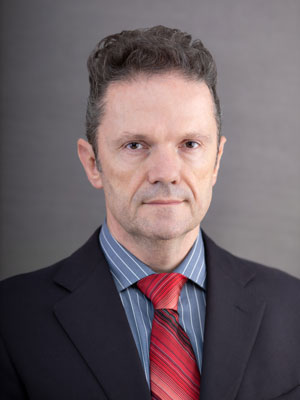
Zoran Budimlić is an Instructional Associate Professor in the Department of Computer Science and Engineering at Texas A&M University. He also serves as Director of Undergraduate Studies for Galveston. His roles include teaching and academic leadership in computer science education and high-performance computing. He holds a Ph.D. in Computer Science from Rice University (2001) and a B.S. in Computer Science and Engineering from the University of Belgrade (1994). His research interests focus on high-performance and parallel computing, compiler optimizations, programming languages, runtime systems, and high-level programming models. He emphasizes improving educational practices in computer science through innovative methods and curricula. His recent publications span parallel algorithms, task parallelism integration with MPI, and compiler optimizations for performance. Earlier work includes contributions to Java runtime optimization and static analysis techniques. Zoran Budimlić has no explicitly listed scientific awards or grants in the provided text, but his contributions to parallel computing and compiler design are notable. He advises students in these areas but no names are provided in the text.
Nicola Capodieci is an Associate Professor at the Department of Physical, Computer and Mathematical Sciences at the University of Modena and Reggio Emilia, specializing in Information Processing Systems (IINF-05/A). He actively teaches multiple courses including Object-Oriented Programming, Web Technologies, and General Computer Science across Computer Science and Mathematics degree programs. His research interests focus on GPU acceleration for embedded systems, autonomous vehicles, and real-time computing. Dr. Capodieci's work addresses critical challenges in heterogeneous computing platforms, particularly for automotive applications and smart city infrastructure. His research bridges theoretical computer science with practical applications in autonomous driving and urban mobility systems. Analysis of his recent publications reveals a strong focus on optimizing GPU performance for latency-sensitive applications, particularly in autonomous vehicles. His work spans path planning algorithms, memory interference management, and real-time scheduling on heterogeneous platforms. A significant portion of his research addresses practical implementation challenges in embedded systems where computational resources are constrained but timing predictability is critical. Dr. Capodieci's teaching portfolio demonstrates expertise in both foundational programming concepts and advanced topics in web technologies. His courses emphasize practical implementation skills while covering theoretical foundations of object-oriented programming, web development frameworks, and computational thinking.
Emmanuel Bayle is a Full Professor of Sports Management at the Institute of Sports Sciences (ISSUL) of the University of Lausanne (UNIL) and serves as Dean of the Faculty of Social and Political Sciences for the 2024-2027 legislature. Appointed to his professorship effective August 1, 2024, he previously served as an associate professor at UNIL since 2012 and as Director of ISSUL from 2019 to 2023. His research focuses on the governance, regulation, and management of sports systems including Olympic, international, and national configurations, with particular expertise in sports federations and hybrid organizations. Bayle's scholarly work examines how sports organizations balance commercial, political, and social objectives within complex institutional environments. His research has been supported by multiple FNS projects, including studies on the professionalization of sports federations (2014-2018) and on international sports federations (2020-2024). Bayle has made significant institutional contributions, managing the interdisciplinary sports research platform since 2016 and developing the Master's degree in Movement and Sports Sciences' "sports and leisure management" orientation from 2012 to 2020. He co-created continuing education programs including CAS Leadership and Management of Sport with HEC faculty and CAS Regulation of Global Sport with the Faculty of Law. As an active participant in the global sports ecosystem, Bayle serves on the scientific council of the AISTS foundation since 2013 and frequently collaborates with public actors and international sports institutions. His expertise is regularly sought by media outlets, reflecting his prominence in sports governance and management.
Steve Zdancewic is the Schlein Family President's Distinguished Professor and Associate Chair in the Department of Computer and Information Science at the University of Pennsylvania's School of Engineering and Applied Science. He is a leading researcher in programming languages, formal methods, and computer security with over two decades of impactful contributions to the field. His research interests span programming languages, type theory, logic, computer security, quantum programming, and formal verification. Zdancewic has made significant contributions to information-flow security, memory safety, program synthesis, and the verification of low-level systems. His work often bridges theoretical foundations with practical applications, particularly through the development of verified systems using Coq and other proof assistants. Analysis of his recent publications reveals a strong focus on formal verification techniques, particularly using Interaction Trees and the Coq proof assistant. His research trajectory shows consistent evolution from foundational work on information-flow security toward increasingly sophisticated verification of complex systems including LLVM, quantum computing, and distributed systems. His work demonstrates a commitment to building practically useful verification tools while maintaining rigorous theoretical foundations. Distinguished Paper Award for Semantics for Noninterference with Interaction Trees (ECOOP 2023) Schlein Family President's Distinguished Professor (2021) Distinguished Paper Award for Interaction Trees (POPL 2020) Christian R. and Mary F. Lindback Foundation Award for Distinguished Teaching (2018) IEEE MICRO top picks (2013) Alfred P. Sloan Fellow (2009-2010) NSF CAREER award (2004) Zdancewic has advised numerous PhD students who have gone on to successful careers in academia and industry. His research has been supported by significant grants from NSF, including the NSF Expedition on the Science of Deep Specification. He is actively involved in multiple major research projects including Vellvm (verified LLVM), DeepSpec, and quantum programming verification. Zdancewic also co-organizes Penn's PL Club programming languages research group with Benjamin Pierce and Stephanie Weirich.
Luis Nunes Vicente is the Timothy J. Wilmott '80 Endowed Faculty Professor and Chair of Lehigh University's Department of Industrial and Systems Engineering since August 2018. He previously served as a faculty member at the University of Coimbra's Department of Mathematics. His research focuses on Continuous Optimization, Computational Science and Engineering, and Machine Learning/Data Science. Education: Ph.D. in Applied Mathematics (Rice University, 1996), M.A. in Applied Mathematics (Rice University, 1994), B.S. in Mathematics and Operations Research (University of Coimbra, 1990). Honors include the Lagrange Prize (2015), SIAM Fellowship (2024), and Fulbright Scholarship (1996). He co-authored the influential book Introduction to Derivative-Free Optimization (2009). Research Interests: Development of optimization algorithms for derivative-free and stochastic scenarios, multi-objective optimization, machine learning applications, and computational methods for engineering problems. Key contributions include trust-region methods, bilevel optimization frameworks, and fairness-aware machine learning models. Grants and Leadership: Secured over $1M from the Office of Naval Research (2024) and the Air Force Office of Scientific Research (2023). Served as Editor-in-Chief of Portugaliae Mathematica (2013–2018) and on editorial boards of top journals like SIAM Journal on Optimization . Elected President of the Operations Research Association of Chairs (2024). Visiting Positions: IBM T.J. Watson Research Center (2002/2003), Courant Institute/NYU (2009/2010), and CERFACS/Toulouse (2010–2015). Active in international conferences, delivering plenary lectures at 13th French-German Conference on Optimization, ICCOPT III, and ISMP 2018.
Todd Millstein is a Professor in the Computer Science Department at the University of California, Los Angeles (UCLA). He served as the Computer Science Department Chair from 2022-2025 and is also an Amazon Scholar. His research focuses on making software systems more reliable through programming languages techniques, with significant contributions to network verification and probabilistic programming. Millstein received his Ph.D. from the University of Washington Department of Computer Science, where he was a member of the Cecil group led by Craig Chambers. Prior to that, he completed his undergraduate studies at Brown University under the guidance of Paris Kanellakis and Pascal Van Hentenryck. Millstein's research spans several areas of programming languages and systems with a focus on reliability. He has made significant contributions to network verification, developing the Batfish network configuration analyzer which is now managed by Amazon Web Services and forms the basis of Oracle Cloud's Network Path Analyzer. His work has been recognized with the ACM SIGCOMM Networking Systems Award in 2025. He also works on interactive program verification through lemma synthesis and scalable reasoning methods for probabilistic programming languages. His research bridges programming languages theory with practical systems challenges, as highlighted in his SPLASH/OOPSLA 2024 keynote "Everything is a Program (even if it's not)". Millstein's recent publications demonstrate a consistent focus on verification and reliability across multiple domains. His work shows a progression from foundational programming language techniques to practical applications in networking and probabilistic systems. Key themes include data-driven approaches to program analysis, synthesis of verification artifacts, and applying programming languages techniques to non-traditional domains like network configuration. Millstein's scientific achievements have been recognized with numerous prestigious awards including an NSF CAREER Award, an ACM SIGPLAN Most Influential PLDI Paper Award, an ACM SIGCOMM Networking Systems Award, IEEE Micro Top Picks selection, best-paper awards from PLDI, OOPSLA, and SIGCOMM, a Microsoft Research Outstanding Collaborator Award, an Okawa Foundation Research Grant, an IBM Faculty Award, and a Facebook Research Award. He has also received both the Northrop Grumman Excellence in Teaching Award (for junior faculty) and the Eon Instrumentation Inc. Excellence in Teaching Award (for senior faculty) from UCLA Engineering. Millstein advises several Ph.D. students including Ana Brendel, Poorva Garg (co-advised with Guy Van den Broeck), Rajdeep Mondal (co-advised with George Varghese), and Rathin Singha (co-advised with George Varghese). His research has been supported by various grants including an NSF CAREER Award, Okawa Foundation Research Grant, IBM Faculty Award, and Facebook Research Award. He has also been a Co-Founder and Chief Scientist of Intentionet, which was later acquired by Amazon Web Services. Millstein is actively involved in the Batfish project, an open-source network configuration analyzer that has had significant practical impact. Batfish is now managed by AWS, powers Oracle Cloud's Network Path Analyzer, and is used by dozens of companies. His research group continues to work on network reliability, developing techniques for scalable BGP policy verification and behavioral testing of protocol implementations.
Professor Yngve Karl Frøyen works at the Department of Architecture and Planning, Faculty of Architecture and Design, Norwegian University of Science and Technology (NTNU). With expertise in sustainable transport solutions, urban spatial modeling, and GIS applications for planning, he has taught and supervised urban and regional planning topics since 2010. His work spans multiple master programs and involves improving transport modeling tools for walking, transit, and bicycling modes. Research Focus: Sustainable urban transport (walking, bicycling, public transit), urban density, GIS methods, land use-transport interactions, and urban logistics. Teaching: Courses in GIS methods, land use-transport integration, regional planning, and master thesis supervision. Publications: 15+ works on transport modeling, urban density impacts, bicycle infrastructure, and planning methodology. Outreach: Regularly presents at conferences and seminars on topics like urban logistics, walking modeling, and transport policy. His academic career spans from 1981 civil engineer graduation to current professorship, with prior roles at Norwegian Institute of Urban and Regional Research (NIBR) and SINTEF. He combines technical GIS proficiency with policy-oriented planning expertise.
Robert Bruce Findler is a Professor of Computer Science at Northwestern University, specializing in programming languages and software engineering. He serves as a core developer of the Racket programming language and has contributed extensively to language design, macro systems, and gradual typing. Affiliation: Department of Electrical Engineering and Computer Science, McCormick School of Engineering Research Interests: Programming Languages (PL), Domain-Specific Languages (DSLs), Macro Systems, Gradual Typing, Contracts His work spans both theoretical and practical domains, including the development of Racket's Redex framework for semantics engineering and innovative approaches to contract systems in gradual typing. He has been actively involved in the PL community through committee memberships and program organization. Recent research focuses on macro systems (Rhombus), contract optimization (Collapsible Contracts), and language interoperability (The Functional, the Imperative, and the Sudoku). His GitHub contributions reflect ongoing development in Racket and related tools. Key Collaborations: Racket development ecosystem, PLDI/POPL/ICFP/SPLASH conferences Committee Roles: ICFP Programme Committee, REBLS Program Committee, POPLmark Retrospective Panelist
Dr. Husam Al-Najjar is a Lecturer at the School of Computer Science within the Faculty of Engineering and Information Technology at the University of Technology Sydney (UTS). He serves as the Course Director for the Bachelor of Information Systems (BIS) program. With expertise in geospatial technology and machine learning, Dr. Al-Najjar focuses on predicting and mitigating natural hazards and environmental issues to contribute to a sustainable digital earth. Dr. Al-Najjar earned his PhD from the University of Technology Sydney. Before joining academia, he worked in project management and has received numerous prestigious awards, scholarships, and grants throughout his career. Dr. Al-Najjar's research primarily centers on the application of machine learning techniques to address complex environmental challenges. His work spans geospatial AI, natural hazard prediction (particularly landslides and bushfires), and sustainable development. He has developed innovative approaches that integrate physical models with machine learning algorithms to improve prediction accuracy in data-scarce environments. His research also extends to remote sensing applications, urban planning, and smart city technologies, with a strong emphasis on practical solutions for real-world problems. Analysis of Dr. Al-Najjar's recent publications reveals a strong focus on applying explainable AI techniques to natural hazard prediction, particularly landslides. His work consistently bridges the gap between theoretical machine learning approaches and practical geospatial applications. He has made significant contributions to integrating physical models with AI, developing methods for handling imbalanced data through generative adversarial networks, and improving feature selection for remote sensing applications in environmental monitoring. Best Paper Award at the ISPRS Geospatial Week in Enschede, the Netherlands As an educator, Dr. Al-Najjar is actively involved in mentoring and teaching. He serves as Course Director for the Bachelor of Information Systems program and teaches courses in GIS, Information Systems, IS development methodologies, Design & Innovation, and Project Management. He welcomes prospective PhD candidates interested in his research areas and emphasizes the importance of detailed research proposals that demonstrate novelty and significance. His teaching philosophy focuses on fostering an engaging and inclusive learning environment that promotes student success and well-being. Dr. Al-Najjar is affiliated with 'The Trustworthy Digital Society' concentration at UTS and serves as a referee and holds editorial roles in respected journals. His work contributes to the development of geospatial AI frameworks that support decision-making in environmental management and disaster preparedness.
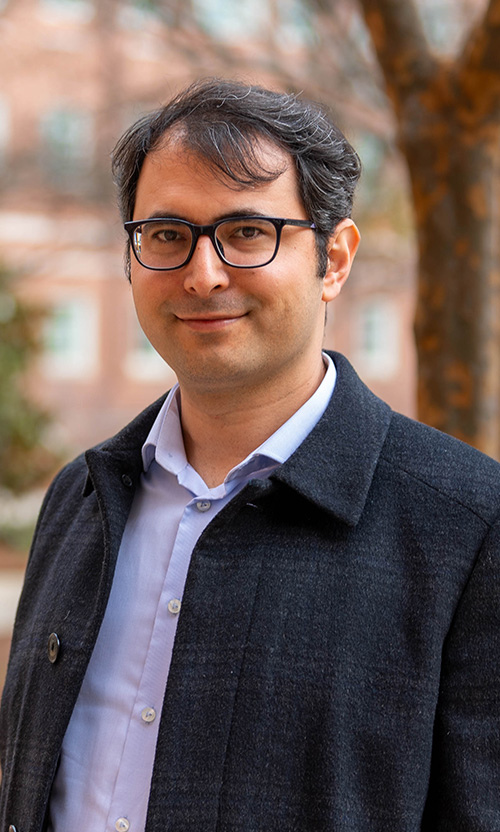
Ali Ghanbari is an Assistant Professor in the Department of Computer Science and Software Engineering at Auburn University's College of Engineering. His research focuses on software engineering, programming languages, and data science, with an emphasis on automated program repair, deep learning, and mutation analysis. He received his Ph.D. in Software Engineering from the University of Texas at Dallas and his M.Sc. and B.Sc. from Amirkabir University of Technology in Tehran, Iran. Education: Ph.D. Software Engineering, University of Texas at Dallas M.Sc. Software Engineering, Amirkabir University of Technology B.Sc. Software Engineering, Amirkabir University of Technology Research Interests: Dr. Ghanbari's work spans automated program repair, deep neural network analysis, and mutation-based fault localization. He explores techniques to enhance software quality through methods like patch correctness assessment, object similarity-based prioritization, and optimization of mutation testing frameworks. His contributions include frameworks such as PRF and tools like Shibboleth for hybrid patch evaluation. Publications Trends: His recent work highlights advancements in accelerating mutation analysis, improving deep learning models via modular decomposition, and refining automated repair techniques. Notable contributions include Rocq for goal clone detection and MeMu for faster mutation analysis. Awards & Grants: No specific awards or grants mentioned in the provided materials. Advising & Labs: While no advisees are listed, his research group likely focuses on program repair and deep learning applications. His work is supported by datasets like Defexts, which provides reproducible real-world bugs for JVM languages.
Akshay Narayan is a Senior Lecturer (Educator Track) at the School of Computing, National University of Singapore (NUS), where he teaches senior undergraduate and graduate-level courses in AI Planning and Decision Making, as well as introductory and intermediate-level Software Engineering courses. Education: Ph.D. in Computer Science from National University of Singapore (completed in 2020) M.Tech. in Information Technology from International Institute of Information Technology Bangalore, India B.E. in Computer Science & Engineering from Visveswaraya Technological University, India Research Interests: Dr. Narayan's research spans multiple domains within computer science with a primary focus on artificial intelligence and its applications. His current research centers on transfer learning in reinforcement learning, multi-agent decision making, and AI planning. He has also made significant contributions to cloud computing research, particularly in areas such as smart metering, chargeback systems, power-aware cloud metering, and workload analysis for virtual machine sizing. His work bridges theoretical foundations with practical applications, addressing real-world challenges in computing systems. He has recently expanded his research to include technology in education, exploring how AI can be integrated into teaching and learning processes. Publication Trends: Dr. Narayan's publication record demonstrates a clear evolution from foundational work in cloud computing to more recent explorations in reinforcement learning and AI education. His early work focused on practical applications in cloud systems, including smart metering and QoS monitoring. More recently, his research has shifted toward AI planning, decision making, and the educational applications of AI. This progression shows his ability to adapt to emerging fields while maintaining a strong foundation in systems research. Awards and Recognition: Teaching and Mentoring: Dr. Narayan teaches a variety of courses at NUS including CS2113 Software Engineering & Object-Oriented Programming, CS3219 Software Engineering Principles and Patterns, CS3268 Responsible AI: From Algorithms to Impact, and IT5100F Industry Readiness: Data Analytics and AI in Practice. He has also taught CS4246/CS5446 AI Planning and Decision Making. His teaching approach integrates his research expertise with practical applications, providing students with both theoretical foundations and hands-on experience. He has taught these courses across multiple academic years from AY-2013/14 through AY-2020/21. Research Groups and Collaborations: Dr. Narayan has collaborated with researchers across multiple institutions, including work with Prof. Tze Yun Leong at NUS (his PhD advisor), Shrisha Rao, Zhuoru Li, and others. His research has often involved interdisciplinary collaborations that bridge theoretical computer science with practical system implementations.
Shiny Verghese is a Lecturer in Computer Science at Teeside University, affiliated with the Faculty of Computing, Engineering and Science and the Computing, Cybersecurity, Mathematics and Informatics Research and Innovation Group. She holds a PhD in Human-Computer Interaction from Teeside University (2019), focusing on design parameters for online psychometrics. Her research spans human-computer interaction, online questionnaire design, and posture monitoring using machine learning. She leads the 2023-2028 project "A Smart Sensing System for Continuous Sitting Posture Recognition and Monitoring using Machine Learning and a Mobile App" , funded in part by the Kuwait Foundation of Advancement of Sciences. Teaching focuses include programming languages, object-oriented concepts, algorithms, and event-driven programming. Her work bridges HCI with educational technology, emphasizing innovative pedagogy and creative problem-solving. Recent collaboration on posture monitoring systems demonstrates expertise in sensor technology and health informatics. Key contributions include a novel online research tool for psychometric questionnaires and a comprehensive review in Sensors (2024) on smart posture monitoring systems. She collaborates with researchers like Prof. Kulon and Dr. Odesola, advancing applications of machine learning in health and education.
Guimu Guo is an Assistant Professor in the Department of Computer Science at Rowan University's College of Science & Mathematics. His research focuses on parallel and distributed computing techniques for large-scale graph mining problems, with applications in bioinformatics and transportation engineering. Ph.D. in Computer Science from University of Alabama at Birmingham M.Sc. in Computer Science from Tongji University Dr. Guo has published extensively in top-tier venues like VLDB, ICDE, and IEEE BigData. His work spans graph mining algorithms, parallel computing, and interdisciplinary applications in transportation and genomics. He actively mentors PhD and Master's students, offering fully funded positions. Key research trends include: Advancing GPU-accelerated graph decomposition techniques Developing distributed frameworks for subgraph querying and task concurrency Exploring parallel algorithms for frequent pattern mining and clique-like subgraphs Scientific Recognition: NSF CRII Award UAB Outstanding PhD Student Award Alabama GRSP Awards (Rounds 15 & 16) Teaching spans from foundational object-oriented programming to advanced graduate courses in parallel programming. His lab group has produced significant contributions to subgraph mining, transportation simulation, and genome assembly systems.
Eduard Kamburjan is a Researcher at the University of Oslo , affiliated with the Reliable Systems (PSY) and Data and Knowledge Systems (DKM) research groups. His work bridges formal methods , digital twin engineering , and knowledge graph applications . Research interests include: Formal verification of hybrid systems using deductive methods Digital twin architecture with compositional correctness guarantees Semantic lifting and ontology-driven modeling for complex systems Concurrency analysis and non-determinism in program verification Interactive visualization as serious games for formal methods His 2024-2023 publications demonstrate expertise in digital twin reconfiguration , semantic interoperability , and knowledge-based runtime enforcement . Key contributions include Crowbar for active object verification and ABS simulator toolchain for model-driven engineering. Collaborations span institutions like Springer , ACM , and IEEE , with work featured in Lecture Notes in Computer Science (LNCS) , Software and Systems Modeling (SoSyM) , and Science of Computer Programming . His research integrates RDF data management , behavioral contracts , and modular analysis for distributed systems.
Zhenchang Xing is a Research Professor at CSIRO's Data61 and holds a Hans Fischer Senior Fellowship at TUM-IAS. With a Ph.D. in Computer Science from the University of Alberta (2008), he previously served as Associate Professor at Australian National University and Assistant Professor at Nanyang Technological University. His research focuses on software engineering for AI systems and human-centered computing. Current projects include: Automated Software-Hardware Co-Design for AI Systems Software Supply Chain Security frameworks Data Bill of Materials (DataBOM) for verifiable data ecosystems Software Testing Knowledge Graph development Professor Xing has received 10 Distinguished Paper Awards from ACM and IEEE, including the 2005 Most Influential Paper Award for UMLDiff. His work combines software engineering with responsible AI development.