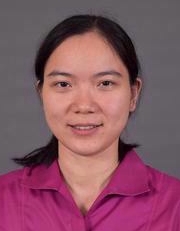
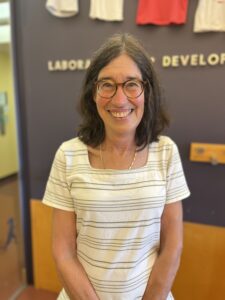
Dr. Rui Dai is an Associate Professor in the Department of Computer Science at the University of Cincinnati's College of Engineering and Applied Science. Her research focuses on wireless sensor networks, multimedia communications, and video analytics for healthcare and surveillance applications. She directs multiple NSF and NIST-funded projects on perceptual-quality-aware video systems. Research interests include quality-of-experience optimization for video analytics, compressed domain feature extraction, and edge computing frameworks for intelligent surveillance. Recent work develops deep feature compression techniques, multi-camera fall detection systems, and quality-aware video distribution strategies for 5G networks. Publications demonstrate consistent innovation in video processing for resource-constrained environments, with applications spanning healthcare monitoring, public safety networks, and embedded vision systems. Current projects investigate metaverse communication challenges for 6G networks and PHP vulnerability detection through hybrid static-fuzzing analysis.
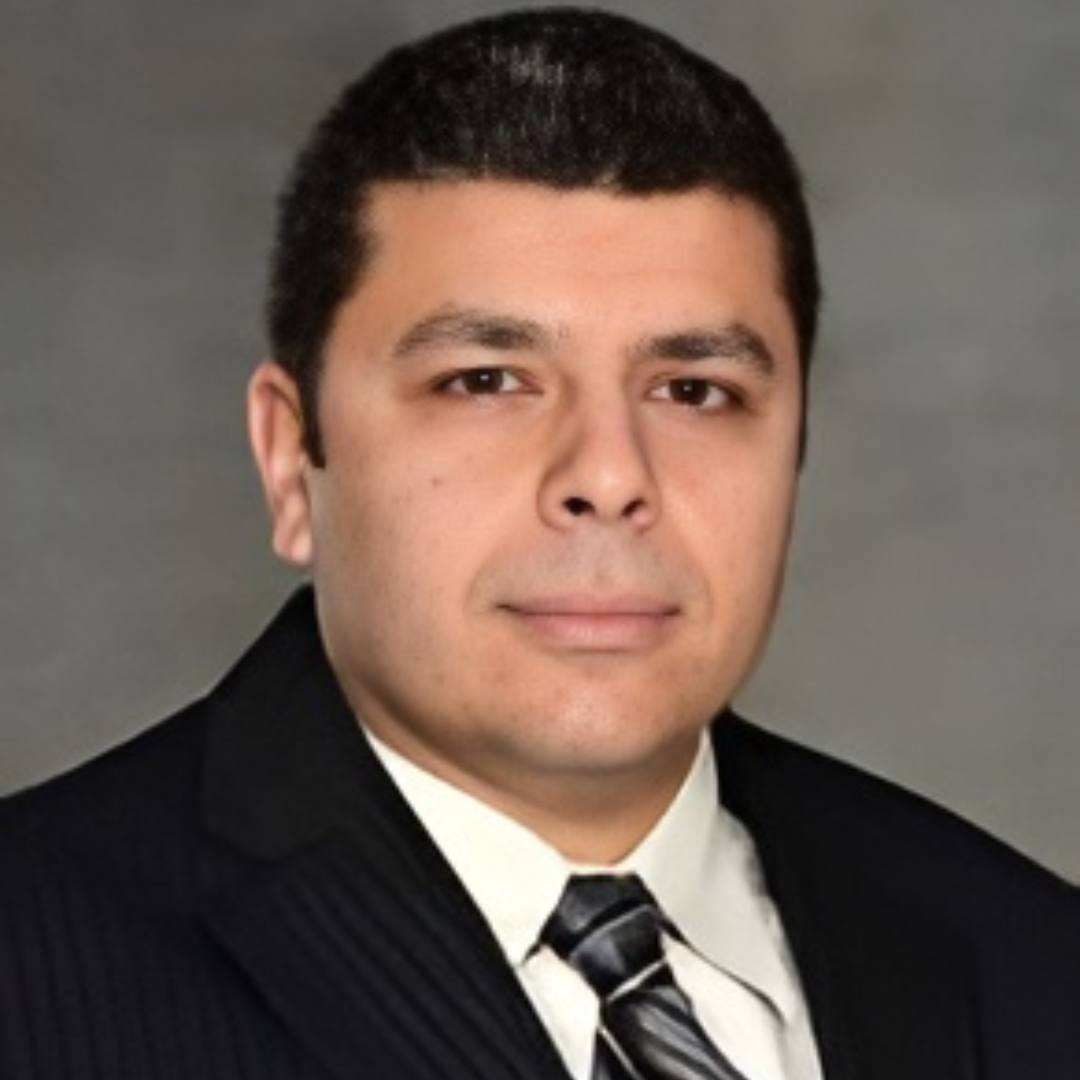
Dr. Walid Morsi Ibrahim is a Professor in the Department of Electrical, Computer and Software Engineering at Ontario Tech University, Faculty of Engineering and Applied Science. His expertise includes Smart Grid design, power systems analysis, and signal processing. He holds a PhD from Dalhousie University (2009), with prior academic positions including Adjunct Professor at the University of Waterloo and Assistant Professor roles at Ontario Tech University and the University of New Brunswick. Education: PhD (2009, Dalhousie), MSc (2002, Suez Canal University), BSc (1998, Suez Canal University) His research focuses on Smart Grid technologies, including signal processing for power systems, automation, and distributed energy resources. Notable contributions include work on electric vehicle integration, transformer aging analysis, and nonintrusive load monitoring using wavelet transforms and machine learning. He has authored over 50 publications in top-tier IEEE conferences and journals. Recent articles highlight his work on electric vehicle load forecasting during the pandemic, fault detection in photovoltaic systems, and transactive energy frameworks for prosumers. Awards include the IEEE PEDG 2010 Best Paper Award and multiple poster awards at Ontario Tech University. Dr. Ibrahim teaches courses on smart grid fundamentals, power systems operation, and information technology for engineers. He has secured grants for research on smart grid monitoring systems and holds patents related to energy management solutions. His work bridges theoretical advancements with practical grid applications, emphasizing resilience and sustainability.
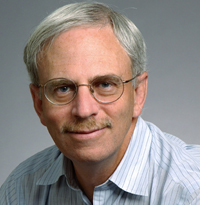
John Guttag is the Dugald C. Jackson Professor in Electrical Engineering and Computer Science at MIT. His work focuses on AI-driven healthcare solutions, biomedical systems, and advanced computer vision applications. He leads research in medical image analysis, machine learning reliability, and healthcare equity. Guttag's contributions include innovative frameworks like MultiMorph and Scale-Space Hypernetworks, addressing challenges in medical imaging and clinical decision-making. Affiliations: MIT Electrical Engineering & Computer Science Department (EECS) Research emphasizes AI for healthcare, particularly in segmentation, predictive analytics, and ethical algorithm design. Notable projects include real-time fraud detection systems and studies on racial disparities in clinical risk scores. His work bridges computer science with clinical practice through tools like Voxelmorph for medical image registration and ScribblePrompt for interactive biomedical segmentation. Recent publications highlight advancements in uncertainty-aware AI, contrastive learning, and scalable medical data processing. Guttag’s methodologies prioritize practical clinical applications, aiming to improve diagnostics and healthcare workflows. His lab develops open-source tools and frameworks that enhance accessibility to advanced medical imaging technologies.
Barry Rawn is an Associate Teaching Professor in Electrical and Computer Engineering at Carnegie Mellon University (CMU), affiliated with the College of Engineering. He focuses on stressed centralized electricity infrastructure and off-grid energy systems, particularly in Nigeria. His research contributes to the IEEE Working Group on Sustainable Energy for Developing Communities and emphasizes renewable energy integration, grid stability, and smart grid technologies. Education: All degrees from the University of Toronto: Ph.D. in Electrical Engineering MASc in Electrical Engineering BASc in Engineering Science Research Interests: Rawn explores the interplay between centralized grids and decentralized energy solutions in developing regions. His work spans transmission/distribution system optimization, renewable energy modeling, and circular economy frameworks for plastics in Africa. He also investigates battery reuse and smart grid innovations, often collaborating with industry and international partners. Key Article Trends: Recent work emphasizes circular plastics economies in Africa, vehicle-to-grid integration, and Nigerian grid modernization. Earlier research focused on wind power integration, grid stability under reverse power flows, and HVDC transmission planning. Awards: No specific awards listed, though his work aligns with IEEE sustainability initiatives. Advising/Grants: No grant details provided; maintains affiliations with CMU Africa and Brunel University London’s Smart Power Networks Theme. Collaborative activities include industrial partnerships and cross-sectoral projects in Africa. Labs/Teams: Engaged with the Institute of Energy Futures (UK) and leads fieldwork in Nigeria/Rwanda. Active in IEEE committees and African energy policy dialogues.
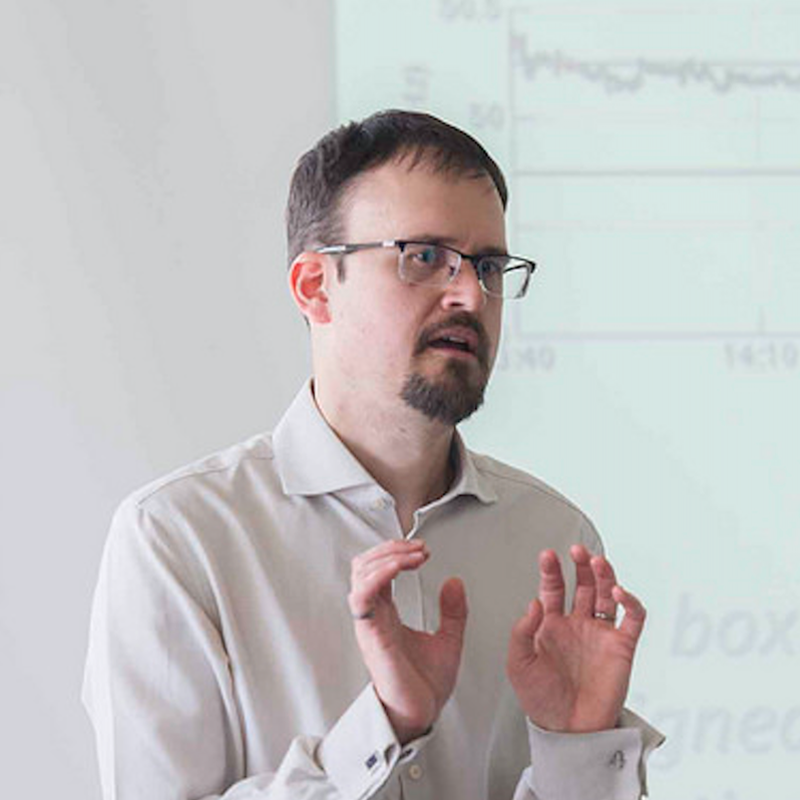
Dr Elliot J. Crowley is a Senior Lecturer in Electronics and Electrical Engineering at the University of Edinburgh, serving as Discipline Programme Manager. He co-leads the Bayesian and Neural Systems research group. His research focuses on simplifying machine learning, automated ML, low-resource deep learning, and engineering applications. He holds an MEng in Engineering Science and a DPhil (PhD) from the University of Oxford, with postdoctoral experience at Edinburgh's School of Informatics. He leads the EPSRC New Investigator Award and participates in the dAIEdge Horizon Network. Notable contributions include foundational work in neural architecture search (NAS), probabilistic methods for model efficiency, and applications in computer vision. His courses, such as the Data Analysis and Machine Learning module, emphasize practical Python-based learning for engineering students. Key awards include an EPSRC grant and recognition through distinguished papers at ASPLOS 2021. His team includes current PhD students (Linus Ericsson, Miguel Espinosa) and former advisees (Chenhongyi Yang at Meta, Jack Turner at Qualcomm). Research spans from NAS algorithms to ethical machine learning practices, with a focus on bridging theoretical advances and real-world engineering challenges.
Miroslaw Bober is Professor of Video Processing at the University of Surrey, where he joined in 2011. He leads the Visual Media Analysis team within the Centre for Vision, Speech and Signal Processing (CVSSP) in the School of Computer Science and Electronic Engineering. His extensive industry experience includes 15 years as General Manager of the Mitsubishi Electric R&D Centre Europe and Head of Research for its Visual & Sensing Division. BSc and MSc in Electrical Engineering from AGH University of Science and Technology, Krakow, Poland (1990) MSc in Machine Intelligence with distinction from Surrey University (1991) PhD in Computer Vision from Surrey University (1995) Professor Bober's research focuses on novel techniques in signal processing, computer vision and machine learning with applications in industry, healthcare, big-data and security. His expertise particularly lies in image and video analysis and retrieval, including visual search, object recognition, and analysis of motion, shape and texture. His algorithms for shape analysis, image/video fingerprinting, and visual search are considered world-leading and have been selected for ISO International standards within MPEG, with applications used by organizations like the Metropolitan Police. His recent publication trends show a strong focus on hybrid network architectures, scene graph generation, medical imaging applications, and augmented reality publishing systems. His work spans both theoretical advancements in computer vision and practical implementations addressing real-world challenges in media, healthcare, and security domains. The research demonstrates a consistent pattern of bridging academic innovation with industrial applications, particularly in visual search technology and media analysis. Presidential Award for strengthening the TV business in Japan via innovative 'Visual Navigation' content access technology (2010) Mitsubishi Best Invention Award for Image Signature Technology (2008) Professor Bober serves as Programme Director for the MSc in Multimedia Signal Processing and Communications and holds various teaching and mentoring roles. He has secured over 30 research and industrial grants totaling more than £16M, including the BRIDGET FP-7 project (5.28 M€) as coordinator and PI, and the CODAM project (£1.05 M) as PI. His work with the BBC, Huawei, and other industry partners demonstrates strong industry-academia collaboration. As chair of MPEG technical work on Compact Descriptors for Visual Search (CDVS) and Compact Descriptors for Video Analysis (CDVA), Professor Bober leads international standardization efforts. His Visual Media Analysis team develops cutting-edge visual search and media analysis algorithms with applications across broadcast, security, and healthcare domains.
Dr. Christopher Gilliam is an Assistant Professor in Applied Signal Processing at the University of Birmingham's Department of Electronic, Electrical and Systems Engineering. He holds an MEng (1st Class Hons) in Electrical & Electronic Engineering (2008) and a Ph.D. in Signal Processing (2013), both from Imperial College London. Prior to joining Birmingham in 2022, he was a Postdoctoral Fellow at The Chinese University of Hong Kong (2013–2017) and a Research Fellow at RMIT University, Australia (2017–2022). Research Interests: Sensor signal processing, radar imaging, sampling theory, motion estimation, quantum navigation, and medical imaging. Labs: Microwave Integrated Systems Laboratory (MISL). Committees: Member of IEEE Signal Processing Society and APSIPA Technical Committees. His work focuses on advancing signal processing techniques for radar systems, navigation, and medical imaging. Recent research highlights include drone-based SAR imaging, motion correction in MRI, and fusion of classical/quantum sensors for inertial navigation. He is actively supervising PhD students and contributes to projects sponsored by DSTG. Publications span radar SLAM, probabilistic navigation algorithms, and deep learning-driven medical imaging solutions. His research bridges theoretical signal processing with practical applications in autonomous systems and healthcare.
Professor Ferrante Neri is a faculty member at the University of Surrey, holding the positions of Professor of Machine Learning and Artificial Intelligence and Associate Dean (International) for the Faculty of Engineering and Physical Sciences (FEPS). He is affiliated with the Nature Inspired Computing and Engineering Research Group, Surrey Institute for People-Centred AI (PAI), and the Computer Science Research Centre within the School of Computer Science and Electronic Engineering. His research focuses on optimization, explainable AI, and machine learning, with contributions to memetic computing and differential evolution. Since 2010, he has chaired the IEEE Task Force on Memetic Computing. He advises PhD students in topics like dynamic multi-objective optimization and AI-driven applications. His teaching expertise includes mathematical foundations for computer science. He has supervised students such as Aisha E S E Saeid and Pengjin Wu. Notable research areas include evolutionary algorithms, neural architecture search, and applications in robotics and environmental monitoring. Labs and teams include the Nature Inspired Computing group, which explores AI-driven solutions for complex problems. His work bridges theoretical advancements and practical applications in fields like autonomous systems and deep learning.
Prof. Adam Deller is a Professor at Swinburne University of Technology, affiliated with the School of Science, Computing and Emerging Technologies. His academic journey includes a BSc, BE (1st class honours), and PhD in Astrophysics from Swinburne. He specializes in radio interferometry, neutron star physics, fast radio bursts (FRBs), and space domain awareness. His research focuses on compact objects like pulsars and black holes, using radio telescopes for high-resolution imaging. He co-founded Fourier Space Pty Ltd, developing signal processing solutions for radio astronomy and space industries. **Research Interests**: Radio interferometry instrumentation, neutron star magnetospheres, FRB localization and cosmological applications, and space domain awareness through radio observations. **Awards**: Includes the Pawsey Medal (2020), Newcombe Cleveland Prize (2022), and multiple grants from ARC and industry partners. His grants focus on SKA pulsar timing, FRB studies, and gravitational wave astronomy collaborations. **Teaching**: Teaches Computational Astrophysics, emphasizing numerical simulations for astrophysical problems. **Grants & Collaborations**: Key roles in ARC Centre of Excellence for Gravitational Wave Discovery, SKA pulsar timing projects, and international telescope collaborations like ASKAP and VLBI networks.
Behrouz Far is a Professor at the University of Calgary’s Schulich School of Engineering, Department of Electrical and Software Engineering. He holds a PhD in Artificial Intelligence from Chiba University, Japan (1990) and degrees from the University of Teheran including a B.S. in Electrical Engineering (1983) and M.S. in Electrical Engineering (1986). His research focuses on AI applications in medical imaging, software engineering, transportation systems, and data mining. He has contributed to advancements in fundus image analysis, deep learning models for disease detection, and intelligent traffic management systems. Dr. Far has received notable awards such as the 2017 SSE Achievement Award and the AITF-AMA Tier-2 Chair in Smart Multimodal Transportation Systems (2013). His work bridges theoretical AI with practical healthcare solutions, including tools like LETTA for traffic management systems and methodologies for detecting ocular lesions using CNNs. He teaches courses on software testing, reliability engineering, and agent-based systems. His publications highlight contributions to medical diagnostics (e.g., choroidal nevi classification), transportation optimization (e.g., real-time traffic signal control), and machine learning explainability. Collaborative research includes projects on biopotentiostat biosensors for SARS-CoV-2 detection and data mining for cancer patient stratification.
Elizabeth Spelke is the Marshall L. Berkman Professor of Psychology at Harvard University and an investigator at the NSF-MIT Center for Brains, Minds and Machines. She leads the Spelke Lab, which conducts behavioral research on infants and preschool children to understand the origins of uniquely human cognitive capacities such as formal mathematics, symbolic representation, and object taxonomy. Education: B.A. in Social Relations from Radcliffe College (1971), Ph.D. in Psychology from Cornell University (1978). Professional Experience: Faculty positions at the University of Pennsylvania, Cornell University, MIT, and Harvard University since 2001. Her research focuses on core knowledge systems in infancy, including understanding of objects, actions, people, places, number, and geometry. She collaborates with computational cognitive scientists to model infant cognition and with economists to apply findings to educational interventions. Her work integrates developmental, comparative, and cross-cultural perspectives. Her recent publications span topics such as early math learning, social evaluation in toddlers, goal inference, and the interplay between language and conceptual development. Trends in her recent work include experimental field studies, interdisciplinary collaborations, and theoretical synthesis of core knowledge frameworks. National Academy of Sciences (USA), 1999 American Academy of Arts and Sciences, 1997 National Academy of Sciences Prize in Psychological and Cognitive Sciences, 2014 C.L. de Carvalho-Heineken Prize for Cognitive Sciences, 2016 George A. Miller Prize, Cognitive Neuroscience Society, 2018 Mentor Awards from APS and APA, 2021 Spelke has mentored numerous researchers and collaborated widely across disciplines. Her lab’s work is supported by major grants from the NSF and other institutions. She has pioneered the use of behavioral methods to study infant cognition and has been instrumental in translating cognitive science into educational practice. She directs the Spelke Lab at Harvard, which investigates core cognitive systems through behavioral experiments with infants and young children. The lab explores how innate knowledge structures interact with experience to produce complex human cognition.
Dr Lounis Chermak is a Lecturer in Computer Vision and Autonomous Systems at the Centre for Electronic Warfare, Information and Cyber, part of Cranfield Defence and Security at Cranfield University, UK. He leads the Joint Autonomy Lab and is actively involved in research and education in autonomous systems with applications in defence and space. Research Interests: His work focuses on situational awareness in autonomous platforms, with core expertise in computer vision, sensor fusion, artificial intelligence, robotics, and navigation. He investigates perception, decision-making, and mobility across aerial, ground, maritime, and space systems, developing robust solutions for challenging environments including low visibility and extreme illumination. The recent publications reflect a strong trend in autonomous navigation, particularly for space and defence applications, using advanced computer vision techniques such as thermal stereo odometry, HDR imaging, stixel-based scene understanding, and lightweight 3D descriptors. Research also extends to cybersecurity of autonomous systems, including impersonation attack detection and optical countermeasures. Scientific Awards: No scientific awards mentioned in the provided text. Advising and Grants: Dr Chermak leads research activities supported by postdoctoral researchers, PhD, and MSc students. His work is funded and applied in collaboration with major clients including aerospace organizations (ESA, UK Space Agency, Thales Alenia Space), defence agencies (MoD, DSTL, BAE Systems, MBDA), and technology companies (Samsung, Astroscale). He supervises research students in robotics and autonomous systems across civilian and defence domains. Labs and Teams: He leads the Joint Autonomy Laboratory, a 200 m² indoor facility equipped with drone netting, motion capture systems, virtual reality test benches, UAV and ground robot fleets, electric vehicles, and multiple sensors for vision, ranging, and motion. This lab supports both educational and cutting-edge research in autonomous systems.
Naeem Ayoub is an Assistant Professor in the Department of Technology and Innovation at the University of Southern Denmark (SDU), affiliated with SDU Technology Entrepreneurship and Innovation. His research bridges computer science and engineering, focusing on intelligent systems and automation. Research Interests: His work spans machine learning, computer vision, robotics, and cyber-physical systems. He explores applications in autonomous drones, digital twins, power line inspection, and environmental monitoring. His research emphasizes real-time decision-making, energy efficiency, and anomaly detection in complex systems. The recent publications highlight a strong trend in deploying AI-driven robotics for industrial and environmental applications, particularly in infrastructure inspection and predictive maintenance. His work integrates neural networks, sensor networks, and autonomous navigation to solve practical engineering challenges. Scientific Contributions: Active contributor to 19 research outputs including journals and conference proceedings. Creator of an open-source dataset for pylon component and fault detection using machine learning. Involved in interdisciplinary collaborations across engineering, environmental science, and computer science. Advising and Grants: While no formal students are listed, he has participated in academic supervision as a censor in internal examinations. His projects suggest involvement in research grants related to autonomous systems and industrial digitalization, though specific funding details are not provided. Labs and Teams: He collaborates within research teams focused on robotics and intelligent systems at SDU, particularly in drone technology and cyber-physical systems. His work involves close collaboration with researchers in environmental monitoring, power systems, and industrial automation.
Sotirios K. Goudos is a Professor at the Department of Physics, Aristotle University of Thessaloniki (AUTH), Greece, and Director of the ELEDIA@AUTH lab within the ELEDIA Research Center Network. His research focuses on antenna design, evolutionary algorithms, wireless communications, machine learning, and IoT applications. He holds a B.Sc. in Physics (1991), M.Sc. in Electronics (1994), Ph.D. in Physics (2001), and additional qualifications in Information Systems and Electrical Engineering. Prof. Goudos is a Senior Member of IEEE and serves as Editor-in-Chief of the Telecom open access journal (MDPI) and Associate Editor for IEEE Transactions on Antennas and Propagation, IEEE Access, and IEEE Open Journal of the Communication Society. He has organized multiple special issues in journals like EURASIP Journal on Wireless Communications and Networking and has authored/edited books on antennas and AI in networks. His awards include multiple IEEE Access Outstanding Associate Editor recognitions (2019–2023) and inclusion in Stanford University's top 2% scientists list (2020–2024). He teaches courses on telecommunications, Java programming, and microwave systems, and has supervised over two dozen master's students since 2009. His work spans antenna optimization, AI-driven communications, and IoT security, with contributions to 5G/6G, RIS systems, and smart agriculture. Prof. Goudos actively contributes to IEEE Greece Section leadership roles, including Secretary (2022) and Vice-Chair (2023–2024). His labs and teams focus on ELEDIA's research in electromagnetics, optimization, and AI applications.
François Brémond is a Research Director (DR1) at INRIA Sophia Antipolis, where he leads the STARS research team, which he founded on January 1, 2012. He was previously head of the PULSAR team starting September 2009. He is also a co-founder of the CoBTeK team at Nice University in collaboration with Nice Hospital, focusing on behavioral disorders in elderly patients with dementia. His research is centered on dynamic scene interpretation using video and sensor data, with applications in surveillance, healthcare, transportation, and ambient intelligence. Research Interests: Computer Vision: video processing, object detection and tracking, motion analysis, pattern recognition Cognitive Vision: video understanding, scene understanding, event recognition, behavior analysis, multi-sensor fusion, multimedia interpretation Machine Learning: deep learning architectures, self-attention, knowledge distillation, contrastive learning, self-learning, lifelong learning, knowledge-based systems, spatio-temporal reasoning Autonomous Systems: real-time systems, system evaluation, parameter tuning, system design, 3D visualization His work bridges low-level pixel data with high-level semantic behavior modeling, enabling systems to detect and interpret complex human and vehicle activities in real-world environments. Applications include crowd monitoring, fraud detection, airport operations, homecare for the elderly, and biological monitoring. He has authored or co-authored over 200 scientific papers and has (co-)supervised 18 PhD theses. He has participated in 12 European projects (e.g., FP6, FP7), 12 French national projects (ANR, DGE), and numerous industrial collaborations with companies such as Thales, SNCF, RATP, STMicroelectronics, and Alstom. He also serves as an expert reviewer for ANR and the European Commission. Scientific Leadership and Technology Transfer: Co-founder of Keeneo (acquired by Digital Barriers), Ekinnox, and Neosensys — startups in intelligent video monitoring and business intelligence Reviewer for top-tier journals (PAMI, CVIU, AIJ) and conferences (CVPR, ICCV, AVSS) Contributor to the ARDA workshops on video event ontology He has taught numerical classification at Nice University and video understanding at a Master’s level engineering school. His research program emphasizes generic, scalable systems for behavior modeling and long-term activity mining. Research Projects: Stress ID dataset (ECG and video for stress detection) Toyota Smarthome (Activities of Daily Living) SafEE2 (Homecare for elderly with autonomy loss) Praxis dataset (RGB-D upper-body gestures) GER'HOME, CARETAKER, RATP Project, ETISEO, AVITRACK, CASSIOPEE, ADVISOR, PASSWORDS