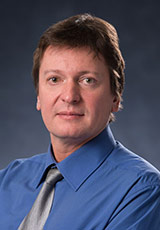
Denny Yu is an Associate Professor at the Edwardson School of Industrial Engineering, Purdue University. His work bridges human factors, neuroergonomics, and healthcare safety through advanced sensor systems and AI. Primary Affiliation : Edwardson School of Industrial Engineering, Purdue University Research Themes : Surgical ergonomics, autonomous vehicle human factors, cognitive workload assessment, multimodal physiological sensing Dr. Yu's research focuses on neuroergonomics and human-robot interaction , particularly in surgical and transportation contexts. His team develops sensor-based systems for workload monitoring, including: EEG-eye tracking fusion for situation awareness Wearable exoskeletons for surgical posture support Computer vision tools for lifting task risk analysis Smart infusion pump usability frameworks AI-driven surgical coaching systems Recent publications emphasize deep learning applications in soft tissue deformation estimation and real-time adaptive systems for robotic surgery augmentation. His work spans both occupational health (veterinary surgeons, airport workers) and medical device innovation domains.
Addie Thompson is an Assistant Professor at Michigan State University's College of Agriculture & Natural Resources , affiliated with the Department of Plant, Soil and Microbial Sciences , Plant Resilience Institute , and Plant Breeding, Genetics, and Biotechnology Program . Her expertise spans maize genetics, genomics, and phenomics, with a focus on genotype-environment interactions. B.S. from Iowa State University Ph.D. from University of Minnesota Postdoctoral work at University of Minnesota & Purdue University Research focuses on drought stress adaptation , high-throughput phenotyping , and quantitative genetics in maize and sorghum systems. Current projects include computational modeling of crop traits, field phenotyping technologies, and cross-species stress response analysis. She leads maize genetics research while participating in national initiatives like the Genomes-to-Fields Initiative , with recent publications on phenotypic plasticity, hyperspectral imaging applications, and climate-resilient breeding strategies. Her work connects molecular genetics to agricultural productivity through advanced data modeling and field experimentation. Thompson directs the Thompson Maize Lab which focuses on: Maize and sorghum genotype-environment interactions Phenomics technologies for trait analysis Development of computational breeding tools Climate resilience trait discovery Historical genetic diversity patterns Agricultural workforce development
Prof. Dr. Haris Gačanin is a faculty member at RWTH Aachen University, affiliated with the Institute for Distributed Signal Processing under the College of Electrical Engineering. His research focuses on integrating machine learning with wireless communication systems, particularly in industrial IoT, edge computing, and network optimization. Current academic rank: Professor Contact: harisg@dsp.rwth-aachen.de Research Interests: Wireless systems, machine learning, signal processing, and network optimization. Key contributions include: Adaptive resource allocation in IIoT and vehicular networks AI-driven channel estimation and feedback mechanisms Security-oriented emitter identification via metric learning Federated/transfer learning for edge environments Hardware-efficient deep learning models for mmWave and THz communications Methodological Focus: Combines reinforcement learning, attention mechanisms, and robust neural architectures with practical implementations on FPGA and vehicular systems.
Abolfazl Simorgh is a researcher at Charles III University of Madrid's Department of Aerospace Engineering, specializing in climate-optimized aviation systems. His work bridges mathematical control theory with practical climate impact mitigation, focusing on robust trajectory optimization under environmental and operational uncertainties. He leads development of open-source tools for sustainable flight planning while contributing to major European aviation initiatives. Education: B.Sc. in Control Engineering (2017) M.Sc. in Control Engineering (2020) Ph.D. in Aerospace Engineering from Charles III University of Madrid Dr. Simorgh's research centers on developing mathematical frameworks that reconcile aircraft trajectory optimization with climate impact reduction. His expertise spans robust control systems, optimization under uncertainty, and climate modeling integration, with particular emphasis on non-CO₂ emissions. His methodology addresses both CO₂ and non-CO₂ climate forcing mechanisms through computationally efficient algorithms that account for weather variability and climate metric uncertainties. This work directly supports aviation's decarbonization by providing operational strategies that reduce environmental footprint without prohibitive cost increases. Analysis of his 15 most recent publications reveals a cohesive research trajectory focused on operationalizing climate-optimal flight planning. His work consistently integrates climate science with aerospace engineering through robust optimization frameworks, demonstrating particular innovation in handling multiple uncertainty sources (weather, climate models, emissions). The publications cluster around three interconnected themes: 1) Development of open-source computational tools (ROOST, CLIMaCCF), 2) Network-scale implementation of climate-aware air traffic management, and 3) Risk analysis of climate mitigation strategies. This body of work establishes new methodological standards for quantifying and minimizing aviation's total climate impact. Scientific Awards: Luis Azcárraga Aeronautical Innovation Award for collaborative research impact Best Paper Award (2022) from a high-impact aerospace journal Dr. Simorgh secures significant research funding through European Commission projects including FlyATM4E (climate-optimized flight planning), ALARM (aviation emissions reduction), and RefMAP (sustainable aviation pathways). His grant portfolio emphasizes practical implementation of climate mitigation strategies, with strong industry-academia collaboration. He mentors junior researchers through project teams and has developed three major open-source Python libraries (CLIMaCCF, ROOST, ROC) that have become community standards for climate impact assessment in aviation research. His current work focuses on scaling climate-optimized trajectories to continental airspace while addressing operational constraints and economic viability. He leads a research group focused on climate-aware air traffic management, developing the ROOST simulation framework for GPU-accelerated trajectory optimization and the CLIMaCCF library for standardized climate metric calculations. His team collaborates with European air navigation service providers and aircraft manufacturers to transition research into operational practice, with current projects emphasizing real-time implementation and regulatory compliance frameworks.
Dr. Mathis Richter is a Postdoctoral Researcher at the Institute of Neuroinformatics (INI), part of the Faculty of Computer Science at Ruhr University Bochum, Germany. He has been affiliated with the INI since 2008, progressing from Research Assistant to Research Associate, and currently serves as a Postdoctoral Researcher since July 2018. At the INI, he contributes to both the Embodied Cognition group and the Autonomous Robotics group, led by Prof. Dr. Gregor Schöner. Dr. Richter earned his Dr.-Ing. (Ph.D. equivalent) in Engineering from Ruhr-Universität Bochum between 2011 and 2018, following an M.Sc. and B.Sc. in Applied Computer Science from the same institution. His academic journey includes an exchange year at the University of Birmingham, UK. His research centers on higher cognition, specifically concept representation, how concepts combine to form complex mental scenes, and the neural mechanisms organizing cognitive operations in time. Using Dynamic Field Theory as his primary framework, he develops mathematical models explaining how neural populations represent objects and concepts. His work demonstrates how these cognitive models connect to sensory-motor systems, often implemented on robotic platforms to validate their autonomy and functionality. Analysis of Dr. Richter's publications reveals a consistent focus on neural dynamic modeling of cognitive processes, with particular emphasis on spatial relations, language grounding, and embodied cognition. His research trajectory shows increasing sophistication in modeling complex cognitive phenomena while maintaining strong connections to robotic implementations. As an educator, Dr. Richter has taught Lab courses in Autonomous Robotics across multiple terms since Winter 2015/2016 and has delivered Lectures in Computational Neuroscience: Neural Dynamics since Winter 2018/2019. His teaching directly reflects his research expertise in neural dynamics and cognitive systems. Dr. Richter actively participates in interdisciplinary research that bridges cognitive science, neuroscience, computer science, and robotics, contributing to the INI's mission of understanding how organisms generate behavior and cognition through interaction with their environments.
Dr. Jan Salmen is a researcher at Ruhr University Bochum's Faculty of Computer Science, affiliated with the Institute of Neuroinformatics (INI). His work focuses on real-time systems, computer vision, and machine learning. Doctoral thesis: Efficient video-based driver assistance systems Salmen's research spans autonomous driving, traffic sign recognition, stereo vision, and sports analytics. He has contributed to benchmarks in traffic sign detection and soccer analysis. Publications highlight his expertise in image processing, pattern recognition, and sensor fusion for autonomous systems. Key trends include optimization of machine learning algorithms for real-time applications. He collaborates with interdisciplinary teams at INI, which integrates experimental psychology, neurophysiology, and robotics into artificial cognitive systems research.
Tony Cheng is an Associate Professor (non-tenure-track) at Waseda Institute for Advanced Study, Waseda University since April 2024. His interdisciplinary research bridges philosophy, cognitive science, and neuroscience with particular emphasis on the philosophical foundations of perception, consciousness, and bodily awareness. Cheng maintains an active research program with significant publications in top journals across multiple disciplines. Education Background: MSc in Psychology and Neuroscience of Mental Health from King's College London (2019-2021) PhD from University College London, Department of Philosophy (2015-2019) MPhil from University College London, Department of Philosophy (2012-2014) MA from City University of New York, Graduate Center, Department of Philosophy (2010-2012) Cheng's research focuses on transcendental arguments, bodily awareness, attention, consciousness, and perception. His work uniquely combines rigorous philosophical analysis with empirical cognitive neuroscience, creating a bridge between abstract philosophical concepts and measurable cognitive phenomena. He has made significant contributions to understanding perspectival shape perception, the relationship between tactile and visual cognition, and the epistemological foundations of consciousness studies. His recent publications reveal a clear trajectory toward increasingly interdisciplinary work that integrates philosophical methodology with empirical neuroscience. Cheng's research shows particular strength in examining Molyneux's question from both historical and contemporary perspectives, investigating how perspectival properties are represented across sensory modalities, and developing frameworks for understanding the relationship between artificial intelligence and human cognition. Scientific Awards: Scholarly Monograph Award in the Humanities and Social Sciences (2022.12) from Academia Sinica Cheng actively participates in academic leadership as Director of Logic, Methodology and Philosophy of Science and Technology (LMPST) since January 2025, and previously served as Supervisor (2022.02-2024.12) and Academic Committee Member for the Center for Traditional & Scientific Metaphysics. His teaching includes courses on Mind and Consciousness at both undergraduate and graduate levels in Waseda's School of Fundamental Science and Engineering and Graduate School of Fundamental Science and Engineering.
Mustafa Abdallah is an Assistant Professor at the Computer and Information Technology (CIT) department of Purdue University in Indianapolis, with a courtesy appointment at the Purdue Polytechnic Institute. He holds a PhD in Electrical and Computer Engineering from Purdue University (2022) and prior degrees from Cairo University (MS: 2016, BS: 2012). His research focuses on game theory, behavioral decision-making, explainable AI, and deep learning, applied to cybersecurity, autonomous systems, and IoT anomaly detection. His work has been recognized by the prestigious Bilsland Fellowship and grants from IEEE and IUPUI. Industrial collaborations include Adobe Research (meta-learning for time-series forecasting), Principal Financial Group (financial risk prediction using Kalman filters), and RDI Company (deep learning for pronunciation systems, resulting in a US patent). He has published extensively in top venues like IEEE S&P, IEEE TCNS, and ACM AsiaCCS.
Yang Yang is a Lecturer in the Global Languages department at Massachusetts Institute of Technology (MIT). She holds a B.A. in Teaching Chinese as a Second Language from Xi’an International Studies University and an M.A. in Teaching English to Speakers of Other Languages from Adelphi University. Currently, she is pursuing a second M.A. in Teaching Chinese as a Second Language at Middlebury College. Her pedagogical interests focus on second language acquisition, Chinese language pedagogy, and cultural communication. Prior to MIT, she developed a Chinese culture and language program at Quincy Asian Resources, Inc., and served as an online tutor for the Center for Talented Youth at Johns Hopkins University. Her professional experience includes teaching at Middlebury Language Schools and creating curriculum for diverse learner demographics. Yang’s expertise emphasizes culturally responsive teaching methodologies and bridging linguistic and cultural gaps in language education. She contributes to the MIT Global Languages initiative by fostering intercultural competency and language proficiency among students. Educational Background: B.A., Teaching Chinese as a Second Language, Xi’an International Studies University (China) M.A., Teaching English to Speakers of Other Languages, Adelphi University (New York) Pursuing M.A., Teaching Chinese as a Second Language, Middlebury College Her research interests explore effective instructional strategies for heritage learners and integrating technology into language acquisition. While no specific awards are listed, her academic trajectory reflects a commitment to advancing language pedagogy through continuous professional development.
Sezer Karaoglu is a Lecturer and part-time postdoctoral researcher at the Computer Vision Group, Informatics Institute, University of Amsterdam. He is also the CTO and Co-Founder of 3DUniversum, a technology spin-off of the University of Amsterdam that provides state-of-the-art 2D/3D computer vision solutions. Additionally, he has co-founded other startups including Scanm and 3DHealthScan. Dr. Karaoglu received his PhD from the Computer Vision Group, Informatics Institute, University of Amsterdam, with research funded by the COMMIT project. His educational background includes a double master's degree: an optics, image and vision master's degree from University Jean Monnet in France and a media technology master's degree from Gjovik University College in Norway. He completed his undergraduate studies with honors at Istanbul Technical University in Telecommunication Engineering. His research focuses on Artificial Intelligence and 3D Computer Vision, with specific interests in SLAM, re-localization, 3D reconstruction, 3D object detection and segmentation, synthetic media, generative AI, deep fake creation and detection, and VR/AR technologies. His work has significant applications in healthcare, particularly in using deepfake technology for therapy for victims of sexual violence-related PTSD and moral injury, as documented in a Frontiers in Psychiatry article. Analyzing his recent publications reveals a strong trend toward neural scene reconstruction, intrinsic image decomposition, and the application of diffusion models to computer vision problems. His research increasingly integrates 3D scene understanding with language models, as evidenced by his work on language-to-3D scene generation. The applications span from healthcare (deeptherapy.ai) to media authenticity (deepfake detection) and industrial applications. ICT.OPEN Poster Award (3rd Position), Oct'13 Pascal VOC'12 Classification challenge, 2nd Position, Sep'12 Pascal VOC'12 Detection challenge, 3rd Position, Sep'12 Best project award at Nokia and CIMET project competition Outstanding reviewer at CVPR'21 PROVADA Future Startup Battle winner Best Dutch AI startup by Valuer Dr. Karaoglu has supervised numerous PhD, Master's, and Bachelor's students, demonstrating his commitment to academic mentorship. His research has attracted significant media attention, with features on Dutch national TV programs including NPO, VPRO, RTL, and international outlets like BBC News. He has received research funding through the COMMIT project during his PhD studies and has successfully translated his research into commercial applications through his startups. His work on deepfake technology has been applied in innovative therapeutic contexts through DeepTherapy.ai, showing the real-world impact of his research. Dr. Karaoglu leads research efforts at the Computer Vision Group Amsterdam and through his company 3DUniversum, which has developed applications like weScan, DeepTherapy, and FairFake.ai. His team collaborates with various institutions including the Netherlands Film Academy for grief therapy applications using deepfake technology. The DeepTherapy project represents a particularly impactful application of his work, using deepfake technology to help victims of sexual violence confront perpetrators in therapeutic settings.
Gianfranco Bertone is a Professor at the Faculty of Science, University of Amsterdam, specializing in astrophysics and theoretical physics with a focus on dark matter, black holes, and gravitational waves. His work bridges cosmology and particle physics through multi-messenger approaches. Research Interests: Dark matter detection via gravitational wave signatures Black hole binary dynamics in dark matter environments Relativistic simulations of extreme mass ratio inspirals Multi-messenger astronomy and fundamental physics Cosmological simulations for dark matter distribution Publication Trends: Recent works emphasize gravitational wave astronomy's role in dark matter studies, including waveform distortions from dark matter spikes, boson cloud effects in black hole binaries, and simulation-based inference for astrophysical observations. His research spans theoretical modeling, computational astrophysics, and observational constraints.
Dr. Salim Bouzerdoum is a Senior Professor of Computer Engineering at the University of Wollongong (UOW), affiliated with the School of Electrical, Computer & Telecommunications Engineering. He holds a Ph.D. and M.Sc. in Electrical Engineering from the University of Washington. His roles include former Associate Dean for Research (2007–2013) and Head of School (2004–2006). He has served on the Australian Research Council panels and held visiting professorships globally. Education: Ph.D. in Electrical & Computer Engineering, University of Washington, Seattle, USA M.Sc. in Electrical Engineering, University of Washington, Seattle, USA Research Interests: His work focuses on Artificial Intelligence , Machine Learning , and Signal & Image Processing , with applications in radar imaging, computer vision, and smart sensors. Key areas include neural networks, object detection/tracking, and compressive sensing. Recent projects include assistive navigation tools for vision-impaired individuals and underwater mine detection via sonar imaging. Grants & Funding: He leads or co-leads over 30 funded projects, including: AI-based SAR Satellite Imaging System for Oceanic Waves (AGO, 2024–2025) A portable AI-guided navigation tool for vision-impaired people (KONEKSI, 2024–2026) Deep Learning for Vessel Surveillance using Satellite Imagery (NSW Space Research Network, 2022–2023) Teaching & Supervision: With 30+ years of experience, he has supervised 38 Ph.D. and 22 master’s students, mentored 12 early-career researchers, and delivered courses like Applied Data Analytics and Neural Networks . Current supervision includes projects on deep learning for obstacle detection and semantic segmentation. Awards: Eureka Prize (2011) for Defence Science ARC College of Experts Member (2009–2011) Multiple Vice-Chancellor Research Awards (1998–1999)
Hussein Gharakhani is an Assistant Professor in the Department of Agricultural and Biological Engineering at Mississippi State University. He specializes in agricultural robotics and automation, focusing on robotic cotton harvesting systems, sensor integration, and precision agriculture applications. His research addresses challenges in end-effector design, object detection, and field testing of robotic prototypes. Dr. Gharakhani holds a Ph.D. in Biosystems Engineering from Mississippi State University, an M.S. in Mechanical Engineering of Agricultural Machinery from the University of Tehran, and a B.S. in Agricultural Machinery Engineering from the University of Tabriz. His academic background includes roles as a graduate research and teaching assistant, as well as industry experience as a research and application engineer. His research interests span robotic manipulators, artificial intelligence, 2D/3D perception, and off-road robotics. Key projects include developing vision-guided robotic harvesters, evaluating end-effectors, and exploring UAV applications in cotton farming. His work emphasizes practical solutions to enhance agricultural efficiency and sustainability through automation. No scientific awards or grants are explicitly listed in the provided text. Dr. Gharakhani’s advising and mentorship activities are not detailed here, though his academic role suggests involvement in graduate student guidance. His research is centered on advancing robotic systems for precision agriculture, with a particular focus on cotton production challenges and robotic harvesting innovations.
Yevgen Biletskiy is a Professor in the Department of Electrical and Computer Engineering at the University of New Brunswick (UNB), Fredericton. His academic roles include serving as Co-Director of the RuleML Initiative and Program Co-Chair of RuleML-2007. He holds a Ph.D. and is a licensed Professional Engineer (P.Eng.) in New Brunswick. His teaching spans graduate and undergraduate courses in software engineering, digital systems, and power electronics, including EE 6263 (Knowledge Representation for Software Engineering) and EE 6213 (Advanced Digital Systems). Research Interests: His work focuses on Knowledge-Based Systems , Artificial Intelligence , Semantic Web , Information Extraction , FPGA-based Design , and Renewable Energy . He has supervised over 40 graduate and undergraduate students, including 3 active PhD candidates, 1 completed PhD, 9 Masters, and 30+ research-based Bachelors. Publications: Over 100 peer-reviewed articles, including recent contributions on smart grid optimization, fault diagnosis in power electronics, and ontology-driven systems. Notable works include frameworks for semantic interoperability, rule-based learning systems, and FPGA applications. Professional Activities: Served as a reviewer for NSERC grants, IEEE journals (e.g., TKDE, TE), and conferences (CDC, WTAS). He has chaired tracks at international conferences and contributed to industry partnerships through consulting roles with firms like Netsphare Solutions and Vox Interactif. Labs/Teams: Active in UNB’s research initiatives involving power systems, semantic web technologies, and e-learning systems. His lab collaborates on projects like SEMESIS (semantic search systems) and advanced manufacturing post-processing techniques.
Harald Kucharek is a Research Professor in the Physics & Astronomy Department at the University of New Hampshire (UNH), part of the College of Engineering and Physical Sciences. He is affiliated with the Space Science Center and holds a dual Ph.D. in Physics from the Technical University of Munich and an M.S. in Physics from the University of Regensburg. His research focuses on heliospheric physics, interstellar medium interactions, and space plasma dynamics, leveraging data from missions like IBEX and Solar Orbiter. Dr. Kucharek's work centers on understanding the global structure of the heliosphere, interstellar neutral gas flow, and particle acceleration at shocks. He has contributed to studies of pickup ions, energetic neutral atoms (ENAs), and magnetic reconnection processes. His teaching includes courses on Space Plasma Physics and Magnetohydrodynamics of the Heliosphere. He has been involved in over 22 grants (2005–2024), including mission-related research for IMAP and interstellar probe concepts. Key research trends include analyzing IBEX observations of interstellar helium and oxygen, investigating shock dynamics and ion acceleration, and modeling the heliospheric boundary. His recent work explores the implications of hybrid simulations and multi-spacecraft data for understanding plasma behavior in extreme environments. Collaborations with institutions like NASA and ESA highlight his role in advancing space physics through both observational and theoretical contributions.