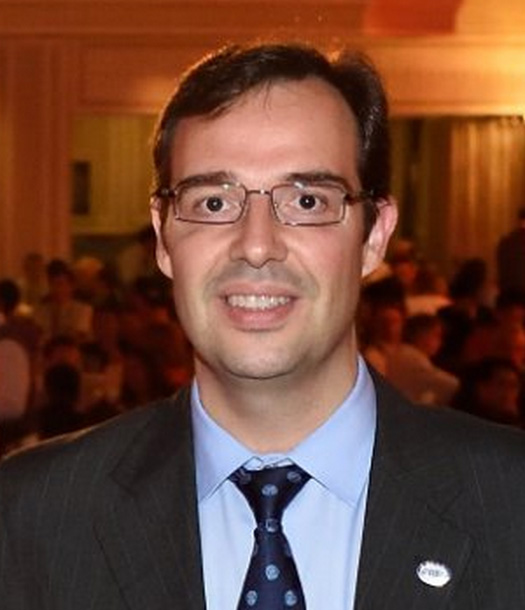
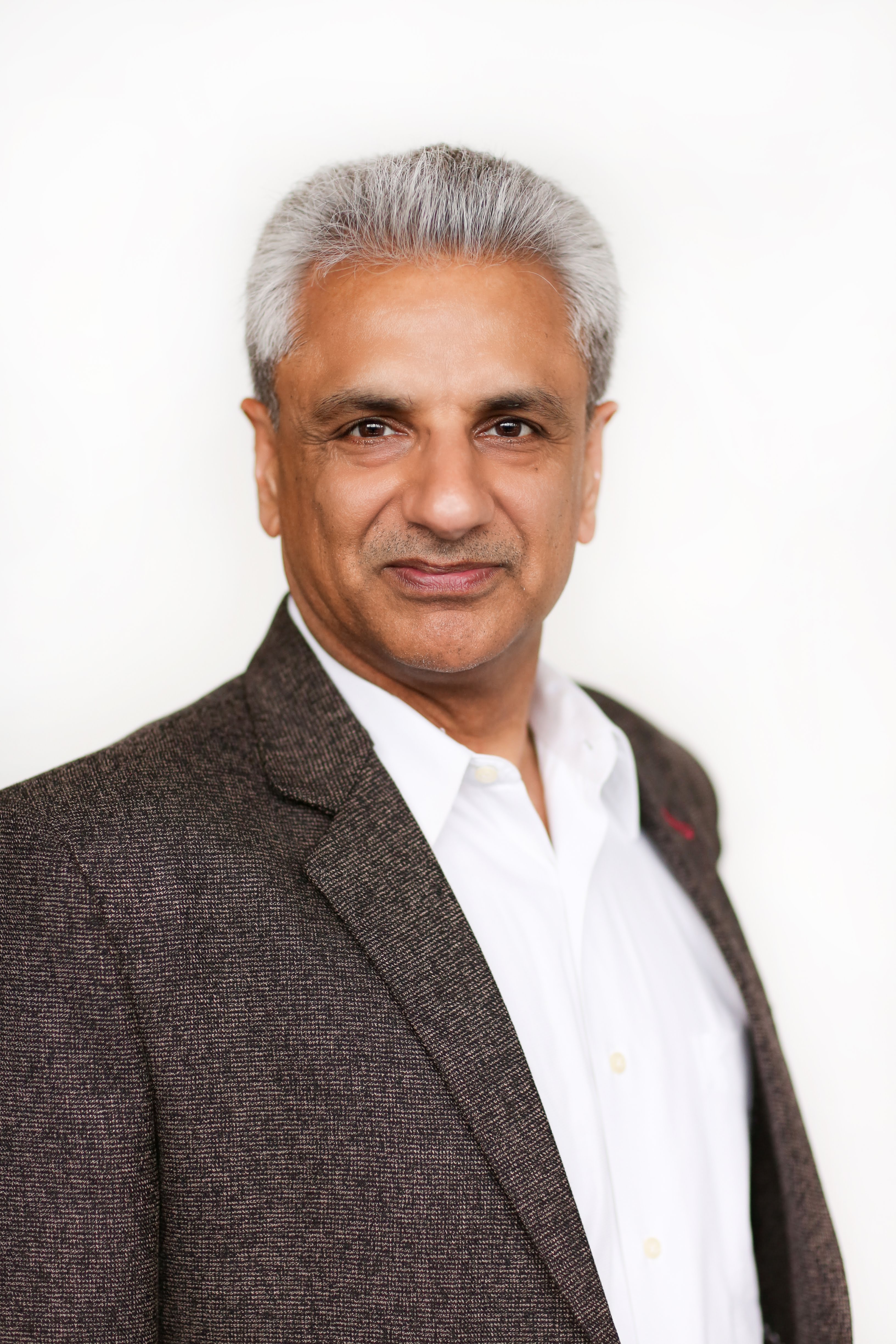
Antonio Plaza is a Full Professor at the University of Extremadura, Spain, and Head of the Hyperspectral Computing Laboratory. With over 600 publications, he is a leading expert in hyperspectral data processing and parallel computing of remote sensing data. He serves as IEEE Fellow and has received numerous accolades, including the 2019 Excellent Teaching Award and multiple Highly Cited Researcher recognitions. Research Interests : His work bridges Hyperspectral Image Analysis , Medical Imaging , and High-Performance Computing . Recent projects focus on 3D anatomical modeling, AI-driven surgical tools, and deep learning applications for aortic dissection segmentation. Scientific Awards : 2019 Highly Cited Researcher (Geosciences) 2015 IEEE Fellow 2019 Excellent Teaching Award 2018 Highly Cited Researcher (Cross-Field) 2002 Best PhD Dissertation, University of Extremadura Editorial Leadership : Served as Editor-in-Chief of IEEE Transactions on Geoscience and Remote Sensing (2013–2017) and held multiple committee roles in IEEE GRSS. His articles reflect a shift from remote sensing to medical imaging, with a focus on Aortic Dissection Segmentation , Skull Reconstruction , and AI-driven Medical Tools .
Włodzimierz Kasprzak is a Professor at the Institute of Control and Computation Engineering, Faculty of Electronics and Information Technology, Warsaw University of Technology. His research focuses on computer vision, robotics, human-computer interaction, and machine learning. He has contributed to advancements in human action classification, skeleton-based feature analysis, and multimodal interface design. Research Highlights: Development of lightweight classification models for human actions in video using skeleton-based features. Advances in multi-stream fusion techniques for image and video analysis. Design of embodied agent systems for cybersecurity event visualization and control. Awards and Recognition: 2024: Individual First Class Rector's Award for Scientific Achievements (2022-2023) 2021: Medal of the Commission of National Education 2011: Golden Cross of Merit His work integrates theoretical contributions with practical applications in robotics, surveillance systems, and human-centered technologies.
Dr Andrew Starkey is a Reader in the School of Engineering at the University of Aberdeen, where he also completed his PhD in 2001. He holds an Honours degree in Applied Mathematics from the University of St Andrews. He is actively involved in research and currently accepting PhD students in Engineering. His work bridges academia and industry, with a focus on AI applications in engineering, bioinformatics, and geosciences. University: University of Aberdeen School: School of Engineering Academic Rank: Reader Email: a.starkey@abdn.ac.uk Phone: +44 (0)1224 272801 Dr Starkey's research centers on Explainable AI (XAI) , Green AI , and Autonomous AI , with applications in robotics, econometrics, bioinformatics, seismic data analysis, and virtual reality. He has developed novel methods for feature selection, autonomous learning, and knowledge abstraction from agent-environment interactions. His work emphasizes low computational cost and transparency in AI systems. The most recent publications reflect a strong trend in applying AI to complex real-world problems, including digital rock technology, robotic grasping, real-time event detection, and medical data analysis. His interdisciplinary research combines machine learning with domain-specific knowledge in engineering and life sciences, often resulting in practical, industry-ready solutions. Millennium Product Award John Logie Baird Award for Innovation Enterprise Fellowship from Royal Society of Edinburgh and Scottish Enterprise Dr Starkey has supervised multiple research projects and secured funding from major bodies including EPSRC, BBSRC, and industry partners. His past work on the GRANIT project led to the development of AI-based condition monitoring for ground anchorages, resulting in commercialization through BlueFlow Ltd. He has collaborated with researchers across disciplines, including Dr Alasdair MacKenzie (bioinformatics), Dr Anne Schwab (seismic analysis), and Dr David Hazlerigg (genomics). He leads research in AI-driven engineering solutions and is the CEO of BlueFlow Ltd, a spinout company commercializing AI technologies developed at the University of Aberdeen. His lab focuses on developing autonomous, explainable, and environmentally sustainable AI systems for real-world deployment.
Paul Wedrich is a Professor (permanent W2) at the Department of Mathematics, University of Hamburg. He is a member of the management committee for the Collaborative Research Center Higher Structures, moduli spaces and integrability , a PI in the Cluster of Excellence Quantum Universe , and spokesperson for the Mathematisches Seminar der Universität Hamburg . He coordinates the Erasmus+ programme and serves as an equal opportunity representative at his department. His research bridges low-dimensional topology, representation theory, and mathematical physics, with a focus on topological quantum field theories (TQFTs), categorified quantum invariants, and higher structures in link homology. He has developed diagrammatic frameworks for categorification, including Soergel bimodules and gl(N) link homology theories, and explores connections to Hilbert schemes, skein modules, and quantum topology. The 15 most recent articles highlight his work on categorified braid group actions, Kirby colors in Khovanov homology, skein lasagna modules for 4-manifolds, and deformations of colored link homologies. These contributions span quantum algebra, category theory, and geometric representation theory, with applications to topological field theories and mathematical physics. Scientific awards include Fellow of the Higher Education Academy and recognition as Lecturer of the Semester (Summer 2022) at the University of Hamburg. He supervises doctoral researchers and co-organizes international workshops and conferences, such as the Quantum Topology and Categorification (QTcat) seminar. His teaching portfolio includes advanced courses on representation theory, algebra, and quantum topology.
Moncef Gabbouj is a Professor of Signal Processing at the Department of Computing Sciences, Tampere University, Finland. He holds a PhD from Purdue University and has held academic positions including Academy of Finland Professor (2011–2015) and Head of the Department of Signal Processing (2002–2007). His research focuses on artificial intelligence, machine learning, multimedia signal processing, and nonlinear signal/image processing. He has authored over 800 papers and supervised 64 doctoral and 72 master’s theses, earning accolades such as IEEE Fellow, Finnish Cultural Foundation Award, and TUT Foundation Grand Award. Education: BS (Electrical Engineering, Oklahoma State University, 1985), MS and PhD (Electrical Engineering, Purdue University, 1986–1989). Visiting roles include Hong Kong University of Science and Technology and University of Southern California. Research interests include Big Data analytics, multimedia content analysis, pattern recognition, and video coding. He leads the Artificial Intelligence Research Task Force of the Research Alliance on Autonomous Systems (RAAS) and directs the NSF IUCRC Center for Visual and Decision Informatics (CVDI). Awards highlight contributions to signal processing and AI, including IEEE Fourier Award Committee membership and leadership roles in EURASIP and IEEE. Grants and projects span EU Horizon programs, NSF, and industry collaborations.
Pankaj Mehra is an Adjunct Professor in the Department of Computer Science and Engineering at the Jack Baskin School of Engineering, University of California, Santa Cruz (UCSC). He is affiliated with the Storage Systems Research Center (SSRC), now succeeded by the Center for Research in Storage Systems (CRSS). Alongside his academic role, he is the Founder and CEO of Elephance Memory, Inc., and serves as Workstream Lead for Computational x Programming (x = Memory or Storage) at the OpenCompute Project. Ph.D. in Computer Science, University of Illinois at Urbana-Champaign Former Faculty, IIT Delhi Adjunct Faculty, University of California, Wright State University Computer Scientist, NASA Ames Research Center Founder, HP Labs Russia Executive Roles: SVP & WW CTO at Fusion-io; VP at Samsung, SanDisk, Western Digital Pankaj Mehra's research centers on next-generation memory and storage systems. His work explores disaggregated memory architectures, computational storage, non-volatile memory (NVM), and data-centric operating systems. He investigates how to optimize data placement, improve system performance through intelligent caching, and restructure computing models around emerging memory technologies like CXL and persistent memory. His recent publications focus on far memory, tiered memory systems, and offloading computation to storage devices. His recent publications demonstrate a strong focus on memory disaggregation, computational storage, and non-volatile memory systems. Themes include rethinking data and pointer management in distributed memory environments, resource allocation in tiered systems, and designing operating systems that treat data as a first-class citizen. His work bridges academic research and industrial innovation, often involving collaboration with leading researchers at UCSC. Samsung R&D Award (2019) CES R&D Innovation Award (2021) Terabyte Sort Trophy by Jim Gray (1998) TPC-C Cluster Performance Records (1997) Pankaj Mehra has advised and collaborated with numerous researchers and engineers across academia and industry. His work has been supported by affiliations with HP Labs, Fusion-io, Samsung, and now Elephance Memory, Inc. He has led major research and development initiatives, including SmartSSD at Samsung and foundational work on persistent memory at HP. He has also contributed to standards efforts through the InfiniBand Trade Association. He has been a key contributor to the UCSC Storage Systems Research Center (SSRC/CRSS), collaborating with faculty and researchers including Ethan L. Miller, Heiner Litz, and Daniel Bittman. His industry leadership at Elephance Memory, Inc. and involvement in the OpenCompute Project further extend his influence in shaping future data infrastructure technologies.
Professor Tenley Conway is a faculty member at the University of Toronto Mississauga within the Department of Geography, Geomatics and Environment. Her research focuses on urban forest governance, human-environment interactions, and geospatial analysis of urban ecosystems, with specific interests in environmental justice, green infrastructure, and socio-ecological systems. PhD in Geography from Rutgers University MSc in Geography from Rutgers University BSc in Natural Resources from Cornell University Conway's work integrates environmental geography, urban ecology, and landscape ecology to examine urban forest governance structures, resident engagement with green infrastructure, and the ecological impacts of policy decisions. She employs diverse methodologies including GIS, remote sensing, statistical analyses, and community surveys to address questions about urban tree distribution equity, invasive species management, and the effects of urban greening initiatives. Recent publications demonstrate her focus on quantifying urban forest diversity using national datasets, developing cost-effective canopy monitoring techniques through Landsat imagery, and analyzing the ethical frameworks of arboricultural practices. She has contributed to understanding how invasive pests reshape distributional justice in urban forests and the relationship between tree proximity and subjective wellbeing across Canadian and Australian cities. As associate editor of Urban Forestry and Urban Greening and board member of LEAF and EcoSpark, she actively participates in urban forestry governance discussions. Her HOUSE Laboratory examines human-environment interactions across urban-suburban-exurban gradients, emphasizing community engagement in sustainable urban forest management.
Arthur Bartels is a Professor at the Mathematical Institute, Department of Mathematics and Computer Science, University of Münster. He is a principal investigator in the CRC 1442 'Geometry: Deformations and Rigidity' and a key member of the Excellence Cluster 'Mathematics Münster', focusing on fundamental problems in topology and geometry. Research Interests: His work centers on topology , particularly algebraic K-theory , L-theory , and the Farrell-Jones conjecture . He investigates geometric rigidity , coarse geometry , and conformal field theory through operator algebras and higher categories. His research connects deep questions in group theory, manifold topology, and mathematical physics. Publication Trends: His recent work (2017–2022) shows a strong focus on conformal nets and higher categorical structures in quantum field theory, while continuing foundational work on isomorphism conjectures for K- and L-theory in geometric group theory. The articles reflect a dual expertise in abstract homotopy theory and concrete geometric analysis. Scientific Awards: No specific awards mentioned in the provided text. Advising and Grants: While no students are listed, he leads major research projects funded by the DFG, including CRC 1442 - C03 'K-theory of group algebras' and EXC 2044 - B2 'Topology'. These projects involve developing tools in index theory, surgery theory, and coarse geometry to study manifolds and group rings. Labs and Teams: He leads the 'AG Topologie' (Topology Research Group) at Münster and co-organizes the 'Advanced Seminar Topology' with colleagues. He is part of a large collaborative environment within Mathematics Münster, working closely with experts in analysis, geometry, and mathematical physics.
Zhiyi Huang is an Associate Professor of Computer Science at the University of Hong Kong, leading the Computer Science Division within the School of Computing and Data Science. He holds a PhD from the University of Pennsylvania (2013) and completed a postdoctoral fellowship at Stanford University (2013–2014). His research focuses on Theoretical Computer Science, Algorithmic Game Theory, Online Algorithms, and Differential Privacy, with notable contributions to Machine Learning and Computer Networks. Education: PhD in Computer and Information Science, University of Pennsylvania (2013) Postdoctoral Researcher, Stanford University (2013–2014) Bachelor's Degree from the Yao Class at Tsinghua University (2008) Research interests span foundational areas including algorithmic game theory, online optimization, and privacy-preserving mechanisms. He has pioneered work on revenue maximization in single-parameter settings and developed novel frameworks for analyzing price of anarchy in game theory. Key Awards: Early Career Award (Research Grant Council of Hong Kong, 2014) Best Paper Award at ACM Symposium on Parallelism in Algorithms and Architectures (SPAA 2015) Morris and Dorothy Rubinoff Dissertation Award (2013) Simons Graduate Fellowship in Theoretical Computer Science (2012–2013) Recent grants include studies on algorithmic foundations of Bayesian mechanism design (HK$675,647), online primal dual techniques (HK$496,028), and privacy-preserving mechanisms (HK$931,737). His work bridges theoretical advancements with practical applications in healthcare, autonomous systems, and cybersecurity. Notable Projects: Medical predictive systems for acute cardiopulmonary events AI-driven maritime navigation using AIS data Secure federated learning frameworks with blockchain
Berta María Guijarro Berdiñas is a Researcher in the Department of Computer Science and Artificial Intelligence at the University of A Coruña , Spain. She is affiliated with the Laboratory for Research and Development in Artificial Intelligence and teaches courses like Machine Learning , Development of Intelligent Systems , and Programming at both undergraduate and postgraduate levels. Research Focus: Her work lies at the intersection of Artificial Intelligence , Machine Learning , and Knowledge-Based Systems . Key contributions include frugal learning (limited data), anomaly explanation , and distributed learning for edge devices. She applies these to areas like health informatics , forest fire management , and human-robot interaction . Recent Publications span explainable AI , anomaly detection , multi-agent systems , and low-power machine learning . Her articles appear in top venues like Expert Systems with Applications and IEEE Transactions on Neural Networks and Learning Systems . Grants & Projects include EU-funded initiatives, Spanish Ministry of Science grants, and regional collaborations. She focuses on AI for healthcare , smart systems , and distributed learning .
Dr. Oliver Smith is a Senior Lecturer in Visual Art at the Sydney College of the Arts, The University of Sydney, where he has been actively contributing since 2005. He earned his Bachelor of Visual Arts (1995), First Class Honours (2000), Master of Philosophy (2003), and PhD (2021) from institutions including The University of Sydney and The Australian National University. As a leading silversmith and metalsmith, Smith's work explores intersections between tradition and contemporary design, with exhibitions across Australia, Germany, and Japan. BVA, Sydney College of the Arts (1995) BVA(Hons) First Class, Australian National University (2000) MPhil, Australian National University (2003) PhD, The University of Sydney (2021) Smith’s research spans silversmithing, contemporary craft, and material culture, often incorporating zoomorphic symbolism and mythological themes. His current project Periapts: Bone, Tooth, Claw investigates archetypal forms in wearable art. He has served as Associate Head - Research Education (Exams) and maintains active collaborations with institutions like the Australian Design Centre and Craft ACT. His 2024-2022 publications focus on sculptural metalworks in exhibitions, with recurring themes of zoomorphic design and material symbolism. Earlier works (2002-2007) established his foundation in traditional techniques and functional art forms. Smith’s accolades include: 2022 German Goldsmithing Hall acquisition 2010 Churchill Fellowship Australia Council grants (2005, 2010) National Gallery of Australia acquisition (2012) He has supervised research students including Boyi CHEN (urban transformation in China), Michael LINDEMAN (post-fire plant resilience), and Xinze YU (unknown). Smith also collaborates with the Charles Perkins Centre and contributes to industry exhibitions globally.
Dr. Samantha Winter is a Reader in Rehabilitation Biomechanics at Loughborough University's College of Engineering, Design and Physical Sciences, affiliated with the National Centre for Sport and Exercise Medicine (NCSEM). Her work bridges clinical rehabilitation, sports performance, and evolutionary biomechanics, with a focus on dysfunctional breathing and neuromuscular fatigue. Education: First Class BSc in Sport and Exercise Sciences (University of Birmingham), MSc Kinesiology, Master's in Applied Statistics, PhD Kinesiology (Penn State University), Post-graduate Certificate in Teaching in Higher Education, BSc Mathematics (Open University) Her research explores the application of opto-electronic plethysmography (OEP) for diagnosing breathing disorders, complexity analysis in neuromuscular fatigue, and evolutionary ergonomics of hominin hand evolution. She leads externally funded projects on real-time OEP feedback systems and fatigue mechanisms. Recent publications highlight trends in Breathing Analysis , Neuromuscular Fatigue , and Evolutionary Ergonomics , utilizing advanced methodologies like time-series modeling, EMG, and motion capture. Key collaborations include studies on chronic ankle instability and prehistoric tool use efficiency. Scientific Recognition: Senior Fellow of the Higher Education Academy (SFHEA), 2019 She has influenced curriculum design and student support systems nationwide, with grants focused on breathing retraining and sports injury prevention. Her work intersects the Lifestyle for Health and Wellbeing and Sport Performance research groups.
Dr. Nathanael L. Baisa is a Lecturer in Artificial Intelligence at De Montfort University (DMU), part of the Computing, Engineering and Media faculty within the School of Computer Science and Informatics. His academic career includes roles as a senior research associate at Lancaster University, researcher at AnyVision, and research fellow at the University of Lincoln, focusing on computer vision and machine learning projects funded by ERC, EPSRC, and Innovate UK. Education: PhD in Electrical Engineering (Computer Vision/ML - Heriot-Watt University, 2018) MSc in Computer Vision and Robotics (Erasmus Mundus program, 2013) Research focuses on computer vision applications including object detection, scene understanding, autonomous systems, and biometrics. He leads work on deep learning for visual tracking, hand-based person identification, and robotic perception. He teaches courses like Introduction to Computer Vision and Deep Learning frameworks. His recent publications emphasize vision-language models, multi-object tracking algorithms, and geoscience machine learning applications. He collaborates with the Institute of Artificial Intelligence (IAI) and contributes to interdisciplinary projects in robotics and energy exploration.
Lim Jit Yan is a Lecturer at the School of Information Technology, Monash University Malaysia. He holds a PhD in Information Technology (2023) from Multimedia University, specializing in self-supervised metric-based meta-learning for few-shot image classification, and a B.IT (Hons) in Artificial Intelligence (2019) from the same institution. His research focuses on few-shot learning, computer vision, and deep learning, with contributions to medical image analysis (e.g., Covid-19 detection), transfer learning applications, and generative models. He has published extensively since 2021, with notable work on self-supervised feature fusion and prototypical networks for few-shot learning. Research interests include few-shot learning techniques, neural architecture design for image classification, and real-world applications like healthcare diagnostics and autonomous systems. Recent work emphasizes self-supervised learning and transformer-based models to address data scarcity challenges in AI. No formal scientific awards are listed. Advising details are not provided in the text, though his publications suggest collaborative research with colleagues like Lim K.M. and Lee C.P. His research spans theoretical advancements and applied projects, including work on pill image recognition, traffic sign detection, and brain tumor classification.
Laura Nelson is an Associate Professor in the Department of Sociology at the University of British Columbia and Director of the Centre for Computational Social Science. She specializes in computational sociology, social movements, gender studies, and intersectionality, employing text analysis, machine learning, and network methods to study organizational inequality, STEM equity, and historical activism. Education: PhD (2014) - University of California, Berkeley MA (2009) - University of California, Berkeley BA (2006) - University of Wisconsin-Madison (Phi Beta Kappa) Her research spans feminist movements, environmental activism, and computational methods, with a focus on combining quantitative analysis with qualitative interpretation. Current projects include studying gender-equity idea diffusion in higher education networks (funded by an NSF grant), analyzing social movement media coverage, and developing frameworks for computational grounded theory. Key publication trends reveal interdisciplinary work across gender studies , computational social science , historical sociology , and organizational equity . Articles frequently utilize machine learning , text mining , and network analysis to examine intersectionality , activism cycles , and institutional change . Scientific Awards: Best Meta-Reviewer, 12th International Conference on Social Informatics (2020) Outstanding Faculty of the Year at Northeastern University (2020) As a methodological innovator, she has advised graduate students like Jinyang Yu and developed courses on Python/R for social scientists, computational text analysis, and sociological theory. Her work appears in journals such as American Sociological Review , Signs , and Social Science Quarterly , with replication repositories available on GitHub and Zenodo.