Dr John Pill is a Lecturer in Language Testing at Lancaster University’s School of Social Sciences, holding the Trinity College London Lectureship in Language Testing . His research focuses on testing language for specific purposes, speaking assessment, language assessment literacy, and test impact across academic and healthcare domains. He actively collaborates with Trinity College London on research and development projects. Current Teaching (2025-26): MA in Language Testing by distance (LING504, LING506) PhD Supervision: All aspects of language testing, particularly test constructs and stakeholder perspectives Research Groups: Language Testing Research Group (LTRG) Research Interests span technical and social dimensions of language testing. Technically, he examines test development for domain-specific language use (e.g., medical contexts) and construct validity. Socially, he investigates test impact through stakeholder views, including professional registration bodies and multilingual faculty at the American University of Beirut. His work bridges discourse community analysis with practical testing frameworks. Recent publications (2025) address societal implications of language testing, comparative judgment methodologies in EFL writing assessment, and fairness in testing legacy. Earlier work (2016-2024) includes healthcare communication standards, academic-to-workplace writing transitions, and Trinity College London Graded Examinations alignment with China’s English standards.
Matthew Thomson is a Charles D. Schewe Faculty Fellow, Professor, and PhD Coordinator in the Department of Marketing at the Isenberg School of Management, University of Massachusetts. His research focuses on consumer-brand relationships, branding strategies, and the psychological underpinnings of consumer behavior. He holds a PhD from the University of Southern California, an MBA from Indiana University, and a BA from McGill University. Key research areas include the impact of brand nicknames on equity, the role of group experiences in consumer well-being, and the effects of corporate social responsibility on brand trust. His work has appeared in top journals like the Journal of Marketing and Journal of Consumer Research , and he has received the 2021 AMA CBSIG Consumer Research in Practice Award. Thomson explores interdisciplinary intersections between marketing and psychology, examining how childhood environments shape anthropomorphic tendencies and how psychological distance influences consumer engagement. His recent articles emphasize methodological rigor in consumer-brand relationship studies and innovative solutions to modern challenges like data breaches and brand loyalty dynamics. Education: PhD (2004, USC), MBA (Indiana University), BA (McGill) Key Awards: 2021 AMA CBSIG Award for How Well Do Consumer-Brand Relationships Drive Customer Brand Loyalty?
Jairo Moreno is an Associate Professor of Music at the University of Pennsylvania's College of Arts & Sciences, Department of Music. His research focuses on the production of musical knowledge in modernity, Latin American and Afro-Caribbean music, and the intersections of sound with political and cultural practices. He has authored major works like Musical Representations, Subjects, and Objects and Syncopated Modernities , exploring themes such as listening practices, colonialism, and cultural hybridity. His awards include the Society for American Music’s Irving Lowens Article Award (2005) and ACLS/National Humanities Center Fellowships. A former professional bassist, he has collaborated with musicians like Ray Barretto and contributed to Grammy-nominated recordings. His current research involves fieldwork with Brazil’s Pankararu community and Colombia’s Pacific region midwives, examining aural practices and metaphysics. Key research themes include the political dimensions of music, the ethics of listening, and the role of sound in shaping cultural identity. His publications span music theory, ethnomusicology, and interdisciplinary studies, with recent work addressing Latin Americanisms and global jazz histories. Scientific Awards: Society for American Music 2005 Irving Lowens Article Award ACLS Fellowship (2009–2010) National Humanities Center Fellowship (2012–2013) Advising & Grants: While no specific advisees are listed, his work involves collaborative fieldwork and interdisciplinary projects funded by fellowships. His musical career includes performances with the Ciompi String Quartet and guitarist David Starobin, reflecting his dual academic and artistic engagement. Labs/Teams: Fieldwork collaborations with Indigenous and Afro-Colombian communities emphasize participatory research, combining ethnography with historical analysis to document marginalized aural traditions.
Dr. Uwe Grünefeld is a Visiting Professor at the Faculty of Computer Science , Institute for Computer Science and Business Information Systems (ICB) of the University of Duisburg-Essen. He has been actively contributing to Human-Computer Interaction research through multiple publications in 2025-2022 focusing on Virtual Reality , Augmented Reality , and Robotics . Research Interests span across immersive technology applications for health behavior change (situated artifacts, weight visualization mirrors), haptic feedback systems (EMS for weight perception, vibrotactile directional cues), and behavioral biometrics (hand tracking identification, gaze-based user recognition). His work addresses cross-reality system design , collaborative robotics , and human-in-the-loop simulation methodologies . Key Publications demonstrate significant contributions to VR/AR user engagement, with particular focus on Physical activity promotion through situated artifacts Advanced haptic feedback techniques for immersive environments Behavioral biometric identification systems Robot motion intent communication Cross-reality transition visualization His research often employs mixed-method approaches combining technical implementations with user studies involving quantitative and qualitative data collection.
Marta Benenti is a Research Fellow in the Department of Philosophy at the Faculty of Philosophy, University of Murcia, affiliated with the Phronesis: Analytic Philosophy Group. Holding a prestigious Marie Curie Fellowship, she bridges philosophical inquiry with cognitive science to investigate expressive properties across art, nature, and everyday experience. Her research centers on Aesthetics and Philosophy of Mind, examining how emotions manifest in music, landscapes, and visual art through theories like contour analysis. Key interests include perceptual learning in aesthetic appreciation, paradoxes of cultural tourism authenticity, and climate change narratives through philosophical fiction. She extends these inquiries to thought experiments in outer space exploration and secondary meaning in musical metaphors, consistently integrating empirical psychology with analytic philosophy. Benenti's recent publications (2020-2024) reveal a cohesive trajectory in expressiveness, demonstrating how affective affordances regulate emotional states and how fictional frameworks illuminate real-world environmental crises. Her work on tourism paradoxes reveals tensions between commodified authenticity and genuine engagement, while her analysis of music-landscape emotion recognition advances cross-modal perceptual theories. Scientific recognition includes: Marie Curie Fellowship As a core member of the Phronesis research group, Benenti contributes to collaborative projects that synthesize analytic rigor with interdisciplinary approaches, particularly through editorial work on contemporary expressiveness debates and Foucault-inspired power analyses in aesthetic contexts.
Jorge Manuel Rodríguez Almenar is a faculty member at the University of Valencia, affiliated with the Faculty of Law, where he serves in the Department of Civil Law. He holds the academic rank of Titular de Escuela Universitaria, equivalent to Associate Professor, and is actively engaged in teaching and research. His research centers on the intersection of law, sacred art, and religious history, with a particular focus on Christian relics such as the Shroud of Turin, the Sudarium of Oviedo, and the Holy Chalice of Valencia. His work employs interdisciplinary methodologies combining art history, forensic analysis, and theological inquiry. Sacred Art Eucharistic Theology Sacred Architecture Historical Art Analysis Religious Relics Interdisciplinary Studies of Faith and Science His publications reveal a consistent scholarly engagement with the historical, artistic, and scientific dimensions of Christian relics. He explores how faith and reason intersect in the study of sacred objects, often analyzing their cultural, theological, and forensic significance. His work bridges legal scholarship with religious and artistic studies, contributing to a deeper understanding of religious heritage within civil and canonical frameworks. Notable scientific contributions include comparative studies of the Sudarium of Oviedo and the Shroud of Turin, analyses of the Holy Chalice of Valencia, and comprehensive historical-artistic investigations into the Shroud. While no formal awards are listed, his publications demonstrate scholarly recognition in niche interdisciplinary domains. He has not listed any students or formal advising roles, nor has he mentioned grants or research teams. However, his academic profile suggests independent and collaborative research in religious and legal studies. His work continues to contribute to academic and ecclesiastical discussions on the authenticity and significance of Christian relics.
Johan Sidén is a Lecturer and Associate Professor at Mid Sweden University , employed in the Department of Computer and Electrical Engineering (DET) . His work focuses on RFID technology , antenna design , and printed/flexible electronics , with a particular emphasis on industrial IoT and welfare technology applications. Research Keywords : Radio Frequency Identification, Antenna Design, Flexible Electronics, Wireless Sensor Networks, Microwave Engineering, Electronic Design Key Projects : DRIVEN (data-driven industrial transformation), SmartArea (functional surfaces), Pressure (ulcer monitoring), MakeSense! (welfare technology) Publications : 15+ recent works on wearable antennas, smart packaging, UWB antenna design, and RFID sensor integration Collaborations include partnerships with industrial and academic institutions, focusing on sustainable electronics, sensor systems, and smart infrastructure. His technical expertise spans antenna optimization , printed circuits , and edge computing for harsh environments.
W. Eric Wong is a Professor of Computer Science at The University of Texas at Dallas (UTD), affiliated with the Erik Jonsson School of Engineering and Computer Science. He holds a Ph.D. in Computer Science from Purdue University (1993), following earlier degrees from Purdue and Eastern Michigan University. His research focuses on reducing software production costs while enhancing reliability, safety, and quality through program-based and architecture/design-based testing methodologies. Key areas include automated test generation, fault localization, debugging, and software safety analysis. Professional Background: Tenured Professor at UTD since 2002 Prior roles include Senior Scientist at Telcordia Technologies (1995–2002) and Consultant at Texas Instruments (2004–2005) Active in industry partnerships, such as projects with Motorola, Avaya Labs, and Raytheon Research Interests: Software Testing & Debugging Dependable Software Development Security Requirements Engineering Fault Localization Techniques Model-Based Testing Software Reliability Modeling Awards & Recognition: 2007 IEEE COMPSAC Best Paper Award 1997 NASA Quality Assurance Special Achievement Award Recipient of a $404,772 NSF grant for software safety and reliability research (2021) Professional Activities: Editorial roles for journals like Journal of Systems and Software and International Journal of Software Engineering Program Chair for ISSRE 2012, COMPSAC 2010, and multiple ACM SAC conferences Member of IEEE Reliability Society Administrative Committee (2008–2013) IBM System z Curriculum Advisory Panel member Labs & Teams: Leads the Software Engineering Group at UTD, collaborating on projects like eXVanatge (dependable software solutions) and Fault-Prone Module Identification in telecommunications systems. Engages in cross-disciplinary efforts with industry and international institutions.
Dr. Mohamed Ibnkahla is a Full Professor and NSERC/Cisco Senior Industrial Research Chair in Sensor Networks for the Internet of Things (IoT) at Carleton University's Department of Systems and Computer Engineering. He holds a Ph.D. and HDR from the National Polytechnic Institute of Toulouse (INP), France. His research focuses on IoT, wireless sensor networks, cognitive radio systems, and adaptive signal processing, with applications in smart cities, healthcare, energy, and transportation. He has led numerous industry and government-funded projects, including the Carleton-Cisco IoT Testbed. Education: Ph.D. and HDR (INP Toulouse, 1996/1998), Engineering and MSc in Electronics/Signal Processing (INP Toulouse, 1992). He previously served at Queen’s University (2000–2015) and INP Toulouse (1996–1999). Research Interests: IoT security, energy harvesting, cognitive radio networks, smart grid communication, and machine learning for wireless systems. His work spans theoretical contributions (e.g., 5 books on signal processing and IoT) and applied innovations (e.g., sensor network architectures for environmental monitoring). He has published over 150 peer-reviewed papers, 4 books, and supervised ~40 graduate students. Awards include the INP Leopold Escande Medal (1997) and Ontario’s Prime Minister’s Research Excellence Award (2000). His lab develops solutions for IoT trust management, edge computing, and decentralized access control using blockchain. Key Projects: Cisco-funded IoT sensor networks for smart cities, NSF-funded cognitive radio projects, and collaborations on eHealth systems. His research addresses IoT security challenges in healthcare, transportation, and energy grids, emphasizing scalable, energy-efficient solutions.
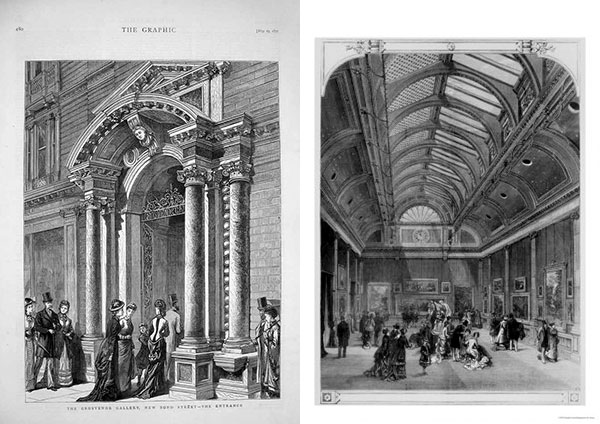
Julie F. Codell is a Professor of Art History at Arizona State University, with affiliations in Asian Studies, Film and Media Studies, English, and Gender Studies. She previously served as Director of the School of Art (1991-2001) and Interim Chair of Film and Media Studies (2010-11). Her research focuses on 19th-century British visual culture, colonialism, and transnational art histories. Codell’s work bridges art historical analysis with critical engagements in gender studies, postcolonial theory, and material culture. Her research interests include the Grosvenor Gallery’s role in the Aesthetic Movement, British colonial exhibitions like the Delhi Coronation Durbars, and the intersections of art, power, and identity. She has authored The Victorian Artist (2003/2012) and edited volumes on transculturation, imperial historiography, and art market dynamics. Codell’s scholarship emphasizes transnational frameworks, examining how art objects and cultural practices mediate colonial and postcolonial identities. Her recent work explores global art networks, replication cultures in Victorian art, and the transatlantic circulation of art objects. Codell’s publications frequently address the politics of display, cultural hybridity, and the material conditions of artistic production. She is a leading figure in redefining 19th-century art history through interdisciplinary and transnational perspectives.
A. Lynn Abbott is a Professor in the Bradley Department of Electrical and Computer Engineering at Virginia Tech , specializing in computer vision, biometrics, and AI-driven sensing systems. His work bridges theoretical and applied domains, including autonomous vehicle perception, physiological signal analysis, and secure healthcare monitoring. Education: Ph.D., University of Illinois, 1990 M.S., Stanford University, 1981 B.S., Rutgers University, 1980 Research Interests focus on computer vision for autonomous systems, biometrics using physiological signals, and deep learning applications in transportation safety and healthcare. Recent projects include neural networks for intersection safety modeling and vision-based cardiovascular signal recovery. Publications highlight advancements in graph neural networks for traffic analysis, spatiotemporal filtering for 3D object detection, and privacy-preserving biometric authentication. His work spans disciplines like transportation safety, biomedical signal processing, and computer architecture. Labs & Teams: Affiliated with the Center for Embedded Systems for Critical Applications , contributing to real-time vision systems and hardware-software co-design for safety-critical domains.
Dr. Avniel Singh Ghuman is an Associate Professor in the Department of Neurological Surgery at the University of Pittsburgh School of Medicine. He serves as Director of the Cognitive Neurodynamics Lab and plays a key role in advancing MEG (Magnetoencephalography) Research at the university. His work bridges clinical neurosurgery with fundamental neuroscience research to understand visual perception mechanisms. Dr. Ghuman's educational background includes: BA in Math and Physics from The Johns Hopkins University (1998) PhD in Biophysics from Harvard University (2007) Postdoctoral training at the National Institute of Mental Health Dr. Ghuman's research focuses on how the brain transforms visual input into meaningful perception of objects, faces, words, and social images in real-world contexts. His laboratory employs both invasive (intracranial EEG) and non-invasive (MEG) techniques to examine the spatiotemporal dynamics of neural activity during visual processing. The lab integrates multivariate machine learning methods, network analysis, and direct neural stimulation to investigate information processing at both local brain regions and distributed network levels. Recent work has pioneered methods for studying brain activity during authentic social interactions and natural behavior. His publication record demonstrates significant contributions to understanding real-world face perception, neural dynamics during natural behavior, and the application of advanced analytical techniques to brain imaging data. His research has revealed how brain network dynamics form a 'punctuated equilibrium' of stable states with transitory bursts between them, coinciding with behavioral shifts in everyday activities. Dr. Ghuman has received notable recognition for his work: Young Investigator Award from NARSAD (2012) Award for Innovative New Scientists from the National Institute of Mental Health (2015) His research has been featured in prominent media outlets including MIT Technology Review, The Wall Street Journal, and Carnegie Mellon University publications. As Director of the Cognitive Neurodynamics Lab, Dr. Ghuman leads a research program that has advanced our understanding of how the brain processes visual information in real-world environments, with implications for both fundamental neuroscience and clinical applications.
Ken Koltun-Fromm is a Professor of Religion at Haverford College, where he has taught since 1997, mirroring his own undergraduate experience as a religion major there. He specializes in modern Jewish thought, material culture, and the intersection of religion with comics and graphic narratives. His courses include 'Material Religion in America' and 'Reading Comics and Religion,' co-taught with Swarthmore’s Yvonne Chireau. He has authored four books, including groundbreaking works on Jewish authenticity and material culture. Koltun-Fromm co-organized a symposium on 'Sacred Texts and Comics,' attracting national scholars, and collaborates on an edited volume with the Israeli Cartoon Museum, exploring comics across world religions. Education: B.A. in Religion from Haverford College (1988) His research emphasizes how material objects, rituals, and visual media shape religious identity. He pioneered a course requiring students to create religious comic narratives, exhibited in a campus symposium. Collaborations include a student co-author (Maddie Backus) and跨-institutional teaching partnerships. Beyond academia, he collects objects like prayer rugs and dolls used in classroom projects, reflecting his research interests. He has no listed scientific awards but is noted for innovative pedagogy and interdisciplinary scholarship. His advising and grants focus on student-faculty research partnerships, exemplified by his work with Maddie Backus on calligraphy in Craig Thompson’s Habibi . He also co-curates projects blending religious studies with graphic arts.
Peter Oakley is a Professor of Material Culture at the Royal College of Art's School of Arts & Humanities, where he also serves as Co-Lead of the Material Engagements Research Cluster. His academic work bridges anthropology, creative practice, science and technology studies, and industrial heritage through ethnographic, experiential, and object-based research methodologies. Education PhD in Anthropology, University College London (2013) Peter Oakley specializes in the anthropology of materials and making, with particular expertise in sustainability across the crafts and applied arts. His research focuses on two main interconnected areas: the social, environmental, and ecological consequences of metal extraction, refining, and assaying throughout history, and the development of sustainable practices within contemporary craft communities. He employs ethnographic, experiential, and object-focused methodologies to examine material culture from multiple perspectives. Analysis of Professor Oakley's recent publications reveals a consistent focus on the intersection of material culture, sustainability, and ethical practices. His work spans historical examinations of mining heritage and contemporary investigations into ethical gold certification programs, with a particular emphasis on the social and environmental impacts of material extraction and use. There is a clear trajectory toward increasingly applied research addressing current sustainability challenges in the creative industries. Research Leadership and Funding UK Principal Investigator for "Toxic Heritage: Socio-natural Landscapes of Extraction and Pollution in the Harz and Cornwall" (AHRC-DFG funded, 2025-2028) Principal Investigator for "Embedding Carbon Literacy in the Applied Arts" (RCA Impact Development Scheme, 2023-2025) Principal Investigator for multiple AHRC-funded projects including "Carbon Measurement Tools in the Creative Industries" (2022-2023) Principal Investigator for international projects in Thailand, Kazakhstan, and other regions focusing on sustainable craft practices Professor Oakley actively supervises PhD candidates, currently advising Enitan Bankole-Race and Yu Lun Eve Lin, with previous successful completion of Wuthigrai Siriphon's doctoral work. His supervision focuses on material culture approaches to creative disciplines and traditional manual skills. Beyond direct supervision, he has led numerous research teams and secured funding from the Arts and Humanities Research Council, Global Challenges Research Fund, and Special Priorities Fund to support sustainability initiatives across the creative industries. As Co-Lead of the Material Engagements Research Cluster at the RCA, Professor Oakley collaborates with researchers across disciplines to advance understanding of material practices and sustainable approaches in the creative sector. His work connects academic research with practical applications through partnerships with craft communities in the UK and internationally, particularly in Thailand, Scotland, and Germany.
Ali Khan is an Assistant Professor of Information Systems at NEOMA Business School. He holds a PhD in Digital Technology (MIS) from Queen's University (Canada, 2022), followed by a postdoctoral research stint before joining NEOMA. His research focuses on digital threats (e.g., fake news), digital professionalism, and gamification within organizational contexts. He has published in top-tier journals like the Journal of Information Technology and European Journal of Information Systems, and actively reviews for leading conferences and journals. Research Interests: Digital Threat Mitigation, Gamification Frameworks, Fake News Analysis, Digital Professionalism Teaching Expertise: Digital Technologies, Digital Business Models, Digital Organizations His work bridges theoretical insights with practical applications, addressing modern challenges in digital media and organizational behavior. Recent contributions emphasize structural approaches to gamification and methodological advancements in analyzing digital misinformation. Awards: Distinction Award (2014 International Conference on Management) Dr. Khan collaborates with industry partners through NEOMA's research initiatives, including the VISTA-AR project on tourism experience digitization and BluePrint Intao (Enedis) on organizational flexibility. He has advised multiple academic conferences and contributes to pedagogical innovations in digital education.