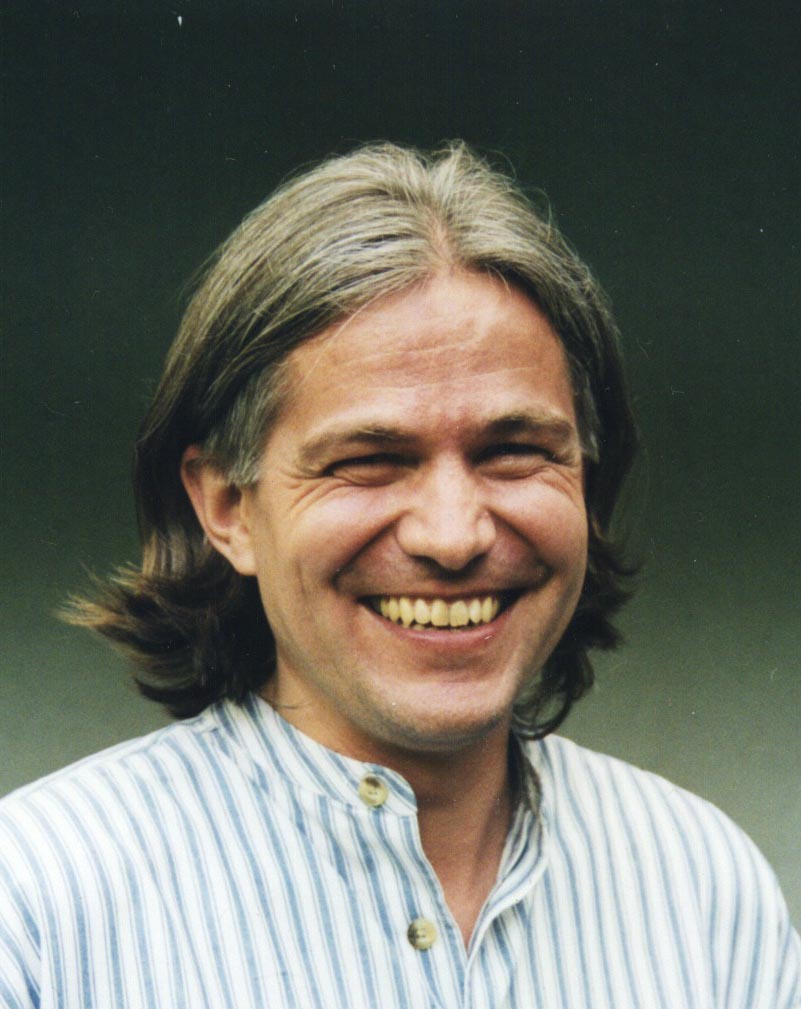
Peter Druschel is a Professor and founding Director of the Max Planck Institute for Software Systems (MPI-SWS) in Saarbrücken, Germany. He holds adjunct professorships at Saarland University and the University of Maryland. His research focuses on distributed systems, operating systems, and privacy-preserving technologies. He earned his Ph.D. from the University of Arizona in 1994 and has held roles at Rice University since 1994, including Professor of Computer Science (2002–2005). Education: Ph.D. in Computer Science, University of Arizona (1994) Research Interests: Distributed systems, operating systems, network security, accountable computing, and privacy technologies. Current projects include privacy compliance in data systems (Thoth), secure communication (EbN), and privacy-aware image capture (I-Pic). Awards: SIGOPS Mark Weiser Award (2008) NSF CAREER Award (1995) Member of Academia Europaea and German Academy of Sciences Leopoldina Grants & Leadership: Leads the ERC Synergy Project imPACT, chairs the Max Planck Society’s Chemistry, Physics, and Technology Section, and collaborates with institutions like Cornell and Google. Advises on policy issues related to technology and privacy. Labs/Teams: Distributed Systems Group at MPI-SWS, collaborations with Microsoft Research and MIT. Current team includes students and postdocs working on privacy, security, and distributed systems.
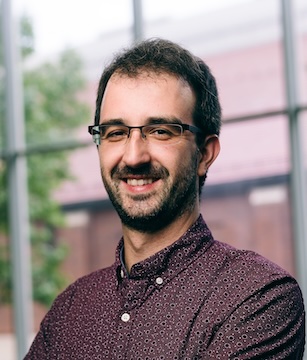
Thomas Pasquier is an Assistant Professor in the Department of Computer Science at the University of British Columbia, affiliated with the Systopia Lab and UBC Security & Privacy Group. His research focuses on digital provenance, system auditing, intrusion detection, and performance optimization. He investigates systems security through provenance graph analysis, developing practical frameworks for intrusion detection (including PROVNET and Kairos) and provenance summarization tools. His work combines machine learning with systems research to enhance cybersecurity transparency. Recent Publications (2022-2025) Provenance-based intrusion detection systems analysis Whole-system provenance for practical security eBPF kernel extension security enhancements LLM-driven provenance summarization Research code quality assessment Scientific Awards Incredible Instructor Awards Amazon Science Research Award He supervises graduate students in systems security research and teaches courses on security & privacy and operating systems. His lab welcomes diverse students for thesis-based research opportunities.
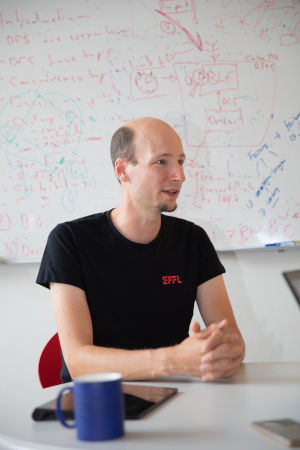
Lin Zhong is the Joseph C. Tsai Professor of Computer Science at Yale University, leading the Efficient Computing Lab. He holds a Ph.D. from Princeton University and M.S./B.S. degrees from Tsinghua University. Previously, he served at Rice University from 2005 to 2019. His research focuses on optimizing computing efficiency, quantum error correction, operating systems, and mobile systems. Education: Ph.D., Princeton University M.S., Tsinghua University B.S., Tsinghua University Research Interests: His work spans quantum computing (e.g., decoding algorithms for surface codes), operating systems (safety, correctness, and lightweight kernels), and mobile/networking systems (massive MIMO, energy-efficient designs). Recent trends include integrating large language models (LLMs) into robotics and securing cloud-based AI workflows. Awards: NSF CAREER Award ACM SIGMOBILE RockStar (2014) and Test of Time (2022) Fellowships from IEEE and ACM Best Paper Awards at ACM MobileHCI, IEEE PerCom, ACM MobiSys, and more Lab & Teams: His Efficient Computing Lab explores systems for quantum error correction (e.g., FPGA-based decoders), secure embedded systems, and LLM-driven robotics. Projects include TimelyLLM (real-time LLM serving) and Blindfold (confidential memory management).
Mads Dam is a Professor in Teleinformatics at the School of Computer Science and Communication at Kungliga Tekniska Högskolan (KTH), where he heads the Department of Theoretical Computer Science. His research focuses on computer security, formal methods, and program logics, with particular emphasis on the formal modeling and verification of low-level hardware and software execution platforms for security and application isolation. His educational background includes: PhD in Computer Science from the University of Edinburgh (1990) MSc in Computer Engineering from Aalborg University, Denmark BSc in Information Technology from Aalborg University, Denmark Mads Dam's research interests center on computer security, formal methods, and program logics. His current work focuses on the formal modeling and verification of low-level hardware and software execution platforms such as hypervisors and OS kernels and their underlying hardware. He has made significant contributions to information flow security, verification of microarchitectural systems, and network programming language security. His research bridges theoretical foundations with practical security applications. His recent publications show a strong trend toward verifying low-level systems, with a focus on information flow security for processors, network programming languages (particularly P4), and microarchitectural vulnerabilities. His work combines formal methods with practical security concerns, developing verification techniques that address real-world security challenges in hardware and software systems. The research spans theoretical foundations in temporal and epistemic logics to practical applications in network security and processor verification. His scientific awards and recognition include: Two framework grants from the Swedish Foundation for Strategic Research A junior individual grant from the Swedish Foundation for Strategic Research Project grants and a five-year research fellowship from the Swedish Research Council (VR) Project grants from Ericsson, Microsoft Research, US Air Force, and Vinnova (the Swedish Innovation Agency) Mads Dam has been a principal investigator on numerous research projects and has supervised many graduate students. He has been a partner in several European projects including HATS, S3MS, VerifiCard, LOMAPS, and UaESMC. His research has been supported by substantial grants from major funding bodies, reflecting the significance and impact of his work in computer security and formal methods. He is a founding member of several research centers at KTH, including Access, the CASTOR software research center, and the CDIS center for cyber defense and information security. These centers bring together researchers from multiple disciplines to address complex challenges in cybersecurity and software engineering.
Emin Gün Sirer is an Associate Professor at the Department of Computer Science , College of Engineering , Cornell University . He co-directs the Initiative for Cryptocurrencies and Smart Contracts and leads the Meridian and HyperDex projects. Research in operating systems, networking, and distributed systems Focus on secure operating systems, high-performance cloud infrastructure, and peer-to-peer networks Developed systems like Nexus (secure OS), OpenReplica (Paxos implementation), and Trickles (stateless network protocol) Prominent Projects : Meridian - Lightweight network location service without virtual coordinates Cubit - Decentralized peer-to-peer search Kimera - Network-centric Java verification SPIN - Extensible microkernel for application-specific services Scientific Contributions : Leading work in blockchain security and peer-to-peer systems Patents in executable content rewriting and distributed virtual machines Advising & Collaborations : Advises projects in network positioning and content distribution Collaborates with institutions like Usenix , SIGCOMM , and NSDI Personal Background : Ph.D. and M.S. in Computer Science from the University of Washington B.S.E. in Computer Science from Princeton University High school at Robert College
Dr. David Cock is a Senior Lecturer and Senior Researcher at ETH Zürich's Department of Computer Science, affiliated with the Systems Group. He holds a PhD from UNSW (2014) and a B.Sc. (hons) from UNSW (2004). His research focuses on formal verification, trustworthy systems, and hardware-software co-design, with notable contributions to projects like Enzian (a CPU/FPGA platform) and seL4 (formally verified kernel). He teaches Advanced Operating Systems and Informal Methods courses. Key achievements include the ACM Software System Award (2022) for seL4 and leadership in projects addressing hardware complexity and security. Research interests include formal methods for hardware modeling (Sockeye project), runtime verification, and mitigating timing channels. His work bridges theoretical foundations with practical systems, emphasizing secure and reliable computing platforms. Projects like Trustworthy BMC aim to enhance baseboard management systems' assurance. Collaborations span academia and industry, with open-source contributions to hardware designs and formal tools. Publications span formal verification, hardware modeling, and secure systems, with recent focus on heterogeneous computing and declarative hardware specifications. Teaching emphasizes practical formal techniques and OS design, leveraging real-world hardware (e.g., Barrelfish). His lab, the Systems Group, explores cutting-edge challenges in systems software and architecture.
Maria Mushtaq is an Associate Professor at Telecom Paris , affiliated with the Information Processing and Communication Laboratory (LTCI) and the Secure and Safe Hardware (SSH) Lab . She received her PhD in Information Security from the University of South Brittany, France (2019) and completed 2 years of postdoctoral research at LIRMM, University of Montpellier under the CNRS excellence post-doc grant. Research Focus: Microarchitectural vulnerability assessment, runtime mitigation against side/covert-channel attacks, cryptanalysis, OS-based security primitives, and hardware-software interface security Technical Expertise: Cache timing attacks, transient execution attacks (Spectre/Meltdown), Hardware Performance Counter analysis, gem5 simulation Her recent work involves RISC-V security analysis using gem5 simulations and machine learning for attack detection. She serves as Guest Editor for the Journal of Applied Sciences special issue on Side Channel Attacks in Embedded Systems and has been on the Program Committee for the European Test Symposium (2020-2021). 2021 HiPEAC Collaboration Grant recipient Organized IP Paris Winter School on Microarchitectural Security (2022) Active in international conferences as panelist and keynote speaker
Pedro Fonseca is an Assistant Professor at the Department of Computer Science, Purdue University. He leads the Reliable and Secure Systems Lab, focusing on building reliable and secure core software systems such as operating systems, hypervisors, and distributed systems. His research has been recognized with awards including the NSF CAREER Award and Google Faculty Research Awards. Before Purdue, he completed a postdoc at the University of Washington, working with Arvind Krishnamurthy, Hank Levy, and Xi Wang. He earned his PhD from MPI-SWS and the University of Saarland under Rodrigo Rodrigues. His academic contributions span over 30 peer-reviewed publications in top-tier conferences like SOSP, OSDI, EuroSys, and ASPLOS. He teaches courses including CS503 (Operating Systems), CS592 (Reliable and Secure Systems), and CS408 (Software Testing). He actively serves on program committees for major systems conferences including SOSP, OSDI, EuroSys, and ASPLOS.
Andreas Rauber is an Associate Professor in the Department of Data Science at Technical University of Vienna. He serves as Curriculum Coordinator for Bachelor and Master programs in Business Informatics and Data Science, and chairs the Curriculum Commission for Business Informatics. His research focuses on Information Systems Engineering, Logic and Computation, and Visual Computing, addressing challenges in data management, digital preservation, and reproducibility in e-science. He leads projects like OS Trails and FAIR-AI, emphasizing FAIR principles and trustworthy research infrastructures. Rauber has contributed to over 150 publications, including works on data citation frameworks, adversarial ML defenses, and reproducibility in IR. His work bridges technical innovation with policy, exemplified through roles in the EOSC Support Office Austria and RDA Austria initiatives. Key projects include establishing FAIR data practices across universities and advancing digital preservation through repositories like DBRepo. He coordinates international collaborations, such as the EU-funded EOSC-Life and EGI Advanced Computing projects. His teaching spans courses in machine learning, information retrieval, and research methods, fostering next-generation data scientists.
Mathias Payer is an associate professor at EPFL's School of Computer and Communication Sciences (IC), leading the HexHive research group since 2018. He focuses on strengthening software and system security through fuzzing, vulnerability mitigation, and compiler-based approaches. His work includes open-source prototypes and contributions to embedded systems, IoT security, and trusted execution environments. Education: PhD in Computer Science (Dr. sc. ETH) from ETH Zurich (2012), postdoctoral researcher at UC Berkeley (2012–2014), and assistant professor at Purdue University (2014–2018). Tenured at EPFL since 2021. Research Interests: Fuzzing frameworks, memory safety, vulnerability analysis, compiler optimizations for security, and firmware security. Projects include Enclosure , HexType , and DP3T (decentralized contact tracing). Awards: Multiple best/distinguished paper awards at top venues (e.g., Usenix Security, NDSS, RAID). Co-founded the EPFL polygl0ts and Purdue b01lers CTF teams to foster cybersecurity innovation. Labs/Teams: HexHive group, CTF initiatives, and collaborations with industry (e.g., Intel SGX, Android security).
Matthew Allen Bishop is a Professor in the Department of Computer Science at the University of California, Davis. His primary affiliation is with the College of Engineering. Bishop's research focuses on cybersecurity, including secure programming, insider threat detection, malware analysis, and cybersecurity education. He has contributed extensively to curricular guidelines (e.g., CSEC 2017) and frameworks for cyber defense. His work spans theoretical advancements (e.g., intrusion detection models) and applied systems (e.g., secure voting platforms). Notable research areas include: Cybersecurity Education: Developing curricula and pedagogical frameworks for secure coding and ethical practices. Insider Threat Mitigation: Declarative approaches and behavioral analysis for detecting and preventing attacks. Malware Mitigation: Techniques leveraging uncertainty principles and defensive programming. Election Security: Analyzing vulnerabilities and designing secure voting systems. Bishop has collaborated with institutions like the Department of Homeland Security (DHS) and National Security Agency (NSA) on critical infrastructure protection. His publications span conferences like IEEE Security & Privacy, HICSS, and NSPW, emphasizing real-world applications of cybersecurity principles.
Vasileios P. Kemerlis is an Associate Professor of Computer Science at Brown University, where he conducts research in systems and software security. He serves as the director of the Secure Systems Lab (SSL) and is a recipient of the prestigious NSF CAREER Award. His work focuses on practical security solutions for real-world systems. Dr. Kemerlis specializes in software, hardware, and systems security with particular emphasis on OS kernel protection, software hardening, fuzz testing, and information flow tracking. His research bridges theoretical security concepts with practical implementations that can be deployed in commodity systems. His work often leverages hardware features to build more robust security mechanisms while maintaining system performance. His recent publications demonstrate a consistent focus on memory safety, control flow integrity, and practical security mechanisms that can be deployed in real-world systems. His work spans multiple security domains including kernel security, network security, and application security, with a strong emphasis on developing solutions that balance security guarantees with practical performance considerations. Scientific Awards: NSF CAREER Award Dr. Kemerlis teaches advanced security courses at Brown University including CSCI 1650: Software Security and Exploitation (offered Fall 2016-2024) and CSCI 2951U: Topics in Software Security (offered Spring 2016-2018, 2020, 2021, 2024). As director of the Secure Systems Lab, he leads research efforts that have resulted in numerous publications at top security venues including IEEE Symposium on Security and Privacy, ACM CCS, and USENIX Security. The Secure Systems Lab under his direction focuses on developing practical security solutions that can be deployed in real-world systems, with recent work exploring hardware-assisted security mechanisms, binary hardening techniques, and novel approaches to memory safety.
Prof. Dr. Andreas Herkersdorf is a Full Professor and Chair of Integrated Systems at the Technical University of Munich (TUM) School of Computation, Information and Technology. His research focuses on application-specific multicore processors (MPSoC), FPGA-based prototyping, fault-tolerant systems, and energy-efficient architectures, with applications in IP packet processing, automotive systems, and visual computing. He has received multiple IBM innovation awards and serves on editorial boards including the DFG Review Board for computer architecture. Education: Dipl.-Ing. Electrical Engineering (TUM, 1987), Dr. techn. Electrical Engineering (ETH Zurich, 1991) Research: MPSoC architectures, autonomic computing, NoC resilience, FPGA acceleration, and self-optimizing systems. Awards: IBM Master Inventor (1998), IBM Outstanding Technical Achievement Award (2001), multiple IBM Innovation Achievement Awards (1996-2003) His recent publications emphasize hardware/software co-design, machine learning integration for runtime optimization, and network-on-chip innovations. He collaborates on projects involving 6G systems, smartNICs, and automotive communication protocols.
Binoy Ravindran is a Professor at Virginia Tech’s College of Engineering, Department of Electrical and Computer Engineering, leading the Systems Software Research Group (SSRG). His research focuses on computer systems, emphasizing security, performance, concurrency, distributed systems, and real-time computing, with recent work in software verification and heterogeneous-ISA platforms. Key projects: Low-level Reasoning Machine (LLRM), Popcorn Linux, LibrettOS, Hyflow, HermiTux, SlimGuard, HydraVM, KairosVM. He has co-authored 15+ papers from 2025 to 2022, spanning venues like ASPLOS, POPL, PLDI, VEE, PPoPP, and MIDDLEWARE, with awards including ACM Distinguished Scientist and eight Best Paper Awards. Service roles: Editorial Boards (IEEE Transactions on Cloud Computing, ACM TECS), Program Co-Chair (ACM Systor 2025), Committee memberships across ASPLOS, PLDI, and more.
Dr. Martin Hoffmann is a former research staff member at the Department of Computer Science 4 (Distributed Systems and Operating Systems) at Friedrich-Alexander-University Erlangen-Nuremberg (FAU). He now works at Brose Fahrzeugteile in Bamberg. His research focuses on dependability, fault tolerance, and real-time systems, with emphasis on embedded systems and safety-critical applications. He taught courses such as Echtzeitsysteme (Real-Time Systems) and Verlässliche Echtzeitsysteme (Reliable Real-Time Systems) across multiple semesters. His work includes projects like dOSEK (a dependability-oriented RTOS), DanceOS (fault-tolerant OS design), and CoRed (software-based redundancy for mixed-criticality systems). He also contributed to the I4Copter interdisciplinary quadrocopter project. His research interests span fault-injection frameworks, static kernel analysis, and soft-error mitigation. Notable contributions include Fail* (a versatile fault-injection tool) and dOSEK (RTOS for automotive safety). He has advised multiple students on topics like fault-tolerant garbage collectors and modular OS service frameworks. No scientific awards are explicitly mentioned in the provided text. His work emphasizes interdisciplinary collaboration, with projects bridging embedded systems, robotics, and safety-critical applications.