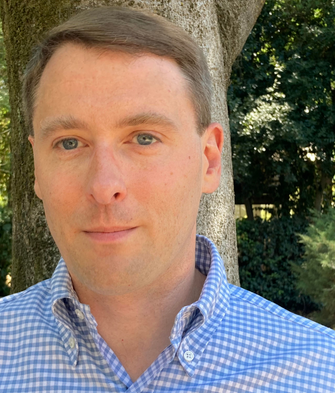
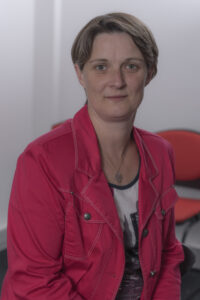
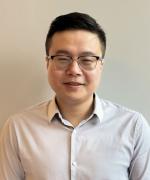
James Bremer is a Professor in the Department of Mathematics and holds a cross-appointment in the Department of Computer and Mathematical Sciences at the University of Toronto's Scarborough campus. His research focuses on developing efficient numerical algorithms for solving elliptic boundary value problems, integral equations, and special function transforms.
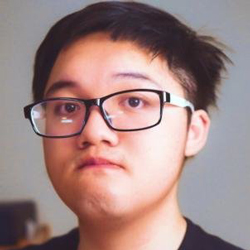
Yiping Lu is an Assistant Professor in the Department of Industrial Engineering and Management Sciences at Northwestern University's McCormick School of Engineering. His research focuses on developing interdisciplinary approaches combining domain knowledge (differential equations, stochastic processes), machine learning, and experiments. Key interests include scientific machine learning (AI4Science), stochastic simulation, and robust machine learning. Education: Ph.D. in Applied and Computational Mathematics, Stanford University (2023) B.S. in Computational Mathematics, Peking University (2019) Research Highlights: Hybrid research integrating ML with scientific domains like PDEs and inverse problems Development of Physics-Informed Learning frameworks Contributions to deep learning theory (ResNets, neural collapse) Advances in kernel operator learning and adversarial robustness Awards: CPAL Rising Star Award (2024) University of Chicago Data Science Rising Star (2022) Stanford Interdisciplinary Graduate Fellowship (2021) Labs/Teams: SCALE Lab (Scientific Computation and Learning at Northwestern) Collaborations with NYU's Courant Institute and Stanford
Prof. Massimo Fornasier holds the Chair of Applied Numerical Analysis at the Technical University of Munich (TUM), within the School of Computation, Information and Technology and the Department of Mathematics. His research focuses on mathematical modeling, numerical analysis, and data-driven methods, particularly in areas like compression, sparse recovery, and optimization. He has made significant contributions to consensus-based optimization, control of multiagent systems, and applications in image/signal processing. Education: PhD in Computational Mathematics, University of Padua (2003) Postdoctoral fellowships at University of Vienna, Sapienza University of Rome, and Princeton University Awards: ERC Starting Grant (2012) START Prize (2011) Prix de Boelpaepe (2009) His work bridges theoretical analysis and computational methods, with applications ranging from compressive sensing to machine learning. Recent research emphasizes consensus-based optimization frameworks and their global convergence properties. Editorial roles include journals like Networks and Heterogeneous Media and Calcolo . He leads research groups in areas such as Data Science and Numerical Analysis at TUM.
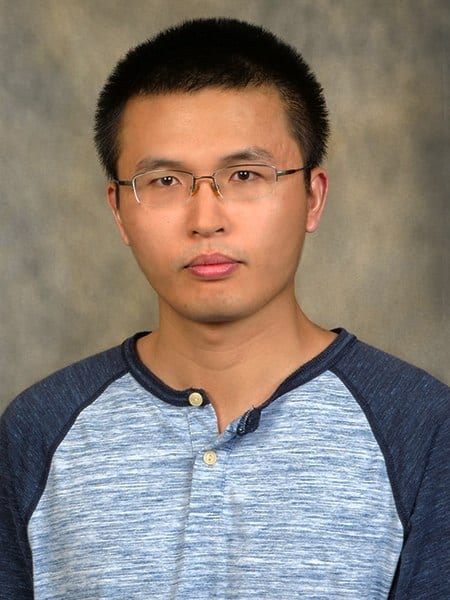
Yukun Li is an Associate Professor in the Department of Mathematics at the University of Central Florida (UCF), part of the College of Sciences. His research focuses on numerical analysis, stochastic partial differential equations, and computational finance. He holds a Ph.D. in Mathematics from the University of Tennessee, Knoxville (2010-2015), followed by postdoctoral roles at Penn State (2015-2016) and The Ohio State University (2016-2019). He has secured grants including NSF REU funding (2023-2026) and led an NSF-funded project on stochastic phase field models (2021-2025). Research interests include: Continuous/Discontinuous Finite Element Methods Numerical Solutions of Stochastic ODEs/PDEs Adaptive Algorithms and Fast Solvers Computational Finance Models Recent publications emphasize stochastic wave equations, phase field models, and financial mathematics. His work spans theoretical analysis and numerical methods for complex systems. Notable recognition includes the 2015 Achievement Award from the University of Tennessee's Mathematics Department. Teaching highlights include advanced graduate courses like Computational Methods for Financial Mathematics and Numerical Linear Algebra, alongside contributions to undergraduate mathematics education. He is proficient in computational tools including MATLAB, Python, FEniCS, and MPI.
Yves Bourgault is a Full Professor in the Department of Mathematics and Statistics at the University of Ottawa. He holds a MSc and PhD from Laval University. His research focuses on computational fluid dynamics, numerical methods, finite element techniques, and continuum mechanics modeling, with applications in cardiac electrophysiology and ecological systems. Dr. Bourgault has supervised several graduate students, including Edward Boey (co-supervised), Sana Keita, Saint-Cyr Koyagurebo-Ime, and Kak Choon Loy. His work integrates advanced numerical techniques to address complex problems in biomedical engineering, environmental science, and mathematical physics. Key methodologies include finite element methods, deferred correction schemes, and anisotropic mesh adaptation. His research group is part of the Applied Mathematics division at the University of Ottawa, emphasizing interdisciplinary applications. Recent work explores climate change impacts on ecological systems, cardiac tissue modeling using high-resolution MRI data, and robust numerical methods for reaction-diffusion equations. Publications span topics such as bidomain models for cardiac electrophysiology, fluid-structure interaction in heart mechanics, and mathematical modeling of fuel cells. His contributions bridge theoretical numerical analysis with real-world biomedical and environmental challenges.
Johanna Sommer is a researcher at the Technical University of Munich , affiliated with the Department of Informatics under the TUM School of Computation, Information and Technology. She contributes to research and teaching in advanced machine learning domains. Education : M.Sc. Computer Science (TUM, passed with distinction), B.Sc. Applied Computer Science (Baden-Württemberg Cooperative State University). Research Interests : Her work spans Robust Machine Learning , machine learning for graphs and sequential data, Bayesian learning with uncertainty quantification, and efficiency improvements in training algorithms. She applies these to tasks like molecular generation and continuous-time modeling. Teaching : Johanna leads seminars and courses on topics including Advanced Machine Learning: Deep Generative Models , Machine Learning for Graphs and Sequential Data , and Large-Scale Machine Learning , often in collaboration with industry partners. Publications highlight her contributions to robustness analysis of combinatorial solvers, molecule generation from 3D shapes, and efficient alternatives to neural ODEs. These works appear at top venues like ICLR and NeurIPS .
Ameya Jagtap is an Assistant Professor (Tenure-Track) in the Department of Aerospace Engineering at Worcester Polytechnic Institute (WPI), USA. Prior to this, he served as an Assistant Professor of Applied Mathematics (Research) at Brown University from 2021 to 2024. He holds a Ph.D. and M.E. in Aerospace Engineering from the Indian Institute of Science (IISc), and completed postdoctoral research at TIFR-CAM (India) and Brown University's Division of Applied Mathematics. His research bridges mechanical/aerospace engineering, applied mathematics, and computation, focusing on scientific machine learning algorithms that integrate data and physics. Key areas include physics-driven deep learning, uncertainty quantification, multi-scale simulations, and novel neural network architectures like quantum and graph networks. He serves on editorial boards for Neural Networks , Neurocomputing , and others. His work emphasizes interpretable neural operators for PDE solutions, domain decomposition methods, and adaptive activation functions to enhance PINN convergence. Notable contributions include XPINNs (extended physics-informed neural networks) and causal sweeping frameworks for PDEs. His research has been widely cited, particularly for PINN applications in supersonic flows and high-dimensional PDEs. Jagtap has delivered invited talks at institutions like Los Alamos National Laboratory, Tsinghua University, and the Alan Turing Institute. He is also recognized as a Top 2% World Scientist by Stanford University.
Kirill Serkh is an Assistant Professor in the Department of Mathematics at the University of Toronto, with a cross-appointment to the Department of Computer Science. His research focuses on advanced numerical methods for solving complex mathematical problems. Key Research Areas: Numerical analysis, Scientific computing, Partial differential equations, Numerical linear algebra, Quadrature and approximation theory, Special functions His recent work explores high-order numerical schemes for PDEs on non-smooth domains, adaptive methods for oscillatory integrals, and efficient evaluation of Newtonian potentials. He has contributed to the development of hybrid boundary integral methods and spectral techniques for challenging computational problems. While no specific scientific awards are mentioned in the provided text, his publications demonstrate expertise in computational mathematics and interdisciplinary applications in fluid dynamics, wave propagation, and machine learning. His methodological innovations span both theoretical and applied domains.
Ahmad Fakheri is Professor of Mechanical Engineering at Bradley University’s Caterpillar College of Engineering & Technology . He has served the university for more than two decades, including as Interim Associate Provost & Dean of the Graduate School (1996-1998) and Director for Research & Sponsored Programs (1992-1996). A triple alumnus of the University of Illinois at Urbana-Champaign (B.S., M.S., Ph.D., all in Mechanical Engineering), he is an ASME Fellow recognized for exceptional research and service. Education Ph.D., Mechanical Engineering, University of Illinois at Urbana-Champaign M.S., Mechanical Engineering, University of Illinois at Urbana-Champaign B.S., Mechanical Engineering, University of Illinois at Urbana-Champaign Research Interests Dr. Fakheri’s scholarship lies at the intersection of heat transfer , fluid mechanics and thermodynamics , with concentrated effort on heat-exchanger design and optimization . His work employs second-law analysis, entropy-generation minimization and advanced numerical techniques to enhance thermal efficiency and guide sustainable energy-system development. Scientific Awards & Honors Fellow, American Society of Mechanical Engineers (ASME) Outstanding Research Award, Bradley College of Engineering Outstanding Service Award, ASME Process Industries Division NASA Summer Faculty Fellow, NASA Lewis Research Center Caterpillar Fellows Program Research Award Leadership & Service Within ASME he has chaired the Process Industries Division (6,000+ members) and the Manufacturing Technical Group (10,000+ members), served on the Board on Research and Technology Development, and acted as Technical Program Chair for the 2012 ASME International Mechanical Engineering Congress. On campus he has been a member of the University Senate and has led curriculum-reform initiatives. Laboratory & Teaching Dr. Fakheri teaches undergraduate and graduate courses such as Heat Transfer , Advanced Heat Transfer , Advanced Fluid Dynamics and Advanced Computer-Aided Design , integrating computational tools and real-world design projects that connect classroom theory to industrial practice.
Kenneth R. Jackson is a Full Professor of Computer Science at the University of Toronto, where he has been active since 1981. He retired in 2020 but continues research in numerical computation, computational finance, and scientific computing. Born in Montreal and raised in Toronto, Jackson earned all his degrees from the University of Toronto: BSc (1973), MSc (1974), and PhD (1978). He held roles as Gibbs Instructor and Visiting Assistant Professor at Yale University before returning to Toronto. Recognized as an NSERC University Research Fellow, he also served as Associate Chair for Graduate Studies (2002–2005) and President of the Canadian Applied and Industrial Mathematics Society (2001–2003). His research focuses on numerical methods for ODEs, parallel computation, validated solutions, and applications in finance, medical imaging, and climate modeling. He has advised over 30 graduate students, many of whom contributed to groundbreaking work in computational finance and scientific computing. Jackson organized the 2001–02 Thematic Year on Numerical Challenges in Science at the Fields Institute and currently advises YetiWare. He teaches advanced courses in numerical methods, optimization, and computational finance, and has published extensively on topics ranging from high-dimensional ODE systems to GPU-accelerated financial modeling.
Prof. Dr. Hartmut Ruhl is a Professor (chair) at the Faculty of Physics of Ludwig-Maximilians-Universität München (LMU Munich), with his office located at Theresienstrasse 37, Room A237 in Munich, Germany. He leads an active research group focused on high field physics and quantum electrodynamics, particularly investigating radiation reaction, vacuum effects, and strong field phenomena. Prof. Ruhl's research spans several cutting-edge areas of theoretical and computational physics. His primary interests include high field physics, quantum electrodynamics in strong fields, radiation reaction effects, vacuum polarization phenomena, and computational methods for solving complex physical systems. He has made significant contributions to understanding the Heisenberg-Euler effective Lagrangian, vacuum high harmonic generation, and the Trident process for electron-positron pair production. His work combines theoretical developments with advanced numerical simulations to explore physics in extreme electromagnetic field conditions. Prof. Ruhl's publication record demonstrates consistent focus on nonlinear quantum electrodynamics in strong fields. His work spans theoretical developments in radiation reaction, numerical methods for solving Heisenberg-Euler equations, and investigations of vacuum effects like high harmonic generation and pair production. A recurring theme is the exploration of quantum vacuum nonlinearities and their observable consequences in high-intensity laser-matter interactions. Prof. Ruhl actively supervises PhD students in high field physics, requiring profound knowledge in quantum transport theory and advanced programming. His group seeks candidates who have completed his courses in Relativistic Quantum Theory and Advanced Programming. He co-organizes the seminar 'Selected Topics in Computational Physics' with Prof. A. Scrinzi, serving as a platform for master's and PhD students interested in computational plasma physics. Prof. Ruhl is associated with the Advanced Simulation Center (ASC) at LMU Munich, as indicated by room locations in his teaching schedule. He collaborates closely with Prof. A. Scrinzi on computational physics topics and is involved with the PSC (Plasma Simulation Code) project. His research group develops specialized numerical solvers for nonlinear wave equations based on the Heisenberg-Euler effective Lagrangian, contributing to the understanding of quantum vacuum effects in extreme field conditions.
Hideyuki Suzuki is a Professor at the Department of Information and Physical Sciences , Graduate School of Information Science and Technology , Osaka University , where he has been employed since April 2016. His research spans nonlinear dynamics , hybrid systems , and many-body dynamics , with applications to power systems , brain modeling , and epidemic networks . 2001 : Ph.D. in Mathematical Engineering and Information Physics, University of Tokyo 1998 : M.Eng. in Mathematical Engineering and Information Physics, University of Tokyo 1996 : B.Sc. in Mathematics, University of Tokyo His research interests focus on nonlinear dynamical systems , particularly those with discontinuities or large-scale interactions , such as chaotic billiards , hybrid systems , and spatio-temporal chaos . He explores computational applications in machine learning (e.g., chaotic Boltzmann machines ), epidemiology (e.g., vaccine allocation models ), and power grid stability . The 15 most recent articles highlight his work in photonic computing , nonlinear sampling algorithms , and chaotic dynamics in engineering and biology . Key trends include interdisciplinary applications of nonlinear mathematics to renewable energy , neuroscience , and epidemic spread . Scientific awards include: 2022 Osaka University Prize 2018 JSIAM Best Paper Award for Hamiltonian Monte Carlo (2017) He leads the Nonlinear Mathematics Course laboratory, which accepts graduate and undergraduate students. His team investigates hybrid dynamical systems , chaotic computation , and real-world modeling in fields like traffic dynamics and epidemic networks . Research is supported by grants from JST CREST and ALCA-Next programs.
Ingrid Lacroix-Violet is a Professor at the University of Lorraine , affiliated with the Faculty of Science and Technology and the research institute IECL (Institut Élie Cartan de Lorraine). Her primary research focuses on the analysis and numerical solution of partial differential equations (PDEs), with emphasis on quantum fluid models, Bose-Einstein condensates, and high-order computational methods. She collaborates with the PDE team at IECL and maintains offices at both IECL (Room 214) and Polytech Nancy (Room F316). Her research interests span: Theoretical analysis of fluid models (Navier-Stokes-Korteweg, Euler-Korteweg) and quantum systems (Schrödinger equations). Numerical innovation including linearly implicit methods, exponential integrators, and energy-preserving algorithms for evolution equations. Applications in vortex dynamics, rotating condensates, and stability of computational schemes. Recent publications (2017–2025) demonstrate a consistent focus on advancing numerical techniques for quantum and fluid systems, with recurring themes of stability analysis, high-order discretization, and physical applications like Bose-Einstein condensates. Her work bridges mathematical rigor with computational efficiency in modeling complex physical phenomena.
Dr. Marissa Condon is an Assistant Professor in the School of Electronic Engineering at Dublin City University (DCU), where she has been since 2000. She holds a BE (First Class Honours) from the National University of Ireland, Galway (1995) and a PhD from the National University of Ireland (1998). Prior to her academic role, she worked at the National Grid of the Electricity Supply Board of Ireland (1998–2000). Her research focuses on numerical modeling of highly oscillatory systems, nonlinear systems analysis, and high-frequency circuit simulation. She led the SFI Investigator Programme Grant SMART (Simulation and Modelling Techniques for Radio Frequency Technology). Her teaching roles include coordinating modules such as Circuits, Numerical Problem Solving for Engineers, and Signals. Her work spans electromagnetic scattering analysis, interconnect modeling, and model order reduction techniques. She has contributed to advancements in RF oscillator simulation and robust control of power electronics systems.
Qi Tang is an Assistant Professor in the School of Computational Science and Engineering (CSE) at Georgia Institute of Technology, part of the College of Computing. He joined Georgia Tech in 2024 after serving as a Staff Scientist at Los Alamos National Laboratory (LANL) from 2018 to 2024. His research focuses on computational plasma physics, high-performance computing, and scientific machine learning, with applications in fusion energy, plasma simulations, and structure-preserving neural networks. Education: Ph.D. in Applied Mathematics, Michigan State University, 2015 B.S. in Mathematics & Applied Mathematics, Zhejiang University, 2010 Research Interests: Qi’s work spans scalable numerical algorithms for exascale computing, fusion modeling, and scientific machine learning. Key areas include: High-order schemes, adaptive mesh refinement, and GPU acceleration for MHD and plasma simulations Structure-preserving neural networks for dynamical systems and multiscale physics Multi-physics modeling of tokamak disruptions and magnetic reconnection Grants & Collaborations: Principal Investigator (PI) for multiple DOE grants, including ASCR MMICC Center (CHaRMNET) Led a multi-institutional ASCR SciML team with LANL, ANL, and universities Recipient of LANL LDRD and NSF grants for fusion and plasma research Advising & Teaching: Advises Ph.D., master’s, and undergraduate students in CSE, physics, and engineering Teaches Parallel Computing Programming and Applications (CSE-6230) Co-advises students in DOE-funded programs and LANL collaborations Labs & Teams: Qi is affiliated with the DOE ASCR MMICC Center (CHaRMNET) and LANL’s Applied Mathematics and Plasma Physics Group. His team develops open-source tools like MFEM-based MHD solvers and structure-preserving ML frameworks.