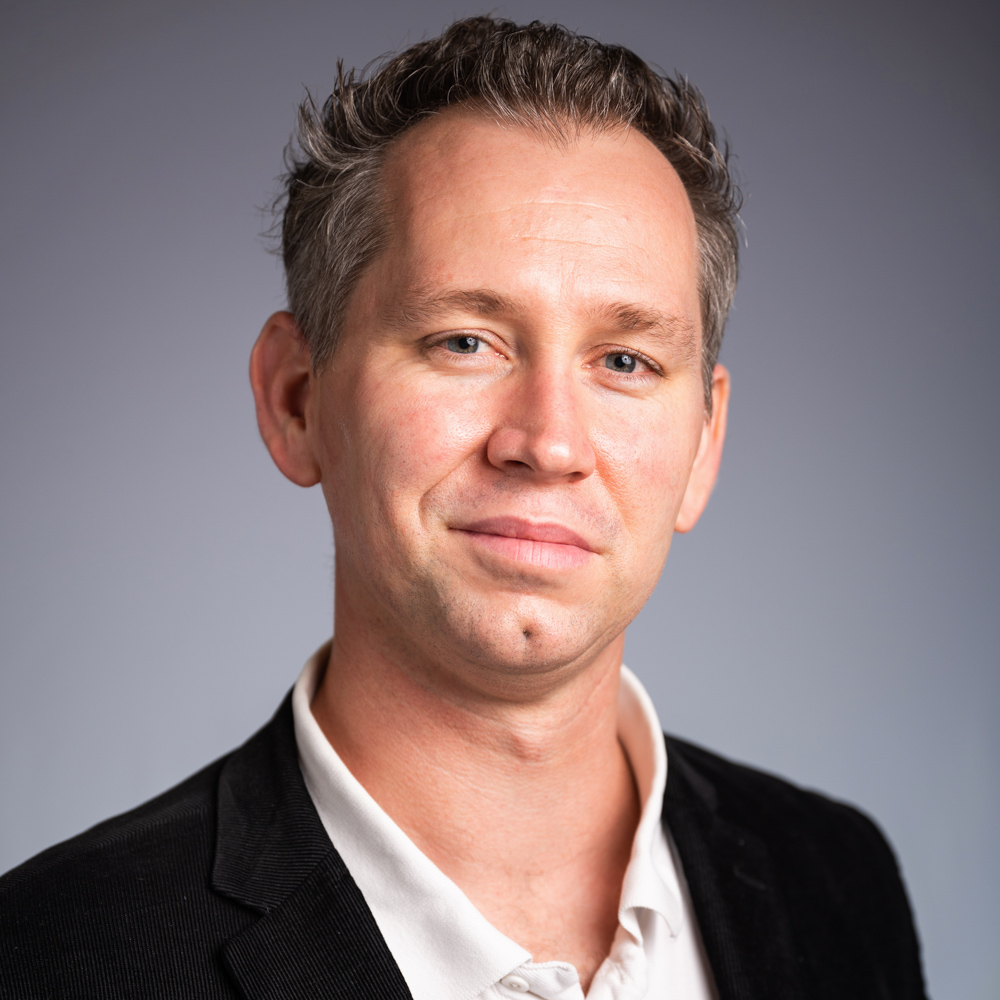
Oana Ignat is a Tenure-Track Assistant Professor in the Computer Science and Engineering (CSE) department at Santa Clara University (SCU), School of Engineering. She holds a Ph.D. in Computer Science from the University of Michigan (2022) and completed a postdoctoral fellowship there (2023–2024). Her research focuses on the intersection of Natural Language Processing (NLP) and Computer Vision (CV), emphasizing equitable AI models and social impact applications. She co-organizes workshops like NLP4PI (EMNLP 2024) and leads initiatives to improve diversity in CS through outreach programs such as ACL Mentorship. Research interests include AI for social good, inclusive language-vision models, and multicultural dataset development. Recent work addresses annotation cost optimization, cross-cultural inspiration detection, and socio-economic bias in AI systems. She advocates for ethical AI practices and collaborates with industry (Amazon, Meta) and academia. Her lab at SCU supports PhD students pursuing socially impactful projects. Education: Ph.D. Computer Science, University of Michigan (2022); Postdoc, University of Michigan (2023–2024); Undergraduate: Disparity image segmentation research at Robert Bosch (2015–2016).
José Ignacio Olmeda Martos is a Professor at the Computer Science Department of the University of Alcalá, Spain. His research focuses on artificial intelligence, neural networks, financial modeling, and applications in tourism and e-learning. He leads the CSRG-UAH Cognitive Science Research Group and the AUDITAI Group for AI Software Development. He earned his Ph.D. in 1996 with a thesis on nonlinear financial models under Dr. Sergio Barba-Romero. His work bridges computational methods with real-world challenges in finance, tourism, and education. Research interests include predictive analytics, algorithmic optimization (genetic algorithms, SOMs), and accessibility in digital systems. His contributions span hybrid models in credit scoring, volatility forecasting using neural networks, and e-commerce adoption analysis. Over 25 years, he has published extensively on topics like tourism demand prediction (PLAZA project), web accessibility metrics, and financial market predictability. Key projects include developing internet-based tourism reservation systems for Castilla-La Mancha and applying wavelet filtering in financial time series. His research emphasizes interdisciplinary applications, integrating AI with tourism management and financial engineering. Education: Ph.D., Universidad de Alcalá, 1996 Publications reflect his expertise in computational finance, tourism technology, and machine learning. Despite no listed awards, his work demonstrates sustained impact in both academic and applied domains. Advising and grant activities are not detailed in the provided texts.
Mustafa Özuysal is an Assistant Professor in the Department of Computer Engineering at the College of Engineering, Izmir Institute of Technology (İYTE), where he leads the Visual Intelligence Research Group. His research focuses on computer vision, including object detection, tracking-by-detection, and real-time scene text recognition, with applications on mobile devices. Research Interests: Large-scale object detection Object detection and tracking on mobile platforms Real-time scene text recognition Feature learning from image and video sequences Augmented reality and camera egomotion estimation His scholarly work includes influential publications in IEEE TPAMI, IET Computer Vision, and top-tier conferences such as CVPR and ECCV, particularly in local feature descriptors like BRIEF and keypoint recognition using random ferns. His research emphasizes efficient, real-time algorithms suitable for embedded and mobile systems. Scientific Contributions: Co-developer of the BRIEF descriptor, widely used in computer vision for fast binary feature matching. Contributor to tracking-by-detection frameworks and homography estimation methods robust to occlusions and viewpoint changes. Dr. Özuysal has taught a range of undergraduate and graduate courses, including Introduction to Image Understanding, Vision-Based Tracking and Modeling, Data Structures, and Mobile Application Development. He advises the Visual Intelligence Research Group and continues to advance research in scalable and efficient vision systems.
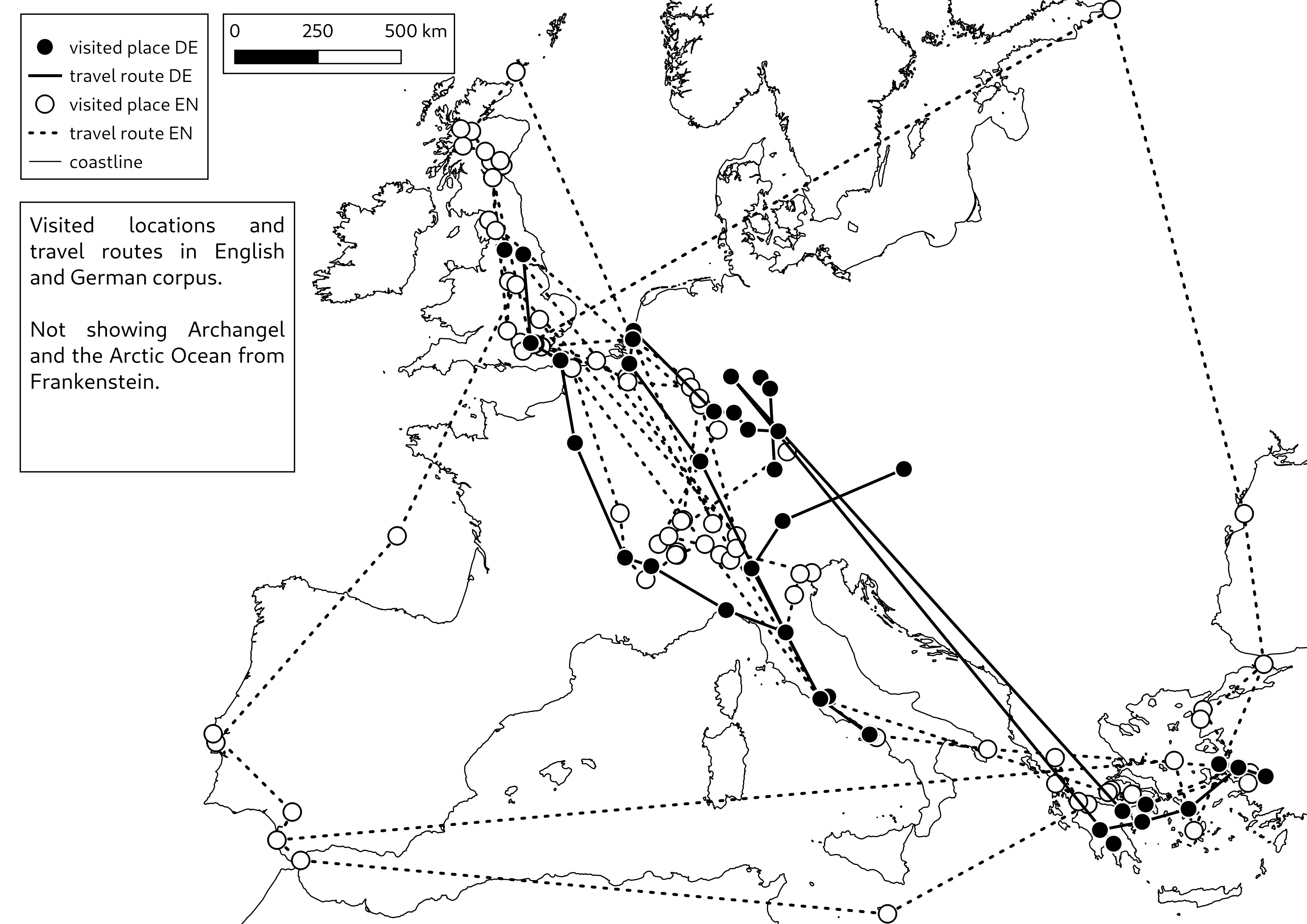
Asko Nivala is an Adjunct Professor and Collegium Researcher at the School of History, Culture and Arts Studies, University of Turku, where he serves as Senior Research Fellow in History and Archaeology at the Turku Institute for Advanced Studies (TIAS). He earned his PhD in Cultural History from the University of Turku in 2015 with a dissertation on Friedrich Schlegel's early Romantic philosophy of history. Nivala's research focuses on nineteenth-century Romanticism across Germany, the UK, and USA, with particular expertise in philosophy of history, spatial humanities, and digital methodologies. His scholarly work bridges traditional humanities with computational approaches, examining how spatial concepts operate in Romantic literature and thought. He has made significant contributions to understanding the spatial dimensions of Romantic narratives and conceptual frameworks. Currently (2022-2025), Nivala serves as Collegium Fellow at TIAS working on the project Artificial Intelligence Before Computers: The History of Romantic Computationalism (AICOM) and as Principal Investigator for the Atlas of Finnish Literature 1870-1940 project funded by the Alfred Kordelin Foundation. His methodological approach combines close reading with distant reading techniques, particularly in geospatial analysis of literary texts. Nivala has published extensively in his field, including the monograph The Romantic Idea of the Golden Age in Friedrich Schlegel's Philosophy of History (Routledge, 2017) and co-editing Travelling Notions of Culture in Early Nineteenth-Century Europe (Routledge, 2016). His recent publications demonstrate sophisticated integration of digital humanities methods with traditional literary scholarship, particularly in extracting geographical references from literature and analyzing conceptual change through computational linguistics. As an educator, Nivala supervises three doctoral students and delivers guest lectures. His scholarly network extends internationally, with collaborations across Europe and North America, reflecting the transnational nature of his research on Romanticism and digital humanities.
Frank Puppe is a Full Professor of Computer Science at the University of Würzburg, Germany, where he holds the Chair of Computer Science VI (Artificial Intelligence and Applied Computer Science) within the Faculty of Mathematics and Computer Science. He is also affiliated with the Center for Artificial Intelligence and Data Science (CAIDAS) and leads research in artificial intelligence, knowledge systems, and applied computer science. His educational background includes a Diploma in Computer Science from Bonn University (1983), a dissertation on Diagnostic Problem Solving from Kaiserslautern University (1986), and a habilitation on Problem Solving with Expert Systems from Karlsruhe University (1991). Professor Puppe's research spans multiple domains of artificial intelligence and its applications. His primary focus areas include Medical Image Analysis , where he develops AI systems for endoscopic disease detection and medical information extraction; Document Analysis and OCR , with significant contributions to processing historical documents and musical manuscripts; and Information Extraction from diverse domains including medical, legal, and literary texts. His work in E-Learning and E-Assessment has led to innovative systems for automatically evaluating programming assignments and argumentation structures. His recent publications demonstrate a strong interdisciplinary approach, bridging computer science with medicine, digital humanities, and law. A notable trend is the application of deep learning techniques to historical document analysis and medical imaging, while maintaining a strong foundation in knowledge-based systems. His research consistently focuses on practical applications of AI that solve real-world problems across multiple domains. 2015-2017: Senator at University of Würzburg 2011-2013: Dean at University of Würzburg 2008-2011: Dean of Students at University of Würzburg Professor Puppe leads multiple significant research projects including KINERGY (optimization of heating systems), DZ-PTM (order entry optimization in radiology), Corpus Monodicum (edition of medieval Latin music), and projects related to adenoma detection in colonoscopy. His laboratory develops tools such as OCR4all for historical document processing and it4all for programming assessment.
Marcus Liwicki is a Chair Professor at Luleå University of Technology (LTU) and Senior Assistant Professor at the University of Fribourg, where he leads research in Machine Learning at the Department of Systems and Space Engineering. He serves on LTU's Vice-Chancellor's Council for Artificial Intelligence. Education: MS in Computer Science (Free University of Berlin, 2004) PhD (University of Bern, 2007) Habilitation (Kaiserslautern University of Technology, 2011) His research focuses on core machine learning (pattern recognition, neural networks) and applied AI in document analysis, quantum computing, and human-computer interaction. Recent publications demonstrate strong emphasis on generative AI models, multi-task learning optimization, and AI applications in physics/health domains. Awards: ICDAR Young Investigator Award (2015) for pattern recognition research He leads the Machine Learning Group at LTU's EISLAB, supervising multiple courses including Advanced Deep Learning, Neural Networks, and AI fundamentals.
Mareike Schmidt is a Scientific Associate and Researcher at the Institute for Software Systems (VSIS) within the Department of Computer Science at the University of Hamburg, MIN Faculty. She actively contributes to heterogeneous database systems research and participates in both teaching and thesis supervision. University: University of Hamburg Department: Computer Science Email: mschmidt@informatik.uni-hamburg.de Office: Room F522 Phone: +49-40-42883-2343 Research Focus : Mareike's work centers on Heterogeneous and Adaptive Database Systems (HADeS) , exploring: Polyglot persistence architectures Dynamic data placement strategies Spatio-temporal task execution Topology description formalisms Publication Trends : Her recent publications reveal a trajectory in database systems research, particularly addressing challenges in polyglot persistence, adaptive data management, and distributed storage solutions. The work spans theoretical foundations and practical implementations, with a focus on multi-model data handling and system optimization. Thesis Supervision : Mareike has supervised multiple student works including: Lili Hauke's Bachelor thesis (2024): Database administration tool for polyglot systems Felix Pusch's Master thesis (2024): PolyStore blueprint model and API Heiko Eckmann's Master thesis (2022): Common data model for polyglot persistence Jan Synwoldt's Bachelor thesis (2019): Probabilistic data generation with Tesseract OCR Michael Hirsch's Bachelor thesis (2019): Question-answering systems for sensor network data Collaborative Projects : Actively involved in the HADeS (Heterogeneous and Adaptive Database Systems) research group and contributes to broader initiatives like Baqend, SmartOpenHamburg, and MIDAS.
Manuel Burghardt is a full-time Professor of Computational Humanities at the Institute of Computer Science , Leipzig University . He coordinates the Bachelor's and Master's programs in Digital Humanities and serves as a spokesperson for the GI's Computer Science and Digital Humanities Group and the Forum for Digital Humanities Leipzig . PhD in Information Science (summa cum laude) from University of Regensburg Magisterstudium in Information Science, English Linguistics, General Linguistics, and Corpus Linguistics at University of Regensburg Burghardt's research spans multiple Computational Humanities domains: Digital Environmental Humanities : Integrating Computational Literary Studies with Biodiversity Research via NLP and Information Retrieval Immersive Humanities : Applying AR/VR/XR, Eye Tracking, and Tangible Interfaces for Digital Humanities Text Mining & NLP : Focused on text reuse detection, similarity analysis, and sentiment modeling Video Analytics : Analyzing news videos and cinematic media through Distant Viewing techniques Theory of Digital Humanities : Investigating methodological foundations and scientometric trends Computational Game Studies : Multimodal empirical analysis of games Computational Spatial Humanities : Spatial data analysis in humanities contexts His recent publications demonstrate strong focus on: Improving OCR for historical documents (2015-2020) Computational drama analysis using sentiment and text mining techniques (2016-2019) Music information retrieval applications in folk song and manuscript analysis (2015-2019) Development of specialized tools for humanities data processing
Sukalpa Chanda is an Associate Professor at the Department of Computer Science and Communication, Halden University College. His research focuses on Machine Learning with applications to Document Image Analysis, Computer Vision, and Video Image Analysis, including advanced methods like Zero-Shot Learning, Deep Learning, and Transformer Networks. PhD in Computer Science from NTNU Appointments: Postdoctoral Researcher at Uppsala University (2018-2019) and Groningen University (2016-2018) Research Interests: Chanda specializes in Zero-Shot and One-Shot Learning for document and image analysis, with applications in handwriting recognition, face generation, and biomedical imaging. His work bridges theoretical machine learning with practical implementations in cultural heritage preservation and healthcare diagnostics. Scientific Collaboration: He collaborates with institutions like Indian Institute of Technology (Pallakad/Patna) and leads the Hugin Munin Project under The Digital Society research priority area. His team includes Master’s students and research assistants working on Transformer Networks and generative models. Key Publications: Recent works include frameworks for zero-shot action recognition (T2L, 2025), Nordic manuscript writer identification (2023), and advanced medical image segmentation networks (PAANet, 2021). His research spans document analysis, deep metric learning, and biomedical applications.
Matthew Thomas Miller is an Assistant Professor of Persian Literature and Digital Humanities at the Roshan Institute for Persian Studies, University of Maryland, College Park. He serves as Director of the Roshan Initiative in Persian Digital Humanities (PersDig@UMD) and co-PI for the Open Islamicate Texts Initiative (OpenITI) and the Persian Manuscript Initiative (PMI). His research spans Sufism, digital humanities, and the history of sexuality in premodern Islamic contexts. He has secured major grants from Mellon Foundation, NEH, and NSF. Research Interests: Sufi epistemology and affect theory Medieval Persian poetry and rogue lyric traditions Open-source Arabic/Persian OCR advancements Digital tools for manuscript studies Critical engagement with Orientalism Grants/Awards: Lead on $2.6M+ in Mellon grants for OpenITI projects NEH HTR grant for Persian/Arabic manuscript transcription NSF support for machine learning in Islamic manuscript analysis Labs/Teams: OpenITI multi-institutional initiative Roshan Institute digital humanities projects Maryland Institute for Technology in the Humanities (MITH)
Ujjwal Bhattacharya is affiliated with the Indian Statistical Institute, India. His primary research focuses on computer vision, machine learning, and document analysis with a strong emphasis on multimodal perception systems and deep learning applications. He has published extensively in top-tier venues like ICPR, ICDAR, CVPR, and BMVC, contributing to advancements in autonomous driving, image processing, and privacy-aware machine learning. His work spans from developing robust pedestrian detection systems using multimodal sensors to enhancing degraded document image processing through domain adaptation and advanced neural architectures. Recent contributions include semi-supervised 3D object detection frameworks and privacy-preserving clustering techniques. Key research areas include: Multimodal sensor fusion for autonomous systems Deep learning for document analysis and OCR Privacy-aware metric learning Efficient neural network compression techniques Image enhancement and restoration His publication trends reflect a focus on solving real-world challenges in autonomous driving, degraded document processing, and privacy-sensitive machine learning applications.
Guido Zuccon is a Professor at Queensland University of Technology (QUT), specializing in Information Retrieval and Medical Informatics. He is affiliated with QUT's ielab, contributing to research in health information systems, semantic web technologies, and quantum models for IR. His work emphasizes evaluation methodologies in medical search, clinical decision support, and healthcare informatics. Education: PhD in Information Retrieval (University of Glasgow, 2012). Research focuses on medical information extraction, ontology mapping, and user-centered IR systems. He has co-authored over 130 publications, including landmark studies on consumer health search, clinical query framing, and de-identification of health records. Key contributions include advancements in task-oriented search, diversity in rankings, and evaluation frameworks for health IR. His work bridges theoretical models (e.g., quantum probability ranking) with practical applications in healthcare and biomedical systems.
Kalle Kappner is an Assistant Professor in the Department of Economics at Ludwig-Maximilians-Universität München (LMU Munich), specializing in urban, regional, health and historical economics. He previously held teaching positions at Humboldt-Universität zu Berlin (2016-2022) where he served as a teaching assistant for graduate-level courses on European Economic History and developed seminars in economic geography. Dr. Kappner earned his PhD in economics from the Berlin School of Economics and Humboldt-Universität zu Berlin in 2021. His doctoral work, titled Water and the Micro-Geography of the Urban Mortality Transition: Essays on 19th Century Berlin , focused on the relationship between sanitation infrastructure and urban health outcomes during the 19th century. His primary research interests lie at the intersection of urban, regional, health and historical economics, with a particular focus on the economic consequences of 19th-century epidemic diseases. He employs empirical methods and works extensively with historical spatial data to examine how epidemics like cholera affected urban development patterns, population dynamics, and infrastructure investments. His work often combines economic history with spatial analysis techniques, including GIS mapping and micro-geographic data extraction from historical sources. Dr. Kappner's publications reveal a consistent focus on how epidemics shape urban development and infrastructure decisions. His research spans multiple disciplines, connecting economic history with public health, urban planning, and spatial economics. A recurring theme across his work is the examination of how cities responded to health crises through infrastructure investments, particularly water and sanitation systems, and how these responses varied based on political, economic, and social factors. His scientific recognition includes: Department-wide teaching prize for best seminar at HU Berlin (2021) Short-listed for university-wide Humboldt teaching prize (2018) Listed first in economics department for teaching excellence (2018) At LMU Munich, Dr. Kappner teaches graduate-level courses in Urban Economics, Advanced Economic History (co-taught with Lukas Rosenberger), and Epidemics in Economic History. He has also been a co-organizer of the annual AGORA Summer School in Philosophy, Politics and Economics since 2016, and was a regular contributor to the Institute for Research in Economic and Fiscal Issues (IREF). His methodological expertise includes spatial data science and the development of algorithms for extracting and referencing historical geographic data, as demonstrated in his work on Berlin city directories.
Stefan Weber is a Professor of Accounting, Auditing & Corporate Governance at Wedel University of Applied Sciences , where he has served since October 2010. He is also the Head of the Master's Program in Sustainable & Digital Business Management and a self-employed tax advisor since 2002. His affiliations include: Member of the Evaluation Committee of the Senate (since 2010) Board member and treasurer of the Wedel University Association Member of the Working Group 'Corporate Governance Reporting' (Schmalenbach Society for Business Administration eV) Advisory Board member of the European Playwork Association (epa) Research focuses on sustainable corporate governance , corporate sustainability reporting , and international accounting standards . His work analyzes regulatory frameworks for corporate governance, sustainability integration, and audit quality. Recent publications examine: EU Corporate Sustainability Reporting Directive (CSRD) implementation DAX30 gender diversity quotas in executive boards Digitalization in tax advisory services (OCR adoption) Reform of corporate governance reporting under HGB and IFRS Impact of sustainability on capital costs and governance structures Professional background includes: Employment at OETTINGER & PARTNER (1998-2002) Academic training at University of Hamburg (business administration, financial accounting focus) and Baden-Württemberg Cooperative State University Stuttgart (taxation focus) Doctorate on 'External Corporate Governance Reporting of Listed Public Companies'
Dr. Gülsüm Çiğdem Çavdaroğlu Akkoç is a full-time Assistant Professor in the Information Technologies Department at Işık University's Faculty of Economics, Administrative and Social Sciences. She holds a multidisciplinary background with degrees in Mathematics Engineering, Geomatics Engineering, and Turkish Language & Literature. Education Ph.D. in Photogrammetry Engineering – Yıldız Technical University (2006–2013) M.S. in Photogrammetry Engineering – Yıldız Technical University (2003–2006) B.S. in Mathematics Engineering – Yıldız Technical University (1998–2003) B.A. in Turkish Language & Literature – Anadolu University (2016–2020) Research Interests Dr. Akkoç's research spans remote sensing , GIS , and machine learning , with applications in environmental monitoring, urban mobility, and health informatics. Her work leverages satellite imagery, mobile data, and AI to address challenges such as wildfire detection, air pollution tracking, and disease diagnosis. She actively integrates spatial data with AI to support smart city development and sustainable resource management. Scientific Awards First Prize – Mobilya Ar-Ge Proje Pazarı (2013), Entrepreneurship Category Supervision & Projects She has supervised four master's theses and led several EU and national projects including: BEE-OPTECH4Honey : Optimizing beekeeping routes using ICT TOP4HoneyChain : A sustainable smart honey value chain platform Open Data Platform for Precision Agriculture Labs & Teams Dr. Akkoç collaborates with interdisciplinary research teams in the fields of AI, geospatial technologies, and agricultural informatics. Her lab activities include developing machine learning models for real-world applications in health, environment, and urban systems.