Dist. Professor Rachel Caruso is a Professor at RMIT University's School of Science, specializing in nanomaterials, energy storage systems, and photocatalysis. Her research focuses on advancing materials science through innovations in titanium-based nanomaterials, perovskite solar cells, and sustainable hydrogen production. She is actively involved in research supervision, offering guidance on topics like carbon capture, electrochemical CO₂ reduction, and antimicrobial surface engineering. Her work integrates machine learning for material discovery and emphasizes interdisciplinary applications in environmental and biomedical fields. Research Interests: Macromolecular Chemistry, Nanotechnology, Energy Materials, Photocatalysis, and Biomedical Applications. Supervision Projects: Includes pioneering studies on direct air capture of CO₂, graphene-based photocatalytic films, and perovskite materials for biomedical uses. Professor Caruso collaborates extensively on projects addressing global challenges such as renewable energy and antimicrobial resistance. Her contributions span over 200 publications, with notable advancements in titanium suboxide synthesis and electrocatalyst design.
Professor George Britovsek (FRSC) is a leading figure in catalysis and sustainable carbon management at Imperial College London . As Director of the MRes in Catalysis & Engineering and Head of Teaching in Inorganic Chemistry, he bridges academic leadership with cutting-edge research. His work focuses on transition metal complexes for converting ethylene , alkanes , biomass , and CO₂ into valuable chemicals and fuels through industrial collaborations. Education : M.Sc. (Technical University of Aachen, 1990), Ph.D. (Aachen, 1993) under Prof. W. Keim Postdoctoral Training : University of Tasmania (1994-1996), Imperial College London (1996-2000) His research interests span: Selective oxidation of alkanes using bio-inspired iron complexes Alkene conversions to functional polymers via novel catalysts CO₂ valorization into polymers and cyclic carbonates Biomass-derived feedstocks for chemical synthesis Recent catalysis trends highlight his work on: Designing Fe-N/C catalysts for epoxidation Developing PN3P pincer ligands for H₂ activation Creating degradable polyethylene via iron-catalyzed chain growth Modeling alternating α-olefin distributions in chromium systems Awards : Fellow of the Royal Society of Chemistry (FRSC) Students & Collaborators actively engage in: Photocatalytic polymer degradation Electrocatalytic CO₂ conversion Functionalized polymeric materials 3D-printed catalytic scaffolds His Britovsek Research Group operates at the Molecular Sciences Research Hub, White City Campus, advancing both homogeneous and heterogeneous catalysis through experimental and computational approaches.
Li Yiju is an Assistant Professor and doctoral supervisor in the Department of Mechanical and Energy Engineering at the Southern University of Science and Technology (SUSTech) . He earned his Ph.D. in Materials Science and Engineering from Harbin Engineering University in 2018 and was a joint Ph.D. student at the University of Maryland, College Park from 2015 to 2017. He conducted postdoctoral research at Peking University (2018-2021) and Hong Kong University of Science and Technology (2021-2022). Education: Ph.D. in Materials Science and Engineering, Harbin Engineering University (2013-2018) Joint Ph.D. student, University of Maryland, College Park (2015-2017) B.S. in Applied Chemistry (Energy Electrochemistry), Harbin Engineering University (2009-2013) Research Interests: Dr. Li's research lies at the intersection of energy storage , materials science , and micro/nano-manufacturing . His work focuses on high-energy-density lithium metal batteries , solid-state batteries , and advanced electrolyte design . He also pioneers interfacial photothermal steam conversion and leverages cutting-edge techniques like 3D printing , electrospinning , and Joule heat pulse for energy applications. Scientific Impact: With over 100 publications in journals like Nature Energy , Joule , Advanced Materials , and PNAS , his work has garnered 17,000+ citations and an H-index of 60 . His research has been highlighted by Nature and international media like ScienceDaily and VOA News . Awards & Recognition: Clarivate Global Highly Cited Researcher (2020-2022) Stanford University’s Top 2% Scientists (2022) National Postdoctoral Program for Innovative Talent (2018) Peking University Boya Postdoctoral Fellowship (2018) Editorial & Leadership Roles: He serves as an editorial board member for journals like Journal of Energy Chemistry and The Innovation and as a reviewer for Nature Communications , Advanced Materials , and others. Grants & Projects: National Natural Science Foundation of China China Postdoctoral Innovative Talent Support Program Beijing Natural Science Foundation Analog Devices Project
Chibueze Amanchukwu is the Neubauer Family Assistant Professor in the Pritzker School of Molecular Engineering at the University of Chicago, with a joint appointment at Argonne National Laboratory. His research focuses on energy storage systems, particularly batteries and electrochemical processes, leveraging electrolyte design, data science, and advanced characterization. He holds a PhD from MIT (NDSEG Fellow) and was a postdoctoral scholar at Stanford University under the TomKat Center. His work addresses challenges in long-duration energy storage, including ion solvation control for efficient electrochemical reactions. Education: PhD in Chemical Engineering (MIT), Postdoctoral Fellow (Stanford). Research interests span electrolyte engineering, sustainable energy, and CO₂ electrocatalysis. Awards include NSF CAREER, DOE Early Career, and MIT Technology Review Innovator Under 35. Key grants include the DOE Early Career Award and NSF CAREER funding. The Amanchukwu Lab actively recruits graduate students and postdocs, emphasizing experimental and computational approaches. Outreach programs like RENEU support Nigerian undergraduates in STEM PhD preparation. Lab Focus: Electrolyte design for batteries, CO₂ conversion, and solid-state systems Awards: 10+ honors including global recognitions and industry fellowships Collaborations: Argonne National Lab, CIFAR, and international academic partnerships
Nisanth N. Nair is Professor of Chemistry at the Indian Institute of Technology Kanpur (IITK), India, holding the position since 2018. He obtained his PhD from the Universität Hannover, Germany (2004) after completing his MSc in Chemistry at IIT Madras (2001). His research group pioneers advanced computational-chemistry methods to address grand-challenge problems in energy, healthcare and materials science. Education PhD (2004), Universität Hannover, Germany MSc (2001), Chemistry, Indian Institute of Technology Madras Research Interests Professor Nair’s work is organized around five tightly linked thrusts: Method development: massively parallel QM/MM algorithms, polarizable force-fields, metadynamics and hybrid functionals for large-scale catalytic systems. Energy catalysis: computational design of Rh/Al₂O₃ and Rh/TaON catalysts for efficient water-splitting and H₂ production. Healthcare: molecular mechanisms behind antibiotic resistance in NDM-1 and Class-C β-lactamase enzymes, guiding de-novo inhibitor discovery. Aerospace materials: multi-scale modelling of thermo-oxidative degradation of high-temperature polymers in collaboration with Boeing. Heterogeneous catalysis: olefin hydrogenation on Rh/Y-zeolite and single-atom catalysis phenomena. Publications Trend His recent articles (2011–2013) highlight an integrative approach combining rigorous electronic-structure calculations with micro-kinetic modelling to unravel complex catalytic cycles, antibiotic-resistance pathways and support-effects in single-atom catalysts. Honours & Awards P. K. Kelkar Young Faculty Research Fellow, IIT Kanpur (2012–2015) Young Associate, Indian Academy of Sciences, Bangalore (2012–2015) Young Scientist Medal, Indian National Science Academy, New Delhi (2013) Contact & Resources Office: SL 302, Department of Chemistry, IIT Kanpur, Kanpur 208016, India Phone: +91 512 259 6311 Email: nnair@iitk.ac.in Web: http://home.iitk.ac.in/~nnair
Maria Pilar Coy Fuster is a Full Professor at the University of Murcia , affiliated with the Faculty of Veterinary Medicine and the Department of Physiology . Her research focuses on reproductive physiology, in vitro fertilization (IVF), oviductal mechanisms, epigenetics, and assisted reproductive technologies (ART) in mammals, particularly pigs and cattle. Education : Degree in Veterinary Medicine, University of Murcia (1987) PhD in Veterinary Medicine, University of Murcia (1991) Diplomate in Animal Reproduction, European College of Animal Reproduction (2001) Research Interests encompass understanding oviductal glycoproteins like OVGP1 that regulate polyspermy, genomic and proteomic analysis of reproductive fluids, epigenetic impacts of ART, and developing biobanks for reproductive biofluids. She co-discovered a conserved oviductal mechanism in ungulates (absent in humans) that enhances IVF efficiency, leading to a PNAS publication and a patent. Scientific Awards include: Mention of Quality by the Spanish Ministry of Education Mention of Excellence by the Spanish Ministry of Education She has secured substantial funding, including a €3.8 million European Horizon 2020 grant for the Rep-Biotech Marie Sklodowska-Curie program, producing 15 international PhDs. Currently, she leads the AFRODITA network. Teaching Contributions include designing the internationally recognized Master and PhD programs in Reproductive Biology and Technology at the University of Murcia. She plays a leadership role as an Associate Editor for journals like Molecular Reproduction and Development and Molecular Human Reproduction .
Timothy Jackson is a Professor of Chemistry at the University of Kansas, specializing in bioinorganic and bio-inspired chemistry. He investigates metalloenzyme mechanisms involving manganese, iron, and copper, focusing on oxidative transformations critical to biological and industrial processes. Ph.D. (2004) and B.S. (2000) in Chemistry NIH Postdoctoral Fellow (2007) at the University of Minnesota Research Interests: His lab combines synthetic, spectroscopic, and computational methods to study metal-oxygen species like Mn III -hydroxo and Mn IV -oxo complexes. Key areas include C-H and O-H bond cleavage, dioxygen activation, and green catalysis using earth-abundant metals. Recent Publications: His team explores ligand sphere perturbations in manganese complexes, hydrogen-atom tunneling mechanisms, and non-macrocycle-based cobalt catalysts for selective O 2 reduction. Articles emphasize spectro-structural correlations and environmentally benign oxidation processes. Collaborations: Active partnerships with labs at Roosevelt University, University of Montana, Université Paris Diderot, and Univ. Grenoble Alpes focus on electronic structure analysis and high-valent metal reactivity. Lab Members: Current graduate students include Markell Lomax, Zahra Aghaei, Anagha Puthiyadath, and Purti Patel. Former students hold positions at institutions like Ohio State University and companies like Intel and Catalent.
Gaston Courtade is an Associate Professor in Biopolymer Science at the Department of Biotechnology and Food Science, Faculty of Natural Sciences, Norwegian University of Science and Technology (NTNU). He leads research in protein dynamics and interactions between proteins and carbohydrates, focusing on lytic polysaccharide monooxygenases (LPMOs) and their structural-functional relationships. His research explores enzymatic mechanisms in biopolymer degradation, particularly through Characterization of LPMO activity on crystalline and non-crystalline substrates NMR and EPR spectroscopy for protein dynamics Role of carbohydrate-binding modules (CBMs) in enzyme efficiency Development of assays for plastic-degrading enzymes Redox chemistry in enzymatic catalysis His recent publications highlight trends in LPMO engineering , PET hydrolysis , protein expression systems , and oxidative stability of enzymes , with a strong emphasis on structural and functional analysis using advanced biophysical techniques.
Christopher Blackwood is a Professor in the Department of Plant Biology at Michigan State University, with additional appointments in Plant Soil and Microbial Sciences and the Ecology, Evolution & Behavior Program. Based in the Plant Biology Lab (S124), his research examines soil-plant-microbe interactions and their critical roles in ecosystem processes and soil carbon dynamics. Education: Ph.D. from Michigan State University His research spans community ecology of plants and microorganisms, plant-fungal interactions, root traits, and soil biogeochemistry. Current projects investigate coexistence mechanisms of closely related plant species, cascading effects of tree root traits on pathogens and soil carbon, forest restoration dynamics, and urban green roof performance. His work integrates field studies with molecular approaches to understand belowground ecological processes. Analysis of recent publications (2021-2025) reveals consistent focus on plant-soil feedbacks, fungal community ecology, and soil carbon dynamics. Key themes include mycorrhizal influences on plant-fungal coevolution, root trait evolution across plant lineages, and applications to sustainable land management. His work bridges fundamental ecological theory with practical restoration ecology. Dr. Blackwood leads an active research laboratory funded by competitive grants, mentoring graduate students in plant and soil ecology. His team investigates soil biota across diverse ecosystems including temperate forests, agricultural landscapes, and urban green infrastructure. His laboratory conducts research on soil organism ecology, plant-microbe interactions, and ecosystem functioning, with ongoing projects in forest restoration, green roof optimization, and soil carbon dynamics across multiple spatial scales.
Philip Matthews is an Associate Professor in the Department of Zoology within the Faculty of Science at the University of British Columbia. He leads the Matthews Lab, which focuses on Comparative Respiratory Physiology and Biomechanics. Dr. Matthews joined UBC in 2014 after completing his PhD at the University of Adelaide (2008) and holding ARC Postdoctoral Fellow and ARC Discovery Early Career Research Award positions at the University of Queensland (2008-2014). Dr. Matthews' research program centers on understanding the respiratory adaptations of insects, particularly those that have re-adopted an aquatic lifestyle. His work explores how insects have adapted their tracheal gas exchange systems to function in different environments, leading to investigations of unusual biomechanical systems in insects. Current projects include studying how aquatic chaoborid midge larvae control buoyancy and examining the energetics and mechanics of bugs that generate megapascals of tension within their feeding pumps to suck xylem sap from plants. The Matthews Lab employs a wide range of experimental techniques, including in vivo measurements using implantable fiber-optic sensors, flow-through respirometry systems, video tracking, and motion detectors. They have developed microscopic implantable oxygen sensors (FIETs) for non-invasive monitoring of O 2 levels within small organisms. The lab has published numerous high-impact papers in journals including Current Biology, Proceedings of the Royal Society B, and Journal of Experimental Biology, with several publications featured in the New York Times. Dr. Matthews has received significant funding for his research, including NSERC Discovery Grants, an NSERC Accelerator Award, and a CFI JELF grant for the Facility for the Study of Insect Adaptability and Physiology (FSIAP). His work has been recognized with prestigious awards, including the Journal of Experimental Biology's Outstanding Paper of 2019 for his research on spittlebug respiration. Dr. Matthews has mentored numerous graduate and undergraduate students, including PhD candidates, MSc students, and summer scholars. His former students have gone on to win awards and achieve success in their careers. He teaches courses including Biol 453 (Insect Physiology), Biol 325 (Introduction to Animal Mechanics and Locomotion), and Zool 503 (Comparative Animal Physiology Seminar Series). The lab is actively recruiting new PhD students for 2025/26 to study xylem feeding in cicadas and the evolution of biomolecular adaptations in Chaoborus midges.
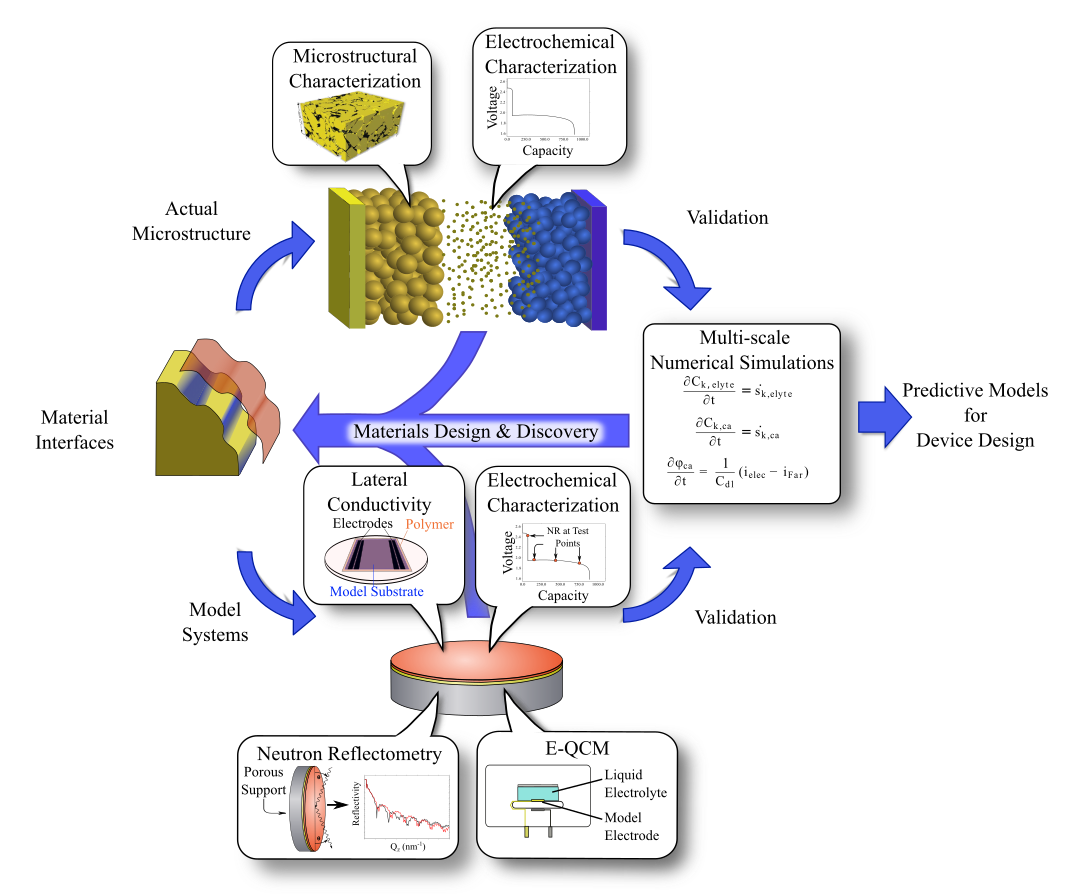
Steven C. DeCaluwe is an Associate Professor in the Department of Mechanical Engineering at Colorado School of Mines, where he combines experimental and computational approaches to study clean energy systems. His research focuses on electrochemistry and interfacial processes in batteries (Li-ion, Li-O 2 , Li-sulfur) and fuel cells. He also serves as Director of Graduate Studies and chairs the university's Diversity, Inclusion, and Access Committee. PhD in Mechanical Engineering (University of Maryland, 2009) NRC Postdoctoral Fellowship at NIST (2009-2012) BS in Elementary Education and Mathematics (Vanderbilt University, 2000) DeCaluwe's work bridges advanced diagnostics (neutron scattering, operando XPS) with multiscale simulations to improve energy storage technologies. His research spans solid-electrolyte interphase formation , electrochemical degradation mechanisms , and materials optimization for sustainable energy . He advocates for open science practices and integrates conservation biology principles into engineering design. His recent publications demonstrate expertise in battery modeling, phase segregation in electrodes, and sustainability-driven materials selection. Key themes include parameter uncertainty quantification , interface stability , and multi-modal characterization of energy storage systems. NRC Postdoctoral Fellowship Associate Editor, ASME Journal of Electrochemical Energy Conversion and Storage Chair, Mechanical Engineering Diversity Committee Director, Rocky Mountain Environmental XPS Facility DeCaluwe actively mentors students through the CORES Research Group , emphasizing inclusive learning environments and growth mindsets. His service extends to organizing neutron scattering conferences and managing shared instrumentation facilities.
Dr. David C. Poole is a University Distinguished Professor of Kinesiology and Physiology at Kansas State University, holding the Elizabeth Chapin Burke Chair in Health and Human Sciences and the Coffman Chair for University Distinguished Teaching Scholars. He serves as Director of the Clarenburg Cardiorespiratory Lab within the College of Veterinary Medicine. His work bridges the fields of kinesiology, physiology, and veterinary medicine, focusing on understanding the fundamental mechanisms of oxygen transport and utilization in health and disease. Dr. Poole earned his B.Sc. from Liverpool Polytechnic and his Ph.D. from UCLA in 1986, followed by a Scientiae Doctor from Liverpool John Moores University in 2000. His academic journey has established him as an internationally recognized researcher in exercise and respiratory physiology. Dr. Poole's research focuses on the critical relationship between oxygen transport and metabolic demands in tissues, particularly during exercise. His laboratory investigates how skeletal muscles can require up to 100-fold more oxygen during exercise compared to rest, and how conditions like heart failure, diabetes, and cancer impair this vital process. Using innovative approaches such as nitrate supplementation and dietary interventions, his work aims to enhance therapeutic strategies for improving exercise tolerance and quality of life in patients with chronic conditions. His research has significantly advanced understanding of capillary function, oxygen uptake kinetics, and Critical Power in exercise physiology. Dr. Poole's extensive publication record includes over 350 peer-reviewed papers in leading journals such as Circulation Research , Journal of Clinical Investigation , and Journal of Applied Physiology . His recent work (2023-2025) demonstrates continued leadership in understanding oxygen transport mechanisms across multiple physiological systems, with particular emphasis on skeletal muscle microcirculation, respiratory muscle function, and the impact of aging and disease on exercise capacity. His research spans fundamental physiological mechanisms to translational applications in clinical settings. Scientiae Doctor from Liverpool John Moores University (2000) Adolph Distinguished Lecturer from the American Physiological Society (2018) Joseph B. Wolffe Memorial Lecture from the American College of Sports Medicine (2021) Higuchi-Dolph Simons Statewide Award for Biomedical Research Excellence (2024) ACSM Citation Award (2019) Fellow of the American College of Sports Medicine Fellow of the American Physiological Society As Principal Investigator, Dr. Poole has secured over $6 million in research funding, with an additional $31 million as Co-Investigator, primarily from the National Institutes of Health and the K-State Johnson Cancer Research Center. His laboratory maintains a vibrant scientific atmosphere with productive collaborations among faculty and students. Key collaborators include Dr. Thomas J. Barstow, Dr. Timothy I. Musch, Dr. Howard H. Erickson, Dr. M. Roger Fedde, Dr. Casey A. Kindig, and Dr. Brad J. Behnke. Dr. Poole's work has achieved an impressive h-index of 84 with over 26,000 citations, reflecting his significant impact on the field. Dr. Poole directs the Clarenburg Cardiorespiratory Lab at Kansas State University, which provides a dynamic research environment focused on understanding oxygen transport limitations from lungs to mitochondria. The lab employs a range of novel and established strategies to investigate tissue oxygenation and metabolic control, with applications to both healthy function and disease states including emphysema, diabetes, chronic heart failure, and cancer.
Malay K. Das is a Professor in the Department of Mechanical Engineering at the Indian Institute of Technology Kanpur . With a PhD from PennState, his career spans advanced research in thermofluid science, focusing on energy systems, carbon capture, and battery thermal management. B. E. (University of Calcutta), M. Tech. (IIT Kanpur), PhD (PennState) Teaches graduate-level courses like Machine Learning for Engineers and Mathematics for Engineers Leads two research laboratories: Energy Conservation and Storage Laboratory and Gas Hydrate Research Laboratory Research Interests: Computational Fluid Dynamics (CFD) applications in energy systems Physics-informed machine learning for thermofluid applications CO2 Sequestration and Methane Hydrate Reservoirs Thermal Management of Batteries and Fuel Cells Modeling Transport Phenomena in Porous Media Recent Publication Trends: His work focuses on energy conversion , gas hydrate dynamics , and advanced materials for electrochemical systems . Key areas include Lattice Boltzmann Methods , viscoelastic flow analysis , and nanofluid applications in carbon capture. Advising: Currently supervising PhD students Sourav Dhawan (CO2 Hydrates), Randeep Ravesh (Methane Recovery), Ayaj A. Ansari (Coalbed Methane), and Pawan K. Pandey (Cerebral Aneurysm Flow). Labs and Teams: Leads the Energy Conservation and Storage Laboratory (8 PhD graduates, 3 in progress) and Gas Hydrate Research Laboratory (2 PhD graduates, 1 in progress). Research teams work on fuel cells , CO2 sequestration , and graphene-based nanomaterials for energy applications.
Eric A. Kort is a Professor in the Department of Climate and Space Sciences and Engineering at the University of Michigan. He holds a Ph.D. and S.M. in Applied Physics from Harvard University and a B.A. in Physics with Mathematics minor from Pomona College. Current research focuses on atmospheric composition changes driven by human and natural forces Develops ground-based, airborne, and space-based trace gas observation techniques Specializes in inverse/forward modeling of atmospheric transport and chemical transformation Active in urban CO2 emission quantification and methane emission source attribution Key research areas include: Atmospheric methane sources and sinks Nitrous oxide emissions from agricultural and industrial sources Airborne and space-based greenhouse gas monitoring Flaring efficiency in fossil fuel production Urban climate pollution dynamics Remote sensing of tropical wetland emissions Recent publications (2024) demonstrate: Heavy-tailed N2O emissions from agricultural sources Improved satellite-based urban CO2 monitoring systems Underestimated tropical wetland methane emissions Temporal persistence of offshore oil/gas methane leaks Stratospheric influence on tropospheric N2O variability Scientific contributions include: NSF CAREER Award recipient for nitrogen-atmosphere research Science Advances publication on Permian Basin methane emissions Science publication on Arctic ocean methane emissions PNAS perspective on atmospheric methane trends Member of National Academies Committee on Earth Science and Applications from Space Research team includes: Postdocs: Natasha Dacic, Daniel Huber PhD students: Alan Gorchov Negron, Emily Yang Collaborators: NASA, NOAA, OCO-2/3 Science Team, Carbon Mapper Initiative
Sara Pakseresht is a Postdoctoral Researcher at Aalto University's Department of Chemistry and Materials. Her work focuses on advanced materials for energy storage systems, particularly lithium-oxygen batteries, and sustainable synthesis methods. Research Groups: Electrochemical Energy Conversion Key Areas: Nanotechnology, Solid-State Electrolytes, Green Synthesis Her recent publications highlight breakthroughs in hybrid solid polymer electrolytes, graphene composites, and biosynthesized catalysts for next-generation batteries. She also explores eco-friendly antimicrobial coatings for medical devices and antibiotic-producing bacterial metabolites. Selected affiliations and collaborations span institutions like Aalto University, with expertise in electrochemical systems, nanomaterials, and biomedical applications.