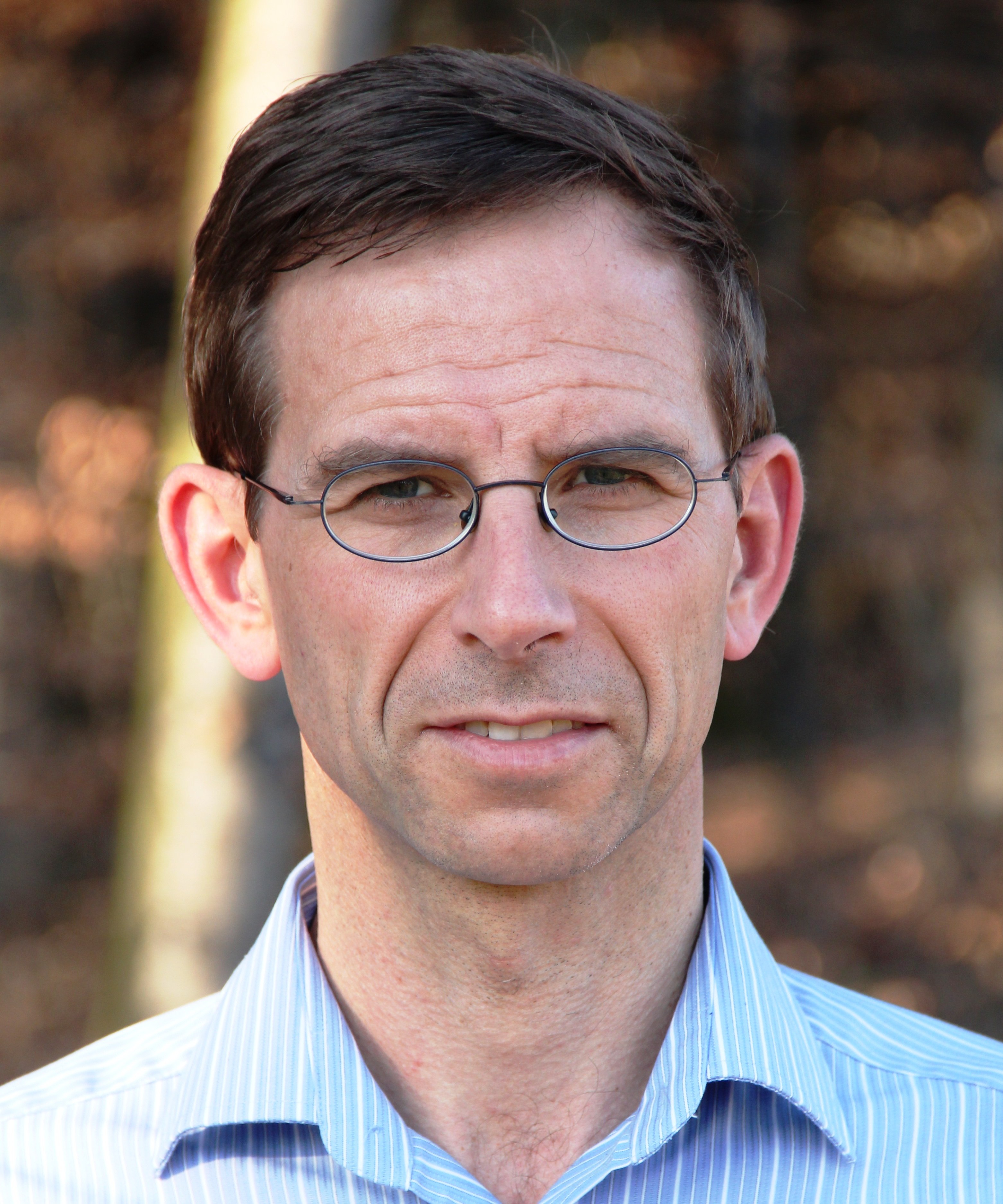
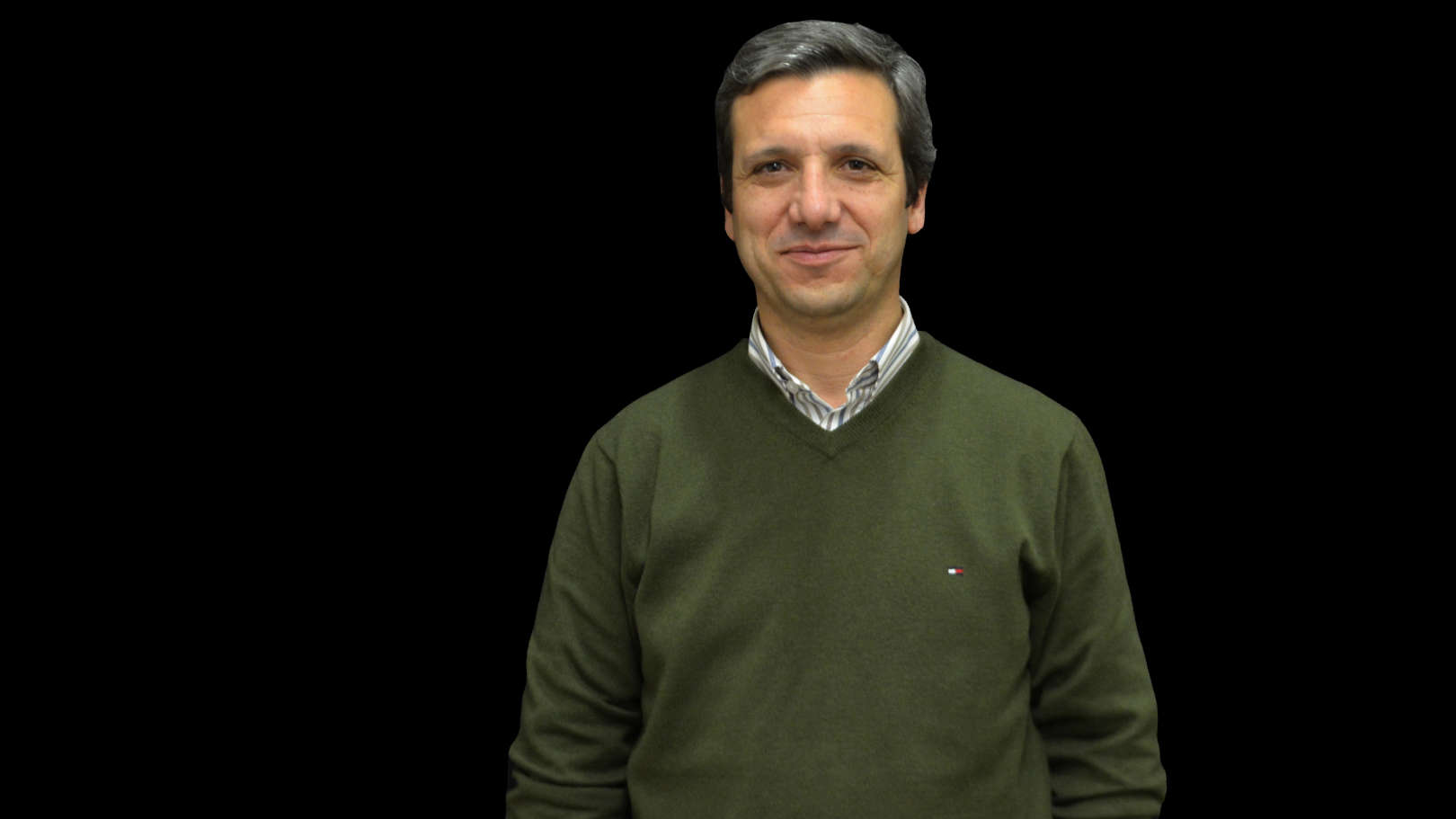
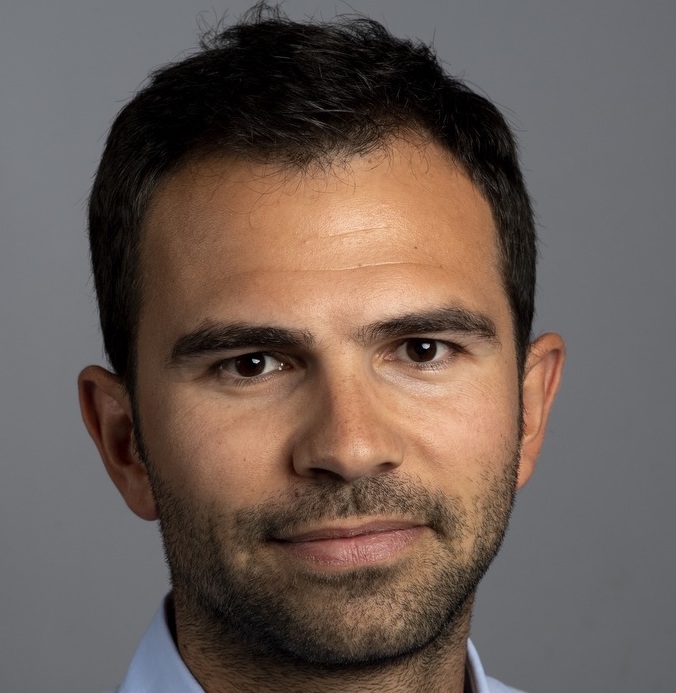
Professor Eddie Ball is a Professor of Radio Frequency Engineering at the University of Sheffield's School of Electrical and Electronic Engineering, and a UKRI Future Leaders Fellow (2021-2028). He leads the Electromagnetics, Wireless Hardware & RF Devices research theme and directs the EPSRC Millimetre Wave Measurement Laboratory. His expertise spans RF circuit/system design, SDR, and millimeter-wave technologies, with a focus on IoT applications and hardware manufacturing. Qualifications: Ph.D., University of Sheffield (2024) M.Eng (1st class), University of York (1996) Chartered Engineer Research Interests: Novel RF circuit/system design Millimeter-wave transceivers and antennas RF-MMIC and SiGe design IoT radio systems and blockchain integration Low-cost, high-performance wireless protocols Teaching: Creator and instructor for EEE6239: Radio Transceiver System & Circuit Design 2nd-year course leader for VHF Synthesiser for Wireless Communications Labs/Teams: EPSRC Millimetre Wave Measurement Laboratory Future Millimetre Wave RF Transceiver Architectures Project
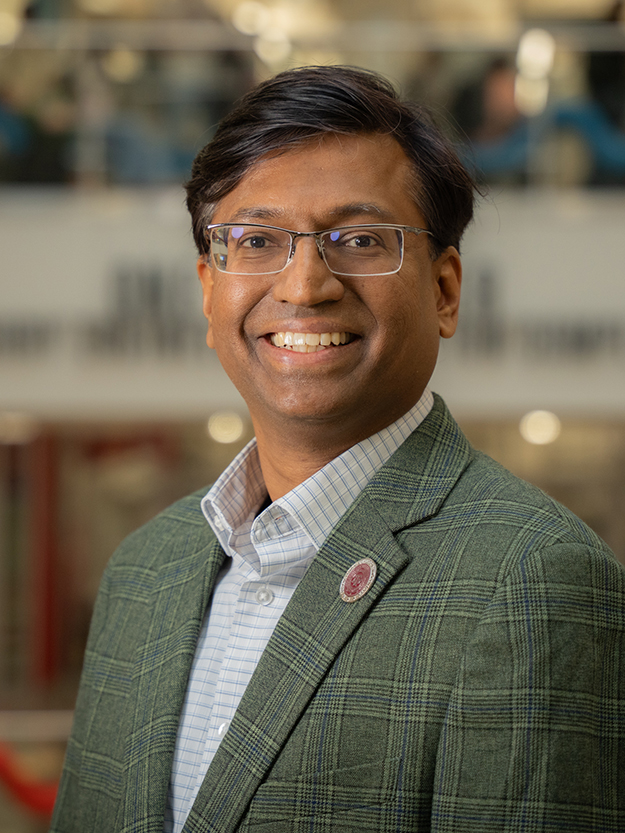
Srinivas Shakkottai is a Professor in the Department of Electrical and Computer Engineering (ECE) and affiliated faculty in the Department of Computer Science and Engineering (CSE) at Texas A&M University. He holds a Ph.D. from the University of Illinois at Urbana-Champaign (2007), followed by a postdoctoral stint at Stanford University. Since 2008, he has been at Texas A&M, advancing through roles from Assistant to Associate Professor before attaining full Professor status. Education: Ph.D., Electrical Engineering, University of Illinois at Urbana-Champaign (2007) Postdoctoral Associate, Stanford University Research Interests: Focus on algorithms for communication, energy, and transportation networks. Key areas include wireless networks, reinforcement learning, caching/content distribution, multi-agent learning, game theory, networked markets, and systems design. He co-directs the LENS Laboratory and the Texas A&M Initiative on Connected Intelligence (TICI). Key Awards: NSF CAREER Award (2012) Google Faculty Research Award (2010) Defense Threat Reduction Agency Young Investigator Award (2009) Grants & Labs: Leads research projects funded by NSF, including collaborative efforts on EdgeRIC (NextG cellular networks) and Caching systems. Active in labs focused on AI-driven network optimization and intelligent control systems. Lab & Teams: Co-director of LENS Lab and TICI, emphasizing real-time intelligent control, edge computing, and networked intelligence.
Angelo Feraudo is a Research Fellow at the Department of Computer Science and Engineering of the University of Bologna. He is currently pursuing a PhD in Computer Science, focusing on vehicular computing and service continuity in vehicular networks. His academic path includes a Master's degree in Computer Engineering (University of Bologna) and research experience at the Computer Laboratory of Cambridge University. PhD Researcher (Nov 2021 - present) Research Fellow (Apr 2021 - Oct 2021) Visitor at University of Cambridge (Sept 2020 - Jan 2021) His research intersects emerging technologies like vehicular ad hoc networks (VANETs), vehicular cloud computing, 5G/Mobile Edge Computing (MEC), O-RAN standards, and IoT security. Key projects include: Vehicular computing research (2021-present) Resilient Water Emilia-Romagna dashboard (2021-present) MUD standard extensions for IoT security (2020) Distributed federated learning at Cambridge (2019-2020) Bluetooth vulnerability analysis (2018-2019) Technical expertise spans multiple programming languages ( Java, C, Python, C++, JavaScript ) and systems engineering. Publications address critical IoT security frameworks, federated learning implementations, and device fingerprinting methodologies.
Dr. Yue Gu is a Research Associate in the School of Computing Science at the University of Glasgow, UK. His research focuses on runtime modelling and verification, with a specialization in swarm robotics, machine learning, and formal methods. Since completing his PhD in Robotics at the University of Sheffield in 2021, he has been contributing to cutting-edge research at Glasgow. He was honored with the Alan Turing Institute’s Post-Doctoral Enrichment Award in 2022, which supported his postdoctoral research endeavors. Affiliations: School of Computing Science, University of Glasgow Education: B.Eng. in Automation, Northwestern Polytechnical University (2014) M.Sc.Eng in Advanced Control and System Engineering, University of Sheffield (2015) Ph.D. in Robotics, University of Sheffield (2021) Research Interests: Swarm Robotics Machine Learning Formal Methods Human-Swarm Interaction Runtime Verification 6G Networks and Formal Verification In publications, Dr. Gu has addressed topics such as optimizing energy efficiency in 6G O-RAN through formal verification, evaluating predictive formal modeling in human-swarm interaction, and enhancing operator awareness in swarm systems. His work bridges theoretical formal methods with practical applications in robotics and telecommunications. Awards: Post-Doctoral Enrichment Award (£2000), Alan Turing Institute (2022) His research has implications for improving the reliability and efficiency of autonomous systems, with contributions to both academic conferences and journal articles. Collaborations include work presented at the ACM/IEEE International Conference on Human Robot Interaction (HRI) and IEEE RO-MAN.
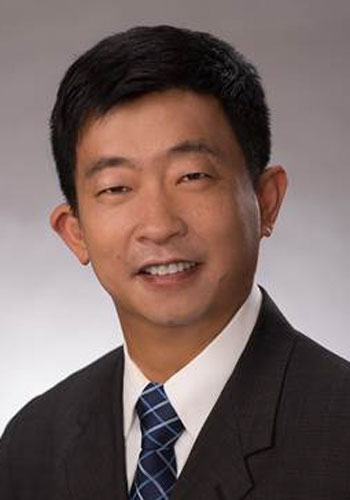
Dr. Zhu Han is the John and Rebecca Moores Professor at the University of Houston's Cullen College of Engineering, Department of Electrical and Computer Engineering. His research focuses on game theory, wireless networking, security, data analysis, and smart grid applications. He holds doctoral and master's degrees from the University of Maryland and a bachelor's from Tsinghua University. Research interests span: Next-generation wireless systems (6G/7G) AI/ML integration in communications Reconfigurable intelligent surfaces Quantum machine learning applications Secure and efficient network architectures His recent publications demonstrate strong focus on generative AI integration in wireless systems, quantum networking, semantic communications, and security frameworks for future networks. Awards and honors include: IEEE/ACM/AAAS Fellow status IEEE Kiyo Tomiyasu Award (2021) Highly Cited Researcher since 2017 IEEE Distinguished Lecturer (2015-2018) Dr. Han leads research in wireless communications and networking, with extensive industry collaboration. His lab focuses on developing theoretical foundations and practical implementations for next-generation communication systems.
Chadi Assi is a Professor and Tier II Concordia Research Chair at the Concordia Institute for Information Systems Engineering, Concordia University. His research focuses on wireless networks, information security, and smart grid systems, with particular emphasis on reconfigurable intelligent surfaces (RIS), integrated sensing and communication (ISAC), cybersecurity for electric vehicles (EVs), and machine learning-driven network optimization. He has pioneered work on mitigating cyber-physical attacks in power grids and IoT ecosystems, while advancing cooperative communication protocols like RSMA and NOMA. His technical contributions span theoretical frameworks for energy efficiency maximization in hybrid SDMA/NOMA schemes, low-complexity RIS element selection algorithms, and adversarial PINN models for grid dynamics. He also investigates vulnerabilities in EV charging infrastructure and O-RAN synchronization protocols, proposing robust detection mechanisms like PEACE and Grid Mirror. His interdisciplinary work bridges communications, power systems, and AI, addressing challenges in 5G/6G security and resilient IoT provisioning. Key Research Areas: RIS-enabled ISAC networks, EV cybersecurity, meta-learning in communications, IoT malware analysis Current Projects: Grid resilience against load-altering attacks, Movable antenna optimization, federated learning for AGC systems Recent publications (2024-2025) emphasize deep reinforcement learning frameworks for RIS-aided networks, cooperative RSMA performance enhancement, and defense mechanisms against dynamic trigger-based attacks. He has also developed novel datasets for advanced persistent threats and frameworks like ChargePrint for EV charging security analysis. His work is published in top venues including IEEE Transactions on Smart Grid, IEEE JSAC, and IEEE ICC, reflecting contributions to both theoretical advancements and practical system implementations.
Véronique VEQUE is a Professor at CentraleSupélec, working within the L2S research laboratory. Her research focuses on networking technologies including wireless networks, vehicular networks, and satellite communications. She specializes in developing efficient routing protocols, mobility management systems, and energy optimization techniques for next-generation networks. Dr. Veque's current research examines flexible resource allocation in disaggregated RAN architectures, intelligent routing algorithms for dense WiFi networks, and predictive modeling for IoT congestion control. Her work combines theoretical modeling with practical implementations for telecommunications systems. Her publication record spans network architecture design, mobility modeling, routing optimization, and energy-efficient communication. Recent work has focused on Open-RAN functionality placement, Cloud-RAN resource allocation, and stochastic mobility modeling for urban environments.
Paolo Bellavista is a Full Professor of Distributed and Mobile Systems at the Department of Computer Science - Science and Engineering, Alma Mater Studiorum – University of Bologna. His research focuses on edge computing, federated learning, IoT, digital twins, and blockchain applications. With over 140 journal articles and 200+ conference papers, his work appears in top venues such as ACM Computing Surveys and IEEE Transactions. He serves as Editor-in-Chief of the MDPI Computers Journal and holds editorial roles in IEEE Communications Surveys&Tutorials and ACM Computing Surveys. His contributions span network optimization, cybersecurity, and smart cities, with notable achievements in citation metrics (h-index 46 on Google Scholar). Research interests include distributed systems, vehicular networks, AI-driven security, and QoS-aware edge infrastructures. He has organized major conferences like IEEE Mobile Cloud and ACM ICDCN. Current projects explore federated learning unlearning, digital twin entanglement, and blockchain-based data spaces. His work bridges theoretical foundations with real-world deployments in smart manufacturing and healthcare. Editorial Roles : MDPI Computers (Editor-in-Chief), IEEE Communications Surveys&Tutorials (Associate Editor), ACM Computing Surveys (Editor) Conference Leadership : Technical Program Chair for IEEE Mobile Cloud 2015, General Co-Chair for SCNS 2018 Key Contributions : Over 140 journal papers, 15 special issues as guest editor, and 200+ conference publications His lab develops middleware for edge-cloud continuum applications and collaborates internationally on projects like InAbled Cities. Office hours are held weekly at the University of Bologna’s DISI department.
Aamir Mahmood is an Associate Professor at the Department of Computer and Electrical Engineering at Mid Sweden University and an Adjunct Professor at NUST, Pakistan. His research focuses on 5G/6G wireless communication , Industrial IoT , RF interference management , and time synchronization . Education: B.Sc. NUST (2002), M.Sc. and Ph.D. Aalto University (2008, 2014) Collaborations: Nokia Research Center, IEEE Sweden VT-COM-IT His recent work explores STAR-RIS for 6G IoT, NOMA for industrial networks, and deep reinforcement learning in MEC systems. Key trends include ultra-reliable communication for industrial automation and interference management in heterogeneous networks. Awards : IEEE WCNC’13 Best Paper Ericsson Research Foundation Grant Nokia Foundation grant STINT grants IEEE Sweden VT-COM-IT Best Student Journal Paper Award Swedish Institute funding Interreg Aurora funding Awarded 80+ peer-reviewed publications and active in IEEE leadership roles.
Carla Fabiana Chiasserini is a Full Professor and Deputy Director at the Department of Electronics and Telecommunications (DET) at the Polytechnic University of Turin. She serves as a Component of the CARS@PoliTO Interdepartmental Center - Center for Automotive Research and Sustainable Mobility and acts as a Spoke leader for research and innovation activities. Her academic career spans multiple prestigious institutions and she maintains active collaborations worldwide. Professor Chiasserini's research interests span algorithm design and analysis, cellular networks, connected cars, edge computing, heterogeneous wireless networks, Internet of Things, machine learning, mobile networks, mobile services, and performance evaluation. Her work bridges theoretical algorithm development with practical applications in next-generation telecommunications systems. She leads the TNG research group at DET and focuses on Machine Learning for Networking, with specific research lines in Network Slicing in 5G, Connected autonomous cars, and Opinion dynamics in social networks. Her research aligns with Sustainable Development Goals including Industry, Innovation and Infrastructure; Sustainable Cities and Communities; and Climate Action. Her recent publications demonstrate a strong trend toward integrating machine learning with edge computing, 5G/6G systems, and automotive applications. The research spans from theoretical algorithm development to practical implementations for XR offloading, distributed service provisioning, reliability assessment of AI-based automotive systems, and satellite networking. Her work shows increasing focus on practical implementations with industry applications, particularly in the automotive sector and next-generation telecom infrastructure. Best Paper Award - Wireless Telecommunications Symposium (WTS) 2018 Best Paper Award - IEEE WoWMoM 2016 Best Paper Award Runner-up at ACM MSWiM 2016 Top Paper Award at the ACM CoNEXT 2016 Cloud-Assisted Networking (CAN) Workshop Best Paper Award at SPACOMM 2014 Best Paper Award at AD HOC NOW 2014 2010 Editor of the Year Award for the Ad Hoc Networks journal (Elsevier) IEEE Fellow (2018-) ACM Fellow (2024-) Professor Chiasserini actively advises numerous PhD students working on cutting-edge topics in network systems, with recent graduates focusing on edge services in 5G networks, resource-aware learning in mobile networks, and deployment of microservices at the network edge. She leads multiple significant research grants including O-RAN (2024-2027), CSI-Future (2023-2025), RESTART - Spoke 4 (2023-2025), PREDICT-6G (2023-2025), and several others funded by PNRR, EU Horizon programs, and industry partnerships. Her work has substantial practical impact through numerous patents including OffloaDNN and SEM-O-RAN. She leads the TNG research group within the Department of Electronics and Telecommunications and participates in the CARS@PoliTO Interdepartmental Center for Automotive Research and Sustainable Mobility. Her laboratory work focuses on practical implementations of theoretical concepts, particularly in the areas of connected vehicles, edge computing, and 5G/6G systems. She maintains strong industry connections through projects with Intel Corporation and other technology partners, ensuring her research has direct real-world applications.
Dimitrios Nikolopoulos is the John W. Hancock Professor of Engineering at Virginia Tech's College of Engineering, within the Department of Computer Science. His research focuses on high-performance computing, systems runtime systems, memory management, and edge computing. He holds a Chartered Engineer (CEng) certification. Education: M.Eng., University of Patras, Greece (1996) M.Sc., University of Patras, Greece (1997) Ph.D., University of Patras, Greece (2000) Research Interests: His work spans transprecision computing, parallel programming paradigms, efficient inference frameworks for large language models (LLMs), and energy-efficient server ecosystems. Recent efforts emphasize optimizing edge computing systems, GPU resource sharing, and adaptive memory management in cloud-edge environments. Recent Trends in Publications: Recent studies highlight advancements in edge-serving frameworks (e.g., SLED), multi-agent systems for HPC code optimization (MARCO), and novel approaches to GPU and memory resource utilization in constrained settings. Themes include reducing latency, improving scalability, and integrating AI-driven techniques into HPC workflows. Grants & Advising: Details on current grants and advisees are not explicitly listed in the provided materials. Labs/Teams: His research is conducted through collaborative groups within Virginia Tech's Department of Computer Science, focusing on systems, parallel computing, and AI/ML infrastructure.
Prof. Torsten Braun is a Professor and Head of the Communication and Distributed Systems (CDS) research group at the Institute of Computer Science, University of Bern. His research focuses on advanced networking technologies, edge computing, and machine learning applications in telecommunications. He leads projects addressing challenges in 5G/6G networks, federated learning optimization, and intelligent systems for smart cities. His work integrates theoretical frameworks with practical implementations, emphasizing distributed systems, service-oriented architectures, and IoT security. Key research areas include edge caching strategies for VR/AR applications, trajectory prediction using reinforcement learning, and resilient network design against jamming attacks. Braun has contributed to innovations in vehicular networks (V2X), RAN intelligence, and decentralized machine learning frameworks. He holds leadership roles in developing adaptive resource management systems for edge-cloud environments and has pioneered solutions for energy-efficient federated learning in heterogeneous IoT ecosystems. Publications span topics like spatial-temporal point cloud sensing, mobility-aware service orchestration, and secure positioning systems. His team explores cross-disciplinary applications such as LoRaWAN-based urban heat monitoring and blockchain-inspired public key infrastructures for IoT (Veritaa-IoT). Braun actively engages in standardization and industry collaborations to advance next-generation network architectures.
Manuel Alberto Pereira Ricardo is a Full Professor at the Faculty of Engineering of the University of Porto (FEUP), teaching courses on Mobile Communications and Computer Networks. He holds the position of TEC4 Coordinator at INESC TEC since January 1, 1996, where he has progressed through roles including Wireless Networks area coordinator, Center for Telecommunications and Multimedia director, and Board of Directors member. His research focuses on mobile communications networks, quality of service, radio resource management, network congestion control, and performance assessment. Licenciatura, M.Sc., and Ph.D. (2000) in Electrical and Computer Engineering (Telecommunications) from FEUP Manuel's recent research trends include 6G technology , O-RAN architecture , and autonomous UAV positioning . He has contributed to vision-aided Radio Access Networks (RANs), reinforcement learning (RL) frameworks for unmanned aerial vehicle (UAV) positioning, and open interface-based mobile RAN control systems. Publications emphasize millimeter-wave communication, network automation, and environment-aware connectivity solutions. He has supervised numerous graduate theses on topics spanning mobile network topology control , underwater radio communications , 5G private networks , vision-aided airborne communications , and O-RAN-based autonomous control . At INESC TEC, he leads telecommunications initiatives and has participated in over 30 research projects with 150+ publications.
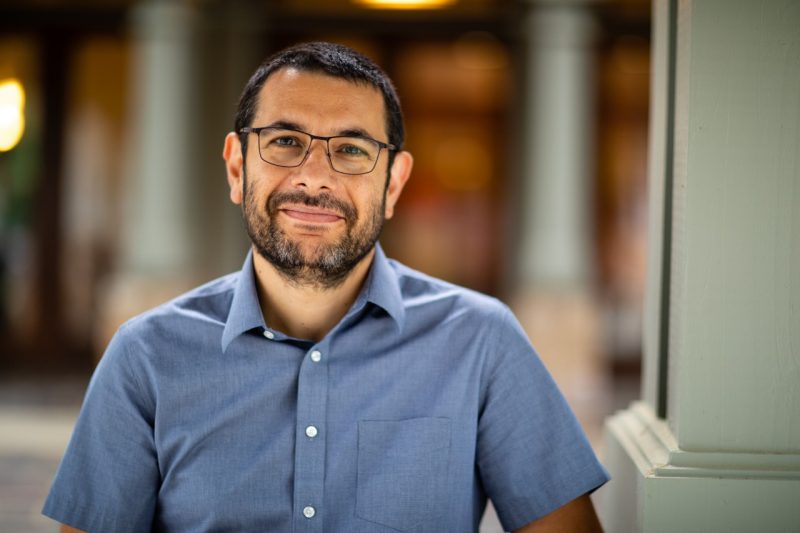
Leonardo Bonati is an Associate Research Scientist in the Department of Electrical and Computer Engineering at Northeastern University. He specializes in cutting-edge wireless communication systems, particularly focusing on Open RAN, 5G/6G networks, and AI-driven network intelligence. His work emphasizes automated testing, network slicing, and security in software-defined cellular systems. He leads and contributes to high-profile projects such as AutoRAN and DigiRAN, funded under the CHIPS and Science Act, which aim to enhance open and disaggregated cellular network testing and digital twin frameworks. His research also involves experimental platforms like Colosseum and OpenAirInterface for large-scale wireless emulation and real-world testing. Key research interests include: AI-based network control (via dApps/xApps), digital twins for network validation, zero-touch deployment, and security in O-RAN interfaces. He holds multiple patents on topics ranging from network slicing to private 5G connectivity through steganography. Notably, Bonati was recognized among the top 2% most-cited scientists globally in 2024 by Stanford University. He collaborates actively with industry and academia on next-generation cellular technologies, contributing to both theoretical advancements and practical implementations. His advising and grant activities include co-PI roles on major initiatives like AutoRAN (testing automation) and DigiRAN (high-fidelity digital twins), totaling over $4M in funding. Bonati’s work bridges academic research and industry-ready solutions through platforms like Colosseum and the Open RAN Gym.
Salvatore D'Oro is an Associate Research Professor in the Department of Electrical and Computer Engineering at Northeastern University, affiliated with the Institute for the Wireless Internet of Things (WIoT). He holds a PhD from the University of Catania (2015), with postdoctoral and visiting research stints at Ohio State University and Université Paris-Sud 11. His research focuses on Open RAN, network slicing, AI-driven networking, and 5G/6G security. He is a co-PI on CHIPS Act-funded projects like AutoRAN and DigiRAN, emphasizing automated testing and digital twins for O-RAN systems. He has authored numerous patents, including frameworks for drone network control and O-RAN efficiency. Recognized in the 2024 Stanford top 2% cited scientists and recipient of a 2019 Best Paper Award for HIRO-NET, his work spans theoretical advancements and practical implementations in wireless systems. Education: B.S./M.S. in Computer/Telecommunications Engineering, University of Catania (2011–2012) PhD in Telecommunications, University of Catania (2015) Postdoctoral Researcher at University of Catania (2016) Research Interests: Open RAN and O-RAN Network Slicing AI/ML for Network Intelligence 5G/6G Security and Private Connectivity Automated Testing and Digital Twins in Cellular Networks Key Projects: AutoRAN: Automated End-to-End Testing for Open Cellular Systems DigiRAN: Digital Twins for O-RAN Security and Performance Colosseum: Large-Scale Wireless Experimentation Platform Awards: 2024 Stanford Top 2% Cited Scientists 2019 IEEE WoWMoM Best Paper Award 2015 Francesco Carassa Award Labs/Teams: Wireless Networks and Embedded Systems Lab (Northeastern) Collaborations with industry partners on O-RAN and 5G/6G systems