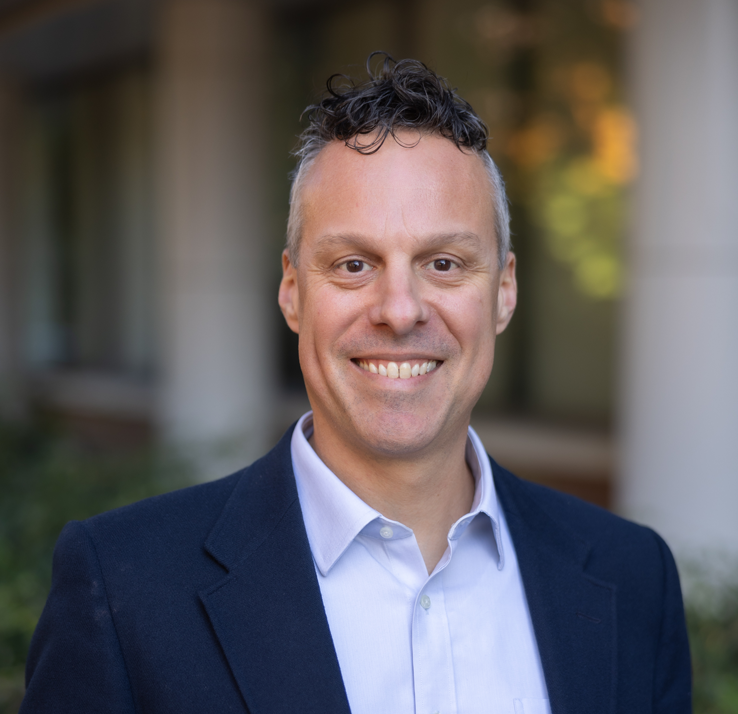
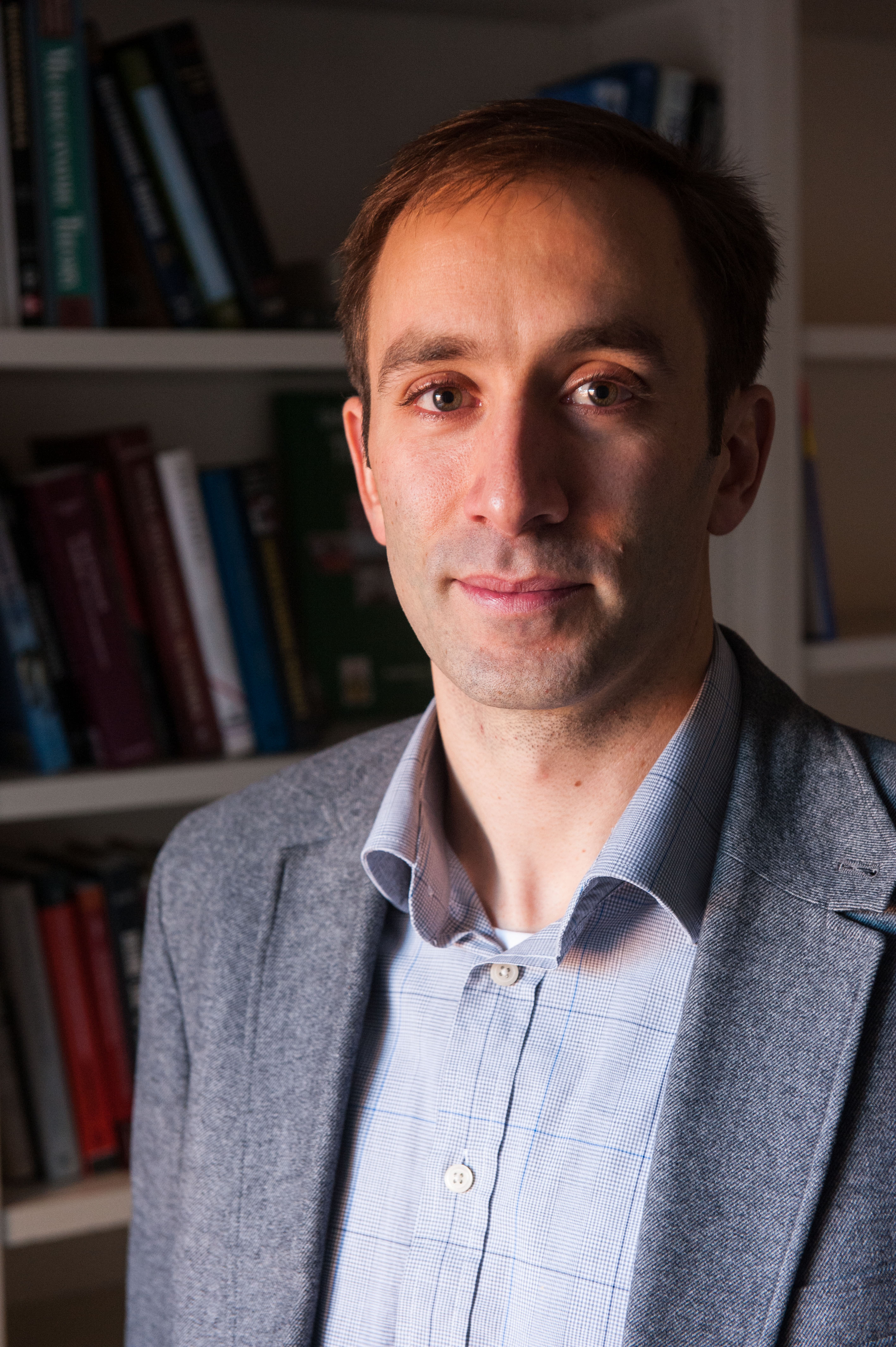
Hans van Trijp is a Full Professor in Marketing and Consumer Behaviour at Wageningen University & Research, focusing on food-related decision-making, sustainability, and packaging innovation. He leads interdisciplinary projects addressing food waste reduction , green packaging , and cultured meat acceptance , bridging behavioral science with market transitions. Key Research Areas: Food waste, sustainable packaging, consumer neuroscience, dietary transitions Collaborations: Partnerships with Dutch supermarkets (Albert Heijn, Aldi), Vietnamese agricultural institutions, and EU policy bodies His recent work explores social norms and implicit cues in shaping food choices, with a focus on experimental designs and virtual reality applications . A 2021 prize recognized his team’s insights into agricultural export integration for Vietnamese farmers. Notable Contributions: Pioneering food swap recommendation systems in online supermarkets Meta-analyses on social norms and emotional regulation in consumption Advocacy for FAIR data in sensory and consumer research As a promotor for 10+ PhD projects, he mentors researchers in topics spanning mindfulness interventions , market orientation for smallholder farmers, and neural responses to food cues. His work emphasizes collaborative innovation across supply chains and policy frameworks.
Sergio Baranzini is a Professor in the Department of Neurology at the University of California, San Francisco (UCSF) School of Medicine and a member of the UCSF Weill Institute for Neurosciences. With a distinguished career spanning over two decades at UCSF, Dr. Baranzini has established himself as a leading researcher in multiple sclerosis (MS) and neuroimmunology. Dr. Baranzini earned his BS/MS and PhD in Biochemistry/Biotechnology and Human Molecular Genetics from the University of Buenos Aires, Argentina, completing his PhD with honors in 1997. He then pursued postdoctoral training in neurogenetics at UCSF before joining the faculty in 2003. His research focuses on the genetic, genomic, and immunological aspects of multiple sclerosis, with particular emphasis on the gut-brain axis and microbiome's role in neuroinflammation. Dr. Baranzini's research employs a multidisciplinary approach integrating wet lab techniques (including DNA microarrays, proteomics, and laser capture microdissection) with dry lab analytical approaches (bioinformatics, complexity theory, and mathematical modeling). His work has revealed critical insights into MS pathogenesis, particularly how gut microbiota influences disease development and progression. Recent groundbreaking studies have demonstrated how specific gut bacteria from MS patients can trigger MS-like disease in animal models and how microbial metabolites affect remyelination processes. His laboratory has secured significant funding through multiple NIH grants, including as Principal Investigator on projects examining the genetic basis of MS progression and post-GWAS approaches to identify cell-specific genetic pathways underlying MS risk. As evidenced by his extensive publication record in top-tier journals including Science, Nature, and PNAS, Dr. Baranzini's work represents some of the most innovative research in neuroimmunology and MS pathogenesis. National Multiple Sclerosis Society (US) Advanced Postdoctoral Fellowship (2001) National Multiple Sclerosis Society (US) Harry Weaver Neuroscience Scholar Award (2009-2014) Department of Neurology UCSF Endowed Chair in Neurology (2010) National Multiple Sclerosis Society Stephen C. Reingold Award (2015) Department of Neurology UCSF Distinguished Professorship in Neurology I (2019) Department of Neurology UCSF Neurology Research Incentive Program 2 (N-RIP2) (2023) Barancik Prize for Innovation in Multiple Sclerosis Research (2024) Dr. Baranzini serves as an ad-hoc reviewer for numerous specialized journals and is an elected member of the American Neurological Association. His laboratory (iMSMS) actively collaborates with interdisciplinary teams worldwide to integrate knowledge across research domains through systems biology approaches. His current NIH-funded research explores automated evidential support from raw data for relay agents in biomedical knowledge graph queries and investigates the genetic basis of progression in multiple sclerosis.
Justin Trogdon, PhD, is a Professor in the Department of Health Policy and Management at the University of North Carolina's Gillings School of Global Public Health. His research focuses on health economics, particularly assessing the economic burden of cancer, evaluating policy cost-effectiveness, and developing methods to estimate causal effects of interventions. Education : B.A. in Economics, Baylor University, 1999 M.A. in Economics, Duke University, 2001 PhD in Economics, Duke University, 2004 Research Interests : Dr. Trogdon's work addresses policy-relevant questions in three key areas: (1) economic burden of cancer, (2) cost-effectiveness of interventions, and (3) causal inference methods. He has evaluated HPV vaccination incentives, Medicare/Medicaid underinsurance, and stroke care continuity. His research combines econometric modeling with real-world policy analysis. Labs/Teams : He participates in the Triangle Health Economics Workshop and collaborates with the Gillings School's research teams focusing on public health economics and outcomes research.
Martin Halla is a Professor of Economics at the Vienna University of Economics and Business (WU) in Austria, with affiliations as Permanent Scientific Consultant at the Austrian National Public Health Institute (GÖG), Associate at the Austrian Institute of Economic Research (WIFO), and Research Fellow at the Institute for the Study of Labor (IZA). His research focuses on applied microeconometrics, with primary interests in family economics, labor markets, health, political economy, and tax evasion. He also utilizes historical data from the Austro-Hungarian Empire in his work. He serves on the scientific advisory board of the Austrian Socio-Economic Panel (ASEP) and three Standing Field Committees of the Verein für Socialpolitik: Population Economics, Health Economics, and Social Policy. As Co-Editor of Empirica , the official journal of the Austrian Economic Association, he emphasizes descriptive research over causal analyses. Current funded research includes the OeNB project 'Are the Alps a Land of Opportunity?'. Halla regularly contributes to public discourse through his German-language column ' Understanding the Economy ' in Oberösterreichische Nachrichten , addressing topics like tax policy, education, and migration. He has also published op-eds in Der Pragmaticus and DerStandard , discussing economic inequality, pandemic costs, and fiscal policies. His recent research explores long-term effects of parental divorce, intergenerational mobility among immigrants, and mental health impacts of parenthood. He frequently presents on family economics, labor market dynamics, and policy-relevant topics at academic conferences and institutions.
Tapan Mehta is a tenured Professor and Vice Chair for Research in the Department of Family and Community Medicine at the University of Alabama at Birmingham (UAB). He also holds appointments in the School of Health Professions - Health Services Administration and multiple research centers including the Comprehensive Arthritis, Musculoskeletal, Bone and Autoimmunity Center (CAMBAC), Center for Clinical and Translational Science (CCTS), and Center for Outcomes and Effectiveness Research and Education (COERE). His research spans health services, biostatistics, and data analytics with a focus on obesity, cardiometabolic conditions, disability, and rehabilitation. Dr. Mehta earned his PhD in Biostatistics and Masters in Electrical Engineering from the University of Alabama at Birmingham. His educational background combines engineering principles with statistical methodology, providing a unique foundation for his research in health services and outcomes. His research interests center on health services and outcomes research related to cardiometabolic conditions (diabetes and obesity), disability, and rehabilitation. He specializes in pragmatic study design application and development, population health initiatives, and analytics for large datasets. His work often involves developing and testing interventions for weight management, diabetes care, and physical activity promotion in diverse populations, including those with mobility disabilities. He has particular expertise in telehealth interventions, adaptive trial designs, and analyzing large existing datasets to answer critical health services questions. Analysis of Dr. Mehta's recent publications reveals a strong focus on adaptive intervention strategies for obesity and cardiometabolic conditions, telehealth delivery of care for people with disabilities, and innovative methods for improving healthcare quality. His work spans clinical trials, machine learning applications, and qualitative studies to understand patient experiences. A consistent theme across his research is the development of personalized, accessible interventions that can be implemented in real-world settings, particularly for underserved populations. Creativity is a Decision Faculty Contest Award (2016) Dr. Mehta serves as a PI and/or co-investigator on numerous research studies funded by NIH, NIDILRR, and PCORI. His grants portfolio includes the NIH-funded Nutrition Obesity Research Center Behavioral Science and Analytics Core and the CDC-funded Data Coordinating Center for the National Center on Health Physical Activity and Disability. He has mentored multiple PhD students, serving as committee chair for several dissertations in rehabilitation science and health services administration. His collaborative approach is evident in his numerous multi-institutional projects focused on improving health outcomes for people with disabilities and chronic conditions. Dr. Mehta leads several research initiatives including the Research Collaborative in the School of Health Professions and co-leads the NORC Behavioral Science and Analytics Core. His work often involves interdisciplinary teams spanning medicine, public health, engineering, and computer science. He has developed and tested numerous telehealth interventions including Movement-to-Music programs, digital coaching platforms, and AI-powered diabetes management tools designed specifically for rural and underserved populations.
Steven Stillman is a Professor of Economics at the Faculty of Economics and Management, Free University of Bozen-Bolzano. He holds a PhD in Economics from the University of Washington (2000) and previously served as a Professor at the University of Otago, New Zealand. His research focuses on empirical labor economics, public policy, and migration, examining how government policies influence individual and household behavior. Key areas include migration's impact on families, voting behavior, minimum wage effects, and healthcare policy. He teaches Advanced Quantitative Methods, Labor Economics, and Public Economics at the undergraduate and graduate levels. His work often employs quasi-experimental methods, with notable contributions on migration lotteries and policy evaluation. Research interests span labor markets, health economics, political decision-making, and development economics. Recent studies analyze refugee integration dynamics, populism drivers, and the obesity epidemic's economic roots. His articles emphasize policy relevance, using rigorous methodologies to assess real-world impacts. Though no scientific awards are explicitly listed, his extensive publication record and methodological contributions highlight academic impact. He advises students but no specific advisee list is provided. His work integrates interdisciplinary approaches, addressing complex issues like pandemic policy responses and socioeconomic inequality.
Dympna Leonard is a Research Fellow at James Cook University (JCU), specializing in public health and nutrition, with a focus on Indigenous populations in Far North Queensland. She holds a PhD in Nutrition from JCU (2019), examining anaemia among Aboriginal and Torres Strait Islander mothers and children. Her research addresses health disparities in remote communities, emphasizing maternal and child health, anaemia prevention, and nutritional interventions. Her work spans epidemiological studies, policy analysis, and community-based interventions. Key areas include anaemia in infants and children, breastfeeding practices in gestational diabetes contexts, and the effectiveness of incentive programs to improve dietary choices. She collaborates with multidisciplinary teams and government agencies to design culturally appropriate health strategies. Leonard’s publications highlight trends in public health nutrition over decades, linking data silos to inform policy, and evaluating long-term health outcomes in Indigenous populations. Her research bridges clinical findings with actionable public health measures, aiming to reduce health inequalities in remote regions. No scientific awards are explicitly noted in the provided texts. However, her extensive peer-reviewed output demonstrates sustained academic contribution. She has advised on multiple studies but no formal advisee names are listed.
Dr. Cynthia Kroeger is a Senior Lecturer and Research Fellow at the University of Sydney’s Central Clinical School, affiliated with the Charles Perkins Centre and the Matilda Centre. She specializes in obesity-related disease interventions, open science, and research integrity. Her work explores the impact of stress on metabolic systems and the role of transparency in scientific practices. Dr. Kroeger holds a PhD from the University of Illinois at Chicago and has conducted postdoctoral research at Indiana University and the University of Alabama at Birmingham. She has received numerous awards, including the George A. Bray Doctoral Dissertation Award and grants from the NIH. Her research spans epidemiology, nutrition science, and clinical trials, with a focus on cardiovascular health and lifestyle interventions. Education: PhD in Kinesiology, Nutrition, and Rehabilitation from the University of Illinois at Chicago (2012); Postdoctoral training at Indiana University Bloomington (NIH-funded) and the University of Alabama at Birmingham. She also completed a clinical trial protocol at the Charles Perkins Centre. Research interests include open science methodologies, bias reduction in nutrition research, and the intersection of trauma, stress, and metabolic dysfunction. Her current projects involve investigating stress reduction techniques in obesity management and collaborating internationally on women’s empowerment strategies in low-resource settings. Dr. Kroeger leads the Open Science stream at the Charles Perkins Centre, emphasizing transparency through preregistration and open data sharing. Key publications highlight her work on cardiovascular risk factors, mindfulness-based interventions for diabetes, and methodological improvements in meta-analyses. Her articles often address large datasets like the UK Biobank, exploring diet, lifestyle, and health outcomes. Awards and honors reflect her contributions to advancing scientific rigor and public health initiatives. Grants include NIH funding (F32DK107157) and institutional awards from the University of Sydney and others. She is a Catalyst for the Berkeley Initiative for Transparency in the Social Sciences and an affiliate of the Kinsey Institute. Her work bridges interdisciplinary fields, emphasizing trust, safety, and transparency in science and healthcare.
Andrew Zeitlin is an Associate Professor at the McCourt School of Public Policy at Georgetown University. He also serves as a Non-Resident Fellow at the Center for Global Development, an Affiliated Professor at J-PAL, and a Research Associate at the Centre for the Study of African Economies at Oxford University. His research focuses on experimental methods to study how individual decision-making impacts state effectiveness, including public-sector incentives, tax policy, and social welfare programs. Zeitlin’s work emphasizes field and lab experiments in developing economies, particularly in Rwanda and Uganda. Key topics include performance contracts for civil servants, cash transfer program efficacy, and tax audit policies. In 2024, he received the Provost’s Distinguished Achievement in Research Award for contributions to teacher incentive studies in Rwanda. His recent articles explore cash vs. in-kind transfers, youth employment barriers, and public-sector performance reforms. Notable collaborations include work with Craig McIntosh on medium-term employment impacts and analyses of Rwanda’s tax evasion strategies. He has also contributed to policy discussions on refugee economic integration and small business development in conflict-affected regions. Zeitlin’s affiliations with global institutions like J-PAL and CGD reflect his commitment to applied policy research with real-world impact. His grants and projects focus on scalable solutions for governance challenges in Africa, combining rigorous empirical analysis with actionable insights for policymakers.
Tatiana Andreyeva, PhD, is Associate Professor and Director of Economic Initiatives at the Rudd Center for Food Policy and Health within the University of Connecticut. She specializes in economic incentives shaping food choices, price elasticity, and taxation policies related to sugar-sweetened beverages, with notable development of the Rudd Center Revenue Calculator for beverage taxes. PhD in Policy Analysis, Pardee RAND Graduate School (2006) MPhil in Policy Analysis, Pardee RAND Graduate School (2003) MA in Economics, National University Kiev-Mohyla Academy (2000) BA in Economics, International Solomon University (1997, with honors) Her research spans food policy economics, focusing on federal nutrition assistance programs (WIC, SNAP), obesity prevention strategies, and health disparities. Recent studies examine breastfeeding trends post-formula shortages, CACFP implementation challenges, and the intersection of maternal employment with infant feeding practices. She has served as Principal Investigator for grants from NIH, USDA Economic Research Service, and Robert Wood Johnson Foundation. Previously, she worked at RAND Corporation on health policy issues including obesity, mental health, and retirement behavior.
Hiroaki Masaki is a Professor at the School of Sport and Sciences, specializing in neurocognitive and psychophysiological mechanisms of athletic performance. He earned his Ph.D. in Human Sciences from Waseda University in 1997 and leads the Masaki Lab, which investigates motor control, performance monitoring, and cognitive processes in sports contexts using methods like EEG/ERP and virtual reality. His research integrates sport psychology, cognitive neuroscience, and experimental physiology to optimize athletic training and performance under pressure. Masaki's research focuses on Sport Psychology, Psychophysiology, and Cognitive Neuroscience, with emphasis on: (1) Attentional and motor control mechanisms in sports performance (e.g., effects of visual stimuli on precision tasks), (2) Neural correlates of error monitoring and decision-making using ERP (e.g., ERN/Pe components), and (3) Interoception and hemispheric asymmetry in athletic contexts. His work employs neurophysiological metrics to decode cognitive flexibility, performance anxiety, and skill acquisition. Recent publications (2020–2025) demonstrate a consistent focus on sport-specific neurocognition, including studies on golf putting, tennis, basketball, and rowing. Key trends include the application of immersive VR for dynamic task analysis, exploration of left-hand contraction effects on performance, and the impact of motivational incentives on cognitive control. Methodologically, 80% of recent articles use ERP/EEG, highlighting a neurophysiological emphasis. Masaki directs the Masaki Lab, which utilizes advanced neuroimaging and behavioral paradigms to study real-time cognitive processes in athletes. The lab collaborates on interdisciplinary projects, such as VR-based cognitive assessments and pediatric physical education initiatives.
Grant Miller is the Henry J. Kaiser, Jr. Professor of Health Policy at Stanford School of Medicine, Senior Fellow at Freeman Spogli Institute (FSI) and Stanford Institute for Economic Policy Research (SIEPR). He holds courtesy appointments in Economics and directs the Stanford Human Trafficking Data Lab. His work focuses on health economics, development economics, and economic demography, with emphasis on improving health strategies in developing countries. Education: Ph.D. in Health Policy (Economics Track), Harvard University, 2005 M.A. in Public Policy, Harvard Kennedy School, 2000 B.A. in Psychology, Yale University, 1995 Research Interests: Miller’s research addresses three core themes: (1) drivers of population health improvement, (2) behavioral underpinnings of health determinants, and (3) policy-design for effective health interventions. Recent work explores clean brick kiln technologies in Bangladesh, China’s One Child Policy impacts, and labor trafficking in global supply chains. Awards: 2020 Essen Health Conference Best Paper Prize 2013 American Economic Review Excellence in Refereeing 2006 ASAHE Best Student Paper Grants & Funding: Over $20M in grants from NIH, Gates Foundation, and US State Department, including projects on labor trafficking prevention in Brazil and Bangladesh, clean energy transitions in brick manufacturing, and anemia reduction programs in China/India. Affiliations: National Bureau of Economic Research (NBER), Abdul Latif Jameel Poverty Action Lab (J-PAL), Stanford King Center on Global Development.
Petter Lundborg is a Professor at the Department of Economics and the Centre for Economic Demography at Lund University. He joined Lund University in 2010 after working at VU Amsterdam from 2006 to 2010. His research focuses on health and labor economics, examining topics such as health outcomes, education, early life conditions, and household finance. He is affiliated with IZA Bonn and has contributed to leading journals including the American Economic Review and the Journal of Finance. Key research interests include understanding how early life conditions influence long-term economic and health trajectories, evaluating public policies related to education and healthcare, and analyzing labor market dynamics. His work contributes to UN Sustainable Development Goals related to quality education and good health. He has received the Assar Lindbeck Medal in 2017 for outstanding contributions to economics. His grants include projects on summer job impacts, socioeconomic segregation, and fertility inequality derived from IVF treatments. Lundborg has supervised multiple PhD students, including Natalie Irmert, and has reviewed for various academic institutions and journals.
Dr. Imran Shah is a Senior Lecturer in the Department of Economics at the University of Bath. His research focuses on applied macroeconomics, monetary policy, energy economics, and pedagogy of economics. He holds a PhD from the University of Leicester and received the Gold Medal for MSc excellence. His research explores monetary policy transmission, inflation dynamics, energy economics, and educational methodologies in econometrics. Recent publications analyze student-centered teaching effectiveness, health disparities measurement, and R&D-driven employment growth. Awards: Gold Medal for MSc Excellence Fellow of the Higher Education Academy Dr. Shah serves as Director of Studies for IMC programs and Senior Tutor for postgraduate programs. He actively contributes to departmental equality initiatives and the econometrics research group.
Ann Bruce is Professor of Innovation in Food Systems at the University of Edinburgh's Global Academy of Agriculture and Food Systems and affiliated with the Innogen Institute. Her interdisciplinary research bridges social and natural sciences with a focus on agricultural innovation, food systems, and animal biosciences. She maintains an active research program with numerous current projects funded by major organizations including the European Commission, Global Food Security Programme, and ESRC. Dr. Bruce holds postgraduate degrees in both natural and social sciences and completed a part-time PhD at the Open University. Her research interests span agriculture and food security, animal biosciences, antimicrobial resistance, livestock genetics, and sustainable agriculture. She has developed significant expertise in interdisciplinary research processes and practices, having worked closely with Catherine Lyall on capacity building workshops for conducting interdisciplinary research. Her publication record demonstrates consistent output across multiple disciplines, with recent work focusing on food system resilience, antimicrobial resistance in livestock, and innovation in agricultural technologies. Her research shows a clear trajectory toward addressing critical challenges in sustainable food production, particularly in remote and upland regions. She has developed particular expertise in translating scientific research into practical applications for farmers and policymakers. Dr. Bruce has supervised numerous PhD students working on diverse topics including Scottish spring barley production, climate blogging, co-innovation in agriculture, and urban farming in Nairobi. Her current students continue this tradition of interdisciplinary research addressing pressing food system challenges. She has held significant advisory roles including as co-opted expert member of Exotic Disease Sub-group of the Defra Science Advisory Council (2012-2018), external member of SRUC Animal Ethics Committee (2013-2018), and member of advisory groups for Scottish Funding Council Knowledge Exchange projects. These roles demonstrate her standing as a trusted expert in food systems and agricultural policy. Dr. Bruce convenes courses on Innovation in Sustainable Food Systems for both the MSc in Bioeconomy, Innovation and Governance and the online MSc on Global Food Security and Nutrition, demonstrating her commitment to training the next generation of food systems researchers and practitioners. Her teaching reflects her research expertise in interdisciplinary approaches to complex food system challenges.