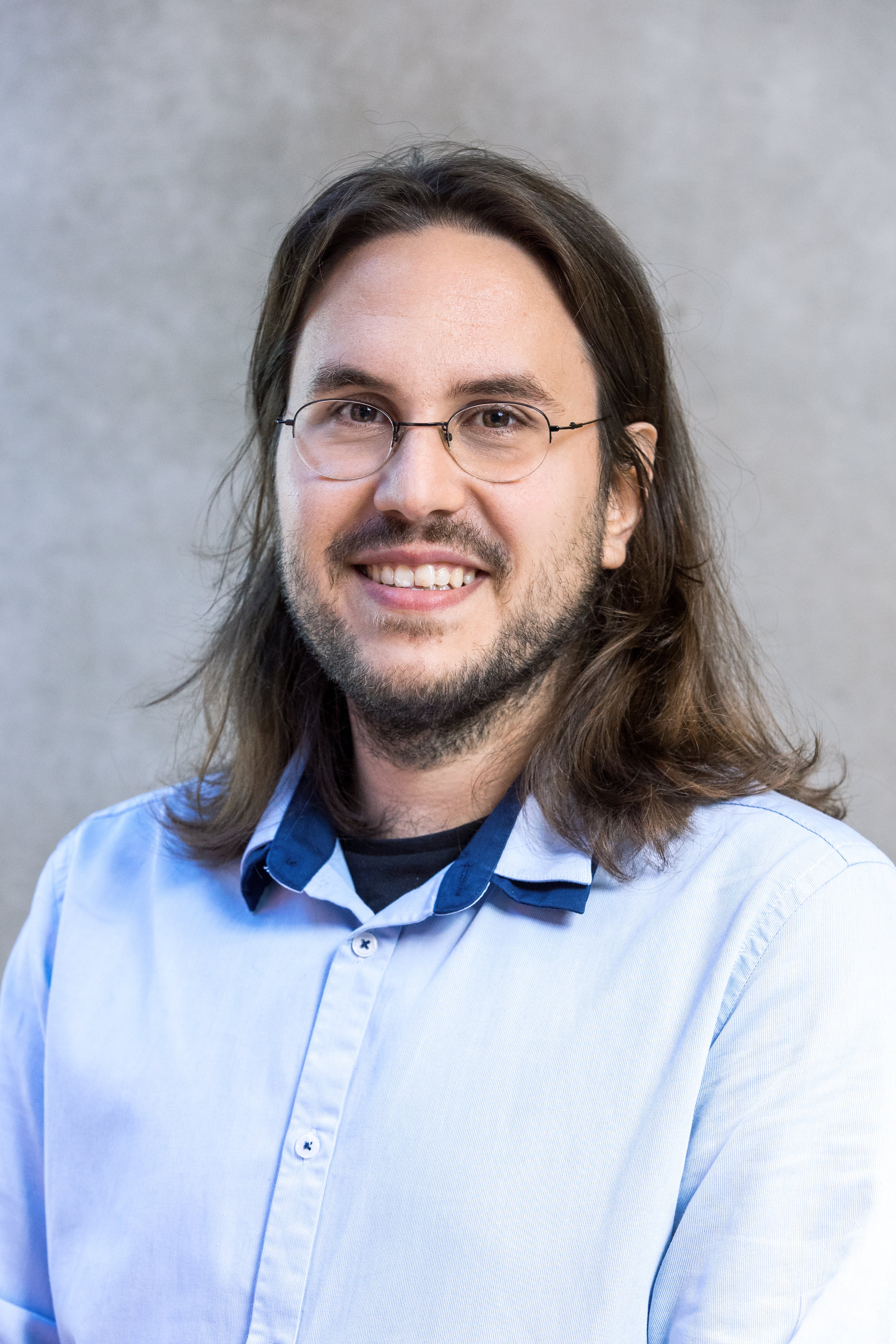
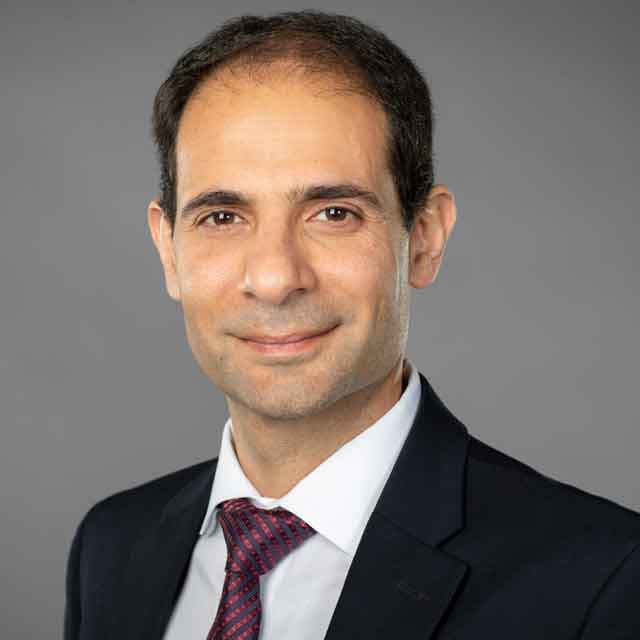
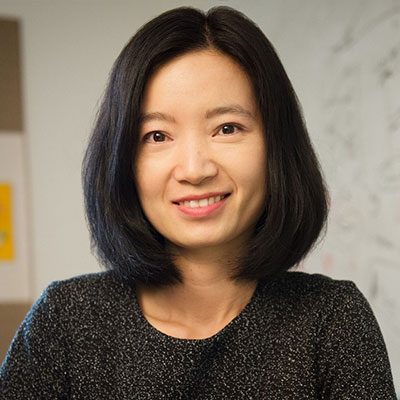
Sebastijan Dumancic is an Assistant Professor at Delft University of Technology, focusing on neuro-symbolic AI through program synthesis and probabilistic programming. He leads the RAIL lab and collaborates with institutions like Harvard, MIT, and CNRS. His research bridges symbolic AI and machine learning, applying program synthesis to scientific discovery, transportation, and robotics. He holds an FWO-funded PhD from KU Leuven and has participated in initiatives like ELLIS and the Symbolic Computation and Machine Learning Initiative. Program synthesis Probabilistic programming Neuro-symbolic AI Constraint-based learning His recent articles highlight advancements in program synthesis, neuro-symbolic integration, and constraint satisfaction. Projects like Find2Fix and Intelligent Greenhouse Horticulture (funded by NWO) demonstrate practical applications. ELLIS Membership University Teaching Qualification He supervises numerous MSc and PhD students in projects involving logic programming, program synthesis, and probabilistic modeling. Active in workshops and symposia, he contributes to neuro-symbolic AI and scientific discovery.
Dr. Todd D. Murphey is a Professor of Mechanical Engineering at Northwestern University's Robert R. McCormick School of Engineering and Applied Science. He serves as Director of Transformative Research and Director of the Master of Science in Robotics Program at Northwestern, leading initiatives in computational dynamics, control systems, and robotics. His work bridges engineering, neuroscience, and biomedical applications, with a focus on developing systems that interact effectively with humans and their environments. Dr. Murphey received his Ph.D. in Control and Dynamical Systems from the California Institute of Technology in 2002, with a thesis titled "Control of Multiple Model Systems." Prior to that, he earned a B.S. in Mathematics, summa cum laude, from the University of Arizona in 1997. Dr. Murphey's research centers on computational methods in dynamics and control, with applications spanning neuroscience, health science, robotics, and automation. His work in the Interactive & Emergent Autonomy Lab focuses on computational models of embedded control, biomechanical simulation, dynamic exploration, and hybrid control. The group develops mathematical approaches that lead to orders of magnitude improvement in computational efficiency for real-time implementation. Key application areas include assistive exoskeleton control, stabilization of energy networks, bio-inspired active sensing, entertainment robots, robotic exploration, and software-enabled stroke rehabilitation. Analysis of Dr. Murphey's recent publications reveals a strong emphasis on human-swarm interaction, algorithmic matter, and control of cyber-physical systems in uncertain environments. His work increasingly integrates information theory with physical systems, exploring how both autonomous and biological systems interact with environments to learn and improve behaviors. Recent trends show growing applications in rehabilitation technology, with particular focus on human-machine interaction in biomedical devices and embodied intelligence. Dr. Murphey has received numerous honors and awards for his contributions to robotics and engineering: Named Director of Transformative Research at Northwestern University (2025) Appointed IEEE Robotics and Automation Society Vice President of Publication Activities (2022) Co-recipient of Best Paper Award for IEEE Transactions on Robotics (2020) Appointed to Air Force Scientific Advisory Board (2019) Recipient of ABB Best Student Paper Award for CPL-SLAM research (2019) Cole-Higgins Award from Northwestern Engineering (2015) Dr. Murphey has supervised numerous graduate students including Taosha Fan, Giorgos Mamakoukas, and Ian Abraham, with research spanning robotic exploration using electrosense and mechanical contact, human-in-the-loop control, and shared control for rehabilitation devices. His lab has secured significant funding from the National Science Foundation, DARPA, and industry partners including Siemens and Ekso Bionics, supporting research in algorithmic matter, emergent behavior, and human-swarm collaboration. The Interactive & Emergent Autonomy Lab, led by Dr. Murphey, investigates how both autonomous systems and biological systems interact with their environments to learn and improve behaviors. Current projects include active learning and data-driven control, active perception in human-swarm collaboration, algorithmic matter and emergent computation, control for nonlinear and hybrid systems, cyber physical systems in uncertain environments, harmonious navigation in human crowds, information maximizing clinical diagnostics, reactive learning in underwater exploration, robot-assisted rehabilitation, and software-enabled biomedical devices. The lab collaborates with researchers across Northwestern and institutions including Georgia Tech, MIT, and industry partners.
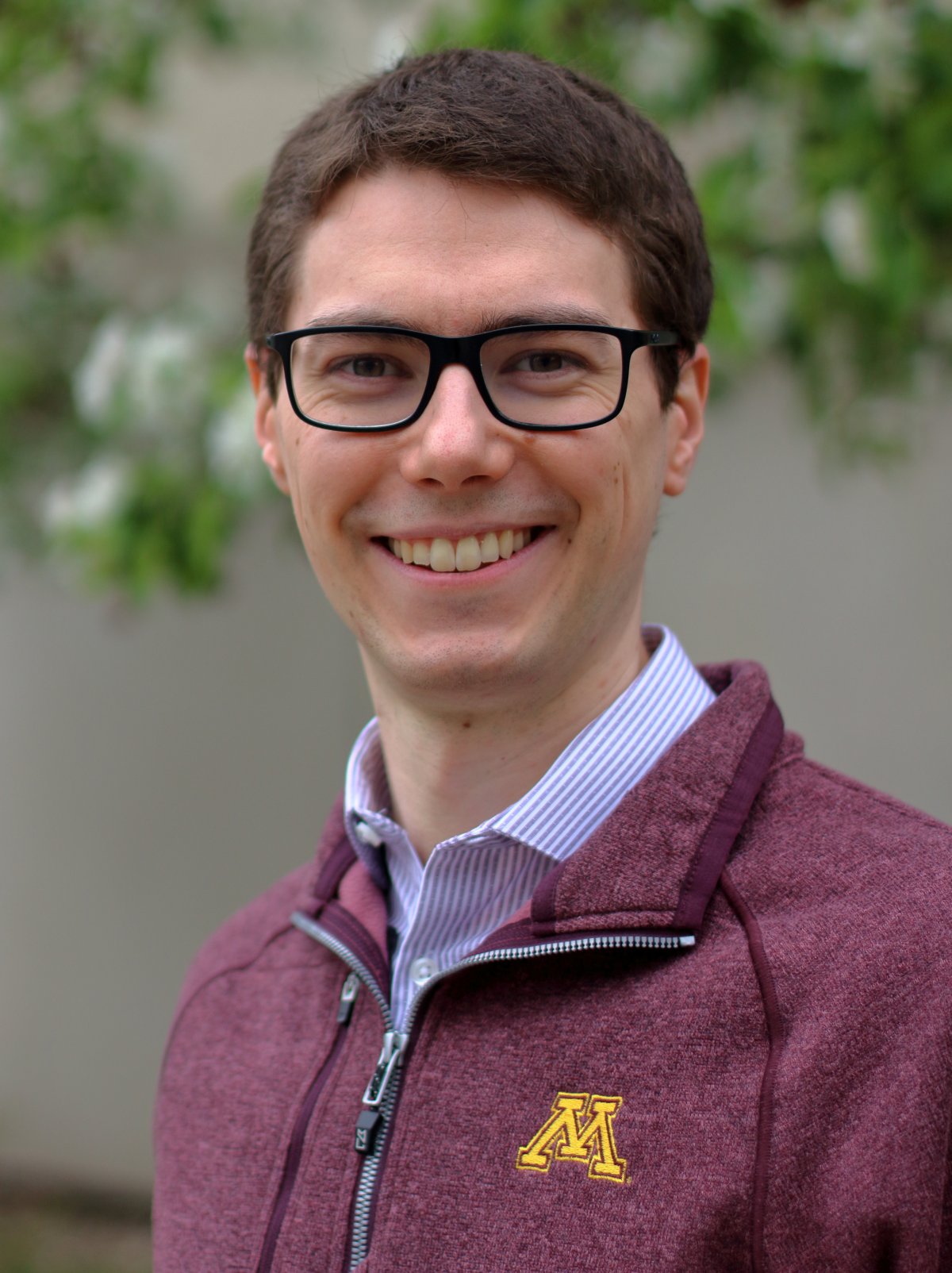
Ryan Caverly serves as an Associate Professor in the Department of Aerospace Engineering and Mechanics at the University of Minnesota, Twin Cities, holding the prestigious McKnight Land-Grant Professorship. His research bridges theoretical control frameworks with practical aerospace and robotics applications, focusing on dynamic modeling and system control. Education: BS in Honours Mechanical Engineering from McGill University MS in Aerospace Engineering from the University of Michigan PhD in Aerospace Engineering from the University of Michigan Professor Caverly's research centers on input-output stability, robust control of nonlinear systems, and computationally efficient modeling of flexible structures. His work spans aerospace vehicles, spacecraft, and robotic manipulators, emphasizing theoretical rigor alongside real-world implementation challenges in structural flexibility and control precision. Recent publications reveal strong emphasis on predictive control for orbital mechanics, hypersonic vehicle dynamics, and cable-driven systems. His work consistently integrates convex optimization, state estimation, and structural dynamics to solve complex problems in solar sail technology, UAV navigation, and hypersonic flow measurement. Scientific Awards: McKnight Land-Grant Professor Caverly leads multiple externally funded projects including NASA-sponsored research on solar sail momentum management, UAV state estimation with Honeywell, hypersonic bow shock measurements with the Air Force, and deployable space structure control. His grants portfolio demonstrates significant industry and government collaboration in aerospace innovation. He directs the Aerospace, Robotics, Dynamics, and Control (ARDC) Lab, which specializes in the intersection of dynamic modeling and control theory for flexible multi-body systems, with particular focus on cable-driven mechanisms and lightweight aerospace structures.
Nicola Nicolici is a Professor in the Department of Electrical and Computer Engineering at McMaster University. His research focuses on methods and algorithms for the design of digital integrated circuits and systems, with significant contributions in manufacturing test, post-silicon validation and debug. His work has expanded to include embedded systems, low-energy computing, and custom hardware-accelerated computing systems. Professor Nicolici's research interests span multiple areas of digital system design and validation. His early work focused on manufacturing test methodologies and power-aware testing strategies for integrated circuits. More recently, he has made significant contributions to post-silicon validation techniques, including constrained-random stimuli generation, trace signal selection, and bit-flip detection. His research has evolved to address emerging challenges in embedded computing systems, low-energy design, and specialized hardware acceleration for various applications including deep neural networks and signal processing. His recent publications reveal a strong trend toward hardware acceleration for specialized computing tasks. The research spans matrix multiplication algorithms (Strassen and Karatsuba), memory system optimization (DDR5 calibration), FPGA-based radar processing, and neural network acceleration. His work consistently bridges theoretical algorithm development with practical hardware implementation considerations, particularly focusing on precision analysis, fault tolerance, and energy efficiency. The research demonstrates a clear progression from traditional digital circuit testing to more complex system-level validation and acceleration techniques. Professor Nicolici has been actively involved in teaching courses related to system-on-chip design and test, digital systems, and embedded systems. His teaching portfolio includes advanced courses such as System-on-Chip (SOC) Design and Test and Digital Systems Design , reflecting his expertise in the field. While specific grant information isn't detailed in the provided text, his extensive publication record suggests ongoing research funding support. His research has contributed significantly to the fields of digital circuit testing, post-silicon validation, and hardware acceleration. The work has practical applications in semiconductor manufacturing, embedded systems design, and specialized computing architectures. His recent focus on neural network acceleration and memory system optimization reflects the evolving landscape of computer architecture research.
Thorsten Koch serves as Head of the Department of Applied Algorithmic Intelligence Methods within the Division of Mathematical Algorithmic Intelligence at Zuse Institute Berlin (ZIB). His research spans mathematical optimization, energy systems modeling, quantum computing applications, and scientometrics. Koch leads significant research projects including FAN (focusing on AI in scholarly communication), UNSEEN (energy scenarios), HPO-NAVI (research software visibility), and Multi-Energy Models for European Energy System Planning. Koch's research interests center on developing advanced optimization algorithms for complex systems, particularly in energy networks and scientific data analysis. His work bridges theoretical mathematics with practical applications in gas network optimization, wind farm design, portfolio management, and quantum computing. He has pioneered methods for large-scale mixed-integer programming, scenario generation, and the integration of machine learning with traditional optimization techniques. His recent publications demonstrate growing emphasis on quantum optimization, scientometrics, and the application of AI to scientific communication infrastructure. His publication trends reveal a strategic expansion from traditional mathematical optimization into quantum computing applications and scientific data infrastructure. Recent work shows increasing collaboration across disciplines - connecting energy systems analysis with financial modeling, integrating machine learning with optimization solvers, and applying computational methods to scientometrics. The 15 most recent articles highlight three major thrusts: quantum optimization (33%), energy systems modeling (27%), and scientific data infrastructure (40%), reflecting his leadership in both theoretical algorithm development and practical implementation for societal challenges. Koch actively contributes to research infrastructure through leadership roles in projects like KOBV (Berlin-Brandenburg Cooperative Library Network), HDC (Humanities Data Centre), and CIB (future library networks). His work on the DeepGreen initiative focuses on establishing legally secure workflows for implementing open-access components in scientific publication licensing agreements, demonstrating his commitment to open science principles and research data management.
Professor B M Azizur Rahman is a distinguished academic in the field of photonics at City University London, where he has served as Professor of Photonics in the Department of Electrical and Electronic Engineering since 2000. Previously, he was Reader in Photonics (1996-2000) and Lecturer (1988-1996) at the same institution. His academic journey began with a BEng (1971-1976) and MSc (1976-1979) from Bangladesh University of Engineering and Technology, followed by a PhD from University College London (1979-1982). His educational background laid the foundation for his extensive research career focusing on photonics, integrated waveguides, and optical sensors. Professor Rahman has made significant contributions to fields including plasmonic biosensors, fiber optic sensing technologies, supercontinuum generation, and metamaterial-based sensing systems. His research bridges theoretical modeling with practical applications in environmental monitoring, healthcare diagnostics, and engineering solutions. An analysis of his most recent publications (2022-2025) reveals a strong focus on advanced sensing technologies with applications across multiple domains. His work demonstrates expertise in combining photonics principles with nanotechnology, artificial intelligence, and novel materials to develop highly sensitive detection systems. Key research trends include the integration of deep learning with optical sensing, development of plasmonic-enhanced biosensors, and innovative waveguide designs for improved optical performance. Professor Rahman has maintained a highly productive research career with over 443 publications documented in his ORCID profile. His work shows extensive international collaboration with researchers from institutions in the UK, Bangladesh, Thailand, and other countries. While specific grant information is not provided in the available data, his sustained publication record across high-impact journals indicates successful research funding and supervision of numerous research projects over his career. His research group appears to focus on experimental photonics, computational modeling of optical systems, and development of novel sensing platforms.
Christian Igel is a Professor at the Department of Computer Science, University of Copenhagen, and serves as director of the SCIENCE AI Centre . He is also a co-lead of the Pioneer Centre for Artificial Intelligence in Denmark. His academic journey includes a Doctoral degree from Bielefeld University (2002) and a Habilitation degree from Ruhr-University Bochum (2010). Igel is a Juniorprofessor (2002–2010) and has held editorial roles at journals like KI - Künstliche Intelligenz and Artificial Intelligence Journal . Doctoral degree: Faculty of Technology, Bielefeld University, Germany (2002) Habilitation degree: Department of Electrical Engineering and Information Sciences, Ruhr-University Bochum, Germany (2010) His research spans Machine Learning , focusing on Support Vector Machines , Evolution Strategies , Reinforcement Learning , Deep Neural Networks , and PAC-Bayesian Analysis . He applies these methods to Environmental Monitoring , Medical Diagnostics , and Climate Research . Recent publications highlight work on adversarial machine learning , environmentally sustainable AI , and tree resource mapping using deep learning. His scientific awards include being a ELLIS Fellow . Igel’s software tools like Shark , woody , and Multi-Planar UNet are widely used in research and industry. Notable grants and collaborations involve projects with European Lab for Learning and Intelligent Systems (ELLIS) , SCIENCE AI Centre , and international teams in Denmark , Germany , and France . His lab leadership emphasizes open-source frameworks and reproducible research. Editorial Roles: German Journal on Artificial Intelligence , Evolutionary Computation Journal , Artificial Intelligence Journal Software Projects: Shark , woody , Multi-Planar UNet , U-Time Collaborations: SCIENCE AI Centre , Pioneer Centre for Artificial Intelligence , European Lab for Learning and Intelligent Systems
Jennifer Ryan is a Professor of Numerical Analysis and Division Head of Numerical Analysis, Optimization, and Systems Theory at the Department of Mathematics, KTH Royal Institute of Technology. Her research focuses on designing and developing numerical schemes to extract accuracy from simulations, particularly through superconvergence properties and computational efficiency improvements. She applies these techniques to applications such as imaging, fluid visualization, and plasma dynamics. Education: PhD in Applied Mathematics, Brown University; MS in Mathematics, Courant Institute; BA in Applied Mathematics, Rutgers University. Professional Activities: Member of editorial boards for BIT Numerical Mathematics, ESAIM:M2AN, and Communications on Applied Mathematics and Computation; Steering committee member of AWM's Women in Numerical Analysis and Scientific Computing (WINASc). Her publications emphasize discontinuous Galerkin methods, SIAC filtering, and applications in fluid dynamics. She has served on multiple grant review panels and received awards for diversity and inclusion initiatives. Grants: Principal Investigator for projects funded by the Swedish Research Council, NSF, and US Air Force Office of Scientific Research. Awards: Fellow of UK Higher Education Academy, DAAD Fellowship, and Householder Fellowship.
Professor Tony Shardlow is affiliated with the Department of Mathematical Sciences at the University of Bath , UK. His research spans Stochastic Differential Equations , Bayesian Inverse Problems , Statistical Shape Modelling , and Numerical Analysis , with applications in data science, medical imaging, and computational physics. Labs/Teams : IMI (Institute for Mathematical Innovation), Prob-L@b (Probability Laboratory at Bath), SAMBa (EPSRC Centre for Doctoral Training in Statistical Applied Mathematics). Recent Research Trends : Focus on geometric shape analysis using flow fields, stochastic PDEs for particle dynamics, and Bayesian inference techniques in industrial and medical contexts. Collaborative work bridges computational mathematics with applications in hip dysplasia assessment and pesticide delivery systems. Advising : Supervised Fengpei Wang's PhD thesis on dimension reduction and Sinkhorn algorithms. Collaborates with researchers like N. D. F. Campbell and C. Poon. Teaching : Offers MA30170 - Numerical Solution of Elliptic PDEs.
Byron Boots is the Amazon Professor of Machine Learning in the Paul G. Allen School of Computer Science and Engineering at the University of Washington, where he directs the UW Robot Learning Laboratory. He also serves as a Principal Research Scientist in the Seattle Robotics Lab at NVIDIA Research and co-chairs the IEEE Robotics and Automation Society Technical Committee on Robot Learning. Dr. Boots received his Ph.D. from the Machine Learning Department in the School of Computer Science at Carnegie Mellon University, where he was a member of the Sense, Learn, Act (SELECT) Lab co-directed by Carlos Guestrin and his advisor Geoff Gordon. Prior to joining the University of Washington faculty, he was an Assistant Professor in the School of Interactive Computing within the College of Computing at Georgia Tech, and before that, he completed a post-doc in the Robotics and State Estimation Lab directed by Dieter Fox at the University of Washington. Professor Boots' research focuses on the intersection of machine learning, artificial intelligence, and robotics, with particular emphasis on developing theory and systems that tightly integrate perception, learning, and control. His work spans computer vision, state estimation, localization and mapping, high-speed navigation, motion planning, and robotic manipulation. His group develops algorithms drawing from deep learning and neural networks, nonparametric statistics, graphical models, nonconvex optimization, quantum physics, online learning, reinforcement learning, and optimal control. The research demonstrates a strong theoretical foundation while maintaining practical relevance to real-world robotic systems. His recent publications reveal a clear trend toward integrating advanced machine learning techniques with robotics, particularly in model predictive control, motion planning, and learning-based approaches to robot control. His work shows increasing focus on developing theoretically grounded methods that can handle the complex, nonlinear dynamics of real-world robotic systems while maintaining computational efficiency. The publications span top venues including ICRA, CoRL, IROS, and NeurIPS, demonstrating broad impact across multiple subfields of robotics and AI. Finalist for Best Systems Paper at Conference on Robot Learning (CoRL-2021) Multiple papers selected for oral presentations at top robotics conferences Work recognized for theoretical contributions and practical applications in robot learning As director of the UW Robot Learning Laboratory, Boots leads a vibrant research group focused on fundamental and applied research in robot learning. The lab maintains strong collaborations with NVIDIA Research and has produced numerous high-impact publications that bridge theory and practice. Professor Boots teaches courses in autonomous robotics, machine learning, and reinforcement learning, contributing to both undergraduate and graduate education at the University of Washington.
Professor Soo-Yeun Lee is a leading Sensory Scientist and academic leader at Washington State University (WSU), serving as Director of the School of Food Science since 2023. She holds a Ph.D. in Food Science from the University of California, Davis, and a B.S. in Food Engineering from Yonsei University, Seoul. Previously, she served as a Professor at the University of Illinois, Urbana-Champaign (UIUC) from 2001-2022, with administrative roles including Assistant Dean and Associate Head. Her research focuses on sensory science and healthful eating, addressing challenges in sodium and sugar reduction, functional food development, and understanding consumer behavior. Notable projects include strategies to enhance taste retention in low-sodium foods and analyzing picky eating behaviors in children. She has published over 100 papers, with recent works exploring remote consumer testing methodologies and sodium reduction perceptions in the food industry. Lee has received numerous awards, including the Fred W. Tanner Lectureship (2021), Paul A. Funk Award (2018), and Samuel Cate Prescott Award (2011). She actively contributes to professional service roles, such as chairing USDA review panels and serving on the IFT Board of Directors. As a mentor, she has shaped food science education through teaching awards and leadership in curriculum development.
Professor Antonio Griffo holds the position of Professor of Power Electronics and Electric Drives at the University of Sheffield's School of Electrical and Electronic Engineering. He leads the Electrical Machines and Drives Research Group and is involved in the High Reliability Drives Group. His academic journey includes a MSc (2003) and PhD (2007) in Electrical Engineering from the University of Naples, followed by research roles at Bristol and Sheffield Universities before becoming a Lecturer in 2013 and later a Professor. His research focuses on advanced control of electric drives, SiC-based power electronics for aerospace/renewables, fault detection in machines, and thermal management. Key projects include modeling hybrid AC/DC power systems for 'More Electric Aircraft', sensorless control techniques, and real-time simulation methodologies. He has pioneered work on SiC converter reliability, insulation monitoring, and condition-based maintenance systems. Publications (15+ in top journals like IEEE Transactions) emphasize innovative solutions for power electronics challenges, including voltage stress mitigation, thermal modeling, and fault tolerance. His work bridges theory and application, addressing critical issues in aerospace, renewable energy, and electric vehicle systems. Griffo also contributes to educational advancements through modular training platforms for power electronics education. Labs/Teams: Active in the Electrical Machines and Drives Research Group, focusing on high-reliability drive systems and sustainable energy technologies. Collaborates with industry on projects like the EPSRC Offshore Wind Prosperity Partnership.
Gianmarco Pinton is an Associate Professor in the Department of Biomedical Engineering at the University of North Carolina at Chapel Hill. His research focuses on nonlinear ultrasound and mechanical wave propagation, with applications to medical imaging and therapy. He specializes in traumatic brain injury, shear shock waves, and ultrasound therapy. Ph.D., M.S., and B.S.E. in Biomedical Engineering/Physics from Duke University His lab develops physics and simulation tools for nonlinear wave propagation, aiming to create advanced diagnostic ultrasound methods. Key areas include traumatic brain injury, transcranial imaging, and therapeutic ultrasound. His recent work explores super-resolution imaging, brain motor circuits, and Alzheimer's disease vascular mapping using ultrasound. Article trends highlight innovations in transcranial ultrasound, super-resolution techniques, lung imaging, and neuromodulation. His publications address image degradation, contrast agents, and shear wave dynamics in neurological contexts.
Elie Hajj is a Professor in the Department of Civil & Environmental Engineering at the University of Nevada, Reno (UNR), serving as Associate Director of the Western Regional Superpave Center. His research focuses on asphalt pavement engineering, sustainable materials, and infrastructure resilience. He specializes in pavement rehabilitation, numerical modeling of dynamic load impacts, and economic analysis of pavement preservation strategies. Dr. Hajj has received recognition for his 2016 ASTM award for outstanding work on pavement rehabilitation economics. He actively engages in professional service, including TRB webinars and academic seminars on topics like pavement damage assessment and vehicle operating costs. His teaching spans graduate and undergraduate courses in pavement design, materials engineering, and advanced pavement analysis. His research integrates experimental and computational methods to address challenges in pavement performance under superheavy loads, recycled material utilization, and energy-efficient construction practices. Collaborations with industry and government agencies enhance the practical applicability of his findings.
Professor Yizhou Sun is affiliated with the University of California Los Angeles (UCLA) and the Henry Samueli School of Engineering and Applied Science . Her academic work focuses on Machine Learning , Artificial Intelligence , and Graph Neural Networks within the Computer Science department. Her research spans High-Level Synthesis , Causal Inference , and Computational Biology , with recent publications addressing neural network compression, language model safety, and dynamical system modeling. The trends in her recent 2025 and 2024 publications emphasize Deep Learning , Graph Theory , and Language Model Optimization , reflecting interdisciplinary applications in Biomedical Data , Hardware Design , and Physical Simulation .