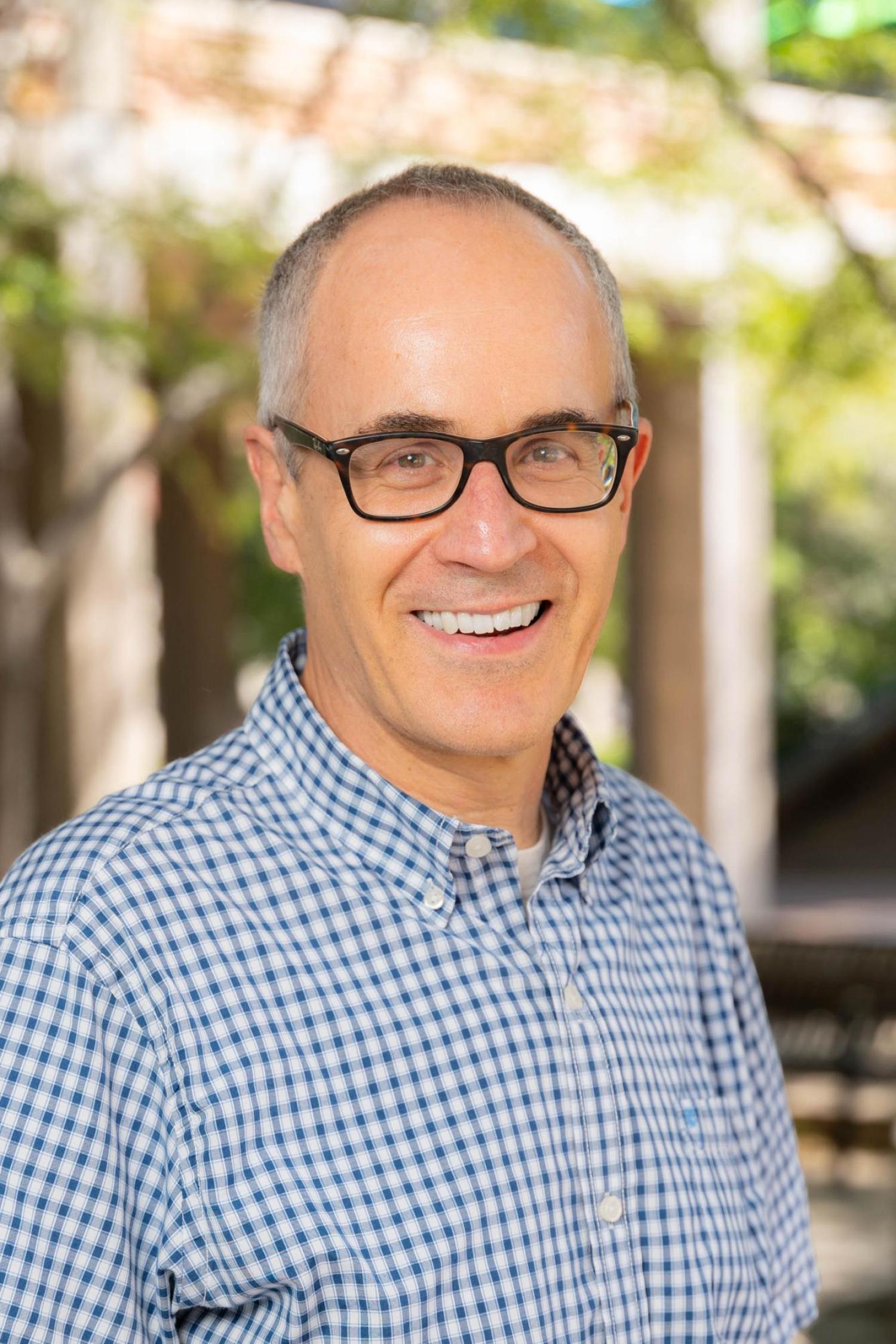
Kurt Maute is a Professor and Palmer Engineering Chair at the University of Colorado Boulder’s College of Engineering and Applied Science (CEAS). He currently serves as Associate Dean for Undergraduate Education. His academic journey includes a PhD in Civil Engineering (University of Stuttgart, 1998) and a Dipl.-Ing. in Aerospace Engineering (University of Stuttgart, 1992). He has held progressively senior roles at CU Boulder, including Associate Dean for Research (2012–2014), Associate Professor (2006–2012), and Assistant Professor (2000–2006). Maute’s research focuses on structural topology optimization, multi-disciplinary optimization, and aeroelastic systems. He has pioneered methods integrating XFEM, level-set techniques, and isogeometric analysis for complex engineering problems. His work spans fluid-structure interaction, hypersonic vehicle design, and additive manufacturing. His notable contributions include advancements in immersed boundary methods, multi-material optimization, and uncertainty quantification. Awards include the NSF Career Award (2004) and Palmer Endowed Chair (2016–present). Maute’s lab (Aerospace Mechanics Research Center, AMREC) addresses challenges in computational mechanics and multi-physics systems. He has advised numerous students and led grants in battery modeling, topology optimization, and aerospace systems. His research bridges theory and application, emphasizing industrial relevance and computational innovation.
Debbie Senesky is an Associate Professor at Stanford University in both the Aeronautics and Astronautics Department and the Electrical Engineering Department, as well as a Senior Fellow at the Precourt Institute for Energy. She serves as the Principal Investigator of the EXtreme Environment Microsystems Laboratory (XLab) and Site Director of nano@stanford. Dr. Senesky received her B.S. in mechanical engineering from the University of Southern California (2001), followed by M.S. (2004) and Ph.D. (2007) degrees in mechanical engineering from the University of California, Berkeley. Prior to joining Stanford, she held positions at GE Sensing (formerly NovaSensor), GE Global Research Center, and Hewlett Packard. Her research focuses on developing nanomaterials and electronic systems capable of operating in extreme environments, including high-temperature conditions for Venus exploration, microgravity synthesis of nanomaterials, and harsh environment electronics. Dr. Senesky's work bridges multiple disciplines, connecting aerospace engineering, electrical engineering, materials science, and space technology to solve challenges in extreme environment applications. Dr. Senesky has made significant contributions to the field of high-temperature electronics, GaN-based sensors, graphene aerogel synthesis in microgravity, and materials for space applications. Her recent publications demonstrate a strong focus on practical applications of these technologies, particularly for space exploration and extreme environment sensing. Presidential Early Career Award for Scientists and Engineers (PECASE), NASA (2025) Emerging Leader Abie Award from AnitaB.org (2018) Early Faculty Career Award from NASA (2012) Gabilan Faculty Fellowship Award (2012) Sloan Ph.D. Fellowship (2004-2006) Dr. Senesky actively advises students at all levels, from undergraduate to postdoctoral researchers, and has established herself as a leader in promoting diversity in STEM through her role as Faculty Advisor for the Stanford Chapter of the National Society of Women Engineers. Her collaborative approach is evident in her numerous interdisciplinary projects and partnerships with NASA, industry, and other research institutions. She directs the EXtreme Environment Microsystems Laboratory (XLab), which focuses on developing technologies for operation in extreme environments including high temperature, radiation, and microgravity conditions. The lab's work has applications for space exploration, particularly for Venus missions, as well as terrestrial applications requiring robust electronics.
Dr. Shirley Coleman is a distinguished Professor at Newcastle University Business School, specializing in the application of statistical methods to business and industrial problems. With over two decades of academic contributions, she has established herself as a leading expert in statistics, data science, and quality management within industrial contexts. Her research interests span several interconnected domains: Statistics, Data Science, Business Analytics, Quality Management, Six Sigma methodologies, Kansei Engineering (which integrates emotional design with product development), Industrial Statistics, Design of Experiments, Predictive Maintenance, and Customer Lifetime Value analysis. Coleman's work consistently bridges theoretical statistical concepts with practical business applications across diverse sectors including healthcare, manufacturing, facilities management, and digital marketing. Analysis of her recent publications reveals a strong focus on the evolving role of statistics in the digital age, particularly examining how statistical expertise contributes to AI development, Industry 4.0 initiatives, and data-driven business transformation. Her work demonstrates increasing emphasis on customer analytics, predictive maintenance modeling, and the strategic implementation of data science in small and medium enterprises. Coleman's publications frequently address methodological challenges while maintaining strong practical relevance for industry practitioners. Throughout her career, Coleman has been actively involved with the European Network for Business and Industrial Statistics (ENBIS), contributing to the development and dissemination of statistical methods in business contexts. Her collaborative approach is evident in numerous co-authored publications across disciplines, demonstrating her ability to work effectively with researchers from diverse fields including engineering, healthcare, and business management. Her advisory work appears focused on helping organizations implement statistical thinking in business processes, with particular attention to small and medium enterprises seeking to leverage data analytics for competitive advantage. Though specific grant information isn't detailed in the available publications, her extensive industry-focused research suggests significant engagement with practical business problems and industry partnerships. Dr. Coleman has made substantial contributions to the field through her leadership in professional organizations, particularly ENBIS, where she has helped shape the discourse around industrial statistics and their business applications. Her work on Kansei Engineering demonstrates innovative approaches to integrating human factors with statistical methods for product development.
Stefan Vandewalle is a full professor at the Department of Computer Science, Faculty of Engineering Sciences, KU Leuven. His research focuses on numerical analysis, applied mathematics, and computational methods for stochastic differential equations, wind energy modeling, and uncertainty quantification. Department Chair, KU Leuven Member, Subdivision Numerical Analysis and Applied Mathematics Member, iSi Health Institute Observer, Faculty Council of Sciences Chair, Department Council for Computer Science His recent work explores multiscale modeling, Monte Carlo methods, and data assimilation techniques. Projects include micro-macro Parareal algorithms, wind turbine aeroelasticity, and turbulent flow reconstruction for wind farms. He supervises PhD candidates and collaborates on interdisciplinary studies involving structural mechanics and renewable energy systems. Publications highlight advancements in parallel-in-time methods, stochastic optimization for tokamak reactors, and DNS-based control of turbulent flows. Key keywords: Multiscale numerical methods Uncertainty quantification Wind energy simulation Monte Carlo algorithms PDE-constrained optimization Stochastic differential equations He contributes to academic governance as a member of extended faculty boards and evaluation committees.
Javier Fernandez Blanco is an Associate Professor and Chair of the Department of Economics and Economic History at the University Autonomous of Barcelona (UAB), affiliated with the Barcelona School of Economics (BSE). He holds a PhD in Economics from the University of Minnesota (2008) and degrees in Economics and Mathematics from the Universitat de Barcelona. His research focuses on labor markets, public insurance design, and macroeconomic policy, with a particular interest in unemployment dynamics, household insurance mechanisms, and aging populations. He has held visiting positions at the University of Toronto (2018-19 as Visiting Associate Professor), UNSW Sydney (2012), and Carlos III University of Madrid (2008-12). His work has been published in top journals like the International Economic Review, Journal of Economic Theory, and European Economic Review. He has secured research grants, including two BSE Seed grants as Principal Investigator, and contributed to national research initiatives. He currently co-directs research projects on labor markets and education, and has advised numerous PhD and master’s students. His awards include fellowships from the Generalitat, Ramon Areces Foundation, and University of Minnesota. He actively participates in academic service, including organizing conferences, serving on editorial boards, and holding leadership roles in academic governance at UAB and BSE.
Zhe Liu is an Assistant Professor in the Analytics & Operations group at Imperial College Business School, where he also serves as PhD Director. He holds a PhD in Operations Management from Columbia Business School and a BS in Industrial Engineering from Tsinghua University. His research focuses on revenue management and supply chain optimization, with specialized interests in sharing economy platforms and multi-sourcing strategies. Liu's work examines operational challenges in modern business environments through mathematical modeling, including queueing systems, pricing optimization, and risk management in volatile supply chains. His publications demonstrate consistent themes in platform operations, stochastic optimization, and behavioral interactions within multi-agent systems. Recognized with numerous honors, Liu received the 1st Place Service Science Best Cluster Paper Award (2024), 2nd Place CSAMSE Best Paper Award (2024), and was a finalist in the George Nicholson Student Paper Competition. He actively mentors PhD students and serves as judge for international paper competitions and conference program committees.
Mustafa TAN is a Professor at Havsa Vocational School of Trakya University and currently serves as Vice Rector of Trakya University since August 2024. He has held various administrative roles, including Director of Edirne Rose and Red Application and Research Center (August 2024–October 2024) and Director of Havsa Vocational School (2020–2024). Previously, he was a Professor and academic leader at Atatürk University's Faculty of Agriculture from 1995 to 2019, serving as Vice Dean (2008–2012) and Department Head. His research focuses on forage crops, quinoa genetics, and agricultural sustainability. Notable projects include studying genetic diversity in forage pea and developing herbicide-resistant quinoa varieties. He has authored/co-authored over 100 publications, including articles on crop improvement, silage quality, and climate-resilient agriculture. Dr. TAN has supervised numerous PhD and MSc students and contributed to books like Alternatif Yem Kaynakları . His work emphasizes practical applications, such as optimizing forage production and enhancing crop resilience in Turkey's high-altitude regions. He has led projects funded by TÜBİTAK and university grants, addressing challenges like quinoa adaptation to arid conditions and nitrogen use efficiency. His contributions extend to editing educational materials and promoting sustainable agricultural practices through publications and conferences.
Andrea Lanzini is a Full Professor in the Department of Energy (DENERG) at the Polytechnic University of Turin, where he is also a member of the Interdepartmental Center Ec-L - Energy Center Lab. He serves as Scientific Advisor for the Partnership Agreement with Edison and Electricité de France (EDF). His academic and research leadership spans energy system integration, hydrogen technologies, fuel cells, renewable energy communities, and industrial decarbonization. His research interests focus on fuel cell and hydrogen technology , energy system integration and modeling , industrial decarbonization , and renewable energy communities . He leads the M3ES research group and is deeply involved in both fundamental and applied research, with a strong emphasis on sustainable urban energy systems and clean energy transitions. The analysis of his recent publications reveals a consistent focus on hydrogen production and storage, fuel cell durability and performance, biogas and biomethane technologies, and the optimization of hybrid renewable energy systems. His work often combines experimental investigation with techno-economic and environmental assessment, particularly in off-grid and community-scale energy applications. Scientific Awards: Fulbright Grant awarded by United States Department of State - Bureau of Educational and Cultural Affairs/The US-Italy Fulbright Commission, United States (2010) Prof. Lanzini actively supervises numerous PhD students and leads a wide array of research projects, including major EU-funded initiatives such as HYWAY, NoMaH, TIPS4PED, and EDUPED, as well as numerous commercial research contracts with industry and municipalities. He is a key contributor to national and international efforts in energy transition, particularly through his work on Positive Energy Districts and renewable energy communities. His research has significant implications for energy policy, urban planning, and industrial sustainability. He is involved in several research groups and collaborative agreements, including the M3ES Research Group (DENERG) and partnerships with RSE SpA, Edison, EDF, and various public administrations. His work is central to the activities of the Energy Center Lab at Politecnico di Torino.
Robert Piche is a Professor at the Computing Sciences Mathematics Research Centre, specializing in advanced signal processing, positioning systems, and sensor fusion. He holds a Doctor of Science (Technology) and Master of Science from the University of Waterloo, Canada (1986 and 1982, respectively). His research focuses on Kalman filters, Global Positioning Systems (GPS), particle filters, and indoor positioning technologies. He has contributed extensively to fields like satellite orbit prediction, non-line-of-sight (NLoS) positioning, and machine learning applications in biomechanics and robotics. Dr. Piche has authored over 230 publications and received recognition through an invitation/ranking in a 2014 competition. He actively participates in academic activities, including conference presentations and peer-review roles. His work bridges theoretical advancements and practical applications, with contributions to autonomous systems, sensor data analysis, and wearable technology. Collaborations span international institutions, reflecting his global impact in engineering and computer science disciplines.
Professor David Taubman is a distinguished academic serving as Professor and Deputy Head of School (Research) at the School of Electrical Engineering and Telecommunications (EE&T) at the University of New South Wales (UNSW) in Sydney, Australia. He is also co-director of Kakadu Software Pty. Ltd. and its affiliates Kakadu R&D and Kakadu GPU. With a career spanning over three decades, Professor Taubman has made significant contributions to the field of image and video compression, most notably as the author of the EBCOT coding algorithm adopted in the JPEG2000 international standard. Professor Taubman earned his B.Sc. in Mathematics and Computer Science (1986) and B.E. (Medal) in Electrical Engineering (1988) from the University of Sydney, followed by an M.Sc. (1992) and Ph.D. (1994) in Electrical Engineering from the University of California at Berkeley. His professional journey includes engineering work at the Electricity Commission of N.S.W. (1988-1990), research positions at Hewlett-Packard Laboratories in Palo Alto (1994-1998), and an academic career at UNSW where he progressed from Senior Lecturer (1998-2003) to Associate Professor (2004-2009) and finally to Professor (2009-present). He has held various leadership roles including Head of the EE&T Telecommunications Research Group (2003-2014), Head of the EE&T Signal Processing Research Group (2014-present), Director of Research for the School of EE&T (2011-2016), and Deputy Head of School (Research) since 2017. Professor Taubman's research interests center on image and video compression, with particular expertise in JPEG2000 standards and implementations. His work spans signal processing, wavelet transforms, scalable video coding, motion modeling, and multimedia systems. He has pioneered numerous compression algorithms and frameworks, including the EBCOT coding algorithm that became central to the JPEG2000 standard. His recent research focuses on efficient motion modeling with cuboidal partitioning, learned lifting-based transform structures, and high-throughput implementations of JPEG2000 for video applications. His work bridges theoretical foundations with practical implementations, as evidenced by the commercially successful Kakadu Software tools that have garnered around 500 commercial licensees. Analysis of Professor Taubman's recent publications reveals a consistent focus on advancing compression technologies with particular emphasis on scalability, efficiency, and adaptability. His work spans traditional image compression (JPEG2000 extensions), video coding (cuboid-based partitioning for UHD/360-degree video), and emerging applications (nanopore sequencing data compression). A notable trend is the integration of machine learning techniques with traditional compression frameworks, as seen in his work on learned lifting-based transform structures. His research maintains strong connections to real-world applications across diverse domains including medical imaging, astronomical data processing, and genomic sequencing. IEEE Fellow Engineers Australia Fellow (by invitation) Professor Taubman has served as Associate Editor for the IEEE Transactions on Image Processing for two four-year appointments (2003-2005 and 2010-2013). He has been actively involved in numerous research grants focused on image and video compression technologies, particularly those related to the JPEG2000 standard and its extensions. His work has received significant industry support, reflected in his consultancy with various U.S., Japanese, and Australian corporations. He has also contributed to international standards development as a member of Standards Australia Technical Committee MS-065 (mirroring ISO TC42 on Digital Photography) and as a constitutional member of Standards Australia Technical Committee IT-029 (Coded Representation of Picture, Audio and Multimedia/Hypermedia Information). Professor Taubman co-directs Kakadu Software Pty. Ltd. and its research affiliates Kakadu R&D and Kakadu GPU, which have developed the commercially successful Kakadu Software tools for JPEG2000. His research group at UNSW focuses on advanced image and video compression techniques, with particular expertise in wavelet-based methods, scalable coding, and motion modeling. The group maintains strong industry connections and has contributed significantly to the development and standardization of image compression technologies worldwide.
Thorsten Koch serves as Head of the Department of Applied Algorithmic Intelligence Methods within the Division of Mathematical Algorithmic Intelligence at Zuse Institute Berlin (ZIB). His research spans mathematical optimization, energy systems modeling, quantum computing applications, and scientometrics. Koch leads significant research projects including FAN (focusing on AI in scholarly communication), UNSEEN (energy scenarios), HPO-NAVI (research software visibility), and Multi-Energy Models for European Energy System Planning. Koch's research interests center on developing advanced optimization algorithms for complex systems, particularly in energy networks and scientific data analysis. His work bridges theoretical mathematics with practical applications in gas network optimization, wind farm design, portfolio management, and quantum computing. He has pioneered methods for large-scale mixed-integer programming, scenario generation, and the integration of machine learning with traditional optimization techniques. His recent publications demonstrate growing emphasis on quantum optimization, scientometrics, and the application of AI to scientific communication infrastructure. His publication trends reveal a strategic expansion from traditional mathematical optimization into quantum computing applications and scientific data infrastructure. Recent work shows increasing collaboration across disciplines - connecting energy systems analysis with financial modeling, integrating machine learning with optimization solvers, and applying computational methods to scientometrics. The 15 most recent articles highlight three major thrusts: quantum optimization (33%), energy systems modeling (27%), and scientific data infrastructure (40%), reflecting his leadership in both theoretical algorithm development and practical implementation for societal challenges. Koch actively contributes to research infrastructure through leadership roles in projects like KOBV (Berlin-Brandenburg Cooperative Library Network), HDC (Humanities Data Centre), and CIB (future library networks). His work on the DeepGreen initiative focuses on establishing legally secure workflows for implementing open-access components in scientific publication licensing agreements, demonstrating his commitment to open science principles and research data management.
Andrew Pavlo is a Professor in the Computer Science Department at Carnegie Mellon University's School of Computer Science. His research focuses on database management systems, particularly in the areas of transaction processing, in-memory databases, and self-driving database systems. He leads a productive research group that has published extensively in top database venues including VLDB, SIGMOD, and CIDR. Pavlo's research interests span database management systems, transaction processing, in-memory databases, non-volatile memory databases, and self-driving database systems. His work often bridges theoretical database concepts with practical system implementation, focusing on performance optimization, query processing, and system architecture. Recent work has explored machine learning applications for database tuning, novel storage techniques, and innovative approaches to transaction processing. An analysis of his recent publications reveals a strong focus on self-driving database systems, with significant work on the Database Gym framework for training machine learning models to optimize database performance. His research also examines columnar storage formats, transaction scheduling, and novel approaches to user-defined function optimization. The work demonstrates a consistent trajectory toward making database systems more autonomous and efficient through a combination of systems techniques and machine learning. Pavlo has been instrumental in mentoring numerous PhD students who have become active contributors to the database research community. His research has been supported by significant grants that have enabled the development of innovative database technologies and frameworks. His research group operates within CMU's vibrant database ecosystem, collaborating with other researchers on projects related to database systems, storage engines, and query processing frameworks. The group maintains close connections with industry partners to ensure practical relevance of their research contributions.
Nicolas Joly is a Researcher at the Le Mans University 's Institute of Acoustics , affiliated with the Transducers team. His work focuses on numerical modeling of acoustics and vibroacoustics, particularly thermoviscous diffusion phenomena in boundary layers. Research Areas : MEMS Transducers, Thermoviscous Fluid Dynamics, Inverse Methods, Composite Material Analysis Recent Contributions : Modeling micro-scale acoustic devices, homogenization of complex elastic moduli in curved beams, and fluid-loaded microbeam dynamics. Scientific Production Trends : Recent publications highlight advanced numerical simulations for miniaturized transducers, inverse methods in material characterization, and thermoviscous effects in MEMS devices. His work bridges acoustics with structural mechanics and sensor design.
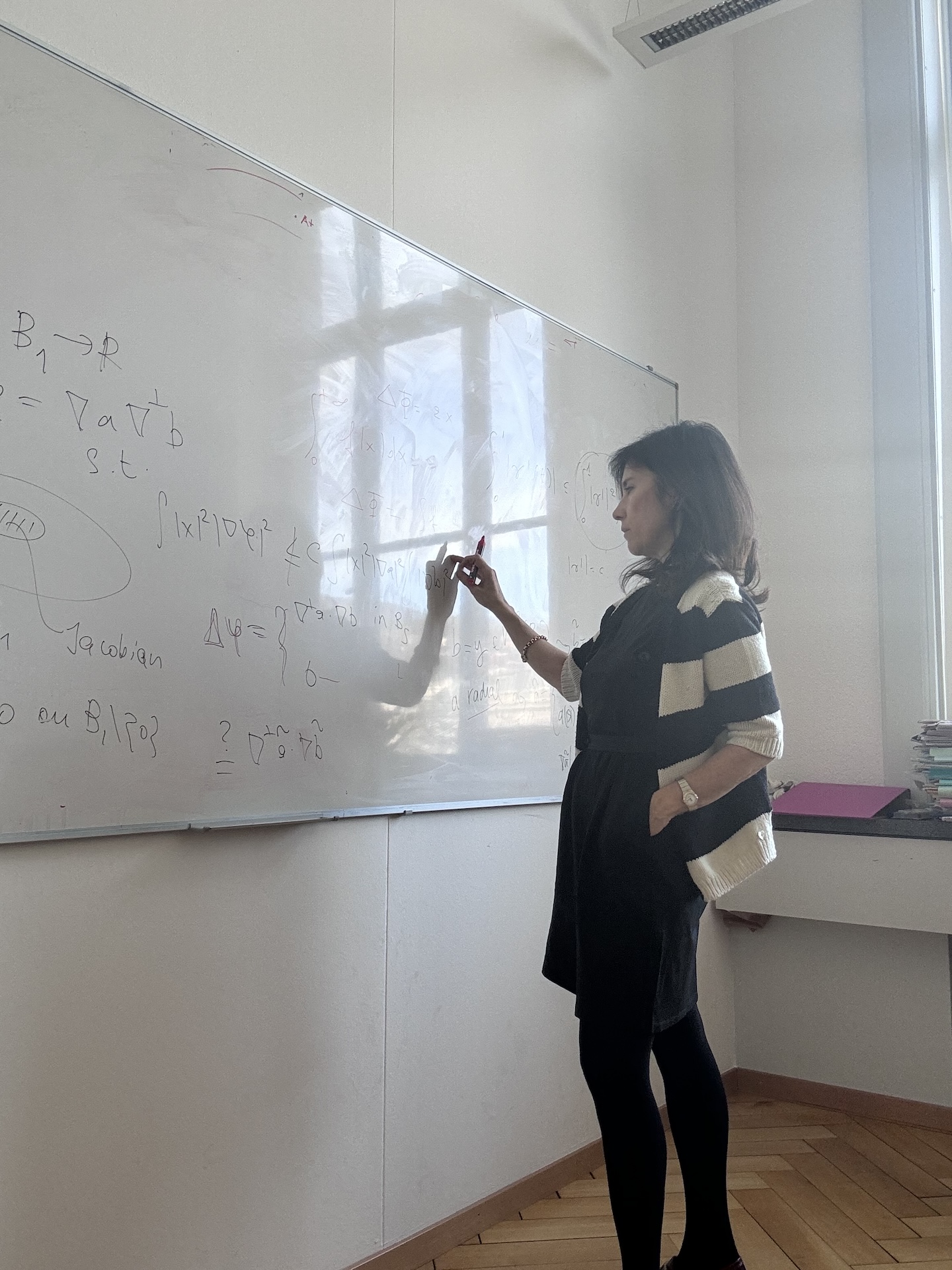
Francesca Da Lio is a Professor at the Department of Mathematics, ETH Zurich, where she has held a titular professorship since 2014. Her research focuses on nonlinear elliptic and parabolic partial differential equations (PDEs), with applications in stochastic and deterministic optimal control, homogenization, front propagation, and geometric analysis. She has pioneered work on conformally invariant variational problems and nonlocal PDEs, including fractional harmonic maps and stability analysis for critical points. PhD in Mathematics (1998) and Summa Cum Laude Degree in Mathematics (1994) from University of Padova. Her research explores the interplay between nonlinearity and non-locality, particularly in problems arising from geometry, mathematical finance, and physics. She has led major Swiss National Fund (SNF) projects, including grants for geometric analysis and conformally invariant variational theory. Her work on 3-commutators, integrability by compensation, and Morse index stability has advanced the understanding of harmonic maps and elliptic systems. Francesca Da Lio has mentored numerous PhD, postdoctoral, and Master/Bachelor students, including Dominik Schlagenhauf, Jerome Wettstein, and Ali Hyder. She has served on hiring committees for full professorships at ETH Zurich and co-organized international conferences such as 'Recent Advances in Nonlocal and Nonlinear Analysis' and 'Topics in Sub-Elliptic PDEs.' Scientific Awards: Italian Scientific Qualification as Full Professor in Mathematical Analysis (2013). She contributes to editorial boards, including Advances in Calculus of Variations , and participates in academic services like refereeing for SNF projects and international journals.
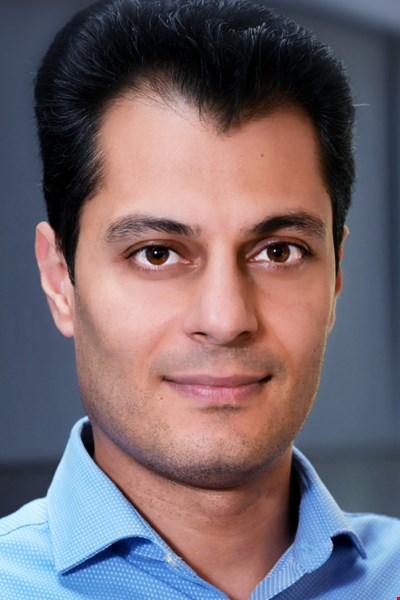
Dr. Esmaeel Esmaeeli is a Senior Lecturer in Civil and Environmental Engineering at Brunel University London, serving as Course Director for the MSc in Structural Engineering. His work focuses on sustainable structural retrofitting solutions, safety, and resilience of concrete and masonry structures. Brunel University London (Current: Senior Lecturer) Queen’s University Belfast (Postdoctoral Fellow, Horizon 2020 MSC Fellowship) University of Minho (PhD research on Hybrid Composite Plate) K. N. Toosi University (MSc research on seismic strengthening) His research spans advanced materials like Strain-Hardening Cementitious Composite (SHCC) and Carbon Fibre Reinforced Polymer (CFRP) for seismic retrofitting, computational modeling of FRP-concrete interfaces, and dynamic response under extreme loads. Recent work includes the SMArtPlate and Hybrid Composite Plate (HCP) systems. Scientific recognition includes the Horizon 2020 Marie Skłodowska-Curie Individual Fellowship and a Portuguese Foundation for Science and Technology (FCT) scholarship. He has advised on structural vulnerability assessments and leads teams in consultancy projects.