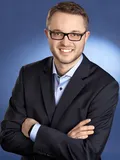
Christoph Schmidt is a Researcher at the Institute for Computational Mechanics of the Technical University of Munich (TUM) since 2017. His work focuses on solid-state batteries , finite element analysis , and multi-physics modeling coupling electrochemistry, solid mechanics, and transport phenomena on resolved microstructures.
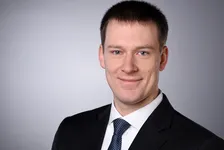
Paul Tuch is a Research Associate at the Institute for Computational Mechanics, Chair of Numerical Mechanics, Technical University of Munich, Germany. He holds a Master of Science (M.Sc.) in Computational Mechanics (2025) and a Bachelor of Science (B.Sc.) in Civil Engineering (2022), both from TUM. Research focuses on cardiac mechanics modeling, including growth/remodeling of cardiac tissue and active tissue mechanics. Contributor to the 4C multi-physics simulation framework. Teaching activities include internships in finite element methods and numerical methods for engineers. Contact: Room 1226, paul.tuch@tum.de , +49 89 289 15276.
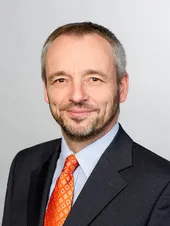
Karl-Robert Wichmann is a Research Associate at the Institute for Computational Mechanics (Lehrstuhl für Numerische Mechanik) at the Technical University of Munich (TUM) since 2012, specializing in computational fluid dynamics and high-performance computing methodologies. Education: 2011: Dipl.-Ing. in Aeronautics and Aerospace, Technische Universität München (TUM), Germany. Thesis: "Grobstruktursimulation turbulenter Zweiphasenströmungen mit der angereicherten Finite Element Methode" (Large eddy simulation of turbulent two-phase flows with the enriched finite element method). Research Interests: His work centers on lung mechanics , incompressible flow , and advanced numerical techniques including finite difference methods and Lattice-Boltzmann methods , with strong emphasis on performance modeling , high-performance computing , and software development for complex fluid dynamics simulations. His research bridges computational mathematics with practical engineering applications in biomechanics and aerospace. Publication Trends: His peer-reviewed articles (2013-2021) demonstrate consistent focus on optimizing computational fluid dynamics solvers, particularly comparative analyses of lattice Boltzmann and finite difference approaches. Key themes include performance benchmarking across CPU/GPU architectures, stencil kernel optimization, and scalability challenges in high-performance computing environments for fluid mechanics applications. Research Environment: He operates within TUM's Institute for Computational Mechanics under Prof. Wolfgang A. Wall, contributing to a research ecosystem focused on numerical methods for solid/fluid mechanics, biomechanics, and high-performance computing. The institute maintains strong industry and academic collaborations in computational engineering.
Wolfgang Wall is a full Professor and founding Director of the Institute for Computational Mechanics at the Technical University of Munich (TUM). Born near Salzburg (Austria), he studied at the University of Innsbruck and received his PhD from the University of Stuttgart. He is a co-founder of AdCo Engineering GW GmbH and Ebenbuild GmbH, and currently serves as Rector of the International Centre for Mechanical Sciences (CISM) in Udine, Italy. A member of both the Austrian and Bavarian Academies of Sciences, he has received numerous prestigious awards including the O.C. Zienkiewicz Award and ERC Advanced Grant. 1983: Matura, Höhere Technische Bundeslehranstalt Salzburg (with distinction) 1991: Dipl.-Ing. degree from University of Innsbruck (with distinction) 1999: Dr.-Ing. (summa cum laude) from University of Stuttgart His research focuses on application-motivated fundamental research in computational mechanics, spanning coupled multifield/multiscale problems (fluid-structure interaction, contact dynamics, electro-chemo-mechano-thermo interaction) and applications in energy storage systems (all-solid-state batteries), additive manufacturing, and computational biophysics/biomedical engineering (patient-specific respiratory/cardiac modeling, cancer nanomedicine, musculoskeletal systems). His group develops advanced computational methods, software frameworks, and physics-based models for high-performance computing. Recent emphasis includes uncertainty quantification, inverse analysis, and machine learning integration. The 15 most recent publications reveal trends in computational mechanics (8/15 articles), biomedical engineering (5/15), and energy storage/additive manufacturing (7/15). Notable themes include novel finite element frameworks for multiphysics problems, Bayesian calibration methods for biological systems, and multiscale modeling of nanomedicine and battery materials. 1986-1988: Excellency in Studying Awards (~ top 1%) 1991: Best graduation ever in Civil Engineering at Innsbruck University 1994: European Academic Software Award 2000: Fritz-Peter-Müller Award, University of Karlsruhe 2000: Rotary Award for doctoral thesis, Stuttgart 2005: Golden Teaching Awards (TUM students) 2008: Fellow Award of the International Association of Computational Mechanics 2011: Chuo University Guest Professorship Award 2012: IACM Computational Mechanics Award 2013: Heinz Maier-Leibnitz Medal 2016: Prandtl Medal (ECCOMAS) 2018: EUROMECH Fellows Award 2021: ERC Advanced Grant 2022: JSCES Grand Prize 2024: O.C. Zienkiewicz Award (IACM) As a dedicated educator, he teaches courses ranging from foundational engineering mechanics (1000+ students) to specialized graduate topics like discontinuous Galerkin methods and biomedical applications. His leadership extends to founding the Munich School of Engineering (2010-2012), establishing the Center for Computational Biomedical Engineering (2012), and serving on multiple editorial boards (IJNME, CMAME, IJNMBE) and scientific councils.
Dr.-Ing. Frédéric Etienne Kracht serves as a Research Group Leader & Lecturer (Postdoctoral Researcher) at the Chair of Mechatronics at the University of Duisburg-Essen, Faculty of Engineering and Computer Science. He is also the Head of Department at the DST Development Center for Ship Technology and Transport Systems eV since August 2024. His work bridges academic research and practical applications in vehicle dynamics, real-time simulation, and inland vessel automation. Dr. Kracht completed his Master's degree in Mechanical Engineering with distinction at the University of Duisburg-Essen, where he was recognized as the Valedictorian of the 2013/2014 class. He was admitted to the prestigious German Academic Scholarship Foundation (Studienstiftung des deutschen Volkes) in 2011. He earned his doctorate with outstanding success in Engineering Sciences from the same university, with his dissertation titled "Modeling and Simulation of the Dynamics and Elastokinematics of Wheel Suspensions for Real-Time Applications." His doctoral work was recognized with the Innovation Award 2020 of the Sparkasse am Niederrhein and honored as an outstanding doctorate at the University of Duisburg-Essen during the Dies Academicus 2021. Dr. Kracht's research focuses on the development of vehicle suspension models with elastic behavior for real-time applications, particularly in driving simulators. His work extends to the automation of inland waterway vessels, where he leads multiple research projects including VeLABi (Test and Control Center for Autonomous Inland Vessels), AutoBin (Autonomous Inland Vessel), FernBin (Remote-controlled Driving in Inland Waterway Transport), and HaFoLa (Test Center for Innovative Port and Handling Technologies). His interdisciplinary approach combines mechanical engineering, mechatronics, and computer science to address challenges in mobility systems. His recent publications demonstrate a strong trend toward applying simulation and modeling techniques to both terrestrial and aquatic transportation systems, with particular emphasis on automation, sustainability, and multimodal integration. The research spans from fundamental vehicle dynamics to practical applications in port logistics and inland navigation. Dr. Kracht has received numerous scientific awards including: Alumni Award Winners of Duisburg Engineering 2013/2014: Best Graduate in the Master's Program in Mechanical Engineering 2011 Admission to the German Academic Scholarship Foundation Best Paper Award of LSMS2017 & ICSEE2017 Doctorate in Engineering Sciences with outstanding success – "Our best" – Honor from University of Duisburg-Essen (Dies academicus 2021) Innovation Award 2020 of the Sparkasse am Niederrhein Helmut and Gerlinde Schwarz Prize 2022 As an academic advisor, Dr. Kracht serves as Faculty Advisor for the Formula Student Team of the University of Duisburg-Essen (E-Team) and as an academic advisor in the Mechatronics major. He is a member of the Examination Board for the Master's program in Automotive Engineering & Management. His research is supported by multiple projects including VeLABi, AutoBin, FernBin, and HaFoLa, which involve collaborations with industry partners and other academic institutions. Dr. Kracht is actively involved in the DST Development Center for Ship Technology and Transport Systems eV as Head of Department, where he oversees research on autonomous inland vessels. At the University of Duisburg-Essen, he manages the Chair's publications and library, and contributes to the development of the "Automotive Engineering & Management Executive" Master's program. His work in developing driving simulators represents a key infrastructure for both research and education at the Chair of Mechatronics.
Prof. Dr.-Ing. Werner Seim serves as Section Head for the Department of Building Rehabilitation and Timber Engineering at the University of Kassel's Faculty of Civil and Environmental Engineering. His research focuses on seismic-resistant timber structures, advanced fabrication techniques, and adhesive-bonded composites. Teaches courses: Construction I/II, Introduction to Timber Construction, Structural Design Leads projects: HOCHHINAUS (high-rise timber), SafeTeCC (adhesive bonding), wood-textile composites Specializes in: CLT shear walls, dowel connections, earthquake engineering Research trends from 2013-2025 emphasize timber structural mechanics, seismic performance, hybrid composites, and computational fabrication methods. His work addresses both historical preservation and modern sustainability in timber construction. Current affiliations include: University of Kassel Faculty of Civil and Environmental Engineering Building Rehabilitation and Timber Engineering Department
Miles Stoudenmire is a Researcher at the Flatiron Institute's Center for Computational Quantum Physics (CCQ) , joining in 2017. He holds a Ph.D. in Physics from the University of California Santa Barbara (2010) and a B.S. in Physics and Math from the Georgia Institute of Technology (2005). His work focuses on tensor networks and their applications in quantum mechanics and machine learning. Education: Ph.D. in Physics, University of California Santa Barbara (2010) B.S. in Physics and Math, Georgia Institute of Technology (2005) Stoudenmire specializes in enhancing tensor network methods to model realistic quantum systems, including finite temperature effects and chemically accurate basis sets. He has developed the ITensor software library, which enables efficient transcription of tensor network diagrams into code for algorithm prototyping. His research bridges quantum physics and computational techniques, with applications in condensed matter physics and quantum computing. Key publication trends include advancements in density matrix renormalization group (DMRG) methods, quantum-inspired machine learning algorithms, and topological quantum simulations. Affiliations: Flatiron Institute (2017–present) University of California Irvine (postdoctoral) Perimeter Institute for Theoretical Physics (research scientist)
Dr.-Ing. Martin Heinrich is a researcher at the Institute of Mechanics and Fluid Dynamics within the Faculty of Mechanical, Process and Energy Engineering at Technical University Bergakademie Freiberg . His work focuses on numerical flow simulation and computational fluid dynamics. Education: Diploma in Mechanical Engineering (2011), TU Bergakademie Freiberg (grade: 1.3) Doctorate in Mechanical Engineering (2016), TU Bergakademie Freiberg (summa cum laude) Martin Heinrich's research spans numerical simulation of multiphase flows , atomization of molten metals and water jets , and surface structuring using laser beams . He has conducted research stays at the University of Toronto (2019, 2017) and Amirkabir University of Technology (2018). His 15 most recent publications (2013–2025) include work on air sampling in closed environments , fluid-structure interaction , CFD software development , and laser-induced surface structuring , with a focus on computational methods like OpenFOAM and ANSYS CFX. Key awards: Summa cum laude doctorate in Mechanical Engineering (2016) He has collaborated with researchers such as Prof. Rüdiger Schwarze , Prof. Kinnor Chattopadhyay , and Dr. Hossein Khaleghi . His work includes grants for multi-scale modeling and fluid dynamics software tools .
Annabelle Bohrdt is a Professor at the University of Regensburg's Institute of Theoretical Physics and an MCQST START Fellow at LMU Munich. She concurrently holds a postdoctoral fellowship at Harvard University and ITAMP. She leads the Theory of Correlated Matter and Quantum Data Group , focusing on quantum many-body systems, machine learning applications in physics, and quantum simulation. Education: PhD from Technical University of Munich (with research exchange at Harvard University); Master's/Diploma from Technical University of Kaiserslautern. Research Interests: Her work integrates numerical methods, machine learning, and quantum simulation to study strongly correlated systems. Key areas include: Neural quantum states and machine learning for quantum data analysis Fermi-Hubbard and t-J models in mixed dimensions Exotic quantum phases (stripes, skyrmions, fractionalization) Quantum state tomography and Hamiltonian reconstruction techniques Non-equilibrium dynamics in optical lattices Publications Focus: Her recent articles (2023–2024) predominantly explore neural network applications in quantum physics, doped antiferromagnets, lattice gauge theories, and quantum simulation protocols. A strong emphasis on machine learning–quantum physics intersections is evident, with innovations in interpretable AI for quantum data. Awards & Honors: Friedrich Hirzebruch-Promotionspreis (German National Academic Foundation Thesis Prize) Finalist for Deborah Jin Thesis Award (APS DAMOP 2022) MCQST START Fellowship Advising & Team Leadership: Directs 13+ students (PhD/Master's/Bachelor's) at Universität Regensburg. Current research group includes projects on neural quantum states, Fermi-Hubbard models, and quantum data analysis. Actively recruits students for quantum many-body physics projects. Teaching: Courses include Numerical Methods for Quantum Many-Body Systems (Winter 2023/24) and Machine Learning for Quantum Many-Body Physics (Summer 2023), blending theory with hands-on coding and research applications.
Dr. Andreas Schäfer is a researcher at the Geophysical Institute (GPI) of Karlsruhe Institute of Technology (KIT), specializing in natural hazard risk assessment and disaster forensics. He leads research on tsunami, earthquake, and flood risks through the CEDIM Forensic Disaster Analysis Group, producing rapid-impact reports for global events like the 2023 Türkiye earthquakes and 2025 Pacific tsunamis. Research Focus: Schäfer's work integrates geophysics, machine learning, and multi-disciplinary analysis to address: Tsunami generation mechanisms and coastal risk modeling Earthquake engineering and forecasting using statistical and computational methods Climate-extreme impacts on flood and heatwave vulnerabilities Real-time disaster forensics for policy-relevant risk reduction Publication Trends: His recent articles demonstrate a focus on forensic disaster analysis, climate-related hazard amplification, and machine learning applications in geophysics. Collaborative works frequently appear in multi-disciplinary journals like Natural Hazards and Earth System Sciences . Academic Engagement: Teaches courses in seismological signal processing, seismic wave theory, and engineering geophysics at KIT. No named students or awards are documented in available materials. Affiliations: Core member of CEDIM Forensic Disaster Analysis Group, conducting rapid damage assessments for global disasters since at least 2017.
Dr. Christina Radlbeck is a Researcher at the Department of Metal Construction within the TUM School of Engineering and Design at Technical University of Munich, working under Professor Martin Mensinger. She has been with the department since completing her doctorate in 2006, establishing herself as a specialist in metal construction with particular expertise in aluminum structures and bridge engineering. Her academic background includes: 1996-2000: Diploma in Civil Engineering, Technical University of Munich 2001: Research Engineer at Department for Civil Engineering and Applied Mechanics, McGill University 2006: Doctorate (Dr.-Ing.) at Technical University of Munich with thesis 'Ganzheitliche Analyse und Bewertung von tragenden Aluminiumkonstruktionen' Dr. Radlbeck's research focuses on critical areas of structural engineering including aluminum structures, fatigue analysis, and historical steel bridge assessment. Her work bridges fundamental material science with practical structural applications, particularly in evaluating the load-bearing capacity of aluminum joints and determining safe operating intervals for historical steel bridges. She has made significant contributions to standards development, particularly regarding DIN EN 1999-1-3 for aluminum structures. Analysis of her recent publications (2023-2025) reveals three dominant research themes: (1) advanced material characterization for additive manufacturing in construction, (2) fracture mechanics applications for railway bridge safety assessment, and (3) fatigue behavior analysis of novel aluminum and stainless steel alloys. Her work consistently connects material properties with structural performance, addressing both traditional construction challenges and emerging technologies. As an educator, Dr. Radlbeck teaches specialized courses including 'Assessment and Preservation of Historical Steel Structures,' 'Construction with Aluminum,' and 'Fracture Mechanics and Fatigue,' reflecting her deep expertise in metal construction. She has maintained an active industry presence since 2003 through independent civil engineering work, ensuring her research remains grounded in practical engineering challenges. Her research collaborations primarily involve colleagues at TUM's Department of Metal Construction, particularly with Dorina Siebert, Jakob Blankenhagen, and Professor Martin Mensinger, contributing to numerous publications in high-impact journals and international conferences. These collaborations focus on advancing sustainable practices in structural engineering through innovative assessment methods and new construction technologies.
Nadine Thomas (M.Sc.) is a Researcher at the Chair of Metal Construction at the Technical University of Munich since 2017. She holds degrees in Civil Engineering from OTH Regensburg (B.Eng., 2014) and Technical University of Munich (M.Sc., 2017). Her work focuses on structural stability, particularly buckling analysis under multiaxial stresses and eccentric load introduction in steel and composite constructions. Education B.Eng., Civil Engineering, OTH Regensburg (2014) M.Sc., Civil Engineering, Technical University of Munich (2017) Her research addresses critical challenges in bridge engineering, fire protection, and sustainability, with key contributions to Eurocode 1993-1-5 compliance. She has collaborated on studies involving historical steel structures, elastomeric bearings, and additive manufacturing in metal construction. Publications span journals like Stahlbau and conferences including the Japanese-German Bridge Symposium. Recent work includes assessments of the Chemnitz Viaduct's bearings and torsional stiffness effects on longitudinally stiffened plates. Collaborations involve Prof. Martin Mensinger, Joseph Ndogmo, and other researchers. No scientific awards are mentioned in the provided text.
Bastian Devresse is a Researcher at the Chair of Structural Analysis at the Technical University of Munich (TUM) , where he has worked since 2022. He holds a Master's degree in Civil Engineering from TUM (2019-2022) and a Bachelor's degree in Civil and Environmental Engineering from Hamburg University of Technology (2015-2019). His research focuses on advanced shape optimization techniques, particularly in structural mechanics and wind engineering. Research Interests : Node-based shape optimization Isogeometric analysis and B-Rep modeling Wind-induced vibrations and flexible membrane structures Lightweight and additive manufacturing optimization Multidisciplinary optimization frameworks Publications highlight his work in developing innovative parameterizations for bead-like features, applying Vertex Morphing methods to thin-walled structures, and integrating sensitivity filtering for robust optimization. Recent work extends to wind engineering simulations and membrane wing design. Teaching includes courses on finite element methods and nonlinear structural analysis. He has supervised theses on topics like robust shape optimization and isogeometric subdivision surfaces. Contact: bastian.devresse@tum.de | Office: Room 0101.Z1.019
Guillermo Martínez-López is a Researcher at the Chair of Statics and Dynamics, Technical University of Munich (TUM), since 2024, previously working at the Chair of Statics (2020-2024). His research focuses on computational structural mechanics with applications in wind engineering and civil infrastructure design. He holds a Master of Science (2017-2019) and Bachelor of Science (2013-2017) in Civil Engineering from Universitat Politècnica de València, with study periods at RWTH Aachen (2016-2017) and KTH Royal Institute of Technology (2018-2019). His research spans Wind Engineering , Structural Optimization , and Computational Mechanics , addressing critical challenges in long-span bridge aerodynamics and membrane structure design. Key contributions include flutter mitigation strategies for cable-supported bridges and standardized pressure mapping for membrane roof canopies, emphasizing computational efficiency through forced-motion simulation optimization. Analysis of his 2019-2024 publications reveals a concentrated focus on wind-structure interaction problems, with increasing emphasis on standardization methodologies for membrane structures and computational cost reduction in aerodynamic simulations. His work bridges theoretical computational mechanics with practical civil engineering applications. His scientific recognition includes: La Caixa Foundation Research Fellowship (2020-2022) DAAD Research Fellowship (2020) He actively contributes to third-party funded projects including CoDA, MistralWind, WINSENT, and FlexWing, focusing on wind engineering applications and structural optimization. As an instructor in Wind Engineering courses at TUM, he integrates research into teaching while collaborating within Prof. Wüchner's research group on advanced computational methods. His work is embedded within TUM's computational mechanics ecosystem, contributing to software development (Kratos Multiphysics) and participating in interdisciplinary teams addressing wind effects on civil structures through projects like Digitaler Baukasten.
Dr. Saeed Mahmoodpour is a researcher at the Technical University of Munich's Department of Geothermal Technologies within the School of Engineering and Design. He works under the Assistant Professorship of Geothermal Technologies led by Prof. Dr. Michael Drews, focusing on subsurface energy systems and contributing to projects like the Geothermal Alliance Bavaria (GAB) and GoEffective. His educational background includes: Bachelor of Science in Petroleum Engineering from Sharif University of Technology (2008-2012) Master of Science in Reservoir Engineering from Sharif University of Technology (2012-2014) Professional experience at University of Tehran and Technical University of Darmstadt prior to his current position Dr. Mahmoodpour's research centers on subsurface energy systems , with particular expertise in fracture network modeling , THMC simulations , carbon capture and storage , and underground hydrogen storage . His work integrates computational approaches with geological analysis to address challenges in sustainable energy development. He has developed sophisticated models for predicting behavior of geological formations under various energy storage and extraction scenarios. Analysis of his recent publications (2022-2025) reveals a strong focus on hydrogen storage in geological formations and enhanced geothermal systems . His research demonstrates increasing sophistication in modeling coupled physical processes, with recent work incorporating molecular dynamics simulations alongside traditional reservoir modeling approaches. A notable trend is his expanding investigation of CO2-hydrogen mixtures and their behavior in subsurface environments. Dr. Mahmoodpour actively collaborates with researchers across multiple institutions, contributing to the Geothermal Congress and EGU General Assembly presentations. His work supports the Bavarian Pressure Map initiative and other regional geothermal development efforts in the North Alpine Foreland Basin.