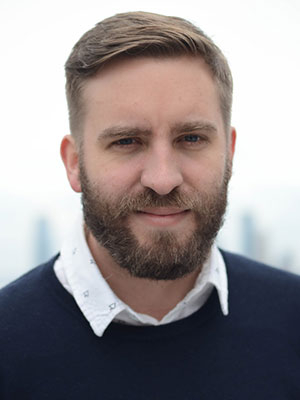
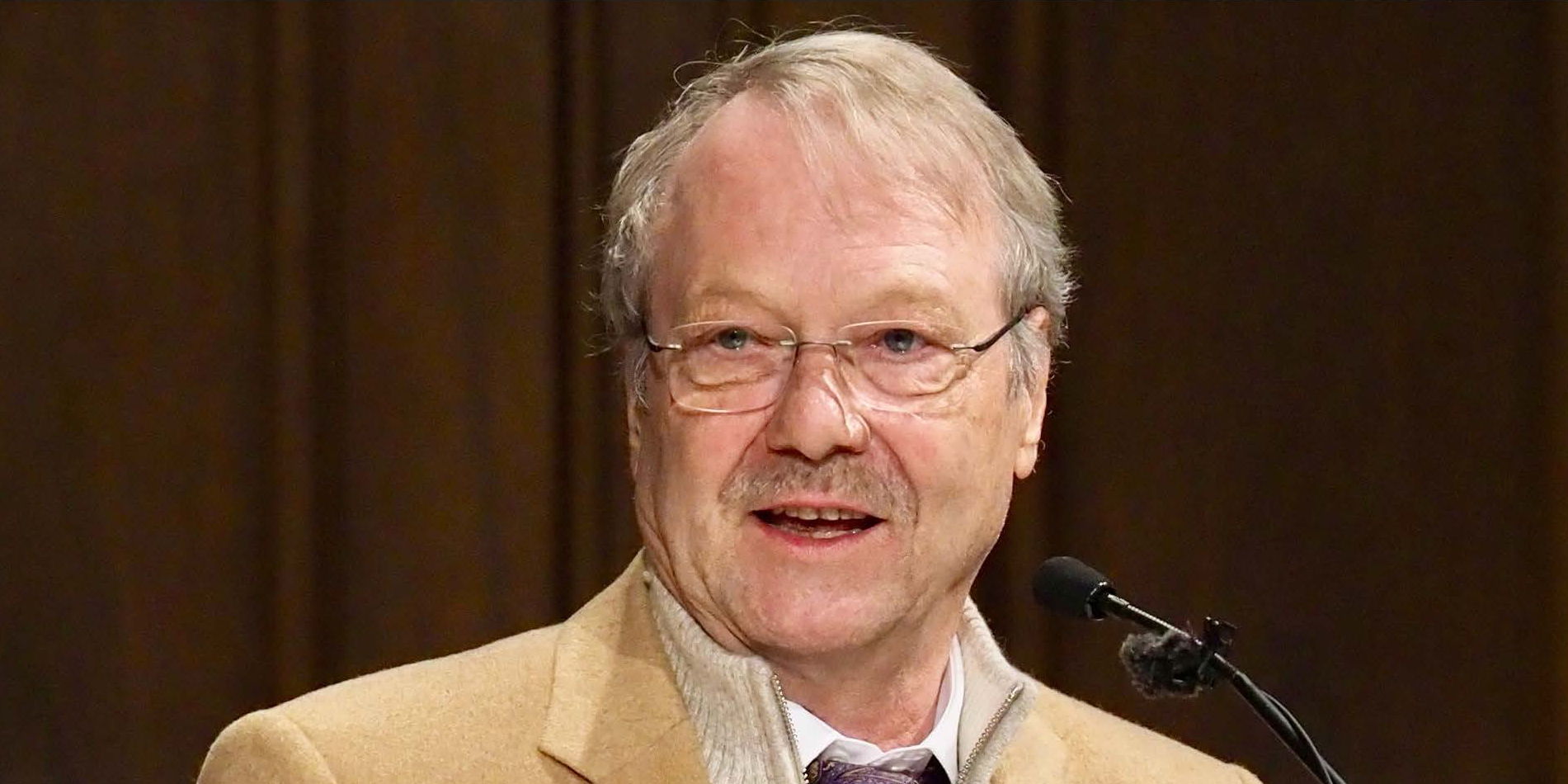
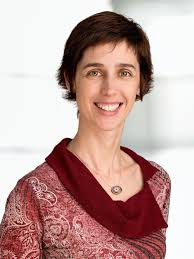
Amanda Morris is a Professor in the Department of Chemistry at Virginia Tech, serving as Chair of the Department and a Faculty Fellow in the Office of the Vice President for Research and Innovation. Her research focuses on molecular materials for energy applications, including artificial photosynthesis, catalysis, and metal-organic frameworks (MOFs). She holds a B.S. from Pennsylvania State University (2005), a Ph.D. from Johns Hopkins University (2009), and completed postdoctoral research at Princeton University (2009–2011). Her research interests span light-harvesting materials, CO₂ reduction, and MOF-based systems for energy storage and environmental remediation. Key projects include investigating MOF conductivity, energy transfer mechanisms, and applications in drug delivery and chemical warfare agent degradation. Dr. Morris has received numerous awards, including the NSF CAREER Award (2016), Sloan Research Fellowship (2016), and Jimmy W. Viers Teaching Award (2022). Her work is funded by agencies like NSF, DOE, and DOD, with grants supporting projects in MOF synthesis, photocatalysis, and nanomaterials. Her lab emphasizes interdisciplinary research in materials chemistry, combining synthesis, spectroscopy, and catalytic studies. Current initiatives include MOF-based drug delivery systems and sustainable energy solutions.
Professor Steph Forrester is a leading academic in Sports Engineering and Biomechanics at Loughborough University , based in the Wolfson School of Mechanical, Electrical and Manufacturing Engineering . She holds the academic rank of Professor and serves as the Programme Director for the Sports Engineering postgraduate programme and Director of the Sports Engineering and Human Factors Research Priority Area . She is also affiliated with the Sports Technology Research Group . Education: BEng in Chemical Engineering – University of Edinburgh (1991) PhD in Chemical Engineering – University of Cambridge (1995) MSc in Sports Biomechanics – Loughborough University (2006) Research Interests: Professor Forrester's research spans sports engineering , biomechanics , and human-surface interaction . Her work focuses on understanding how athletes interact with sports equipment and surfaces, with particular emphasis on artificial turf systems , rotational traction , golf swing mechanics , and running biomechanics . She applies both experimental and modeling approaches to optimize performance and reduce injury risk. Research Trends: Her recent publications (2020–2025) highlight a strong focus on artificial turf performance , including rotational traction testing , infill material behavior , and player perception studies . She also explores golf biomechanics and surgical ergonomics , showing a diverse but applied research portfolio. Leadership & Grants: Professor Forrester has led numerous industry-funded research projects and has held academic leadership roles including Programme Director for Sports Technology (UG) and Director of the Sports Engineering and Human Factors Research Priority Area . Her work bridges academia and industry, particularly in sports surface innovation and athlete performance optimization. Labs & Teams: She is actively involved with the Sports Technology Research Group and leads interdisciplinary teams in the Sports Engineering and Human Factors Research Priority Area at Loughborough University.
Cecil Meeusen is a tenure track lecturer in the Department of Sociology at the Faculty of Social Sciences, KU Leuven. He serves as head of the RESPOND (OG) research unit and is actively involved in multiple research committees including the Sociology Leadership Team, Research Committee, and Evaluation Committee of the Faculty of Social Sciences. His research focuses on political sociology, migration studies, prejudice and discrimination, social polarization, and intercultural relations. Meeusen employs advanced quantitative methods and big data approaches to examine complex social phenomena, with particular attention to ethnic relations, acculturation processes, and political attitudes in Belgium and the Netherlands. Meeusen's recent publications demonstrate a strong focus on analyzing social polarization, particularly regarding migration and sexual education. His research often employs innovative methodological approaches, combining traditional survey data with geospatial information from OpenStreetMap and other big data sources. His work frequently examines the Belgian context, with comparative studies extending to other European countries like Hungary and the Netherlands. Meeusen leads and contributes to numerous research projects with funding extending through 2028, including studies on parental positions amid increasing polarization in sexual education in Belgium, analyzing polarization around relational and sexual formation in Flanders, and examining attitudes toward wealth and redistribution in Belgium since the 19th century. As an educator, Meeusen teaches courses in social statistics, quantitative data analysis, and big data for social sciences, preparing students to handle complex social research questions with advanced methodological tools.
Zhizhen Jane Zhao is an Associate Professor in the Department of Electrical and Computer Engineering at the University of Illinois at Urbana-Champaign, where she holds the William L. Everitt Faculty Fellow position. She is affiliated with the Coordinated Science Laboratory and the National Center for Supercomputing Applications, and serves as an affiliate faculty member in both the Department of Mathematics and the Department of Statistics. Dr. Zhao received her PhD in Physics from Princeton University in 2013, working with Amit Singer. She completed her bachelor's and master's degrees in Physics at Trinity College, Cambridge University, graduating in 2008. Prior to joining the University of Illinois in 2016, she was a Courant Instructor at the Courant Institute of Mathematical Sciences at New York University. Her research focuses on geometric data analysis, dimensionality reduction, mathematical signal processing, scientific computing, and machine learning, with applications to imaging sciences and inverse problems. Specific application areas include cryo-electron microscopy image processing, data-driven methods for dynamical systems, and uncertainty quantification. Her methodology bridges theoretical mathematics with practical applications in biomedical imaging and scientific computing. Analysis of Dr. Zhao's recent publications reveals a strong focus on machine learning approaches to imaging science problems, particularly in cryo-electron microscopy. She has developed innovative methods using geometric analysis, flow matching models, and multi-frequency approaches to solve inverse problems. Her research increasingly integrates physics-driven constraints with deep learning frameworks, creating more robust and interpretable models for scientific applications across biomedical imaging, climate science, and quantum computing. Dr. Zhao has received several notable honors including: William L. Everitt Faculty Fellow Dr. Zhao actively teaches courses ranging from foundational signal processing to advanced topics in machine learning and high-dimensional geometric data analysis. She has mentored numerous graduate students and postdocs working on problems at the intersection of mathematics, computer science, and domain-specific applications. Her research has been supported by various grants enabling interdisciplinary collaborations across engineering, mathematics, and computational sciences. She is an active member of the Coordinated Science Laboratory research community at UIUC, collaborating with researchers across disciplines on projects involving imaging science, machine learning, and computational methods. Her work often involves interdisciplinary teams combining expertise in mathematics, computer science, and domain-specific applications in biomedical imaging, climate science, and quantum physics.
Oliver Fiehn is a Professor and Director of the UC Davis West Coast Metabolomics Center at the University of California, Davis. His laboratory develops cutting-edge metabolomics technologies in cheminformatics and analytical chemistry, with applications in biomedical research and basic science. The Fiehn laboratory leads the UC Davis West Coast Metabolomics Center, which processes data for over 30,000 samples per year using 19 different mass spectrometers. Dr. Fiehn's research spans multiple domains of metabolomics and analytical chemistry: Development of metabolomics technologies in cheminformatics and analytical chemistry Integration of metabolomics with genomics and other omics data Advanced statistical analysis of complex metabolomic datasets Applications in cardiovascular health, metabolic syndrome, aging, and cancer metabolism Development of mass spectrometry-based analytical methods (LC-MS and GC-MS) Creation of databases and software tools for the metabolomics community His laboratory has developed numerous essential tools including MassBank of North America, LipidBlast MS/MS spectral libraries, the Chemical Translation Service, MetaBox for genomic data integration, MetaMapp for data visualizations, and MS2Analyzer and MS-DIAL software for LC-MS/MS data processing. Dr. Fiehn is a member of multiple graduate programs at UC Davis, including Pharmacology/Toxicology, Chemistry, and Biochemistry. His recent publications demonstrate a strong focus on circadian metabolomics, lipidomics in disease states, standardization of metabolomics methods, and the development of new tools for metabolomics data analysis. His work bridges basic science with clinical applications, particularly in understanding the links between the metabolome, exposome, and human health through the creation of standardized methods and open-source resources. Dr. Fiehn actively contributes to the metabolomics community through the development of widely adopted software and databases that have become essential resources for researchers worldwide. His laboratory serves as a hub for metabolomics research and collaboration at UC Davis and beyond, with significant NIH-funded projects addressing fundamental questions in metabolic health and disease.
Mihhail Matskin is a Professor at the Royal Institute of Technology (KTH) within the Department of Software Logic & Computer Systems. He specializes in cloud computing, big data pipelines, machine learning, and distributed systems. His work emphasizes optimizing cloud resource allocation, developing graph-based cost models, and advancing AI-driven systems like SQL recommendation engines and relation extraction frameworks. He actively contributes to KTH's educational mission through roles as examiner and course manager in advanced computer science and engineering courses, including Distributed AI, Cloud Storage Optimization, and Big Data Workflow Design. His research spans over two decades, focusing on scalable data management solutions, edge computing applications in healthcare, and semantic analysis of social media. Notable projects include the DataCloud initiative for big data pipeline orchestration and the DEF-PIPE DSL visualization framework. Matskin’s work bridges theoretical advancements with practical implementations, addressing challenges in reproducibility of LLM-based systems, containerized edge computing, and constraint programming for robotics. His academic contributions include pioneering studies on cloud cost modeling, rule-based storage tiering, and contrastive learning for NER tasks. He has advised numerous advanced-level degree projects across computer science, embedded systems, and communication technologies. Matskin’s lab focuses on innovative solutions at the intersection of distributed systems, AI, and data engineering.
Brian W. O'Shea is a Professor at Michigan State University with joint appointments in the Department of Computational Mathematics, Science and Engineering (since 2015), Department of Physics and Astronomy (since 2008), and Facility for Rare Isotope Beams (since 2014). He serves as Director of MSU's Institute for Cyber-Enabled Research and previously as Interim Director of the Bioinformatics Core . Education: PhD in Physics (2005), MS (2002), B.S. cum laude in Engineering Physics (2000) from University of Illinois at Urbana-Champaign Advisor: Michael L. Norman (UC San Diego) His research spans cosmological structure formation , galaxy evolution , and magnetohydrodynamic simulations , with a focus on the intergalactic medium , galaxy clusters , and machine learning applications in plasma modeling. He contributes to open-source tools like Enzo , Enzo-E , and Athena-PK for astrophysical simulations. Recent publications emphasize exascale MHD simulations of supermassive black hole feedback , cold filament dynamics in galaxy clusters, and data-driven modeling of plasma systems. His work combines cosmological simulations with observational validation through projects like FOGGIE (resolving circumgalactic medium structure) and KODIAQ-Z (metallicity in intergalactic gas). Scientific Recognition : Fellow of the American Physical Society (2016) MSU Teacher-Scholar Award (2015) Lilly Teaching Fellowship (2011-2012) NSF Astronomy and Astrophysics Postdoctoral Fellowship (2008) LANL Director's Postdoctoral Fellowship (2005-2008) Academic Leadership : Director, Institute for Cyber-Enabled Research (2019-present) Co-developer of innovative computational courses Member of multiple research centers Advocate for open-source science As a computational education researcher , he designs active learning physics courses and co-founded MSU's Computational Education Research Lab . His administrative role as ICER Director includes a teaching release to focus on leadership responsibilities.
Elliott M. Hoey serves as an Assistant Professor at Vrije Universiteit Amsterdam within the Faculty of Social Sciences and Humanities, holding dual appointments in the Language and Communication Group and the Network Institute. His research examines the real-time production of human sociality through Conversation Analysis across diverse institutional settings. His academic training includes a PhD from Radboud University Nijmegen (2017) conducted jointly with the Max Planck Institute for Psycholinguistics, followed by postdoctoral research at the University of Basel (2018-2020) under an NWO Rubicon grant and a Fulbright Scholarship at Loughborough University (2021). Hoey's research spans palliative care, construction sites, and educational contexts, investigating phenomena like conversational openings, grammatical constructions, and non-verbal behaviors including sighing, drinking, and silence. His influential monograph When Conversation Lapses: The Public Accountability of Silent Copresence (Oxford University Press, 2020) established him as a leading scholar in interactional research. He actively promotes methodological innovation through co-editing The Encyclopedia of Terminology for Conversation Analysis and Interactional Linguistics . Recent publications reveal a trajectory toward applying Conversation Analysis to critical societal issues including language discrimination, science communication, and end-of-life discussions, while championing open data practices in interactional research. His scientific recognition includes: Best Paper Award from the International Society for Conversation Analysis (2023) NWO Open Competition XS Grant for "Recording under scrutiny" project (2023) Starters en stimuleringsbeurzen grant (2024) Hoey actively mentors emerging scholars through supervision of two PhD candidates and coordination of numerous BA/MA theses in Communication and Information Studies. His NWO-funded project "Recording under scrutiny" investigates police-bystander interactions regarding recording devices, demonstrating his commitment to translating Conversation Analysis into institutional practice. He leads the "Recording under scrutiny" project in collaboration with Uwe-Alexander Küttner at the Leibniz-Institut für Deutsche Sprache, contributing to the growing field of interactional research on institutional encounters while maintaining active engagement with public discourse through media contributions like "De stilte spreekt ook" (2023).
Professor Arne Roets is a prominent social psychologist at Ghent University (UGent) with an extensive publication record spanning over 15 years. His research primarily focuses on social and political psychology, with particular expertise in moral decision-making, prejudice, authoritarianism, and cognitive closure. As a highly productive scholar, he maintains active collaborations with numerous researchers across multiple disciplines. Roets' research interests center on understanding the psychological mechanisms underlying ideological attitudes, moral judgments, and social cognition. His work explores how cognitive styles and personality traits influence political beliefs, prejudice formation, and decision-making processes. He has made significant contributions to the understanding of need for closure as a motivational state that shapes social perception and intergroup relations. His recent work extends into the domains of AI perception, moral development in adolescents, and anti-rape attitude formation. Analysis of his recent publications reveals a strong focus on moral psychology, particularly examining trolley dilemmas, moral foundations, and decision-making processes. His work increasingly addresses contemporary issues including AI in governance, participatory democracy, and sexual violence prevention. Roets demonstrates methodological diversity, employing experimental, cross-cultural, and longitudinal approaches across his research portfolio. Professor Roets has successfully supervised several PhD students to completion, including Jonas De keersmaecker (2020), Dries Bostyn (2019), and Jasper Van Assche (2018). His research program has generated numerous collaborative projects examining prejudice, political attitudes, and moral cognition across diverse populations. He maintains particularly strong research partnerships with Alain Van Hiel (52 co-authored publications), Jasper Van Assche, Dries Bostyn, and Jonas De keersmaecker.
Ryan Abernathey is an Associate Professor of Earth and Environmental Sciences at Columbia University, affiliated with the Lamont Doherty Earth Observatory (LDEO). He holds a Ph.D. from MIT (2012) and a B.A. from Middlebury College, and joined Columbia in 2013 following a postdoctoral fellowship at Scripps Institution of Oceanography. His research focuses on physical oceanography, particularly the role of mesoscale turbulence (eddies, waves, jets) in Earth’s climate system, with a regional emphasis on the Southern Ocean. He develops high-resolution numerical models and leverages satellite remote sensing, while advocating for open-source software, open data, and reproducible science. His research integrates computational methods like machine learning to analyze ocean satellite observations, as seen in collaborations with Prof. Tony Jebara (Computer Science) and Dr. Joaquim Goes (LDEO). He has received prestigious awards including the Alfred P. Sloan Fellowship (2016), NSF CAREER Award, and NASA New Investigator Award. His work also explores cloud-native data repositories and computational ecosystems like Pangeo for geosciences. Abernathey’s studies address key topics such as eddy-driven transport of heat and tracers, Southern Ocean dynamics, and the impact of lateral mixing on climate variability. His recent publications emphasize submesoscale processes, Lagrangian connectivity, and machine learning applications in oceanography. Labs/Teams: Pangeo Ecosystem, LDEO Research Group Grants: NSF CAREER, Sloan Fellowship, NASA, Columbia RISE Grant
August Schubiger was a Professor and later Emeritus Professor of Radiopharmaceutical Sciences at ETH Zurich. His career spanned over three decades, including roles as Associate Professor (1992) and Full Professor (1997–2010). He founded the Center for Radiopharmaceutical Sciences, a joint initiative of ETH Zurich, the Paul Scherrer Institute (PSI), and the University Hospital Zurich, which he led until retirement. Education: Studied chemistry at the University of Zurich (PhD, 1972), followed by postdoctoral research at the Swiss Federal Institute for Reactor Physics (EIR/PSI). He also worked as an IAEA expert in Brazil and as a fellow at the Max Planck Institute for Nuclear Physics in Heidelberg. Research Focus: Development of radiolabeled molecules for cancer and central nervous system disorders, radionuclide applications, and clinical translation of radiopharmaceuticals. His work emphasized diagnostics and therapeutic advancements in nuclear medicine. Awards & Leadership: President of the Society of Radiopharmaceutical Sciences (2001–2003) Honorary Member of HZDR for contributions to cancer research and advisory roles Co-founder of the German-speaking Working Group for Radiochemistry and Radiopharmacy (AGRR) Legacy: Shaped the careers of numerous researchers, established collaborative networks, and contributed to Switzerland’s global leadership in radiopharmaceutical sciences. His work extended to evaluating reproducibility in preclinical research post-retirement.
Prof Louis Moresi is a Professor at the Research School of Earth Sciences, Australian National University. His research focuses on the thermal-mechanical evolution of the Earth's deep interior, particularly mantle convection, plate tectonics, and lithospheric dynamics. He develops computational tools like the Underworld software suite to simulate geodynamic processes, emphasizing open-source practices and reproducible research. Education: DPhil (PhD) in Geophysics, University of Oxford BA (Honors) in Natural Sciences, University of Cambridge Research Interests: Prof Moresi investigates how convective heat loss from the Earth's mantle manifests as plate tectonics, the role of continents in modulating this process, and the interplay between surface processes (e.g., climate change) and deep Earth dynamics. His work integrates numerical modeling, open-source software development, and geodynamic theory to address questions about continental collision, subduction zone dynamics, and lithospheric rheology. Awards: Fellow, Australian Academy of Science (2023) Fellow, American Geophysical Union (2017) Fellow, Royal Astronomical Society (2000) Advising & Grants: He supervises research students and leads projects funded by grants such as "How Large Earthquakes Change Our Dynamically Deforming Planet" (2024–2027). His work includes collaborations on seismic imaging (e.g., Eyre Peninsula Nodal Array) and computational infrastructure for geodynamic modeling (SAM Underworld software system). Labs/Teams: Prof Moresi is a core developer of the Underworld software framework, a collaborative effort advancing numerical geodynamic modeling through Python-based tools for high-performance computing and cloud deployment.
Paul Christopher Boutros is a Professor of Human Genetics and Urology at the University of California, Los Angeles (UCLA), where he also serves as the Acting/Interim Associate Dean in the School of Medicine. He is affiliated with the UCLA Institute of Urologic Oncology and has made significant contributions to cancer genomics, particularly in prostate cancer research. Dr. Boutros holds a PhD in Medical Biophysics from the University of Toronto (2008) and a B.Sc. in Chemistry from the University of Waterloo (2004). He also completed an Executive MBA from the University of Toronto Rotman School of Management (2016). His educational background includes specialized training in mentorship, leadership, and sex and gender in biomedical research. His research focuses on applying computational approaches to cancer genomics, with particular emphasis on prostate cancer. His laboratory integrates machine learning, cloud computing, and advanced statistical methods to analyze genomic, transcriptomic, and proteomic data. Key research areas include cancer heterogeneity, epigenetics, DNA repair mechanisms, and sex differences in cancer biology. His work bridges computational biology with clinical applications, aiming to translate genomic discoveries into improved cancer diagnostics and therapies. Analysis of Dr. Boutros's recent publications reveals a strong focus on prostate cancer genomics, with particular attention to tumor heterogeneity, epigenetic modifications (including N6-methyladenosine), and sex differences in cancer biology. His research increasingly incorporates machine learning approaches to analyze complex genomic datasets and translate findings into clinical applications. The work often involves large-scale collaborative efforts with multiple institutions. Excellence in Postdoctoral Mentoring Award, UCLA, 2023 Outstanding Mentorship Award, BIG Summer Research Program, UCLA, 2023 Bernard and Francine Dorval Prize, Canadian Cancer Society, 2018 Top 25 Peer Reviewer, Journal of the National Cancer Institute, 2019-2020 Early Career Excellence in Graduate Teaching and Mentorship, University of Toronto, 2016 Dr. Boutros has been actively involved in mentoring and training the next generation of scientists, as evidenced by his multiple mentoring awards. His laboratory develops and applies computational pipelines for genomic analysis, including the Metapipeline-DNA framework. His collaborative approach is reflected in numerous multi-institutional projects focused on understanding cancer biology through integrated genomic analyses.
Joelle Pineau is a Professor at McGill University's School of Computer Science and Vice President of AI Research at Meta, leading the Fundamental AI Research (FAIR) team globally. She holds a BASc from the University of Waterloo, and MSc/PhD in Robotics from Carnegie Mellon University. Her research focuses on machine learning, robotics, healthcare AI, and conversational systems, with contributions to reproducibility in ML and FAIR initiatives. She has received prestigious awards including the NSERC Steacie Fellowship and Governor General's Innovation Award. Pineau supervises numerous students and collaborates on projects like the Ubuntu Dialogue Corpus and ML Reproducibility Checklist. She leads teams at Mila and Meta, advancing AI ethics and foundational research. Education BASc in Engineering, University of Waterloo MSc and PhD in Robotics, Carnegie Mellon University Research Interests Pineau's work bridges theory and application, emphasizing practical machine learning solutions in healthcare, robotics, and dialogue systems. She advocates for reproducible research and ethical AI practices, contributing to initiatives like NeurIPS Reproducibility Challenge. Her lab explores reinforcement learning, policy optimization, and causal inference, with applications to medical decision-making and social robotics. Articles Overview Recent work includes advancements in causal inference (e.g., Mendelian Randomization), ethical AI frameworks, and interpretable reinforcement learning policies. Her papers address challenges in medical AI, legal implications of ML, and scalable dialogue systems. Key contributions span foundational methods and applied domains, reflecting her dual academic and industry roles. Awards NSERC E.W.R. Steacie Memorial Fellowship (2018) Governor General's Innovation Awards (2019) CIFAR Canada AI Chair AAAI Fellow Royal Society of Canada Fellow Advising & Grants Pineau has mentored over 100 students, including postdocs and PhD candidates. Her grants support interdisciplinary projects in AI ethics, healthcare, and robotics. Collaborative efforts include biomedicine partnerships and open-source tools for reproducible research. Labs & Teams Leads FAIR (Meta) and Mila, fostering collaborations across academia and industry. Active in initiatives like Conversational Intelligence Challenges and ML benchmarking standards.
Dr. Michael Cotterell is a Senior Lecturer and Undergraduate Coordinator in the University of Georgia's School of Computing (SoC). He holds a B.S. (2011) and Ph.D. (2017) in Computer Science from UGA. His roles include directing the CSUA and UGAHacks Experiential Learning Programs, chairing the Undergraduate Program & Curriculum Committee, and serving on UGA's University Council. Education: Ph.D. in Computer Science (2017), UGA. His research focuses on computing education, functional data analysis, and open science. Notable grants include a $899,995 IES grant (2022–2025) for educational interventions and multiple grants for open educational resources. Awards include the SoC Teaching Excellence Award (multiple years), UGA Teaching Academy induction (2023), and fellowships in Online Learning and Writing (2018–2019). He advises numerous students in research projects and has contributed to courses like CSCI 1302 and Python-based introductory programming. Labs/Teams: Director of CSUA Program, co-PI on interdisciplinary grants, and contributor to ScalaTion Kernel Project. His work emphasizes low-anxiety computing education and evidence-based pedagogy.