Kyle HanquistView profile
Assistant Professor
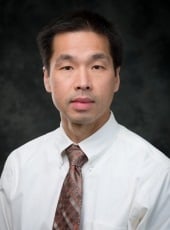
Kyle Hanquist is an Assistant Professor in the Department of Aerospace and Mechanical Engineering at the University of Arizona, where he is also a member of the Graduate Faculty. He directs the Computational Hypersonics and Nonequilibrium Laboratory (CHANL), focusing on advanced simulation techniques for high-speed flows. His academic journey includes a PhD and MSE in Aerospace Engineering from the University of Michigan and a BSE in Mechanical Engineering from the University of Nebraska. PhD, Aerospace Engineering, University of Michigan, Ann Arbor MSE, Aerospace Engineering, University of Michigan, Ann Arbor BSE, Mechanical Engineering, University of Nebraska, Lincoln Dr. Hanquist's research centers on hypersonics, aerothermodynamics, and nonequilibrium flows , with strong emphasis on computational fluid dynamics , low-temperature plasmas , and thermal management systems . His work involves modeling complex physical phenomena such as electron transpiration cooling, plasma-assisted flow control, and high-temperature gas effects in reentry environments. He also investigates molecular gas dynamics and finite-rate chemistry in extreme conditions. His recent publications reveal a strong trend in computational modeling of hypersonic boundary layers , plasma sheaths , and shock-tube validation of thermochemical models . The interdisciplinary nature of his work spans aerospace engineering, plasma physics, and materials response under extreme thermal loads. Much of his research integrates multi-physics simulations to address fluid-thermal-structural interactions critical for next-generation hypersonic vehicles. Dr. Hanquist has received several scientific honors, including: 2020 AIAA Plasmadynamics and Lasers Best Paper Award Editor's Choice, AIP Publishing - Physics of Fluids (Summer I 2020) Featured Article, AIP Publishing - Physics of Fluids (Summer I 2021) Frontiers in Physics – Plasma Physics (Spring 2020) As an advisor and lab director, he mentors graduate students in computational hypersonics and collaborates with institutions like NASA and the University of Michigan. His research is supported by grants from aerospace and defense agencies, though specific funding sources are not listed. He teaches courses in fluid mechanics, numerical methods, and nonequilibrium flows, contributing to both undergraduate and graduate education. He leads the Computational Hypersonics and Nonequilibrium Laboratory (CHANL) , which develops and applies high-fidelity simulation tools for hypersonic applications. The lab focuses on kinetic modeling, plasma interactions, and optimization of thermal protection systems, often using massively parallel CFD codes and multi-fidelity surrogate models.