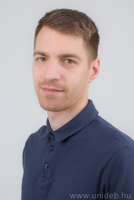
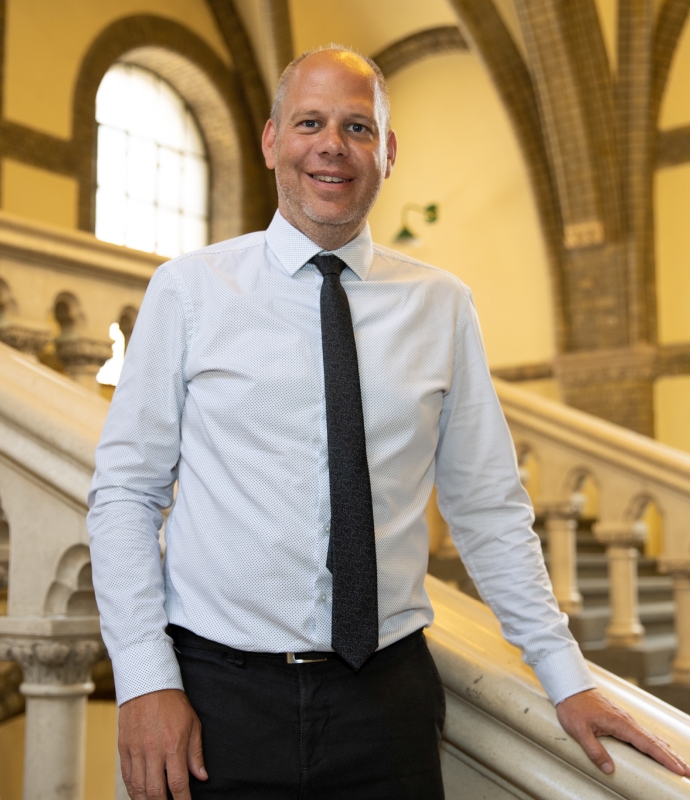
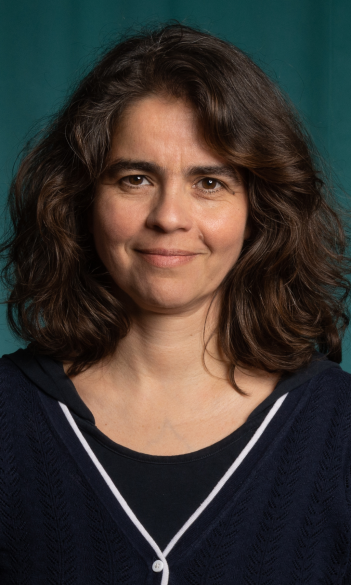
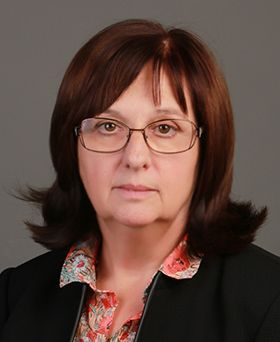
Máté Szabó is an Assistant Professor at the University of Debrecen , affiliated with the Faculty of Informatics and the Department of Information Technology . His email contact is szabo.mate@inf.unideb.hu . He works in areas such as Machine Learning , Smart Cities , and Mobile Computing . His research spans topics like microservice architecture for ensemble models, Markov modeling of traffic flows, and distributed machine learning on mobile platforms. He has explored neural models for conversational AI and gamification in programming education through Minecraft-based challenges. His work also addresses edge computing and data parallelism in mobile environments. His publications (2016–2024) reflect trends in machine learning deployment on Android platforms smart city traffic analytics gamified educational tools cognitive modeling of numerical understanding microservice-based model integration .
Budapest University of Technology and EconomicsHungary
Dr. HAJNAL Géza is an Associate Professor at the Budapest University of Technology and Economics (BME), Faculty of Civil Engineering, where he serves in the Department of Hydraulic and Water Resources Engineering. His office is located in Room K. ép / mf. 12/7, and he can be contacted via email at hajnal.geza@emk.bme.hu or phone at +36 1 463 2362. His teaching portfolio includes active courses such as Hydraulic Engineering, Water Management (BMEEOVVAT43) and Hydrometric Field Course (BMEEOVVAI44). Previously, he taught Hidrogeology (BMEEOGMMET3) and Hydrogeology of Subsurface Water (BMEEOGMDT81). HAJNAL's research specializes in hydrogeology , with emphases on karst aquifer dynamics, groundwater flow modeling, climate impacts on hydrology, and hydraulic engineering. His work integrates field measurements (e.g., drip-water monitoring in Buda Castle Cave) with advanced numerical modeling to address complex hydrological challenges in Hungarian watersheds. Analysis of his 15 most recent publications (2013–2025) reveals dominant themes: 73% focus on karst/fractured aquifers , 20% on hydrological modeling techniques , and 7% on socio-environmental conflicts. Recurrent technical subfields include seepage flow validation, transmissivity determination, and rainfall-runoff sensitivity. No scientific awards, grants, student advisees, or lab affiliations are documented in the provided materials.
Budapest University of Technology and EconomicsHungary
Dr. FARKAS Dávid is an Assistant Professor in the Department of Hydraulic and Water Resources Engineering, Faculty of Civil Engineering, Budapest University of Technology and Economics (BME). His office is located in Building K, basement level, room 12/7, and he holds weekly consultation hours on Mondays from 1–3 pm. Educational contributions include teaching core courses in hydrogeology and groundwater engineering: Groundwater (BMEEOVVMV63) Hydrogeology (BMEEOGMMG62) Infrastructural Design Project (BMEEODHAI41) Research activities concentrate on quantitative hydrogeology, with a special emphasis on karstic groundwater systems, seepage hydraulics, and the safety of flood-protection levees. He couples field investigations in iconic Hungarian cave systems (Buda Castle Cave, Molnár János Cave) with laboratory sandbox experiments and numerical modelling to advance understanding of flow and transport processes in fractured carbonates. Over the past decade his work has evolved from fundamental hydrogeological mapping toward the design and deployment of automated monitoring networks that integrate classical hydrological instruments with modern sensor technologies. This progression is evident in his most recent publications (2024-2025) that document the establishment of high-resolution cave monitoring systems capable of capturing rapid responses to precipitation events. Scientific awards currently listed: none. Advising and grants: no specific student names, grant numbers, or funded project titles are provided in the supplied text. Laboratories and teams: while no dedicated laboratory name is stated, his affiliation with the Department of Hydraulic and Water Resources Engineering implies access to the faculty’s hydraulics and hydro-environmental laboratories, including sandbox and seepage modelling facilities.
Béla Greskovits is a University Professor at the Central European University (CEU) in Vienna, Austria, holding dual roles in the Department of International Relations and Department of Political Science, alongside Emeritus statuses in both departments. He also serves as a University Professor in the Doctoral School of Political Science, Public Policy, and International Relations. His research focuses on the political economy of East-Central Europe, comparative economic development, social movements, and democratization, with a current emphasis on civil society’s role in the rise of right-wing populism. Academic appointments include visiting roles at Harvard University (2008-09), Cornell University (1998-99), and the European University Institute (2016-21). He earned a PhD in Economics from the Hungarian Academy of Sciences (1996) and an MA from the Budapest University of Economics (1980). Fluent in Hungarian, English, and German, he has authored over 100 publications, including the influential book Capitalist Diversity on Europe's Periphery (2012, co-authored with Dorothee Bohle), which won the Stein Rokkan Prize in 2013. Key Awards: 2021 East European Politics Best Article Prize, 2021 Polányi Károly Prize, Danubius Award (2018), Bibó István Prize (2014), and CEU Outstanding Research Award (2014). His work bridges political economy and sociology, analyzing how economic systems interact with democratization processes. Recent publications explore nationalism, rule of law crises in Europe, and Hungary’s illiberal turn. He has advised numerous policy initiatives and remains a leading voice on post-socialist transformation and civil society dynamics.
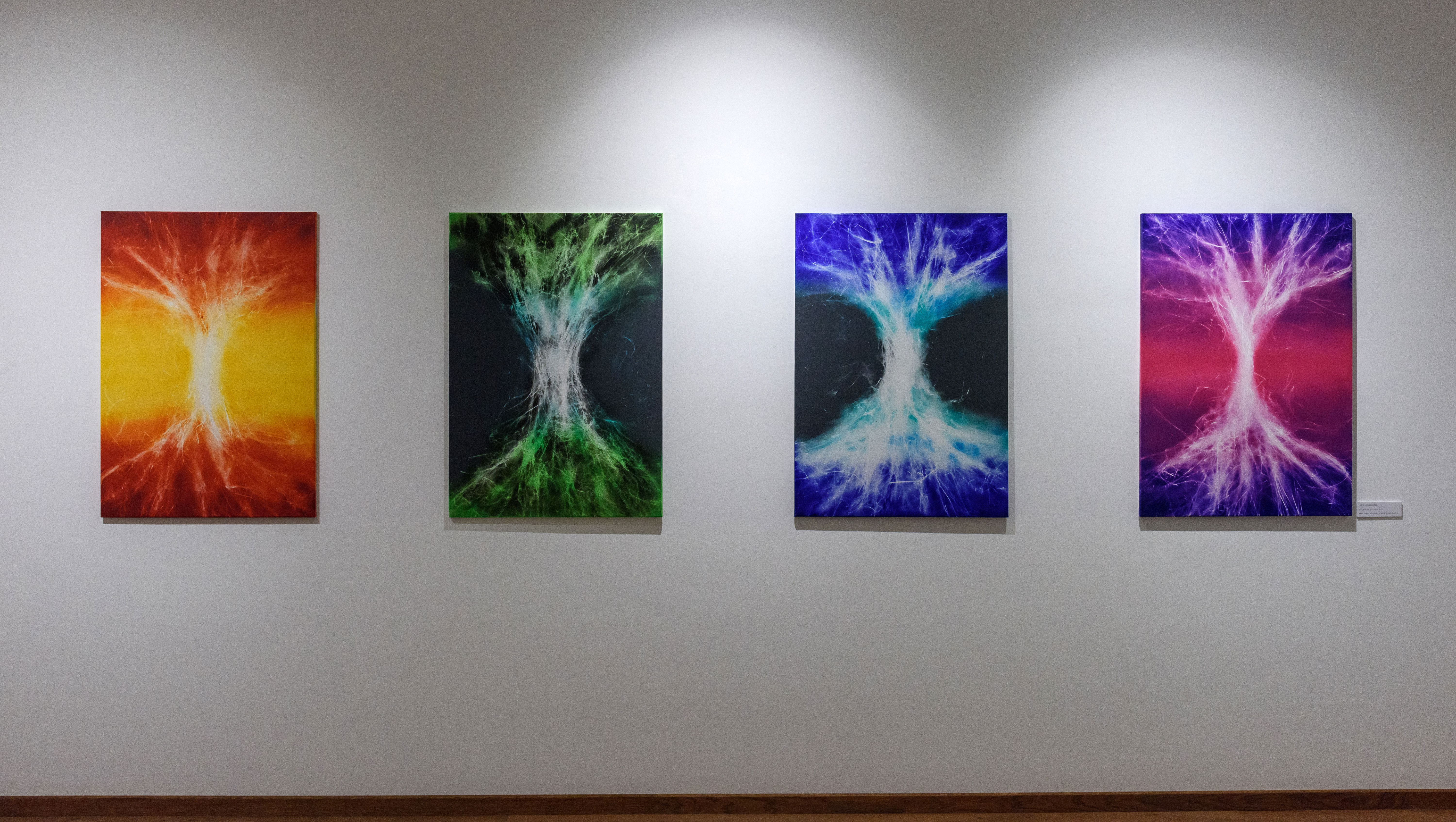
Zsigmond Lucza (born 1978 in Budapest) is a Hungarian contemporary artist and university assistant professor at the Hungarian University of Fine Arts, Department of Visual Art since 2022. He holds a DLA (Doctor of Liberal Arts) degree from the University of Pécs Faculty of Arts (2011-2014) and has extensive international experience including studies at the University of Lapland in Finland (2012-2013). Lucza's educational background includes dual Master's degrees from the Hungarian University of Fine Arts (2002-2007) in both Painting and Visual Art Teacher programs, along with foundational training at the Buda Drawing School (2000-2002). His academic career includes teaching positions at Jelky András Applied Arts Vocational High School (2014-2018), Modell Fashion School (2008-2012), and Kolumbusz Humanities High School (2005-2007). Lucza's artistic practice spans contemporary painting, transmedia art, and mixed media works, with significant focus on digital integration in traditional art forms. His research interests center on transmedia tendencies in contemporary Hungarian painting, visual communication, and the evolving relationship between digital and physical art spaces. His work often explores identity, perception, and the integration of technology in artistic expression, creating pieces that bridge traditional painting techniques with contemporary digital aesthetics. His artistic output shows a consistent evolution from figurative works toward more experimental transmedia approaches, with recent projects focusing on environmental reflection, digital portraiture, and collaborative installations. Lucza's work demonstrates a sophisticated understanding of both traditional painting techniques and contemporary digital media, creating a distinctive visual language that addresses current artistic concerns while maintaining strong technical foundations. Lucza has received multiple awards including an Erasmus scholarship for study at the University of Lapland, a scholarship from the Budapest Gallery and Kunststiftung Baden-Württemberg, and first prizes in national competitions. His professional affiliations include membership in the Hungarian Artists' Association (MAOE) since 2007, the MAMŰ Society since 2015, and non-academic membership in the Hungarian Academy of Arts (MMA) since 2022. As an educator, Lucza has conducted numerous workshops internationally including the Experimental Drawing Course at the Latvian Academy of Arts and Transmedia Workshops at the University of Pécs. His curatorial work includes the 'Medium Summoners' exhibition at MAMŰ Gallery in Budapest (2017). Lucza maintains an active exhibition schedule with solo shows across Hungary, Finland, and Slovenia, alongside participation in numerous international artist colonies and collaborative projects.
Budapest University of Technology and EconomicsHungary
VARGA Gabriella is an Assistant Professor at the Department of Engineering Geology and Geotechnics under the Faculty of Civil Engineering at Budapest University of Technology and Economics. She serves as Head of the Faculty Committee on Career Orientation for Highschool Students and coordinates the University Open Days. Primary affiliation: Budapest University of Technology and Economics Academic role: Teaching and research in geotechnics Organizational leadership: Career orientation and university outreach Her research focuses on geotechnical stability and soil mechanics , with a strong emphasis on landfill engineering , slope stability analysis , and settlement modeling . She has developed expertise in evaluating safety factors for soil structures and integrating computational methods with field applications. Recent publications highlight her work in bioreactor landfill mechanics , cohesive soil slope stability , and geotechnical modeling . Key trends include environmental geotechnics, waste management systems, and sustainable earthwork design. Scientific Awards Magyar Felvételi #építő250 Scholarship Advising and Education : She teaches foundational courses in Earthworks and Soil Mechanics, guiding students through practical project work in structural design. Her pedagogical approach emphasizes real-world geotechnical challenges.
Budapest University of Technology and EconomicsHungary
Mahler András , Associate Professor at the Faculty of Engineering (Budapest University of Technology and Economics), specializes in Geotechnical Engineering and Soil Mechanics within the Department of Engineering Geology and Geotechnics . His research integrates numerical modeling and empirical testing to address geotechnical challenges in infrastructure and construction materials. Department: Engineering Geology and Geotechnics Email: mahler.andras@emk.bme.hu Courses: Soil Mechanics, Geotechnical Finite Element Analysis, Numerical Methods in Geotechnics Research Focus Mahler's work emphasizes: Geotechnical Testing : CPT-Vs correlations, hypoplastic parameter calibration, and permeability studies. Material Behavior : Analysis of rolled asphalt, concrete seepage, and collapsible soils. Seismic Applications : Liquefaction hazard assessment and seismic fragility of embankments. His recent publications highlight advancements in soft clay characterization , asphalt modeling , and sustainable soil stabilization using sewage sludge ash. Awards Építő250 Scholarship
Budapest University of Technology and EconomicsHungary
Dr. Farkas-Karay Gyöngyi serves as Assistant Professor at the Department of Hydraulic and Water Resources Engineering within the Faculty of Civil Engineering at Budapest University of Technology and Economics (BME). She teaches core courses including Groundwater (BMEEOVVMV63), Hydrogeology (BMEEOGMMG62), and Hydraulic Engineering, Water Management (BMEEOVVAT43), maintaining office hours Fridays 10:00-12:00 in room K. ép / mf. 12/7. Education: Civil Engineering BSc (2011) Structural Engineering MSc (2013) PhD (2018) Research Focus: Her expertise centers on fractured and karst aquifer systems, conducting hydraulic investigations of complex rock formations, developing methodologies for pumping test evaluation in fractured media, and implementing numerical models for groundwater flow characterization. This work bridges theoretical hydrogeology with practical water resource management applications. Publication Trends: Analysis of her 2013-2017 publications reveals consistent advancement in fractured/karst aquifer characterization techniques. Key contributions include non-linear flow analysis in pumping tests, transmissivity determination from mining operations, and integrated physical-numerical modeling approaches. Her research demonstrates strong methodological rigor across laboratory experiments, field data interpretation, and computational simulation. Scientific Awards: No awards documented. Advising and Grants: Available materials contain no information regarding student supervision, research grants, or funded projects.
Márk Jelasity is a Full Professor in the Department of Algorithms and AI at the University of Szeged, Hungary, where he has been working since 2016. Previously, he served as a research advisor (equivalent to full professor) and senior research scientist at the Research Group on Artificial Intelligence (RGAI) of the Hungarian Academy of Sciences. His career includes numerous international research positions at institutions in Sweden, Norway, France, Italy, and the Netherlands. Professor Jelasity's research spans distributed systems, peer-to-peer computing, gossip protocols, and decentralized machine learning. His work bridges theoretical foundations with practical applications, particularly in the areas of self-organizing systems and privacy-preserving computation. His research has significant implications for smart grid technologies, secure distributed systems, and robust machine learning. His publication record shows a clear evolution from foundational work in gossip protocols and peer-to-peer systems toward cutting-edge research in decentralized machine learning, adversarial robustness, and privacy-preserving AI. Recent publications demonstrate his leadership in comparing gossip learning with federated learning approaches and exploring novel techniques for enhancing robustness in neural networks. Bolyai Plaquette (2015) 10 years best paper award at ACM/IFIP/USENIX Middleware Conference (2014) Best paper award at IEEE International Conference on Peer-to-Peer Computing (2014) Best paper award at IEEE International Conference on Self-Adaptive and Self-Organizing Systems (2013) Scientific Award of the Faculty of Science and Informatics, University of Szeged (2013) Fulbright Scholarship to visit Cornell University (2013) Multiple Bolyai Scholarships (2007-2014) Professor Jelasity has been actively involved in the academic community as an organizer of major conferences including DAIS'16 (TPC co-chair), SASO 2010 (General Co-Chair), and SASO 2007 (TPC co-chair). His leadership in the field is evidenced by his extensive publication record in top venues and his role in editing special issues and conference proceedings.
Prem Kumar Rajaram is a Professor in the Department of Sociology and Social Anthropology at Central European University (CEU). He is based in Vienna and serves as Head of the Open Learning Initiative and project leader of the Erasmus+ Refugee Education Initiatives consortium, which implements educational programs for displaced populations across Austria, Hungary, Germany, the UK, and Greece. His educational qualifications include: Ph.D. in International Relations, London School of Economics (2002) M.A. in International Relations, Australian National University (1994) B.A. (Hons) in Politics, University of Hull, UK (1993) Rajaram’s research engages with critical questions of marginality, depoliticization, colonial histories of capitalism and race, and the governance of asylum-seekers and refugees. He is deeply committed to critical pedagogies and the democratization of higher education, particularly in making universities more accessible to marginalized groups. His work bridges sociology, anthropology, migration studies, and postcolonial theory, emphasizing engaged and activist scholarship. His recent publications reveal a sustained focus on migration, border regimes, refugee subjectivity, and the politics of knowledge production in academia. Themes such as coloniality, carceral geographies, and institutional exclusion recur across his work, especially in the context of European migration policies and higher education. He critiques prestige culture in academia and advocates for transformative, inclusive pedagogical models. Scientific Awards and Honors: No awards or fellowships are mentioned in the provided text. Rajaram actively supervises or mentors students, though no specific names are listed. He has been involved in significant research initiatives, including the Erasmus+ Refugee Education Initiatives, which functions as both a research and practice-oriented program. His work is closely tied to public engagement, as evidenced by numerous events, book launches, and workshops on migration, solidarity, and open education. While no formal lab or research team is named, his leadership in the Open Learning Initiative suggests a collaborative, interdisciplinary research environment focused on educational justice and refugee inclusion.
Anna Kende is a University Professor at Eötvös Loránd University, serving as Director of the Institute of Psychology and Head of the Department of Social Psychology. She actively contributes to academic governance as a member of both the Faculty Honors Committee and Faculty Council. Her research centers on the psychology of intergroup relations, with specialized expertise in social change processes, prejudice reduction mechanisms, and collective action dynamics. A defining focus of her work examines anti-Gypsyism and the social inclusion challenges faced by Roma communities across Europe, integrating both theoretical frameworks and applied interventions. Her research methodology frequently employs large-scale international collaborations spanning dozens of countries. Analysis of her 15 most recent publications (2025) reveals three dominant research trajectories: pandemic-induced shifts in intergroup relations (particularly migration attitudes), cross-cultural analyses of allyship motivations for marginalized groups (LGBTQ+ and Roma), and context-dependent interventions for reducing structural prejudice. Her work consistently utilizes multinational datasets and addresses contemporary societal challenges through psychological lenses. Professor Kende has secured substantial funding from European Union programs and other international organizations for numerous research projects. She leads the Social Groups and Media Research Workshop, which investigates group dynamics, media influences on social attitudes, and psychological mechanisms of social change. Her work bridges academic research with real-world applications in prejudice reduction and social cohesion.
Károli Gáspár University of the Reformed ChurchHungary
Dr. Adam Bence Bethlenfalvy is an Associate Professor at the Faculty of Humanities and Social Sciences, Károli Gáspár University of the Reformed Church in Hungary. Born in Delhi, India in 1977, he holds a PhD in Drama Pedagogy (Education) from Birmingham City University (2017) and MA degrees in English Language and Literature from ELTE (2004). He serves as Research Group Leader of the Theatre Pedagogy and Theatre Sociology Research Group and has directed numerous theatre productions while maintaining an active research profile. Bethlenfalvy earned his doctoral degree in 2017 from Birmingham City University with a dissertation titled "Living through extremes: an exploration of integrating a Bondian approach to theatre into 'living through' drama." His educational background includes dual MA degrees from ELTE Budapest in 2004 - one in English Language and Literature and another as an English Language and Literature Teacher. He also obtained professional qualification in drama direction from the Hungarian Drama Pedagogical Society in 1996. His language proficiency includes English (C2), French (A2), and Hindi (A2). Dr. Bethlenfalvy's research focuses on drama pedagogy, theatre education, and Edward Bond's theatre. His work explores the integration of Bondian approaches into living through drama, reflective practice in educational settings, and creative partnerships in theatre education. He has made significant contributions to understanding how fictional contexts can liberate educational and artistic processes, particularly through process drama methodologies. His research also addresses contemporary challenges such as digital media usage, online learning during the pandemic, and code-switching in multilingual drama classrooms. His extensive publication record shows a clear focus on mapping and analyzing educational theatre programs in Hungary and Europe. Recent work examines methodology for national mapping of educational theatre, the big picture of objectives and strategies in Hungarian educational theatre programs, and trends in educational theatre practices. His scholarship consistently connects theory with practical applications in drama education while exploring the intersections between Edward Bond's theatrical approaches and educational drama methodologies. Dr. Bethlenfalvy has supervised doctoral students including Melinda Gemza (University of Debrecen) and Dear Kristina (Babeș–Bolyai University). He has served as an opponent at numerous doctoral defenses, including for Ramona Gecse (2021), Antal Klaudia (2022), Vera Prontvai (2022), Kata Pető (2022), and Prezsmer Boglárka Laura (2023). He leads research projects including "Theatre and society – theatre pedagogy and theatre sociology in Hungary" (2022-2024) and participates in "Victim Roles" and "Code-switching in the arts" projects. As an active practitioner, Bethlenfalvy has directed numerous theatre productions, including "OnLife" at Csokonai National Theatre (2025), "Dragon's Eye" (2024), and several Edward Bond adaptations. He has organized significant conferences such as the Democracy through Drama Summer School (2019) and The GAP conference (2016). His professional activities also include membership in academic societies like IDEA Europe, Hungarian Drama and Theatre in Education Association, and National Association for the Teaching of Drama.
Budapest University of Technology and EconomicsHungary
Sándor Ádány is a Professor at the Department of Structural Mechanics , Budapest University of Technology and Economics. His work focuses on advanced structural analysis of thin-walled members and systems-based design methodologies. Research Interests: Specializes in buckling behavior of thin-walled structures, finite element modeling, cold-formed steel stability, and modal decomposition techniques. Key areas include Lateral-torsional buckling Displacement mapping in constrained FEM Stiffener optimization in plate structures Combined loading stability of tubular members Prebuckling deformation effects Fourier-based numerical methods Article Trends (2023-2025): Recent publications emphasize elastic stability analysis of thin-walled beams and tubular structures under complex loading conditions, with particular attention to prebuckling deflections, torsional rigidity effects, and numerical validation of analytical models. Innovations include Fourier-series displacement approximations and constrained finite element methodologies.
Zsuzsanna Varga is Professor and Head of Department at the Department of Modern and Contemporary Hungarian History at Eötvös Loránd University (Budapest), where she also holds a Doctor of Science (DSc) degree. Her academic work is centered within the Faculty of Humanities at the university, with her office located at 1088 Budapest, Múzeum körút 6–8. Professor Varga received her PhD in Agrarian History in 1998, establishing her expertise in historical research with a focus on agricultural and rural history. Her educational trajectory has positioned her as a leading scholar in Hungarian agrarian studies. Her primary research interests focus on the history of socialist agriculture in Hungary, with particular emphasis on cooperatives, lobbying networks, knowledge transfer processes, and East-Central European comparative studies. Varga's work examines how Hungarian agricultural cooperatives developed a unique path that diverged from the Soviet kolkhoz model, creating what she terms the "Hungarian Agricultural Miracle" through a hybrid of American technology and socialist structures. She investigates peasant resistance strategies, the agrarian lobby's influence on policy, and the complex relationship between the Kádár regime and the peasantry. Her research demonstrates how ordinary people maintained agency even within authoritarian systems. Professor Varga is a founding member of the European Rural History Organisation (EURHO) and has served as a regional representative in its Management Committee. She held the position of Vice-President of EURHO from 2019-2021, demonstrating her international standing in the field of rural history. Founding member of the European Rural History Organisation (EURHO) Regional representative in the Management Committee of EURHO Vice-President of EURHO (2019-2021) Throughout her career, Professor Varga has supervised numerous graduate students in agrarian history and related fields. Her research has been supported by academic grants that have enabled extensive archival work in Hungarian and Eastern European collections. She has published extensively, with her work appearing in journals such as Hungarian Historical Review, East Central Europe, and Europe-Asia Studies. Professor Varga leads research initiatives focused on socialist-era agricultural history, with particular attention to knowledge transfer processes, cooperative structures, and comparative methodologies across Eastern European contexts. Her work bridges disciplinary boundaries between agrarian history and rural history, contributing significantly to our understanding of how agricultural systems evolved under state socialism.
Anikó Csébfalvi is a full professor at the Department of Civil Engineering, Faculty of Engineering and Information Technology, University of Pécs. She specializes in structural optimization, heuristic methods, and stability analysis of elastic structures, with a focus on discrete and continuous optimization of space trusses. Her research integrates hybrid metaheuristic algorithms, such as ANGEL, for engineering applications in structural design and project scheduling. Education: MSc (1978), PhD (1996), CSc (1996), Habilitation (2011) from institutions including Budapest University of Technology and Economics and the University of Pécs. Research: Structural optimization (sizing-shaping-topology), heuristic modeling, stability analysis, resource-constrained project scheduling, and elastic-plastic collapse constraints. Her 15 most recent articles (2004–2012) demonstrate expertise in hybrid metaheuristics, discrete-continuous truss optimization, and financial engineering. She serves as a thesis supervisor in the Marcell Breuer Doctoral School and collaborates internationally on structural mechanics topics. Scientific contributions include memberships in CEACM, ISSMO, and editorial roles for journals like Pollack Periodica and Structural and Multidisciplinary Optimization .