Tapio Schneider is the Theodore Y. Wu Professor of Environmental Science and Engineering at the California Institute of Technology. His research focuses on atmospheric dynamics across Earth and other planets, climate modeling innovations, and geophysical turbulence analysis. He contributes to the Climate Modeling Alliance (CliMA) and develops advanced computational tools for climate prediction. Albert-Ludwigs-Universität Freiburg (Vordiplom, 1993) Princeton University (M.Sc. 1997, Ph.D. 2001) University of Washington, Seattle (Visiting Graduate Student, 1994-1995) His research spans climate dynamics , atmospheric turbulence , and AI-enhanced climate modeling , addressing challenges in cloud dynamics, extreme weather patterns, and planetary climate systems. Current work emphasizes hybrid machine learning-physical models and computational acceleration for high-resolution simulations. Recent publications highlight trends in AI integration for climate science, with applications in hydrology , cloud microphysics , ocean circulation , snowpack modeling , and climate tipping points . His team develops open-source tools like ClimateMachine for GPU-accelerated simulations. Scientific Recognition: Fellow, American Geophysical Union (2022) Rosenstiel Award (2019) World Economic Forum Young Scientist (2012) David and Lucile Packard Fellow (2005-2010) Alfred P. Sloan Research Fellow (2004-2006) Tapio leads climate dynamics research at Caltech, directs the Linde Center for Global Environmental Science (2011-2012), and serves as Editor for the Journal of Advances in Modeling Earth Systems . His group collaborates with NASA Jet Propulsion Laboratory (2016-2024) and Google Research (2022-present).
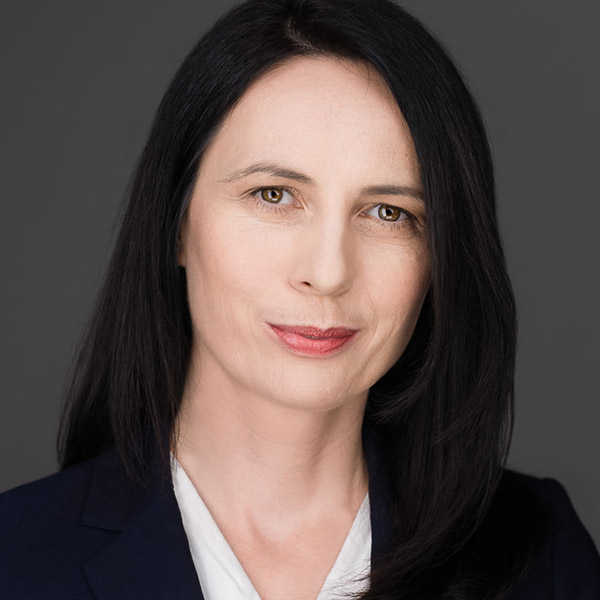
Dr. Oana Cocarascu is a Senior Lecturer in Artificial Intelligence at the Department of Informatics, Faculty of Natural, Mathematical & Engineering Sciences, King's College London. She holds a PhD and MEng in Computing (Artificial Intelligence) from Imperial College London and conducts applied research focusing on how artificial intelligence can be deployed to support real-world applications, with machine learning and natural language processing as core components of her work. Her research interests span argument mining, explainable AI, machine learning, natural language processing, and symbolic reasoning. She is particularly focused on developing AI systems that can provide transparent, accountable, and ethical decision-making processes. Her work addresses critical challenges in bias mitigation, fairness metrics, fact verification systems, and argumentation-based explanations for complex AI decisions. Analysis of her recent publications (2023-2025) reveals a strong focus on fairness in AI systems, with particular attention to individual fairness metrics and nuanced evaluation frameworks. She has made significant contributions to fact verification systems, especially in multimodal contexts involving charts and tabular data. Her work increasingly integrates argumentation theory with natural language processing to create explainable AI systems that can justify their decisions through structured reasoning. Dr. Cocarascu leads an EPSRC-funded project titled 'A framework for evaluating and explaining the robustness of NLP models' (2024-2027) and is actively involved in the Natural Language Processing Group at KCL. Her research fingerprint shows strong activity in argumentation (100%), decision-making (74%), artificial intelligence (50%), explainable AI (39%), and bias mitigation (35%). She has contributed to numerous high-impact publications in top venues including ACL, EMNLP, AAAI, and the Journal of Artificial Intelligence Research, with a particular focus on making AI systems more transparent, accountable, and aligned with human values. Her work intersects with UN Sustainable Development Goals, particularly those related to reducing inequality and building resilient infrastructure.
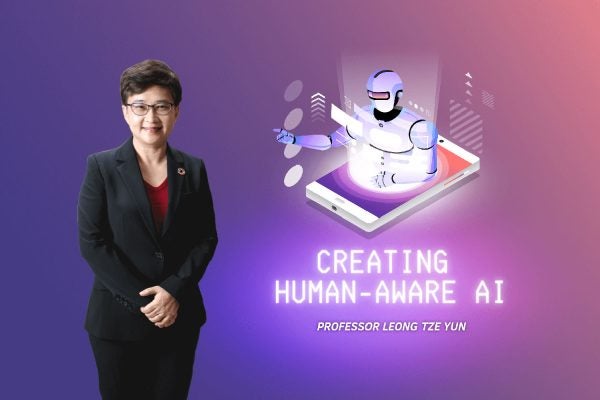
LEONG Tze Yun is a Professor in the Department of Computer Science at the School of Computing, National University of Singapore (NUS). She holds S.B., S.M., and Ph.D. degrees in Computer Science from the Massachusetts Institute of Technology (MIT). Her academic career spans both research and industry experience, with significant contributions to the fields of artificial intelligence and health informatics. Dr. Leong's educational background includes: Ph.D. in Electrical Engineering & Computer Science, Massachusetts Institute of Technology S.M. in Electrical Engineering & Computer Science, Massachusetts Institute of Technology S.B. in Computer Science & Engineering, Massachusetts Institute of Technology Her primary research interests focus on responsible AI, dynamic decision-making, neurocognitive modeling, reinforcement learning, artificial general intelligence, and biomedical and health informatics. Her work bridges the gap between theoretical AI development and practical healthcare applications, with an emphasis on ethical considerations and human-centered design. She directs the Medical Computing Laboratory at NUS, a multidisciplinary research program exploring human-aware decision modeling in complex environments. Analysis of her recent publications reveals a strong trend toward responsible AI development, with significant contributions to reinforcement learning techniques, causal inference methods, and applications of AI in healthcare. Her work increasingly integrates ethical considerations with technical AI development, particularly evident in her 2024 publications on medical AI and human values. Her scientific recognition includes: Fellow of the American College of Medical Informatics (ACMI) Founding Fellow of the International Academy of Health Sciences Informatics (IAHSI) Member of Eta Kappa Nu (Honor Society for Electrical Engineers) Dr. Leong has supervised numerous doctoral and master's students throughout her career, many of whom have gone on to prominent positions at institutions like Google, Netflix, Mayo Clinic, and academic institutions worldwide. Her advisory work extends to significant policy development, including contributions to WHO guidance on ethics and governance of AI for health. She currently serves on the World Health Organization (WHO) Expert Group on Ethics and Governance of AI for Health, the World Economic Forum (WEF) AI Governance Alliance, and the Advisory Council on AI in Uzbekistan. Her laboratory work focuses on developing adaptive systems that evolve with changing technical functionalities, system infrastructures, usage patterns, and operational contexts, with applications spanning prediction and decision analytics, human-aware robotics, game artificial intelligence, personalized education, and assistive care for elderly with neurocognitive disorders.
Vesna Terzic is a Professor in the Department of Civil Engineering and Construction Engineering Management at California State University Long Beach's College of Engineering. Her research specializes in seismic performance assessment, infrastructure resilience, and probabilistic risk analysis of structures. Education includes a PhD in Structural Engineering from UC Berkeley, MS in Earthquake Engineering from Ss. Cyril and Methodius University, and BS in Structural Engineering from University of Belgrade. Research focuses on developing advanced computational frameworks for evaluating post-earthquake functionality of buildings and bridges. Her work integrates performance-based engineering with resilience quantification, emphasizing practical applications for seismic design and retrofitting. Recent publications demonstrate consistent focus on functional recovery modeling, structural health monitoring, and optimization of protective systems. Research trends show progression from component-level analysis to regional recovery simulation frameworks. Major awards: ACI Chester Paul Siess Award for Excellence in Structural Research (2017) Popert Fellowship, UC Berkeley (2009) Professional service includes membership on FEMA P-58 project committees and contributions to OpenSees development. Current projects investigate soil-structure interaction effects on tall buildings and recovery-based design methodologies.
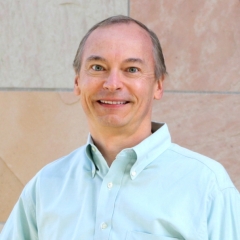
Bradley Olsen is a Professor of Chemical Engineering at the Massachusetts Institute of Technology (MIT), holding the Alexander and I. Michael (1960) Kasser Chair in Chemical Engineering. He is affiliated with MIT's School of Engineering and directs research in the Plastics and the Environment Program. His academic career spans over two decades with numerous prestigious appointments and recognitions. Olsen earned his S.B. from MIT in 2003 followed by a Ph.D. from the University of California Berkeley in 2007. His educational background is complemented by postdoctoral fellowships including NIH and Beckman Institute Postdoctoral Fellowships (2008-2009) and the Hertz Fellowship (2003-2007). Research Interests Professor Olsen's research focuses on designing materials to address important challenges while understanding the fundamental science necessary for materials design. His primary research areas include block copolymers, soft condensed matter physics, protein-based materials, and bioelectronics. His group specializes in polymer networks, protein-polymer conjugates, self-assembly phenomena, and sustainable polymer development. The research has significant implications for biomaterials, sustainable polymers, and advanced materials design. Publication Trends Analysis of Professor Olsen's recent publications reveals a strong focus on polymer network topology, protein-polymer conjugates, and sustainable materials. His work increasingly integrates computational methods with experimental approaches, particularly in polymer characterization and data science applications to materials science. Recent publications show growing emphasis on biodegradable polymers, polymer informatics, and biomedical applications of advanced materials. Scientific Recognition Professor Olsen has received numerous prestigious awards throughout his career, including: American Physical Society (APS) Fellow (2023) Fulbright Amazonia Scholar (2023) Alexander and I. Michael Kasser Chair in Chemical Engineering (2021) ACS Macro Letters/Biomacromolecules/Macromolecules Young Investigator Award (2021) AIChE Owens Corning Early Career Award (2019) American Physical Society Dillon Medal (2018) Alfred P. Sloan Research Fellow in Chemistry (2014) Advising and Funding Professor Olsen has secured significant research funding from multiple federal agencies including NSF, NIH, AFOSR, and DOE. His group has produced numerous high-impact publications across top journals in polymer science, materials science, and chemistry. He has advised multiple graduate students and postdoctoral researchers who have gone on to successful careers in academia and industry. The MIT OGE's Committed to Caring Honor (2019) recognizes his excellence in graduate student mentoring. Research Infrastructure Professor Olsen leads a research group with capabilities spanning polymer synthesis, protein engineering, materials characterization, and computational modeling. His lab maintains strong collaborations with other MIT departments, national laboratories, and international research institutions. The group participates in several interdisciplinary initiatives including the Plastics and the Environment Program and has developed significant data infrastructure for polymer science through projects like CRIPT and BigSMARTS.
Chris G. Van de Walle is the Herbert Kroemer Distinguished Professor in the Department of Materials at the University of California, Santa Barbara's College of Engineering. As a member of the National Academy of Engineering and fellow of multiple prestigious scientific societies including the American Physical Society and Materials Research Society, he leads the Computational Materials Group which is part of UCSB's strong computational science cluster within the Materials Department. His research interests focus on novel electronic materials, particularly wide-band-gap semiconductors (III-V nitrides, II-VI compounds), transparent conductors, complex oxides, loss mechanisms in light emitters, two-dimensional conductors, quantum information science, and the physics and chemistry of hydrogen interactions with solids. His group uses first-principles computational techniques to study atomic and electronic structure of crystalline, polycrystalline and amorphous materials, interfaces, surfaces, defects, and heterojunctions. Analysis of his recent publications reveals a strong focus on semiconductor materials for quantum technologies, with particular emphasis on GaN, Ga 2 O 3 , and related compounds. His work combines computational materials science with applications in optoelectronics, quantum information, and energy technologies, demonstrating consistent innovation in understanding defects and their role in material properties. Major Awards and Recognitions: Aneesur Rahman Prize for Computational Physics (APS) Materials Theory Award (MRS) Vannevar Bush Faculty Fellowship (DoD) John Bardeen Award (TMS) Medard W. Welch Award (AVS) Highly Cited Researcher (Clarivate Analytics) Professor Van de Walle has mentored numerous successful researchers, including Dr. Fangzhou Zhao (Corbett Prize winner) and Dr. Mark Turiansky (APS Nicholas Metropolis Award recipient). His group maintains strong connections with the UCSB Quantum Foundry and the Solid State Lighting and Energy Electronics Center, demonstrating collaborative research efforts across multiple disciplines. The group actively investigates defects for quantum information science, loss mechanisms in light emitters, nitride semiconductors, halide perovskites, oxides, and hydrogen interactions with materials.
Petros Koumoutsakos is the Herbert S. Winokur, Jr. Professor of Computing in Science and Engineering at Harvard University's School of Engineering and Applied Sciences (SEAS), where he also serves as Area Chair for Applied Mathematics. His research integrates machine learning with computational science to advance understanding of complex systems, including fluid dynamics, turbulence modeling, and biomedical applications. He leads the CSE Lab, focusing on high-performance computing and interdisciplinary collaborations such as a recent study with Citadel Securities and Google Cloud to simulate heart disease in cloud environments. Key research interests include reinforcement learning for turbulence closures, generative models for PDE solutions, and physics-informed AI for biomedical imaging and wildfire prediction. He was awarded the PRACE HPC Excellence Award (2023) for contributions to high-performance computing. His work bridges computational methods with real-world applications, emphasizing interpretability and scalability in multiscale systems. Grants & Collaborations: Leadership in multi-institutional projects, including turbulence modeling via reinforcement learning and cloud-based HPC studies. Labs/Teams: Director of the CSE Lab, advancing AI, computational fluid dynamics, and biomedical simulations.
Prof. Dr. Nikolaus A. Adams is a full professor and Chair of Aerodynamics and Fluid Mechanics at the Technical University of Munich (TUM), affiliated with the TUM School of Engineering and Design. Born in 1963, he holds a doctorate from TUM (1993) and habilitation from ETH Zurich (1999). His research focuses on numerical methods, turbulent flows, microfluidics, and multiphase systems. He has held leadership roles, including Dean of the Faculty of Mechanical Engineering since 2023 and Vice Dean (2015–2016). Education: PhD from TUM (1993), habilitation from ETH Zurich (1999) Research interests include aerodynamics, fluid-structure interaction, and numerical techniques for compressible flows. His work spans high-speed aerodynamics and computational fluid dynamics (CFD). Awards include ERC Advanced Grants (GENUFASD 2023, NANOSHOCK 2015), the Gordon Bell Prize (2013), and Fellow of the American Physical Society (2011). Grants and leadership: Spokesperson of DFG SFB/TRR 40 (2008–2020), co-author of 'Large-Eddy Simulation for Compressible Flows' (2009), and editorial roles in J. Comput. Phys.
Frank L. Brown is a Professor of Chemistry & Biochemistry at the University of California, Santa Barbara, with a joint appointment in Physics and the Biomolecular Sciences & Engineering (BMSE) program. His research focuses on theoretical and computational studies at the interface of physical chemistry and biophysics, particularly biomembrane dynamics and spectroscopy. Dr. Brown received his B.S. in Chemistry and B.A. in Applied Mathematics from UC Berkeley, followed by a Ph.D. in Physical Chemistry from MIT. He has held postdoctoral appointments at UC San Diego and the University of Chicago before joining UCSB in 2001. He is the recipient of prestigious awards including the Alfred P. Sloan Research Fellowship and the Presidential Early Career Award in Science and Engineering. His laboratory employs tools from statistical mechanics, hydrodynamics, and quantum mechanics to study biomembrane structure, dynamics, and interactions with embedded proteins. Key research areas include lipid bilayer fluctuations, membrane protein diffusion, and interpretation of spectroscopic techniques like single-molecule fluorescence and neutron spin echo. Dr. Brown has mentored numerous graduate students and postdoctoral researchers, with notable alumni including Brian Camley, Max Watson, and Golan Bel. His research is supported by grants from agencies such as the National Science Foundation and the Department of Energy. He directs the Brown Research Group, which collaborates with institutions like the CNSI Center for Scientific Computing. His work bridges computational modeling and experimental biophysics, advancing understanding of membrane systems in health and disease.
Tzu-Mao Li is an Assistant Professor in the Department of Computer Science and Engineering (CSE) at the University of California, San Diego (UCSD), affiliated with the Center for Visual Computing. His research focuses on differentiable graphics algorithms, combining classical visual computing with modern machine learning techniques. He holds a Ph.D. from MIT CSAIL under Frédo Durand and a postdoc at MIT and UC Berkeley with Jonathan Ragan-Kelley. His work spans rendering, programming languages for graphics, Monte Carlo methods, and inverse problems. Education: B.S. and M.S. from National Taiwan University (2011-2013), advised by Yung-Yu Chuang. Ph.D. from MIT CSAIL (Computer Graphics Group), advised by Frédo Durand. Postdoctoral research at MIT and UC Berkeley with Jonathan Ragan-Kelley. Research Interests: Differentiable rendering, Monte Carlo integration, programming language design for visual computing, physical simulation, adversarial machine learning, and applications in computer vision and robotics. Key areas include rendering algorithms (path tracing, bidirectional methods), optimization techniques (MCMC, gradient-based), and neural representations (SDFs, neural fields). Publications focus on advancing rendering algorithms, differentiable systems, and applications in inverse problems. Notable contributions include edge sampling for differentiable rendering, warped-area sampling, and diffusion models for BSDF sampling. Awards: ACM SIGGRAPH 2020 Outstanding Doctoral Dissertation Award, multiple Best Paper Awards at SIGGRAPH, and oral presentations at ICCV. Teaching: Courses include CSE 167 (Computer Graphics), CSE 168 (Rendering), and CSE 272 (Advanced Image Synthesis), emphasizing physically-based methods and programming.
Jelani Nelson is a Professor and Department Chair in the UC Berkeley EECS Department (College of Engineering). His work focuses on theoretical computer science , particularly algorithms , data streams , dimensionality reduction , and privacy-preserving computation . Advising : Current students include Ishaq Aden-Ali, Xin Lyu, Mihir Singhal, and Hongxun Wu (co-advised with leading researchers). Education : PhD from MIT (George M. Sprowls Award), M.Eng from MIT. Research Highlights : Developed foundational results in Johnson-Lindenstrauss dimensionality reduction (optimality, sparse embeddings). Advancements in differential privacy (lower bounds, private mean estimation, threshold learning). Pioneering work on streaming algorithms for heavy hitters, norm estimation, and graph problems. Innovations in compressed sensing and oblivious subspace embeddings . Scientific Awards : PODS Best Paper Award (2011, 2022) IBM Pat Goldberg Memorial Best Paper Award (2011) George M. Sprowls Award for MIT doctoral thesis (2009) NeurIPS 2020 Spotlight Presentation
Gail E. Kaiser is a Professor of Computer Science and the Director of the Programming Systems Laboratory (PSL) in the Computer Science Department at Columbia University. She has been with Columbia University since 1985, becoming a full Professor in 1998. Prof. Kaiser's research spans software engineering, program analysis, software testing, and software security, with recent focus on addressing challenges in AI/ML systems testing and security. Prof. Kaiser received her PhD in Computer Science from Carnegie Mellon University in 1985 and her ScB in Computer Science and Engineering from MIT in 1979. Her dissertation at CMU was titled "Semantics for Structure Editing Environments" under advisor Nico Habermann, and at MIT she completed "Automatic Extension of an Augmented Transition Network Grammar for Morse Code Conversations" under advisor Al Vezza. Prof. Kaiser's research interests primarily focus on software engineering following a systems building approach, with recent emphasis on static and dynamic program analysis techniques to improve software reliability and security. Since 2005, she has investigated testing "non-testable" programs, particularly in machine learning, data mining, and scientific computing applications where traditional testing oracles are insufficient. She has developed novel techniques and tools for detecting bugs and verifying repairs in complex systems. Concurrently, she has worked on collaboration environments for computational scientists, creating knowledge sharing and domain-aware environments to support scientific workflows. Prof. Kaiser's recent publications demonstrate a strong focus on the intersection of software engineering and artificial intelligence. Her work addresses critical challenges in testing AI systems, code understanding through deep learning, vulnerability detection, and educational tools for computational thinking. There's a clear evolution from traditional software engineering topics toward AI/ML applications, with particular emphasis on metamorphic testing for non-testable systems, code similarity analysis, and educational applications. Prof. Kaiser has received numerous prestigious awards throughout her career: Distinguished Journal Award (10 Years) from 18th IEEE International Conference on Software Testing, Verification and Validation (ICST), April 2025 Best Research Paper Award at 24th IEEE International Conference on Source Code Analysis & Manipulation (SCAM), October 2024 Distinguished Reviewer Awards for ASE 2024 and FSE 2024 ACM SIGSOFT Distinguished Paper Award for "CONCORD: Clone-aware Contrastive Learning for Source Code", July 2023 Best Student Paper Award at ICCE 2021 Multiple ACM SIGSOFT Distinguished Paper Awards dating back to 2014 Presidential Young Investigator in Software Engineering and Software Systems from NSF (1988-1993) Prof. Kaiser has chaired Columbia's doctoral program since 1997 and served on editorial boards including IEEE Internet Computing and as a founding associate editor of ACM Transactions on Software Engineering and Methodology. Her lab has been continuously funded by major agencies including NSF, NIH, DARPA, ONR, NASA, and numerous companies. Current grants include significant NSF funding for secure containers architecture, learning semantics of code for software assurance, and finding semantic security bugs. As Director of the Programming Systems Laboratory (PSL), Prof. Kaiser leads research in software systems, program analysis, and software testing. The lab has developed numerous tools and techniques for software reliability and security, with recent focus on challenges in AI/ML systems. Her work bridges theoretical foundations with practical applications, often resulting in deployable tools that address real-world software engineering challenges.
Fatma Kılınç-Karzan is an Associate Professor of Operations Research at Carnegie Mellon University's Tepper School of Business, with a courtesy appointment as Associate Professor of Computer Science. She is also affiliated with the Algorithms Combinatorics and Optimization (ACO) PhD Program and was a Visiting Scientist at Berkeley's Simons Institute for the Theory of Computing during Fall 2017. Her educational background includes a PhD from Georgia Institute of Technology's H. Milton Stewart School of Industrial & Systems Engineering with a minor in Mathematics, supervised by Prof. Arkadi Nemirovski. She earned her B.S. and M.S. degrees from the Industrial Engineering Department of Middle East Technical University with a minor in Information Systems. Dr. Kılınç-Karzan's research spans mathematical optimization with emphasis on convex and non-convex optimization theory, algorithms, and applications. Her work bridges theoretical foundations with practical implementations in optimization under uncertainty (robust optimization, chance constraints, distributionally robust optimization), machine learning (preference learning from limited data), and business analytics. She develops foundational theory for large-scale optimization problems with applications in decision making under uncertainty and high-dimensional statistical inference. Analysis of her recent publications reveals a strong focus on convex hull characterizations, semidefinite programming relaxations, distributionally robust optimization, and online convex optimization frameworks. Her work demonstrates increasing integration of optimization theory with machine learning applications, particularly in developing data-driven approaches for decision making under uncertainty. NSF CAREER Award (2015) INFORMS Optimization Society Young Researcher Prize (2015) INFORMS Junior Faculty Interest Group (JFIG) Best Paper Award (2014) BP Junior Faculty Chair (2014-2015) Faculty Giving Chair (2012-2013) Wimmer Fellowship (2012-2013) Dr. Kılınç-Karzan has successfully mentored numerous PhD students who have received prestigious awards, including the 2021 INFORMS Optimization Society Best Student Paper (1st prize) and multiple honorable mentions. Her research has been supported by significant grants including an NSF CAREER Award, an ONR grant (with S. Küçükyavuz), and an AFOSR grant. She serves on editorial boards for Mathematical Programming, Operations Research, Mathematics of Operations Research, and other leading journals, and has held leadership positions in professional societies including the Mathematical Optimization Society and INFORMS Computing Society. Through her affiliations with CMU's Tepper School, Computer Science Department, and ACO Program, she collaborates across disciplines to advance optimization theory and its applications. Her professional service includes committee chair roles for major INFORMS competitions and program committee leadership for international optimization conferences.
Charalampos Papamanthou is an Associate Professor of Computer Science at Yale University, where he also serves as Co-director of the Yale Applied Cryptography Laboratory and a member of the Yale Institute for Foundations of Data Science. He holds affiliations with the Yale Center for Algorithms, Data, and Market Design. Additionally, he is Chief Scientist at Lagrange Labs. His research focuses on computer security and applied cryptography, particularly verifiable and privacy-preserving computations, leakage-abuse attacks on searchable encryption, and scalable blockchains/cryptocurrencies. He has advised numerous students and postdocs, and his work is supported by NSF, Protocol Labs, and JP Morgan. Research Interests: His primary areas include cryptographic protocols, privacy-preserving systems, blockchain infrastructure, secure cloud computing, and distributed consensus mechanisms. He has pioneered advancements in zero-knowledge proofs, private information retrieval, and dynamic searchable encryption. Awards: He has received prestigious awards such as the CCS Test-of-Time Award (2022), JP Morgan Faculty Research Award (2022), and NSF CAREER Award (2017). His contributions span over 140 publications in top venues like CRYPTO, CCS, and SODA. Teaching: He has taught advanced courses in cryptography, algorithms, and computer systems security at Yale and previously at the University of Maryland and Brown University. Recently, he chairs Yale’s PhD admissions in Computer Science. Labs & Teams: Leads the Yale Applied Cryptography Lab, focusing on real-world applications of cryptographic research. Collaborates with industry partners like Lagrange Labs to develop privacy-preserving technologies.
Jonathan D. Bray is the Faculty Chair in Earthquake Engineering Excellence and a Distinguished Professor of Civil and Environmental Engineering at the University of California, Berkeley . He is a globally recognized authority in earthquake and geotechnical engineering, with research spanning seismic performance of earth structures, liquefaction, ground failure, and earthquake fault rupture effects. Education: Bray earned his Ph.D. in Geotechnical Engineering from UC Berkeley (1990), M.S. in Structural Engineering from Stanford University (1981), and B.S. from the United States Military Academy (1980). Research Interests: His work focuses on earthquake engineering , geotechnical engineering , physical and numerical modeling , and environmental geotechnics . Key areas include seismic site response, liquefaction of soils, seismic slope stability, and post-earthquake reconnaissance. Contributions: Bray has developed widely used procedures for seismic slope displacement and liquefaction-induced building settlement. He created the NSF-sponsored GEER Association to capture post-earthquake data. His work has influenced seismic design codes and practices globally. Awards & Recognition: He is a member of the U.S. National Academy of Engineering and a Fellow of the American Society of Civil Engineers (ASCE) . His accolades include the Seed Medal , Terzaghi Award , Ishihara Lecture , Peck Award , Joyner Lecture , Prakash Award , Huber Research Prize , Packard Foundation Fellowship , and the NSF Presidential Young Investigator Award . Grants & Projects: Bray has led major projects funded by the NSF , California Energy Commission , U.S. Geological Survey , and Caltrans , totaling millions in research funding. Advising & Mentorship: He has supervised over 30 Ph.D. students, significantly shaping the next generation of earthquake engineers.