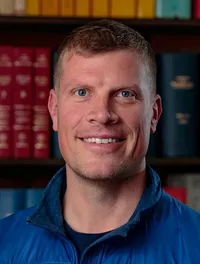
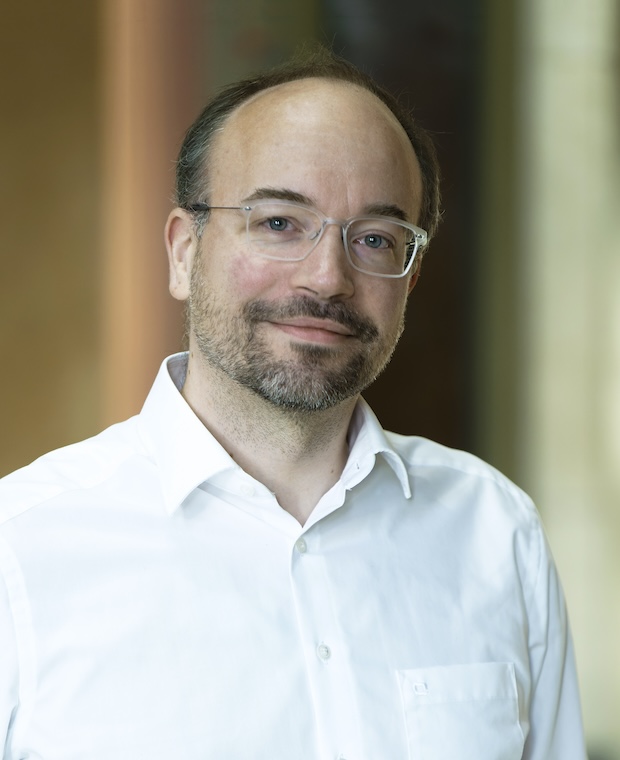
Prof. Mathias Drton holds the Chair of Mathematical Statistics at the Technical University of Munich (TUM), within the Department of Mathematics and School of Computation, Information and Technology. His research focuses on graphical models, algebraic statistics, causal inference, and multivariate data analysis. He has authored numerous publications in top-tier journals and conferences, including work on conditional independence, sparse factor analysis, and causal discovery in linear models. Drton has supervised a large number of theses, mentoring students in areas like high-dimensional statistics, graphical models, and causal inference. He is actively involved in teaching advanced courses such as 'Graphical Models in Statistics' and 'Fundamentals of Mathematical Statistics.' His academic contributions span theoretical developments in statistical methodology and computational tools, including R packages like SEMID and symRC . Drton collaborates internationally, contributing to projects like the TUM-ICL Mathematical Sciences Hub and Exzellenzcluster MCQST. His work bridges algebraic methods with statistical challenges, addressing identifiability in latent variable models and robust graphical modeling under non-Gaussian assumptions. Recent research emphasizes causal structure learning under partial homoscedasticity, distribution-free independence tests, and multi-domain causal representation learning. Drton’s lab actively explores applications in genomics, epidemiology, and machine learning, leveraging both theoretical rigor and practical computational methods.
Professor Josef Dick serves as a Professor and Deputy Head in the School of Mathematics & Statistics at the University of New South Wales (UNSW). With a distinguished career in computational mathematics, he has established himself as a leading researcher in numerical integration methods and quasi-Monte Carlo theory. His work bridges theoretical mathematics with practical computational applications across various scientific domains. Dr. Dick earned his PhD in Mathematics from UNSW in 2004 and his MSc in Mathematics from the University of Salzburg in 2001. His academic journey reflects a strong foundation in both theoretical and applied mathematics, which has informed his subsequent research contributions. Professor Dick's research primarily focuses on numerical integration and quasi-Monte Carlo rules , employing techniques from number theory , abstract algebra (particularly finite fields), discrepancy theory , wavelet theory , and statistics . His work provides rigorous analysis of practical algorithms for computational problems, with implementations often provided in Matlab to bridge theory and application. His research has successfully addressed point distributions on the unit cube for numerical integration, completely uniformly distributed sequences for Markov chain quasi-Monte Carlo algorithms, and explicit constructions of uniformly distributed points on the sphere. Analysis of his recent publications (2022-2025) reveals a consistent focus on advancing quasi-Monte Carlo methods, with increasing integration of machine learning techniques and applications to complex computational problems. His work demonstrates strong interdisciplinary connections between pure mathematics, computational science, and practical engineering applications, particularly in uncertainty quantification and high-dimensional numerical integration. Discovery project from Australian Research Council (2012-2014): "Mathematics in the round - the challenge of computational analysis on spheres" Queen Elizabeth II Fellowship from Australian Research Council (2010-2014): "Algebraic methods for Markov Chain Monte Carlo and quasi-Monte Carlo" UNSW Vice Chancellor Fellowship (2006-2009) Professor Dick has supervised numerous PhD and Honours students working on topics including Quasi-Monte Carlo methods, Discrepancy Theory, Markov chain Monte Carlo, and Uncertainty Quantification. His research has been supported by significant grants from the Australian Research Council, including serving as Chief Investigator on multiple projects. Beyond his research, he serves as an Editor for the Journal of Complexity and Journal of Approximation Theory, demonstrating his leadership in the mathematical community. He teaches courses in Algebra and Mathematical Computing for Finance at UNSW.
Prof. Dr. Markus Bachmayr is a full professor at the Institute for Geometry and Practical Mathematics, RWTH Aachen University, holding the chair for Applied Mathematics. His research focuses on nonlinear approximation, high-dimensional partial differential equations (PDEs), uncertainty quantification, and numerical methods in quantum chemistry. He leads the ERC Consolidator Grant project Computational Complexity of Highly Nonlinear Approximations (COCOA) and contributes to CRC 1481 Sparsity and Singular Structures, and RTG 2326 Energy, Entropy, and Dissipative Dynamics. His recent work emphasizes adaptive low-rank and sparse approximation techniques for parametric and stochastic PDEs, including applications in radiative transfer and poroviscoelastic flow modeling. He serves as Editor-in-Chief of Foundations of Computational Mathematics and Associate Editor for multiple journals. Scientific Awards: John Todd Award 2013 Borchers Plakette 2014 Erwin Wenzl Preis 2007 He has taught courses such as Numerische Analysis I/II, Numerische Mathematik für Elektrotechniker, and seminars on numerical methods and approximation theory.
Xiaocheng Shang is an Associate Professor in Mathematical Optimisation and Data Science at the University of Birmingham's School of Mathematics. His research focuses on numerical methods for stochastic differential equations, with applications in computational mathematics, statistics, physics, and data science. He is affiliated with the Optimisation and Numerical Analysis Group, Statistics and Data Science Group, and the Institute for Data and AI. Shang holds a PhD in Applied and Computational Mathematics from the University of Edinburgh (2016) and completed postdocs at the University of Edinburgh, Brown University, and ETH Zurich before joining Birmingham in 2019. His academic achievements include fellowships from The Alan Turing Institute, the LMS Emmy Noether Fellowship, and the EUniWell Leadership Fellowship. He has secured funding from EPSRC, the Royal Society, and the Isaac Newton Institute. Shang is actively involved in supervising PhD students and co-organizing research initiatives such as the Data Science and Computational Statistics Seminar. Research interests include structure-preserving integrators, Bayesian sampling techniques, and machine learning applications in dynamical systems. His work bridges numerical analysis, probability theory, and multiscale modeling in materials science. Recent projects involve neural networks for complex dynamical systems and numerical algorithms for deterministic/stochastic systems.
Karl-Theodor Sturm is a Professor of Mathematics at the University of Bonn, holding this position since 1997. He is affiliated with the Institute for Applied Mathematics and leads the Cluster of Excellence Hausdorff Center for Mathematics. His academic journey includes a PhD (1989) and habilitation (1993) from the University of Erlangen-Nürnberg, followed by postdoctoral positions at Zurich, Erlangen-Nürnberg, and the Max Planck Institute for Mathematics in the Sciences (MPI Leipzig). He has held visiting professorships at Stanford, Toulouse, Paris, and Bonn. Sturm's research focuses on stochastic analysis and geometric analysis, particularly in optimal transport, metric measure spaces, synthetic curvature bounds, and diffusion processes. His work on synthetic Ricci curvature bounds, developed in competition with Cédric Villani, has been highly influential. He received the ERC Advanced Grant (2016-2022) for research on metric measure spaces and Ricci curvature, and was a Plenary Speaker at the 2020 European Congress of Mathematics. His leadership roles include Vice Chairman of Collaborative Research Center SFB 611 (2002–2012), Managing Director of the Institute for Applied Mathematics (2007–2010), and Coordinator of the Hausdorff Center for Mathematics (2012–2019). Awards include the Heisenberg Fellowship (1994) and recognition through numerous invited lectures and editorial roles. His mentorship has shaped the careers of prominent researchers such as Nicola Gigli and Jan Maas.
Carlos Fernandez-Granda is an Associate Professor of Mathematics and Data Science at New York University, holding joint appointments at the Courant Institute of Mathematical Science and the Center for Data Science. He currently serves as the Interim Director of the Center for Data Science. His academic career spans over a decade at NYU, where he has taught probability and statistics to data-science students. Dr. Fernandez-Granda's research focuses on designing and analyzing data-science methodology, with current emphasis on machine learning applications in medicine, climate science, and scientific imaging. His work bridges theoretical foundations with practical applications across multiple domains. His notable contributions include: Development of the COBRA (COnfidence-Based chaRacterization of Anomalies) score for automatic assessment of impairment and disease severity Applications of machine learning to improve climate projections through the M2LInES project Research on magnetic resonance fingerprinting for quantitative tissue parameter estimation Development of AI systems for medical diagnostics including Alzheimer's detection and breast cancer diagnosis Dr. Fernandez-Granda is the author of the book "Probability and Statistics for Data Science," published by Cambridge University Press. The book serves as a comprehensive guide to the two pillars of data science, featuring real-world datasets and addressing fundamental challenges like overfitting, the curse of dimensionality, and causal inference. His research has been supported by grants from the National Science Foundation (Division of Mathematical Sciences, grants 1616340 and 2009752) and the Alzheimer's Association (grant AARG-NTF-21-848627). Dr. Fernandez-Granda is actively involved in several collaborative projects: M2LInES project: An international collaboration focused on improving climate projections using machine learning to capture unaccounted physical processes at the air-sea-ice interface Math and Data group: Exploring the intersection of mathematical theory and data science applications
Dr. Steven A. Miller is a Professor of Psychology in the Department of Psychology at Rosalind Franklin University of Medicine and Science, within the College of Health Professions. He joined RFUMS in 2013 and serves as a statistics consultant for the university. His academic background includes a PhD in Social Psychology from Loyola University Chicago, an M.S. in Psychology from Illinois State University with specialization in Clinical Psychology, and an M.S. in Mathematics from Loyola University Chicago with specialization in Probability and Statistics. PhD in Social Psychology, Loyola University Chicago M.S. in Psychology, Illinois State University (Clinical Psychology specialization) M.S. in Mathematics, Loyola University Chicago (Probability and Statistics specialization) Dr. Miller's research focuses on the intricate relationship between personality characteristics/individual differences and emotional experiences. He investigates anxiety and emotional disorders, social cognitive models of personality, and applies quantitative methodology to psychological questions. His work examines intra-individual variability in emotional responses and how situational factors interact with personality to shape emotional experiences. He employs diverse methodologies including experience sampling studies and laboratory experiments to explore these complex dynamics. His recent publications demonstrate a strong focus on psychopathy, emotion regulation, network analysis of personality, and the tripartite model of anxiety and depression. His work spans clinical, forensic, and general populations, often employing sophisticated statistical techniques. There's a clear trajectory toward more complex modeling approaches including network analysis, longitudinal modeling, and advanced psychometric techniques across his publication history. Accredited Professional Statistician (PStat®) with the American Statistical Association Chartered Statistician (CStat) with the Royal Statistical Society Dr. Miller actively mentors graduate students, with numerous student co-authors appearing in his publications. He teaches advanced statistical courses including multivariate statistics, longitudinal models, and categorical data analysis. He is currently accepting doctoral students for the 2026/2027 academic year. His collaborative research spans multiple institutions including DePaul University and Texas A&M, focusing on emerging adults, romantic relationships, and chronic illness. His research laboratory examines the fundamental relationship between personality and emotion, exploring how situational contingencies and individual expectancies shape emotional responses. Current collaborative projects investigate daily experiences of emerging adults, psychopathy in romantic relationships, and social media use among individuals with chronic illness using diverse methodological approaches.
Rasmus Kyng is an Assistant Professor in the Department of Computer Science at ETH Zurich, where he has been since 2019. His research focuses on fast algorithms for graph problems, convex optimization, and their applications in machine learning. He has received grants from the Swiss National Science Foundation, including project grants and a starting grant. Education: B.A. in Computer Science from the University of Cambridge (2011), PhD in Computer Science from Yale University (2017), advised by Daniel A. Spielman. Postdoctoral positions included Harvard University (2018–2019) and a research fellowship at the Simons Institute, UC Berkeley (2017). Research Interests: Development of nearly linear-time algorithms for fundamental graph problems (e.g., maximum flow, minimum-cost flow), dynamic graph algorithms, discrepancy theory, and fine-grained complexity. His work bridges numerical linear algebra and combinatorial optimization, emphasizing practical implementations such as the Laplacians.jl package. Awards: FOCS Best Paper Award (2022), Inaugural ICBS Frontiers of Science Award (2022), Machtey Award (Best Student Paper, FOCS 2017). Teaching: Advanced Graph Algorithms and Optimization (ETH Zurich, 2020–2023), Algorithms, Probability, and Computing (ETH Zurich, 2020–2022). Supervised numerous PhD students and mentored postdocs in theoretical computer science. Labs/Teams: Co-leads a research group with Maximilian Probst Gutenberg, focusing on dynamic graph algorithms and optimization. Collaborations include work on sparsification, spectral graph theory, and machine learning applications.
Piotr Zwiernik is an Associate Professor in the Department of Statistical Sciences at the University of Toronto's Faculty of Arts and Science, with a cross-appointment in the Department of Mathematics. Currently on leave from the University of Toronto, he is based in Barcelona following his return in July 2025. His academic journey includes a PhD in Statistics from the University of Warwick (2011), research positions at prestigious institutions including Mittag Leffler Institute, IPAM, TU Eindhoven, UC Berkeley, and the University of Genoa, and an Assistant Professorship at Universitat Pompeu Fabra in Barcelona (2016-2021). His research spans the intersection of statistics, mathematics, and computational methods, with particular emphasis on graphical models, covariance matrix estimation, convex analysis, tensors, and algebraic and combinatorial methods in statistics. Zwiernik's work demonstrates a consistent focus on high-dimensional statistics, mathematical statistics, and elegant theoretical frameworks that bridge abstract mathematics with practical statistical applications. His recent publications reveal a deepening exploration of tensor analysis, algebraic statistics, and the geometric properties of statistical models. Zwiernik serves as an associate editor for leading journals including Biometrika, Scandinavian Journal of Statistics, and Algebraic Statistics. His research program includes the development of the GOLAZO R package for asymmetric regularization of log-likelihood in Gaussian graphical models. As an academic leader, he has served as Associate Chair for Research in his department and actively participates in numerous international conferences and workshops, reflecting his significant standing in the statistical community. His recent publications show a strong trend toward algebraic and geometric approaches to statistical problems, with increasing focus on tensor methods, positivity constraints in statistical models, and the theoretical foundations of graphical models. The work demonstrates remarkable continuity in exploring the mathematical structures underlying statistical models while adapting to emerging challenges in high-dimensional data analysis. Zwiernik is committed to mathematical accessibility and education, guided by Federico Ardila's four axioms which emphasize equitable distribution of mathematical potential, joyful mathematical experiences, mathematics as a malleable tool, and treating every student with dignity and respect. He actively seeks PhD students with strong mathematical backgrounds for research at UPF or the Institute of Mathematics of UPC.
Paul G Dupuis is the IBM Professor of Applied Mathematics at Brown University. His research focuses on applications of probability theory, stochastic processes, control theory, and numerical methods. He holds affiliations with the American Mathematical Society, Society for Industrial and Applied Mathematics (SIAM), and the Institute for Mathematical Statistics (IMS). His work emphasizes large deviation theory, Markov chain approximations, Monte Carlo simulation, and partial differential equations. Education: Ph.D. in Applied Mathematics from Brown University (1985), M.S. from Northwestern University (1982), and B.S. from Brown University (1981). Research Interests: Control of deterministic and stochastic processes, differential games, numerical methods, operations research, and stochastic processes. His contributions include foundational work on large deviation theory, risk-sensitive control, and queueing networks. Awards: Elected SIAM Fellow (2010), Fellow of the Institute for Mathematical Statistics (2011), IBM Professor of Applied Mathematics (2012), and AMS Fellow (2014). Previously held an NSF Postdoctoral Fellowship (1985-1988). Grants: Current funding from the Army Research Office and National Science Foundation. Key collaborations include work on stochastic approximation, constrained diffusions, and reflected Brownian motion. Teaching: Courses include Operations Research: Probabilistic Models, Information Theory, and Advanced topics in Probability and Stochastic Control.
Krzysztof Burdzy is a Professor of Mathematics and Adjunct Professor of Statistics at the University of Washington, where he is affiliated with the Department of Mathematics in the College of Arts and Sciences. He maintains an active research and teaching profile, currently offering undergraduate courses in probability. His research interests span Probability Theory , Stochastic Processes , Neumann Eigenfunctions , Hot Spots Problem , and the Philosophy of Probability . He is particularly known for his work on Brownian motion, eigenfunction behavior, and spectral theory in geometric domains. His recent work includes contributions to the resolution of the hot spots conjecture for Euclidean triangles and the discovery of interior hot spots in convex sets. The most recent articles reflect a deep engagement with both theoretical mathematics and foundational philosophy. Topics include spectral geometry, probabilistic methods in PDEs, critiques of philosophical theories of probability, and interdisciplinary reflections on epistemology. The publication trend shows sustained contributions from the 1990s through 2024, with a dual focus on rigorous mathematical proofs and meta-scientific analysis. Euclidean triangles have no hot spots (Annals of Mathematics, 2020) Convex sets can have interior hot spots (preprint, 2024) Hypocrisy++: On Philosophy of Probability and Sociology of Ideologies (2023) Burdzy has advised students in mathematics and probability, though specific names are not listed. He has received recognition through publications in top-tier journals such as Annals of Mathematics and Journal of Functional Analysis , though formal awards are not explicitly mentioned. He has delivered numerous talks on the philosophy of probability and its relationship to statistics. He is actively involved in public scholarship, maintaining a personal website with essays on quantum probability, real estate, philosophy, and AI. His work on the limitations of mathematics, suicide prevention, and critiques of post-modern thought reflect a broad intellectual engagement beyond technical mathematics. He does not appear to lead a formal lab or research team, but collaborates with scholars such as R. Bañuelos, W. Werner, and others in probability and analysis.
Ron Peled is a Full Professor in the School of Mathematical Sciences at Tel Aviv University , currently on leave to serve as the Brin Professor in the Department of Mathematics at the University of Maryland starting summer 2024. During 2022–2024 he was a Member at Princeton University and the Institute for Advanced Study . Education & Career: While explicit degrees are not listed, his trajectory shows appointments at NYU (2009–2010), UC Berkeley and Tel Aviv University as a teaching assistant, followed by faculty positions culminating in full professorship. Research Interests: His work lies at the intersection of probability theory, statistical physics, and combinatorics . Key themes include: Disordered systems and random environments (random-field Ising, spin glasses) First-passage percolation and random metrics Random surfaces and height functions Loop models and critical phenomena Random matrices and band matrices Geometric probability and allocation problems Publications & Impact: With over 70 papers in top journals such as Annals of Mathematics , Annals of Probability , Inventiones Mathematicae , and Communications in Mathematical Physics , his recent work explores minimal surfaces in random environments, localization in random band matrices, and quantitative disorder effects in low-dimensional spin systems. Grants & Awards: Research has been continuously funded by: Israel Science Foundation (grants 1048/11, 861/15, 1971/19, 2340/23) ERC Starting Grant LocalOrder ERC Consolidator Grant Transitions Marie Skłodowska-Curie International Reintegration Grant SPTRF Teaching & Mentoring: Prof. Peled has taught a broad spectrum of courses at Tel Aviv University (Brownian motion, probability, percolation, random matrices, stochastic calculus) and NYU (combinatorics, discrete mathematics). He has supervised 13 post-doctoral fellows and 8 graduate students (PhD & MSc) to date. Service & Outreach: He co-organizes the Joint Israeli Probability Seminar and has organized numerous international workshops and conferences including at Oberwolfach, Technion, and Tel Aviv University.
Hyuck Jin Park is a Full Professor in the Department of Energy Resources and Geosystems Engineering at Sejong University, South Korea, where he has been teaching and conducting research since 2003. With a Ph.D. in Engineering Geology from Purdue University, his expertise spans geotechnical engineering, landslide analysis, and geospatial technologies. Professor Park has built a distinguished career in landslide hazard assessment, combining traditional geotechnical approaches with modern machine learning techniques to improve prediction accuracy and risk management. His educational background includes: B.S. in Geology from Yonsei University (1990) M.S. in Geophysics from Yonsei University (1993) Ph.D. in Engineering Geology from Purdue University (2011) Professor Park's research focuses on the spatial and temporal probability of landslide occurrence, utilizing fuzzy logic, probabilistic analysis, GIS, Monte Carlo simulation, and machine learning for landslide hazard assessment. His work integrates physically based models with statistical approaches to better understand landslide mechanisms and improve prediction capabilities. He has made significant contributions to the development of methodologies that account for geological uncertainties in hazard assessment, with applications ranging from rock slope stability to rainfall-induced shallow landslides. His recent publications demonstrate a clear trend toward integrating explainable artificial intelligence with traditional geotechnical approaches for natural hazard assessment. Professor Park's work increasingly focuses on making machine learning models transparent and interpretable while maintaining high predictive accuracy. The research spans multiple hazard types including landslides, earthquakes, and floods, with a growing emphasis on climate change impacts and data-scarce environments. With an h-index of 28 and over 3,421 citations, Professor Park has established himself as a leading researcher in his field. His work has been published in high-impact journals including Engineering Geology, Landslides, and Catena, reflecting the significance and quality of his contributions to geotechnical engineering and natural hazard assessment. Professor Park has mentored numerous researchers through collaborative projects and has secured funding for his innovative work in landslide prediction and hazard assessment. His research has involved significant international collaboration, particularly with researchers from Malaysia, Australia, and Yemen, addressing landslide and flood risks in diverse geographical contexts. He leads research activities within the Department of Geoinformation Engineering at Sejong University and has contributed to the development of specialized tools like DEWS (Distance, Elevation, Watershed, and Slope unit) for landslide early warning systems.
Prof. Dr. Martin Burger is a leading scientist at DESY and a Full Professor in the Department of Mathematics at Universität Hamburg, where he leads the Computational Imaging Group. His research bridges applied mathematics, imaging sciences, and machine learning, with a focus on inverse problems, mathematical modeling, and partial differential equations. He has held professorial positions at Universität Münster and FAU Erlangen-Nürnberg prior to his current dual appointment. Full Professor, Universität Hamburg (2023–present) Leading Scientist, DESY, Hamburg (2023–present) Full Professor, FAU Erlangen-Nürnberg (2018–2023) Full Professor, Universität Münster (2006–2018) His research interests include inverse problems, variational regularization, optimal transport, kinetic models, and mathematical modeling in biology and social sciences. He has made significant contributions to imaging reconstruction, sparse neural networks, and the analysis of transformer architectures. His work often integrates theoretical analysis with computational methods, influencing both pure and applied mathematics. The most recent articles reflect a strong trend toward interdisciplinary applications, combining deep learning with PDE-based modeling, analyzing social and biological systems via kinetic and mean-field models, and advancing mathematical imaging through graph-based and optimal transport methods. His publications span high-impact venues in applied mathematics and computational science. Calderon Prize, Inverse Problems International Association (IPIA) ERC Consolidator Grant (2014) Invited speaker at ECM (2021), ICM (2022), and ICIAM (2023) Editor-in-Chief, European Journal of Applied Mathematics (since 2017) Prof. Burger has supervised numerous PhD students and postdoctoral researchers, many of whom appear as co-authors in his publications. His research is supported by major grants, including funding from the German Federal Ministry of Education and Research (BMBF). He is actively involved in collaborative projects across mathematics, physics, and engineering disciplines. He leads the Computational Imaging Group at DESY, fostering a collaborative environment for developing novel mathematical tools in imaging science. The group works on both theoretical foundations and practical implementations, contributing to advancements in tomography, machine learning, and data analysis.
Yvain Bruned is a Professor of Mathematics at Université de Lorraine, Nancy, France, where he leads research in singular stochastic partial differential equations and related fields. He serves as Principal Investigator for the ERC Starting Grant LoRDeT (2023-2028), which focuses on advancing the theory of decorated trees and Hopf algebraic structures for solving singular SPDEs and dispersive PDEs at low regularity. Previously, he was a Lecturer at the University of Edinburgh (2019-2022) and completed postdoctoral work at Imperial College London and University of Warwick under Martin Hairer. His educational background includes: PhD in Mathematics (2012-2015), UPMC (Paris 6), on "Singular KPZ type equations" under Lorenzo Zambotti Master 2 in Probability and Statistics, ENS Cachan / Rennes 1, with honors Master 1 in Mathematics, ENS Cachan, with honors Bachelor in Mathematics and Computer Science, University of Rennes 1, with honors Student at ENS Cachan Brittany extension (2009-2013) Classes Préparatoires in Mathematics and Physics (2007-2009) Bruned's research centers on singular stochastic partial differential equations, with particular focus on Regularity Structures, renormalization theory, and their connections to Hopf algebras. His work bridges theoretical mathematics with applications in quantum field theory, wave turbulence, and numerical analysis. He has developed novel approaches using decorated trees to handle renormalization procedures for singular SPDEs and has extended these methods to dispersive PDEs with random initial data. His research program aims to establish existence and uniqueness results for quasilinear and dispersive SPDEs while developing algebraic tools through deformations of Hopf algebras. His extensive publication record demonstrates consistent contributions to the field of singular SPDEs, with a clear trajectory from foundational work on Regularity Structures to more recent applications in dispersive PDEs and numerical methods. The publications reveal a strong collaborative network with leading researchers in stochastic analysis, mathematical physics, and algebra. His work shows increasing sophistication in handling renormalization procedures through algebraic structures, with recent papers exploring connections between different mathematical frameworks. His major scientific recognition includes: ERC Starting Grant LoRDeT (2023-2028) Bruned actively supervises a large group of researchers, currently advising 4 PhD students and 2 postdoctoral researchers at Université de Lorraine, with several former PhD students having completed their degrees at the University of Edinburgh. His ERC grant has enabled him to organize multiple international workshops in Nancy, fostering collaboration between researchers in singular SPDEs, algebraic structures, and numerical analysis. The grant also supports the development of software platforms for decorated trees and their Hopf algebraic structures. As Principal Investigator of the ERC LoRDeT project, Bruned leads a vibrant research team based at the Elie Cartan Institute of Lorraine, which includes postdocs, PhD students, and visiting researchers. The team regularly organizes specialized workshops on topics including operads, symmetries for quantum field theory, and normal forms for singular dynamics, creating a dynamic research environment that bridges multiple mathematical disciplines.