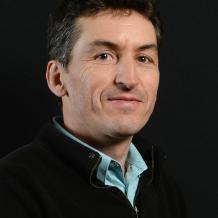
Gianluca Iaccarino is a Professor of Mechanical Engineering at Stanford University and the Robert Bosch Chairholder. He serves as Director of the PSAAP Center and leads large-scale computational research initiatives in uncertainty quantification, exascale computing, and multiphysics simulations. His academic journey includes a PhD in Mechanical Engineering from Politecnico di Bari (2005), postdoctoral work at Stanford's Center for Turbulence Research, and progression from Research Engineer to full Professor. Education : PhD (Politecnico di Bari), MS/BS in Aeronautical Engineering (University of Naples) Research : Computational engineering, turbulence modeling, uncertainty quantification, biomedical fluid dynamics, and exascale-ready algorithms Publications : 15+ recent articles focus on turbulence modeling, data-driven simulations, and uncertainty quantification across diverse applications in aerospace, biomedical, and energy systems Awards : PECASE (2010), APS Fellow (2019), multiple best paper awards (AIAA, ASME), Terman Fellow (2007) Students : Advises doctoral and master's students in mechanical engineering and computational methods Leadership : Director of PSAAP Center (2014-present), Chair of Mechanical Engineering Department (2024-present)
PD Dr. Christian Zillinger is a researcher at the Karlsruhe Institute of Technology (KIT), specifically within the Department of Mathematics. He leads the Junior Research Group "Stability and Instability in Fluids and Materials" (AP6) as part of the CRC 1173. His office is located at Kollegiengebäude Mathematik (20.30), room 2.024 in Karlsruhe, Germany. Dr. Zillinger obtained his PhD under the supervision of Herbert Koch at the University of Bonn. Following his doctorate, he served as an assistant professor (NTT) at the University of Southern California and was a postdoctoral fellow at BCAM (Basque Center for Applied Mathematics). He recently completed his habilitation thesis titled "On Mixing and Resonances in Fluid Systems" at KIT in 2023. Dr. Zillinger's research focuses on partial differential equations motivated by physical problems, particularly in fluid dynamics and material sciences. His work encompasses several key areas: Mixing as a (de)stabilizing mechanism in fluids and inviscid damping Cascades of resonances and instabilities in fluids and plasmas Convex integration and microstructures in materials, including rigidity and flexibility phenomena Magnetic fluids and magnetohydrodynamics Partial dissipation in the Boussinesq equations His recent publications demonstrate a strong focus on stability and instability phenomena in fluid systems, with particular attention to mathematical analysis of PDEs governing fluid behavior. He has made significant contributions to understanding echo chains, resonance phenomena, and damping mechanisms in various fluid models. His work bridges theoretical mathematics with applications in physics and materials science, often employing advanced analytical techniques to address challenging problems in nonlinear PDEs. Dr. Zillinger actively teaches courses at KIT, including "Klassische Methoden für partielle Differentialgleichungen" (Classical Methods for Partial Differential Equations), "Introduction to convex integration," "Introduction to Kinetic Equations," and seminars on microstructure in materials and fluid dynamics. He leads the Junior Research Group "Stability and Instability in Fluids and Materials" which is part of the Collaborative Research Centre (CRC) 1173 at KIT, focusing on wave phenomena. This research group investigates mathematical aspects of stability and instability in physical systems, with applications to fluid dynamics and material science.
Tzu-Mao Li is an Assistant Professor in the Department of Computer Science and Engineering (CSE) at the University of California, San Diego (UCSD), affiliated with the Center for Visual Computing. His research focuses on differentiable graphics algorithms, combining classical visual computing with modern machine learning techniques. He holds a Ph.D. from MIT CSAIL under Frédo Durand and a postdoc at MIT and UC Berkeley with Jonathan Ragan-Kelley. His work spans rendering, programming languages for graphics, Monte Carlo methods, and inverse problems. Education: B.S. and M.S. from National Taiwan University (2011-2013), advised by Yung-Yu Chuang. Ph.D. from MIT CSAIL (Computer Graphics Group), advised by Frédo Durand. Postdoctoral research at MIT and UC Berkeley with Jonathan Ragan-Kelley. Research Interests: Differentiable rendering, Monte Carlo integration, programming language design for visual computing, physical simulation, adversarial machine learning, and applications in computer vision and robotics. Key areas include rendering algorithms (path tracing, bidirectional methods), optimization techniques (MCMC, gradient-based), and neural representations (SDFs, neural fields). Publications focus on advancing rendering algorithms, differentiable systems, and applications in inverse problems. Notable contributions include edge sampling for differentiable rendering, warped-area sampling, and diffusion models for BSDF sampling. Awards: ACM SIGGRAPH 2020 Outstanding Doctoral Dissertation Award, multiple Best Paper Awards at SIGGRAPH, and oral presentations at ICCV. Teaching: Courses include CSE 167 (Computer Graphics), CSE 168 (Rendering), and CSE 272 (Advanced Image Synthesis), emphasizing physically-based methods and programming.
Professor Jiyuan Tu is a Professor in the Department of Mechanical and Automotive Engineering at RMIT University's School of Engineering. He specializes in computational fluid dynamics (CFD), multiphase flows, and their applications in renewable/nuclear energy, biomedical engineering, and built environment systems. His research has led to over 500 peer-reviewed articles, 9 books, and $10M+ in ARC grants. He has supervised over 50 postgraduate students and received prestigious awards such as the RMIT Research Excellence Award (2012) and Fulbright Senior Scholar Award (2008). Research interests include CFD modelling of bioaerosol transport, drug delivery systems, and thermal energy storage. He pioneered numerical models for multiphase flows, contributing to software implementations in industries. Notable works include books on CFD and multiphase flow analysis, and leadership in international conferences like COBEE 2018. He holds honorary professorships at Tsinghua University and is Editor-in-Chief of the Experimental and Computational of Multiphase Flow journal. Industry experience includes roles at ANSTO (1996-2001). Awards span fellowships from JSPS, KOSEF, and Fulbright programs. Grants include ARC Discovery, Linkage, and LIEF projects. His work ranks him among the world’s top researchers in pebble bed reactors and airborne infection studies (SciVal 2016-2025).
Nuno F. Loureiro is Professor of Nuclear Science and Engineering and the Herman Feshbach (1942) Professor of Physics at MIT, and serves as Director of MIT's Plasma Science and Fusion Center (PSFC) since May 2024. He holds joint appointments in MIT's School of Engineering and School of Science, and is affiliated with the MIT Kavli Institute for Astrophysics and Space Research and the MIT Energy Initiative. Director, Plasma Science and Fusion Center (2024-present) Professor of Nuclear Science and Engineering (2016-present) Herman Feshbach (1942) Professor of Physics (current) Loureiro earned his MEng in Physics from Instituto Superior Técnico in Lisbon (2000) and his PhD in Physics from Imperial College London (2005). He completed postdoctoral work at Princeton Plasma Physics Laboratory (2005-07) and UKAEA Culham Centre for Fusion Energy (2007-09) before returning to lead the Theory and Modeling Group at the Institute for Plasmas and Nuclear Fusion at IST Lisbon. Loureiro's research focuses on fundamental aspects of magnetized plasma dynamics, with particular emphasis on magnetic reconnection, magnetic field generation and amplification, confinement and transport in fusion plasmas, and turbulence in strongly magnetized, weakly collisional plasmas. His work bridges theoretical physics with computational simulations using state-of-the-art tools like the Viriato code, which he developed for reduced-gyrokinetic modeling. His research has significant implications for both understanding cosmic phenomena and advancing practical fusion energy solutions. Analysis of Loureiro's recent publications reveals a strong focus on magnetic reconnection mechanisms across multiple scales, from electron-only reconnection to relativistic plasma turbulence. His work increasingly incorporates computational innovations, including quantum computing approaches for plasma modeling. The research spans applications from solar physics and astrophysical phenomena to practical fusion energy challenges, demonstrating the unifying nature of plasma physics across disciplines. NSF Presidential Early Career Award for Scientists and Engineers (PECASE) (2025) American Physical Society Fellow (2022) NSF CAREER Award (2017) Thomas H. Stix Award for Outstanding Early Career Contributions (2015) Loureiro leads the Loureiro Group at MIT, which conducts research at the interface of analytical theory and numerical simulations on supercomputers. His laboratory has developed the Viriato code for plasma simulations and investigates phenomena relevant to both fusion energy and astrophysical plasmas. As Director of the PSFC, he oversees one of MIT's largest research laboratories with over 250 full-time researchers, staff members, and students working across 250,000 square feet of lab space.
Zongyi Li is a Research Fellow at Massachusetts Institute of Technology , hosted by Kaiming He. They are currently pursuing a Ph.D. in Computing and Mathematical Sciences at Caltech (2019-2025), mentored by Anima Anandkumar and Andrew Stuart. Ph.D. candidate: Computing and Mathematical Sciences, Caltech (2019-2025) B.Sc. in Computer Science and Mathematics with a Jazz minor from Washington University in St. Louis (2015-2019) They focus on Neural Operators for learning solution operators in Partial Differential Equations (PDEs) , particularly in fluid mechanics and earth science . Their work models physical simulations with chaotic behaviors and complex geometries, showing applications in weather forecasting , carbon storage , and aerodynamics simulation . Publications emphasize resolution-invariant models , chaotic systems , and zero-shot super-resolution capabilities. Their research combines Fourier analysis , graph networks , and physics-informed loss functions to achieve state-of-the-art performance in PDE solving with up to 1000x speedup over traditional solvers. Fellowships: Kortschak Scholarship PIMCO Fellowship Amazon AI4Science Fellowship Nvidia Fellowship MIT Novo Nordisk AI Fellowship Code & Open-Source: Co-developer of the NeuralOperator library Implementations for Fourier Neural Operators , Graph Neural Operators , and Tensorized Neural Operators Media Recognition: Quanta Magazine MIT Tech Review NVIDIA Features Towards Data Science
David Bindel is an Associate Professor in the Department of Mathematics at Cornell University, affiliated with the College of Arts and Sciences, College of Engineering, and Cornell Ann S. Bowers College of Computing and Information Science. He earned his Ph.D. in Mathematics from the University of California, Berkeley in 2006. His research focuses on applied numerical linear algebra, eigenvalue problems, and their applications in plasma physics, network analysis, and nonlinear systems. He develops methods for analyzing complex systems, including magnetic confinement in stellarators, stability of MHD systems, and community detection in networks. His work bridges theoretical foundations with practical computational tools, such as formal verification of linear algebra algorithms and scalable Gaussian process models. Bindel’s research explores the interplay between structure and computation, leveraging eigenvalue analysis to address challenges in computer vision, opinion dynamics, and engineering design. He has contributed to advancements in numerical methods for large-scale systems, including iterative solvers, spectral approximation techniques, and stochastic optimization. His interdisciplinary approach spans applied mathematics, computer science, and physics, with applications in fusion energy, machine learning, and network science. Recent work highlights include high-order expansions for magnetic confinement, adaptive filtering for dynamical systems, and Bayesian optimization strategies. His publications emphasize rigorous analysis alongside computational scalability, addressing both theoretical and practical aspects of modern scientific computing. Despite no explicitly listed awards, his contributions reflect significant impact in his fields.
John Evans is an Associate Professor and Jack Rominger Faculty Fellow in the Department of Aerospace Engineering Sciences at the University of Colorado Boulder, affiliated with the Applied Mathematics program. He serves as Associate Chair for Undergraduate Curriculum and is part of the Aerospace Mechanics Research Center (AMREC). His research focuses on computational mechanics, particularly fluid dynamics, fluid-structure interaction, and turbulence modeling using high-order and structure-preserving methods. Evans holds a PhD (2011) and MS (2008) in Computational and Applied Mathematics from the University of Texas at Austin, and dual BS/MS degrees in Mathematics and Applied Mathematics from Rensselaer Polytechnic Institute (2006). Before joining CU Boulder, he was a postdoctoral fellow at the Institute for Computational Engineering and Sciences (ICES). His research interests include isogeometric analysis, immersed methods, and data-driven turbulence modeling. Notable contributions include development of divergence-conforming discretizations for incompressible flows, stabilized collocation methods, and invariant subgrid stress models. He leads the AMREC lab and collaborates on plasma-fueled propulsion systems and geometrically sensitive simulations. Key Awards: 2021: Rocky Mountain AIAA Educator of the Year 2021: Gallagher Young Investigator Medal 2019-2021: Clarivate Highly Cited Researcher Professional Activities: Editor of Engineering Computations, Senior AIAA Member, Simons Visiting Professor (2019) Evans' work bridges advanced numerical methods with real-world engineering challenges. His lab develops open-source tools like XIGA for multi-material problems and focuses on immersive simulation environments. Current projects explore turbulence closure models, plasma propulsion, and topology optimization with B-spline-based approaches.
Farhad Rachidi-Haeri is a Titular Professor and Head of the Electromagnetic Compatibility (EMC) Group at EPFL. His expertise spans EMC research, lightning electromagnetics, time reversal techniques, and fault location in power systems. He has led the EMC Group since the 1980s, with funding from the Swiss National Science Foundation, European Union, and private sector collaborations. His work involves international partnerships with institutions like the University of Toronto and KTH. Education: PhD in Electrical Engineering from EPFL (1991), M.S. from EPFL (1986). Roles: President of Swiss National Committee of URSI (2012–2020), Editor-in-Chief of IEEE Transactions on EMC (2013–2015), and member of the Academy of Sciences of Bologna Institute (2019). Research Focus: Lightning interaction with infrastructure, electromagnetic field modeling, time reversal applications for fault detection, and high-frequency transient analysis. His work bridges theoretical physics and engineering, addressing challenges in power systems, lightning protection, and aerospace. Awards: IEEE EMC Technical Achievement Award (2005), Berger Award (2016), and Distinguished Honorary Professor at Tsinghua University (2024). Over 400 peer-reviewed papers and 500 conference contributions reflect his prolific research output. Labs/Teams: Leads the EMC Laboratory at EPFL, focusing on experimental and numerical studies of electromagnetic phenomena. Collaborates with global networks on projects like Laser Lightning Control and structural lightning protection for wind turbines.
Dr. Jean-Christophe Nave is an Associate Professor in the Department of Mathematics and Statistics at McGill University, specializing in applied mathematics, numerical analysis, and computational methods. His research focuses on numerical methods for partial differential equations, fluid mechanics, interface problems, and computer graphics. He holds a PhD from UCSB (2004) and has held academic positions at MIT and McGill since 2005. Currently, he serves on committees such as the Steering Committee of the Institut des Sciences Mathematiques and the CRM Applied Mathematics Lab. His educational background includes a PhD under Professors Xu-Dong Liu and Sanjoy Banerjee. Key research areas include level set methods, fluid-structure interaction, and invariant numerical methods. Notable works include the Correction Function Method for interface problems and the Characteristic Mapping Method for advection problems. Nave’s publications span topics like Poisson equations with discontinuous coefficients, fluid dynamics simulations, and high-order numerical schemes. He has advised numerous graduate and undergraduate students, contributing to their research in applied mathematics and computational science. His work bridges theoretical rigor and practical applications in engineering and physics. He teaches advanced courses such as Numerical Analysis I/II and Computational Methods in Applied Mathematics. His research group collaborates on projects involving fluid dynamics, elasticity, and geometric algorithms, with a focus on developing robust numerical tools for complex systems.
Howard Elman is a Professor in the Department of Computer Science at the University of Maryland, with affiliations to the Institute for Advanced Computer Studies (UMIACS) and as an Affiliate Professor in the Department of Mathematics. His research spans numerical analysis, computational fluid dynamics, and uncertainty quantification, focusing on iterative solvers for partial differential equations. Education: PhD in Computer Science, Yale University (1982); BA in Mathematics, Columbia University (1975); Stuyvesant High School (1971) Elman's research integrates Scientific Computing with Numerical Linear Algebra , Computational Fluid Dynamics , and Uncertainty Quantification . His work addresses Stochastic Galerkin Methods , Reduced-Order Modeling , and Low-Rank Approximations for PDEs with random data. Recent publications emphasize Surrogate Models and Deep Learning in Bayesian inverse problems. His scientific awards include SIAM Fellowship (2009) and roles as Associate Editor for journals like Mathematics of Computation and SIAM Journal on Scientific Computing . He served as SIAM Editor-in-Chief (1998-2004) and Vice President for Publications. Contact: helman@umd.edu | Office: 4210 Iribe Center | Courses: AMSC/CMSC 460 Computational Methods
Oscar P. Bruno is a Professor of Applied and Computational Mathematics at the California Institute of Technology (Caltech). He holds a Licenciado from the University of Buenos Aires (1982) and a Ph.D. in Mathematics from New York University's Courant Institute (1989). Since 1998, he has been a Professor at Caltech, previously serving as Associate Professor (1995–98) and Executive Officer for Applied Mathematics (1998–2000). His research focuses on developing high-performance numerical methods for solving partial differential equations (PDEs), addressing challenges in complex geometries, singularities, and high-frequency phenomena. Key contributions include the Fourier Continuation (FC) method and integral-equation techniques, enabling solutions to previously intractable PDE problems in science and engineering. Prof. Bruno's expertise spans computational electromagnetics, computational fluid dynamics (CFD), solid mechanics, and mathematical physics. His work integrates numerical analysis, multiphysics modeling, and computational science to solve real-world problems in geophysics, optics, and fluid dynamics. He has received numerous awards, including membership in the National Academy of Sciences of Argentina (2020), the Vannevar Bush National Security Science and Engineering Fellowship (2016), and SIAM Fellow (2013). Bruno serves on editorial boards for journals like SIAM Journal on Scientific Computing and SIAM Journal on Applied Mathematics, and participates in national science advisory roles. His teaching includes advanced courses on applied mathematics methods (ACM/IDS 101 ab), emphasizing theoretical foundations and numerical techniques for PDEs. His research group develops cutting-edge solvers with applications in shock dynamics, optical tomography, and geophysical fluid dynamics.
Freddy Bouchet is a Directeur de Recherche at CNRS and a Professeur attaché at École Normale Supérieure de Paris (ENS-PSL). His work bridges mathematical physics, climate science, data science, and statistical mechanics , focusing on turbulent flows, climate extremes, and large deviation theory . He will lead the Laboratoire de Météorologie Dynamique (LMD) starting 2025. Research Themes : Statistical mechanics of geophysical flows (Jupiter's jets, ocean currents). Large deviation theory for rare events in turbulence and climate. Non-equilibrium phase transitions in atmospheric/oceanic systems. Ensemble inequivalence in systems with long-range interactions. Scientific Awards : Three Physicists Prize Collaborations : Tapio Schneider, Antoine Venaille, J. Laurie, O. Zaboronski, B. Dubrulle, A. Venaille. Labs & Teams : Climate and Statistical Mechanics group at ENS de Lyon Future director of Laboratoire de Météorologie Dynamique (LMD/IPSL) Publications span climate dynamics, turbulence, statistical mechanics, and large deviation theory , with applications to Jupiter's atmosphere, ocean vortices, and non-equilibrium systems . His work often challenges paradigms like Tsallis non-extensive statistics.
Anne E. White is the School of Engineering Distinguished Professor of Engineering and associate vice president for research administration at the Massachusetts Institute of Technology (MIT). She serves in the Department of Nuclear Science and Engineering within MIT's School of Engineering and is a key researcher at the Plasma Science and Fusion Center (PSFC). White has held significant leadership roles including NSE department head from 2019 to 2023 and co-chair of the MIT Climate Nucleus from 2021 to 2024. She currently chairs the Fusion Energy Sciences Advisory Committee (FESAC), providing federal advisory input to the U.S. Department of Energy Office of Science. White received her PhD in physics from UCLA, where she conducted research at the Electric Tokamak. Her early career included research positions at the National Spherical Torus Experiment at Princeton Plasma Physics Laboratory and the DIII-D National Fusion Facility at General Atomics before joining MIT as a faculty member. Her educational background laid the foundation for her expertise in plasma physics and fusion energy research. Professor White's research focuses on magnetic fusion energy, specifically on understanding turbulent transport in magnetically confined fusion plasmas. Her work spans diagnostic development, novel experimentation, and validation of nonlinear gyrokinetic codes. She aims to demonstrate nuclear fusion as a practical part of the world's sustainable energy future. Her group develops and uses radiometers, reflectometers, and interferometers to measure fluctuations in plasma density, temperature, and flows in tokamaks. This research is critical for improving predictive capabilities of turbulent transport models, which is essential for developing viable fusion reactors. Analysis of Professor White's recent publications reveals a strong focus on plasma diagnostics and turbulence measurements across multiple tokamak facilities. Her work spans experimental measurements on ASDEX Upgrade, Alcator C-Mod, NSTX, and DIII-D tokamaks, with particular emphasis on electron temperature fluctuations, turbulence characterization, and transport model validation. A significant theme is the development and application of novel diagnostic techniques for simultaneous measurements of multiple plasma parameters. Her research increasingly incorporates computational approaches, including gyrokinetic simulations and machine learning methods, to interpret experimental data and advance predictive capabilities in fusion plasma physics. Professor White has received numerous prestigious awards throughout her career: Fellow, American Physical Society Division of Plasma Physics (2019) Cecil and Ida Green Career Development Professor, MIT (2014) American Physical Society Katherine E. Weimer Award (2014) Fusion Power Associates Excellence in Fusion Engineering Award (2014) Junior Bose Award for Excellence in Teaching, MIT (2014) PAI Outstanding Faculty Award from MIT student chapter of the American Nuclear Society (2013) Norman C. Rosenbluth Career Development Professor, MIT (2012-2014) Department of Energy Early Career Award (2011-2016) Marshall N. Rosenbluth Outstanding Doctoral Thesis Award (2009) As an educator and mentor, Professor White has advised numerous students through MIT's Department of Nuclear Science and Engineering. She has taught courses including Principles of Plasma Diagnostics, Seminar in Fusion & Plasma Physics, and Introduction to Plasma Physics. Her leadership extends to developing educational resources, notably leading a team in 2018 to create a free MITx MOOC focused on nuclear science and engineering for global high school learners. Professor White has secured significant research funding through Department of Energy awards, including the Early Career Award (2011-2016) and various fusion energy fellowships throughout her career. Her research group at MIT's Plasma Science and Fusion Center has contributed to multiple major fusion facilities and has been instrumental in advancing understanding of plasma turbulence and transport. Professor White leads the Fusion and Plasmas Lab at MIT, which focuses on diagnostic development and turbulence measurements in fusion plasmas. Her team has made significant contributions to research on four major tokamaks: Alcator C-Mod, ASDEX Upgrade, DIII-D, and National Spherical Torus Experiment Upgrade. At MIT's Plasma Science and Fusion Center, she previously served as assistant division head for magnetic fusion energy collaborations and ran the Gyrokinetic Simulation Working Group and the Alcator C-Mod Transport Group. Her lab maintains close collaboration between experimental work, theoretical modeling, and computational simulation to advance the understanding of plasma turbulence and transport phenomena critical for fusion energy development.
Professor Patricia H. Reiff is a Professor in the Department of Physics and Astronomy at Rice University and Associate Director for Outreach Programs at the Rice Space Institute. Her research focuses on space plasma physics, magnetospheric dynamics, auroras, and space weather. She has led missions like the Magnetospheric Multiscale (MMS) and contributed to the Dynamics Explorer, Polar, and Cluster missions. Reiff has pioneered public education initiatives, including the Discovery Dome portable planetarium system and the 'Totality!' planetarium show, reaching global audiences. She has trained fourteen PhD students and directs the Master of Science Teaching (MST) program, which has produced 36 teacher alumni as of 2024. Education: B.S. Physics (Oklahoma State University, 1971), M.S. Space Science (Rice University, 1974), and Ph.D. Space Physics and Astronomy (Rice University, 1975). Her research uses data from missions like MMS and citizen science projects like Citizen CATE to study magnetic reconnection and space weather effects. Key research interests include solar wind-magnetosphere-ionosphere interactions, magnetospheric reconnection, and the societal impacts of space weather. She has authored over 160 refereed publications and holds an H-index of 40. Reiff’s awards include AGU Fellow (1997), the Athelstan Spilhaus Award (2009), and NASA Group Achievement Awards. She is a vocal advocate for STEM education, frequently appearing in media to discuss eclipses and space science, including her role as a solar eclipse tour guide and science commentator.