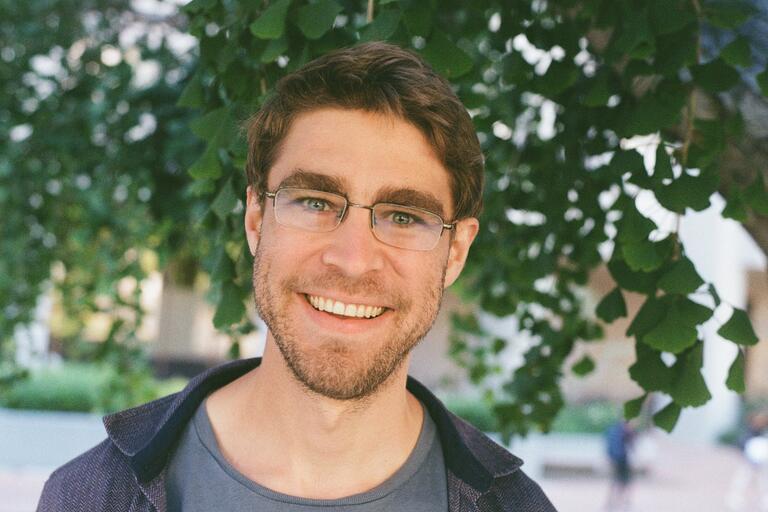
John Sous is an Assistant Professor of Applied Physics at Yale University. His research focuses on complex quantum systems with strong correlations, exploring novel functionalities for future technologies such as energy materials. Key areas include correlated quantum matter (quantum materials, ultracold atoms/molecules) and dynamical nonlinear systems (optically driven quantum systems, neural learning models). He has been awarded the AFOSR Young Investigator Program Award (2024-2027) and the Gordon and Betty Moore Foundation Postdoctoral Fellowship (2022-2023). His work bridges theoretical physics and computational methods, with recent contributions to superconductivity theory, polaron dynamics, and topological protection mechanisms. Notable research trends include investigation of bipolaronic superconductivity mechanisms, electron-phonon coupling effects, and quantum many-body systems under optical excitations. His studies often leverage advanced computational tools like the Generalized Green's function Cluster Expansion Python package. Collaborations with experimental groups and interdisciplinary efforts in AI applications (e.g., benchmarking foundation models) highlight his cross-cutting research approach. Key Awards: Nevill Mott Prize (2024), AFOSR YIP (2024), Moore Fellowship (2022) Grant activities include Yale Engineering seed funding for AI-driven physics research. His advisory work focuses on graduate students in condensed matter and quantum physics domains.
Ana Djurdjevac is an Assistant Professor in the Department of Numerical Analysis and Stochastics at the Freie Universität Berlin , within the Department of Mathematics and Computer Science. Her research focuses on numerical analysis, stochastic processes, and partial differential equations, with particular emphasis on uncertainty quantification and mathematical modeling in evolving domains. She teaches advanced courses such as Numerical Methods for Stochastic Differential Equations and Stochastik I , reflecting her expertise in computational methods and probabilistic frameworks. Her work integrates theoretical analysis with practical numerical techniques, addressing challenges in domains such as fluid dynamics, quantum systems, and biological surface fluctuations. Recent contributions include studies on hybrid algorithms for particle systems, rough homogenization in stochastic dynamics, and synchronization mechanisms in conservation laws. Djurdjevac actively participates in academic events, including the 2025 SIAM Conference on Computational Science and Engineering, and collaborates on projects involving quasi-Monte Carlo methods for Bayesian inversion and domain decomposition techniques. Professional activities highlight her role in shaping emerging fields like stochastic PDEs on evolving domains and feedback loops in agent-based models. While no specific awards are listed, her prolific publication record and teaching roles underscore her contributions to computational science and applied mathematics.
Professor Stefan Kehrein is a faculty member at the Institute for Theoretical Physics, University of Göttingen, where he leads research on quantum many-body systems. His work bridges fundamental physics and practical applications, with focus areas in non-equilibrium quantum dynamics, entanglement properties, and connections to black holes and topological materials. His research explores quantum entanglement in non-equilibrium systems , particularly the analytical and numerical study of Page curves, quantum phase transitions, and photoexcited materials. Recent publications highlight his contributions to understanding entanglement entropy dynamics and thermalization in closed quantum systems like the Sachdev-Ye-Kitaev model. Entanglement dynamics and Page curves (2024 Phys. Rev. B paper) Thermalization in thermodynamic limits (2024 arXiv preprint) Generalizations to non-integrable systems (2025 arXiv preprints) He maintains an active research blog discussing topics such as the microscopic mechanism of light propagation in matter (Ewald-Oseen extinction theorem) and the philosophical foundations of quantum mechanics. His group employs both analytical and numerical techniques to tackle challenging problems in quantum many-body physics.
Barbara Roos is a Postdoctoral Researcher at the Department of Mathematics, University of Tübingen, within the Faculty of Mathematics and Natural Sciences. She works under the supervision of Stefan Teufel and Ángela Capel Cuevas, focusing on mathematical physics, particularly quantum many-body systems and superconductivity. Education: BSc in Mathematics, ETH Zurich (2017) MSc in Mathematics, ETH Zurich (2019) PhD in Mathematical Physics, IST Austria (2023), advised by Robert Seiringer Her research spans quantum mechanics, differential geometry, and condensed matter physics, with a focus on BCS theory, topological insulators, and geometric effects in superconductivity. Her publications analyze critical temperatures, boundary phenomena, and low-dimensional systems. Other Activities: Founding member of the Association of Women in Mathematical Physics (AWMP) Member of the Academic Committee for the European Physics Olympiad (since 2021) Co-organizer of the Swiss Physics Olympiad (since 2015)
Tom Braeckevelt is a Research Fellow at Ghent University, Belgium, working within the computational materials science group led by Prof. Veronique Van Speybroeck. Based at Tech Lane Ghent Science Park (Technologiepark 46, Zwijnaarde), he collaborates extensively with experimental teams including Prof. Johan Hofkens (photophysics) and Prof. Sara Bals (electron microscopy), bridging theoretical modeling with advanced characterization techniques to solve stability challenges in next-generation photovoltaics. Education: PhD in Materials Science, Ghent University (2018). Dissertation: Designing 2D hybrid organic-inorganic perovskites for game-changing photovoltaics , supervised by Prof. Veronique Van Speybroeck and Dr. Kurt Lejaeghere. His research centers on perovskite stability mechanisms through multiscale computational modeling (DFT, machine learning potentials, molecular dynamics) integrated with experimental validation (TEM, GIWAXS, spectroscopy). Key focus areas include phase transition kinetics, strain engineering, doping strategies, and interfacial design for cesium lead halide perovskites. This work addresses critical barriers to commercial solar cell deployment, particularly ambient-condition stability and efficiency retention. From 2019-2025, Dr. Braeckevelt co-authored 13 high-impact publications including Science (2019), Nature Communications (2022), and ACS Nano (2025), demonstrating progression from fundamental phase transition studies to machine learning-enhanced stability solutions. Recent work expands into covalent organic frameworks and rare-event sampling algorithms, reflecting methodological diversification while maintaining photovoltaic applications as the core driver. No scientific awards or fellowships were documented in the source materials. Supported by institutional research grants at Ghent University, Dr. Braeckevelt has presented findings at 8+ international conferences including PSCO19 (Lausanne), ICAMM (Rennes), and DFT2022 (Brussels). His invited talk at the 2025 Eindhoven Psiflow workshop highlights growing recognition in machine learning for perovskites. No student supervision roles were indicated in current position. He operates within Ghent's integrated materials research ecosystem, contributing to cross-disciplinary projects that combine computational prediction with nanoscale characterization to accelerate renewable energy technology development.
Prof. Tobias Donner is a faculty member at ETH Zurich, affiliated with the Quantum Optics research group. His work centers on theoretical and computational approaches to quantum many-body systems, with a focus on quantum simulations, cavity quantum electrodynamics, and GPU-accelerated computational methods. Research Interests: His expertise spans quantum optics, many-body physics, and computational physics. Key areas include: Quantum simulations of Bose-Einstein condensates Cavity QED phenomena GPU-based solvers for quantum equations Floquet engineering in polaritonic systems High-performance computing for quantum problems Publication Trends: Recent articles (2022–2024) emphasize computational tool development for quantum many-body systems, including GPU-accelerated solvers (e.g., TorchGPE) and theoretical studies of multimode-polariton dynamics using Floquet methods. Dominant themes include quantum simulations, open-source software, and light-matter interactions. Affiliation Context: He contributes to the Quantum Optics group at ETH Zurich, which explores quantum many-body phenomena, quantum simulations, and photonic systems.
Domenico Di Sante is an Associate Professor at the University of Bologna , affiliated with the Department of Physics and Astronomy 'Augusto Righi' . His research bridges numerical quantum simulations with topological and spin-orbit driven phenomena , using advanced computational methods and machine learning in condensed matter systems. B.S. in Physics, University of L’Aquila (2011) Ph.D. in Physics, University of L’Aquila (2015) Postdoctoral Fellow and Young Group Leader, University of Würzburg (2016-2020) Marie Curie Research Fellow, Flatiron Institute (2021-2023) His research focuses on topological materials , including Kagome metals , where he investigates spin-orbit coupling , superconductivity , and Berry curvature effects . Recent work explores machine learning applications for quantum many-body problems and orbital Zeeman effects in topological systems. Selected scientific awards include: EU Marie Curie Global Fellowship (2020, project BITMAP) DFG-SFB1170 Grant (2019-2023, Principal Investigator)
Professor Norbert Schuch is a full Professor of Physics and Mathematics at the University of Vienna, where he leads the Research Group "Quantum Information and Quantum Many-Body Physics" at both the Faculty of Physics and Faculty of Mathematics. He joined the University of Vienna in October 2020 after serving as a tenured Research Group Leader at the Max-Planck-Institute of Quantum Optics in Garching, Germany and as a Lecturer at the Technical University Munich. Prior to that, he held a Tenure-Track-Professor position at the Institute for Quantum Information at RWTH Aachen University. Professor Schuch's research focuses at the intersection of Quantum Information and Computation with the Physics of Complex Quantum Many-Body Systems. His work combines mathematical, physical, and computational approaches to understand quantum correlations in many-body systems. Key research areas include tensor networks (such as Matrix Product States and Projected Entangled Pair States), topological order, entanglement theory, quantum algorithms, and quantum complexity theory. His interdisciplinary approach integrates methods from physics, mathematics, and theoretical computer science to address fundamental questions about quantum systems. His recent publications show a continued focus on tensor network theory and applications, with particular emphasis on topological phases, entanglement structure, quantum algorithms, and computational aspects of quantum many-body systems. His work spans mathematical foundations, physical applications, and computational implementations, demonstrating the cross-disciplinary nature of his research program. As an educator, Professor Schuch teaches courses on Quantum Information, Quantum Computing, and Quantum Algorithms, as well as specialized topics like Entanglement in Quantum Many-Body Systems. He actively supervises PhD students, postdocs, and master's students in his research group, which maintains strong connections with the international quantum information community.
Antoine Tilloy is a researcher at Mines Paris – PSL 's Centre Automatique et Systèmes , affiliated with the Quantic group (a joint venture with Inria Paris, ENS Paris, and Mines Paris). He focuses on the intersection of quantum field theory and tensor networks , particularly relativistic continuous matrix product states (RCMPS) for solving non-perturbative QFT problems. His work emphasizes rigorous numerical methods and their competitiveness with lattice gauge theory approaches. His research includes: ERC-funded projects on tensor networks in quantum field theory Collaborative work with Clément Delcamp on tensor renormalization Comparative studies of quantum computing, tensor networks, and Monte-Carlo methods for QCD He actively participates in academic outreach through blog posts, teaching assistant roles, and postdoc/PhD recruitment. His technical advancements aim to improve error scaling in variational optimization algorithms while addressing the limitations of structured versus unstructured approaches in theoretical physics.
Lin Lin is a Professor in the Department of Mathematics at the University of California, Berkeley, and a Senior Faculty Scientist at Lawrence Berkeley National Laboratory. His research bridges computational quantum many-body problems, quantum algorithms, and numerical analysis, with affiliations to the Computational Research Division and CAMERA (Center for Advanced Mathematics for Energy Research Applications). Research Interests: Quantum chemistry, quantum algorithms, numerical analysis, and computational quantum physics. Scientific Awards: Sloan Research Fellowship (2015), NSF CAREER (2017), DOE Early Career (2017), SIAM CSE Early Career (2017), PECASE (2019), ACM Gordon Bell Team (2020), Simons Investigator (2021), and APS Outstanding Referee (2025). Contact: linlin@math.berkeley.edu | Office: 817 Evans Hall. Publications span quantum algorithms, Hamiltonian simulation, and computational methods in quantum chemistry. His seminars, like the Quantum Many-Body Seminar (Math 290) , engage students and researchers in cutting-edge topics such as quantum control, tensor networks, and open quantum systems. He leads the UC Berkeley / LBNL Applied Math Seminar and is an invited speaker at the 2026 International Congress of Mathematicians.
Michael J. Lindsey is an Assistant Professor in the Department of Mathematics at the University of California, Berkeley, and a Faculty Scientist at Lawrence Berkeley National Laboratory. His research focuses on computational methods driven by Numerical Linear Algebra , Optimization , and Randomization , particularly for High-Dimensional Scientific Computing in quantum many-body problems and applied probability. University : UC Berkeley (Assistant Professor since 2022) Lab Affiliation : Mathematics Group at Lawrence Berkeley National Laboratory Email : lindsey@berkeley.edu His work includes Semidefinite Relaxation for quantum and classical problems, Monte Carlo Sampling techniques, and Tensor Networks for high-dimensional functions. He has pioneered Variational Embedding theory with guaranteed energy bounds and scalable solvers for quantum systems. Recent publications span Quantum Chemistry , Machine Learning , and High-Dimensional Probability , with applications to Electronic Structure , Molecular Dynamics , and Optimal Transport . He received the 2024 Hellman Fellowship and the 2019 SIAM Student Paper Prize . Teaching includes graduate and undergraduate courses in numerical analysis and applied mathematics at UC Berkeley and New York University. He also organizes the HDSC Seminar on high-dimensional scientific computing.
Julia Wildeboer is a Researcher in the Condensed Matter Physics and Materials Science Department at Brookhaven National Laboratory . Her work bridges condensed matter theory , quantum information science , and computational physics , focusing on non-equilibrium quantum systems, topological phases, and quantum memory design. Ph.D. : Washington University in St. Louis (advisor: Prof. Alexander Seidel, Thesis: "Physics of Resonating Valence Bond Spin Liquids") M.Sc. : Technical University of Dresden, Germany Her research spans quantum many-body scars , topological order in 2D systems , quantum dimer models , and non-Abelian anyons . She develops exactly solvable models for unconventional quantum phenomena and investigates entanglement entropy as a probe of topology. Recent work explores quantum phase transitions in kagome metals and symmetry-protected quantum memory . Scientific contributions include designing novel quantum scars , solving sign-problems in Monte Carlo simulations , and proposing probes for topological order . Her publications highlight expertise in DMRG , exact diagonalization , and Monte Carlo methods . Contact: jwildeboe@bnl.gov .
Zaher Hani is a Professor of Mathematics at the University of Michigan, holding the Frederick W. and Lois B. Gehring Professorship. He previously served as an assistant professor at Georgia Tech (2014-2018) and as a Courant Instructor/Simons Fellow at NYU's Courant Institute (2011-2014). He earned his Ph.D. (2011) and M.A. (2008) in Mathematics from UCLA under Terence Tao. Research Focus: Nonlinear partial differential equations (PDE), particularly dispersive wave equations, turbulence theory, and connections to harmonic analysis, dynamical systems, probability, and mathematical physics. Editorial Roles: Editor for Archive for Rational Mechanics and Analysis and Ars Inveniendi Analytica . His work explores the behavior of solutions to nonlinear dispersive PDEs in deterministic and probabilistic frameworks, with applications in quantum mechanics, nonlinear optics, plasma physics, and general relativity. Recent publications focus on wave kinetic equations, turbulence derivation, and Sobolev norm growth. He has collaborated extensively with Yu Deng, Pierre Germain, Jalal Shatah, and others. Scientific Awards: Courant Instructor/Simons Fellow at NYU Frederick W. and Lois B. Gehring Professorship He contributes to expository works and curriculum development, including a Ph.D. thesis on nonlinear Schrödinger equations. His teaching and administrative contact details are listed at the University of Michigan's Mathematics Department.
Professor Morten Hjorth-Jensen is a theoretical physicist affiliated with the Department of Physics at the University of Oslo and the Department of Physics and Astronomy at Michigan State University. He has held a shared professorship between these institutions since 2012, with prior roles as an associate professor (1999) and full professor (2001) at the University of Oslo. Education: PhD in Physics, University of Oslo (1993) His research spans computational physics, nuclear many-body theory, quantum computing, and machine learning, focusing on solving Schrödinger's and Dirac's equations for complex systems. He explores algorithmic methods, quantum mechanical properties, and interdisciplinary applications of machine learning in nuclear and particle physics. Recent publications highlight his expertise in quantum computing algorithms for many-body systems, machine learning in nuclear physics, and computational modeling of neutron stars. Themes include neural networks, Bayesian methods, and quantum simulations. Supervision: Geoscience: Optimal Climate Physics: Frictional properties of surface structures generated by machine learning Machine-learning-based molecular modeling of nanoscale geological processes Quantum computing algorithms for quantum mechanical many-body systems
Prof. Eran Rabani is a distinguished researcher and professor holding dual appointments at Tel Aviv University's School of Chemistry and the University of California, Berkeley's Department of Chemistry. At UC Berkeley, he holds the prestigious Glenn T. Seaborg Chair in Physical Chemistry and serves as a Faculty Scientist at Lawrence Berkeley National Laboratory. His research bridges theoretical chemistry, computational physics, and nanomaterials science, with significant contributions to understanding quantum phenomena at the nanoscale. Prof. Rabani earned his Ph.D. in Theoretical Chemistry from The Hebrew University in 1996, followed by postdoctoral research at Columbia University. His academic career progressed from Senior Lecturer to full Professor at Tel Aviv University, where he has maintained a continuous appointment since 1993. His educational background includes a summa cum laude B.Sc. from the Special Program "Amirim" at The Hebrew University. Rabani's research program centers on three interconnected pillars: Optoelectronic Properties of Nanomaterials , where his group develops computational models to describe exciton fine structure and phonon interactions in nanocrystals; Quasiparticle Dynamics , investigating electron transfer processes in nanoscale systems; and Stochastic Electronic Structure Methods , pioneering computational approaches that dramatically reduce the complexity of quantum simulations. His work combines theoretical innovation with practical applications in renewable energy, sensing technologies, and quantum information processing. Analysis of Rabani's recent publications reveals a strong emphasis on quantum confinement effects, exciton dynamics, and the development of stochastic computational methods that enable simulations of previously intractable systems. His research demonstrates increasing interdisciplinary collaboration, particularly with experimental groups working on quantum dots, perovskites, and other nanomaterials, with a clear trajectory toward solving real-world problems in energy conversion and quantum technologies. Prof. Rabani's contributions have been recognized with numerous prestigious awards: International Association of Advanced Materials Fellow (2023) Humboldt Research Award (2022) Vebleo Fellow for Prominence and Leadership in Science (2021) Glenn T. Seaborg Chair in Physical Chemistry (2017) Baker Symposium Speaker at Cornell University (2016) Kavli Frontiers of Science Alumni (2015) Marko & Lucie Chaoul Chair for Theoretical and Computational Nanoscience (2013) His research program is supported by substantial funding from major agencies including the National Science Foundation, Department of Energy, and Israel Science Foundation. Current grants (2021-2025) total over $2.5 million, focusing on semiconductor nanowires, computational materials science, and optoelectronic materials. As Director of The Sackler Center for Computational Molecular and Materials Science at Tel Aviv University, he leads a vibrant research group that bridges theoretical innovation with experimental validation. Prof. Rabani directs The Sackler Center for Computational Molecular and Materials Science at Tel Aviv University and has served in various administrative roles including Vice President for Research and Development. His research group maintains strong collaborations with experimentalists worldwide, creating an intellectual community focused on advancing fundamental understanding of nanoscale phenomena while exploring practical applications in energy, sensing, and quantum technologies.