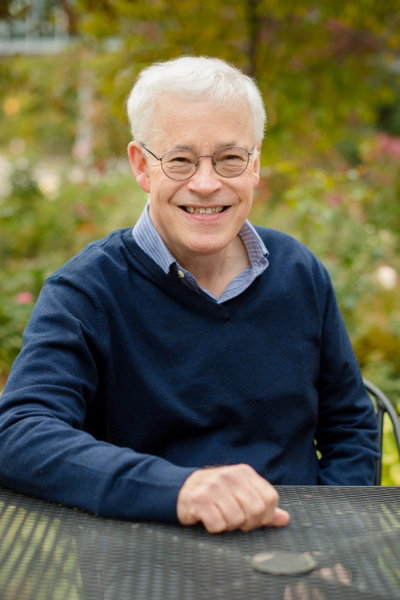
Matthias Ihme is a Professor in the Department of Mechanical Engineering and Photon Science Directorate at Stanford University. His research focuses on large-eddy simulation (LES) of turbulent reacting flows, aeroacoustics, combustion-generated noise, numerical methods, and high-order schemes. He holds a Ph.D. from Stanford University (2008), an M.Sc. in Computational Engineering from the University of Erlangen (Germany, 2002), and a Dipl.-Ing. in Mechanical Engineering from Munich University of Applied Sciences (Germany, 2000). His work bridges computational fluid dynamics, combustion science, and photon science, with notable contributions to supercritical fluid dynamics, machine learning integration in fluid simulations, and high-fidelity atmospheric transport modeling. Recent research emphasizes ultrafast cluster dynamics, shock-induced interface behavior, and stochastic ignition mechanisms in advanced fuel systems. Publications highlight interdisciplinary advancements, including physics-informed ML frameworks for reacting flows and experimental studies using X-ray photon correlation spectroscopy. His projects often involve high-performance computing and collaboration with national labs like SLAC.
Dr. Horia Hangan is a Professor of Mechanical Engineering and Canada Research Chair in Adaptive Aerodynamics at Ontario Tech University's Faculty of Engineering and Applied Science. He holds an adjunct professorship at Western University. His research focuses on Experimental Fluid Mechanics, particularly bluff body aerodynamics, turbulent coherent structures, and aerodynamic control, with applications to buildings, vehicles, and aerostructures. He pioneered the WindEEE Dome, a unique facility simulating complex 3D wind flows, enabling studies of tornado-like vortices and non-Gaussian wind phenomena. Education: PhD in Wind Engineering from Western University (1996), Diplomat Engineering Degree in Aeronautics from the Polytechnic University of Bucharest (1985). Research interests include downburst dynamics, wind–structure interaction, and renewable energy. Over 150 publications span experimental and numerical studies of tornado-like vortices, downburst flows, and wind turbine performance. Notable awards include the CSME Fellowship (2016), ENR News Maker of the Year (2015), and the ASME Lewis F. Moody Award (2010). His work bridges fundamental aerodynamics with practical engineering solutions for wind-related challenges.
Scott T. M. Dawson is an Assistant Professor in the Mechanical, Materials, and Aerospace Engineering Department at Illinois Institute of Technology (Illinois Tech). He holds positions in the Armour College of Engineering and leads research at the intersection of fluid mechanics, dynamical systems, control theory, and data science. His work focuses on extracting dynamic models from large datasets to analyze and control turbulent flows and unsteady aerodynamic systems. Education includes a Ph.D. and M.A. from Princeton University (2017, 2013), and B.Eng. and B.S. degrees from Monash University (2010, 2009). Prior to Illinois Tech, he was a postdoctoral scholar at Caltech’s Graduate Aerospace Laboratories under Prof. Beverley McKeon. Research interests emphasize reduced-order modeling, data-driven techniques for fluid flows, and flow control applications. His group’s work is supported by NSF, AFOSR, and DOE grants. Recent projects include sparsity-promoting methods for flow analysis, wavelet-based resolvent analysis, and neural network-driven flow control systems. Publications span over 60 peer-reviewed articles, with a focus on turbulence modeling, transient flow dynamics, and machine learning integration in fluid mechanics. Key contributions include novel algorithms for isolating amplification mechanisms in wall-bounded flows and robust neural network frameworks for closed-loop flow stabilization. Grants and collaborations include multi-year NSF CAREER funding for automated distillation of coherent flow structures. Ongoing efforts explore time-localized spectral methods, nonlinear dimensionality reduction, and hydrogen decarbonization in vehicular systems.
Prof. Karsten Urban is a Full Professor of Numerical Mathematics at the University of Ulm, leading the Institute for Numerical Mathematics. He holds roles such as Dean of Studies in Computational Science and Engineering (CSE) and Deputy Spokesman for the Research Association for Scientific Computing in Baden-Württemberg. He is an active member of prestigious societies including the Deutsche Mathematikervereinigung (DMV) and SIAM. His academic journey includes a PhD from RWTH Aachen (1995), Habilitation (2001), and a full professorship at Ulm since 2005. Research focuses on numerical methods for PDEs, reduced basis techniques, multiscale simulations in fluid mechanics, biomechanics, quantum sciences, and financial mathematics. He has pioneered wavelet-based methods and collaborated with industries on ship propulsion and energy trading models. His work integrates mathematical rigor with real-world applications, emphasizing model reduction and computational efficiency. Editorial Roles: Managing Editor of Advances in Computational Mathematics , Editor of SN Partial Differential Equations and Applications . Awards: Teaching award of Baden-Württemberg (2005), Science-Economy Cooperation Awards (2004, 2008). Administrative Roles: Member of the University Council and ASIIN expert committee. Supervises doctoral students in numerical analysis, quantum simulations, and biomechanics. Active in interdisciplinary projects, including quantum systems (IQST) and fracture healing modeling in collaboration with biomechanics experts. His contributions bridge academia and industry, driving innovation in computational methods.
Professor Matthew Jonathan Rosseinsky holds the Chair of Inorganic Chemistry at the University of Liverpool, a position he has occupied since October 1999. His career includes significant appointments at the University of Oxford (1992-1999) and Bell Laboratories in New Jersey (1990-1992), following his DPhil at Merton College, Oxford. As a Fellow of the Royal Society and recipient of numerous prestigious awards, Professor Rosseinsky maintains an active research program and leadership roles in the international chemistry community. Professor Rosseinsky's educational background includes a First Class Honours degree in Chemistry with Quantum Chemistry from the University of Oxford (1987) and a DPhil in "Physical Properties of Superconducting Oxides and Radical Cation Salts" completed in 1990 under Professor P. Day FRS. His research focuses on the synthesis of new materials with applications in energy storage and generation, communications, separation, and catalysis. The Rosseinsky Group employs a broad range of synthesis and characterization techniques, including neutron and synchrotron X-ray diffraction, combined with computational methods in collaboration with Dr. George Darling. Current research areas include Dynapore, CO2 fuels, SOLBAT, and CATMAT projects that target specific material challenges. Professor Rosseinsky's publication record is exceptional, with 304 papers including 11 in Nature, 6 in Science, and 3 in Nature Materials, accumulating over 15,000 citations and an h-index of 56 as of 2012. His work demonstrates consistent excellence across materials chemistry, with particular emphasis on porous frameworks, electronic materials, and solid-state chemistry. Among his numerous accolades are the Harrison Memorial Prize (1991), Corday-Morgan Medal (2000), Royal Society Wolfson Research Merit Award (2002), De Gennes Prize (2009), and the prestigious Hughes Medal from the Royal Society (2011). He also holds an ERC Advanced Investigator Grant and has delivered distinguished lectures worldwide. Professor Rosseinsky has served in numerous editorial and advisory capacities, including as Associate Editor for Chemical Sciences, membership on the Royal Society Conference and Travel Grant Committee since 2007, and as a member of the International Advisory Board for the Max Planck Institut for Solid State Research since 2011. His professional activities extend to international review committees for research institutions in France, South Korea, and Saudi Arabia. The Rosseinsky Group operates within the Department of Chemistry at the University of Liverpool, collaborating extensively with researchers including Dr. John Claridge, Professor Andrew Cooper, and Professor Paul Chalker. The group maintains strong international partnerships and utilizes advanced facilities for materials synthesis and characterization to drive innovation in functional materials development.
Lloyd Nicholas Trefethen is Professor of Numerical Analysis and Fellow of Balliol College at the University of Oxford, a position he has held since 1997. He also has concurrent appointments as Global Distinguished Professor of Mathematics and Computer Science at New York University (2013–2019) and has served as Von Neumann Professor at TU Munich and Matheon Professor at TU Berlin in 2010. Education: PhD (Computer Science/Numerical Analysis), Stanford University, 1982 MS (Computer Science/Numerical Analysis), Stanford University, 1980 AB summa cum laude (Applied Mathematics), Harvard College, 1977 Research Interests: Trefethen’s work centers on numerical mathematics, with particular emphasis on spectral methods , numerical linear algebra , approximation theory , numerical conformal mapping , quadrature , and pseudospectra . His research often bridges rigorous mathematical theory and practical algorithms, most notably through the widely used Chebfun software system. Recent publications illustrate a trend toward developing fast, high-accuracy algorithms for solving classical problems such as the Laplace and Helmholtz equations, rational approximation via the AAA algorithm, and stability analysis in fluid mechanics without traditional eigenvalue techniques. Scientific Awards: Pólya Prize for Mathematical Exposition (SIAM, 2017) Naylor Prize (London Mathematical Society, 2013) Gold Medal (Institute of Mathematics and its Applications, 2011) Fellow of the Royal Society (2005) Member of the US National Academy of Engineering (2007) ERC Advanced Grant (2012–2017) Honorary doctorates from Stellenbosch University and University of Fribourg (2019) Advising & Grants: Trefethen has supervised 24 PhD/DPhil students at MIT, Cornell, and Oxford; twelve have launched academic careers. He has held major grants including an ERC Advanced Grant on “Computing with functions instead of numbers” (€2.4 M, 2012–2017) and EPSRC funding for the Chebfun System (2006–2010). Labs & Teams: He leads the Chebfun Team at Oxford, an interdisciplinary group developing open-source software for numerical computing with functions. The team collaborates globally with researchers in mathematics, computer science, and engineering.
Dr Xinchen Zhang is a Grant-Funded Researcher (A) at the University of Adelaide's Department of Mechanical Engineering within the School of Electrical and Mechanical Engineering. His research focuses on integrating machine learning with computational fluid dynamics (CFD) to enhance predictive capabilities for multiphase flow solutions, particularly in sustainable energy applications like decarbonization technologies. He holds a PhD (2022) with a Dean's Commendation for Doctoral Thesis Excellence, emphasizing fluid and particle dynamics in particle-laden flows. His work addresses challenges in net-zero industrial processes such as limestone calcination and hydrogen production via methane pyrolysis, leveraging advanced CFD and ML-augmented methodologies. Key research areas include turbulence modeling, particle dispersion in jets, and flow regime analysis in horizontal particle-laden pipe systems. He is eligible to supervise Masters and PhD students as a co-supervisor. Dr Zhang's publications span 2018–2024, with recent trends focusing on physics-informed machine learning for turbulence modeling and multiphase flow optimization. His contributions advance computational efficiency and accuracy in predicting complex fluid-particle interactions.
Jay D. Sau is a Professor of Physics at the University of Maryland, College Park, and Co-Director of the Joint Quantum Institute (JQI). His research focuses on theoretical condensed matter physics, particularly topological quantum computing, quantum many-body systems, and Majorana fermions. He holds affiliations with the Condensed Matter Theory Center (CMTC) and JQI. Sau received his Ph.D. from UC Berkeley in 2008. His work bridges theoretical concepts in topological materials, superconductivity, and quantum information processing. Research Interests: Sau's primary interests include applying topological principles to solid-state and cold-atomic systems for quantum computation. Key areas include topological superconductivity, Majorana fermions, quantum Hall effects, and spin-orbit coupled systems. His group explores phenomena like topological degeneracy, Weyl semimetals, and cold atomic gases. Awards: He has been recognized with the National Science Foundation CAREER Award (2016) and the Sloan Research Fellowship (2016). His work has been published extensively in high-impact journals and covers topics ranging from Majorana physics to quantum phase transitions. Advising & Labs: Sau mentors graduate students including Tamoghna Barik, Stuart Thomas, Huan-Kuang Wu, and Shuyang Wang. His research group collaborates on projects at JQI and CMTC, focusing on experimental realizations of topological qubits and quantum devices.
Prof. Dr. Oliver Paul is a Full Professor at the Department of Microsystems Engineering (IMTEK), University of Freiburg, since 1998. He previously held roles such as Dean of Studies (1999–2002), Director of IMTEK (2006–2008), and Dean of the Faculty of Engineering (2016–2018). His research focuses on Microsystems for biomedical applications, MEMS technology, sensor systems, and advanced fabrication techniques. Key projects include the Excellence Cluster BrainLinks-BrainTools (2012–2017) and the Institute for Brain-Machine Interfacing Technology (IMBIT, 2015–present). Paul’s education includes a Diploma in Physics (1986, ETH Zurich) and a PhD in Solid-State Physics (1990, ETH Zurich). He has supervised numerous PhD students and postdocs, contributing to topics like neural probes, energy harvesting, and sensor calibration. His teaching spans courses in MEMS, semiconductors, and quantum mechanics. He co-founded Sensirion (1998) and Atlas Neuroengineering (2012), and holds editorial roles in journals like Sensors and Actuators A and IOP Journal of Micromechanics and Microengineering. His research interests include multisensory system calibration, biohybrid microsystems, and MEMS-based tools for neuroscience. Notable contributions include silicon neural probes, advanced microneedles, and telemetric smart orthodontic brackets. He has led large collaborative projects involving academia and industry, emphasizing interdisciplinary innovation in microsystems and biomedical engineering.
David A. Hammer is the J. Carlton Ward, Jr., Professor of Nuclear Energy Engineering and Professor of Electrical and Computer Engineering at Cornell University's College of Engineering. He has been a faculty member since 1977 and has held visiting positions at Imperial College London, Applied Materials, Inc., and the Paris Observatory. His work bridges nuclear engineering, plasma physics, and electromagnetics. His research focuses on high energy density plasmas generated by pulsed power systems, particularly through wire explosions, X-pinches, and gas-puff Z-pinches. Key areas include inertial confinement fusion, magneto-Rayleigh-Taylor instabilities, and plasma diagnostics using visible and X-ray spectroscopy, laser-based methods, and electro-optical instruments. He also explores the application of X-pinch radiation for biomedical radiography. His recent publications reveal a strong emphasis on Z-pinch and hybrid X-pinch dynamics, plasma turbulence, magnetic field diagnostics using Faraday rotation and Zeeman splitting, and the development of advanced imaging and spectroscopic techniques. His work frequently involves the COBRA pulsed-power generator and addresses fundamental questions in plasma stability, implosion dynamics, and radiative collapse. Distinguished Career Award, Fusion Power Associates Board of Directors (2018) Cornell College of Engineering Teaching Award (2006, 1998) Cornell IEEE Professor of the Year Award (2006) McCormack Advising Award (2005) IEEE Plasma Science and Applications Committee Award (2004) Hammer has advised numerous graduate students and led experimental campaigns involving plasma diagnostics, liner implosions, and laboratory astrophysics. His work is supported by grants from agencies interested in fusion energy, plasma science, and advanced diagnostics. He has developed innovative platforms, including 3D-printed plasma loads, to study turbulent plasma jets and magnetization. His lab at Cornell is a key facility for high-energy-density plasma research. He leads a research group focused on plasma diagnostics and pulsed power experiments, operating the COBRA generator and developing novel measurement techniques. His team investigates plasma instabilities, magnetic field generation, and the transition from radial implosions to collimated jets, with implications for both fusion and astrophysics.
Dr. Catherine Rychert is an Associate Professor in the Department of Geology and Geophysics at the University of Southampton, where she conducts cutting-edge research in seismology and marine geophysics. She is a member of both the Geology and Geophysics research group and the Southampton Marine and Maritime Institute, contributing significantly to our understanding of Earth's interior structure and dynamics through advanced seismic imaging techniques. Her research focuses on several key areas: Seismic imaging of lithosphere-asthenosphere boundary Subduction zone dynamics and slab structure Continental rifting processes Seafloor spreading mechanisms Mantle flow patterns and upwellings Development of novel seismic sensing technologies Dr. Rychert's recent publications (2023-2025) demonstrate a strong focus on applying advanced seismic techniques across diverse tectonic settings including subduction zones (Lesser Antilles, Cascadia, Hikurangi), mid-ocean ridges (Mid-Atlantic Ridge), and continental rift systems (East African Rift). A notable trend is her increasing use of distributed acoustic sensing technology for both terrestrial and planetary applications, showing interdisciplinary reach beyond traditional Earth science. Dr. Rychert actively supervises PhD students, including William Arnold Buffett working on the INSPIRE project. She has secured significant research funding from diverse sources including the European Union (EURO-LAB project), National Geographic Society, and Natural Environment Research Council (NERC). Her collaborative network includes Dr. Nicholas Harmon and Professor Derek Keir, with whom she frequently publishes. Her research team conducts fieldwork and data analysis focused on understanding fundamental Earth structure and processes through innovative seismic methodologies, contributing to both theoretical understanding and practical applications in hazard assessment and resource exploration.
Guang Lin is the Associate Dean for Research and Innovation in the College of Science and a Full Professor in the School of Mechanical Engineering and Department of Mathematics at Purdue University. He leads the Data Science Consulting Services and has dual appointments in Statistics and Earth, Atmospheric, and Planetary Sciences. His research focuses on AI, machine learning, uncertainty quantification, and computational science, with applications in fluid mechanics, materials science, and healthcare. Lin holds a Ph.D. from Brown University (2007) and has received numerous awards, including the NSF CAREER Award and Purdue’s University Faculty Scholar distinction. He has authored over 250 publications and secured grants totaling millions, including DOE and NIH funding. His interdisciplinary work bridges academia and industry, emphasizing AI-driven solutions for complex systems. Education: Ph.D. Applied Mathematics (Brown, 2007), M.S. Applied Mathematics (Brown, 2004), M.S. Mechanics (Peking University, 2000), B.S. Mechanics (Zhejiang University, 1997). Research Grants: Includes DOE-funded projects on machine learning for plasma-wall interactions and NSF grants for multiscale modeling. Service: Editorships in SIAM MMS, ASME Journal, and leadership in Purdue’s AI initiatives. Teaching: Courses on Uncertainty Quantification, Fluid Mechanics, and Data Science.
Karthik Dantu is an Associate Professor in the Department of Computer Science and Engineering at the University at Buffalo, State University of New York, within the School of Engineering and Applied Sciences. His research focuses on mobile sensor networks, robot networks, networked embedded systems, mobile computing, wireless networks, and embedded operating systems. He leads the Distributed Robotics and Networked Embedded Sensing (DRONES) Lab and has received significant funding including an NSF CAREER Award. Dr. Dantu's educational background includes: PhD in Computer Science from University of Southern California (2009) BE in Computer Science from Sri Jayachamarajendra College of Engineering (1999) His research interests center on algorithmic and systems challenges in Edge Computing Systems, with particular focus on enabling seamless vision sensing in cloud-edge environments. Dantu's work bridges mobile systems and robotics, developing novel approaches for UAV software, visual SLAM, and distributed sensing. His research addresses critical challenges in resource-constrained environments, security, and real-time performance for mobile and robotic systems, with emphasis on practical implementations that solve real-world problems in autonomous systems. Dr. Dantu's publication record shows a strong trajectory in mobile systems and robotics research, with increasing focus on edge computing applications for visual sensing. His recent work demonstrates expertise in adapting visual SLAM to edge environments, securing mobile systems through technologies like Rushmore, and developing novel approaches for UAV software reliability and depth sensing. The research spans theoretical algorithms and practical system implementations, with particular strength in bringing academic research to practical applications in robotics and mobile computing. Dr. Dantu has received several scientific honors: NSF CAREER Award on Enabling Seamless Vision Sensing in Cloud-Edge Systems Outstanding service award from the Office of International Services NSF Travel Grant for SenSys 2005 Conference Travel Grant for SIGCOMM 2002 As an advisor, Dr. Dantu has mentored numerous PhD students to completion, with graduates now working at companies like Samsung Research and Zoox Inc., or continuing academic careers as Assistant Professors. His research is supported by substantial grants including a DARPA OFFSET Sprint 4 award ($470k), an NSF CAREER award ($550k), and multiple NSF collaborative grants totaling over $1.5 million. He serves on numerous conference committees including Mobicom, MobiSys, and ICRA, demonstrating leadership in the mobile systems and robotics research communities. Dr. Dantu leads the Distributed Robotics and Networked Embedded Sensing (DRONES) Lab at UB, which focuses on developing algorithms and systems for mobile sensor networks, robot networks, and embedded sensing applications. The lab's work spans theoretical foundations to practical implementations, with particular expertise in UAV systems, visual SLAM, and edge computing for robotics, maintaining strong collaborations with industry partners and other academic institutions to advance the state of the art in mobile and robotic systems.
Dr. Susan D. Hovorka is a Research Professor at the Bureau of Economic Geology, The University of Texas at Austin, specializing in geological techniques for environmental applications. She focuses on subsurface permeability dynamics in both tight and highly transmissive systems, with a primary emphasis on geological carbon sequestration and CO₂ storage security. Ph.D. in Geology (1990), The University of Texas at Austin M.A. in Geology (1981), The University of Texas at Austin B.A. in Geology (1974), Earlham College Her research addresses critical challenges in carbon geological storage, including: Characterizing salt formations as containment materials Analyzing carbonate fabrics for karst aquifer flow understanding Field CO₂ injection experiments for sequestration assessment Developing composite confining systems for secure CO₂ retention The articles she has contributed to since 2002 demonstrate a consistent focus on: Carbon capture and storage (CCS) technologies Reservoir pressure dynamics and fault permeability Permit-ready site workflows and risk mitigation Geological analogs from petroleum systems Dr. Hovorka actively collaborates with institutions like the Gulf Coast Carbon Center (GCCC) and participates in international CCS initiatives. Her work integrates sedimentology, geophysics, and environmental policy to advance subsurface carbon management solutions.
Dr. Arman Khoshghalb is a Senior Lecturer in Geotechnical Engineering at the School of Civil and Environmental Engineering, UNSW Sydney, where he has been a faculty member since 2012. His academic credentials include a PhD in Geotechnical Engineering from UNSW (2012), an MSc from Sharif University of Technology (2005), and a BSc in Civil Engineering from the same institution (2003). His research focuses on numerical modeling of multi-phase porous media , with emphasis on unsaturated soils, large deformation analysis, and dynamic soil behavior. Key areas include meshfree computational methods, soil-structure interaction, bio-cementation, and thermo-hydro-mechanical processes in geotechnical systems. His work bridges theoretical advancements with practical applications in slope stability, foundation engineering, and sustainable ground improvement. Dr. Khoshghalb's publications predominantly explore geomechanical modeling, experimental soil mechanics, and computational techniques. Recent trends highlight innovations in bio-cemented soils, thermal properties of unsaturated soils, and adaptive numerical methods for complex geotechnical simulations. Awards & Honors: IACMAG Excellent Paper Award (2017) UNSW Research Excellence Award (2012) Advising & Grants: He has supervised 7+ PhD students on topics ranging from weak rock mechanics to computational geomechanics. Funded projects include: ARC Discovery Project (2019–2021): "Non-isothermal dynamic strain localisation in unsaturated porous media" ($298,257) ARC Linkage Infrastructure Grant (2015): "Earthquake shaking table for soil-structure interactions" ($320,000) ARC Linkage Project (2014–2017): "Constitutive modelling of weak rocks" ($314,280) He leads research within UNSW's geotechnical engineering group, collaborating on large-scale experimental testing and computational frameworks for infrastructure resilience.