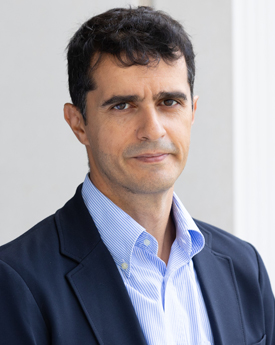
Mikael Johansson is a Professor at Kungliga Tekniska Högskolan (KTH), specializing in Control Technology . He teaches and coordinates courses such as Distributed Optimization (FEL3311) and various advanced-level degree projects in computer science, electrical engineering, and systems engineering. His research spans Control Systems , Machine Learning , and Optimization , with a focus on asynchronous algorithms, federated learning, and applications in energy systems and construction. His work includes 15 recent publications on topics like neural networks, distributed optimization, and battery technology. Notable areas of contribution are in asynchronous learning, federated learning with privacy constraints, and quasi-Newton methods for optimization. His research bridges theoretical advancements with practical applications in urban design, healthcare, and autonomous systems.
Huy T Tran is an Assistant Professor in the Department of Aerospace Engineering at the University of Illinois at Urbana-Champaign's College of Engineering, with additional appointments at the Applied Research Institute. His research focuses on the intersection of robotics, artificial intelligence, and multi-agent systems, with applications spanning autonomous navigation, critical infrastructure resilience, and intelligent transportation. Dr. Tran earned his Ph.D. in Aerospace Engineering from Georgia Institute of Technology in 2015, following advanced degrees from Georgia Tech and University of Wisconsin-Madison. His academic journey includes research assistant professor positions before achieving his current assistant professor role in 2021. He previously worked as a Senior Multi-Disciplinary Systems Engineer at The MITRE Corporation and served as a Visiting Scholar at the Air Force Institute of Technology. His research interests encompass Autonomy, Reinforcement Learning, Artificial Intelligence, Machine Learning, Robotics, Multiagent Systems, Intelligent Transportation Systems, and Critical Infrastructure Resilience. As director of the Lab for Intelligent Robots and Agents (LIRA), he leads cutting-edge research in autonomous systems that interact with humans and other robots. His work has evolved from foundational resilience modeling in aerospace systems toward increasingly sophisticated AI applications in multi-robot coordination and explainable decision-making. Dr. Tran's publication record demonstrates a clear trajectory toward explainable AI and human-AI collaboration, with recent work focusing on generating explanations for reinforcement learning policies, coordination in ad hoc teams, and neuro-symbolic approaches to robot policy interpretation. His research bridges theoretical advances with practical applications in air traffic control, field robotics, and critical infrastructure management. Best Paper Award: Theoretical (2016 Complex Adaptive Systems Conference) Selected for oral presentation at IROS 2023 Workshop 27% full paper acceptance rate at AAMAS 2022 44% acceptance rate at ICRA 2020 As an educator, Dr. Tran teaches core aerospace courses including Computational Systems Engineering, Aerospace Numerical Methods, and Reinforcement Learning. He has secured significant research funding from NASA's Transformational Tools and Technologies program, ARL A2I2 program, ONR Science of AI program, and DARPA. His current projects span ad hoc teaming in multi-robot systems, collective autonomous air mobility, hierarchical reinforcement learning, and interpretable AI agents.
Flavio Esposito is an Associate Professor in the Computer Science Department at Saint Louis University's School of Engineering. He also serves as a Research Institute Fellow and CS Graduate Coordinator. His office is located in ISE 234D at 3450 Lindell Blvd, St. Louis, MO. Dr. Esposito's research focuses on cyber-physical systems and networked systems, including network virtualization, network management, Software-Defined Networks (SDN), network architectures, and wireless networks. He has a strong interest in interdisciplinary applications of these technologies to medicine and agriculture. His work bridges theoretical networking concepts with practical implementations. His publications span key areas in networking research, with recent work focusing on congestion control algorithms, virtual network embedding, recursive network architectures, and edge computing applications. The research trends show a progression from foundational networking protocols toward more sophisticated applications integrating machine learning, edge computing, and cyber-physical systems, with increasing emphasis on real-world applications in diverse domains. Outstanding Graduate Mentoring Faculty Award from the School of Engineering (2021) Finalist for the Undergraduate Mentoring Award in the College of Arts and Sciences Multiple NSF research awards including US Ignite, ICE-T, CNS Core, CC* Integration, CPS:TTP, and ModernCARE projects COMCAST Innovation Fund Award (January 2020) International Center for Responsible Gaming (ICRG) Award ($150K) Dr. Esposito actively mentors PhD and MS students, with numerous current and past students who have gone on to positions at major tech companies, universities, and research institutions. He has been a Principal Investigator on multiple significant research grants totaling millions of dollars. He co-founded Spaghetti Code Labs with former PhD student Alessandro Sangiorgi, whose cybersecurity educational app WeeNet has achieved 5.7M+ downloads. He leads several research labs and teams focused on cyber-physical systems, with current openings for PhD students, visiting researchers, and postdocs working on networks, learning, edge computing, and applications to medicine and agriculture. His teams have developed numerous software systems including Software Mutant, Neighborhood Method Prototype, VINEA, ProtoRINA, and BUtorrent.
Dr. Sana Jahanshahi Anbuhi is an Associate Professor at the Department of Chemical and Materials Engineering , Gina Cody School of Engineering and Computer Science , Concordia University. She holds the Concordia University Research Chair Tier II in Stable Bio/Chemo-Sensors and serves as the Graduate Program Director for PhD and MASc programs. Her research focuses on Paper-based microfluidic devices and thermal stabilization of biologics for portable diagnostic applications. Education: Ph.D. in Chemical Engineering (2015), McMaster University , Canada B.Sc. in Chemical Engineering, Sharif University of Technology , Iran Her work emphasizes point-of-care diagnostics , bio-sensing , and detection of pesticides , heavy metals , and microorganisms . Recent publications highlight gold nanoparticle-based tablets for colorimetric assays in environmental monitoring and food safety . She has also contributed to flow control in paper microfluidics and vaccine stabilization using sugar films . Scientific patents include methods for stabilizing molecules without refrigeration and pullulan mixtures for preserving chemicals. Her teaching activities include courses on Advanced Separation Processes , Thermodynamics I , and Research Protocols and Safety . She actively mentors researchers and has participated in numerous international conferences and media features, including interviews in Le Devoir and The Globe and Mail .
Moïse Blanchard is an Assistant Professor and Tennenbaum Early Career Professor at the H. Milton Stewart School of Industrial and Systems Engineering at Georgia Institute of Technology, having joined in August 2025. Previously, he was a Postdoctoral Fellow at Columbia University Data Science Institute. His academic journey includes a Ph.D. in Operations Research from MIT (2024), and M.Sc. and B.Sc. degrees in Applied Mathematics from École Polytechnique. Blanchard's research focuses on the intersection of machine learning theory, statistics, and optimization. His work addresses fundamental questions in universal learning, online algorithms, and convex optimization under memory constraints. His research program explores learnability under minimal assumptions, query complexity/memory tradeoffs, and decision-making in adversarial environments. This work has significant implications for theoretical computer science, operations research, and statistical learning theory. His publications reveal a strong emphasis on foundational aspects of learning theory and optimization. Recent work demonstrates expertise in universal learning frameworks, memory-constrained optimization, and probabilistic analysis of combinatorial problems. His research often bridges theoretical computer science with practical optimization challenges, particularly in contexts where traditional i.i.d. assumptions don't hold. Columbia DSI postdoctoral fellowship, 2024 INFORMS Transportation Science & Logistics (TSL) best student paper award, 2023 Air Force Office of Scientific Research Grant (AFOSR), with Prof. Patrick Jaillet, 2023 COLT 2022 Best student paper runner-up Bronze medal, Alibaba Global Mathematics Competition, 2022 Blanchard has received significant research funding including an Air Force Office of Scientific Research Grant. His work has been recognized with multiple prestigious awards, including the INFORMS TSL best student paper award for his research on the k-Traveling Salesman Problem. His extensive publication record in top venues demonstrates a strong research trajectory with impactful contributions to theoretical machine learning and optimization.
Prof. Dr. Jürgen Biela serves as Full Professor at ETH Zurich within the Department of Information Technology and Electrical Engineering, where he leads the Laboratory for High Power Electronic Systems. His academic career at ETH Zurich has progressed from doctoral studies to his current position as head of his research laboratory, with significant contributions to power electronics research and education. Biela earned his diploma with honors from Friedrich-Alexander University in Erlangen, Germany in 2000 and completed his Ph.D. at ETH Zurich in 2005, both in electrical engineering. His educational background includes specialized work on resonant DC-link inverters at Strathclyde University and active control of series connected IGCTs at the Technical University of Munich. His research program focuses on multi-physics modeling, design and optimization of power electronic systems , with particular emphasis on applications for future energy distribution and transmission, pulsed power systems, and advanced medium voltage power electronics based on novel semiconductor technologies like silicon carbide (SiC). He also investigates integrated passive components for ultra-compact and ultra-efficient high-power converter systems, pushing the boundaries of power density and efficiency in electronic power conversion. Analysis of his recent publications reveals strong trends in high-frequency power conversion , with significant work on transformer and inductor design, insulation systems for medium-frequency applications, thermal management of power components, and advanced modeling techniques for electromagnetic phenomena. His research bridges fundamental electromagnetic theory with practical engineering applications, particularly in high-voltage and high-power scenarios where traditional approaches face limitations. As a prolific researcher, Biela has published over 85 journal papers and 210 conference papers while holding more than 35 patents. He serves as an Associate Editor for the IEEE Transactions on Power Electronics and regularly reviews for leading journals and conferences in the field. His work demonstrates consistent contributions to advancing power electronic systems through rigorous theoretical analysis combined with practical implementation. Biela has supervised numerous doctoral and master's students, with recent publications indicating active mentorship of researchers working on advanced power electronic components and systems. His laboratory at ETH Zurich serves as a hub for innovation in high-power electronics, with connections to industry research projects that translate theoretical advances into practical applications. Current research directions include developing cost-effective alternatives to traditional components like Litz wire, improving insulation systems for high-voltage applications, and creating more accurate models for predicting thermal and electromagnetic behavior in power electronic systems.
Professor Lyudmila Mihaylova is a distinguished academic at the University of Sheffield's School of Electrical and Electronic Engineering, where she holds the position of Professor of Signal Processing and Control. She has established herself as a leading researcher in the fields of signal processing, Bayesian methods, and autonomous systems, with significant contributions to particle filtering techniques for intelligent transportation systems. Her work bridges theoretical developments with practical applications across multiple domains including transportation, healthcare, and industrial automation. Prof. Mihaylova's research interests center on nonlinear filtering, sequential Monte Carlo methods, statistical signal processing, and sensor data fusion. Her work spans both theoretical advancements and practical implementations, with particular focus on high-dimensional problems including vehicular traffic flow estimation, image processing, and localization in sensor networks. She has extensive experience with various image modalities such as optical, thermal, LIDAR, SAR, and hyperspectral imaging. Her group actively develops novel methods for autonomous intelligent systems focusing on sensing, tracking, decision making, and machine learning applications. Analysis of Prof. Mihaylova's recent publications reveals a strong trend toward uncertainty quantification in machine learning models, particularly for safety-critical applications. Her work increasingly integrates traditional signal processing techniques with modern deep learning approaches, with applications spanning sewer inspection robotics, medical diagnostics (particularly sleep apnea detection), UAV swarm tracking, industrial manufacturing, and autonomous vehicle systems. A significant portion of her recent research focuses on developing robust methods that can handle incomplete or outlier-corrupted data while providing reliable uncertainty estimates. Among her notable professional achievements: President of the International Society of Information Fusion (ISIF) Senior member of the IEEE Signal Processing Society Associate Editor for IEEE Transactions on Aerospace and Electronic Systems Associate Editor for Elsevier Signal Processing Journal Prof. Mihaylova has successfully mentored numerous PhD students and postdoctoral researchers, many of whom have gone on to prominent academic and industry positions. Her research has been supported by major funding bodies including EPSRC, EU, MOD/DSTL, and industry partners, with recent projects including 'Protecting Environments with UAV Swarms' (InnovateUK, 2022-2024), 'ShiRAS: Towards Safe and Reliable Autonomy in Sensor Driven Systems' (NSF-EPSRC, 2019-2023), and 'Confident safety integration for Cobots' (Lloyd's Register Foundation, 2019-2020). Her research group follows a collaborative approach with the philosophy 'We share knowledge, we grow.' Prof. Mihaylova maintains active research collaborations with institutions worldwide and has held previous academic positions at Lancaster University (2006-2013) and University of Bristol (2004-2006), along with research visiting positions at the University of Ghent, Katholic University of Leuven, and the Bulgarian Academy of Sciences.
Dr. John O. Miller is an Associate Professor of Operations Research in the Department of Operational Sciences at the Air Force Institute of Technology (AFIT), where he has served since 1997 in roles including Military and Civilian Deputy Department Head and Director of the Center for Operational Analysis. A retired U.S. Air Force Lieutenant Colonel, he combines more than three decades of military experience with scholarly expertise in simulation modeling, defense logistics, and operations research. Education: Ph.D. in Industrial Engineering, The Ohio State University, 1997 M.S. in Operations Research, Air Force Institute of Technology, 1987 M.B.A., University of Missouri at Columbia, 1983 B.S. in Biology, United States Air Force Academy, 1980 Dr. Miller’s research focuses on the development and application of simulation methodologies—especially agent-based and discrete-event modeling—to military logistics, weapon system evaluation, and combat readiness. His work often integrates multivariate statistics, experimental design, and optimization techniques to address Air Force and Department of Defense challenges such as sortie generation, munitions supply chains, and directed-energy weapon assessment. Across more than 40 refereed articles, recent publications demonstrate a sustained emphasis on: Metamodeling of large-scale simulations using dynamic Bayesian networks and bootstrapping Agent-based exploration of air-to-air missile concepts and aircraft maintenance manpower Statistical evaluation of pattern-recognition and automatic-target-recognition algorithms Logistics degradation modeling for bomber fleets and brigade combat teams These contributions underscore his leadership in military simulation and defense-focused operations research. Scientific & Teaching Honors: AFIT Instructor of the Quarter, 2005 Tau Beta Pi Engineering Honor Society (Alumnus Member), 2001 AFIT Student Chapter ORSA Outstanding OR Educator, 1999 MORS Barchi Prize Nominee, 1998 Alpha Pi Mu & Omega Rho Honor Societies USAFA Department Instructor of the Year, 1993 Dr. Miller has advised numerous M.S. and Ph.D. students whose dissertations and theses advance simulation optimization, military logistics, and combat modeling. His teaching interests span simulation modeling and analysis, design of experiments, probability and statistics, and operations research methods for defense applications. He maintains active professional memberships in INFORMS, the Military Operations Research Society, and the Air Force Association, and he frequently presents at both invited and organized conferences, fostering collaboration among military, academic, and industry analysts.
Harpreet S. Dhillon is the W. Martin Johnson Professor of Engineering and Associate Dean for Research and Innovation at Virginia Tech's College of Engineering. He holds appointments in the Bradley Department of Electrical and Computer Engineering. His research focuses on wireless communications, stochastic geometry, machine learning, and next-generation network systems. Education: Ph.D., University of Texas at Austin (2013); M.S., Virginia Tech (2010); B.Tech., Indian Institute of Technology Guwahati (2008). Research Interests: Communication Theory, Stochastic Geometry, Machine Learning for Communication Systems, Heterogeneous Networks, IoT, and Energy Harvesting. He leads projects on vision-aided localization, LEO satellite systems, and RIS-aided networks. Key Awards: IEEE Fellow (2023), AAIA Fellow (2022), IEEE Heinrich Hertz Award (2016), and numerous early-career recognitions. His work has resulted in over 150 journal/conference publications. Advising: Supervises Ph.D. students in cutting-edge research areas like 6G localization and RIS optimization. His advisees have won awards such as the VT ECE Blackwell Award for Best Dissertation. Labs/Teams: Head of the research group focusing on communication theory and localization. Collaborates on projects funded by agencies like NSF and industry partners.
Dr. Thomas Lancaster is a Principal Teaching Fellow in the Department of Computing at Imperial College London, part of the Faculty of Engineering. He specializes in academic integrity, generative AI's impact on education, and combating contract cheating. His roles include Associate Dean at Staffordshire University and leadership positions at Coventry University and Birmingham City University. His research spans ethical AI use, plagiarism detection, and educational policy. He has authored numerous articles on cheating prevention and technology's role in academic integrity. His Orcid identifier is 0000-0002-1534-7547, and he can be reached at t.lancaster@imperial.ac.uk. Research Interests: Lancaster focuses on the intersection of technology and academic ethics, including generative AI's implications for student work, digital watermarking, and social media's role in enabling cheating. He advocates for staff-student partnerships to strengthen integrity frameworks and has pioneered methodologies for detecting source code plagiarism from online repositories. Publications: His recent work highlights global comparisons of cheating industries, the evolution of AI-driven cheating threats, and policy development to address historical misconduct. He emphasizes practical solutions for institutions, such as leveraging AI tools ethically and enhancing detection systems. Professional Contributions: As a leader in computing education, Lancaster has improved placement-year support for students and developed strategies to address transnational education challenges. His work on the SEEPAI project in Southeast Europe underscores his global impact.
Professor Efthymios Pavlidis is a faculty member in the Department of Economics at Lancaster University Management School (LUMS). He holds the rank of Professor and specializes in macroeconomics, international finance, and time series econometrics. His research focuses on housing market dynamics through collaborations like the International Housing Observatory (with the Federal Reserve Bank of Dallas) and the UK Housing Observatory. He is a Fellow of the Higher Education Academy, reflecting his commitment to academic excellence in teaching and research. His research interests include speculative bubble detection, real estate price forecasting, and testing parity conditions in financial markets. Pavlidis actively supervises PhD students in applied time series econometrics, emphasizing practical applications in financial markets and housing economics. He is involved in numerous academic activities, including organizing conferences and workshops such as the Dynare Conference and the Lancaster Economics Seminar. Key contributions include developing econometric methods for detecting market exuberance and analyzing real exchange rates. His work bridges theoretical econometrics with practical policy implications, particularly in housing and energy markets. Pavlidis collaborates internationally, evidenced by his participation in global academic networks and institutions like the European Economic Association and the Royal Economic Society. His teaching includes the course ECON222 Intermediate Macroeconomics I, and he maintains an office in the Management School (B015), with weekly office hours on Tuesdays. A comprehensive overview of his research and projects is available at his personal webpage: https://sites.google.com/view/etpavlidis/ .
Beth Anne Bennett is a Senior Lecturer in the Department of Mechanical Engineering at Yale University. Her research focuses on computational methods for solving complex fluid dynamics and combustion problems, particularly involving adaptive grid refinement techniques for nonlinear PDEs. She holds a Ph.D. from Yale University, where her doctoral work centered on developing efficient numerical algorithms for multidimensional combustion phenomena. Her research interests include laminar combustion, fluid dynamics, heat transfer, and solidification processes. She has pioneered solution-adaptive gridding techniques like Local Rectangular Refinement (LRR) for both nonreacting and reacting flows, with applications to steady and unsteady multidimensional systems. Bennett has been recognized with the National Science Foundation ADVANCE Fellows Award (2002-2006). Her publications span computational studies of ethanol/dimethyl ether blending effects in flames, oxygen-enhanced methane flames, and axisymmetric coflow flames. She actively contributes to professional societies including The Combustion Institute, ASME, SIAM, ASEE, and SWE. Her work integrates computational innovation with experimental validation, addressing challenges in parallelization, sparse matrix treatments, and algorithm optimization for convection-diffusion problems. Bennett's research bridges fundamental numerical methods and applied combustion engineering, advancing both theoretical frameworks and practical applications in energy systems.
Dr. Rameeza Moideen is a Researcher at the University of Edinburgh's School of Engineering, affiliated with the Energy Systems Research Institute. Her work focuses on offshore renewable energy infrastructure, coastal structural resilience, and fluid-structure interaction dynamics. Research Interests Her research spans vortex-induced vibrations in marine power cables, extreme wave impacts on coastal decks, and climate change adaptation for port infrastructure. She applies advanced numerical simulations to analyze hydrodynamic forces, structural stresses, and material degradation mechanisms. Key Research Trends Recent work emphasizes lazy wave dynamic cables under varying currents (2025), focused wave impacts on bridge decks (2023-2021), and marine growth effects on tubular structures (2021). These studies combine computational modeling with real-world climate scenarios to improve offshore energy systems and coastal infrastructure durability. Awards & Grants No specific awards or grants mentioned in available texts. Research is likely funded through institutional and collaborative projects within the Energy Systems Institute. Labs & Teams Active within the Energy Systems Research Institute at Edinburgh, collaborating on offshore renewable energy projects and coastal engineering initiatives.
O. Burak Ozdoganlar is a Professor in the Departments of Mechanical Engineering and Biomedical Engineering at Carnegie Mellon University. His research focuses on multiscale (meso/micro/nano) manufacturing science, combining theoretical, numerical, and experimental analyses to advance three-dimensional device fabrication. He leads the Multiscale Manufacturing and Dynamics Laboratory (MMDL), with applications spanning medical, biomedical, energy, robotics, and aerospace fields. B.S., Istanbul Technical University, Turkey M.S., Ohio State University, Columbus Ph.D., University of Michigan, Ann Arbor Post-doc, University of Illinois at Urbana-Champaign Senior Member of Technical Staff, Sandia National Labs His work addresses mechanics of micro-scale material removal, dynamics of micro-scale structures, novel micro/nano-manufacturing techniques, and application-driven research. Key contributions include scalable fabrication of microneedle arrays, freeform 3D ice printing for vascular networks, and high-density soft-matter electronics. His research emphasizes predictability and precision in manufacturing processes. Recent publications highlight advancements in dissolvable microneedle arrays for transdermal delivery, freeform 3D printing of ice structures for biomimetic vascularization, and scalable methods for porous and soft-matter electronics. His work bridges fundamental mechanics with medical device innovation. Blackall Machine Tool and Gage Award, ASME, 2011 Russell V. Trader Career Faculty Fellow, CMU, 2009-2011 NSF CAREER award, 2006 Kuo K. Wang Outstanding Young Engineer, SME, 2007 Organizer, 'Manufacturing...The Future' symposium, NAE EU-American Frontiers Conference, 2011 Best paper award, NAMRI SME, 2007-2008 Struminger Teaching Fellow, CMU, 2007-2008 Ozdoganlar's Multiscale Manufacturing and Dynamics Laboratory (MMDL) develops cutting-edge manufacturing solutions for biomedical applications, including neural probes, cartilage implants, and biosensors. His research integrates mechanics, materials science, and process engineering to address challenges in device predictability and scalability.
Dr. Yongjie Jessica Zhang is a Professor at Carnegie Mellon University, holding appointments in both the Department of Mechanical Engineering and the Department of Biomedical Engineering . She received her B.S. and M.S. in Engineering Mechanics from Tsinghua University, followed by an M.S. in Aerospace Engineering and a Ph.D. in Computational Engineering and Sciences from the University of Texas at Austin. After a postdoctoral fellowship at ICES, she joined CMU in 2007, advancing from assistant to full professor by 2016. Research Interests : Image-based geometric modeling, mesh generation, finite element analysis (FEA), isogeometric analysis, and applications in computational biomedicine, materials science, and computer-assisted surgery. Leadership Roles : Chair of Solid Modeling Association (2019-2020), USACM Executive Committee Member-at-Large (2017-2021), and ELATE Fellow (2017-2018). Her work addresses the critical challenge of automating high-fidelity geometric modeling and mesh generation for complex domains (e.g., human anatomy), which traditionally consumes ~80% of FEA time. Her group develops AI-driven methods for multiscale modeling (molecular to organ), with applications in neuroscience , biomechanics , and 4D printing . Notable awards include the Presidential Early Career Award (PECASE) , NSF CAREER Award , and ASME Van C. Mow Medal (2025) . Dr. Zhang’s publications span over 170 peer-reviewed articles, focusing on truncated hierarchical B-splines , polycube meshing , and neurite transport modeling . She has advised more than 40 students, including PhD candidates and postdoctoral fellows. Her editorial roles include Associate Editor of Computer Aided Geometric Design and editorial board memberships in Computer-Aided Design and Engineering with Computers .