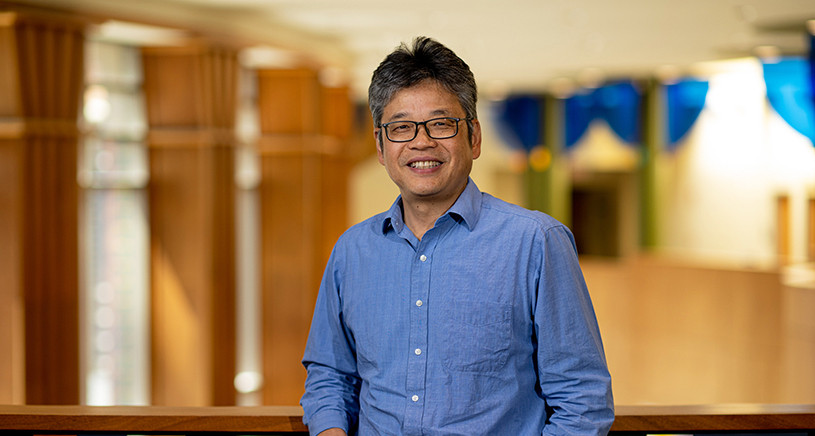
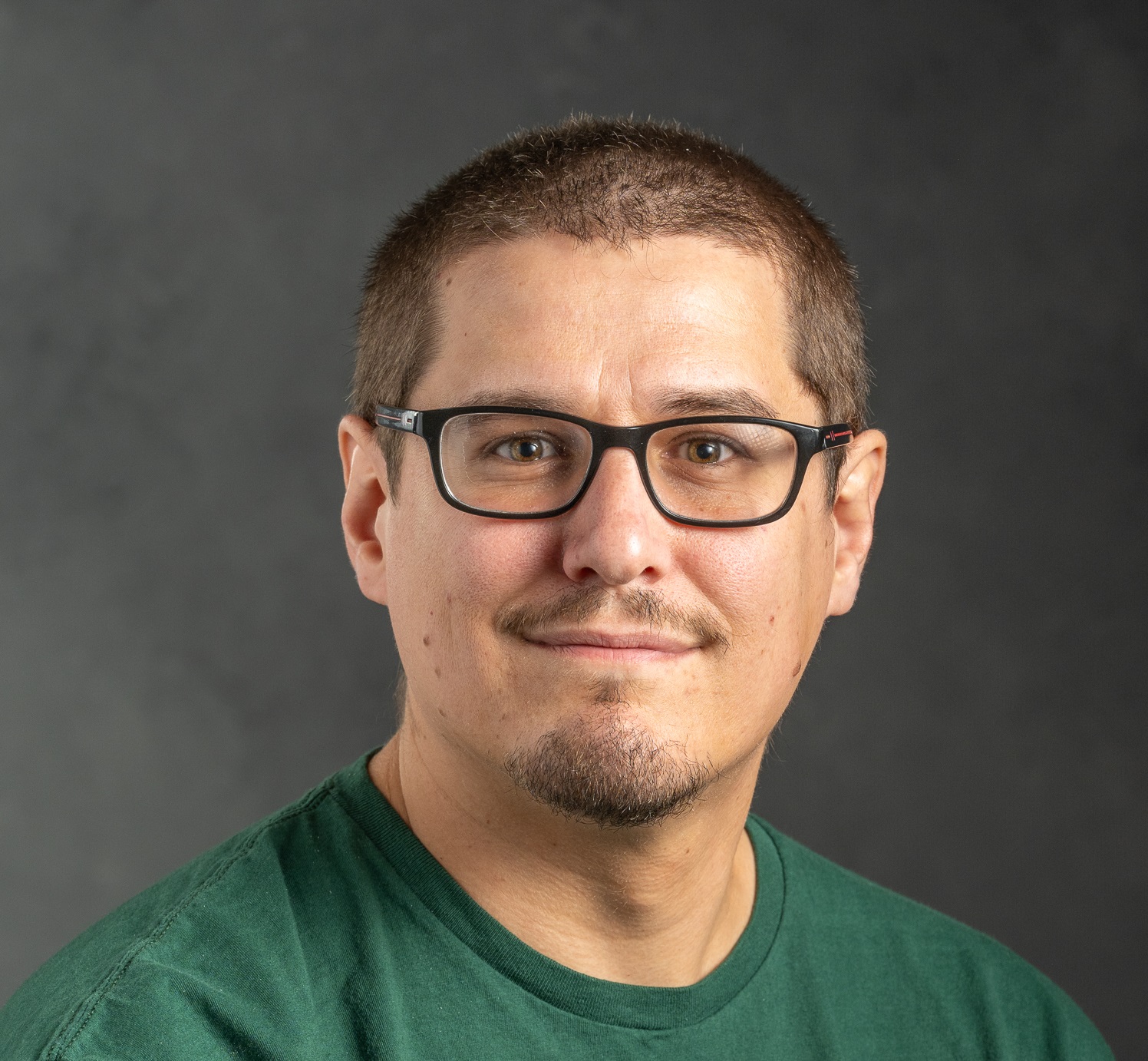
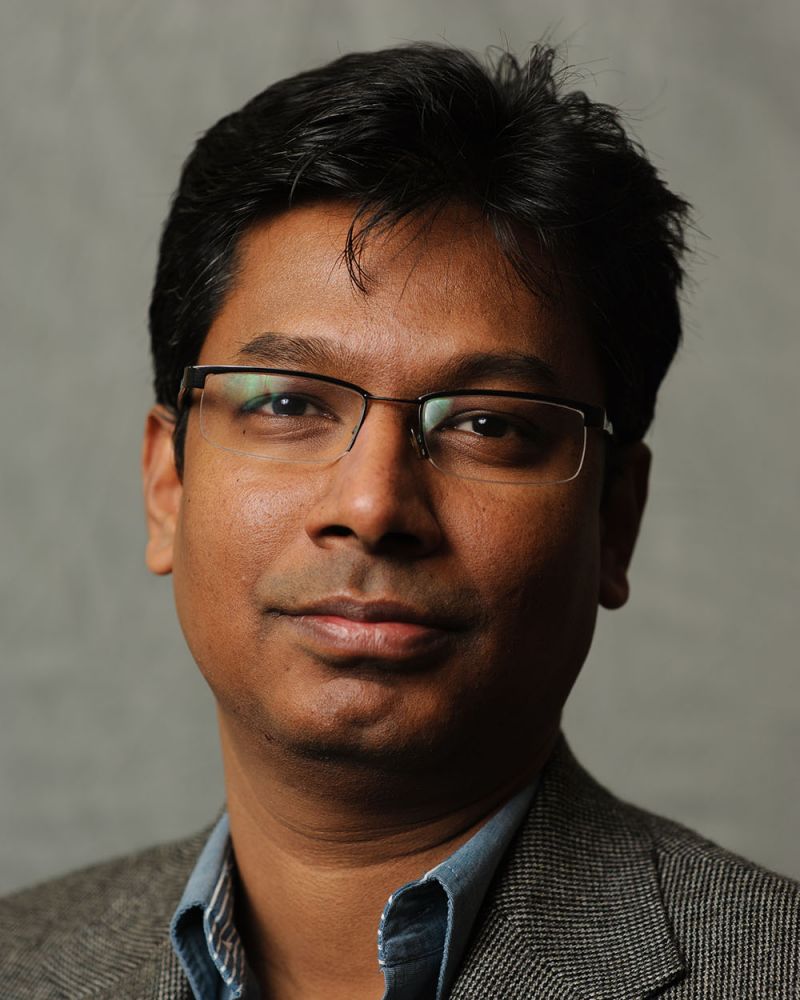
Assoc. Prof. Dr. Ayhan Gün is an Associate Professor in the Department of Electrical and Electronics Engineering at Kütahya Dumlupınar University's Faculty of Engineering. With a career spanning over two decades, he has held various academic positions including Research Assistant, Assistant Professor, and currently Associate Professor since 2024. His extensive administrative experience includes serving as Head of the Control and Command Systems Department (2007-2021) and various leadership roles in university-industry collaboration initiatives. Dr. Gün completed his Bachelor's degree at Near East University (1991-1996), Master's at Dumlupınar University (1998-2001), and PhD at Eskişehir Osmangazi University (2001-2007). His research focuses on control systems, mathematical modeling, artificial neural networks, robotics, SCADA, PLC programming, electromechanical systems, nonlinear control, fuzzy logic, optimization techniques, automation, biomechanics, and mechatronics. His recent publications demonstrate a consistent research trajectory in control engineering, with particular emphasis on optimization algorithms applied to quadrotor control, inverted pendulum systems, and electrical motor design. His work bridges theoretical control concepts with practical implementations in robotics and power systems. A significant portion of his research involves applying swarm intelligence and evolutionary algorithms to solve complex control problems. Bilim, Sanayi ve Teknoloji Bakanlığı Kurumsal Kapasitenin Arttırılması (2016) BİLİM SANAYİ VE TEKNOLOJİ BAKANLIĞI Çift Beslemeli İndüksiyon Generatörü Tasarımı ve İmalatı (2016) Dr. Gün has supervised multiple graduate students and managed numerous research projects, including the current 'Robotic Arm Design and Implementation for Patients with Hemiparetic Arms' project. His external roles include serving as an expert witness for judicial institutions, project referee for TÜBİTAK, and publication reviewer for IEEE Transactions. He has also contributed to regional development through his work with Kütahya Governorship's Planning and Development Board.
Tayfun Günel is a Professor in the Department of Electronics and Communication Engineering at Istanbul Technical University (ITU) , Faculty of Electrical and Electronics Engineering. He holds a PhD (1993), MSc (1988), and BSc (1986), all from ITU. His research spans microwave circuits, radar systems, antennas, and optimization using genetic algorithms and soft computing. His research interests include Microwave Circuits , Radar and Antennas , Optimization , and Genetic Algorithms . His work focuses on impedance matching, microstrip antennas, noise modeling, and metamaterial-based microwave components. He has taught courses such as Electromagnetic Fields, Radar Systems, and Satellite Communication Systems. The recent publications reflect a strong trend in microwave circuit design , antenna miniaturization , and the application of evolutionary algorithms (genetic algorithms, PSO) and machine learning (neural networks, SVR) in electromagnetic design and optimization. There is a consistent focus on practical microwave components like transmission lines, patches, and amplifiers, often using nanomaterials (e.g., carbon nanotubes) and metamaterials . His work bridges theoretical modeling with computational optimization for real-world RF and radar applications. Email: gunelmur@itu.edu.tr Professor Günel has supervised 2 completed PhD theses, 2 ongoing PhD theses, 23 completed master's theses, and 1 ongoing master's thesis, demonstrating a significant contribution to student mentoring. There are no specific grants or funding sources mentioned in the provided text. He is affiliated with research in microwave systems and antenna design , likely operating within the broader research ecosystem of the Electronics and Communication Engineering Department at ITU, which includes labs such as the Microwave Systems and Antennas Laboratory and the Radar and Microwave Technologies Research Laboratory.
Giovanni Pantuso is an Associate Professor at the Department of Mathematical Sciences, University of Copenhagen, specializing in stochastic programming and optimization under uncertainty . His work bridges mathematical methods with practical applications in transportation, logistics, and production planning. Education : PhD in Operations Analysis from the Norwegian University of Science and Technology (Feb 2014) Research Focus : Developing mathematical frameworks for decision-making under risk, with applications to maritime fleet renewal, car-sharing systems, and ride-sharing logistics. Teaching : Courses in Advanced Operations Research: Stochastic Programming, Risk Optimization, and Introduction to Numerical Analysis. His methodological contributions include novel algorithms for stochastic programming and decomposition methods, while applied work spans electric car-sharing systems, first-mile transportation challenges, and production planning under uncertainty. Current research explores dynamic fleet management and cost-service tradeoffs in shared mobility.
Dr. Yinghe Qi is a Professor in the Department of Experimental Fluid Dynamics at ETH Zürich, Switzerland. His research focuses on multiphase flows, turbulence, and free-surface dynamics, with applications in aerospace, marine engineering, and computational fluid dynamics. He has contributed extensively to understanding bubble dynamics, flow instabilities, and turbulence modulation through experimental and phenomenological studies. Research Interests: Dr. Qi’s work addresses complex phenomena in multiphase flow instabilities free-surface turbulence deformable bubble dynamics supersonic jet interactions vortex-induced fragmentation machine learning in fluid dynamics Recent Publications: His recent studies (2023–2025) explore multiscale bubble deformation, free-surface turbulence structure, and supersonic jet-plume interactions. Key themes include turbulent fragmentation, vortex-bubble coupling, and novel computational methodologies. Laboratory Affiliations: He collaborates with the Coletti Group, Jenny Group, and Supponen Group at ETH Zürich, advancing experimental and computational techniques in fluid dynamics.
Rainald Loehner is a Distinguished Professor of Fluid Dynamics at George Mason University's Center for Computational Fluid Dynamics. Since 2003, he has led the Center for Computational Fluid Dynamics at George Mason University. He is currently a Hans Fischer Senior Fellow at the Technical University of Munich's Institute for Advanced Study (TUM-IAS) for 2023, hosted by Professors Kai-Uwe Bletzinger and Roland Wüchner in the 'Adjoint-Based System Identification of Large-Scale Structures' Focus Group. Loehner received his Diplom Ingenieur (Maschinenbau) degree from the Technical University of Braunschweig, and his PhD and a DSc in civil engineering from the University College of Swansea, Wales. After teaching at Swansea for a year, he worked at the Naval Research Laboratory in Washington, DC, followed by a research professorship at George Washington University. He joined George Mason University as an associate professor and was promoted to full professor in 1995 and distinguished professor in 2004. With over 35 years of experience, Professor Loehner's research spans the complete pipeline of numerical solvers and simulation tools. His expertise includes pre-processing, grid generation, numerical methods, field solvers, parallel computing, adaptive mesh refinement, fluid-structure interaction, shape optimization, system identification, and computational crowd dynamics. His current work focuses on developing advanced field solvers for compressible and incompressible flows, acoustics, electromagnetic wave propagation, heat and mass transfer, structural mechanics, and fluid-structure interaction. Key application areas include blast mitigation, ship hydrodynamics, blood flow, contaminant transport, and pedestrian safety. Loehner's recent research output (2020-2024) shows a strong trend toward digital twin technology and adjoint-based methods for structural analysis and optimization. His publications focus on high-fidelity digital twins for detecting structural weaknesses, risk assessment in engineering systems, and optimization of sensor placement. His work bridges computational mechanics with machine learning approaches, particularly in system identification and inverse problems, demonstrating how computational methods can solve complex real-world engineering challenges. 2020: Ranked #15119 in the Stanford List of Most Influential Scientists of the World; #8 in Aerospace and Aeronautics 2010: Distinguished International Career Award, Argentine Association of Computational Mechanics 2008: Fellow, International Association for Computational Mechanics 2006: Associate Fellow, AIAA 2005: Honorary Professor, University of Wales Swansea 2005: Advisory Professor, Shanghai Jiao Tong University 2004: Distinguished Professor of Fluid Dynamics, George Mason University 1999: Computational Mechanics Achievements Award, Japan Society of Mechanical Engineering 1993: Doctor of Science in Civil Engineering, University College of Swansea 1979-1983: Studienstiftung des Deutschen Volkes (Top 1% of German Students) Professor Loehner has mentored numerous students through his work at George Mason University and has supervised research in computational fluid dynamics, structural mechanics, and related fields. His research has been supported by various grants from government agencies and industry partners, enabling the development of advanced simulation tools applied in aerodynamics, hydrodynamics, shock-structure interaction, and medical applications. His codes and methods have been widely adopted in industry and academia for applications ranging from aircraft and ship design to medical simulations and urban pathogen transmission modeling. Loehner leads the Center for Computational Fluid Dynamics at George Mason University, which focuses on developing cutting-edge computational methods for fluid dynamics and related multiphysics problems. The center works on strategic application areas including blast mitigation, ship hydrodynamics, blood flow simulation, and pedestrian movement modeling. As a TUM-IAS Fellow, he collaborates with the Chair of Computational Modeling and Simulation at TUM on adjoint-based system identification of large-scale structures, bringing together expertise in computational mechanics and digital twin technology to address complex engineering challenges.
Michael Molloy is a Professor in the Department of Computer Science at the University of Toronto, with a cross-appointment to the Department of Computer and Mathematical Sciences at the University of Toronto Scarborough (UTSC). He teaches courses in Discrete Mathematics and the Probabilistic Method, including CSC/MAT A67 and CSC2427/MAT1500 . Research Focus: Graph Theory, Probabilistic Methods, Random Graphs, Constraint Satisfaction Problems, and Markov Chain analysis. His work includes foundational contributions to graph coloring, such as adaptable/conflict coloring and correspondence coloring, and exploring phase transitions in random graphs. He has supervised numerous graduate students, including Lora Hrisch, Jurgen Aliaj, and Hamed Hatami, advancing combinatorial and algorithmic research. Recent publications analyze random graph processes, the freezing threshold for k-colorings, and the resolution complexity of constraint satisfaction problems. These studies intersect theoretical computer science, combinatorics, and probabilistic modeling, often revealing deep structural insights through rigorous mathematical proofs.
Tarmo Lipping is a Professor in the Department of Computer Science and Engineering at the Faculty of Information Technology and Electrical Engineering, University of Oulu. His work bridges computing sciences with biomedical engineering, environmental modelling, and data-driven societal applications. Doctor of Science (Technology), Information Technology – Awarded 14 Feb 2001 Master of Science (Technology), Information Technology – Awarded 10 Sept 1993 His research focuses on electroencephalography (EEG) , mental workload assessment , depth of anesthesia monitoring , and machine learning applications in healthcare and human-computer interaction. He also contributes to environmental informatics , particularly in land uplift modelling and radionuclide transport , aligning with UN Sustainable Development Goals. Recent publications highlight trends in transformer networks for EEG analysis , wearable HCI systems , data-driven food safety , and participatory municipal governance . His work integrates deep learning, signal processing, and real-world deployment. Scientific awards include: CIMO opettajavaihto (2017) Lipping has supervised numerous master’s students and served as an examiner in diverse topics including data vault modelling , telecom revenue estimation , and EEG hyperscanning . He has evaluated funding applications, acted as a journal reviewer (65 times), and contributed to editorial work. His activities reflect strong engagement in academic service and interdisciplinary research mentorship. He has contributed datasets on Fennoscandian land uplift , lake isolation , and archaeological shorelines to PANGAEA, supporting open science in geosciences and environmental history.
Burak Kurkcu is an Assistant Professor in the Department of Electrical and Computer Engineering at Santa Clara University's School of Engineering. He previously served as an Assistant Professor at Hacettepe University and as a Senior Control System Design Engineer at Aselsan Inc. Education: Ph.D., TOBB University of Economics and Technology (2019) M.S., TOBB University of Economics and Technology (2015) B.S., Istanbul Technical University (2010) Research Interests: Dr. Kurkcu specializes in robust control systems, soft robotics, switched neural networks, and autonomous systems. His work focuses on disturbance estimation, simultaneous learning algorithms, and control of nonlinear systems. Recent Publication Trends: His research includes soft pneumatic actuator modeling, disturbance observer-based control methods, and evolutionary optimization for state-space models. Key themes involve soft robotics, autonomous control, and computational intelligence applications. Scientific Awards: IEEE Turkey Ph.D. Thesis Award (2020) Editorial Roles: Associate Editor for TIMC, Measurement and Control , and Turkish Journal of Electrical Engineering and Computer Science . Principal Investigator for defense-related control system projects.
Prof. Dr. Nina Zschocke is Professor of Art History with a focus on 'Digital Aesthetics' at the Karlsruhe University of Arts and Design (HfG Karlsruhe) since April 2024. Previously, she served as senior research associate and lecturer at the Department of Architecture at ETH Zurich until 2023, and as a research associate at the Institute of Art History at the University of Zurich from 2005. She maintains strong connections with the ZKM | Center for Art and Media in Karlsruhe through collaborative projects and lecture series. Her educational background includes studies in art history, ethnology, and classical archaeology at the University of Cologne, where she earned her doctorate in 2004 with a dissertation on 'irritation' in art reception. She furthered her academic work as a DFG visiting scholar at University College London and Columbia University in New York. Zschocke's research centers on the intersection of art history, digital aesthetics, and materiality, with particular emphasis on how computational processes reshape artistic production and reception. Her work explores the material dimensions of digital media, algorithmic authority, and unconventional computing paradigms. She investigates how traditional art historical frameworks can be adapted to address contemporary digital practices and the physical manifestations of computational processes in artistic contexts. Her publications and symposia reveal consistent engagement with digital materiality, examining how digital processes manifest in physical form and how traditional art historical methods apply to contemporary computational practices. Recent work focuses on 'unconventional computing' - exploring alternative physical substrates for computation beyond standard silicon-based systems, and questioning the dominant paradigms of digital technology. Zschocke has organized numerous significant academic events including the 'Conversations on Art and Media' lecture series (2025), 'Dirty Computers' seminar week (2024), 'Digital Matters Symposium' (2024), and the long-running 'Don18 - Conversations on Art and Architecture' (2006-2022). These events demonstrate her commitment to creating interdisciplinary dialogue platforms that bridge art, architecture, media theory, and computational practices. Her academic leadership extends to doctoral program development, having co-designed the SNSF doctoral program 'ProDoc Art&Science' (2008-2014) and the 'Doctoral Program in the History and Theory of Architecture' at ETH Zurich (2012-2015). She has taught at multiple institutions including the University of Fribourg, Bremen University of the Arts, and Bern University of the Arts, establishing herself as a significant figure in European art and media theory education.
Peter X. K. Song is a Professor in the Department of Biostatistics at the University of Michigan School of Public Health. With expertise spanning statistical methodology development and interdisciplinary applications, Dr. Song maintains active collaborations across Nutritional Sciences, Environmental Health Sciences, Chronic Disease research, and Nephrology. His work bridges theoretical statistics with practical healthcare solutions, focusing on innovative approaches to complex data challenges in public health and medicine. Based at the M4140 SPH II building in Ann Arbor, he leads the Song Lab and contributes significantly to the academic community through teaching, research mentorship, and scholarly publications. PhD, University of British Columbia, Vancouver, 1996 BS, Jilin University, Changchun, 1985 Dr. Song's research focuses on the statistical foundation of big data analytics, with particular emphasis on data integration, distributed inference, high-dimensional data analysis, longitudinal data analysis, mediation analysis, and spatiotemporal modeling. His methodological innovations address critical challenges in smart health applications, including organ exchange programs, children's health, chronic disease management, environmental health assessment, and nutritional sciences. His approach combines statistical theory, integer optimization, and algorithm development to create practical tools that help researchers understand complex relationships between environmental exposures and health outcomes. Dr. Song's publication record demonstrates a consistent trajectory of methodological innovation applied to pressing health challenges. His recent work shows increasing focus on sleep classification using AI techniques, personalized treatment effect analysis, distributed statistical methods for high-dimensional data, and epigenetic applications in adolescent health. The interdisciplinary nature of his research is evident in publications spanning biostatistics journals, computer science venues, and domain-specific medical publications. His work increasingly addresses the challenges of integrating diverse data sources while maintaining statistical rigor in the era of big data. IMS Fellow ASA Fellow Elected Member of the International Statistical Institute 2017 ENAR John Van Ryzin Award Dr. Song has mentored an impressive 22 PhD students and 6 postdoctoral trainees throughout his career, with many now holding faculty positions at prestigious institutions or working as data scientists in leading technology companies. His lab, the Song Lab, currently supports two postdoctoral research fellows and eight doctoral students working on cutting-edge statistical methodology development. His collaborative research extends across numerous grants that support interdisciplinary projects in kidney paired donation programs, environmental health studies, nutritional sciences, and chronic disease research, demonstrating his commitment to translating statistical innovation into practical health solutions. The Song Lab serves as a hub for interdisciplinary statistical research at the University of Michigan, bringing together experts from statistics, operations research, and machine learning to address complex challenges in medical and public health sciences. Current lab members include eight doctoral students and three postdoctoral fellows working on projects related to optimal organ matching strategies, causal mediation pathways of omics biomarkers, and statistical methods for big data integration. The lab maintains strong connections with clinical researchers across nephrology, pediatrics, environmental health sciences, and nutritional sciences, ensuring that methodological developments remain grounded in real-world applications.
Christian A Parkinson is an Assistant Professor at Michigan State University , affiliated with the Departments of Mathematics and Computational Mathematics, Science and Engineering. His research spans mathematical modeling, computational methods, and interdisciplinary applications in epidemiology, control theory, and differential geometry. Research Interests : Mathematical epidemiology, path planning algorithms, reaction-diffusion systems, stochastic modeling, differential geometry, and network science. Email : chparkin@msu.edu His recent publications focus on: Hamilton-Jacobi equations for optimal path planning in multi-agent systems Reaction-diffusion models for epidemics with human behavior Differential geometry approaches to hyperbolic surfaces Network models for disease-opinion coevolution Environmental crime modeling using level sets He teaches MTH 890: Readings in Mathematics , emphasizing advanced computational and theoretical frameworks.
Sithik Aliyar is a Postdoctoral Researcher at the Department of Wind and Energy Systems, Flows Wind Turbine Design Division, at the Technical University of Denmark (DTU). He specializes in computational fluid dynamics (CFD) and offshore wind turbine dynamics, focusing on wave interactions with floating structures. Institution: Technical University of Denmark (DTU) Department: Flows Wind Turbine Design Division, Wind and Energy Systems Research Focus: Floating wind turbines, extreme sea states, harmonic separation, and numerical algorithms His work combines advanced CFD simulations with experimental validation to analyze floating wind turbine stability under directional waves. Recent contributions include the FloatStepper algorithm for robust wave response modeling and studies on SPAR platform upending risks. Publications highlight collaborations with experts like H. Bredmose and J. Roenby, with research outputs spanning Renewable Energy , Royal Society Open Science , and international conferences on ocean engineering. Key metrics include open-access citations, computational fluid dynamics, and floating wind turbine dynamics.
Dr. Sameer Mulani is an Associate Professor, Associate Department Head, and Director of Graduate Programs in the Department of Aerospace Engineering and Mechanics at the University of Alabama's College of Engineering. He leads the Stochastic Mechanics and Multi-Disciplinary Optimization Laboratory (SMO Lab) and is an integral part of the Remote Sensing Center and Alabama Materials Institute. Dr. Mulani's research spans uncertainty quantification, random vibrations, multi-disciplinary optimization, and composite structures' multi-scale analysis and design. His work combines computational methods with machine learning to develop innovative solutions for aerospace engineering challenges. He has made significant contributions to self-healing composite materials, uncertainty quantification techniques, and optimization of composite structures. His research group has published extensively on topics including polynomial chaos expansion for uncertainty quantification, self-healing composites, stochastic buckling analysis, and machine learning applications in structural mechanics. The publications demonstrate a strong trend toward integrating probabilistic methods with traditional engineering analysis to improve reliability and safety of aerospace structures. AIAA Associate Fellow, Class of 2025 2025 Department of the Air Force Summer Faculty Fellowship Program 2024 Department of the Air Force Summer Faculty Fellowship Program MSC Software Contest Winner (2011) Night on the Town: General Electric Award (2007) DAAD Fellowship (1999-2000) Dr. Mulani has advised numerous graduate students who have gone on to successful careers at institutions including Los Alamos National Laboratory, Cirrus Aircraft, L3Harris, and Lockheed-Martin. His lab collaborates with various research centers including the Remote Sensing Center where they work on antenna design, manufacturing, and integration for aircraft systems. The SMO Lab utilizes advanced software including MSC NASTRAN/PATRAN, ANSYS Mechanical/FLUENT, ABAQUS, SOLIDWORKS, and CATIA for their simulations and analyses.
Professor Spiridon Ivanov Penev is a leading academic in the School of Mathematics and Statistics at the University of New South Wales. He holds a PhD in Mathematical Statistics from Humboldt University (Berlin, Germany) and has been affiliated with UNSW since 1992, progressing from Lecturer to Professor in 2019. His research spans wavelet methods, saddlepoint approximations, structural equation models, and stochastic risk analysis. Education: PhD in Mathematical Statistics, Humboldt University Current Affiliation: Department of Statistics, School of Mathematics and Statistics, UNSW His work focuses on advanced nonparametric techniques, including wavelet-based signal recovery with adaptive sampling rates, and robust inference in structural equation models. He has developed bias-corrected reliability measures for psychometric applications and contributed to stochastic optimization problems in finance and engineering. Recent publications highlight his expertise in semiparametric regression, robust portfolio optimization, and marine engineering applications using machine learning. Key trends include the use of Bregman divergence for shape-preserving estimation and Markov chain methods for climate model weighting. Scientific Awards: DAAD award Elected member of the International Statistical Institute (ISI) He has supervised numerous grants as Chief Investigator, including Australian Research Council projects and industry collaborations. Administrative roles include membership in the School of Mathematics and Statistics Executive Committee. Teaching duties span advanced statistical inference, multivariate analysis, and data science applications.
Manolis Chatzis is an Associate Professor in the Department of Engineering Science at the University of Oxford and a Tutorial Fellow at Hertford College. His research focuses on dynamic systems and earthquake engineering, particularly modeling risks for unanchored structural and non-structural components subjected to ground motions. University of Oxford - Department of Engineering Science Hertford College - Tutorial Fellow His work on system identification and observability of nonlinear systems aims to optimize sensor setups for infrastructure reliability. Recent publications address discontinuous Kalman filters for non-smooth dynamics, energy loss in rocking bodies, and experimental validation of seismic response models. Applications span seismically isolated buildings, museum artifacts, hospital equipment, and supercomputers. Key research trends include: Nonlinear dynamics of rocking/sliding systems Bayesian identification methods Energy dissipation mechanisms 3D motion tracking algorithms Sensor fusion and data-driven modeling His publications since 2010 demonstrate interdisciplinary collaboration across civil, mechanical, and computational engineering domains.