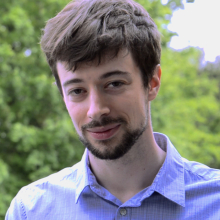
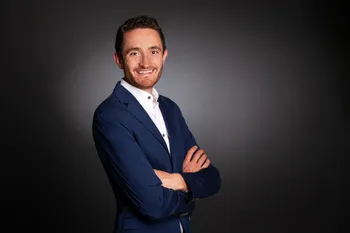
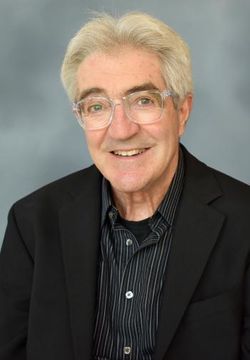
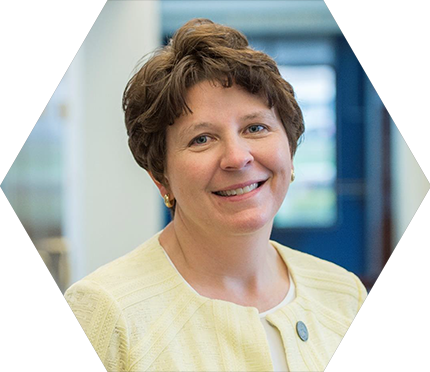
Mark D. Haiman is a Professor at the University of California, Berkeley, Department of Mathematics, with research interests spanning algebra, combinatorics, and algebraic geometry. His work connects symmetric function theory with geometric objects like Hilbert schemes and algebraic structures such as Cherednik algebras and Hecke algebras. Appointed: 2001 Contact: mhaiman@math.berkeley.edu Teaching: Math 256B—Algebraic Geometry (Spring 2025), Math 249—Algebraic Combinatorics (Spring 2024), and others in calculus and Lie groups. Research Interests : Haiman's research focuses on Macdonald polynomials, LLT polynomials, Hilbert schemes of points in the plane, and their combinatorial and geometric implications. His work includes resolving the Macdonald positivity conjecture and the n! conjecture through algebraic geometry. Publications : Haiman has contributed to foundational papers in combinatorial and algebraic structures, including generalizations of the shuffle theorem and positivity results for LLT polynomials. His articles often bridge representation theory, symmetric functions, and geometric methods. Students : He has supervised numerous PhD students, including Magda Hlavacek (2023), Foster Tom (2022), Jeremy Meza (2021), Maryam Farahmand-Asil (2018), Maria Monks Gillespie (2016), and others working on combinatorial algebraic geometry and related fields.
Brent Pym is an Associate Professor in the Department of Mathematics and Statistics at McGill University. His research focuses on the intersection of differential, algebraic, and noncommutative geometry, with a particular emphasis on Poisson varieties and deformation quantization. He has held academic positions at the University of Edinburgh, University of Oxford, and was a Postdoctoral Fellow at McGill and the University of Toronto. Education: BScE in Engineering Physics, Queen's University (2007) MSc in Mathematics, University of Toronto (2008) PhD in Mathematics, University of Toronto (2013) Research Interests: Pym studies Poisson structures, their quantizations, and connections to mathematical physics. His work involves classical/derived algebraic geometry, D-modules, moduli spaces, the Stokes phenomenon, and multiple zeta values. Recent projects include holonomic Poisson manifolds, log symplectic structures, and software for symbolic calculations in deformation quantization. Awards: Lichnerowicz Prize (2018) Advising & Grants: Pym has openings for graduate students (admission 2026) and undergraduate projects (2026–27). He develops the Star Products software package for symbolic calculations in Poisson brackets and quantization. His work is supported by research collaborations and institutional grants. Labs & Teams: Pym collaborates with researchers in geometry and mathematical physics, contributing to projects in noncommutative algebra and geometric quantization. His software tools enhance symbolic computation in these fields.
Amadeus Gebauer is a Researcher at the Chair of Computational Mechanics within the Institute for Computational Mechanics at the Technical University of Munich (TUM), serving as a Research Associate since 2019. His work specializes in computational biomechanics with emphasis on cardiac mechanics modeling, growth and remodeling processes, and multi-physics simulation frameworks. Education: Master of Science (M.Sc.) in Mechanical Engineering, Technical University of Munich, 2019 Research Interests: Gebauer's research centers on cardiac mechanics modeling, including growth and remodeling of cardiac tissue, cardiac active tissue mechanics, and medical image processing. He develops advanced computational methods for parallel and high performance computing, particularly through the 4C multi-physics simulation framework. His work integrates constrained mixture models to simulate organ-scale biological processes, bridging computational mechanics with clinical cardiology applications and focusing on mechanobiological stability in cardiac systems. Publication Trends: Gebauer's publications (2018-2025) demonstrate consistent innovation in computational cardiology, primarily using constrained mixture models to address cardiac growth and remodeling. His recent work introduces adaptive integration techniques for history variables and homogenized modeling approaches, while expanding into software benchmarking for cardiac elastodynamics and gastric motility simulations. These contributions highlight his expertise in developing robust numerical methods for multi-physics biomedical problems, with increasing focus on patient-specific applications and high-performance computing solutions. Teaching and Advising: Gebauer teaches core computational mechanics courses including Finite Elemente and Numerische Festkörpermechanik across multiple semesters. He has supervised diverse student projects ranging from term papers to Master's theses, with notable collaborations including Maximilian Grill's shoulder biomechanics research (2020) and Janina Datz's artery geometry framework development (2021). His advising consistently focuses on cardiac mechanics, computational modeling, and medical device simulation. Research Environment: As part of Professor Wolfgang A. Wall's Institute for Computational Mechanics (LNM) at TUM, Gebauer contributes to a leading research group in computational solid/fluid mechanics. The LNM develops the 4C simulation framework for complex engineering and biomedical challenges, with current emphasis on cardiac growth modeling, multi-physics integration, and high-performance computing applications in personalized medicine.
Farhad Rachidi-Haeri is a Titular Professor and Head of the Electromagnetic Compatibility (EMC) Group at EPFL. His expertise spans EMC research, lightning electromagnetics, time reversal techniques, and fault location in power systems. He has led the EMC Group since the 1980s, with funding from the Swiss National Science Foundation, European Union, and private sector collaborations. His work involves international partnerships with institutions like the University of Toronto and KTH. Education: PhD in Electrical Engineering from EPFL (1991), M.S. from EPFL (1986). Roles: President of Swiss National Committee of URSI (2012–2020), Editor-in-Chief of IEEE Transactions on EMC (2013–2015), and member of the Academy of Sciences of Bologna Institute (2019). Research Focus: Lightning interaction with infrastructure, electromagnetic field modeling, time reversal applications for fault detection, and high-frequency transient analysis. His work bridges theoretical physics and engineering, addressing challenges in power systems, lightning protection, and aerospace. Awards: IEEE EMC Technical Achievement Award (2005), Berger Award (2016), and Distinguished Honorary Professor at Tsinghua University (2024). Over 400 peer-reviewed papers and 500 conference contributions reflect his prolific research output. Labs/Teams: Leads the EMC Laboratory at EPFL, focusing on experimental and numerical studies of electromagnetic phenomena. Collaborates with global networks on projects like Laser Lightning Control and structural lightning protection for wind turbines.
Alfonso Giuseppe Tortorella is a Tenure Track Assistant Professor in the Department of Mathematics at the University of Salerno since October 31, 2022. Previously, he held research positions at CMUC (Center of Mathematics of the University of Coimbra), CMUP (Center of Mathematics of the University of Porto), and KU Leuven. He received his PhD in Mathematics from the University of Florence in 2017 under the supervision of Luca Vitagliano and Paolo de Bartolomeis. His educational background includes an MSc in Mathematics from the University of Salerno (2013) with honors, where he completed his thesis titled "Geometric methods of Hamiltonian mechanics" under Luca Vitagliano's guidance. Tortorella's research focuses on Poisson geometry in the broadest sense, with particular emphasis on deformation theory of coisotropic submanifolds in Jacobi manifolds, multiplicative structures on Lie groupoids, and VB-groupoids. His work explores the intersection of differential geometry, mathematical physics, and algebraic structures, developing sophisticated theoretical frameworks to understand geometric structures and their deformations. He has made significant contributions to understanding symplectic foliations, contact dual pairs, and the algebraic structures underlying Jacobi geometry. His most recent publications (2023-2025) demonstrate a consistent focus on deformation problems in Poisson and related geometries, with particular attention to coisotropic submanifolds in contact geometry, symplectic foliations, and the application of L∞ algebras to geometric deformation problems. His work shows increasing sophistication in handling higher structures and their applications to geometric problems. Abilitazione Scientifica Nazionale for Professore Associato in Geometria e Algebra (01/A2 - II Fascia) (May 24, 2021 - May 24, 2030) Qualification aux fonctions de Maître de conférences, section 25 - Mathématiques (December 31, 2018 - December 31, 2022) PhD internship at IM PAN awarded by WCMCS (December 2014) PhD scholarship from INdAM (October 2013) Scholarship from SMI (June 2013) Tortorella has advised multiple PhD, MSc, and BSc students, including Vanessa Oliveira (PhD, University of Porto), Antonio Maglio (PhD, University of Salerno), and Rodrigo de Oliveira Baptista (MSc, University of Porto). He has served on examination committees and as a reviewer for numerous prestigious mathematics journals. His collaborative work extends across international boundaries, with research stays at institutions in Italy, Portugal, Belgium, Poland, France, Germany, and Brazil. He is an active organizer of conferences and workshops, particularly in the field of Poisson geometry, serving on the organizing committees for events like Poisson 2024 and the INdAM Intensive Period on Poisson Geometry & Mathematical Physics.
Morris P. Fiorina is the Wendt Family Professor of Political Science at Stanford University and a Senior Fellow at the Hoover Institution. He joined Stanford in 1998 after teaching at Caltech and Harvard. His academic credentials include a B.A. from Allegheny College (1968) and a Ph.D. from the University of Rochester (1972), both in Political Science. Fiorina's research focuses on American politics, emphasizing representation, public opinion, elections, and partisan dynamics. His influential works include Retrospective Voting in American National Elections , Culture War? The Myth of a Polarized America , and Unstable Majorities . He has authored or edited thirteen books and numerous articles, challenging conventional views on polarization, electoral behavior, and political institutions. He has held editorial roles across a dozen political science journals and chaired the American National Election Studies Board (1986–1990). A distinguished scholar, he is an elected member of the American Academy of Arts and Sciences, the American Academy of Political and Social Sciences, and the National Academy of Sciences. He received Career Achievement Awards from the American Political Science Association's sections on Elections, Public Opinion, and Voting Behavior, as well as Political Organizations and Parties. Key Contributions: Pioneered studies on retrospective voting, party sorting, and the 'myth of polarization.' Public Engagement: Analyzes contemporary issues like divided government, electoral reform, and the role of third parties. Fiorina’s work bridges academia and public discourse, addressing critical challenges in American democracy. His current research continues to explore polarization, representation, and governance in the modern political landscape.
Dr. Carolyn Conner Seepersad is a Woodruff Professor in the George W. Woodruff School of Mechanical Engineering at Georgia Institute of Technology. She leads the Digital Design and Manufacturing research group and previously founded the Center for Additive Manufacturing and Design Innovation at The University of Texas at Austin. Her research focuses on additive manufacturing, materials design, and process innovation. She holds editorial roles, including Editor-in-Chief of the ASME Journal of Mechanical Design, and has received numerous awards for research and teaching. Education: PhD, Mechanical Engineering, Georgia Tech, 2004 MS, Mechanical Engineering, Georgia Tech, 2001 BA, Philosophy, Politics, and Economics, Oxford University, 1998 BS, Mechanical Engineering, West Virginia University, 1996 Her research interests span design for additive manufacturing, simulation-based materials and structures, and metamaterials. She emphasizes manufacturing-aware design and sustainability. Key contributions include lattice structure optimization, negative stiffness composites, and process-aware manufacturing techniques. Her publications reflect advancements in additive manufacturing processes, materials characterization, and design methodologies. Awards include the ASME Design Automation Award and recognition as a University of Texas System Academy of Distinguished Teachers. Seepersad has advised on grants such as the LEAP-HI GOALI project and contributed to initiatives like the Solid Freeform Fabrication Symposium. Her work bridges academia and industry, emphasizing practical applications and innovation. Labs/Teams: Leads the Digital Design and Manufacturing group at Georgia Tech, previously directed the UT Austin Additive Manufacturing Center.
Dr. Hongye Zhang serves as a Lecturer in Superconducting and Cryogenic Electric Machines at the School of Engineering, University of Edinburgh, while maintaining a Visiting Research Fellow position at the University of Manchester. He actively contributes to the European Society for Applied Superconductivity (ESAS) as a Board Member and chairs the international HTS 2026 workshop. His educational foundation includes: BSc and MSc in Electrical Engineering from Xi’an Jiaotong University (2015, 2018) Diplôme d’ingénieur (MEng) from École Centrale de Lyon (2018) PhD in Applied Superconductivity from the University of Edinburgh (2021) Dr. Zhang’s research centers on decarbonizing transport through superconducting/cryogenic electric machines for hydrogen-powered aircraft, integrating artificial intelligence with superconductor technology and cryogenic techniques. His work targets net zero emissions by developing high-power-density propulsion systems that leverage hydrogen energy and advanced numerical modeling of superconductors. Analysis of his 2022-2025 publications reveals dominant themes in superconducting machine design for wind energy and electric aviation, with significant contributions to loss mitigation, flux pump technology, and trapped field magnet applications. His research bridges fundamental superconductor characterization with practical system integration for renewable energy. Recognized with the 2021 IEEE Council on Superconductivity Graduate Study Fellowship, his professional engagements include: Early Career Editorial Board Member for Elsevier’s Superconductivity journal Technical Editor for IEEE Transactions on Applied Superconductivity Program Committee Member for SMT 2023 He leads critical research within the £54-million H2GEAR project developing hydrogen-electric aircraft propulsion, while teaching Power Engineering 2 and Electrical Machines courses. His advisory roles span doctoral supervision and industry collaboration through Energy Systems research institute. Based at the University of Edinburgh’s Faraday Building, Dr. Zhang directs a research group focused on hydrogen energy applications and superconducting machine testing, with strong ties to the H2GEAR consortium and ESAS working groups.
Prof. Nicolas Perkowski is a Professor in the Department of Mathematics at Freie Universität Berlin, specializing in Stochastic Analysis and Probability Theory. He holds roles such as Vice Spokesperson of DFG CRC/TRR 388 (since 2024) and Chair of the Master of Mathematics Examination Board. His research focuses on stochastic partial differential equations (SPDEs), rough paths, and applications in mathematical physics. Notable contributions include work on singular SPDEs, fractional processes, and the KPZ equation. Perkowski has authored/co-authored numerous publications in top journals like the Annals of Probability and Communications in Mathematical Physics, and he serves as an associate editor for several journals. His institutional responsibilities include leadership in research collaborations and academic governance. Education: PhD and diploma in stochastic population models (details not explicitly provided in text). Research Interests: Stochastic Analysis, Probability Theory, SPDEs, Mathematical Physics, Nonlinear Filtering. Recent Articles: Focus on fractional processes, SPDEs with singular terminal conditions, and stochastic sewing lemmas. His work bridges theoretical probability with applications in physics and engineering, with a strong emphasis on rigorous mathematical frameworks for complex stochastic systems.
Olof Runborg is a Professor in Numerical Analysis at the Royal Institute of Technology (KTH) in Stockholm, Sweden. He works in the Division of Numerical Analysis, Optimization and Systems Theory within the Department of Mathematics at KTH. His research focuses on developing and analyzing numerical methods for partial differential equations, particularly for wave propagation problems. His educational background includes: MSc in Electrical Engineering from KTH (1992) BSc in Economics & Business Administration from SSE (1994) PhD in Numerical Analysis/Applied Mathematics from KTH (1998) Postdoc at Paris VI University (1999) Postdoc at Princeton University's Program in Applied and Computational Mathematics (2000-2001) Became Docent at NADA in 2003 Appointed Professor at KTH in 2010 Professor Runborg's research centers on the numerical treatment of partial differential equations, with special emphasis on wave propagation problems. His work spans multiple areas including high-frequency waves, multiscale phenomena, numerical homogenization, uncertainty quantification, multiresolution analysis, Gaussian beams, and mesh generation. A recurring theme in his research is developing methods to solve computationally expensive problems more efficiently while maintaining accuracy. His approach often involves coupling different numerical methods or reformulating equations to create more efficient computational approaches. His research has applications across physics and engineering domains where wave phenomena are important. An analysis of his recent publications (2015-2025) shows continued focus on high-frequency wave propagation with expanding applications to areas like the Landau-Lifshitz equation for magnetic materials and elastic wave propagation. His work bridges theoretical numerical analysis with practical computational techniques, often developing novel methods like the WaveHoltz iteration for solving the Helmholtz equation. The publications demonstrate increasing attention to uncertainty quantification and multiscale methods while maintaining strong theoretical foundations in error analysis. Professor Runborg teaches several courses at KTH including Numerical Methods (basic course), Applied Numerical Methods, Numerical Algorithms for Data-Intensive Science, and Selected Topics in Numerical Analysis II. He serves as examiner for degree projects in Scientific Computing. His teaching reflects his research expertise in numerical methods and computational mathematics, providing students with both theoretical foundations and practical implementation skills. Beyond his core research, Professor Runborg has engaged in interesting side projects, such as his analysis of 'Numbers on the Web' where he investigated the frequency of numbers 11-1000 in web content, revealing patterns related to dates, time, computer systems, and cultural phenomena. This demonstrates his broader interest in data analysis and computational approaches to understanding patterns in information.
Ali Mani is an Associate Professor of Mechanical Engineering at Stanford University and a faculty affiliate at the Institute for Computational and Mathematical Engineering. He earned his PhD in Mechanical Engineering from Stanford in 2009, following an M.S. (2004) and B.S. (2002) from Stanford and Sharif University of Technology, respectively. His research focuses on fluid mechanics, turbulence, and numerical simulations, with applications in multiphase flows, electrokinetic systems, and applied mathematics. His group develops high-fidelity simulation tools and reduced-order models to understand transport processes in turbulent and chaotic systems. Research interests include turbulence modeling, two-phase flow dynamics, and electrochemical transport. Recent work explores eddy viscosity operators, nonlocal transport phenomena, and computational methods for multiphase systems. The group's studies often bridge experimental validation and numerical analysis to improve predictive engineering models. Key contributions span electrokinetic transport in porous media, superhydrophobic surface slip effects, and phase field modeling. His lab’s work is supported by grants focusing on fluid dynamics, renewable energy systems, and advanced simulation frameworks.
Thomas Yizhao Hou is the Charles Lee Powell Professor of Applied and Computational Mathematics at the California Institute of Technology, where he has served as a faculty member since 1998 and as Executive Officer of Applied and Computational Mathematics from 2000-2006. His research spans fundamental mathematical problems with significant implications for fluid dynamics and computational science. Hou received his B.S. in Mathematics from South China University of Technology in 1982, followed by an M.S. in 1985 and Ph.D. in 1987 from UCLA under the supervision of Prof. Bjorn Engquist. His academic journey includes positions at the Courant Institute and the Institute for Advanced Study before joining Caltech. Hou's research focuses on multiscale analysis and computation, interfacial problems, stochastic PDEs and uncertainty quantification, and the Millennium Problem concerning global regularity of 3D incompressible Euler and Navier-Stokes equations. His work on adaptive data analysis has led to significant methodological innovations. His research is characterized by the integration of rigorous mathematical analysis with computational approaches to tackle problems that have resisted traditional methods. His recent publications reveal a consistent focus on singularity formation in fluid equations, particularly the Euler and Navier-Stokes equations, with increasing sophistication in analyzing potential blowup scenarios. His work spans theoretical analysis, numerical verification, and the development of innovative mathematical frameworks for multiscale problems. Member of the National Academy of Sciences (2024) William Benter Prize in Applied Mathematics (2024) SIAM Ralph E. Kleinman Prize (2023) SIAM Outstanding Paper Prize (2018) Fellow of the American Mathematical Society (2012) Fellow of the American Academy of Arts and Sciences (2011) Hou has served in significant editorial roles including Founding Editor-in-Chief of the SIAM Journal on Multiscale Modeling and Simulation and Co-Editor-in-Chief of Research in Mathematical Sciences. His professional service includes membership on the SIAM Council and leadership roles at the Institute of Mathematics and its Applications. His research has been supported by numerous grants focusing on multiscale modeling, fluid dynamics, and computational mathematics.
Roles & Affiliations: Professor of Mathematics at Cornell University, Department of Mathematics. Member of graduate programs in Mathematics, Applied Mathematics, Operations Research and Information Engineering, Theoretical & Applied Mechanics, and Computational Science & Engineering. Co-organizer of the Scientific Computing and Numerics (SCAN) Seminar and founder of the Cornell Mathematical Contest in Modeling. Education: Ph.D. in Applied Mathematics from University of California, Berkeley (2001); B.A. in Applied Mathematics (with high honors) from University of California, Berkeley (1995). Research Interests: Focuses on numerical analysis, nonlinear PDEs, control theory, and dynamical systems. Explores applications in optimal control, front propagation, anisotropy, bifurcation theory, and mathematical biology. Develops methods for invariant manifold approximation, Eikonal equations, and stochastic systems. Recent work includes studies on cancer therapy optimization, surveillance evasion, and pedestrian flow modeling. Teaching: Teaches courses like Introduction to Partial Differential Equations, Differential Games, Numerical Analysis, and Mathematical Modeling. Recent courses include Math 4280 (Spring 2025) and Math 3610 (Fall 2024). Labs/Teams: Active in interdisciplinary collaborations, including work on computational biology, robotics path planning, and mathematical contest problem-solving initiatives.
Julia Kempe is a Silver Professor of Computer Science, Mathematics, and Data Science at New York University (NYU), holding joint appointments at the Courant Institute and the Center for Data Science (CDS). She serves as Director of the CDS and is on research leave at the CSD, ENS, Paris (2023–24). Her expertise spans interdisciplinary research in quantum computing, machine learning, and data science. She holds PhDs in Mathematics (UC Berkeley, 2001) and Computer Science (École Nationale Supérieure des Télécommunications, Paris, 2001), alongside advanced degrees in theoretical physics and mathematics from prestigious institutions in France and Austria. Research Interests: Data Science, Machine Learning (theoretical foundations and applications to physics), and past contributions to quantum computing. She focuses on robustness in machine learning models, adversarial examples, and interdisciplinary applications of physics-informed AI. Awards and Honors: Knight of the National Order of Merit (France, 2010), Femme en Or de la Recherche (France, 2010), ERC Starting Grant (2007, top-ranked in Europe), and numerous academic fellowships. She is a member of Academia Europaea (2018) and a Fellow of the Asia-Pacific Artificial Intelligence Association (2022). Grants and Leadership: Principal investigator of NSF NRT grants for CDS PhD programs, co-PI on NASA TCAN grants, and leader in NYU’s Senior Leadership Team. She designed NYU’s Data Science undergraduate programs and expanded interdisciplinary collaborations in machine learning and quantum computing. Labs and Teams: Directs the CDS, collaborates with the Courant Institute, and leads research initiatives in Paris. Her work bridges theoretical computer science, physics, and applied data science, emphasizing interdisciplinary innovation.
Joachim Weickert is a Professor of Mathematics and Computer Science at Saarland University where he heads the Mathematical Image Analysis Group since 2001. He received his diploma and Ph.D. in mathematics from the University of Kaiserslautern (1991, 1996), and a habilitation degree in computer science from the University of Mannheim (2001). Prior to his current position, he worked as a research assistant at the University of Kaiserslautern, as a post-doctoral researcher at the universities of Utrecht and Copenhagen, and as an assistant professor at the University of Mannheim. His research focuses on image processing, computer vision, and scientific computing, with special emphasis on techniques based on partial differential equations, variational principles, wavelets, morphological and nonlocal methods, as well as neuroexplicit approaches. He has developed mathematical models and efficient numerical algorithms for image restoration, enhancement, segmentation, compression, optic flow computation, stereo reconstruction, shape from shading, and signal processing methods for tensor fields. These ideas have been successfully applied in industry, biomedical image analysis, and other fields. Analysis of his recent publications reveals a strong trend toward combining traditional PDE-based methods with modern deep learning approaches, particularly in the areas of image inpainting and compression. His work increasingly explores the connections between numerical algorithms for partial differential equations and neural network architectures, demonstrating how mathematical foundations can inform cutting-edge AI techniques while maintaining strong theoretical guarantees. Gottfried Wilhelm Leibniz Prize (2010), considered the most important research award in Germany ERC Advanced Grant (2017) for "Inpainting-based Compression of Visual Data" Elected member of Academia Europaea - The Academy of Europe Jan Koenderink Prize for Fundamental Contributions in Computer Vision (2014) Multiple DAGM Prizes and Best Paper Awards throughout his career AAIA Fellow (2021) and Highly Ranked Scholar (2024) distinctions Professor Weickert has supervised over 250 bachelor's and master's theses and initiated the Master Programme in Visual Computing at Saarland University, the first of its kind in Germany taught in English. He has established numerous interdisciplinary collaborations with colleagues from medicine, bioinformatics, pharmacy, physics, mechatronics, and mechanical engineering. As Principal Investigator for Visual Computing within the Multimodal Computing and Interaction Cluster of Excellence, and former dean of the Faculty of Mathematics and Computer Science (2008-2010), he has played a significant leadership role in advancing visual computing research and education. He heads the Mathematical Image Analysis Group, which has been at the forefront of developing mathematical methods for image analysis. The group maintains strong connections with both theoretical mathematics and practical applications, bridging the gap between fundamental research and real-world implementation across various domains including medical imaging, industrial inspection, and multimedia processing.