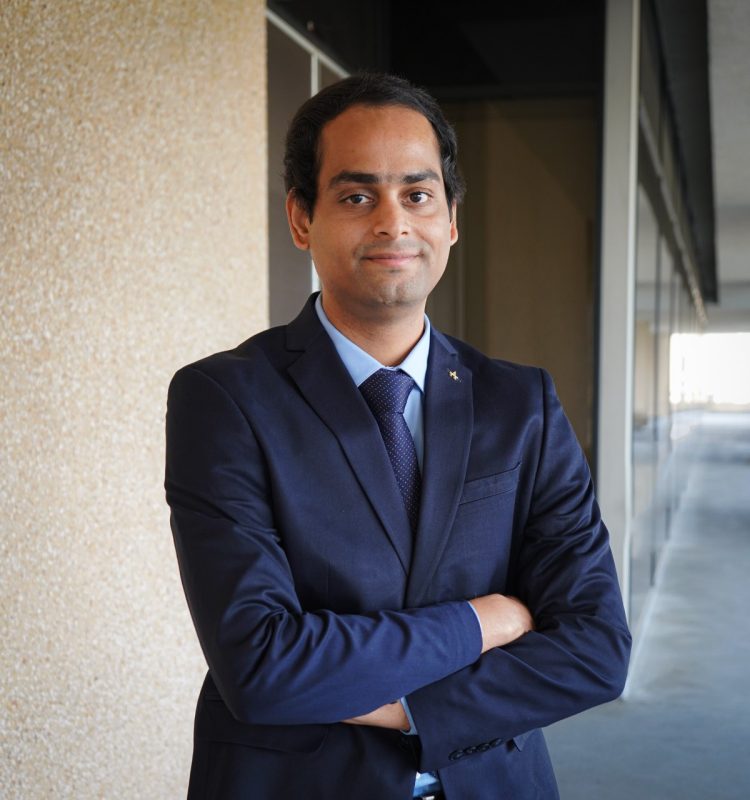
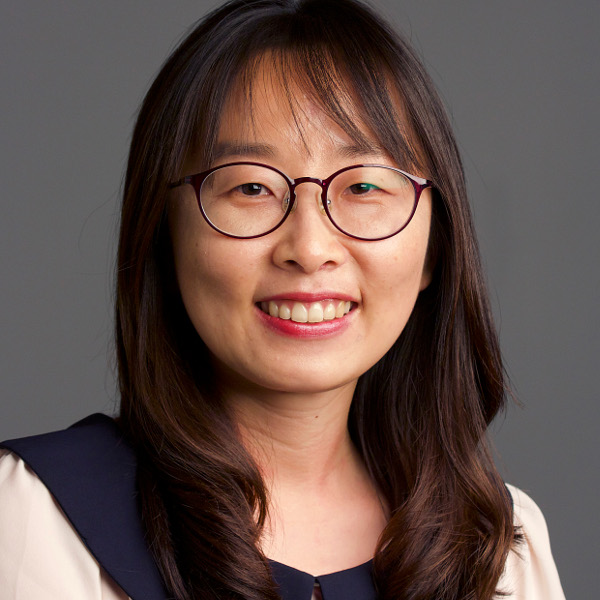
Rohit Kannan is an Assistant Professor in the Grado Department of Industrial and Systems Engineering at Virginia Tech. He holds a Ph.D. and M.S. in Chemical Engineering from MIT and a B.Tech. from IIT Madras. His research focuses on integrating machine learning with global optimization and optimization under uncertainty, emphasizing energy systems applications. Previous roles include postdoc positions at Los Alamos National Laboratory and the Wisconsin Institute for Discovery. Education: Ph.D., Chemical Engineering, Massachusetts Institute of Technology, 2018 M.S., Chemical Engineering Practice, MIT, 2014 B.Tech., Chemical Engineering, IIT Madras, 2012 Research Interests: Global optimization, optimization under uncertainty, computational optimization, energy systems, and machine learning integration. Recent Highlights: Recipient of the Excellence in Teaching Spotlight Award (2024) Lead researcher in stochastic optimization and energy systems (e.g., hybrid polygeneration systems) Developed algorithms for chance-constrained nonlinear programs and distributionally robust optimization Service & Leadership: Elected Vice-Chair of Global Optimization, INFORMS Optimization Society (2025–2026) Reviewer for top journals like Operations Research and Mathematical Programming Advisor to ISE InclusiveVT and Graduate Admissions Committee Labs & Collaborations: Directs a research group advancing optimization and machine learning for energy and engineering systems. Active in interdisciplinary projects with LANL and UW-Madison.
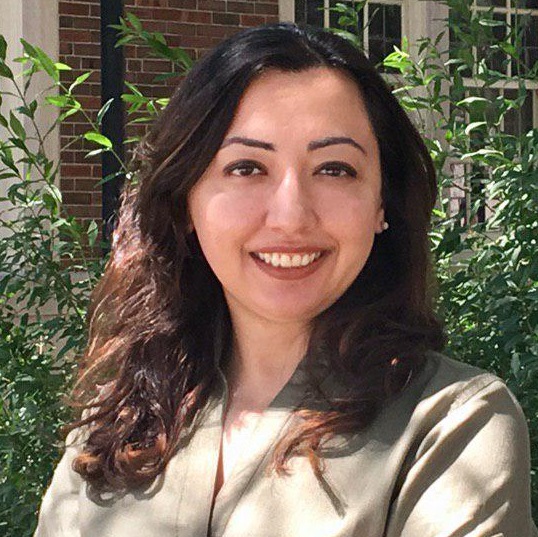
Melissa Landers-Potts is an Interim Assistant Dean for Academic Programs and Principal Lecturer at the University of Georgia's College of Family and Consumer Sciences (Department of Human Development and Family Science). She focuses on active and universal design for teaching and learning, emphasizing inclusive excellence. Her roles include overseeing undergraduate programs, aligning with the college's 2025 Strategic Plan, and fostering teaching excellence. She earned a Ph.D. (1998), M.A. (1994), and B.A. (1990) in Sociology/Anthropology from the University of Georgia and Carleton College. Her research explores socioeconomic status, race/ethnicity, and technology's impact on human development, with a focus on marginalized populations. She designs inclusive curricula and integrates service-learning, partnering with private-sector mental health companies for global adolescent mentorship programs. Recent studies include effects of economic stress on children, racism/classism, and technology's role in military youth well-being. Recipient of numerous awards, including the UGA Teaching Excellence Award (2022), she mentors faculty in active learning and service-learning initiatives. She chairs multiple committees (e.g., College Curriculum, Scholarships) and advises Phi Upsilon Omicron. Her outreach emphasizes experiential learning and inclusive educational practices.
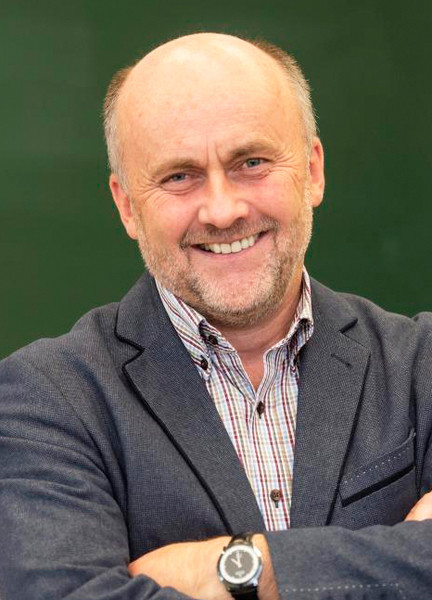
James Conant is the Chester D. Tripp Professor of Humanities, Professor of Philosophy, and Professor in the College at the University of Chicago. He also served as Humboldt Professor of Theoretical Philosophy at Leipzig University (2017–2022). He holds a BA (1982) and PhD (1990) from Harvard University. His academic roles include Interim Chair of the Department of Philosophy at the University of Chicago (2014–2015, 2025–2026), co-director of the Forschungskolleg Analytic German Idealism, and director of the Center for German Philosophy at Chicago. Education: Bachelor of Arts, Harvard University (1982) Doctor of Philosophy, Harvard University (1990) Research Interests: Focuses on Philosophy of Language, Philosophy of Mind, Aesthetics, German Idealism, and the History of Analytic Philosophy. He explores themes such as skepticism, Wittgenstein’s methods, rule-following paradoxes, and the interplay between German Idealism and analytic philosophy. Publications Trends: Conant’s recent work includes monographs on skepticism and film aesthetics, co-authored volumes on Wittgenstein, and edited collections of Hilary Putnam’s papers. His articles often critically engage with figures like Kant, Wittgenstein, Nietzsche, and Frege, emphasizing methodological rigor and historical context. Scientific Awards: Anneliese Meier Research Award (2012) Humboldt Prize (2017) Neubauer Collegium Award Grants and Advising: Co-recipient of Mellon Sawyer Seminar Grants (2006–2008) and Humboldt TransCoop Awards. Advised numerous postdoctoral and doctoral researchers through initiatives like the Leipzig-Chicago collaborative projects. Labs/Teams: Leads the Center for German Philosophy at Chicago and co-directs the Center for Analytic German Idealism in Leipzig. Collaborates internationally on projects bridging analytic and continental philosophy.
Syed S.H. Rizvi is a Professor of Food Process Engineering at Cornell University's Department of Food Science, affiliated with the College of Agriculture and Life Sciences. He holds the title of International Professor and advises over 65 graduate and 70 undergraduate students. His expertise spans food engineering, processing, and international development. Education: Ph.D., The Ohio State University (1976) MEng, Chemical Engineering, University of Toronto (1988) B.Tech., Panjab University (1968) Research Focus: Physical, chemical, and engineering aspects of food and biomaterials Supercritical fluid technology, liposome synthesis, and sustainable processing International value-chain developments and food security Articles Trends: Recent works emphasize supercritical fluid extrusion, liposome encapsulation, and novel food processing innovations. Key themes include material characterization, functional food development, and sustainable technologies. Awards: Distinguished Professor (2017), Chinese Academy of Agricultural Science Excellence in Teaching Award (2014) Stanley Watson Award (2012) Advising & Grants: Mentor to numerous students globally. Collaborates internationally under sponsorships like FAO, UNIDO, and World Bank. Teaches courses on food engineering, international agriculture, and bioprocessing systems. Labs/Teams: Leads the Rizvi Lab, focusing on novel food processes and engineering. Active in developing sustainable technologies for bioactive delivery and food security.
Professor Vikas Kumar is a leading academic in International Business at the University of Sydney Business School. He holds a BA from Delhi University, an MIB from IIFT, and a PhD from Saint Louis University. His research focuses on emerging market firms' internationalization strategies, institutional contexts, and business group dynamics. As Editor-in-Chief of the Journal of International Management, he influences global research trends in the field. He has authored numerous books and articles, including 'Global Outsourcing and Offshoring' (Cambridge University Press). Key roles include Director of the Emerging Markets Research Group (EMRG) and past visiting scholar at Stanford University. Awards include the University of Sydney Business School's Excellence in Research Award (2013) and recognition for impactful research on emerging market firms. His teaching spans Global Business, Strategy, and Cross-Cultural Management. Current students explore topics like ESG, behavioral strategy, and sustainability in global supply chains. Research highlights include studies on India's business groups, the role of institutions in firm strategies, and the impact of digitalization on international practices. He actively contributes to editorial boards of journals like Journal of Management Studies and Management International Review.
Zohreh Sharafi is an Assistant Professor of Software Engineering in the Department of Computer and Software Engineering (GIGL) at Polytechnique Montréal. Previously, she served as a Senior Research Fellow in the Department of Electrical and Computer Engineering at the University of Michigan, Ann Arbor, where she worked with Dr. Westley Weimer and was awarded the prestigious NSERC Postdoctoral Fellowship. Prior to her academic career, she worked as a software engineer at Morgan Stanley, contributing to the firm's electronic trading platform and serving as principal architect of SURF, a market data simulator. Her educational background includes a Ph.D. in Computer Engineering from École polytechnique de Montréal under the supervision of Dr. Giuliano Antoniol and Dr. Yann-Gaël Guéhéneuc, a Master of Applied Science in Software Engineering from Concordia University, and a Bachelor of Computer Engineering from the University of Tehran. Dr. Sharafi leads the SENSE Lab, a multidisciplinary software engineering research laboratory focused on understanding problem-solving strategies developers use during software development, with particular attention to human factors such as gender and native language. Her research combines human-centric design with experimental methodologies, investigating cognitive processes involved in software development using biometric measures including eye tracking and neuroimaging. Current active projects include evaluating trustworthiness perceptions of software artifacts and studying the role of creativity in software engineering tasks. She has made significant contributions to understanding how gender influences program comprehension and code review processes. Her publication record demonstrates a strong focus on empirical methods in software engineering, particularly eye tracking and neuroimaging techniques to study developer cognition. Her work spans program comprehension, code review, requirements engineering, and the impact of human factors on software development processes. She has developed methodological frameworks for conducting eye tracking studies in software engineering and has made notable contributions to understanding how visualization techniques affect software development tasks. NSERC Postdoctoral Fellowship NSERC Discovery Grant Program and Launch Supplements (Sep 2024-Sep 2029) IVADO Startup & Operation Fund (Jan 2022-Jan 2023) Scholarship for Doctoral Studies from Fonds de Recherche du Quebec Distinguished Reviewer Awards from IEEE ICPC 2020 and ACM FSE 2024 Dr. Sharafi actively mentors students including Mahta Amini (PhD Candidate, IVADO Scientifique en résidence 2024 Laureate), Cameron Cherif (PhD Candidate), Sara Yabesi (Master's Student), and Anthonia Njoku (Graduate research intern). She serves on numerous conference organizing committees including as Local Arrangement Chair for SANER 2025, Program Co-chair for SEMLA 2024, and as a reviewer for top-tier journals including IEEE Transactions on Software Engineering and ACM Computing Surveys. Her research is supported by multiple grants focused on understanding human factors in software engineering through empirical methods. At Polytechnique Montréal, Dr. Sharafi directs the SENSE Lab which brings together computer scientists, cognitive scientists, and software engineering researchers to investigate the cognitive aspects of software development. The lab employs advanced methodologies including eye tracking, functional near-infrared spectroscopy (fNIRS), and functional magnetic resonance imaging (fMRI) to study how developers comprehend, navigate, and modify software systems. Current projects examine trustworthiness perceptions in code review, the role of creativity in software engineering tasks, and gender differences in software development processes.
Karl-Theodor Sturm is a Professor of Mathematics at the University of Bonn, holding this position since 1997. He is affiliated with the Institute for Applied Mathematics and leads the Cluster of Excellence Hausdorff Center for Mathematics. His academic journey includes a PhD (1989) and habilitation (1993) from the University of Erlangen-Nürnberg, followed by postdoctoral positions at Zurich, Erlangen-Nürnberg, and the Max Planck Institute for Mathematics in the Sciences (MPI Leipzig). He has held visiting professorships at Stanford, Toulouse, Paris, and Bonn. Sturm's research focuses on stochastic analysis and geometric analysis, particularly in optimal transport, metric measure spaces, synthetic curvature bounds, and diffusion processes. His work on synthetic Ricci curvature bounds, developed in competition with Cédric Villani, has been highly influential. He received the ERC Advanced Grant (2016-2022) for research on metric measure spaces and Ricci curvature, and was a Plenary Speaker at the 2020 European Congress of Mathematics. His leadership roles include Vice Chairman of Collaborative Research Center SFB 611 (2002–2012), Managing Director of the Institute for Applied Mathematics (2007–2010), and Coordinator of the Hausdorff Center for Mathematics (2012–2019). Awards include the Heisenberg Fellowship (1994) and recognition through numerous invited lectures and editorial roles. His mentorship has shaped the careers of prominent researchers such as Nicola Gigli and Jan Maas.
Francesco Rosati is an Associate Professor at the Department of Management Engineering, Technical University of Denmark (DTU), affiliated with the Centre for Technology Entrepreneurship. His work focuses on the intersection of entrepreneurship, innovation, and sustainable development, particularly addressing the UN Sustainable Development Goals (SDGs). He holds academic qualifications in management and engineering and has mentored numerous Danish and international startups. Rosati has been recognized with the Tietgen Award 2020 for early-career contributions to business-oriented social sciences. Research interests include corporate sustainability management, business model innovation for sustainability, and organizational silos analysis. His work spans multiple sectors, including healthcare and construction industries. Rosati teaches courses on strategy, entrepreneurship, and sustainability at both Master’s and executive education levels, and actively participates in global conferences. Key projects include accelerating SDG-aligned entrepreneurship education, circular business model innovation in construction, and building climate resilience for vegetable farmers in Ghana. His research has been published in journals like Business Strategy and the Environment , Journal of Cleaner Production , and Organization and Environment . Rosati has supervised several PhD students exploring topics such as entrepreneurial resilience, SDG reporting, and business model innovation. His work emphasizes bridging management and engineering disciplines to address global sustainability challenges.
Katherine J. Franz is a Professor of Chemistry at Duke University, affiliated with the Trinity College of Arts & Sciences and the Duke Cancer Institute. She holds a Ph.D. from MIT (2000) and a B.A. from Wellesley College (1995). Her research focuses on bioinorganic chemistry, particularly metal ion coordination in biological systems, with applications in antimicrobial therapies, cancer metallomics, and neurodegenerative diseases. Key projects include developing prochelators targeting fungal and bacterial pathogens, studying copper's role in antifungal drug efficacy, and designing light-activated metal complexes for controlled drug release. Dr. Franz has received numerous awards including the Camille Dreyfus Teacher-Scholar Award (2009), Sloan Research Fellowship (2008), and the NSF CAREER Award (2005). She leads a lab with 6 current students/mentees and has secured grants from NIH, NSF, and the US-Israel Binational Science Foundation. Her lab's work spans from fundamental metalloprotein studies to translational drug development, emphasizing interdisciplinary approaches in chemistry and biology. Education: Ph.D. in Chemistry, MIT, 2000 B.A. in Chemistry, Wellesley College, 1995 Research Interests: Metal homeostasis in pathogens, copper's role in antifungal resistance, prodrug design for targeted therapy, and mechanistic studies of metalloproteins. Grants: Tri-Institutional Molecular Mycology Training Program (NIH, 2024–2029) Duke PREP Biomedical Sciences Program (NIGMS, 2022–2027) Copper-Mucin Interaction Study (BSF, 2022–2026) Her lab's publications (n=15+ since 2020) highlight breakthroughs in prodrug selectivity, copper-induced protein toxicity, and histatin antifungal mechanisms. The Franz Lab actively collaborates with clinicians and computational scientists to advance therapeutic strategies addressing unmet medical needs in infectious diseases and cancer.
Dr. Farhad Aslani is an Associate Professor in the Department of Civil, Environmental and Mining Engineering at the University of Western Australia (UWA), serving as Director of the Materials and Structures Innovation Group. He leads the $250M Australian Composites Manufacturing CRC and co-leads UWA's Engineering Materials Research Cluster. His research focuses on innovative construction materials, including self-sensing concrete, 3D-printed composites, and fire-resistant materials. He has secured over $20M in CRC funding and holds leadership roles in national/international conferences. Key awards include the 2024 Concrete Institute WA Rising Star Award and multiple citation milestones. His work aligns with sustainable development goals, emphasizing eco-friendly materials and infrastructure resilience. Education: PhD in Structural Engineering, University of Technology Sydney (2014) Certificates in Leadership, Research Commercialization, Public Policy, and Project Management from Curtin University, Queensland University of Technology, RMIT, and UTS. Research Interests: Smart materials, sustainable concrete technologies, additive manufacturing, blast/fire resistance, and composites for infrastructure. His lab develops self-sensing concretes, lightweight engineered composites, and electromagnetic shielding materials. Grants & Projects: $4.3M ACM CRC project on composite repairs ARC grants for nanocomposite coatings and fire facilities Main Roads WA funding for timber bridge strengthening Expertise: Structural design, composite materials, and industrial collaborations (e.g., Woodside, Holcim). He advises on major projects like the Morley Ellenbrook Rail Line and Forrestfield Airport Link. Awards: 2024 Concrete Institute WA Rising Star Highly Cited Scholar (ScholarGPS, 2024) Most Cited Paper Awards (2018–2020)
Rafael Pérez-Escamilla is a Professor of Public Health (Social and Behavioral Sciences) and serves as Director of the Office of Public Health Practice, the Global Health Concentration, and the Maternal and Child Health Promotion Track at the Yale School of Public Health. He leads the Yale-Griffin CDC Prevention Research Center with over $70 million in extramural funding, focusing on improving breastfeeding outcomes, maternal-child nutrition, food security, and early childhood development through community health worker interventions. He holds a BS in Chemical Engineering from Universidad Iberoamericana (Mexico City), an MS in Food Science, and a PhD in Nutrition from the University of California, Davis. His postdoctoral training at UC Davis explored the link between nutrition and early childhood development. His research interests emphasize breastfeeding promotion , maternal and child health equity , food security measurement , and implementation science . He co-leads studies in vulnerable communities, including U.S. communities of color, and has published over 340 articles, three books, and numerous technical reports. Key publications from 2024–2025 highlight innovations in addressing food insecurity, hypertension disparities, and the evaluation of global nutrition programs. His work bridges research and practice, advocating for scalable interventions. Awards: Lifetime Achievements Award in Global Nutrition (2020) Elected to U.S. National Academy of Medicine (2019) Doctor Honoris Causa from Universidad de Guadalajara (2016) Patricia Martens Award for Excellence in Breastfeeding Research (2015) As a senior advisor to WHO, UNICEF, and U.S. federal agencies, he collaborates on global nutrition policies and measurement frameworks. His grants fund programs like the FOOD4MOMS initiative and the Criança Feliz Program in Brazil. He mentors students through the Maternal and Child Health Promotion Track and oversees Yale’s Global Health and Public Health Practice initiatives. Active in interdisciplinary teams such as the Becoming Breastfeeding Friendly (BBF) initiative and the Center for Methods in Implementation and Prevention Science (CMIPS), he promotes collaboration between academia, communities, and policymakers.
Dale L. Boger is a Professor of Chemistry at The Scripps Research Institute (TSRI), where he leads the Boger Group specializing in synthetic organic and medicinal chemistry. His academic roles include serving as co-Chair (2017-2018) and Chairman (2013-2017) of the Chemistry Department. Boger earned his B.S. from the University of Kansas (1975) and Ph.D. from Harvard University (1980). His research focuses on total synthesis of natural products, development of synthetic methodologies, and antibiotic design, particularly addressing antibiotic resistance via glycopeptide analogs like vancomycin. Key honors include the Paul Janssen Prize (2002), RSC Robert Robinson Award (2017), and election to the National Academy of Sciences (2014). His work spans collaborations in bioorganic chemistry, molecular modeling, and drug design. The Boger Group’s lab includes numerous students and postdocs, advancing projects such as maxamycins and guanidine-modified vancomycins. Funding includes NIH grants and industry partnerships, highlighting his contributions to both academic and applied research. Research highlights include groundbreaking studies on vancomycin analogs with dual mechanisms of action to combat resistance, as well as contributions to TLR agonists and neurovascular drug delivery. His legacy includes over 300 publications and impactful patents in antibiotic design and synthetic organic chemistry.
Dr. Nikolas Roberts serves as an Assistant Professor in the Department of Criminal Justice at Pennsylvania Western University, tenured since 2022. He holds appointments in the College of Education, Arts, and Humanities. His roles include teaching courses on correctional systems, criminological theory, research methods, and international conflict resolution. He previously worked with the Pennsylvania Department of Corrections, focusing on inmate education and solitary confinement reform. Dr. Roberts is AccessData-certified in digital forensics and authored the 2024 anthology The Law Behind the Wall . Education: B.A., B.S., and M.S. from Pennsylvania Western University M.A. from Indiana University of Pennsylvania Ph.D. from Saybrook University Research Interests: Dr. Roberts specializes in corrections policy, criminological theory, and conflict resolution. He emphasizes practical applications of research, such as re-entry training and policing strategies. His upcoming work Research Methods for Qualitative Justice Studies (co-edited) underscores his commitment to methodological rigor. Service & Leadership: Elected Co-Chair of the University-wide Tenure Committee (2024–) Title IX Student Advisor and Hearing Board Member (2023–2024) Member of numerous committees, including curriculum development, faculty professional development, and policy review Community Engagement: Dr. Roberts serves as an official prison monitor with the Pennsylvania Prison Society and contributed to the Donora Smog Museum’s historical preservation efforts. His consultancy work with legal institutions includes mediation for federal litigation cases.
Seulgi Moon is an Associate Professor at the University of California, Los Angeles (UCLA) in the Department of Earth, Planetary, and Space Sciences . She has been affiliated with UCLA since 2015, first serving as an Assistant Professor until 2022, followed by her current role as Associate Professor. Education : Ph.D. in Geological and Environmental Sciences (2007-2013), Stanford University M.S. in Earth System Science (2005-2007), Seoul National University B.A. in Earth System Science, summa cum laude (2001-2005), Seoul National University Her research focuses on geomorphology, planetary geology, and Earth surface processes. She investigates sediment transport, climate-landscape interactions, and planetary surface dynamics, with notable work on Martian geological features and hydrological systems. Her publications highlight advancements in understanding sediment transport mechanics (Flinchum et al., 2018) and planetary surface processes (Moon et al., 2017), both recognized as top cited/downloaded papers in the Journal of Geophysical Research: Earth Surface . Scientific Awards : Katharina von Salis Fellowship (2024) AGU Robert Sharp Lecture (2022) AGU Luna B. Leopold Early Career Award (2022) Sloan Research Fellow (2022) NSF CAREER Award (2019) UCLA Faculty Career Development Award (2018) Gabilan Stanford Graduate Fellowship (2008-2011) She has been active in mentoring postdoctoral scholars and contributes to advancing computational and analytical methods in geosciences.
Dominic Liao-McPherson serves as an Assistant Professor in the Department of Mechanical Engineering within the Faculty of Applied Science at the University of British Columbia. His research bridges algorithmic control, optimization theory, and computational engineering with practical applications across robotics, energy systems, and aerospace domains. His academic background includes a BASc from the University of Toronto, PhD from the University of Michigan, and postdoctoral training at ETH Zürich: BASc (University of Toronto) PhD (University of Michigan) Postdoc (ETH Zürich) Dr. Liao-McPherson's research centers on developing real-time computational decision-making algorithms for physical systems. His work spans predictive and constrained control (including model predictive control and reference governors), real-time embedded optimization, and game-theoretic coordination mechanisms for multi-agent systems. Key application areas include energy grids, autonomous vehicles, additive manufacturing, and aerospace systems, with past projects covering spacecraft landing, engine emissions control, and aircraft upset recovery. His methodology emphasizes rigorous stability analysis, constraint satisfaction, and practical implementation on resource-constrained hardware. Analysis of his 2020-2022 publications reveals a strong focus on advancing optimization-based control frameworks. His work consistently addresses stability guarantees and constraint handling in real-time systems, with increasing emphasis on distributed algorithms for multi-agent coordination. The research demonstrates a clear trajectory from theoretical algorithm development (e.g., FBstab solver) toward experimental validation in complex engineering systems like diesel engines and autonomous networks. No scientific awards are documented in the provided materials. Regarding academic advising and research funding, the source text contains no information about current students, grant awards, or sponsored research projects. He directs the Algorithmic Optimization and Control Lab (AOCL) at UBC, as evidenced by his research website (aocl.mech.ubc.ca). The lab specializes in developing computationally efficient control algorithms for embedded systems, with particular expertise in handling physical constraints and coordination challenges in multi-agent environments across energy, manufacturing, and robotics applications.