Madeleine EL ZAHER is a Researcher-Lecturer at CESI, affiliated with the Engineering and Numerical Tools research team. Her work focuses on Artificial Intelligence, Collaborative Robotics, Human-Machine Interaction, and Multi-Agent Systems. She holds a PhD in Computer Sciences from the University of Technology of Belfort-Montbéliard (2013) and a Master’s degree in Computer Sciences and Telecommunications from Paul Sabatier University (2010). Teaching responsibilities include Computer Sciences and Electronics at the Engineering program level, emphasizing project-based learning and training through research. She co-supervises PhD students in industrial robotics and cyber-physical systems, including Abdessalem ACHOUR (defending in 2024) and Badra Souhila GUENDOUZI (defending in 2025). Her research spans semantic mapping in mobile robotics, federated learning for industrial systems, and platooning algorithms for autonomous vehicles. Notable publications include work on semantic mapping with 3D models (2024), federated learning frameworks using genetic algorithms (2023), and verification of platooning systems (2012–2015). No scientific awards are explicitly listed, but her contributions reflect impactful work in autonomous systems and robotics. Grants and lab affiliations are not detailed in the provided text, though her team’s research aligns with CESI’s focus on engineering and numerical tools.
Pierre Jourlin is a Professor at Avignon University, specializing in Computer Science and Artificial Intelligence. He actively contributes to academic events such as workshops on programming education and AI ethics. His research focuses on areas like natural language processing, machine learning, and the societal impact of AI. Jourlin has organized events like a programming workshop for high school students (2022) and authored numerous articles on topics ranging from rule-based event extraction to generative AI in creative writing. His academic contributions include work on semantic disambiguation, medical literature tools (SIMI), and foundational studies in speech recognition and multimedia retrieval. He critiques AI limitations, emphasizing the importance of human oversight in code generation and advocating for accessible education to counteract underfunding in public schools. Jourlin's recent publications (2024–2025) address AI's role in creative fields and the evolution of programming languages. His work often bridges technical innovation with ethical considerations, as seen in his analysis of code-producing AI tools like Copilot. He remains an active member of the academic community, blending research with pedagogical outreach.
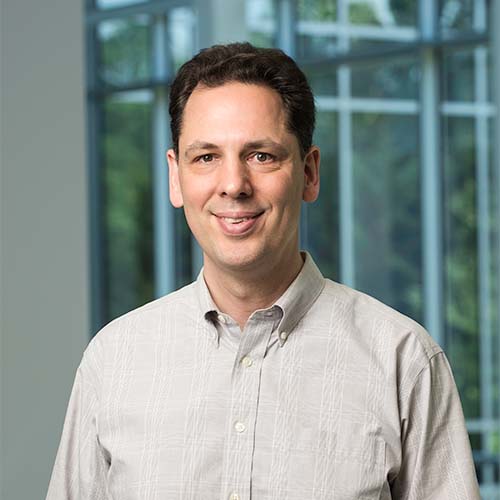
Jens-Peter Kaps is an Associate Professor at George Mason University's Volgenau School of Engineering, jointly affiliated with the Department of Electrical and Computer Engineering and the Department of Cyber Security Engineering. He holds a PhD in Electrical and Computer Engineering from Worcester Polytechnic Institute (2006), an MS from the same institution, and a BS from Munich University of Applied Sciences. As a co-director of the Cryptographic Engineering Research Group (CERG), his research focuses on cryptographic hardware design, side-channel analysis, post-quantum cryptography, and IoT security. Dr. Kaps has led numerous research projects funded by agencies like the National Science Foundation (NSF) and NIST, including initiatives on countermeasures for post-quantum cryptographic algorithms and lightweight cryptography in embedded systems. He has organized major conferences such as CHES 2008 and SHARCS 2012, and is actively involved in standardization efforts for cryptographic algorithms. His teaching responsibilities include courses on computer organization and side-channel security. He has advised over 50 senior design projects, focusing on cryptographic hardware implementations, IoT devices, and security tools. His lab work emphasizes practical applications of cryptographic engineering, with a strong emphasis on hardware-software co-design and vulnerability assessment. Dr. Kaps collaborates with industry partners like McQ Inc. and Riscure, and his research outputs include open-source platforms like FOBOS for side-channel analysis. His work bridges theoretical cryptography with real-world hardware implementations, addressing critical challenges in secure embedded systems and post-quantum security.
Dr. Amirreza Khodadadian is a Lecturer in Mathematics at the School of Computer Science and Mathematics, Keele University, since August 2023. He holds a Ph.D. from the University of Vienna (2017), followed by postdoctoral positions at the Technical University of Vienna and Leibniz University Hannover. His research focuses on uncertainty quantification, numerical methods for stochastic PDEs, finite element methods, computational mechanics, and machine learning applications in nanoelectronics and biological systems. Key research interests include Bayesian inversion, multiscale modeling, reduced-order methods, and the design of nanoscale sensors. He has collaborated with institutions like the University of Oxford and secured an Austrian Science Fund (FWF) grant (476k€) for nanozyme sensor research. Dr. Khodadadian mentors postdoctoral researchers, including Dr. Samaneh Mirsian, and actively publishes in top-tier journals such as Journal of Computational Physics and Computer Methods in Applied Mechanics and Engineering . His work bridges applied mathematics with engineering challenges, emphasizing efficient numerical algorithms for real-world problems like battery degradation, groundwater contamination, and biomedical sensor optimization. Recent projects involve machine learning integration for enhanced predictive modeling. Education: Ph.D. in Mathematics, University of Vienna, Austria (2017) Postdoctoral Fellowships: TU Vienna (2018), Leibniz University Hannover (2018–2022) Grants/Awards: Austrian Science Fund (FWF) Grant: Single Atom Catalysts as Nanozymes in FET Sensors (2023) Advising: Postdoctoral Mentor: Dr. Samaneh Mirsian (Keele University) Dr. Khodadadian’s publications span computational mechanics, stochastic modeling, and interdisciplinary applications, reflecting his expertise in translating mathematical theory into practical engineering solutions.
Scott Ormiston is a Professor in the Department of Mechanical Engineering at the University of Manitoba's Price Faculty of Engineering. He holds a B.Sc. (1981), M.A.Sc. (1984), and Ph.D. (1990) in Mechanical Engineering from the University of Manitoba and University of Waterloo. His research focuses on Computational Fluid Dynamics (CFD) , specializing in two-phase flow modeling, heat transfer, and numerical methods. Key areas include falling film condensation/absorption, turbulent flow in tube bundles, and CFD code development for industrial applications. His group develops in-house CFD codes and leverages commercial tools like ANSYS CFX and Fluent. Research emphasizes applications in power generation, refrigeration, and chemical processing industries. Recent work includes supercritical fluid instability analysis, phase change material thermal performance, and desalination systems. He actively seeks M.Sc. and Ph.D. students with strong fluid mechanics, heat transfer, and programming skills. Labs/Teams: His research group focuses on CFD software development and industrial collaboration. Ongoing projects involve modeling heat exchangers, aerothermal systems, and energy-efficient materials.
Professor Bradley Evans is a distinguished Earth observation and remote sensing specialist at the University of New England, where he holds a position in the Faculty of Science, Agriculture, Business and Law within the School of Environmental and Rural Science. His expertise spans environmental science, biodiversity conservation, and the application of hyperspectral imaging spectroscopy to solve real-world environmental challenges. Previously, he has held significant positions including Director of Australia's Terrestrial Ecosystem Research Network and Director of Sydney Informatics Hub at The University of Sydney. PhD in Environmental Science, Murdoch University, Western Australia, 2013 Bachelor of Science with Honours in Environmental Science, Murdoch University, Western Australia, 2009 Bachelor of Science in Energy Studies, Murdoch University, Western Australia, 2009 Advanced Diploma in Marketing Management, TAFE NSW, Bradfield College, 1999 CASA RPAS sub 25kg (Multirotor Drone) certification Professor Evans's research focuses on applying advanced remote sensing techniques to environmental monitoring and conservation. His work integrates hyperspectral imaging with ecological modeling to address critical issues such as koala habitat mapping, forest health assessment, and water quality monitoring. He has pioneered approaches using plant fluorescence to model growth patterns and has contributed significantly to NASA's OCO2 mission. His recent work emphasizes the development of open-source tools for hyperspectral imaging, making advanced remote sensing more accessible to researchers worldwide. Analysis of Professor Evans's recent publications reveals a strong trend toward practical applications of hyperspectral imaging across diverse environmental contexts. His work spans from precision agriculture applications for cotton farming to koala habitat conservation, demonstrating the versatility of remote sensing technologies. The research shows increasing integration of machine learning techniques with hyperspectral data, enhancing the accuracy and efficiency of environmental monitoring systems. There's also a notable emphasis on open-source solutions, reflecting his commitment to democratizing access to advanced remote sensing technologies. 2016 – Terrestrial Ecosystem Research Network NSW – NSW Chief Scientist Award Multiple travel scholarships from NCCARF, EUFAR, and Australian Research Council 2010 Centre of Excellence for Climate Change PhD top-up Scholarship 2008 Master class Scholarship from Wentworth Group of Concerned Scientists Professor Evans has successfully supervised numerous PhD and Master's students across multiple institutions, demonstrating strong mentorship capabilities. His research is supported by substantial grants including the $198K NSW Department of Environment Koala's in the Landscape project (2023), the University of Sydney's Koala's in the Air project ($70K), and significant funding for the OpenHSI initiative. He has been a Chief Investigator for the Australian Research Council Training Centre on CubeSats, UAVs and Their Applications, securing funding for innovative remote sensing projects. His work with NASA JPL's Surface Biology and Geology Study and collaborations with international space agencies demonstrates the global impact of his research. At the University of New England since 2023, Professor Evans has established the Earth Observation Laboratory with a special focus on water and wildlife habitat (particularly koalas) and riverine water quality. He serves as Vice President of Earth Observation Australia and participates in the AquaWatch Steering Committee for the Commonwealth Department of Defence. His laboratory actively collaborates with industry partners like HyVista Corporation and academic institutions including The University of Sydney. The lab emphasizes open-source approaches to remote sensing technology, exemplified by the OpenHSI project, which has created accessible hyperspectral imaging solutions for researchers worldwide.
Blagoja Markovski is an Assistant Professor at the Faculty of Electrical Engineering and Information Technologies (FEIT), Ss. Cyril and Methodius University in Skopje. He holds a PhD (2019), MSc (2012), and BSc (2009) in Electrical Engineering from FEIT. His research focuses on electromagnetic compatibility, grounding systems analysis, lightning protection, and power systems engineering. He has contributed to projects assessing electromagnetic impacts on infrastructure and public exposure to electromagnetic fields from energy equipment. His work emphasizes the analysis of grounding systems under lightning and transient conditions, with applications in transmission lines, wind turbines, and pipelines. He has developed novel methodologies for efficient grounding system analysis using circuit models, GPU parallelization, and analytical approximations. His recent studies include optimizing grounding configurations for communication towers and evaluating human exposure near high-voltage systems using finite-element methods. Collaborations span international conferences and industry projects, addressing challenges in electromagnetic compatibility and renewable energy systems. His publications span IEEE journals and conferences, focusing on grounding systems, lightning protection, and computational electromagnetics.
Cornelis Jan Kikkert is an academic affiliated with James Cook University, specializing in areas such as Power Line Communications (PLC), Signal Processing, and Electrical Engineering. His research focuses on improving communication systems within power grids, including impedance measurement techniques, transformer modeling, and smart grid infrastructure. He has contributed to numerous peer-reviewed journals and conferences, including IEEE Smart Grid Communications and Power Line Communications events. His work spans topics like FPGA-based phasor measurement units, inductive shunt analyzers, and broadband PLC applications. Notable contributions include modeling powerline communication channels, developing low-cost coupling networks for smart grids, and advancing adaptive digital predistortion techniques for high-crest-factor signals. His research often bridges theoretical analysis with practical implementations, such as embedded software for real-time impedance analysis and hardware design for satellite beacon receivers. Kikkert has collaborated extensively with industry and academic partners, presenting at global conferences like ISPLC and ICICS. His publications reflect a deep engagement with both foundational and applied aspects of electrical engineering, emphasizing innovation in power systems and communication technologies.
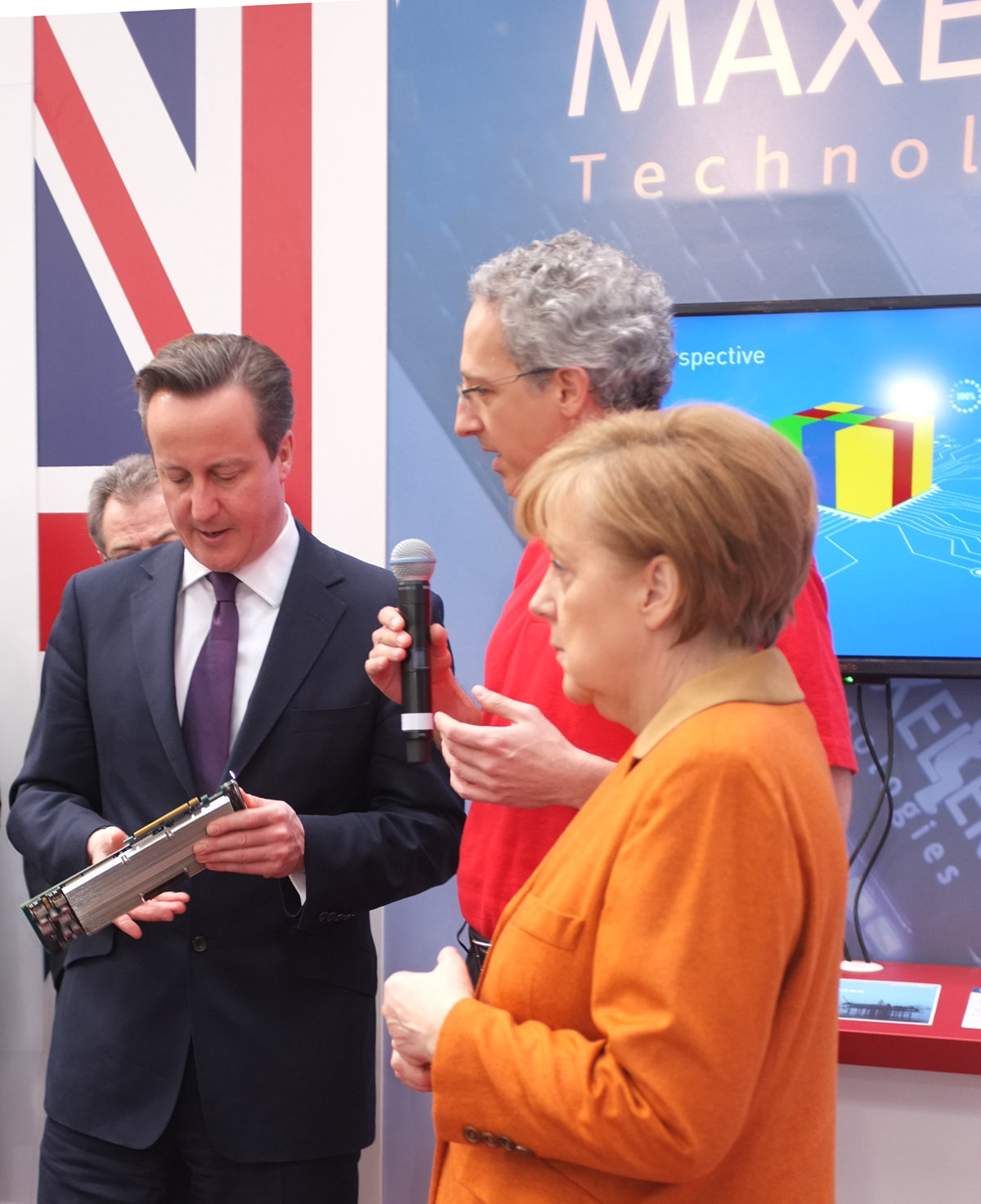
Oskar Mencer is a Professor in the Department of Computing at Imperial College London , where he has been a member of academic staff since 2000. He was also a Consulting Professor at Center for Computational Earth and Environmental Science , Stanford University (2009-2010). His research focuses on Multiscale Dataflow Computing , exploring the interaction of hardware and software systems through domain-specific representations, parallel programming, VLSI design, and compiler methodologies. He has contributed to fields including high-performance computing, FPGA optimization, and computational finance. Dr. Mencer's work has been recognized with a Special Award from Com.sult (2012), Imperial College Research Excellence Award (2007), and a Top EPSRC Advanced Fellowship (2001). He has received multiple best paper awards, including at ICFPT'08 and ASAP 2008, and his 2000 paper on stream architectures was recognized as historically significant in 2015. His publications demonstrate a strong emphasis on FPGA acceleration , custom architectures , and parallel processing across geophysics, finance, and neuroscience applications. Special Award for Dataflow Innovation (2012) Best Paper Award - ICFPT'08 Best Paper Award - ASAP 2008 He has served on technical committees for conferences such as FPL , DATE , and FPT , and leads the Computer Architecture Research Group (currently inactive).
Dr. Simone Falco is a Research Fellow at the Department of Engineering Science, University of Oxford, and a Lecturer at Oriel College. He holds a DPhil (Oxon) in Engineering Science. His research focuses on numerical modeling of polycrystalline materials, micromechanical behavior of ceramics, and multi-scale approaches. He has contributed to projects involving high-rate testing, explosive materials simulation, and flash sintering techniques. His work bridges computational methods with experimental validation, emphasizing practical applications in materials engineering. Education: Bachelor’s and Master’s in Aerospace Engineering, University of Naples Federico II (2006, 2009) PhD in Engineering Science, University of Oxford (2015) Research Interests: Generation of numerical models for real polycrystalline microstructures Numerical simulation of brittle material failure Multi-scale homogenization techniques High-rate material testing Modeling of material manufacturing processes Key Awards: Ross Coffin Purdy Award, American Ceramic Society (2019) JCS 2018 Award, Journal of the Ceramic Society of Japan (2019) Excellence Award, University of Oxford (2019) Lab/Team Affiliations: Impact Engineering and Materials Engineering groups at the University of Oxford.
Jun Liu is a Professor in the Department of Statistics at Harvard University, renowned for his contributions to computational statistics, bioinformatics, and Bayesian methods. He leads research in statistical genetics, genomic data analysis, and algorithm development for biological systems. His work integrates advanced statistical theory with computational tools, such as the Gibbs Motif Sampler and Bayesian Aligner, widely used in bioinformatics. Research interests include Monte Carlo methods, statistical genetics, and machine learning applications in biology. He has developed influential software tools like BPPS, MDScan, and CLIC, addressing problems in motif discovery, genomic sequence analysis, and pathway expansion. Liu’s interdisciplinary approach bridges statistics and computational biology, with applications in cancer genomics, immune repertoire analysis, and evolutionary biology. Notable recognition includes fellowships from the American Statistical Association, Institute of Mathematical Statistics, and International Society for Bayesian Analysis. He advises numerous Ph.D. students and postdoctoral researchers, many of whom hold academic and industry positions globally. His lab collaborates internationally, organizing workshops on Monte Carlo methods and statistical forums in China. Liu’s publications span statistical methodology, computational biology, and genetics, with recent work on genomic element evolution, immune cell profiling, and algorithmic advancements in high-dimensional data analysis. He emphasizes inverse modeling and Bayesian approaches to tackle complex biological questions.
Professor Phil Trinder is a Professor of Computing Science at the University of Glasgow's School of Computing Science. He leads the Glasgow Parallelism Group (GPG) and is a member of the Glasgow Systems Section (GLASS) and the Scottish Programming Languages Seminar (SPLS). His research focuses on parallel and distributed programming models, functional programming, and applications in computational algebra. Trinder holds a DPhil from Oxford University and has over 100 publications. He has led 12 major research projects as Principal Investigator and coordinated EU projects. Collaborations include Ericsson, Maplesoft, Microsoft, and Motorola. His work emphasizes scalable distributed systems, actor-based platforms, and reliable computation. Notable contributions include the SymGridPar framework for computational algebra and research on Erlang scalability. He also explores IoT architectures and tierless programming languages. Key projects include improving Erlang's network scalability and developing frameworks for exact combinatorial search (YewPar). He has supervised numerous researchers and contributed to high-performance systems like HPC-GAP.
Stéphane BORDAS is a Full Professor in Computational Mechanics at the University of Luxembourg's Faculty of Science, Technology and Medicine (FSTM), leading the Computational Mechanics (Legato) research group. His work focuses on free boundary problems, method development for complex geometries, and applications in fracture mechanics, biomechanics, and computational engineering. He previously held roles at Cardiff University and the Swiss Federal Institute of Technology in Lausanne (EPFL). His research integrates computational methods like XFEM, isogeometric analysis, and meshfree techniques to address challenges in engineering and medicine. Education: Ph.D. in Theoretical and Applied Mechanics, Northwestern University (2003) M.Sc. in Civil Engineering, École Spéciale des Travaux Publics and Northwestern University (1999) Research Interests: Computational Mechanics, Biomechanics, Finite Element Methods, Fracture Mechanics, High-Performance Computing, Isogeometric Analysis. Grants & Projects: ERC Starting Grant (RealTCut) for surgical simulation and material cutting FP7 ITN INSIST for meshless methods Labs/Teams: Computational Mechanics (Legato) Group at the University of Luxembourg. His work bridges academia and industry, with applications in aerospace, biomedical engineering, and materials science. He is active in open-source software development, including codes for XFEM, isogeometric analysis, and meshfree methods.
Yuhan Ding is an Associate Teaching Professor of Applied Mathematics and Program Director of the Master of Data Science program at Illinois Institute of Technology's College of Computing. Their research focuses on numerical analysis, adaptive algorithms, and computational methods. Ding has contributed to the development of adaptive approximation techniques and integration libraries like GAIL, emphasizing guaranteed error control and algorithmic efficiency. Education details are not explicitly provided in the text, but their work aligns with advanced computational mathematics and data science education. Research interests include multivariate approximation, algorithm design, and mathematical modeling. Advising and grant details are not specified here. The GAIL library demonstrates expertise in creating robust computational tools for scientific applications.
Sneha Kumar Kasera is an Associate Dean for Academic Affairs and Professor at the John and Marcia Price College of Engineering, affiliated with the Kahlert School of Computing. She leads the ANSR Lab, founded in 2003, focusing on advanced networked systems research. Her work spans networks and systems, including mobile/pervasive systems, wireless security, IoT, crowdsourcing, and spectrum management. She has held leadership roles in conferences like IEEE WoWMoM, ACM WiSec, and ACM MobiCom. Kasera’s research emphasizes practical applications of networking and security, with contributions to spectrum sharing, dynamic zone protocols, and privacy-preserving technologies. Her professional activities include program co-chair roles for major conferences and editorial positions for IEEE Transactions. She advises numerous PhD and MS students, many of whom hold prominent roles in academia and industry. Kasera’s lab develops open platforms like POWDER for experimental wireless research, addressing real-world challenges in network design and security. Key research themes include spectrum monitoring, deep reinforcement learning for network optimization, and privacy-aware systems. Her publications highlight advancements in 5G/6G networks, wireless localization, and IoT ecosystems. Her work bridges theoretical contributions with scalable, deployable solutions for modern communication challenges.