Hironori IwasakiView profile
Professor
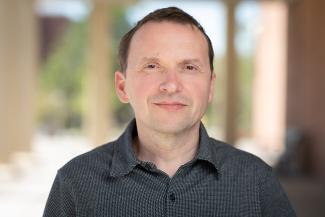
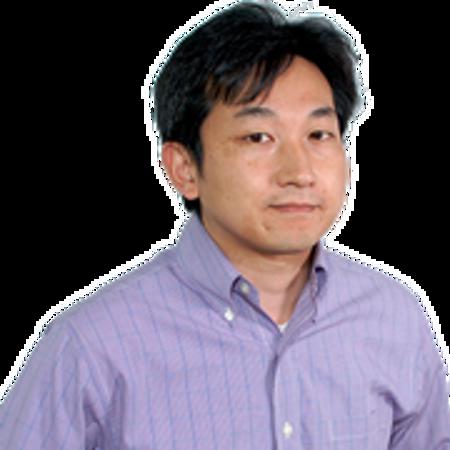
Hironori Iwasaki is a Professor of Physics at Michigan State University's Department of Physics and Astronomy, with a joint appointment at the Facility for Rare Isotope Beams (FRIB). His research focuses on experimental nuclear physics, particularly the investigation of exotic nuclei with unusual proton-to-neutron ratios. He joined MSU in 2009 after working at various international institutions including the University of Tokyo, IPN Orsay in France, and the University of Cologne in Germany. Dr. Iwasaki received his MS in Physics from the University of Tokyo in 1998 and completed his PhD in Physics from the same institution in 2001. Dr. Iwasaki's research centers on spectroscopy of exotic nuclei far from stability. His work examines unstable nuclei with unusual proton-to-neutron ratios, which often exhibit surprising phenomena that challenge our understanding of atomic nuclei. He aims to establish a unified understanding of nuclear structure for both stable and exotic nuclei by exploring the isospin degree-of-freedom in shell structure and collective properties. His research provides critical tests for modern nuclear theories and addresses questions concerning neutron stars and the origin of elements in the universe. A key focus of his research is in-beam gamma and particle spectroscopy with rare isotope beams, with special emphasis on lifetime measurements for nuclear levels. These measurements serve as sensitive probes for anomalies in the structure of exotic nuclei, including shape coexistence, changes in magic numbers, and proton-neutron decoupling phenomena. His work spans an extraordinary range of timescales, from nanoseconds down to zeptoseconds, requiring advanced detection systems suitable for use with rare isotope beams. Dr. Iwasaki's publication record demonstrates a consistent focus on nuclear structure, particularly examining shell evolution and lifetime measurements in exotic nuclei. His work spans from early studies of carbon isotopes in 2008 to recent investigations of mirror nuclei in 2024. A recurring theme is the examination of shell closures and intruder states in neutron-rich and proton-rich nuclei. His research increasingly utilizes advanced facilities like FRIB and sophisticated detection systems such as GRETA and TRIPLEX to achieve precise measurements of nuclear properties. No specific awards were mentioned in the provided information. Dr. Iwasaki actively mentors graduate students in his research group, where they develop experimental setups and techniques for spectroscopy and lifetime measurements using rare isotope beams. Students work hands-on with the TRIPLEX device for Doppler-shift lifetime measurements and participate in detector development projects, including radiation-hard diamond detectors. He emphasizes collaboration with early-career scientists, believing that interactions with students provide fresh perspectives and ideas. His research is supported by MSU's Facility for Rare Isotope Beams, which operates as a user facility for the U.S. Department of Energy Office of Science. Dr. Iwasaki leads the Lifetime Group at FRIB, which specializes in precise lifetime measurements of nuclear states. His team utilizes state-of-the-art equipment including GRETA (Gamma-Ray Energy Tracking Array), TRIPLEX (a plunger device for lifetime measurements), and the S800 spectrograph. The TRIPLEX device allows for application of Doppler-shift techniques, including the recoil-distance method, enabling model-independent measurements of excited-state lifetimes. His group is also involved in developing new detector technologies to advance nuclear spectroscopy capabilities.