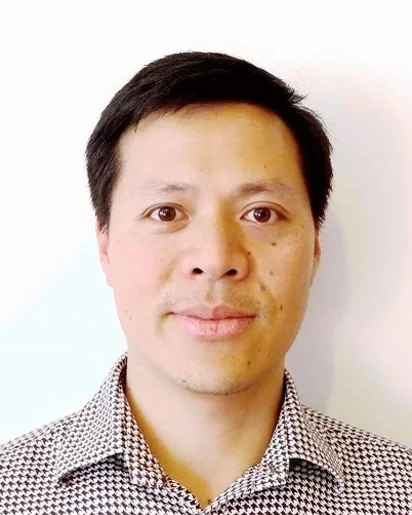
Robert Janssens is the Edward G. Bilpuch Professor in the Department of Physics & Astronomy at the University of North Carolina at Chapel Hill (2018-present). Previously, he served as Visiting Professor at UNC (2017-2018) and held various leadership roles at Argonne National Laboratory, including Director of Physics Division (2007-2017) and Scientific Director of the ATLAS facility (2000-2011). His research focuses on nuclear structure, shell evolution in neutron-rich nuclei, nuclear astrophysics, and instrumentation development. Key collaborations involve facilities like HIgs at TUNL, ATLAS, and NSCL. Education: B.S. in Physics and Education (1973) and Ph.D. in Experimental Nuclear Physics (1978), both from Catholic University of Louvain, Belgium. Research emphasizes understanding nuclear shell structure evolution, nuclear shape transitions, and reaction dynamics. His work bridges experimental studies with astrophysical implications, utilizing advanced gamma-ray spectroscopy techniques. Notable contributions include discoveries regarding octupole deformation in heavy nuclei and doubly magic nuclei. Instrumentation efforts include advancements at the CARIBU facility at Argonne, enabling studies of rare isotopes. His research has been published in high-impact journals like Nature and Physical Review Letters . Leadership roles include directing major nuclear physics facilities and guiding interdisciplinary projects. Active in fostering collaborations between universities and national labs.
Prof. Dr. Hans Jakob Wörner is a Full Professor of Physical Chemistry and Head of the Laboratory of Physical Chemistry at ETH Zürich's Department of Chemistry and Applied Biosciences. His research focuses on ultra-fast molecular spectroscopy with attosecond resolution (10 -18 s), aiming to characterize molecular valence shell dynamics through novel experimental methods. He leads the Atto Group, developing attosecond X-ray and laser spectroscopy techniques for studying electron and nuclear dynamics in liquids, clusters, and gases. Education: BSc (2003) and PhD (2007) in Physical Chemistry from ETH Zürich. Postdoctoral Work: Laboratoire Aimé Cotton (France) and National Research Council (Canada). Roles: Full Professor since 2013, ERC Consolidator Grant recipient (2017), and numerous international awards including the Coblentz Award (2018). Research interests include attosecond electron dynamics in molecules, liquids, and clusters; X-ray transient absorption spectroscopy; and intermolecular Coulombic decay in liquids. His lab pioneered attosecond techniques for imaging electron wave packets and studying conical intersection dynamics in aqueous systems. Awards: New Horizon Lectureship (2020) Coblentz Award (2018) ERC Consolidator Grant (2017) Carus Medal (2015) Young Academy Membership (2013) Lab & Collaborations: The Laboratory of Physical Chemistry at ETH Zürich focuses on ultrafast dynamics with state-of-the-art attosecond sources and liquid-jet technologies. Current projects explore proton transfer in aqueous solutions and Jahn-Teller effects in molecular cations.
Ryan Plestid is a NTN Postdoctoral Scholar Research Associate in Theoretical Physics at the California Institute of Technology (Caltech), affiliated with the Division of Physics, Mathematics, and Astronomy. His research focuses on particle physics, dark matter, neutrino interactions, and high-energy phenomena, with an emphasis on theoretical tools for neutrino scattering, millicharged particles, and cosmological implications of dark matter models. He explores topics such as radiative corrections in atomic and nuclear systems, detector physics, and experimental signatures of beyond-Standard-Model particles. His work integrates advanced methodologies like effective field theories, lattice QCD, and precision calculations to address fundamental questions in neutrino physics, dark matter detection, and the interplay between cosmology and particle interactions. Notable areas include coherent neutrino-nucleus scattering, SHiP experiment signatures, and ultralight scalar dark matter dynamics. Ryan contributes to collaborations like the SENSEI experiment and has authored numerous papers on theoretical frameworks for interpreting high-energy experiments. His research also spans topics such as Fermi function applications in neutron decay, collective excitations in silicon detectors, and cosmological models involving right-handed neutrinos. Ryan’s interdisciplinary approach bridges theoretical developments with experimental feasibility, aiming to uncover new physics in particle and astroparticle systems.
Alfredo Poves is a Full Professor of Theoretical Physics at the Autonomous University of Madrid (UAM) since 1984. He has held visiting positions at TRIUMF (Canada) and CERN (Switzerland). His roles include Vice-Rector of UAM (1983–1985), Chairman of the Department of Theoretical Physics (1988–1992, 2002–2006), and Director of the Institute of Theoretical Physics (UAM-CSIC, 1994–1997). He has served on numerous international committees, including the Programme Advisory Committee of ISOLDE at CERN and the Board of Directors of the European Centre for Theoretical Studies in Nuclear Physics (ECT*). His research focuses on nuclear structure, theoretical nuclear spectroscopy, exotic nuclei, and neutrinoless double-beta decay. He has coordinated major collaborations, such as the IN2P3-CICYT projects on exotic nuclei and nuclear theory. Awards include the GENCO Award (2012), CERN’s Scientific Associate Award (2014), and the American Physical Society’s Outstanding Referee designation (2014). He is an Associate Editor of Nuclear Physics A and has contributed to over 115 peer-reviewed articles, amassing 7,500 citations (H-index 46). His work bridges theoretical models (e.g., shell model) with experimental advancements in nuclear astrophysics and particle physics.
Dr. Joseph Sperling is a Research Associate Professor in the Department of Chemistry at the Colorado School of Mines. His research focuses on nuclear energy applications, actinide chemistry, and radiochemistry. He specializes in synthesizing and characterizing novel actinide complexes, with a particular emphasis on transuranium elements like plutonium, americium, curium, and californium. His work explores structural chemistry, bonding mechanisms, and electronic properties under varying conditions such as high pressure and ligand modification. Education details are not explicitly provided, but his extensive publication record suggests advanced training in inorganic chemistry and materials science. His research interests include investigating covalency in metal-ligand bonds, designing ligands for actinide separation, and studying pressure-induced phase changes in actinide materials. Key research trends in his articles include the synthesis of organometallic actinide complexes, crystallographic analysis of transuranium compounds, and probing electronic structures through spectroscopic and computational methods. His studies often compare actinide behavior with lanthanides to highlight unique properties. Recent work has also revitalized coordination chemistry of radium and explored divalent europium complexes with crown ethers. Though no awards are listed, his prolific output in top-tier journals indicates recognition in the field. He has advised no students listed here, but his research likely involves a team of postdocs and technicians in specialized actinide chemistry labs. Collaborations likely focus on nuclear energy applications and fundamental actinide science. His research infrastructure includes advanced crystallography facilities, high-pressure apparatus, and computational resources for quantum chemistry modeling. Projects may involve national laboratories given the sensitivity of actinide work.
Dr. Ronald Fernando Garcia Ruiz is the Thomas A. Frank Career Development Associate Professor of Physics at MIT. His research focuses on using laser spectroscopy to study short-lived radioactive nuclei and molecules to explore fundamental physics, including nuclear forces, quantum chemistry, and new physics beyond the Standard Model. He leads the Laboratory of Exotic Molecules and Atoms and is affiliated with the Hadronic Physics Group (HPG) and the Laboratory for Nuclear Science at MIT. Educational Background: B.Sc. in Physics (2009, Universidad Nacional de Colombia), M.Sc. in Physics (2011, Universidad Nacional Autónoma de México), PhD in Physics (2015, KU Leuven, Belgium). Postdoctoral roles include Research Associate at The University of Manchester (2016-2017) and CERN Research Fellow (2018-2019). Research interests center on developing precision laser techniques to probe subatomic particles in exotic nuclei, with applications to nuclear theory, fundamental symmetries, and quantum sensors. Notable achievements include groundbreaking work on charge radii in exotic isotopes and the first spectroscopy of radioactive molecules. Key publications highlight discoveries in nuclear structure (e.g., indium isotopes’ magic number anomalies), charge radii variations, and experimental advancements in CRIS (Collinear Resonance Ionization Spectroscopy). His work bridges nuclear physics, atomic physics, and quantum chemistry. Awards include the 2023 Sloan Research Fellowship, 2022 IUPAP Prize, and 2020 DOE Early Career Award. Active in international collaborations at CERN, FRIB, and other facilities. Leads experimental programs on radioactive molecules and exotic nuclei. Labs/Teams: Laboratory of Exotic Molecules and Atoms (MIT), Hadronic Physics Group (MIT), and CERN collaborations.
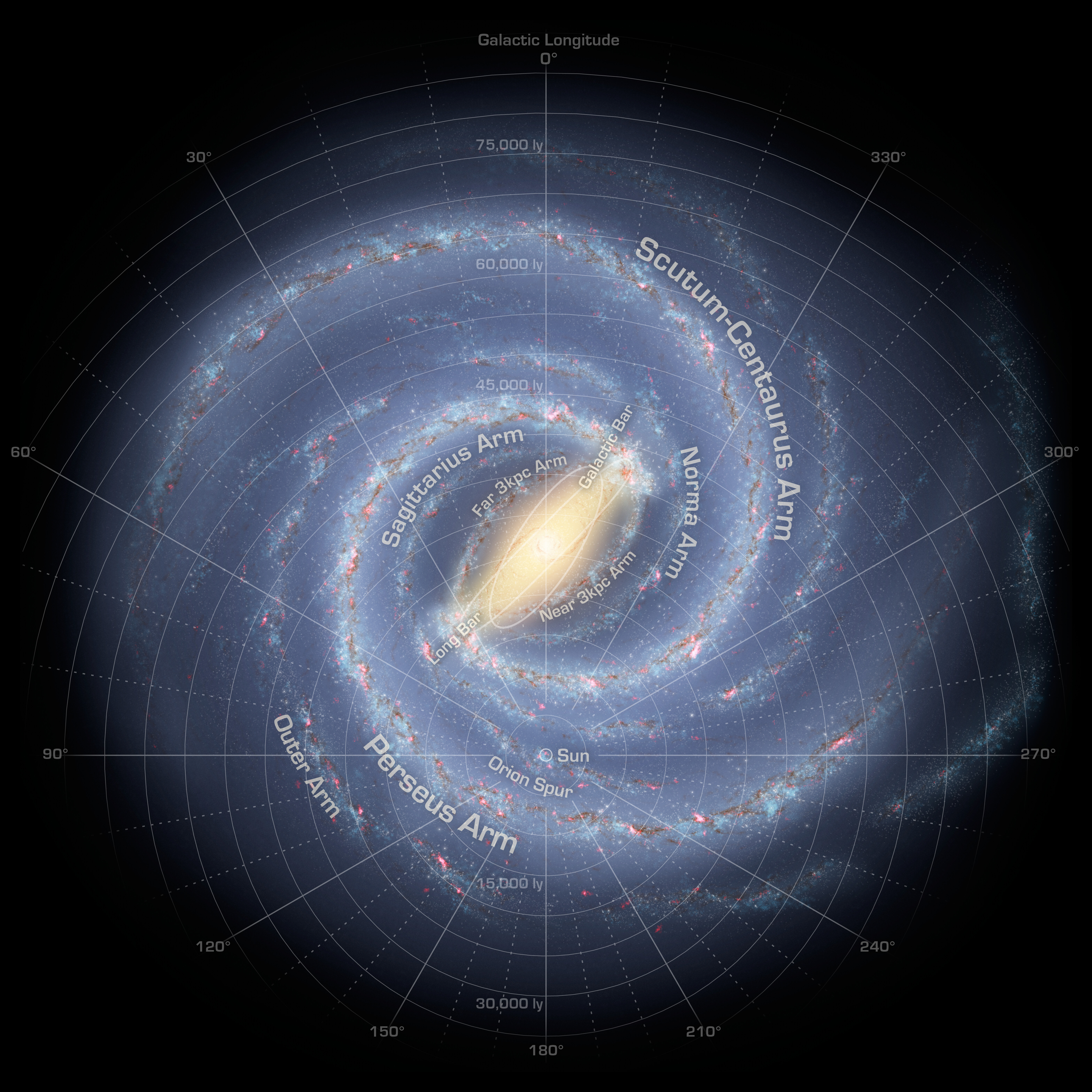
Dr. Eugene Vasiliev is an STFC Ernest Rutherford Fellow at the School of Mathematics and Physics, University of Surrey, UK. He specializes in galactic and stellar dynamics, focusing on supermassive black holes, Milky Way modeling, and the use of Gaia astrometric data. He develops advanced computational tools such as AGAMA, Forstand, and SMILE for dynamical modeling and action-based analysis. His research spans: Dynamical modeling of galaxies using the Schwarzschild method Action-based modeling of the Milky Way and dark matter halos Interactions between the Milky Way and the Large Magellanic Cloud Tidal disruption events and black hole feeding rates Structure and evolution of globular clusters and nuclear star clusters His recent publications (2022–2024) show a strong focus on refining Milky Way models using Gaia data, exploring phase-space substructures from past mergers, and improving black hole mass measurements in nearby galaxies. He frequently collaborates with leading researchers like James Binney, Vasily Belokurov, and Monica Valluri. His work is instrumental in advancing our understanding of galactic formation and evolution in the era of large-scale surveys. He has developed key software tools widely used in the astrophysics community. STFC Ernest Rutherford Fellowship Dr. Vasiliev actively mentors and collaborates on projects involving dynamical modeling, data analysis, and software development. He has delivered numerous talks and outreach lectures on black holes, galactic dynamics, and Gaia science. He leads research efforts that integrate observational data with theoretical modeling to probe the structure and history of the Milky Way.
Ayse Nyberg is a Professor of Physics at the Department of Physics, KTH Royal Institute of Technology (since 2015), following a Guest Professorship at KTH (2011–2015) and tenure as a Professor at Ankara University (2003–2013). Her academic journey includes a Dr.Sc. (PhD) in Nuclear Physics from the University of Oslo (1989) and a Docent degree from Uppsala University (1993). She has held roles as a postdoctoral fellow at the Niels Bohr Institute (1990–1992) and researcher positions at Uppsala University and the University of Oslo. Research Interests: Experimental Nuclear Physics and Gamma-Ray Spectroscopy, focusing on the structure of N=Z nuclei, extreme nuclear deformations, and Giant Dipole Resonance (GDR) in hot nuclei. Her work explores phenomena such as shape coexistence, proton emission, and nuclear decay mechanisms using advanced techniques like gamma-ray tracking with the AGATA array. Publications: Nyberg’s research spans over 50 peer-reviewed articles, emphasizing nuclear structure, decay processes, and experimental methodologies. Her recent work includes studies on exotic nuclei like 131Ba, Tc-87, and Ru-94, leveraging collaborations with facilities like FAIR (PANDA experiment) and AGATA. These projects highlight her contributions to understanding nuclear dynamics, symmetry properties, and decay mechanisms in extreme conditions. Collaborations & Labs: She is actively involved with the PANDA experiment at FAIR and the AGATA gamma-ray tracking array. Her research integrates theoretical models with experimental data from high-energy facilities, advancing knowledge in nuclear and particle physics.
Professor J. G. C. Veinot holds dual roles at the University of Alberta: as a Professor in the Department of Chemistry (Faculty of Science) and as Associate Dean of Research in the College of Natural and Applied Sciences. His research focuses on nanotechnology and organic optoelectronics, with particular expertise in nanoparticle synthesis, silicon-based materials, and hybrid organic-inorganic systems. Research Themes: Nanoparticle synthesis via solution chemistry, targeting metallic and semiconductor nanoparticles (e.g., Si, Ge, lanthanides) Development of silicon quantum dots and their applications in optoelectronics, biomedicine, and energy storage Design of hybrid materials, such as silicon nanocrystal-polymer composites for light-emitting diodes (OLEDs) Surface functionalization strategies to enhance material stability, biocompatibility, and optical properties Collaborations and Facilities: Active participation in international research networks Utilization of advanced facilities like the Canadian National Institute for Nanotechnology and the Canadian Light Source Grants and Advising: Extensive funding from interdisciplinary research programs Mentorship of students across chemistry, materials science, and engineering disciplines Labs and Teams: The Veinot Research Group operates at the intersection of chemistry, physics, and engineering, with projects spanning nanomaterial fabrication, optoelectronic device development, and biocompatible materials design.
Radosław Zaleski is a Professor at the Department of Material Physics, Institute of Physics, Faculty of Mathematics, Physics and Computer Science at Maria Curie-Skłodowska University in Lublin, Poland. He leads the Nuclear Physics Specialist Laboratory and coordinates laboratory exercises, including the development and implementation of LabVIEW-based automation courses. His academic career spans decades of research in materials science, with a focus on nanomaterials characterization using positron annihilation techniques. Professor Zaleski is actively involved in teaching nuclear energy concepts and supervising student projects related to physics and materials science. Professor Zaleski's primary research interests center around the physics and chemistry of nanomaterials, with particular expertise in positron annihilation lifetime spectroscopy (PALS) for characterizing porous materials. His work spans multiple domains including the characterization of polymeric composite materials, dynamics of polymer-solvent systems, drug delivery mechanisms, adsorption/desorption phenomena in mesopores, and phase behavior of liquids confined at the nanoscale. He has pioneered methods for porosimetry using annihilation techniques and investigates surface modification of structural alloys. His research bridges fundamental physics with practical applications in materials engineering and pharmaceutical sciences. Analysis of Professor Zaleski's recent publications reveals a consistent focus on applying positron annihilation techniques to solve complex problems in materials science. His work spans from fundamental studies of confined liquids and nanoporous materials to practical applications in catalysis, energy storage, and biomedical engineering. Notably, his research group has made significant contributions to understanding the behavior of materials at the nanoscale, particularly how confinement affects physical properties and phase transitions. The interdisciplinary nature of his work is evident in collaborations across physics, chemistry, materials science, and engineering disciplines. Professor Zaleski actively supervises student research and has developed specialized laboratory courses that integrate hands-on experience with theoretical knowledge. His teaching portfolio includes programming in LabVIEW, nuclear energy systems, and scientific presentation techniques for doctoral students. He emphasizes practical skills development through team projects and laboratory work, fostering both technical expertise and collaborative abilities among his students. Within the Institute of Physics, Professor Zaleski leads the Nuclear Physics Specialist Laboratory, which serves as a hub for advanced materials characterization using positron techniques. His laboratory work supports both fundamental research and practical applications, with equipment and methodologies that enable precise analysis of material structures at the nanoscale. The laboratory plays a key role in training the next generation of materials scientists and physicists.
Dr. hab. Artur Dobrowolski is a Professor at the Department of Theoretical Physics within the Faculty of Mathematics, Physics and Computer Science at Maria Curie-Skłodowska University (UMCS). His research focuses on nuclear physics, particularly in the areas of nuclear symmetry, fission dynamics, and collective nuclear models. Specializes in quadrupole-octupole collective models , fission barrier calculations , and symmetry effects in nuclear structure Active in computational nuclear physics with expertise in eigenvalue problems and Yukawa-folded potentials Collaborates on nuclear level-density models and rotational-vibrational basis functions His recent publications (2013–2019) analyze topics such as rotational bands in deformed nuclei, symmetry energy in nuclear shapes, and fission dynamics of heavy isotopes. Research keywords include nuclear theory, collective models, dipole deformations, and fission barrier calculations. Professional contact: artur.dobrowolski@mail.umcs.pl
Camilla Stitt is a Research Fellow in the Department of Materials at Imperial College London, where she has been affiliated since June 2016. She holds a first-class BSc in Environmental Geoscience (2011) and a PhD in Materials Science (2015), both from the University of Bristol. Her doctoral research focused on uranium corrosion dynamics relevant to nuclear waste storage and disposal. Her current research emphasizes the corrosion behavior of stainless steels and FeCr alloys, leveraging advanced experimental techniques such as in-situ synchrotron analysis, X-ray Photoelectron Spectroscopy (XPS), and Transmission Electron Microscopy (TEM) to study passivation layer structures. She actively contributes to interdisciplinary initiatives, including the Shell-Imperial Advanced Interfacial Materials Science (AIMS) Centre. Camilla serves as a post-doctoral representative in the Department of Materials and participates in the Athena Swan committee, advocating for gender equality in STEM. No specific grants, awards, or advised students are documented in the provided information.
Dr Elizabeth Williams is a Senior Lecturer at the ANU Centre for European Studies and an Honorary Senior Lecturer in the ANU Department of Nuclear Physics. She holds a B.S. (Intensive) in Physics from Yale University (2004) and a Ph.D. in Experimental Nuclear Structure from Yale (2009). Her research bridges nuclear physics and applied ethics, focusing on AI governance and responsible innovation. As a Research Fellow at the 3A Institute, she develops frameworks for managing data, AI, and cyber-physical systems in societal contexts. Her work emphasizes anticipatory governance, ethical AI implementation, and the societal impacts of emerging technologies. Her academic journey includes postdoctoral roles at Yale and CSIRO, an ARC DECRA fellowship at ANU (2012–present), and leadership in transdisciplinary research programs. Key interests include fusion-fission dynamics in superheavy elements, trustworthy autonomous systems, and policy around AI ethics. She has contributed to projects like the AI Observatory for the Nuclear Sector and studies on rehabilitation robotics in healthcare. Williams has published extensively on nuclear physics phenomena (e.g., quasifission, fission dynamics) and AI-related topics such as voice data documentation, trust in human-machine systems, and defense technology implications. Her research highlights the intersection of science and policy, advocating for proactive approaches to technological development's societal consequences.
Zhenmin Zou is a Lecturer in Mechanical and Aerospace Engineering at Nanjing University of Aeronautics & Astronautics (NUAA), China. He holds a BEng, MEng, and PhD from NUAA. His career includes roles as a Research Associate and Research Fellow at UMIST and the University of Manchester. His research focuses on composite materials, structural fracture mechanics, thermomechanical behavior of hybrid composites, and biomechanical systems. Key areas include fiber hybrid composites, microstructural analysis, and advanced manufacturing techniques for biomedical applications. Education: BEng (Aircraft Engineering, NUAA), MEng (Solid Mechanics, NUAA), PhD (Aircraft Engineering, NUAA). Research Interests: Composite materials and structures Structural dynamics and fracture High strain rate material response Biomechanics and bioinspired designs Finite element modeling Thermomechanical behavior of composites Recent work emphasizes fiber hybridization effects, micro-stress fields in composites, and fatigue characterization of joints. His contributions to the Manchester Biomanufacturing Centre and Structural and Fire Engineering themes align with UN Sustainable Development Goals. Collaborations include international institutions and industry partners in materials science and biomedical engineering.
Xinhua Xie is a staff scientist at the Laboratory for Non-linear Optics at the Paul Scherrer Institute (PSI) in Switzerland. He holds a PhD in Physics (2007) from TU Wien and completed his MSc (2004) at Shanghai Institute of Optics and Fine Mechanics, China, and BSc (2001) at University of Science and Technology of China. His institutional responsibilities include installation and maintenance of SwissFEL experimental lasers, development of diagnostics for XUV-THz wavelength ranges, and conducting user operations at SwissFEL. Education: BSc in Physics (2001), University of Science and Technology of China MSc in Physics (2004), Shanghai Institute of Optics and Fine Mechanics PhD in Physics (2007), TU Wien Xinhua Xie’s research focuses on ultrafast spectroscopy of electron and nuclear dynamics in atoms and molecules under ultrashort laser and X-ray pulses , aiming to uncover the role of these dynamics in light-induced processes. His recent publications emphasize Rydberg electron dynamics, frustrated tunneling ionization, quantum control via interferometric techniques, and polarization-dependent inner-shell excitations. He contributes to the development of advanced laser systems, including sub-5fs violet pulses and self-compression methods in ambient air. Key trends in his work include strong-field quantum control , electron recollision processes , and time-resolved molecular imaging . His team at PSI explores applications in magnetic scattering, stimulated Raman spectroscopy, and nonlinear optical phenomena like second harmonic generation under extreme conditions. Scientific Awards: No awards or honors explicitly mentioned As a staff scientist, Xie collaborates on SwissFEL experimental infrastructure and engages in both independent and team-based research. His lab provides diagnostics support for XUV-THz laser systems and participates in international collaborations for attosecond-scale studies of molecular dimers and Rydberg state formation.




--tojpeg_1549295710630_x2.jpg)