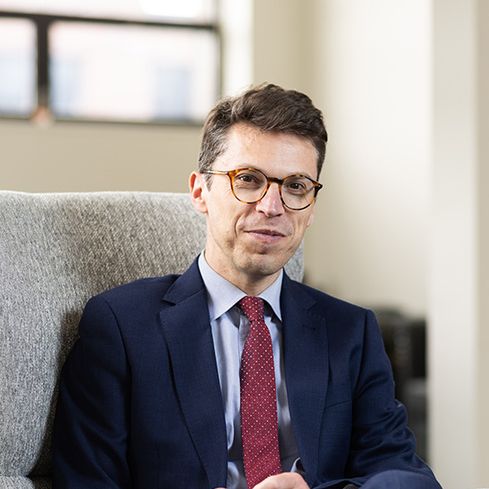
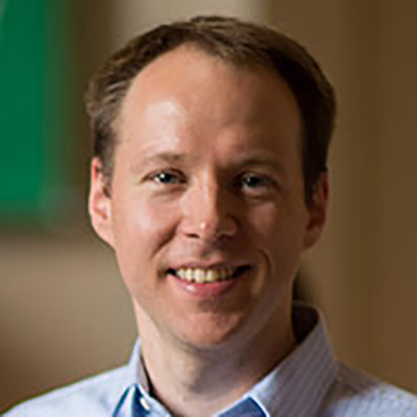
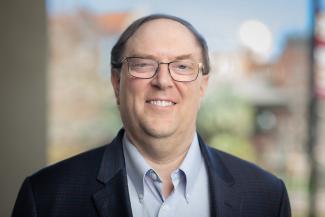
John F. Beacom is a Distinguished Professor of Physics and Astronomy at The Ohio State University and Director of the Center for Cosmology and AstroParticle Physics (CCAPP). His academic roles include leadership in astroparticle physics research and education. He holds joint appointments in both the Department of Physics and the Department of Astronomy within the College of Arts and Sciences. Beacom earned his Ph.D. in Physics from the University of Wisconsin (1997) and dual B.S. degrees in Physics and Mathematics from the University of Kansas (1991). He has held postdoctoral positions at Fermilab and Caltech before joining Ohio State in 2004. His research focuses on neutrinos, dark matter, and multi-messenger astrophysics, with emphasis on neutrino detection techniques, supernova physics, and cosmological implications. He leads major projects like the All-Sky Automated Survey for Supernovae (ASAS-SN) and contributes to the Deep Underground Neutrino Experiment (DUNE). Awards: APS Fellow (2014), NSF CAREER Award (2005–2010), multiple teaching awards for distinguished instruction. Grants: Extensive funding from NSF, DOE, and collaborative international initiatives. Labs/Teams: CCAPP, DUNE Collaboration, ASAS-SN project. His articles span neutrino physics, detector development, and observational astrophysics, reflecting interdisciplinary expertise in theoretical and experimental particle astrophysics.
Vivek Shenoy is the Eduardo D. Glandt President's Distinguished Professor at the University of Pennsylvania, with primary appointments in the Department of Materials Science and Engineering and secondary appointments in Bioengineering and Mechanical Engineering and Applied Mechanics. He leads the Multiscale Mechanobiology and Biomaterials Laboratory, which focuses on developing theoretical frameworks and numerical methods to understand complex biological and engineering systems across multiple length scales. Shenoy's research spans mechanobiology, chromatin organization, cell mechanics, and biomaterials. His work addresses the fundamental challenge of modeling how small-scale cellular phenomena couple with long-range tissue-level interactions across micrometers to centimeters. By integrating insights from soft matter physics, solid mechanics, chemistry, and applied mathematics, his group develops multiphysics continuum and mesoscale theories to elucidate mechanisms controlling both biological and engineering systems. His recent publications demonstrate an increasing focus on nuclear mechanics, chromatin organization, and the interplay between mechanical forces and gene regulation. Analysis of Shenoy's publication record reveals a strong interdisciplinary approach, with high-impact papers spanning biophysics, materials science, and cell biology. His work shows consistent evolution from fundamental mechanics of materials to complex biological systems, with recent emphasis on the mechanical regulation of chromatin architecture, cell migration dynamics in 3D environments, and mechanotransduction in development and disease. His publications appear regularly in top journals including Nature, Science, and their affiliated publications, demonstrating significant influence across multiple fields. Eduardo D. Glandt President's Distinguished Professor Multiple publications in Nature, Science, and PNAS Active research program with publications through 2025 Shenoy actively mentors students and postdocs through his laboratory, with numerous co-authored publications indicating strong mentorship. His research program appears to be well-funded through multiple grants supporting his work in mechanobiology and biomaterials. The Multiscale Mechanobiology and Biomaterials Laboratory maintains active collaborations across disciplines and institutions, reflecting the interdisciplinary nature of his research. The Multiscale Mechanobiology and Biomaterials Laboratory, housed within the Department of Materials Science and Engineering at the University of Pennsylvania, serves as the primary research hub for Shenoy's work. The lab maintains an active presence on social media (Twitter: @ShenoyLab) for updates on activities and publications. Their research approach combines theoretical modeling with experimental validation to address fundamental questions at the interface of mechanics, materials science, and biology.
Seth Aubin is a Professor of Physics at the College of William & Mary, affiliated with the College of Arts & Sciences. His research focuses on experimental atomic, molecular, and optical physics, with emphases on precision measurements and quantum phenomena. Key projects include developing atom chip technologies for trapping ultracold atoms, Rydberg atom-based sensors for charged particle diagnostics, and francium spectroscopy for weak interaction studies. Education: License de Physique (ENS Paris/MIP), 1994 B.Sc. in Physics, Yale University, 1995 Ph.D. in Physics, SUNY Stony Brook, 2003 Research Themes: Quantum Trapping Techniques: Innovations in AC Zeeman atom chip traps and RF microtraps to suppress potential roughness Rydberg Atom Sensors: Pioneering applications in electron beam profiling and electromagnetic field imaging Franium Spectroscopy: Collaborative work on parity-violation measurements and isotope shift analyses Recent Article Trends: Recent work emphasizes practical implementations of quantum sensors (e.g., charged particle beam diagnostics) and foundational trapping technology advancements. Over 30 peer-reviewed publications since 2018 reflect sustained contributions to atom chip systems and precision measurements. Awards: American Physical Society Fellow (APS Fellow) Grants & Collaborations: Lead PI on atom chip-based interferometry projects Contributing member to the FrPNC collaboration at TRIUMF (atomic parity violation studies) Developed hybrid optical dipole traps for magnetometry applications Labs & Infrastructure: Manages state-of-the-art atomic physics labs at W&M, including ultrahigh-vacuum systems for francium trapping and laser stabilization setups. Active in developing microwave/radio-frequency atom chip platforms for next-generation quantum sensors.
Yaojun Zhang is an Assistant Professor in the Department of Physics & Astronomy and the Department of Biophysics at Johns Hopkins University. She earned her PhD in Physics from the University of California, San Diego (2015), followed by postdoctoral fellowships at the Princeton Center for Theoretical Science (2015-2018) and the Princeton Center for the Physics of Biological Function (2018-2021). Her research focuses on biological physics, particularly the complex behaviors of biomolecules and their assemblies across scales—from single-molecule folding to intracellular transport and biomolecular phase separation. She employs theoretical, mathematical, and computational tools to bridge biological questions with physical principles. Education PhD in Physics, University of California, San Diego (2015) Postdoctoral Fellowships: Princeton University (2015-2021) Research Interests Her group studies biomolecular condensates and liquid-liquid phase separation, exploring how microscopic interactions determine macroscopic properties of cellular compartments. Key areas include: Biomolecular condensate formation and dynamics Phase separation in cellular environments Interactions between biomolecules and cellular components Biophysics of intracellular transport Collaborations & Tools Zhang collaborates with experimentalists to validate theoretical models and develops frameworks for understanding condensate functions, such as surface tension, stoichiometry, and phase diagrams. Her work addresses challenges like condensate stability, molecular exclusion, and biological function regulation. Labs & Resources She leads the Zhang Lab , which integrates experimental and computational approaches. Her team’s research is supported by resources at the Bloomberg Center for Physics and Astronomy.
Massachusetts Institute of TechnologyUnited States
Bradley D. Olsen is a full professor in the Department of Chemical Engineering at the Massachusetts Institute of Technology (MIT), where he leads research at the intersection of polymer science, soft matter physics, and bioengineering. His work focuses on designing materials for critical applications in biotechnology, hemostasis, and sustainable polymer development while advancing fundamental understanding of polymer network mechanics and self-assembly. Education: Ph.D. in Chemical Engineering, University of California Berkeley (2007) S.B. in Chemical Engineering, Massachusetts Institute of Technology (2003) Olsen's research spans protein-based materials, block copolymer phase behavior, and mechanochemical hydrogels. He has pioneered methods for quantifying polymer network topology, developing hemostatic nanoparticles, and creating bio-inspired materials for selective biomolecular transport and medical applications. His recent publications emphasize data-driven approaches to polymer characterization and educational outreach in materials science. Scientific Awards: American Physical Society (APS) Fellow (2023) Fulbright Amazonia Scholar (2023) Alexander and I. Michael Kasser Chair in Chemical Engineering (2021) ACS Macro Letters Young Investigator Award (2021) MIT Committed to Caring Honor (2019) AIChE Owens Corning Early Career Award (2019) APS Dillon Medal (2018) Kavli Emerging Leader in Chemistry (2017) ACS Polymer Division Fellow (2016) Camille Dreyfus-Teacher Scholar (2015) Alfred P. Sloan Research Fellow (2014) NSF Career Grant (2013) NIH Postdoctoral Fellowship (2008-2009) Hertz Fellow (2003-2007) Barry M. Goldwater Scholarship (2002) Olsen has received significant grant support including NSF Career (2013) and AFOSR (2012) awards. His teaching activities include innovative international outreach like the 2025 soccer-themed science camp in Brazil. The Olsen Group at MIT explores advanced materials with applications ranging from trauma care to sustainable polymers.
Andrew Childs is a Professor at the University of Maryland, affiliated with the Department of Computer Science and the Institute for Advanced Computer Studies (UMIACS). He serves as Director of the NSF Quantum Leap Challenge Institute for Robust Quantum Simulation (RQS) and is a Fellow at the Joint Center for Quantum Information and Computer Science (QuICS). His research focuses on quantum algorithms for simulating physical systems, algebraic problems, and quantum walk protocols, with applications in quantum computing and computational complexity. University of Maryland Institute for Advanced Computer Studies (UMIACS) Joint Center for Quantum Information and Computer Science (QuICS) NSF Quantum Leap Challenge Institute for Robust Quantum Simulation Childs' research spans quantum simulation, quantum Fourier transform, phase estimation, and Hamiltonian dynamics. He has developed techniques to reduce quantum computational resources for simulating quantum systems and explored limitations of quantum computers through hidden subgroup problems and non-unitary dynamics. His publications cover diverse areas including quantum walk optimization, Hamiltonian simulation methods, and applications to cryptography and condensed matter physics. Recent works address spatial search algorithms, product formulas for commutators, and quantum routing protocols. As an educator, Childs has taught courses on quantum algorithms and information processing at both the University of Maryland and University of Waterloo, with lecture notes and materials spanning multiple years. Contact: amchilds@umd.edu | Office: ATL 3359 | Affiliated with University of Maryland's quantum research institutes.
Christopher Kanan is a tenured Associate Professor of Computer Science at the University of Rochester, leading the AI Initiative within the Hajim School of Engineering & Applied Sciences. He holds secondary appointments in Brain and Cognitive Sciences, the Goergen Institute for Data Science and AI (GIDS-AI), and the Center for Visual Science. His research focuses on deep learning systems for artificial general intelligence (AGI), including continual learning, medical computer vision, and visual question answering. Previously, he was an Associate Professor at RIT’s Carlson Center for Imaging Science and a leader at Paige.AI, contributing to the FDA-cleared Paige Prostate system. Kanan earned his PhD from UC San Diego, completed postdoctoral work at Caltech, and worked at NASA JPL. Education: PhD in Computer Science, UC San Diego MS in Computer Science, University of Southern California Bachelor’s in Philosophy and Computer Science, Oklahoma State University Research Interests: Kanan’s work spans foundational AI capabilities like continual learning, medical imaging (pathology and radiology), multi-modal reasoning, and cognitive science-inspired models. His lab develops bias-robust AI systems and applies deep learning to healthcare and fusion research. Articles Trends: His recent work emphasizes out-of-distribution generalization, foundation models in pathology, and stability in continual learning. Key themes include AI applications in healthcare, model robustness, and neuroscience-inspired algorithms. Awards: NSF CAREER Award Senior Member, AAAI and IEEE DoE and NSF grants totaling $5M+ DARPA/ARL awards Advising & Grants: Mentored over 10 PhD students, including Robik Shrestha and Usman Mahmood. Secured grants for AI in nuclear fusion and medical imaging. Led RIT’s Center for Human-aware AI (CHAI) as Associate Director. Labs & Teams: Heads the University of Rochester AI Initiative, collaborates with Paige.AI, and leads teams advancing AI in pathology and robotics. His lab’s KLab (klab.cis.rit.edu) focuses on vision and learning systems.
Ankit Saxena serves as Assistant Professor in the Department of Mechanical Engineering at the University of Wyoming since 2024, focusing on innovative applications of additive manufacturing in structural engineering and materials science. His work bridges theoretical design with practical implementations in energy, aerospace, and robotics systems. Education: Ph.D. in Mechanical Engineering, Penn State University (2024) M.S. in Mechanical Engineering, Penn State University (2020) B.S. in Mechanical and Automotive Engineering, Delhi Technological University (2016) Dr. Saxena's research centers on developing adaptive stiffness structures , meta-materials , and functionally graded systems through advanced additive manufacturing techniques. His work specifically targets energy applications (nuclear, wind, hydrogen, oil/gas) and aerospace challenges, with emphasis on structural health monitoring and vibration damping. The SUMMIT Lab under his direction creates multi-functional materials enabling shape morphing and self-strengthening properties for next-generation engineering solutions. His publication record (2020-2024) reveals a consistent trajectory toward multi-physics meta-material design , with dominant themes in TPMS lattice optimization, fluid-structure interaction systems, and medical robotics applications. Key methodological contributions include novel fluid accumulator integration, laser powder bed fusion parameterization, and non-pneumatic tire architectures. Scientific Recognition: ASME Graduate Teaching Fellow (2022-2024) Harold F. Martin Graduate Assistant Outstanding Teaching Assistant Award (Penn State, 2023) Dr. Saxena teaches core materials courses (ME 3450: Properties of Materials; ME 4150: Mechanical Behavior of Materials) while expanding his research group through active recruitment of PhD candidates for 2026. His teaching philosophy emphasizes practical applications of theoretical concepts, recognized through multiple Penn State teaching fellowships. The SUMMIT Lab operates at the intersection of Wyoming's energy priorities and cutting-edge manufacturing research, maintaining strategic focus on renewable energy infrastructure and aerospace applications through metal additive manufacturing innovations.
Massachusetts Institute of TechnologyUnited States
Nuno F. Loureiro is Professor of Nuclear Science and Engineering and the Herman Feshbach (1942) Professor of Physics at MIT, and serves as Director of MIT's Plasma Science and Fusion Center (PSFC) since May 2024. He holds joint appointments in MIT's School of Engineering and School of Science, and is affiliated with the MIT Kavli Institute for Astrophysics and Space Research and the MIT Energy Initiative. Director, Plasma Science and Fusion Center (2024-present) Professor of Nuclear Science and Engineering (2016-present) Herman Feshbach (1942) Professor of Physics (current) Loureiro earned his MEng in Physics from Instituto Superior Técnico in Lisbon (2000) and his PhD in Physics from Imperial College London (2005). He completed postdoctoral work at Princeton Plasma Physics Laboratory (2005-07) and UKAEA Culham Centre for Fusion Energy (2007-09) before returning to lead the Theory and Modeling Group at the Institute for Plasmas and Nuclear Fusion at IST Lisbon. Loureiro's research focuses on fundamental aspects of magnetized plasma dynamics, with particular emphasis on magnetic reconnection, magnetic field generation and amplification, confinement and transport in fusion plasmas, and turbulence in strongly magnetized, weakly collisional plasmas. His work bridges theoretical physics with computational simulations using state-of-the-art tools like the Viriato code, which he developed for reduced-gyrokinetic modeling. His research has significant implications for both understanding cosmic phenomena and advancing practical fusion energy solutions. Analysis of Loureiro's recent publications reveals a strong focus on magnetic reconnection mechanisms across multiple scales, from electron-only reconnection to relativistic plasma turbulence. His work increasingly incorporates computational innovations, including quantum computing approaches for plasma modeling. The research spans applications from solar physics and astrophysical phenomena to practical fusion energy challenges, demonstrating the unifying nature of plasma physics across disciplines. NSF Presidential Early Career Award for Scientists and Engineers (PECASE) (2025) American Physical Society Fellow (2022) NSF CAREER Award (2017) Thomas H. Stix Award for Outstanding Early Career Contributions (2015) Loureiro leads the Loureiro Group at MIT, which conducts research at the interface of analytical theory and numerical simulations on supercomputers. His laboratory has developed the Viriato code for plasma simulations and investigates phenomena relevant to both fusion energy and astrophysical plasmas. As Director of the PSFC, he oversees one of MIT's largest research laboratories with over 250 full-time researchers, staff members, and students working across 250,000 square feet of lab space.
Professor Mikko Haataja is a distinguished faculty member in the Department of Mechanical and Aerospace Engineering at Princeton University's School of Engineering and Applied Science. Holding a Ph.D. from McGill University (2003), he leads the Haataja Research Group focused on theoretical and computational approaches to materials science and physical biology. His office is located in D404C Engineering Quadrangle, and he serves as an advisor to numerous graduate students working at the intersection of physics, materials science, and biology. Professor Haataja's research spans multiple domains including theoretical and computational materials science, physics of materials, and physical biology. His work examines microstructure formation during solid-solid phase transformations and solidification, growth of electrodeposited thin films and quantum heterostructures, dynamics of driven interfaces with mobile impurities, recrystallization kinetics, cell signaling mechanisms, and the regulation & self-organization of 'lipid rafts' in plasma membranes. His group has pioneered concepts in 'dynamically programmable electromechanical 2D materials' and investigates phase separation phenomena in biological systems. His publication record demonstrates significant contributions across several key areas: intracellular phase transitions and biomolecular condensates, 2D transition metal dichalcogenide materials, lipid bilayer membrane physics, solid oxide fuel cells and batteries, and organic semiconductor thin films. His most recent work focuses on amyloid-like fibril formation, liquid-liquid phase separation in biological contexts, and defect engineering in 2D materials, reflecting his interdisciplinary approach that bridges physics, materials science, and biology. Professor Haataja actively mentors graduate students and postdoctoral researchers, with numerous co-authored publications indicating strong advising relationships. His research program encompasses multiple funded projects investigating materials for energy conversion and storage, intracellular organization mechanisms, and novel 2D material systems. The Haataja Group maintains strong collaborations with other Princeton researchers and external institutions, particularly in the fields of biophysics and advanced materials. The Haataja Group operates as a dynamic research laboratory employing computational modeling and theoretical approaches to address fundamental questions in materials science and biophysics. Their work spans from atomic-scale simulations to continuum modeling, with particular emphasis on phase-field crystal models, membrane biophysics, and 2D material systems. The group maintains specialized computational infrastructure for multiscale modeling and collaborates extensively with experimental groups to validate theoretical predictions.
Dr. Herb Lin is the Hank J. Holland Fellow in Cyber Policy and Security at the Hoover Institution and Senior Research Scholar for Cyber Policy and Security at the Center for International Security and Cooperation (CISAC), both at Stanford University. He also serves as Chief Scientist, Emeritus for the Computer Science and Telecommunications Board of the National Academies, where he worked from 1990 to 2014, and as Adjunct Senior Research Scholar and Senior Fellow in Cybersecurity at Columbia University's Saltzman Institute for War and Peace Studies. Dr. Lin received his doctorate in physics from MIT, providing him with a strong technical foundation that informs his policy work at the intersection of technology and national security. His academic background bridges the gap between deep technical understanding and policy application in the cybersecurity domain. Dr. Lin's research focuses on the policy dimensions of cybersecurity and cyberspace, with particular emphasis on offensive cyber operations as instruments of national policy, information warfare, and influence operations affecting national security. His work addresses critical challenges at the intersection of emerging technologies like artificial intelligence, quantum computing, and their implications for nuclear security, election integrity, and democratic processes. He has been instrumental in analyzing how cyber capabilities are transforming traditional security paradigms and how policy frameworks must adapt to these changes. His extensive publication record reveals a consistent focus on the evolving relationship between cyber capabilities and national security strategy. Lin's work demonstrates increasing attention to the implications of artificial intelligence for warfare, the vulnerabilities created by quantum computing for current cryptographic systems, and the growing threat of cyber-enabled information warfare to democratic institutions. His research trajectory shows a progression from traditional cybersecurity issues toward the broader implications of digital technologies for national and international security. Member of Science and Security Board of Bulletin of the Atomic Scientists Served on President Obama's Commission on Enhancing National Cybersecurity (2016) Regular congressional testimony on cybersecurity matters Contributor to Stanford Emerging Technology Review As a mentor and collaborator, Dr. Lin works extensively with policymakers, military officials, and technology experts to translate complex cybersecurity concepts into actionable policy recommendations. His approach emphasizes practical solutions to emerging threats while recognizing the technical limitations and policy constraints that shape real-world security outcomes. Dr. Lin is associated with multiple research initiatives including Stanford's Center for International Security and Cooperation and the Stanford Emerging Technology Review, which aim to connect technological advances with policy considerations for national security decision-makers.
Massachusetts Institute of TechnologyUnited States
Benoit Forget is the Korea Electric Power Professor of Nuclear Engineering and the Department Head of Nuclear Science and Engineering at MIT. He joined MIT in 2008 and leads the MIT Computational Reactor Physics Group (CRPG), which focuses on advancing computational methods for reactor simulation. His research spans Monte Carlo and deterministic transport methods, multiphysics coupling, and uncertainty quantification. He co-developed OpenMC and OpenMOC, open-source tools for reactor analysis. Forget holds a PhD from Georgia Tech and has received awards including the 2013 Landis Young Member Engineering Achievement Award. He teaches courses such as 22.05 Neutron Science and Reactor Physics, and actively contributes to MIT’s computational science initiatives. Educations: PhD in Nuclear Engineering (Georgia Tech, 2006), MS and BS in Energy Engineering (École Polytechnique de Montréal, 2003). Research Interests: Computational reactor physics, radiative transport, high-performance computing, Monte Carlo and deterministic methods, multiphysics coupling, nuclear data uncertainty. Labs/Teams: MIT Computational Reactor Physics Group (CRPG), Consortium for Advanced Simulation of Light Water Reactors (CASL).
Todd Adams is a Professor in the Department of Physics at Florida State University . He leads research in particle physics (high energy experiment) with the CMS Experiment at CERN and previously the D0 Experiment at Fermilab , focusing on searches for new physics in underexplored datasets through long-lived particles , machine learning techniques , and charged particle detection . Education : PhD in Experimental Particle Physics from University of Notre Dame (1997); Postdoctoral researcher at Kansas State University (1997-2001) His research includes electromagnetic calorimeter studies for CMS, calorimeter upgrade investigations , and Monte Carlo simulation leadership for D0. He pioneered searches for neutral long-lived particles and top quark decay anomalies , co-authored key publications in Physical Review Letters and Journal of High Energy Physics , and served as Faculty Senate President and Board of Trustees member at FSU. Notable affiliations include: Collaborations : CMS, D0, NuTeV, NuSOnG Laboratories : CERN (Geneva), Fermilab (Chicago), Florida State High Energy Physics Group Key contributions: Co-convenor of D0 Monte Carlo Simulations and New Physics Signatures groups Expert in heavy quark production , dimuon analysis , and neutral current studies Publications on Higgs boson discovery implications, supersymmetry , and anomalous gauge couplings Scientific Awards : Fellow, American Association for the Advancement of Science Multiple Fermilab Result of the Week highlights (2006, 2008, 2013) Contributor to CMS Thesis Award Committee He advises graduate students in experimental particle physics and contributes to detector technology development, particularly in timing studies , calibration , and trigger systems . His research program will continue through the LHC's 2035 operations with ongoing CMS data analysis.
Andrew Spakowitz is a Professor of Chemical Engineering, Materials Science and Engineering, and by courtesy, Applied Physics and Chemistry at Stanford University. He currently serves as the Senior Associate Dean for Research and Faculty Affairs and holds the Tang Family Foundation Chair of the Department of Chemical Engineering. His academic career at Stanford spans from Assistant Professor (2006-2014) to Associate Professor (2014-2020) and now Professor since 2020. Dr. Spakowitz earned his PhD in 2004, MS in 2001 from the California Institute of Technology, and his BS in Chemical Engineering from the University of Wisconsin, Madison in 1999. He completed postdoctoral training in Molecular and Cell Biology and Biophysics at UC Berkeley from 2004-2006. His research focuses on theoretical and computational approaches to understanding biological processes and complex materials. The Spakowitz lab addresses fundamental chemical and physical phenomena through four main research themes: chromosomal organization and dynamics, protein self-assembly, polymer membranes, and charge transport in conducting polymers. His group employs diverse theoretical and computational methods including analytical theory of semiflexible polymers, polymer field theory, continuum elastic mechanics, Brownian dynamics simulation, equilibrium and dynamic Monte Carlo simulations, and reaction-diffusion modeling. Analysis of his recent publications reveals a strong emphasis on epigenetics and chromatin dynamics, with significant work on DNA methylation patterns, nucleosome clustering, and chromosome organization. His research also extends to polymer physics applications in biological systems, particularly in respiratory diseases, water purification membranes, and bacterial phage interactions with human mucus. Tang Family Foundation Chair of the Department of Chemical Engineering Professor Spakowitz mentors several graduate students and postdoctoral scholars in the Chemical Engineering and Materials Science departments. His lab members work on diverse projects spanning from chromatin dynamics to polymer membranes for water purification. He teaches multiple courses including CHEMENG 120B (Energy and Mass Transport), CHEMENG 340 (Molecular Thermodynamics), CHEMENG 466 (Polymer Physics), and CHEMENG 467 (Physics of Biomacromolecules). The Spakowitz lab operates from Clark S295 at Stanford University, conducting theoretical and computational research that bridges chemistry, physics, biology, and engineering disciplines to address complex problems across multiple length and time scales.
Cathryn Carson is a Professor in the Department of History at the University of California, Berkeley. Her work bridges the philosophical, cultural, and political dimensions of 20th-century science, with a focus on theoretical physics, nuclear history, and the integration of social sciences and humanities into engineering education. Education: AB in History and Philosophy of Science from University of Chicago (1990) AM in Physics from Harvard University (1993) PhD in History of Science from Harvard University (1995) Her research explores the interplay between science and philosophy, particularly in Germany and the U.S., alongside the institutionalization of data science. She teaches graduate and undergraduate courses, including Berkeley’s Data Science major’s Human Contexts and Ethics of Data course. Scientific Awards: Berkeley Collegium Award for Excellence in Undergraduate Education (2017) Distinguished Service Award, Division of Social Sciences (2014) Carol D. Soc Distinguished Graduate Student Mentoring Award (2014) Fellow of the American Association for the Advancement of Science Fellow of the American Physical Society Mellon New Directions Fellowship NSF CAREER Award Alexander von Humboldt Foundation Research Fellowship Member, Institute for Advanced Study, Princeton Carson has served in multiple leadership roles, including Associate Dean of Social Sciences, founding Interim Director of the D-Lab (Social Science Data Laboratory), and Faculty Lead of Berkeley’s Data Science Education Program. She is currently accepting students for advising and contributes to campus governance through roles in the Academic Senate.