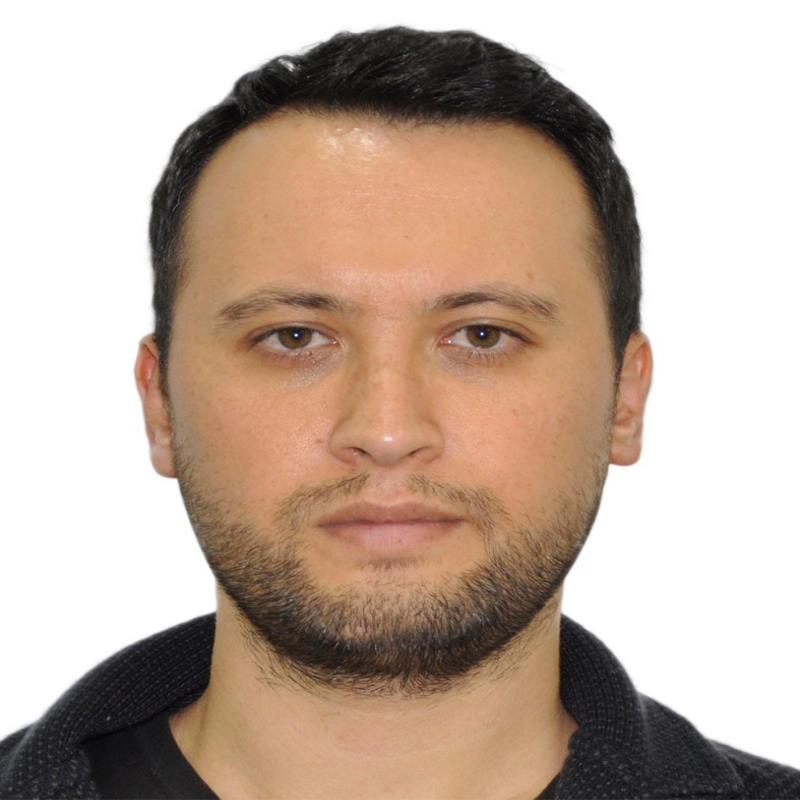
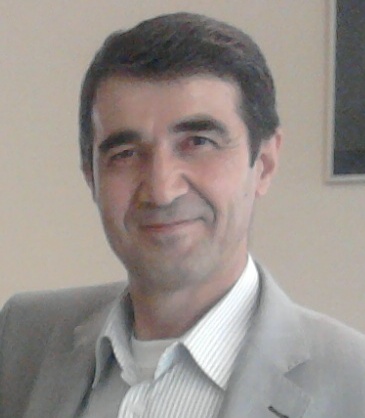
Prof. Dr. Hüseyin Yapıcı is a faculty member in the Department of Mechanical Engineering at Başkent University . His research focuses on Nuclear Energy Systems , Accelerator Technology , and Thermodynamics . Nuclear Reactor Design Energy Systems Optimization Heat Transfer Analysis His work involves numerical simulations , neutronic analysis , and nuclear waste transmutation . Recent publications highlight three-dimensional power density modeling in accelerator-driven systems and tritium production studies. Prof. Yapıcı has supervised numerous students, including Gizem Bakır , Alper Buğra Arslan , and Büşra Durmaz , across diverse projects from fusion-fission hybrids to renewable energy systems .
Prof. Uner Colak is a Professor at Istanbul Technical University's Energy Institute, specializing in nuclear reactor engineering, computational fluid dynamics, and thermal hydraulics. His research focuses on high-temperature reactors, neutron flux analysis, and reactor safety. He has led numerous projects on nuclear fuel management, hydrogen production, and energy systems optimization. Colak has received the TÜBA Scientific Copyright and Translated Works Awards Program (TEÇEP) in 2015. His work spans reactor core design, neutron transport analysis, and droplet dynamics, with over 49 publications and 12 projects since 2001. Research interests include nuclear reactor core physics, computational modeling for reactor safety, and advanced energy systems. His recent work involves validating reactor analysis codes, optimizing load dispatch algorithms, and investigating droplet-surface interactions for heat transfer applications. Projects include developing pebble flow dynamics for high-temperature reactors and assessing nuclear power localization strategies. His articles highlight contributions to reactor physics, fluid dynamics, and energy policy. Current activities include active projects on hydrogen technologies and sustainable energy solutions until 2027. Colak collaborates internationally, contributing to global nuclear energy advancements and training future researchers through ongoing theses supervision.
Dr. Sueda Saylan is an Assistant Professor at the Faculty of Engineering, Özyeğin University, since 2024. Her academic journey includes a Ph.D. in Interdisciplinary Engineering (2016) from Masdar Institute (now Khalifa University), postdoctoral research at Khalifa University (2016-2022), and an MSCA Postdoctoral Fellowship at Bilkent University (2022-2024). She has also held visiting researcher positions at MIT (2014) and the University of Tokyo (2016). Education Doctorate: Interdisciplinary Engineering, Masdar Institute of Science and Technology (2016) Master's: Microelectronic Manufacturing Engineering, Rochester Institute of Technology (2004) Bachelor's: Mechanical Engineering, Middle East Technical University (2002) Dr. Saylan's research focuses on memristive devices , photovoltaics , and light-matter interactions at micro/nanoscale . Her work bridges materials science and electronic engineering, with recent publications on memristor-based sensors, spectral filtering in silicon, and machine learning integration for biomedical diagnostics. Key trends from her 15 most recent articles (2013-2025) include: Advancing memristor technology for radiation sensing and vacuum monitoring Optimizing photovoltaic efficiency through light management and antireflection coatings Developing compact, low-power diagnostic devices for pathogen detection Exploring nanoscale electrode materials and switching mechanisms Applying Fourier transforms and interferometry in optical systems Scientific Awards Marie Skłodowska-Curie Actions (MSCA) Postdoctoral Fellowship (2022-2024) Dr. Saylan has received research support from prestigious programs and has contributed to interdisciplinary projects involving semiconductor physics, optical engineering, and biomedical diagnostics. Her collaborations span institutions like Khalifa University, MIT, and the University of Tokyo.
Professor SEFA ERTÜRK is a distinguished academic at Nigde Omer Halisdemir University, holding positions in both the Faculty of Medicine (Department of Basic Medical Sciences/Biophysics) and previously in the Faculty of Science and Letters (Physics Department/Nuclear Physics). With a career spanning over 25 years since earning his doctorate from the University of Liverpool in 1998, he has progressed through academic ranks from Research Assistant to full Professor. His educational background includes a Doctorate (1994-1998) and Master's degree (1993-1994) in Physics from the University of Liverpool, and a Bachelor's degree (1987-1991) in Physics from Çukurova University. His doctoral thesis focused on 'Gamma ray spectroscopy of 150Gd and 151Gd'. Professor ERTÜRK's research spans nuclear physics, biophysics, and medical imaging, with particular expertise in gamma spectroscopy, neutron detection, and radiation physics. His work bridges fundamental nuclear research with practical medical applications, especially in radiation detection systems for medical imaging. He has supervised numerous graduate students in areas ranging from nuclear waste management to detector development. Analysis of his recent publications reveals a strong focus on nuclear structure studies, particularly examining exotic nuclei, neutron-rich systems, and nuclear deformation phenomena. His work increasingly integrates advanced digital electronics (NUMEXO2) with traditional gamma detection systems (EXOGAM2), while maintaining parallel research in environmental radiation (radon detection) and radiation-absorbing materials (geopolymers). He has led and participated in numerous significant research projects including TÜBİTAK 1001 projects on portable medical imaging systems, EU-funded NEDA Neutron Detector Array projects, and research on the PARIS detector system. His current research includes developing portable integrated ultrasound and gamma imaging systems. Professor ERTÜRK has held substantial administrative roles including Department Chair (2020-), Head of Basic Medical Sciences Department (2021-), and previously served as Dean of Nigde University (2006-2009). His laboratory work focuses on nuclear detector development, particularly the NEDA (Neutron Detector Array) system and EXOGAM gamma spectrometer, often collaborating with international facilities like GANIL in France.
Ertan Güdekli is a researcher at Istanbul University, focusing on theoretical physics and astrophysics. His work spans modified gravity theories, dark energy models, black hole thermodynamics, and cosmological frameworks. He frequently collaborates on interdisciplinary studies involving particle dynamics, quantum corrections, and observational constraints. Research Focus: Modified gravity (f(R,T), Rastall, Horndeski), dark energy, black hole physics, wormhole solutions, and cosmological models. Methodology: Utilizes quasi-periodic oscillations (QPOs), trajectory analysis, and thermodynamic principles to test gravitational theories. Recent Contributions: Investigates anisotropic stellar models, tidal effects in rotating black holes, and holographic inflation scenarios. Collaborations: Active in international research networks, co-authoring studies with physicists from Turkey, Pakistan, India, and Germany. Academic Output: Over 148 publications (WoS), 76 citations (WoS), and 13 thesis advisories. His work appears in high-impact journals like Annals of Physics , Physics of the Dark Universe , and Nuclear Physics B . He also contributes to educational literature, editing a Temel Fizik textbook series.
Ceyhun Bulutay is a Professor in the Department of Physics at Bilkent University's Faculty of Science in Ankara, Turkey. He has been a faculty member at Bilkent University since 2000, teaching a wide range of undergraduate and graduate physics courses across multiple semesters. Dr. Bulutay received his Ph.D. in 1997 from the Electrical and Electronics Engineering Department of Middle East Technical University. His doctoral research focused on computational many-body physics of electron liquids. He conducted post-doctoral research at the University of California, Santa Barbara (1997-1998) working on excitons in wide band gap semiconductors, and at the University of Essex (1998-2000) researching full-band electron transport phenomena. His research program spans nuclear spin based solid-state quantum information, wavelet-enhancement of magnetic field sensing in NV centers, and non-Hermitian physics with applications in optomechanics and synthetic gauge field control. His work aims to develop computational and conceptual tools to investigate previously inaccessible physical phenomena. During his 2011 sabbatical, he collaborated with Ataç İmamoğlu at ETH-Zurich on nuclear spin dynamics in quantum dots. Dr. Bulutay teaches diverse courses including Mechanics (PHYS 111), Electromagnetic Theory (PHYS 315), Quantum Optics, Semiconductor Physics (PHYS 573), and Introduction to Many-Body Theory (PHYS 451) at both undergraduate and graduate levels. His teaching philosophy emphasizes providing clear foundational knowledge while building students' confidence and curiosity. His active research program and consistent course offerings through Fall 2016 demonstrate his ongoing contributions to theoretical physics education and research at Bilkent University.
Assoc. Prof. Dr. Celalettin Duran is a Turkish geographer and associate professor at Kastamonu University's Faculty of Humanities and Social Sciences, Department of Geography. With a career spanning since 2005, his work connects physical geography, ecology, and GIS technologies. PhD in Physical Geography (Fırat University, 2011) MSc in Physical Geography (Fırat University, 2005) BSc in Forest Engineering (Istanbul University, 1999) Research spans three core areas: Ecology (soil contamination, radiological risks, forest health), Ecological Design/Planning (agroforestry systems, spatial suitability analysis), and Geographic Information Systems (GIS applications in environmental monitoring, climate-vegetation mapping). Recent work includes 2025 studies on chestnut forests and doline distribution, 2024 analyses of radiogenic heat in clay bricks, and 2023 assessments of radon risks in beverages. Collaborates with Şeref Turhan and Aslı Kurnaz on industrial pollution studies Worked with Halil Günek on Mersin region ecological research Part of 7 funded projects including Devrekani Plateau silvopastoral systems
Dr. Büşra DURMAZ is an Assistant Professor at the Faculty of Engineering and Architecture, Kırşehir Ahi Evran University , specializing in Mechanical Engineering . She earned her PhD in Energy Systems Engineering (2020-2023) and BSc in Energy Systems Engineering (2013-2017) from Turkish universities. Research Focus: Nuclear energy systems, neutron transport theory, reactor design optimization, and thorium-based fuel cycles Key Publications: 14 total contributions focusing on accelerator-driven systems (ADS), spent fuel reprocessing, and advanced reactor modeling Teaching: Delivers undergraduate courses in Statics, Dynamics, and computer applications (2024-2026) Collaborations: Works with Hüseyin Yapıcı, Alper Buğra Arslan, and Gizem Bakır on nuclear reactor analysis Her research combines theoretical modeling with practical applications in nuclear energy, emphasizing sustainable fuel cycles and reactor safety.
Fatih Bay serves as Full Professor and Chair of the Department of Mechanical Engineering at Antalya Bilim University since 2020, leveraging his physics expertise in an engineering leadership role. With a Ph.D. in Physics from the University of Bern (2012), he has driven major contributions to neutrino physics through international collaborations at CERN, Fermilab, and KEK, currently focusing on the DUNE experiment's quest to explain matter-antimatter asymmetry. His academic journey features: B.Sc. in Physics, Kocaeli University (2004) M.Sc. in Physics, Middle East Technical University (2008) Ph.D. in Physics, University of Bern, Switzerland (2012) Dr. Bay's research centers on experimental neutrino physics and advanced detector development, specializing in liquid argon time projection chambers, emulsion detectors, and iron-scintillator calorimeters. His current work with DUNE integrates deep learning for neutrino interaction reconstruction while exploring supernova neutrino detection capabilities. This builds upon foundational contributions to OPERA, T2K, and MicroBooNE experiments. Analysis of his 2023-2025 publications reveals dominant focus on DUNE detector systems, with emerging trends in AI-driven event reconstruction, liquid argon purity optimization, and multi-detector synergies for supernova neutrino studies. His work bridges particle physics methodology with cutting-edge computing techniques to enhance detection precision in large-scale experiments. His exceptional contributions earned recognition through: Breakthrough Prize in Fundamental Physics (2016) for T2K experiment leadership Dr. Bay secured significant research funding including a TÜBİTAK 'Returning Researchers' fellowship (2015) and leads international collaborations requiring substantial project resources. While student advising details aren't specified, his department chair role implies graduate mentorship in mechanical engineering contexts. His laboratory work spans CERN (Switzerland), KEK (Japan), and Fermilab (USA) facilities, with current focus on DUNE's vertical drift technology development and ProtoDUNE-SP calibration systems.
MUSTAFA TOKAÇ is a Lecturer at Alanya Aladdin Keykubat University , affiliated with the Rafet Kayış Faculty of Engineering and Department of Fundamental Engineering Sciences . His research focuses on magnetic materials, spintronics, and nanomagnetism. PhD in Physics from University of Durham (2016) MSc in Physics Teaching (Non-Thesis) from Afyon Kocatepe University (2008) BSc in Physics from Afyon Kocatepe University (2003) His work explores interfacial effects in ferromagnetic thin films, spin mixing conductance, magnetic damping mechanisms, and radiation shielding properties of amorphous alloys. Key subfields include thin film magnetism , spin-orbit torque , multilayer systems , and Monte Carlo simulations . Recent publications analyze: Co/Pt multilayer magnetic properties (2025) Ge-doped Co thin films (2024) Spin pumping in Pt/CoFeTaB systems (2023) Gamma-ray shielding in CoFeTaB alloys (2023) Scientific Awards : Graham Russell Prize (2016)
Dr. Gamze HOŞGÖR is a researcher in the Department of Physics at Sakarya University's Faculty of Science, specializing in nuclear physics and radiation shielding. Her work focuses on electromagnetic dipole transitions, giant dipole resonance, and computational modeling of nuclear properties. Current projects: MFAG 125F034 (2025, neutron-rich deformed nuclei GDR), MFAG 123F207 (2023, prolate-oblate transition) Recent publications analyze radiation shielding in La 2 O 3 -B 2 O 3 glasses (2025), E1 excitations in Sm isotopes (2024), and polarization effects in Yb nuclei (2023). She serves as a referee for journals like European Journal of Physics (2024) and Physica Scripta (2024). Contact: gamzeh@sakarya.edu.tr | Phone: +90 264 295 6797
Cuma Yarım is an Assistant Professor in the Department of Astronautical Engineering at Istanbul Technical University, Turkey. His research focuses on plasma physics and nuclear fusion, with expertise in tokamak devices, plasma rotation dynamics, and spacecraft motion. Research interests include: Plasma Physics and Nuclear Fusion Edge Plasma Dynamics and Rotation Bifurcation Neutral Beam Injection Physics Tokamak Magnetic Perturbations Spacecraft Relativistic Effects Rotational Momentum Transport His 11 publications (1999-2009) reveal consistent contributions to fusion energy research through theoretical modeling of plasma behavior in tokamaks, with later expansion into spacecraft dynamics and satellite technology development. Dr. Yarım has supervised 3 students and actively participates in the İTÜ-PSAT I student pico-satellite program, a CubeSat initiative advancing space systems engineering education at Istanbul Technical University.
Ramazan Koç is a Professor in the Department of Physics Engineering at Gaziantep University's Faculty of Engineering. He has been serving in this position since 2007, having previously held positions as Associate Professor (2002-2007) and Assistant Professor (1995-2002) at the same institution. His academic career spans over three decades with significant contributions to mathematical physics, group theory, and crystallography. Education: PhD (1992-1995): Çukurova University, Institute of Science, Physics MS (1991-1992): Gaziantep University, Institute of Science, Physics Engineering BS (1983-1989): Middle East Technical University, Gaziantep Engineering Faculty, Physics Engineering Ramazan Koç's research primarily focuses on mathematical physics with special emphasis on group theory applications in crystallography and quasicrystals. His work explores the connections between higher-dimensional lattices and their projections to lower dimensions, particularly examining Coxeter groups, quaternions, and their applications to physical systems. He has made significant contributions to understanding the mathematical structures underlying quasicrystalline materials, including dodecahedral structures, twelvefold symmetries, and aperiodic tilings. His research also extends to quantum mechanics, where he has developed methods for solving quantum systems including the Pauli equation and quantum gates. His publication record demonstrates a consistent research trajectory spanning over 30 years with more than 50 scholarly articles in prestigious journals. His recent work (2018-2022) shows a continued focus on mathematical crystallography while also expanding into applied research on energy conversion technologies, particularly metal-air batteries. His publications appear in high-impact journals such as Acta Crystallographica, Journal of Physics A, and Journal of Mathematical Physics, indicating the interdisciplinary nature of his work bridging mathematics, physics, and materials science. Research Projects: Radioactive and Chemical Energy Conversion to Electrical Energy (2018-2019) Investigation of Spectrum Shift Related to Phosphors on Photovoltaic Panel Efficiency (2017-2018) Conversion of Radioactive Decay Energy to Electrical Energy (2014-2016) Quasicrystallography from Projections of Higher Dimensional Lattices (2014-2016) Professor Koç has supervised 5 doctoral theses and 11 master's theses, mentoring students in diverse areas including quantum information, energy conversion, and mathematical physics. His administrative experience includes serving as Department Chair (2008-2009, 2015-present), Institute Director (2008-2012), and Vice Dean (2006-2008). He has also contributed to the academic community through two patents related to aluminum-air batteries and membership in the Physics Engineers Association since 2009.
Selçuk KORKMAZ is an Associate Professor in the Department of Biostatistics at Trakya University Faculty of Medicine. His interdisciplinary research bridges computational methods with biomedical applications, focusing on machine learning approaches for biological data analysis. Educational Background: Bachelor's Degree (2008): Ege University Faculty of Science, Department of Statistics Master's Degree (2011): Ege University Faculty of Medicine, Department of Biostatistics and Medical Informatics Doctoral Degree (2016): Hacettepe University Faculty of Medicine, Department of Biostatistics Dr. Korkmaz's research primarily focuses on machine learning applications in biostatistics, with particular emphasis on epigenetics, proteomics, and computer-aided drug design. His work demonstrates strong interdisciplinary connections between computational methods and clinical applications. He has developed novel approaches for biological assembly evaluation and protein-protein interface analysis during his visiting scientist position at the RCSB Protein Data Bank (University of California, San Diego) from April 2015 to March 2016. His recent publication trend shows a strong focus on developing computational tools (particularly R packages) for biomedical data analysis, with significant contributions in protein data bank interfaces, chemical database access, and biological variation analysis. His work spans multiple disciplines including bioinformatics, medical imaging analysis, and drug discovery applications. Dr. Korkmaz has served as an Assistant Professor at Trakya University since 2017 and was promoted to Associate Professor in 2021. Prior to this, he worked as a Research Assistant at Hacettepe University Faculty of Medicine Department of Biostatistics from June 2012 to November 2016.
Prof. Mustafa Karadağ is a full-time Professor in the Department of Physics Education at Gazi University's Gazi Education Faculty, specializing in nuclear physics and physics education. He has held continuous academic positions since 1995, progressing from Research Assistant to Professor. His leadership roles include serving as Dean (2016) and Vice Chairman of TÜRTEP at Ahmet Yesevi University (2009–2015). Education: PhD in Physics Education, Gazi University (1998–2003) MSc in Physics Education, Gazi University (1995–1998) BSc in Mathematics and Science Education, Gazi University (1991–1995) Research Interests: Prof. Karadağ focuses on neutron cross-section measurements, radiation detection technologies, physics curriculum development, and educational tool design. His work bridges experimental nuclear physics with pedagogical innovations, including assistive devices for visually impaired students and magnetic polarity detectors. Publications: His 42+ articles predominantly explore neutron activation analysis, reactor physics, and science education methodologies. Recent works emphasize practical teaching tools and conceptual physics education, while earlier research established foundational nuclear data for isotopes. Students Supervised: He has advised 10+ graduate students, including thesis work on physics textbooks, teacher satisfaction studies, and curriculum comparisons. Notable students include O.TÜRK (PhD) and E.ÖZKAN (MSc). Laboratory & Teams: Collaborates with nuclear physics researchers (e.g., H. YÜCEL, M.G. BUDAK) on radiation detection projects and co-authors educational studies with physics educators.

.jpeg)