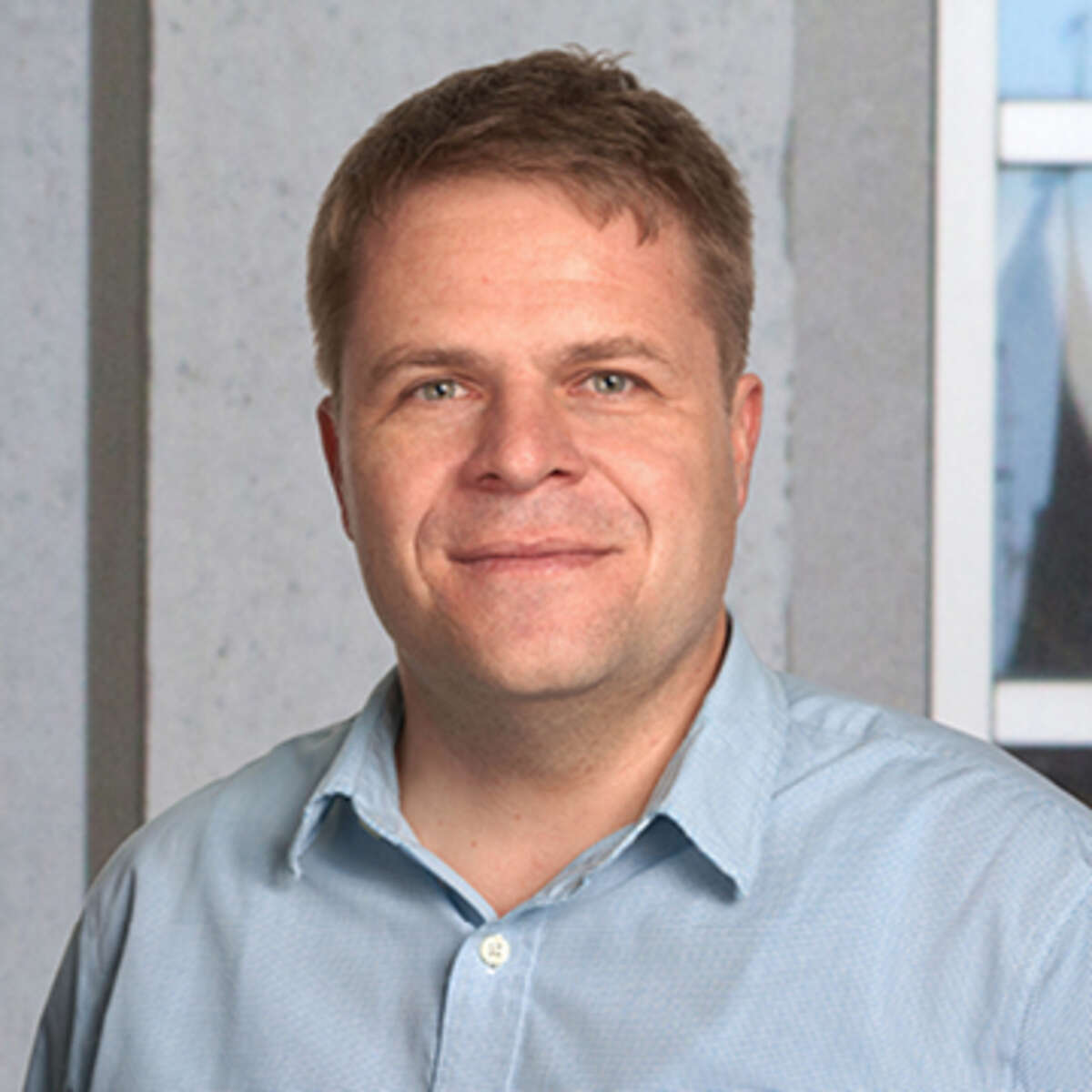
Dr. Lukas Frey is a Researcher at ETH Zurich, affiliated with the Chair of Physical Chemistry and the Institute of Molecular Physical Sciences (IMPS). His work focuses on biophysical studies of membrane proteins, lipid dynamics, and protein aggregation mechanisms. Key research areas include structural biology of ion channels, NMR spectroscopy of membrane proteins in nanodiscs, and the role of lipid environments in modulating protein dynamics. Frey employs advanced techniques like mass photometry and solid-state NMR to investigate molecular mechanisms in biological systems. His recent studies address amyloid fibril formation, pH-dependent α-synuclein polymorphism, and cholesterol-mediated modulation of membrane protein behavior. Based at the HCI F 228 facility in Zurich, Frey collaborates on projects involving lipid bilayer environments, ion channel function, and the structural basis of protein aggregation. His email is lukas.frey@phys.chem.ethz.ch, and he holds an ORCID identifier 0000-0002-1052-1104. Research contributions span from fundamental biophysical insights to methodological advancements in membrane protein analysis.
Swiss Federal Institute of Technology in LausanneSwitzerland
Anne-Sophie Chauvin is a Senior Lecturer and Researcher at École Polytechnique Fédérale de Lausanne (EPFL), School of Basic Sciences, within the Institute of Chemical Sciences and Engineering and the Supramolecular Chemistry Laboratory. She actively engages in supramolecular and inorganic chemistry, focusing on f-element (lanthanides and actinides) coordination polymers and luminescent bioprobes for biological and technological applications, including invisible inks and dye-sensitized solar cells. PhD in Bioinorganic Chemistry from University Paris V-René Descartes (thesis on Nitrile Hydratase mimetics) Postdoctoral work at University of Geneva on chiral alcohol configuration analysis Habilitation à Diriger des Recherches (HDR) from University René Descartes (2006) Her research spans Lanthanide and Actinide Chemistry , Luminescence , Coordination Polymers , Metallacages , and Photovoltaic Materials . Recent publications emphasize catalytic spiro stereocenter formation, actinide coordination polymers, and photoredox-enabled biomolecule functionalization. She has supervised PhD students including Andrei Andreichenko , Julien Andrès , Steve Comby , and Aurélien Willauer . Recognitions include Fellowship of the Royal Society of Chemistry (FRSC) and membership in the Swiss Chemical Society (SCS). Current roles include teaching General and Analytical Chemistry to first-year Pharmacy and Biology students at the University of Lausanne (UNIL), overseeing practical sessions, and serving on the EPFL School of Basic Sciences Faculty Council.
Professor Sebastian Hiller is a Full Professor at the Biozentrum of the University of Basel, Switzerland, where he leads a research group focused on structural biology and biophysics. His laboratory specializes in using nuclear magnetic resonance (NMR) spectroscopy to elucidate the structures and functions of proteins and their interactions at the atomic level. His research spans several key areas including molecular chaperones and protein folding mechanisms, outer membrane protein biogenesis in bacteria, and kinase signaling pathways. Notably, his group has made significant contributions to understanding how chaperones like trigger factor function, the mechanisms of outer membrane protein assembly through the Bam complex, and dynamic kinase interactions. Their work has direct implications for neurodegenerative diseases and antibiotic development. The Hiller lab's recent publications demonstrate a strong focus on NMR methodology development, protein folding dynamics, and structural mechanisms of antibiotic action. Their research on darobactin's mechanism of action against Gram-negative bacteria represents a significant advance in antibiotic discovery. The group frequently publishes in high-impact journals including Nature, Science, and Nature Communications. ICMRBS Founder's Medal (2018) EMBO Young Investigator (2014) ERC starting grant (2011) SNSF professorship (2010) SNSF scholarship for young researchers (2008) Professor Hiller supervises numerous PhD students and postdoctoral researchers, with many alumni having secured prestigious positions in academia and industry. His laboratory maintains strong collaborations across multiple institutions and has received significant funding through ERC grants and other competitive mechanisms. The Hiller group also operates advanced NMR facilities that serve the broader research community at the University of Basel.
Swiss Federal Institute of Technology in LausanneSwitzerland
Aurélien Bornet is a Lecturer at École Polytechnique Fédérale de Lausanne (EPFL) in the School of Basic Sciences (SB), specifically within the Institute of Chemical Sciences and Engineering (ISIC). He serves as the Platform Leader for the Nuclear Magnetic Resonance Platform at EPFL, where he oversees advanced NMR facilities and research. Dr. Bornet's research focuses on Nuclear Magnetic Resonance (NMR) and Dynamic Nuclear Polarization (DNP) techniques. His work spans several key areas including hyperpolarization methodologies, development of NMR instrumentation, and applications in both chemistry and biomedical fields. His research has led to significant advancements in dissolution DNP, long-lived nuclear spin states, and hyperpolarized metabolite imaging. His recent publication record demonstrates strong activity in developing new NMR techniques and applications, with particular emphasis on hyperpolarization methods that dramatically enhance NMR sensitivity. His work bridges fundamental physics with practical applications in medical imaging and materials science. The research outputs include numerous high-impact publications in journals like Nature Communications, Journal of the American Chemical Society, and Physical Chemistry Chemical Physics, as well as several patents related to NMR technology. Dr. Bornet has received recognition through multiple patents for his innovations in NMR technology, including patents related to polarizing agents, dissolution DNP methods, and NMR instrumentation. His work has important implications for biomedical imaging, particularly in the development of hyperpolarized metabolic imaging for cancer diagnostics and other medical applications. As an educator, Dr. Bornet teaches courses on Basic and Advanced NMR at multiple levels (Level 1 A, Level 1 B, and Level 2) at EPFL and in Sion. His teaching focuses on both theoretical and experimental aspects of NMR, providing students with hands-on experience with modern NMR spectrometers. His academic journey includes completing his PhD at EPFL in 2015 with a thesis on hyperpolarized protons for enhancing NMR sensitivity, advised by G. Bodenhausen and S. Jannin. Prior to this, he completed earlier research on long-lived states as probes of protein stability in 2010 under the supervision of G. Bodenhausen and P. Vasos.
University of Applied Sciences and Arts Northwestern SwitzerlandSwitzerland
Prof. Joris Pascal is a Lecturer in Life Science Technologies at the University of Applied Sciences and Arts Northwestern Switzerland (FHNW), affiliated with the School of Life Sciences and the Institute for Medical Engineering and Medical Informatics in Muttenz, Switzerland. He holds a Ph.D. in Microelectronics from the University of Strasbourg (2008), an M.S. in Electrical Engineering from Supélec (2005), and a B.S. in Electrical Engineering from the University of Strasbourg (2003). His professional experience includes roles as Senior Scientist and Scientist at ABB Switzerland Ltd. (2009–2015), and Research Assistant at the iCube laboratory (2005–2009). His research focuses on advanced biosignal processing, medical sensor systems, magnetic field sensing, and miniaturized diagnostic/therapeutic tools. Key projects include electromagnetic tracking systems for neurosurgery, magnetic safety assessment for MRI workers, and wearable sensor integration. He has 9 patents (5 granted, 4 pending) and extensive IEEE review involvement. Recent publications emphasize magnetic field cameras, MRI safety protocols, and nanoscale sensor technologies. His work bridges electrical engineering and biomedical applications, with contributions to medical robotics, portable NMR devices, and cardiac implant safety. Active in PhD committee roles and industry-academia collaborations, he leads projects at the intersection of sensor innovation and clinical needs.
Prof. Alexander Barnes is a Full Professor at the Department of Chemistry and Applied Biosciences and Head of the Institute of Molecular Physical Science at ETH Zürich. His research focuses on advanced magnetic resonance techniques, gyrotron technology, and biomolecular structural analysis. Key areas include high-power microwave source development for NMR applications, structural characterization of viral proteins (e.g., SARS-CoV-2), and cryogenic instrumentation for enhanced spectroscopy. Barnes has pioneered innovations in dynamic nuclear polarization (DNP) systems, frequency-agile gyrotrons, and miniaturized superconducting magnets. His work bridges fundamental physics with biomedical and materials science applications. Current projects address protein-membrane interactions, THz gyrotron design, and cryogenic NMR probe optimization. Barnes collaborates extensively with international research groups and industry partners to advance analytical instrumentation and disease-related molecular mechanisms. Publications reflect a sustained focus on experimental and computational methods for magnetic resonance, including breakthroughs in electron beam modeling, frequency-chirped DNP, and ultra-high-field magnet development. His engineering contributions include spherical rotor systems for magic-angle spinning and lightweight gyrotron cavities. Barnes also leads initiatives in solid-state NMR for drug discovery, particularly targeting protein kinase modulation in T-cells and viral assembly mechanisms.
Stephan Grzesiek is a Professor of Biological NMR Spectroscopy at the Biozentrum, University of Basel, Switzerland. He leads a research group focused on the structural and dynamic characterization of biomolecules using nuclear magnetic resonance (NMR) spectroscopy. His work bridges physics, chemistry, and biology, with a strong emphasis on disease-relevant proteins such as GPCRs, kinases, and HIV-related receptors. Research Interests: His research centers on understanding biomolecular function through atomic-level insights into protein structure, dynamics, and interactions. He focuses on G-protein coupled receptors (e.g., β1-adrenergic receptor, CCR5), tyrosine kinases (e.g., Abl kinase), and membrane-associated signaling complexes. His group develops advanced NMR methodologies for studying unfolded states, hydrogen bonding, and allosteric regulation. Recent Research Trends: Analysis of his recent publications (2021–2025) reveals a strong focus on GPCR-arrestin interactions, kinase regulation mechanisms, and the structural basis of drug action. His work employs high-resolution NMR, often combined with Cryo-EM and biochemical assays, to dissect conformational dynamics, allosteric networks, and signal transduction pathways. Key themes include biased agonism, cholesterol modulation, and the molecular basis of drug inhibition in cancer and infectious disease. Scientific Awards & Recognitions: Laukien Prize (ENC) Fellow, International Society of Magnetic Resonance Honorary Member, National Magnetic Resonance Society of India Chair, Gordon Conference on Computational Aspects of Biomolecular NMR Member, Swiss National Research Council VP, International Society of Magnetic Resonance Advising and Grants: While specific students are not listed, his frequent co-authorship with junior researchers (e.g., Iva Petrovic, Luca Abiko, Sanjana Desai) suggests active mentorship. His research is likely supported by major Swiss and international grants, given the scale and impact of his work. He has led long-term projects on NMR method development and structural biology of signaling proteins. Labs and Teams: He leads a research group at the Biozentrum, University of Basel, integrating NMR spectroscopy, protein engineering, and biophysical analysis. His team collaborates widely with structural biologists and biochemists, contributing to high-impact studies on GPCRs and kinase regulation.
Dr. Yanhui Hu is a Researcher in the Solid State NMR Spectroscopy group at ETH Zürich, focusing on advanced nuclear magnetic resonance techniques for material and structural analysis. Contact: HCI D 222, Vladimir-Prelog-Weg 1-5/10, 8093 Zürich, Switzerland. Work: +41 44 633 61 27 | Email: yanhui.hu@phys.chem.ethz.ch His research interests include Solid State NMR Spectroscopy Physical Chemistry Materials Science Structural Biology Magnetic Resonance Imaging
Dr. Tianqi Zhu is a Professor at ETH Zürich, holding the Professorship for Spin Physics within the Department of Physics, School of Basic Sciences. His research focuses on quantum sensing technologies, nanophotonics, and plasmonics with applications in molecular detection and high-frequency detection systems. Key projects include optimizing diamond NV-center performance, terahertz detection using organic phase modulators, and studying optomechanical systems in plasmonic environments. His work bridges fundamental physics with applied nanotechnology, emphasizing practical advancements in quantum sensors, nanoscale thermometry, and high-efficiency photonics. Recent contributions span diamond-based molecular sensing, nanopillar design for enhanced quantum efficiency, and plasmonic nanostructure development for cavity optomechanics. Dr. Zhu’s research portfolio reflects a strong emphasis on interdisciplinary innovation, combining materials science with quantum engineering for cutting-edge applications in sensing and communication technologies.
Swiss Federal Institute of Technology in LausanneSwitzerland
Dr. Pascal Miéville serves as Operational Director of the Catalysis Hub - Swiss CAT+ at École Polytechnique Fédérale de Lausanne (EPFL), holding concurrent Senior Scientist positions in the Institute of Chemical Sciences and Engineering (ISIC) and School of Chemistry and Chemical Engineering (SCGC). His leadership focuses on developing automated, data-driven infrastructure for homogeneous catalysis discovery and optimization. His academic credentials include: PhD in hyperpolarized NMR from EPFL under Prof. G. Bodenhausen Master's degree in Chemistry from EPFL Master in Public Administration (MPA) from IDHEAP at UNIL specializing in public finances Miéville's research bridges traditional chemistry with digital innovation through three core domains: Nuclear Magnetic Resonance, Automation in Chemistry, and Digital Chemistry. With 15 years of pharmaceutical industry experience at Bracco Research developing MRI contrast agents, he brings practical expertise to his current mission of creating fully automated laboratory systems. His work represents a paradigm shift toward data-intensive chemical research where algorithms drive experimental design and analysis. His publication record demonstrates consistent expertise in NMR techniques, particularly dynamic nuclear polarization, with applications spanning materials science, medical imaging, and environmental chemistry. Recent work increasingly focuses on integrating automation systems with chemical workflows, reflecting his leadership in the emerging field of digital chemistry laboratories. As an educator, Miéville teaches digital and automation chemistry to Master's students at EPFL, preparing the next generation of chemists for data-driven laboratory environments. His leadership of the Swiss CAT+ West Hub has positioned him at the forefront of chemical research innovation, though specific scientific awards aren't documented in the provided materials. The Swiss CAT+ West Hub under Miéville's direction operates as a cutting-edge testbed for automated chemistry, combining robotics, machine learning, and systematic data collection to accelerate catalysis research. This infrastructure enables high-throughput experimentation with rigorous data capture, facilitating machine learning applications that optimize catalytic systems more efficiently than traditional methods. The hub exemplifies Miéville's vision of chemistry's digital transformation.
May Elizabeth Sharpe is a Group Leader of the MX Samples group at the Paul Scherrer Institute (PSI), Switzerland. She leads efforts in macromolecular crystallography (MX) sample preparation, protein crystallization facility management, and high-throughput fragment screening. Her roles include overseeing the PSI Crystallisation Facility and the Fast Fragment and Compound Screening pipeline. She holds a B.Sc. (First Class Honours) in Biochemistry from the University of Sussex (2004) and a Ph.D. in Structural Biology from the University of Bristol (2008). Her research focuses on protein crystallization method development, fragment-based drug discovery, and advancing synchrotron/XFEL beamline technologies for structural biology. Key research contributions include optimizing crystal growth via microseed matrix screening, developing automated workflows for high-throughput crystallography, and analyzing SARS-CoV-2 protease inhibitors using X-ray crystallography. She has pioneered the HEIDI experiment-management system and SDU data collection software, enabling scalable drug screening. Her work bridges structural biology, automation, and translational drug discovery. Her publications reflect expertise in fragment screening, protein-ligand interactions, and structural analysis of medically relevant proteins. She has collaborated internationally, contributing to cancer drug target studies and antiviral research. No scientific awards are explicitly listed, though her impactful contributions suggest potential recognition in structural biology circles. May’s advisory and facility management roles ensure PSI remains a global leader in MX infrastructure. Her lab supports academic and industrial users via crystallization robotics and beamline optimization, advancing structural biology applications in drug development and fundamental research.
Prof. Matthias Ernst is a Private Lecturer at the Department of Chemistry and Applied Biosciences, ETH Zurich, leading the Laboratory for Physical Chemistry. His research focuses on advancing solid-state NMR methodologies, particularly in dynamic nuclear polarization (DNP), hyperpolarized MRI, and protein dynamics analysis. He develops innovative pulse sequences and theoretical frameworks to enhance MAS NMR resolution and sensitivity. Current projects include exploring spin dynamics in biomolecules, optimizing DNP for nanoscale materials, and advancing hyperpolarized imaging techniques. Research Interests: Solid-State NMR, DNP, MAS Spectroscopy, Biomolecular Dynamics, Hyperpolarized MRI, Spin Diffusion, Pulse Sequence Design. Recent work highlights advancements in low-power decoupling methods (e.g., SDPACs, WALTZ), theoretical modeling of Floquet systems, and applications in amyloid fibril analysis. His lab collaborates on silicon and diamond nanoparticle synthesis for biomedical imaging. No scientific awards explicitly mentioned in provided texts. Advising and grants details not available here. His work contributes to structural biology, materials science, and medical imaging through cutting-edge NMR technologies.
Swiss Federal Institute of Technology in LausanneSwitzerland
Lyndon Emsley is a Professor at the École Polytechnique Fédérale de Lausanne (EPFL), affiliated with the School of Basic Sciences and the Department of Chemistry and Chemical Engineering. He leads the Laboratoire de résonance magnétique (LRM), focusing on advanced NMR methodologies and their applications in materials science, pharmaceuticals, and energy materials. His roles also span the SCGC and EDCH educational programs within EPFL, emphasizing interdisciplinary teaching in chemistry and chemical engineering. Research interests include NMR crystallography, solid-state chemistry, perovskite materials for solar cells, and structural characterization of amorphous drugs. He has supervised numerous PhD students in these areas. Key contributions involve developing high-resolution NMR techniques, such as dynamic nuclear polarization (DNP), and applying machine learning to chemical shift predictions. His work bridges fundamental material science with practical applications in drug design and renewable energy. Teaching responsibilities include courses on structural analysis, experimental physical chemistry, and advanced NMR techniques. Collaborations involve multi-scale structural analysis and supramolecular engineering for photovoltaic stability.
Martha Millen is a researcher at the Institute of Molecular Physical Sciences (IMPS) at ETH Zurich. Her work focuses on solid-state NMR spectroscopy, dynamic nuclear polarization (DNP), and terahertz technology. Research Interests: She specializes in developing advanced instrumentation for magnetic resonance, including high-frequency gyrotrons, cryogenic-compatible components, and precision alignment systems. Her research bridges microwave engineering and materials science, with applications in structural biology and semiconductor analysis. Her recent publications highlight innovations in DNP hardware, electron decoupling techniques, and computational modeling of THz systems. The Institute of Molecular Physical Sciences at ETH Zurich provides institutional context for her technical contributions.
Dr. Maxim Yulikov is a Lecturer at the Department of Chemistry and Applied Biosciences, ETH Zurich, Switzerland. He is affiliated with the Institute of Molecular Physical Sciences (IMPS), focusing on advanced spectroscopic techniques and biomolecular studies. His research integrates electron paramagnetic resonance (EPR) spectroscopy, dynamic nuclear polarization (DNP), and molecular modeling to explore structural dynamics of biomolecules, heterogeneous materials, and functional nanomaterials. Key affiliations: ETH Zurich, IMPS Expertise: EPR spectroscopy, DNP, biomolecular structure analysis, nanomedicine His work emphasizes developing novel spin labels, optimizing DNP sensitivity, and studying protein-RNA interactions, dietary fibers, and phase-separated biomolecular condensates. Recent projects include designing Gd(III) spin labels, investigating copper interactions with biomolecules, and enhancing NMR sensitivity through tailored biradicals. Publications highlight contributions to RIDME spectroscopy, heterogeneous systems analysis, and materials chemistry. He teaches 529-0053-00L Polymer Physics Methods for Unstructured Biomolecules in the Fall semester 2025.