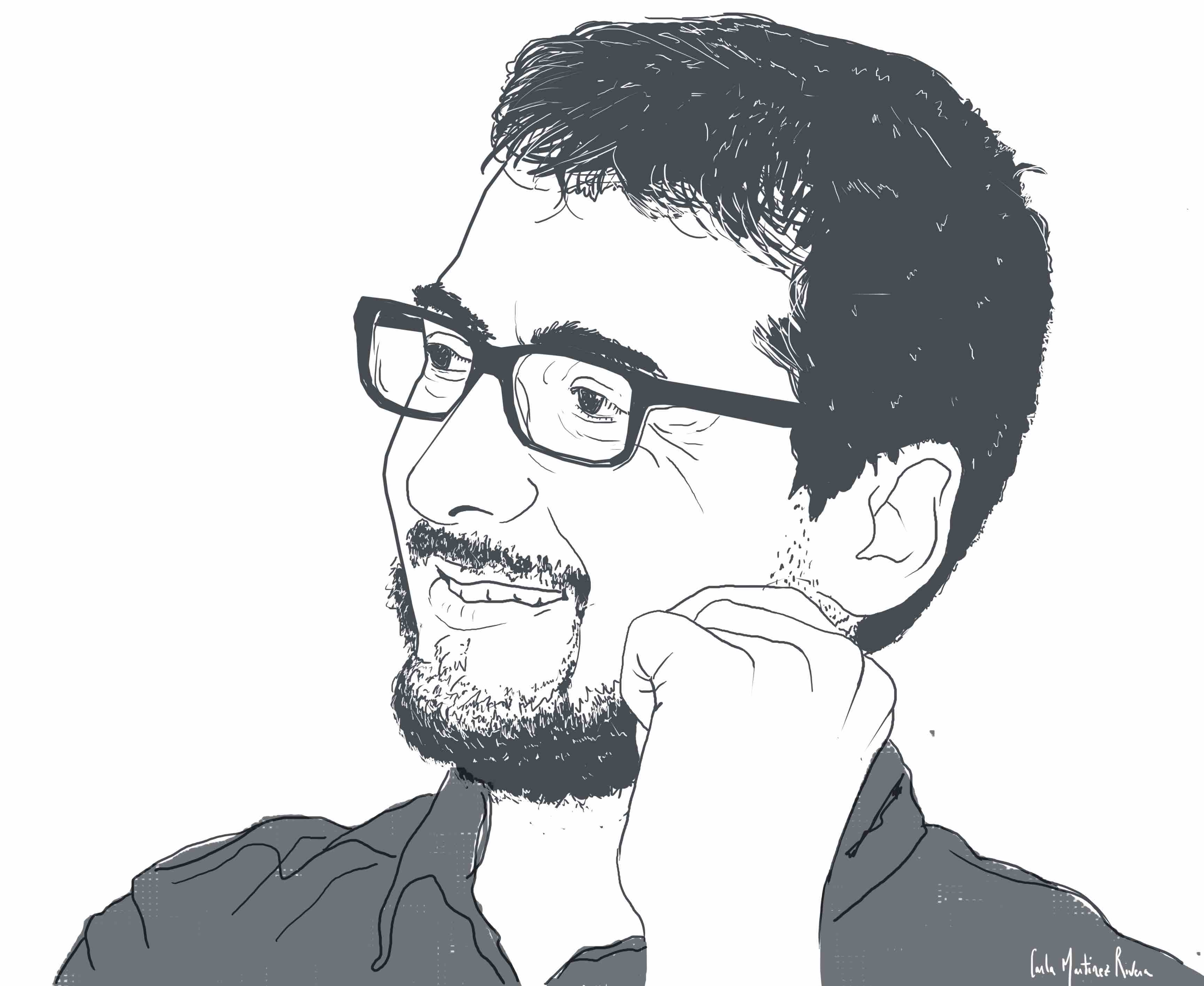
Dr. Gines Martinez is a Director of Research at CNRS/IN2P3 and Director of SUBATECH laboratory at IMT Atlantique. His research focuses on experimental study of quark-gluon plasma using relativistic heavy ion collisions at ALICE (LHC) and PHENIX (RHIC) experiments. He teaches Experimental Physics of Strong/Weak Interactions at Université de Nantes and electromagnetism/quantum mechanics at IMT Atlantique. Research Interests: Quark-gluon plasma formation, particle production in hadronic collisions, deuteron formation mechanisms, and ultra-relativistic nuclear collisions. Recent Publications: Focus on femtoscopy, flow harmonics, and QCD phase diagram using LHC data. Research reveals insights into nucleosynthesis in hadronic collisions and QCD matter behavior under extreme conditions. Outreach: Featured in Ouest-France and El País, with seminars on physics education in prisons and schools.
Knut Håkon Hole is an Associate Professor at the University of Oslo's Department of Radiology and Nuclear Medicine. His research focuses on diagnostic imaging applications in oncology, particularly in prostate and rectal cancers. He specializes in MRI, PET, and radiogenomics techniques to assess tumor biology, treatment response, and recurrence. Expertise: Prostate cancer imaging, neoadjuvant therapy response, tumor hypoxia, and imaging biomarkers Key affiliations: Oslo University Hospital (Rikshospitalet), Radium Hospital Research interests include: Developing MRI and PET protocols for cancer staging and recurrence detection Integrating imaging with genomic data (radiogenomics) Optimizing therapeutic approaches using imaging biomarkers Recent work highlights: Prostate cancer radiogenomics and hypoxia biomarkers (2024) MRI/PET comparisons for tumor localization (2021-2023) Neoadjuvant therapy response assessment in rectal and breast cancers (2020-2023) Publications span over 50 peer-reviewed articles with a focus on translational imaging research. Collaborates extensively with oncology and urology teams.
Dr. Phyllis I. Hanson is the Minor J. Coon Professor and Chair of Biological Chemistry at the University of Michigan Medical School. She also holds secondary appointments in Neurology and Cell and Developmental Biology, with affiliations to the Rogel Cancer Center and Precision Health Initiative. Research Interests: Her lab investigates mechanisms of cellular membrane stress sensing and repair, focusing on lysosomes and the ESCRT pathway. Her work integrates biochemical, cell biological, and advanced imaging techniques to study organelle membrane dynamics in health and disease. Recent Publications highlight her contributions to understanding ESCRT function in endolysosomal trafficking, membrane resilience under osmotic stress, and protein degradation pathways. These studies intersect with neurodegeneration, cancer biology, and infectious disease. Scientific Awards: AAAS Fellow Keck Scholar Searle Scholar Sloan Scholar McKnight Scholar Grants from NIH and disease-focused foundations since 2018 support her work on ESCRT pathway analysis, HSC70 AMPylation, and signal relay during cell migration. Leadership: She co-chairs Michigan Medicine’s Endowment for the Basic Sciences and chaired the 2024 Gordon Research Conference on Lysosomes & Endocytosis. She serves as Associate Editor of the Journal of Biological Chemistry .
Edward Delp is the Charles William Harrison Distinguished Professor of Electrical and Computer Engineering at Purdue University's College of Engineering. He holds affiliations with both the Department of Electrical and Computer Engineering and the Department of Biomedical Engineering. His research spans computer vision, medical imaging, and data forensics with a focus on synthetic media detection, deep learning applications, and healthcare technologies. Education: Not explicitly listed in the provided text. His work includes developing algorithms for speech forensics, microscopy image analysis, and food/nutrition assessment systems. He leads projects on synthetic speech detection, medical image segmentation, and automated crop disease measurement using RGB imaging. Delp collaborates across disciplines, integrating machine learning with healthcare and agricultural challenges. Recent work emphasizes ethical AI through fairness in synthetic media detection and explainable artifacts in biomedical imaging. He contributes to large-scale datasets like MetaFood3D and 3D nuclear segmentation frameworks for microscopy analysis. His grants and advising focus on interdisciplinary applications, though specific grant details are not provided. Delp is affiliated with the Purdue School of Biomedical Engineering and maintains active collaborations in medical imaging, computer vision, and aerospace anomaly detection.
Dr. Richard H. Wiggins serves as Professor of Radiology and Imaging Sciences at the University of Utah School of Medicine, where he also holds the position of Associate Dean of Continuing Medical Education. He maintains adjunct professorships in Otolaryngology, Head and Neck Surgery, and Biomedical Informatics. His educational background includes a BA in Biochemistry from the University of Texas at Austin and an MD from the University of Texas at Houston Health Sciences Center, followed by specialized training at the University of Florida and University of Utah. Dr. Wiggins's research spans neuroradiology, biomedical informatics, and medical education innovation. His work explores advanced imaging techniques for head and neck pathologies, PET-CT applications in oncology, and the development of novel educational platforms like the RadDiscord community. He maintains particular expertise in temporal bone imaging, paragangliomas, and thyroid nodule classification systems. Analysis of his recent publications shows strong emphasis on: (1) optimizing oncologic imaging protocols, especially PET-CT applications across cancer types; (2) advancing head and neck radiology through volumetric analysis and radiomics; and (3) transforming radiology education via gamification and digital communities. His scientific honors include: Distinguished Teaching Award (Otolaryngology, University of Utah) Honored Educator Award (Radiological Society of North America) Inaugural Fellow, Academy of Health Science Educators 25th Fellow of the Society of Imaging Informatics in Medicine Fellow of the American College of Radiology He leads the Utah Head and Neck Imaging Center of Excellence, which includes an educational YouTube channel (@UHNICE). While specific grants aren't detailed, his extensive lecture record (600+ presentations) and leadership roles in professional societies like SIIM (Program Chair 2014-2020), ASHNR (Past President), and WNRS (Past President) demonstrate significant academic influence.
Victor Becerra is a Professor of Power Systems Engineering at the University of Portsmouth, affiliated with the School of Electrical and Mechanical Engineering within the Faculty of Technology. He is also associated with the Centre for Environmental and Renewable Energy Solutions and the Agile Centre For Equitable Sustainability. His research focuses on advanced control systems, renewable energy integration, smart grids, battery management, and nuclear power plant control. He actively supervises PhD students in topics like optimal control of battery systems and microgrid optimization. His academic work spans over 193 publications, with recent contributions emphasizing techno-economic analysis of green hydrogen, modular energy storage solutions, and optimal control strategies for batteries and nuclear reactors. His research often addresses real-world applications such as grid flexibility at ports, peer-to-peer energy trading platforms, and drone-based inspection of offshore wind turbines. Becerra's expertise includes developing control algorithms for marine structures, sodium-cooled reactors, and unmanned aerial vehicles. He has contributed to books on solar energy engineering and applications, highlighting interdisciplinary approaches to sustainability challenges. His work integrates theoretical models with practical implementations, such as energy management systems for compressed air and advanced BMS for drones. Key themes in his research include renewable energy systems optimization, fault-tolerant control mechanisms, and adaptive control strategies for dynamic environments. He collaborates internationally, addressing global energy challenges through innovative control methodologies and sustainable technologies.
Curt Bronkhorst is the Harvey D. Spangler Professor of Engineering and Professor of Applied Mechanics in the Department of Mechanical Engineering at the University of Wisconsin-Madison. He received his B.S. in Mechanical Engineering and Mathematics (1985), M.S. (1988), and Ph.D. (1991) in Mechanical Engineering from the Massachusetts Institute of Technology. His career includes roles as Senior Scientist at Weyerhaeuser (1991–2002) and Scientist/Project Leader at Los Alamos National Laboratory (2002–2019) before joining UW-Madison. He leads the Army Research Laboratory's Center for Extreme Events in Structurally Evolving Materials and contributes to the Theoretical and Computational Mechanics of Materials Group . PhD (1991) - Massachusetts Institute of Technology MS (1988) - Massachusetts Institute of Technology BS (1985) - University of Wisconsin-Madison Bronkhorst's research focuses on theoretical and computational mechanics of materials , particularly under extreme conditions. Key themes include: Coupled thermo-mechanical deformation Finite elasticity and dislocation slip plasticity Deformation twinning and phase transformations Pore nucleation and adiabatic shear banding Brittle-to-ductile transition mechanisms Multi-scale modeling of damage evolution His 2025–2023 publications emphasize data-driven modeling , void nucleation , and machine learning integration in EBSD analysis. Recent work explores gradient nanostructured metals and low-grain polycrystal stress heterogeneity . 2019: Harvey D. Spangler Professorship 2012: DOE Defense Programs Award (Implosion Predictive Capability) 2009: DOE Outstanding Mentor Award 2007–2008: Los Alamos Distinguished Performance Awards Fellow, American Society of Mechanical Engineers Member, Phi Kappa Phi and Tau Beta Pi Honor Societies Bronkhorst serves as Associate Editor for the International Journal of Plasticity and president of Northland Partners, LLC. He is affiliated with UW-Madison's Nuclear Engineering & Engineering Physics and Materials Science & Engineering departments. No formal advisees are listed, but his computational framework has been adopted in grants like the DMREF collaborative research on grain-interface design.
Dr. Prineha Narang is a Professor of Physical Sciences and Electrical and Computer Engineering at the University of California, Los Angeles (UCLA). Previously, she held positions as an Assistant Professor at Harvard University and a Research Scholar at MIT. Her research focuses on quantum materials, quantum information science, and non-equilibrium dynamics, with interdisciplinary contributions to photonics, topological materials, and cavity quantum electrodynamics (QED). She leads the Narang Lab, which develops theoretical and computational methods to design quantum systems and explores applications in quantum networks and energy conversion. Dr. Narang has held leadership roles in major initiatives such as the DOE Quantum Science Center and the NSF Center for Quantum Networks. She is also the founder and CTO of Aliro Quantum, a company advancing quantum networking technologies. Education: M.S. and Ph.D. in Applied Physics from the California Institute of Technology (Caltech). Her work has been recognized with prestigious awards, including the Mildred Dresselhaus Prize, NSF CAREER Award, and being named a Moore Inventor Fellow. She serves on editorial boards for journals like ACS Nano and Applied Physics Letters , and chairs international conferences. Outside academia, she advises organizations like arXiv and actively engages in promoting quantum technologies through industry collaborations. Research Interests: Quantum materials engineering, quantum networks, non-equilibrium phenomena, topological quantum states, and quantum defect physics. Current projects include designing scalable quantum repeaters, developing error-corrected quantum systems, and studying light-matter interactions in novel materials. Her lab’s SpaRTaNS code enables spatially-resolved transport simulations, advancing understanding of electron and phonon dynamics. Awards and Grants: Over 20 major awards, including the Guggenheim Fellowship (2023), ONR Young Investigator Award (2022), and leadership roles in DOE and NSF-funded centers. Her work bridges academia and industry, with partnerships at companies like Applied Materials and Northrop Grumman.
Ed Pickering is a Senior Lecturer in Metallurgy and Materials Engineering at the University of Manchester. He has held roles since 2015, advancing to Reader in 2023. His affiliations include the Henry Royce Institute (Research Area Lead for Advanced Metals Processing), the Advanced Metallics System CDT and Fusion CDT Management Boards, and industrial technical advisory panels. Ed’s work bridges academic and industrial collaboration with Rolls-Royce, UKAEA, Airbus, EDF, and Sheffield Forgemasters. Ed completed his undergraduate studies (2011) and PhD (2014) in Materials Science at the University of Cambridge, followed by a Research Associate role in Cambridge’s Rolls-Royce UTC. His academic trajectory includes: Senior Lecturer (2019–present) Reader (2023–present) Ed’s research focuses on phase transformations, microstructural characterization, and alloy development for nuclear (fission/fusion) and aerospace applications. Key themes include optimizing processing routes to enhance material properties while minimizing waste and environmental impact. His studies frequently address steel, high-entropy alloys, and novel refractory alloys, emphasizing their service performance under extreme conditions. His scientific contributions span structural integrity assessment of welded joints, machine learning applications in metallurgy, and material flow uncertainties in forging. He has also advanced heat treatment optimization for reactor steels and explored cobalt-free hardfacing alloys. Frank Fitzgerald Medal (2017) Grunfeld Memorial Medal (2021) In advising and grants, Ed leads the Materials Performance Centre (MPC) and co-leads the NEWAM project on wire-additive manufacturing. He supervises research across these initiatives and collaborates with over 30 PGR students in interdisciplinary teams. His work also involves managing technical facilities like the Advanced Metal Processing platform. Ed’s laboratory affiliations include the MPC and WAAM-based Engineering and Process Metallurgy groups, where he explores sustainable materials solutions for energy and aerospace industries.
Dr Marten Moore is a Research Fellow at the Division of Plant Sciences, The Australian National University. His research focuses on understanding mRNA dynamics, plant stress responses, and photosynthesis efficiency through molecular and genetic approaches. He investigates how plants adapt to environmental stresses such as light fluctuations and salinity, with a particular emphasis on retrograde signaling pathways linking chloroplasts to nuclear responses. Dr Moore’s work integrates experimental and computational methods, including the development of tools like ConCysFind for analyzing conserved protein sequences across plant species. He collaborates on projects aimed at enhancing crop resilience through improved energy use efficiency and yield stability, leveraging insights from wheat and Arabidopsis models. Key Projects: Using RNA regulation to improve energy use efficiency and boost yield in wheat (2024–2027) Regulators of protein translation reveal new pathways to plant productivity (2022–2025) Smart Plants and Solutions for Enhancing Crop Resilience and Yield (2021–2025) His research interests span mRNA fate during stress recovery, nitric oxide signaling in plant cells, and the role of glutathione peroxidases in symbiotic root nodules. Dr Moore’s contributions bridge fundamental plant biology with applied agricultural challenges, aiming to translate molecular insights into practical solutions for sustainable agriculture.
Professor Klaus McDonald-Maier is a full Professor in the School of Computer Science and Electronic Engineering (CSEE) at the University of Essex , where he leads the Embedded and Intelligent Systems (EIS) Research Laboratory and heads the Intelligent Embedded Systems and Environments Research Group . He is also Director of Impact , Visiting Professor at the University of Kent, and Visiting Research Affiliate at NASA Jet Propulsion Laboratory, California Institute of Technology. Education PhD in High-Performance Parallel Neural Network Architectures, Friedrich-Schiller-University Jena (Germany, 1999) Electronic Engineering studies, University of Ulm (Germany) Electronic Engineering studies, Cardiff University (Wales) Electronic Engineering studies, École Supérieur de Chimie Physique Électronique de Lyon (CPE-Lyon) (France) Research Interests Professor McDonald-Maier’s research integrates embedded systems , System-on-Chip (SoC) architectures , and AI-driven robotics . He pioneers visual place recognition techniques that remain robust under severe appearance and viewpoint changes, develops cybersecurity frameworks based on ICMetrics for autonomous vehicles and IoT, and designs approximate real-time computing solutions for energy-constrained multicore and FPGA platforms. His work on radiation-tolerant systems supports space and nuclear applications, while his bio-inspired algorithms enable lightweight, neuromorphic perception on resource-limited robots. Publication Trends Between 2022 and 2025 his output converges on FPGA-accelerated AI , secure edge intelligence , visual navigation for autonomous systems , and healthcare analytics . He repeatedly couples rigorous algorithmic innovation with practical hardware deployment, yielding energy-efficient, real-time systems validated in domains ranging from autonomous driving to post-stroke rehabilitation. Scientific Awards & Recognition Best Paper Award – IEEE Transactions on Sustainable Computing (2024) Best Paper Award – IEEE/ACM DATE (2024) Best Paper Award – IEEE Systems Journal (2022) Best Paper Award – IEEE Sensors Journal (2021) Best Paper Award – IEEE Access (2020) Research Grants & Industrial Collaboration He has secured major funding from EPSRC , EU Horizon 2020 , Innovate UK , and industry partners. Current projects span trustworthy autonomy, radiation-hardened edge AI, and AI-enhanced rehabilitation technologies. He is Chief Scientist of UltraSoC Technologies Ltd and CEO of Metrarc Ltd , commercialising University research in semiconductor debug and cybersecurity respectively. Laboratory & Team Leadership As Director of the Embedded and Intelligent Systems Laboratory (EIS Lab) , he oversees a multidisciplinary team of researchers and PhD students, providing state-of-the-art FPGA, robotics, and embedded-systems facilities. The lab collaborates closely with NASA JPL, UK Atomic Energy Authority, and leading semiconductor firms to translate fundamental research into high-impact industrial solutions.
Adrien Depeursinge is a Professor at HES-SO Valais-Wallis - Haute Ecole de Gestion, affiliated with the School of Economics and Services and the Management Information Systems department. His research focuses on radiomics, personalized medicine via image-based analysis, and clinical workflow optimization. He leads the development of the QuantImage platform, a physician-centered web-based tool for radiomics research, and contributes to radiomics standardization efforts through initiatives like the Image Biomarker Standardization Initiative (IBSI). His work emphasizes machine learning applications in healthcare, including tumor segmentation, biomarker extraction, and improving diagnostic accuracy through computational models. Key research themes include: 1) Radiomics – developing quantitative imaging features for cancer diagnosis/prognosis; 2) Medical Imaging Analysis – advancing texture-based models, multi-modal fusion, and automated lesion detection; 3) Physician-AI Collaboration – designing user-centric tools for clinical integration. His contributions span neuro-oncology (brain metastases), head-and-neck cancer, and multiple sclerosis imaging. Publications emphasize methodological advancements (e.g., kernel optimization in CNNs, steerable detectors) and clinical validation (e.g., reproducibility of radiomics features across imaging protocols). He collaborates with institutions like the University Hospital of Lausanne (CHUV) and international teams on projects like the HECKTOR challenge for PET/CT tumor segmentation. His work bridges technical innovation with clinical impact, aiming to translate radiomics into actionable clinical tools. QuantImage v2, his flagship tool, enables no-code development of machine learning models using clinical imaging data. Research also includes phantom-based validation of radiomics features and addressing challenges in feature stability across imaging modalities. Current projects explore improving contour quality for radiomics studies and optimizing AI explainability in medical decision-making.
Lee Towers is a Postdoctoral Research Associate at the Institute for Collective Place Leadership and SSSHL Research & Innovation, affiliated with Teesside University. His work focuses on intergenerational justice, nuclear waste management, and energy transitions. He holds a PhD in Energy Justice from the University of Brighton (2022), an MSc in Environment and Development from the University of Leeds (2016), and prior degrees in education and history. PhD: Energy Justice and the UK's Energy Transition, University of Brighton (2018–2022) MSc Environment and Development, University of Leeds (2015–2016) PGCE, Manchester Metropolitan University (2009–2010) MA Modern European History, University of Manchester (2004–2006) His research integrates anthropological perspectives, decolonial theory, and deliberative democracy frameworks. Recent work explores temporal challenges in nuclear waste governance and the sociopolitical dimensions of energy transitions. His articles and presentations address topics like hydrogen innovation, intergenerational equity, and trust in environmental discourses. Labs/Teams: Active within the Institute for Collective Place Leadership and SSSHL Research & Innovation, collaborating with institutions like the University of Groningen and Nuclear Waste Services.
Tarmo Lipping is a Professor in the Department of Computer Science and Engineering at the Faculty of Information Technology and Electrical Engineering, University of Oulu. His work bridges computing sciences with biomedical engineering, environmental modelling, and data-driven societal applications. Doctor of Science (Technology), Information Technology – Awarded 14 Feb 2001 Master of Science (Technology), Information Technology – Awarded 10 Sept 1993 His research focuses on electroencephalography (EEG) , mental workload assessment , depth of anesthesia monitoring , and machine learning applications in healthcare and human-computer interaction. He also contributes to environmental informatics , particularly in land uplift modelling and radionuclide transport , aligning with UN Sustainable Development Goals. Recent publications highlight trends in transformer networks for EEG analysis , wearable HCI systems , data-driven food safety , and participatory municipal governance . His work integrates deep learning, signal processing, and real-world deployment. Scientific awards include: CIMO opettajavaihto (2017) Lipping has supervised numerous master’s students and served as an examiner in diverse topics including data vault modelling , telecom revenue estimation , and EEG hyperscanning . He has evaluated funding applications, acted as a journal reviewer (65 times), and contributed to editorial work. His activities reflect strong engagement in academic service and interdisciplinary research mentorship. He has contributed datasets on Fennoscandian land uplift , lake isolation , and archaeological shorelines to PANGAEA, supporting open science in geosciences and environmental history.
Professor Satoshi Kurokawa is a full Professor of Environmental and Administrative Law in the School of Social Sciences at Waseda University, Japan. Holding Ph.D. and LL.M. degrees from Kyoto University and a B.A. in Political Science from Waseda, he has taught continuously since 1994, first at Tezukayama University and, from 2004 onward, at Waseda, where he served as Associate Professor (2003-2004) before promotion to Professor. Education: Ph.D. (Kyoto University) LL.M. (Kyoto University) Bachelor of Political Science (Waseda University) Research interests revolve around the intersection of public law and sustainability: environmental law, administrative law, energy law, climate-change policy, nuclear-risk regulation, energy justice, and the legal challenges posed by artificial-intelligence in government decision-making. His recent work pays particular attention to achieving Japan’s 2050 carbon-neutrality target through an “energy-justice” lens, examining social acceptance of high-level radioactive-waste disposal, and assessing the rule-of-law implications of algorithmic administration. Grants & projects: He currently leads a JSPS KAKENHI multi-year project (2024-2028) on “Long-Term Disaster Preparedness and Intergenerational Equity in Light of Uncertainty in Predicting Mega-Earthquakes,” and has completed earlier JSPS projects on climate policy under the Trump administration, California’s sub-national leadership, and social acceptance of geological disposal of nuclear waste. Professional memberships: Japan Public Law Association, Environmental Law Policy Association, and Japan-US Law Society. He teaches an extensive range of courses including “Environmental Law in Japan,” “Environmental Issues and Sustainable Society,” “Sustainability Study,” and “Social Science for Energy Innovation” across Waseda’s graduate and undergraduate programmes, and is concurrently affiliated with several interdisciplinary research institutes.