Max Planck Institute for Research on Collective GoodsGermany
Ben McWilliams is a Research Fellow at Bruegel, focusing on Energy and Climate Policy . His work combines data-driven analysis to critique and inform European public policy, with particular emphasis on energy sector decarbonisation , industrial policy , and hydrogen-based economic geography . Recently, he has analyzed European energy crises and proposed policy responses , while tracking clean tech trends and natural gas dynamics across Europe. Education : MSc in Economic Policy (Utrecht University, thesis on carbon taxation in British Columbia); BSc in Economics (University of Warwick) with exchange year at Monash University Research Focus : Energy Security , Climate Policy , Hydrogen Economics , and Industrial Decarbonisation Key Contributions : Co-authored 15 major analyses (2021-2025) on topics including EU-Russia energy divorce , transatlantic clean investment , and hydrogen strategy Awards : No scientific awards mentioned in available records Affiliations : Bruegel (Affiliate Fellow), dual citizenship (British/Dutch)
Prof. Dieter H.H. Hoffmann is a distinguished academic in the Department of Physics , specializing in high-energy physics, dark matter detection, and plasma-based fusion research. His work focuses on particle astrophysics, including axion searches via helioscopes like CAST, nuclear fusion mechanisms (particularly proton-boron reactions), and plasma dynamics in extreme conditions. He collaborates on major projects such as the Cherenkov Telescope Array (CTA) for gamma-ray astronomy and heavy-ion beam experiments at facilities like FAIR. Research interests include: Dark matter axion detection and theoretical modeling Proton-boron fusion as an alternative energy pathway Plasma interactions in high-intensity laser and beam experiments Stopping power and beam transport in dense matter High-energy-density physics for inertial confinement fusion Recent work highlights advancements in: CAST experiment sensitivity improvements for solar axions Experimental validation of proton-boron fusion yields in dense plasmas Development of NectarCAM cameras for CTA's gamma-ray detection Simulation of proton beam dynamics in solid-state materials His contributions bridge fundamental physics with applied research in energy and detector technology, with active involvement in international collaborations like CTA and FAIR experiments.
Timo Metzler is a doctoral researcher at the Karlsruhe Institute of Technology (KIT) , affiliated with the Institute of Applied Materials - Institute of Materials and Interface Mechanics (IAM-MMI) . His work focuses on fracture mechanical characterization of nuclear materials, particularly reactor pressure vessel steels, using computational modeling and experimental analysis. Education : Master's and Bachelor's in Mechanical Engineering from KIT, specializing in Theoretical Mechanical Engineering and Energy Technology. Current Role : Ph.D. student investigating fracture toughness prediction for nuclear safety applications. Past Roles : Scientific staff member at KIT's Institute of Engineering Mechanics (ITM) and Institute of Thermal Turbomachinery (ITS), with industry experience in fuel cell development. His research leverages the cohesive zone model for simulating fracture processes and involves fractography to analyze material failure mechanisms. Publications highlight his contributions to nuclear materials safety through numerical modeling and small-specimen testing. Timo's scientific awards include the 2020 SEW-EURODRIVE Foundation Study Award for his outstanding Master's thesis on labyrinth seal simulations. His software expertise spans ABAQUS, MATLAB, Python, and C++, with CAD and IT skills supporting his computational work.
Prof. Rafael Macián-Juan holds the Chair of Nuclear Engineering (NTech) at the Technical University of Munich (TUM), part of the TUM School of Engineering and Design. He specializes in nuclear safety, reactor thermohydraulics, and advanced nuclear systems. With over 20 years of experience, he led research at the Paul Scherrer Institute (PSI) in Switzerland before joining TUM in 2007. His work focuses on experimental analysis, computational methods for nuclear systems, and radiation applications in medicine. Education: MSc in Energy Engineering (1990, Polytechnic University of Valencia), MSc & PhD in Nuclear Engineering (1993/1996, Pennsylvania State University) Research emphasizes reactor safety through experimental thermohydraulics, coupled neutronic simulations, and innovative fuel design. His 70+ publications address CCFL phenomena, uncertainty quantification, and drift-flux models. Awards include TUM's Golden Teaching Award (2009/2010) and Alpha Nu Sigma membership. Led the development of DYNSUB coupled code system and conducted critical studies on steam bubble condensation in large geometries. His lab integrates experimental facilities with advanced computational tools for safety analysis.
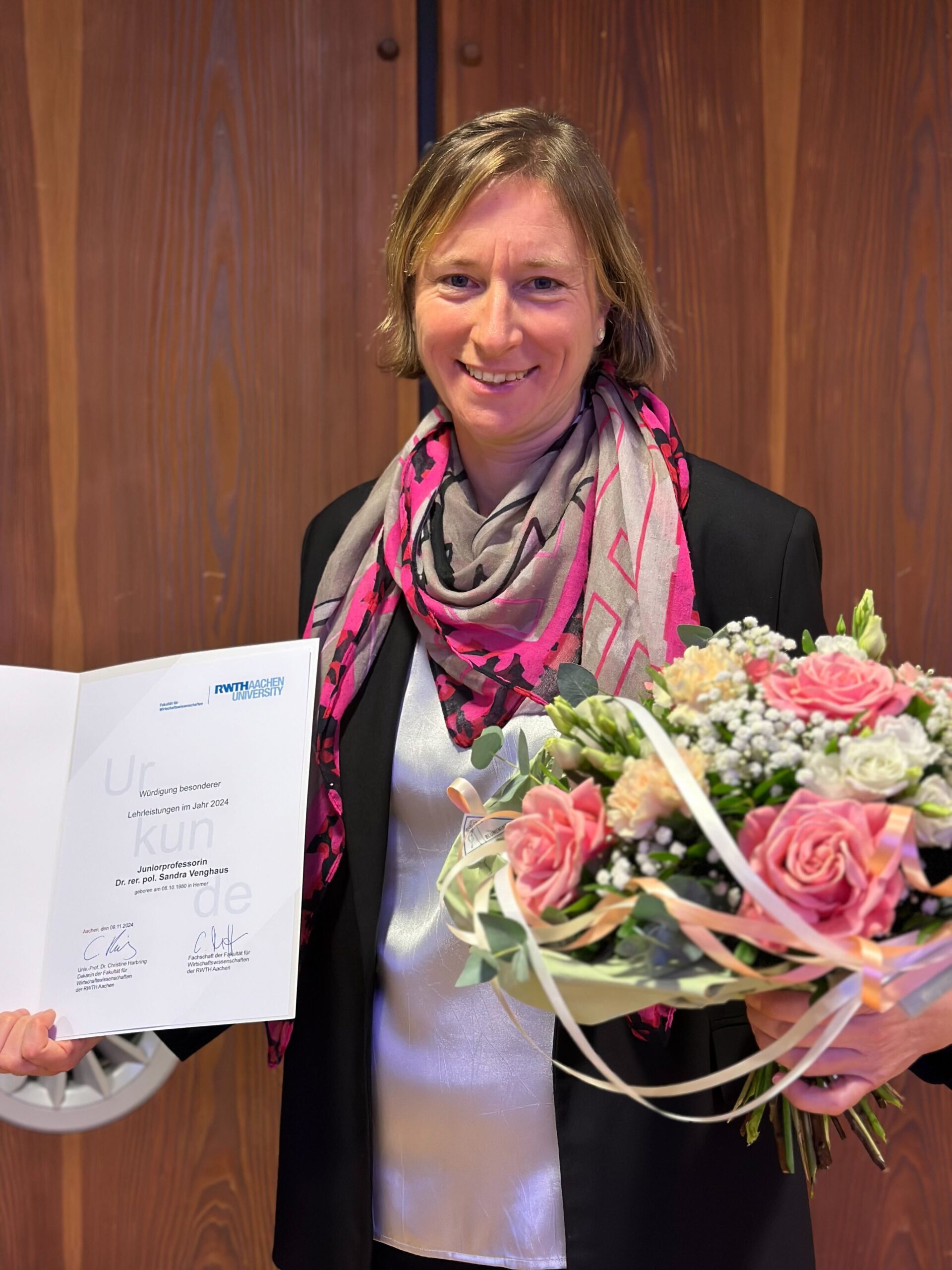
Sandra Venghaus serves as Assistant Professor for Decision Analysis and Socio-Economic Assessment at RWTH Aachen University's Faculty of Business and Economics, leading the dedicated research group in this field. She additionally coordinates the BioSC Competence Platform "Transform2Bio: Integrated Transformation Processes and their Regional Implementations: Structural Change from Fossil Economy to Bioeconomy". Her academic foundation includes: Environmental Science and Public Policy studies at Harvard University (2000-2004) Doctoral degree in Complex System Innovations from Leibniz University Hannover Professor Venghaus's research centers on quantitative modeling of complex socio-ecological systems , specifically analyzing how political decisions impact social, economic, and ecological outcomes. Her work spans critical domains including: Governance of the Sustainability Transformation Innovation in Socio-Ecological Systems Computational Resource Economics Decision Analysis Sustainability Assessment Bioeconomy development Markets, Circular Economy, and Water-Energy-Land Nexus dynamics Recent publications (2023-2024) demonstrate evolving focus on renewable energy market barriers, bioeconomy's climate mitigation potential, and sustainability-digitalization intersections. Her interdisciplinary work integrates energy economics, environmental science, and policy analysis within German and European contexts, emphasizing quantitative assessment frameworks for resource security and transformation pathways. She has received recognition through the Faculty of Business and Economics Teaching Prize. Teaching Prize of the Faculty of Business and Economics Information regarding her advisees and grant funding specifics was not provided in available sources. Professor Venghaus leads the Decision Analysis and Socio-Economic Assessment research group while coordinating the Transform2Bio platform, which drives integrated strategies for transitioning from fossil-based economies to sustainable bioeconomies through regional implementation frameworks.
Prof. Dr. Wolfgang Lippmann is a Senior Scientist at the Institute of Process Engineering and Environmental Technology, Chair of Hydrogen and Nuclear Energy at Technical University of Dresden. He has maintained continuous affiliation with TU Dresden since 1974, progressing from student to professorial status, with his current role beginning in 2021 after decades as Scientific Staff member. From 2017-2020, he served as Substitute Chair for Prof. Antonio Hurtado during Hurtado's tenure as Vice-Rector for University Development. His academic journey includes: 1974-1978: Studies of energy technology at Technical University of Dresden 1978-1983: Scientific assistant at Chair of Nuclear Energy Technology 1984: PhD on reactor containment stress analysis during cooling loss scenarios 1989: Post-doctoral thesis on pressurized-water reactor containment stress Lippmann's research bridges nuclear engineering with hydrogen technologies through innovative laser-based applications. His work spans reactor safety analysis, high-temperature ceramic materials, and nuclear-hydrogen system integration. He has pioneered laser joining techniques for silicon carbide ceramics in nuclear applications, developed laser decontamination systems for nuclear decommissioning, and conducted safety analyses of hydrogen systems coupled with nuclear power plants. His research integrates fundamental materials science with practical engineering solutions for next-generation energy systems. Analysis of his recent publications reveals three dominant research thrusts: nuclear-hydrogen integration (particularly PEM electrolysis coupled with nuclear plants), laser-based nuclear technologies (decontamination and ceramic joining), and advanced safety analysis of energy systems. His work demonstrates increasing focus on cross-sector energy integration while maintaining strong foundations in nuclear materials and safety engineering. Lippmann leads multiple significant research initiatives including TE-Cer (ceramic composites for thermo-electrical systems), F-Bridge (GEN IV fuel design), MANOLA (laser ablation systems), eJoin and CeraJoin (ceramic joining technologies), DELTA (integrated electrolyzer-hydrocarbon systems), LaDECO (laser decontamination), TE-K-SYSTEM (thermoelectric modules), and SYNKOPE-flex (energy carrier coupling). His laboratory at George-Bähr-Straße 3b in Dresden houses specialized equipment for laser processing, materials characterization, and thermal testing of nuclear components.
Paul Drude Institute for Solid State ElectronicsGermany
Samuel A. Bryan serves as a Lab Fellow and Chemist at Pacific Northwest National Laboratory (PNNL), where he pioneers spectroelectrochemical sensor development for measuring chemical species in highly complex nuclear systems. His innovations have resolved critical Department of Energy safety issues, particularly regarding ferrocyanide concentration determination in nuclear waste and hydrogen flammability in Hanford waste tanks. Dr. Bryan earned his B.S. in Chemistry from Boise State University (1979), followed by M.S. and Ph.D. degrees in Inorganic Chemistry from Washington State University (1983, 1985). His educational background established the foundation for his expertise in complex chemical systems analysis. His research focuses on real-time spectroscopic monitoring methodologies for nuclear applications. Key contributions include developing the first-ever luminescence detection from technetium complexes, creating sensors for nuclear waste analysis, and establishing predictive models for hydrogen gas generation that continue to inform Hanford Waste Treatment Plant safety designs 25 years later. His work bridges fundamental chemistry with practical nuclear engineering solutions. Analysis of his recent publications reveals strong emphasis on multi-modal spectroscopy (Raman, UV-Visible, NIR) combined with chemometric analysis for nuclear applications. His research spans from fundamental sensor development to practical implementation in nuclear fuel recycling, waste treatment, and safeguards verification. Fellow of the American Chemical Society Chair of Richland Section of the ACS (1998 and 2004) Fitzner-Eberhardt Award for Outstanding Contributions to Science and Engineering Education PNNL Laboratory Director's award (2005) ACS ChemLuminary Award for Outstanding Performance by Richland Section (2004) Dr. Bryan's technical leadership extends to mentoring junior scientists and contributing to national initiatives in nuclear safeguards. His current research focuses on microfluidic sensor systems, multi-modal spectroscopy approaches, and advanced data analysis techniques for nuclear applications, continuing to address critical challenges in nuclear waste management and national security.
Prof. Dr. Vera Krewald is a Professor for Quantum Chemistry at Technische Universität Darmstadt, Department of Chemistry. She leads a research group focused on theoretical and quantum chemistry approaches to understand electronic structures and properties of inorganic and transition metal complexes. Her work bridges computational methods with experimental spectroscopy to explore magnetic interactions, electron transfer processes, and catalytic mechanisms. Professor for Quantum Chemistry (W3) at TU Darmstadt (since 11/2023) Professor for Theoretical Chemistry (W2, tenure track) at TU Darmstadt (12/2018-10/2023) Research Group Leader at University of Bath (01/2017-11/2018) Prof. Krewald's research focuses on applying quantum chemistry methods to understand the electronic structure and functioning of inorganic complexes. Her group makes predictions about spectroscopic, magnetic, and other measurable properties of transition metal complexes, with particular interest in systems that exhibit unexpected properties, magnetic coupling, challenging molecular transformations, or promising catalytic activity. Key research areas include electron transfer processes, photophysics and photochemistry of transition metal complexes, nitrogen activation and splitting, oxygen reduction catalysis, and the development of theoretical methods like the Angular Overlap Model. Analysis of Prof. Krewald's recent publications reveals a strong focus on iron-based catalysis, particularly for energy-related applications like the oxygen reduction reaction in fuel cells. Her work frequently combines computational quantum chemistry with experimental spectroscopy, especially Mössbauer spectroscopy, to characterize active sites in catalysts. There's also significant emphasis on electron transfer processes, photochemical activation of small molecules like dinitrogen, and the development of computational tools for analyzing magnetic properties and metal-ligand bonding. 2022: Dozentenpreis from the chemical industry fund (Fonds der Chemischen Industrie) 2021: Award from the Dr. Hans Messer Stiftung for early career researchers 2021: ADUC Award from the German association of university professors in chemistry 2014: Otto Hahn Medal of the Max-Planck-Society 2013: Participant at 63rd Lindau Nobel Laureate Meeting 2008-2013: German National Academic Foundation fellowship Prof. Krewald leads a research group with 2 postdocs, 6 PhD candidates, and several B.Sc./M.Sc. students. Her group has secured funding from multiple sources including the DFG, Leverhulme Trust, Merck'sche Gesellschaft für Kunst und Wissenschaft e.V., NHR Verein e.V., and Deutsche Bundesstiftung Umwelt. She serves as vice-speaker of SFB 1487 "Iron, upgraded!" (2022-2025), demonstrating her leadership in coordinated research efforts. Her group actively collaborates with experimental researchers to elucidate reaction mechanisms and identify catalytically active species. The Krewald Research Group operates within the Department of Chemistry at TU Darmstadt, with strong connections to collaborative research centers including SFB 1487 "Iron, reimagined!", SFB 1633 "Pushing Electrons with Protons", and SPP 2491 "Interactive Switching of Spin States". The group is also involved in the Quantum Bio-Inorganic Chemistry Society, which Prof. Krewald co-founded and serves as Secretary General. Their work combines high-level quantum chemical calculations with experimental validation to address fundamental questions in inorganic chemistry and catalysis.
Dr. Silviya Boycheva is a researcher in the Department of Thermal and Nuclear Power Engineering at the Technical University of Sofia, Bulgaria. Her work bridges energy systems engineering and sustainable materials development, focusing on environmental and energy challenges through innovative technological solutions. Research Interests: Her primary research areas include carbon capture using waste-derived adsorbents, utilization of coal fly ash in catalytic applications, development of 3D-printed catalysts for green chemistry, and optimization of proton exchange membrane fuel cells. She is deeply engaged in transforming industrial byproducts into functional materials for clean energy and environmental remediation. Publication Trends: Recent publications (2024–2025) highlight her focus on sustainable catalytic processes for producing γ-valerolactone—a renewable platform chemical—from levulinic acid using fly ash-based Ni-Cu zeolites. She also investigates advanced flow field designs in hydrogen fuel cells to improve efficiency and performance. These efforts reflect a strong commitment to circular economy principles and low-carbon energy technologies. Scientific Collaborations: She frequently collaborates with researchers such as Margarita Popova, Boian Mladenov, and Daniela Kovacheva, indicating active participation in interdisciplinary research teams. Advising and Grants: While no formal advisees or grant details are mentioned in the provided text, her consistent publication output suggests involvement in funded research projects and potential mentorship roles within her department. Laboratories and Research Groups: Although not explicitly stated, her work implies affiliation with laboratories focused on thermal systems, catalysis, and sustainable energy at the Technical University of Sofia, likely contributing to national and international efforts in clean energy innovation.
Dr. Carsten Lange is a faculty member at the Chair of Hydrogen and Nuclear Energy within the Institute of Process Engineering and Environmental Technology at Technische Universität Dresden . Since 2010, he has led the Reactor Dynamics workgroup and has served as Head of the nuclear training reactor AKR-2 since 2015. His research focuses on nonlinear stability analysis of boiling water reactors (BWR) , model order reduction techniques , neutron noise analysis , and non-invasive reactor monitoring . Dr. Lange earned his PhD in 2009 from Technische Universität Dresden with a dissertation titled Advanced nonlinear stability analysis of boiling water nuclear reactors . He has contributed to projects like GRE@T-PIONEER and international initiatives such as the OECD/NEA Zero Power Reactors Task Force . His work includes experimental reactor physics , nuclear safety , and reactor instrumentation development. His research spans nuclear reactor stability , neutron imaging , and advanced simulation techniques . Key publications analyze PWR power fluctuations , coupled fuel assembly vibrations , and reduced-order models for online monitoring . Dr. Lange actively mentors students in reactor physics and reactor training assignments.
Dr. Tim Happel is a leading researcher in plasma physics and fusion energy, affiliated with the Max Planck Institute for Plasma Physics (IPP) in Garching, Germany, where he serves as Head of the Plasma Dynamics Division and a Scientific Member of the Max Planck Society since 2024. He also lectures at the University of Ulm, contributing to academic education in plasma physics. His research focuses on turbulence, confinement regimes, and advanced tokamak operation, particularly using the ASDEX Upgrade device. His research interests center on plasma turbulence in tokamaks, with a special emphasis on the Improved Energy Confinement Mode (I-mode) and discharges with negative triangularity, which are promising for future fusion reactors. He investigates turbulence-flow interactions, develops diagnostics like Doppler reflectometry, and validates gyrokinetic simulations against experiments. His work bridges theoretical modeling and experimental validation to improve predictive capabilities for ITER and DEMO. The 15 most recent publications highlight a strong trend toward predictive fusion science, with studies on gyrokinetic code validation (e.g., GENE), edge-localized modes, pedestal physics, and negative triangularity configurations. These works are published in top journals like Nuclear Fusion and Nature Communications , reflecting his leadership in advancing core and edge plasma physics for next-generation fusion devices. Itoh Prize for Plasma Turbulence (for doctoral work on Doppler reflectometry) Dr. Happel leads the Turbulence research group at IPP since 2023 and has been instrumental in major collaborative efforts, including the EUROfusion Tokamak Exploitation programme. His work is supported by extensive experimental campaigns and international grants, though specific funding sources are not detailed. He collaborates widely across institutions, as seen in co-authorship with teams from EUROfusion, ASDEX Upgrade, and other tokamak facilities. He heads the Plasma Dynamics Division at IPP, overseeing research on turbulence, transport, and confinement optimization in fusion plasmas. His team integrates experimental diagnostics, advanced data analysis, and high-performance simulations to tackle key challenges in plasma physics.
Dr. Andreas Wagner is a leading researcher at the Helmholtz-Zentrum Dresden-Rossendorf (HZDR), serving as Head of the Nuclear Physics Division and Head of the Radiation Source ELBE. His work focuses on applied nuclear physics, including nuclear astrophysics, detector development, and radiation technology. He leads the R3B collaboration at GSI/FAIR and chairs the Helmholtz portfolio initiative for Detector Technologies and Systems. His research spans nuclear data applications, materials science using positron annihilation spectroscopy, and medical physics applications in proton therapy verification. Dr. Wagner collaborates internationally, with projects at HZDR, GSI, and TU Dresden. He has contributed to advanced experimental facilities like the ELBE Linac and the Radiation Source ELBE. Teaching activities include courses on nuclear astrophysics, particle accelerators, and detector technologies at TU Dresden. His work bridges fundamental physics with applied technologies, emphasizing interdisciplinary research in energy, materials, and medical physics.
Paul Drude Institute for Solid State ElectronicsGermany
David Senor is a Lab Fellow at Pacific Northwest National Laboratory (PNNL) and an Adjunct Professor of Nuclear Engineering at Texas A&M University. With over 30 years of experience since joining PNNL in 1992, he specializes in nuclear materials science with a focus on irradiation effects, material behavior under radiation, and development of nuclear fuels and structural materials. Dr. Senor holds a PhD in Nuclear Engineering from Texas A&M University (1992), along with MS (1989) and BS (1988) degrees from the same institution. His educational background has provided a strong foundation for his extensive research career in nuclear materials. His research focuses on neutron irradiation effects on reactor structural materials, burnable absorbers, and fuels, as well as proton and ion irradiation effects on accelerator beam-intercepting devices. He has pioneered work in fabrication of materials and fuels for nuclear service, particularly in silicon carbides for fission and fusion reactor applications, tritium-producing burnable absorber rods, and uranium-molybdenum fuels for research reactors. His recent publications demonstrate continued leadership in understanding radiation damage mechanisms, lithium ceramics for fusion applications, and advanced characterization techniques for nuclear materials. Dr. Senor has received numerous professional recognitions including the Secretary's Achievement Award from the Department of Energy (2019) and the Nuclear Engineering Distinguished Former Student Award from Texas A&M University (2018). He also earned early career recognition as a Young Leader from The Minerals, Metals and Materials Society (1996). As the national technical lead for the National Nuclear Security Administration Tritium Modernization program, principal investigator for fusion solid breeder research, and PI for post-irradiation examination in the RaDIATE Collaboration, Dr. Senor continues to play a critical role in advancing nuclear materials science. He has organized numerous international workshops and symposia, served on the Science Review Board for Nuclear Science User Facilities, and contributed to professional societies including The Minerals, Metals and Materials Society and the American Nuclear Society.
Prof. Dr. Pao-Yu Oei serves as full Professor for 'Economics of Sustainable Energy System Transition' at Europa Universität Flensburg (EUF), where he directs the 'Industrial Engineering: Energy and Environmental Management' study program. He leads the 30-member 'CoalExit' research group spanning EUF, TU Berlin, and DIW Berlin, and coordinates the international CoalTransitions research hub with over 60 researchers from 25 institutions across 5 continents. Oei also heads the Transnational Centre for Just Transitions (TRAJECTS), a DAAD climate center fostering North-South-South cooperation with Colombia and South Africa to enhance knowledge exchange and capacity building in the Global South. His research spans techno-economic modeling of 100% renewable energy systems integration across electricity, heat, and transport sectors, alongside analysis of socio-political challenges in structural change processes and the political economy of fossil fuel phase-outs. Oei's work notably incorporates gender aspects in just transition frameworks and addresses contemporary energy challenges including responses to the Russian energy crisis and nuclear phase-out implications. His research methodology combines quantitative system modeling with qualitative policy analysis to develop practical transition pathways. Recent publications demonstrate a strong focus on comparative coal phase-out analysis across different national contexts (Germany, UK, Poland, South Africa), just transition policy frameworks, and energy security challenges in the current geopolitical context. His work shows increasing attention to Global South perspectives and gender-inclusive transition approaches, reflecting his leadership in the TRAJECTS center. Oei's research output combines academic rigor with policy relevance, frequently addressing immediate energy challenges while developing long-term transition pathways. Oei has contributed significantly to German coal phase-out policy development, worked with the German Advisory Council on the Environment (SRU), and serves as managing editor of the Journal Economics of Energy & Environmental Policy (EEEP). His research group 'CoalExit' has produced influential analyses on the Garzweiler II mine and Lützerath preservation, commissioned by organizations including Greenpeace and BÜNDNIS 90/DIE GRÜNEN. Through CoalTransitions, he facilitates international knowledge exchange on coal phase-out experiences across 25 research institutions. Based at the Interdisciplinary Institute for Environmental, Social and Humanities Sciences at EUF, Oei's work bridges technical energy system analysis with social science perspectives. His research group utilizes modeling tools like GENeSYS-MOD for renewable energy scenario development while maintaining strong connections to policy implementation challenges in coal regions. The TRAJECTS center under his leadership represents a significant effort to reframe energy transition discourse through Global South perspectives and equitable North-South-South cooperation.
Dr. Kvashnina K. O. is a leading researcher at the Helmholtz-Zentrum Dresden-Rossendorf (HZDR) in Germany. Her work focuses on advanced synchrotron-based spectroscopy techniques for actinide science, particularly uranium and plutonium chemistry in environmental and materials contexts. Key areas include oxidation state analysis, mineral interactions, and metastable phase characterization. Institution: Helmholtz-Zentrum Dresden-Rossendorf Role: Researcher Research Interests: Utilizing high-resolution X-ray and synchrotron methods to study actinide behavior in environmental systems and advanced nuclear materials. Special attention to redox reactions, atomic-scale speciation, and chemical durability. Publications Trends: Recent work (2024-2025) emphasizes uranium oxidation mechanisms, actinide-mineral interactions, and development of synchrotron imaging techniques like HERFD. Research spans nuclear waste management, geochemistry, and materials design.