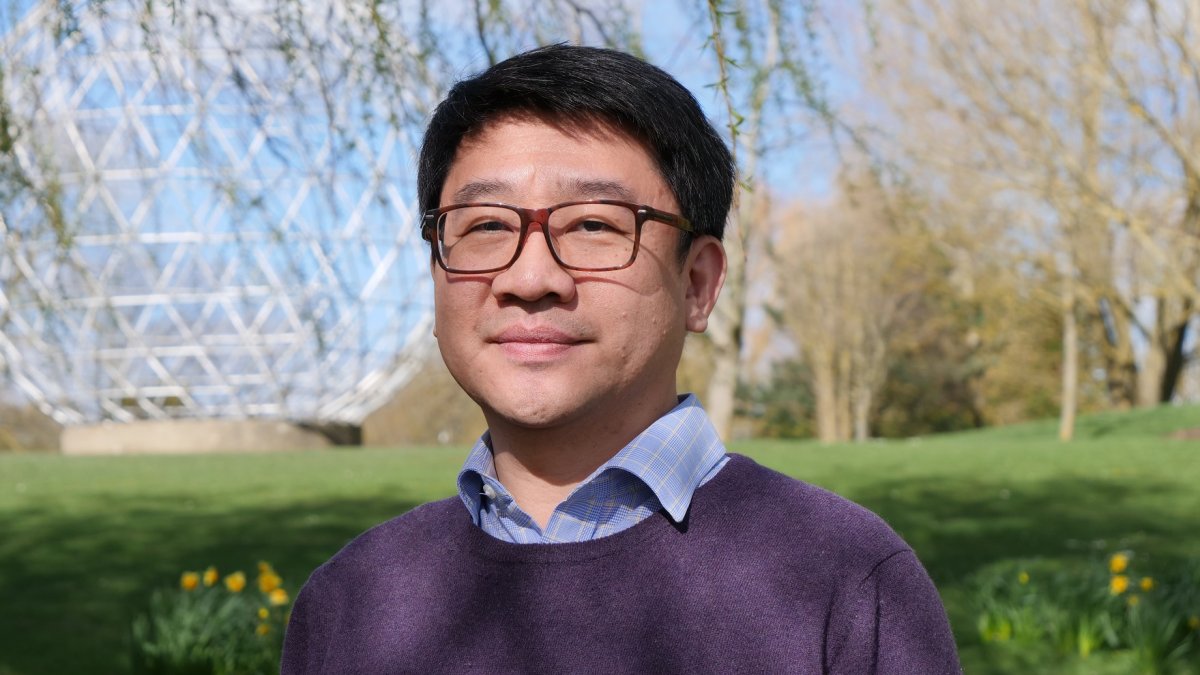
Alexander von Humboldt Professor and Chair for Dynamics, Control, Machine Learning and Numerics at Friedrich-Alexander-Universität Erlangen-Nürnberg. Holds dual PhD from University of Basque Country and Université Pierre et Marie Curie. Secondary affiliations at University of Deusto and Autonomous University of Madrid. Research integrates partial differential equations, control theory, and machine learning. Develops computational frameworks for system optimization and dynamic modeling. Current focus includes neural transport in normalizing flows and PDE-based machine learning architectures. Recipient of Alexander von Humboldt Professorship (2019), three European Research Council Advanced Grants, and W.T. Reid Prize (2022). Editor-in-Chief of Mathematical Control and Related Fields. Founded Basque Center for Applied Mathematics and established Computational Mathematics Chair at Deusto Foundation. Supervised 30+ PhD students with work cited in 300+ publications.
Pawel Artymowicz is a Professor at the University of Toronto Scarborough (UTSC) focusing on the origin and evolution of planetary systems. His research spans astrophysical disk dynamics, circumstellar dust physics, and binary star interactions. He holds a Ph.D. from the Polish Academy of Science (1990). Research Interests: Artymowicz investigates planetary formation mechanisms, protoplanetary disk evolution, and binary star-disk interactions. He explores topics like irradiation instabilities in accretion disks, gravitational instabilities in gas disks, and the role of turbulence in planetesimal formation. His work bridges theoretical modeling with observational studies using instruments like the Gemini NICI Planet-Finding Campaign. Key Contributions: Artymowicz has pioneered studies on Type III planetary migration, disk-planet interactions, and the dynamics of embedded protoplanets. His research on binary systems' impact on disk structures has advanced understanding of star formation processes. He also explores black hole dynamics and AGN phenomena through disk evolution frameworks. Recent Work Trends: Recent articles highlight advancements in 3D flow simulations around protoplanets, modal analysis of disk instabilities, and direct imaging of substellar companions in young stellar systems. His studies emphasize high-contrast imaging techniques for exoplanet detection and debris disk characterization. Grants & Advising: While specific grants/students aren't listed, his prolific publication record indicates active research leadership. He collaborates on large-scale observing campaigns like the Gemini NICI project, contributing to exoplanet demographics in B/A-type stars. Labs/Teams: Affiliated with the University of Toronto's astronomy department and UTSC's research initiatives, though specific lab names aren't provided. His work integrates theoretical astrophysics with observational astronomy.
Bernhard Rabus is a Professor and holder of the Industrial Research Chair in Synthetic Aperture Radar (SAR) at Simon Fraser University's School of Engineering Science. His work focuses on SAR technologies, with emphasis on maritime applications and novel land applications using multi-channel SAR systems. He leads the SARlab and collaborates with institutions like IEEE. Rabus earned his Ph.D. in Geophysics from the University of Alaska Fairbanks and an M.Sc. from the Technical University of Munich. His research integrates advanced interferometric and polarimetric techniques to study glaciers, landslides, and environmental dynamics. Recent projects include landslide deformation analysis, glacier motion tracking, and SAR-based wildlife monitoring. Rabus teaches graduate courses like ENSC895/EASC609 and advises students on SAR applications. His work is funded through industrial and academic partnerships, addressing challenges in geohazard monitoring and remote sensing innovation. Education: Ph.D., Geophysics, University of Alaska Fairbanks (1997); M.Sc., Technical University of Munich (1992) Affiliations: IEEE, SARlab Director Labs/Teams: SARlab, collaborating with NASA, ESA, and industry partners Research Highlights: Rabus pioneers SAR applications for maritime domain awareness, landslide prediction, and glacier dynamics. His team develops novel algorithms for interferometric analysis and airborne SAR systems. Recent studies include Fels Slide displacement tracking and Arctic ice cap stability assessments. Outcomes contribute to disaster risk reduction, climate science, and environmental policy. Awards: Industrial Research Chair in SAR (SFU), recognized for advancing SAR technology in geoscience and engineering. Grants/Projects: Funded by NSERC, NASA, and industry partnerships for SAR sensor development and environmental monitoring initiatives.
Anthony A. Harkin is an Associate Professor in the Department of Mathematics and Statistics at the Rochester Institute of Technology (RIT), within the College of Science. His academic roles include teaching and research in applied mathematics, fluid mechanics, and dynamical systems. He holds a B.S. from SUNY Brockport, M.S. from MIT, and Ph.D. from Boston University, with postdoctoral research at Harvard University. His expertise spans computational mathematics, fluid dynamics, and network science, with a focus on mathematical modeling and partial differential equations. Education: B.S. in Math/Physics/Computer Science, SUNY College at Brockport (1993) M.S. in Applied Mathematics, Massachusetts Institute of Technology (1995) Ph.D. in Mathematics, Boston University (2000) Postdoctoral Fellow in Applied Mathematics, Harvard University (2001–2005) Research Interests: Fluid Mechanics: Bubble dynamics, multiphase flow, and nonlinear acoustics Dynamical Systems: Perturbation theory, renormalization group methods, and bifurcation analysis Network Science: Community detection, graph theory, and clustering algorithms Data Science: Hyperspectral image processing and machine learning applications Teaching Contributions: Harkin has taught advanced courses at RIT, Harvard, and Boston University in areas such as mathematical modeling, partial differential equations, dynamical systems, and linear algebra. He received the RIT Provost's Award for Excellence in Teaching (2008) and Harvard's Certificate of Distinction in Teaching (2004). Publications: His research spans fluid dynamics, network theory, and mathematical modeling, with notable contributions on bubble dynamics, graph modularity, and renormalization group methods. Recent work includes studies on Rayleigh collapse of bubbles and community detection in networks. Professional Activities: Co-founder of icitizen.com, a political networking platform. Active in editorial roles, including as editor of the International Journal of Applied Nonlinear Science (2013).
Jean Lécureux is a Lecturer at the Department of Mathematics within the Faculty of Sciences of Orsay at the University of Paris-Saclay. His research focuses on geometric group theory, specifically exploring buildings, their boundaries, Poisson boundaries, rigidity phenomena, and random walks in CAT(0) spaces. He has supervised the PhD of Corentin Le Bars (2023), currently a postdoc at the Weizmann Institute, and is currently advising Antoine Derimay's PhD. His work spans advanced topics such as the Normal Subgroup Theorem for groups acting on Ã₂ buildings, superrigidity in algebraic group actions, and geometric density of invariant random subgroups. Notable contributions include foundational studies on CAT(0) cubical complexes and boundary maps in infinite-dimensional Hermitian symmetric spaces. He holds a PhD from 2009 under Bertrand Rémy and an habilitation (2020) titled 'Bords et rigidité en courbure négative ou nulle.' Publications highlight interdisciplinary approaches to geometric structures, with key journals including Annales scientifiques de l'École normale supérieure, American Journal of Mathematics, and Groups, Geometry, and Dynamics. His pedagogical contributions include a 2017 paper on evaluation strategies in university mathematics education.
Frédéric Paulin is a Professor at the Université Paris-Saclay, affiliated with the Department of Mathematics of Orsay (Institut de Mathématique d'Orsay, UMR 8628 CNRS). His research focuses on hyperbolic geometry, geometric group theory, ergodic theory, and their connections to number theory and dynamical systems. He has extensively studied topics such as Teichmüller spaces, discrete subgroups of Lie groups, and Diophantine approximation. Paulin has taught advanced courses across various institutions, including the École Normale Supérieure and Université Paris-Sud, covering topology, differential geometry, dynamical systems, and algebra. He has organized international conferences like the GDR Platon meetings and contributed to significant research in areas like equidistribution of geodesics and counting problems in negative curvature. His work bridges pure mathematics disciplines, with applications in geometry, number theory, and topology. He actively participates in academic service, including editorial roles and conference organization, furthering collaborative research in his fields.
Alexander Schwing is an Associate Professor in the Department of Electrical and Computer Engineering at the University of Illinois at Urbana-Champaign (UIUC), with affiliations to the Coordinated Science Laboratory and the Computer Science Department. His research focuses on machine learning, computer vision, and structured prediction, emphasizing algorithms for deep networks, multivariate distributions, and 3D scene understanding. He has held postdoctoral positions at the University of Toronto and completed his PhD at ETH Zurich. Educations: PhD in Computer Science (ETH Zurich, 2014) Diploma in Electrical Engineering & IT (Technical University of Munich, 2010) Research interests include generative modeling, embodied agents, video segmentation, and reinforcement learning. He has developed influential frameworks like XMem for video object segmentation and MaskRNN for instance-level tracking. His work emphasizes reproducibility and open-source releases. Key awards include the NSF CAREER Award, Amazon Research Award, and NVIDIA GPU donations. He has advised over 25 students, many of whom have pursued roles at top tech firms and academia. Current research explores structured prediction, multi-agent systems, and 3D reconstruction. His labs collaborate with industries like Samsung and Adobe, and he teaches courses on machine learning and pattern recognition.
Zhizhen Zhao is an Associate Professor in the Department of Electrical and Computer Engineering at the University of Illinois. He holds additional appointments as Associate Professor in the Coordinated Science Lab, Department of Statistics, and Department of Mathematics, and is an Affiliate at the Carl R. Woese Institute for Genomic Biology. He is also recognized as a William L. Everitt Faculty Fellow. His research encompasses machine learning, computational imaging, high-energy physics, climate modeling, cryo-electron microscopy, and quantum computing. He develops algorithms for complex data analysis, inverse problems, and interdisciplinary scientific applications. Recent publications (2023–2025) focus on generative AI, FAIR-compliant models for physics, climate prediction, and advanced imaging techniques. Key trends include deep learning for inverse problems, community detection in networks, and energy informatics. Scientific Awards: William L. Everitt Faculty Fellow He collaborates with the Coordinated Science Lab and the Carl R. Woese Institute for Genomic Biology, contributing to cross-disciplinary initiatives in AI, physics, and computational biology.
Dr. Jisu Kim is an Assistant Professor in the Department of Interdisciplinary Social Science at Utrecht University, Netherlands. She was previously a research scientist at the Max Planck Institute for Demographic Research (MPIDR) in the Digital and Computational Demography department. Her expertise lies in Mobility and Migration, Applied Data Science, Big Data, and Social Networks, with a focus on using innovative data analytics to study migration dynamics and societal integration. She holds a Ph.D. in Data Science from Scuola Normale Superiore, Italy. Her research interests include exploring big data sources to understand migration’s socio-political and cultural contexts, particularly using social media data. She is fluent in Korean, English, French, and Italian, and skilled in Python, R, and Stata for statistical analysis. Dr. Kim has received notable awards, including the DGD Best Paper Award (2025) for her work on gender differences in migration processes and the Best Poster Award at Complenet 2023. She has organized multiple interdisciplinary workshops (e.g., MIMODE 2024/2023/2022) and co-led the Population and Social Data Science Summer Incubator Program in 2024. Her grants include the Seed Money Award from Utrecht University. She has advised and mentored in summer programs, contributed to courses like the Research Practicum, and actively participates in academic networks such as CSS council (2021–2024). Her work spans collaboration with institutions like the Paris School of Economics, Imperial College London, and OECD/IOM/UN initiatives.
Jose M Pena is a Senior Associate Professor and Head of Unit at Linköping University's Department of Computer and Information Science, specializing in the Division of Statistics and Machine Learning (STIMA). His research focuses on probabilistic graphical models including Bayesian networks, Markov networks, and chain graphs within machine learning and artificial intelligence. His research interests center on causal inference, machine learning, and statistical modeling. He actively develops methods for causal discovery, counterfactual reasoning, and sensitivity analysis using normalizing flows and graphical models. His work bridges theoretical statistics with practical applications in complex data analysis. His recent publications (2020-2025) demonstrate a strong focus on causal machine learning, with particular emphasis on directed acyclic graphs (DAGs), counterfactual modeling, and handling unobserved confounding. Key trends include the integration of deep learning with causal structures, robust causal inference under distribution shifts, and scalable methods for high-dimensional causal analysis. As Head of Unit within STIMA, he contributes to the international master's programme in Statistics and Machine Learning. The division hosts significant research activities in modern data analysis and is part of Linköping University's Department of Computer and Information Science—one of northern Europe's largest departments in this field.
Professor Yi-Zhe Song is a Professor of Computer Vision and Machine Learning at the University of Surrey's Centre for Vision, Speech and Signal Processing (CVSSP), one of Europe's largest AI research centers. He leads the SketchX Lab, focusing on understanding human sketching to advance computer vision and cognitive science. His roles include Co-Director of the Surrey Institute for People-Centred AI and Programme Lead of Surrey’s MSc in Artificial Intelligence. He holds a PhD (2008) and MSc (2004, Best Dissertation Award) from the University of Cambridge and Bath. Research interests span sketch-based systems, fine-grained visual classification, domain adaptation, and generative models. His lab has produced over 67 publications in top-tier conferences (CVPR, ICCV, ECCV) and journals, including a Best Paper Award at BMVC 2015. He is an Associate Editor for IEEE TPAMI and Frontiers in Computer Science, and has served as Programme Chair for BMVC 2021. Recent trends in his work emphasize explainable AI (SketchXAI), 3D reconstruction from sketches, and practical applications like virtual try-on and fashion-focused V+L models. His MSc AI programme integrates technical, ethical, and business aspects, preparing students for diverse AI roles. Awards: Best Paper Award (BMVC 2015), Senior Member of IEEE, Fellow of the Higher Education Academy. Lab Leadership: 3 academics, 2 postdocs, 14 PhD students in the SketchX Lab. Grants & Partnerships: Collaborations with industry and international funding bodies (e.g., EPSRC, São Paulo Research Foundation). Future Work: Expanding AI’s societal impact through inclusive education, human-centric AI, and democratizing generative AI tools.
Luigi Acerbi is an Associate Professor at the Department of Computer Science, University of Helsinki, leading the Machine and Human Intelligence research group. He is affiliated with the Finnish Center for Artificial Intelligence (FCAI) and ELLIS (European Laboratory for Learning and Intelligent Systems). His research focuses on probabilistic machine learning, statistical inference methods (e.g., amortized and surrogate-based approaches), and computational and cognitive neuroscience, including Bayesian models of perception and resource-constrained rationality. Previously, he held postdoctoral positions at the University of Geneva and New York University. He earned his PhD from the Doctoral Training Centre in Computational Neuroscience at the University of Edinburgh, working with Sethu Vijayakumar and Daniel Wolpert. His work includes developing open-source tools like BADS (Bayesian Adaptive Direct Search) and VBMC (Variational Bayesian Monte Carlo), widely used for optimization and Bayesian inference in MATLAB/Python. He actively contributes to the academic community through teaching (e.g., BAMB! 2022 summer school tutorials on model fitting) and software development (GitHub repositories for optimization, inference, and AI tools like Athanor). His research bridges machine learning, neuroscience, and cognitive science, emphasizing robust and efficient statistical methods.
Matthew Thomas Borzage is an Associate Professor at the University of Southern California, holding joint appointments in Pediatrics, Regulatory and Quality Sciences, and Biomedical Engineering. His research focuses on advancing medical imaging techniques, particularly MRI and neuroimaging, to study cerebrovascular dynamics, hydrocephalus, sickle cell disease, and pediatric neurological conditions. He has contributed to the development of non-invasive diagnostic methods for CSF flow analysis and cerebrovascular reactivity. His interdisciplinary work bridges engineering, neuroscience, and clinical practice, with over 70 peer-reviewed publications since 2010. Key research areas include MRI innovations for CSF dynamics, cerebral blood flow quantification, and automated diagnostic algorithms. Collaborations involve neurosurgery, radiology, and neonatology. His studies span from fetal imaging to geriatric neurological disorders, emphasizing translational applications. Publications from 2021–2025 highlight advancements in ultrafast neuronavigation protocols, quantitative susceptibility mapping, and brain development lifespan charts. His work addresses critical gaps in understanding anemia’s cerebrovascular effects and optimizing hydrocephalus diagnostics. Awards: None explicitly listed in provided texts. Grants and advising details are not specified, though extensive collaborative networks exist with researchers like Arthur Toga and Berislav Zlokovic.
Benita Tamrazi is an Associate Professor of Radiology (Clinical Scholar) specializing in pediatric neuroradiology and oncologic imaging. Her research encompasses advanced neuroimaging techniques, quantitative MRI biomarkers, and imaging protocol standardization for pediatric CNS disorders. Key research areas include: imaging biomarkers for hypoxic-ischemic encephalopathy in neonates; AI-based tumor segmentation in medulloblastoma; CSF flow dynamics in shunted hydrocephalus; and neuroimaging complications of immunotherapies. Recent work establishes standardized response assessment protocols for pediatric brain tumors through RAPNO working groups. Publication themes show focus on pediatric neuro-oncology (64%), particularly medulloblastoma (21%) and pineal tumors (7%). Technical innovations include AI segmentation (7%), quantitative CSF flow (11%), and metabolic imaging (7%). Clinical applications span treatment monitoring (21%), complication detection (14%), and guideline development (14%).
Hans Kuerten is a Full Professor holding the Chair of Computational Multiphase Flow at the Department of Mechanical Engineering , Eindhoven University of Technology (TU/e) . Additionally, he serves as a part-time professor in Computational Multiscale Methods at the Faculty EEMCS, University of Twente . His research spans numerical simulation techniques for turbulent and multiphase flows, with applications in process technology and fluid mechanics. Academic Background: MSc in Theoretical Physics from the University of Utrecht, PhD from TU/e. International Collaborations: Partnerships with institutions like Ohio State University, ETH Zurich, and Politecnico di Torino. Projects: Leads the FIP 2.0: Complex Fluids on Complex Substrates project (2020–2026). Research Focus: Multiscale problems in two-phase flows, particularly turbulence-particle interactions, phase transitions, and computational methods like spectral and finite volume techniques. Applications include particle separation, steam injection, boilers, and inkjet printing. Scientific Contributions: Over 200 research outputs, including influential reviews on point-particle methods and DNS/LES techniques. Collaborates with semi-industry partners like Océ, AkzoNobel, NRG, and TNO. Advising: Supervised student theses, including M.H.M. Lemmens 's 2007 Master's work on 3D particle tracking in turbulent pipe flow.