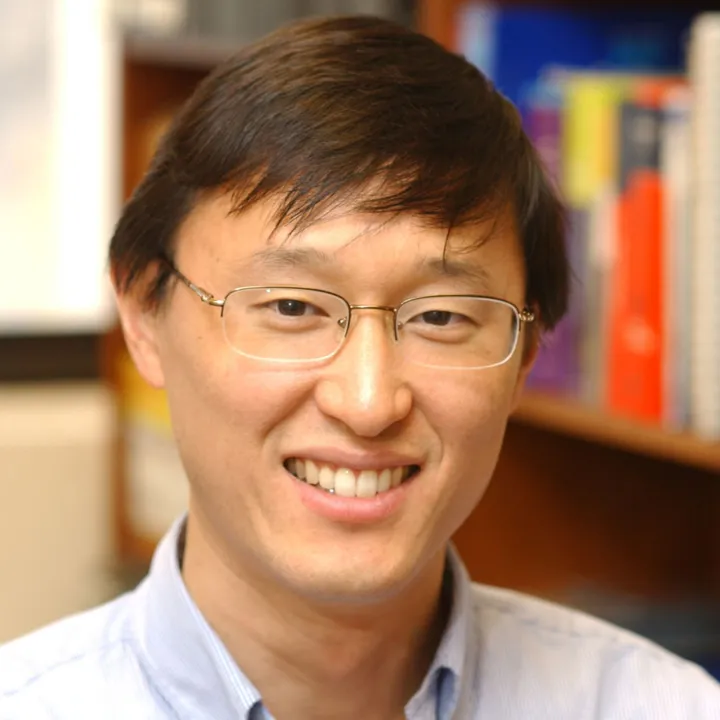
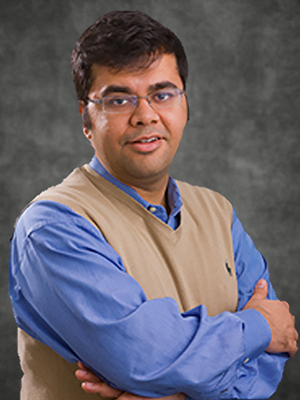
Michael McAlpine is a Professor in the Mechanical Engineering department at the University of Minnesota . He also holds affiliations with the Biomedical Engineering and Electrical and Computer Engineering departments. His research focuses on 3D printing functional materials & devices , Nanoscale inks , Biomedical devices , Bioelectronics , and Flexible Microsystems . Research Interests : 3D Printing, Biomedical Engineering, Nanotechnology, Flexible Electronics, Microfluidics Labs : ME 361/363 Contact : mcalpine@umn.edu , (612) 626-3303, ME 117 Recent Research Trends include 3D Printed Biomedical Devices , Flexible Electronics , and Bioprinting Applications . His work spans from Spinal Organoid Formation to Programmable Drug Release Capsules . Scientific Award : Circulation Research 2020 Best Manuscript Award
Charles Ahn is the John C. Malone Professor of Applied Physics & Materials Science at Yale University. His research focuses on fabricating and studying novel complex oxide materials using advanced techniques like molecular beam epitaxy and synchrotron x-ray scattering. His work addresses multifunctional oxides, nanofabrication, and nonvolatile logic switches for post-CMOS computing. Key research areas include electronic control of complex order parameters in correlated oxides and scanning probe microscopy-based nanofabrication. Education: Ph.D. in Applied Physics from Stanford University. Research interests span the physics and technology of complex oxides, with emphasis on electronic and structural control at the nanoscale. His group develops next-generation materials for computing and electronics, leveraging interdisciplinary approaches in materials science and condensed matter physics. Notable awards include Fellow of the American Physical Society, AVS Peter Mark Memorial Award, David and Lucile Packard Fellowship, and Alfred P. Sloan Fellowship. His lab (Ahn Lab) actively explores cutting-edge applications in oxide electronics and quantum phenomena. Grants and patents include innovations in magnetoelectronic devices and ferroelectric-based technologies. He collaborates widely, bridging experimental materials science with theoretical modeling to advance functional oxide systems.
Suman Datta is a Professor at the Georgia Institute of Technology , holding the Joseph M. Pettit Chair in Advanced Computing and Georgia Research Alliance Eminent Scholar titles. He has a joint appointment with the School of Materials Science and Engineering. Education : B.Tech in Electrical Engineering from IIT Kanpur; Ph.D. in Electrical and Computer Engineering from the University of Cincinnati. Prior Appointments : Stinson Endowed Chair Professor of Nanotechnology at University of Notre Dame (2015–2022); Professor at Penn State (2007–2015); Intel Corporation (1999–2007) in Advanced Transistor Group. Research Interests : His work focuses on high-performance heterogeneous computing using advanced CMOS and beyond-CMOS semiconductors. Key areas include ferroelectric field-effect transistors (FeFETs) , cryogenic computing , in-memory computing , and brain-inspired computing . He explores materials like ferroelectric gate stacks , insulator-to-metal phase transition oxides , and high-mobility oxides for next-generation compute architectures. Recent Article Trends : His group’s publications emphasize BEOL-compatible oxide transistors , negative capacitance , radiation-resilient devices , and machine learning-aided modeling . Subfields include low-voltage memory , 3D Ising machines , dynamic logic at cryogenic temperatures , and monolithic integration of power delivery systems. Scientific Awards : IEEE Fellow (2013) for contributions to transistor technologies NAI Fellow (2016) for societal impact via patents Intel Achievement Award (2003) for high-k/metal gate CMOS Intel Logic Technology Quality Award (2002) for Tri-gate transistors SEMI Award (2012) for high-k dielectrics Penn State Outstanding/ Premier Research Awards (2012, 2015) Advising & Grants : He has mentored students like Wriddhi Chakraborty , Khandker Akif Aabrar , and Sourav Dutta . His research is funded by SRC , DARPA , and NSF , including leadership of the ASCENT and EXCEL centers. Labs & Collaborations : Datta directs the STAR Lab at Georgia Tech, which specializes in atomistic modeling , nanofabrication , and compact model development . The lab collaborates with industry giants like Intel , Micron , and IBM through the ASCENT center.
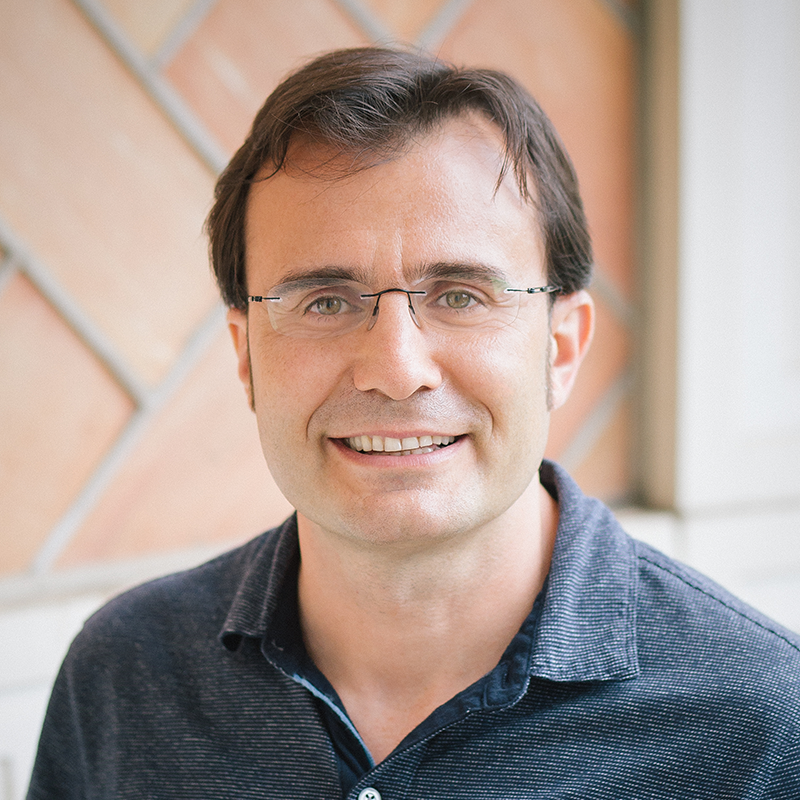
Elias Passerini is a Researcher at the Institute of Electromagnetic Fields (IEF), ETH Zürich, part of the Department of Information Technology and Electrical Engineering. His work focuses on memristive devices and their applications in neuromorphic computing, photonics, and nanoelectronics. He completed his doctoral thesis on 'Memristors for Neuromorphic Computing' in 2025, exploring volatility control and synaptic response tuning. His research emphasizes atomic-scale memristive systems, three-terminal architectures, and material innovations like Sn alloying for improved device stability. Key contributions include developing versatile nanoscale memristive switches with gate tuning capabilities and demonstrating metamaterial graphene photodetectors with record-breaking bandwidth. Passerini collaborates with the Center for Single-Atom Electronics and Photonics, advancing low-power neuromorphic hardware and optoelectronic integration. His publications span conferences like MEMRISYS and journals such as ACS Nano and Light: Science & Applications .
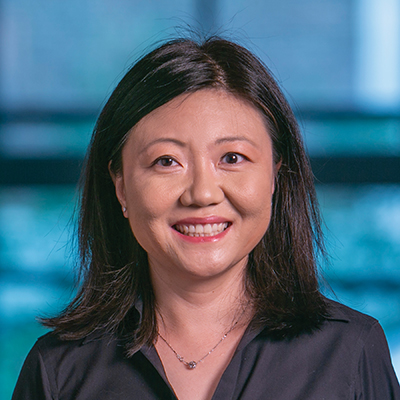
Dr. Jing Li is an Associate Professor and Eduardo D. Glandt Faculty Fellow at the University of Pennsylvania , holding dual appointments in the Electrical and Systems Engineering and Computer and Information Science departments. As co-director of the CyberSavvy nationwide security research center and director of the Penn Computational Intelligence Lab (PennCIL) , she pioneers innovations in non-von Neumann computing paradigms. Her research spans post-CMOS technologies, in-memory computing, and hardware-software co-design for security and AI applications. PhD in Computer Engineering, Purdue University (2009) BSc in Electrical Engineering, Shanghai Jiaotong University (2004) Research Focus: Dr. Li's work addresses fundamental challenges in computer systems across the stack. Key areas include: In-Memory Computing: Liquid Silicon architecture combining RRAM with silicon CMOS through monolithic 3D integration Security Engineering: Transforming computer security from "Art" to formal "Engineering" discipline within CyberSavvy Virtualization: Cloud FPGA abstraction layers decoupling compilation from runtime resource management Graph Analytics: Degree-aware optimization techniques for massive-scale graph processing Deep Learning Systems: Roofline model extensions for FPGA-based CNN acceleration Scientific Impact: Awarded DARPA Young Faculty Award , NSF CAREER Award , and IBM CEO Milestone Award , her team has achieved world records in energy-efficient computing (ENIAD supercomputer). With 46 U.S. patents and over 80 publications, she leads ecosystem development for emerging computing architectures through initiatives like the open-source MEG simulation platform . Community Leadership: Dr. Li serves on program committees for flagship conferences ( ISCA , FPGA Symposium ), chairs the International Memory Workshop , and contributes to the MLsys conference's inaugural committee. She actively mentors through multiple PhD openings and industry collaborations.
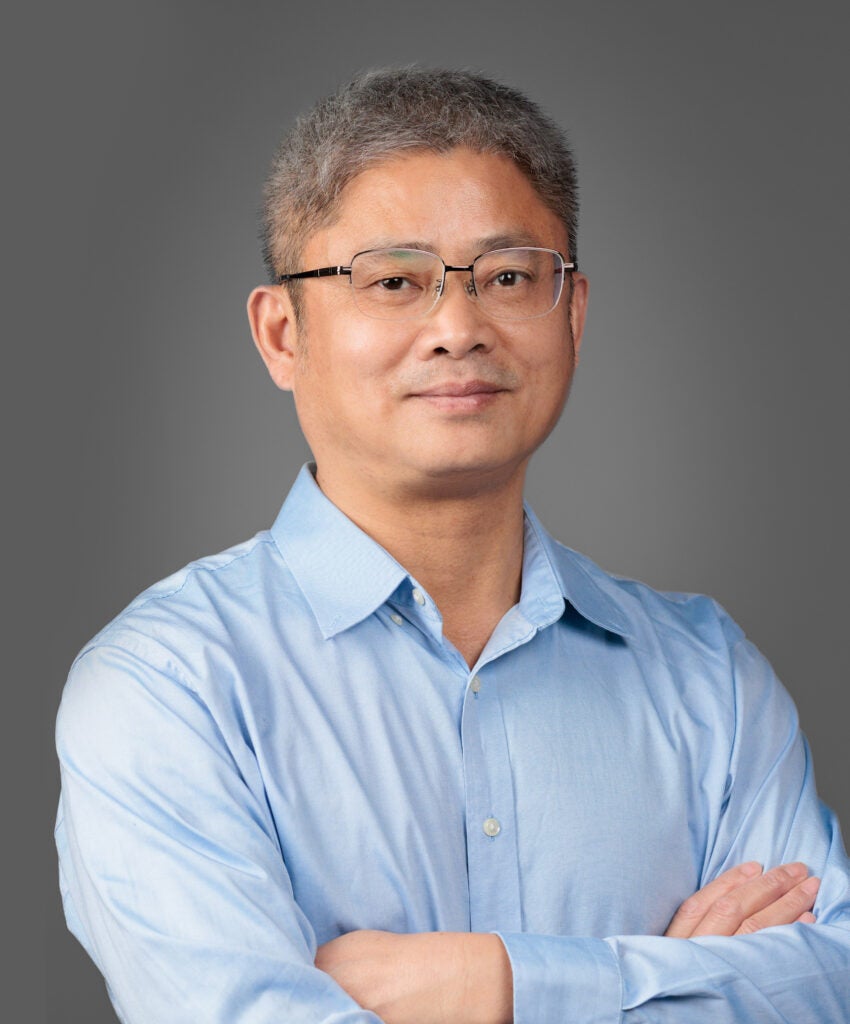
Prof. Jianyong Ouyang is a Professor in the Department of Materials Science & Engineering at the National University of Singapore (NUS), part of the Faculty of Engineering. He holds a PhD from the Institute for Molecular Science (Japan), and has worked at the Japanese Advanced Institute of Science and Technology, UCLA, and NUS since 2006. His research focuses on high-performance conducting polymers, thermoelectric materials, and flexible electronics. Key achievements include inventing the first polymer/nanoparticle memristor (2004), hybrid ionic/electronic thermoelectric converters (2020), and self-adhesive conducting polymers (2020). Research interests include flexible/wearable electronics, organic electronics, and energy materials. Notable awards include the Distinguished Award for Novel Materials (2015), NUS Young Investigator Award (2017), and inclusion in the World’s top 2% Scientists (2019–2022). His lab has over 200 publications with ~30,000 citations and an H-index of 87. Publications highlight advancements in thermoelectric polymers, stretchable sensors, and energy materials. Collaborations include work on perovskite solar cells, graphene-based electrodes, and MXene composites. His group explores applications in healthcare monitoring, energy harvesting, and smart materials.
Daniele Ielmini is a Professor at the Department of Electronics, Information and Bioengineering at Politecnico di Milano, Italy, where he leads research in non-volatile memory technologies and neuromorphic computing. He received his Laurea (with merit) and Ph.D. in Nuclear Engineering from Politecnico di Milano in 1995 and 2000, respectively, and has held visiting positions at Intel Corporation (2006), Stanford University (2006), and the University of Illinois at Urbana-Champaign (2010). His research focuses on the modeling and characterization of non-volatile memories, including nanocrystal memory, charge trap memory, phase change memory (PCM), resistive switching memory (RRAM), and spin-transfer torque magnetic memory (STT-MRAM). He has co-edited the book 'Resistive switching – from fundamental redox-processes to device applications' and published over 300 papers with more than 10,000 citations and an H-index of 69 (Scopus, September 2023). Prof. Ielmini's recent publications demonstrate a strong trend toward in-memory computing and neuromorphic applications, with particular emphasis on closed-loop analog computing architectures, reservoir computing with 2D materials, and hardware security implementations using emerging memory technologies. His work bridges fundamental device physics with practical computing applications, especially for energy-efficient AI acceleration. Intel Outstanding Researcher Award (2013) ERC Consolidator Grant (2014) IEEE-EDS Paul Rappaport Award (2015) Fellow of the IEEE Prof. Ielmini leads multiple ERC-funded projects including SHANNON (Secure Hardware with Advanced Nonvolatile memories), NEURO2D (neuromorphic systems based on reservoir computing in MoS2), and ANIMATE (closed-loop in-memory computing). His research group includes post-doctoral researchers, PhD students, and M.Sc. students working on various aspects of emerging memory technologies and their applications. He serves as Associate Editor for IEEE Trans. Nanotechnology and Semiconductor Science and Technology (IOP), and has served in several Technical Subcommittees of international conferences including IEEE-IEDM, IEEE-IRPS, and IEEE-ISCAS. His laboratory at Politecnico di Milano is equipped with advanced semiconductor device testing equipment including probe-stations, semiconductor parameter analyzers, high-speed waveform generators, and other specialized instruments for nano-electronic research. The lab collaborates with major semiconductor companies including Micron Technology Inc. and STMicroelectronics, as well as participating in national and international research projects.
Gianluca Piazza is the STMicroelectronics Professor of Electrical and Computer Engineering at Carnegie Mellon University (CMU), with a courtesy appointment in Mechanical Engineering. He directs the John and Claire Bertucci Nanotechnology Laboratory (CMU Nanofab). Previously, he was the Wilf Family Term Assistant Professor at the University of Pennsylvania. His research focuses on piezoelectric micro/nano electromechanical systems (M/NEMS) for RF communication, optomechanics, chemical/biological sensing, and mechanical computing. Key projects include nanorelays for low-power computing, ultrasound-based wireless powering, and piezoelectric MEMS for energy harvesting. Education: PhD (2005) in Electrical Engineering from UC Berkeley; MS (2001) from University of Texas at Austin and Politecnico di Milano (Italy). Research Interests: M/NEMS design, micro/nano fabrication, piezoelectric materials, mechanical switches, and energy-efficient electronics. His work bridges fundamental science and applied engineering, with patents in micromechanical resonators and awards including the IBM Young Faculty Award (2006) and multiple IEEE Best Paper Awards. Grants & Collaborations: NSF LEAP-HI grant ($2M) for nanorelay development (2020); CMU Kavčić-Moura Endowment funding. Collaborates with Maarten de Boer (Mechanical Engineering) and institutions like the University of Pennsylvania and City University of Hong Kong. Labs & Teams: Leads the Piazza Micro and Nano Systems Laboratory, focusing on NEMS/MEMS innovation. Active in CMU’s Center for Silicon System Implementation and Engineering Research Accelerator.
Matthew J. Marinella serves as an Associate Professor in the School of Electrical, Computer and Energy Engineering at Arizona State University, where his research bridges semiconductor device physics and next-generation computing architectures. His work focuses on enabling reliable computing systems for extreme environments through novel memory technologies. His academic foundation includes: Ph.D. in Electrical Engineering, Arizona State University (2008) Marinella's research centers on nonvolatile memory devices (particularly ECRAM and SONOS technologies), neuromorphic computing systems, and radiation effects characterization. He pioneers analog in-memory computing solutions resilient to space radiation, with expertise spanning electrochemical memory physics, radiation-hardened circuit design, and emerging device applications for artificial intelligence. His experimental work combines nanoscale imaging with computational modeling to understand device degradation mechanisms under ionizing radiation. Analysis of his 2023-2025 publications reveals a dominant focus on radiation-tolerant neuromorphic systems, with 70% of recent work addressing radiation effects on emerging memories. Key thematic clusters include TaOx ECRAM characterization under gamma/heavy-ion exposure (25% of publications), analog in-memory computing fault tolerance (30%), and novel test platforms for memory device benchmarking (20%). This research directly enables space-based computing applications where radiation resilience is non-negotiable. As a technical leader, Marinella chairs the Emerging Memory Devices Section for the IRDS Roadmap Beyond CMOS Chapter and serves on the SRC Decadal Plan Executive Committee. His Sandia legacy includes founding the Secure, Efficient, Extreme Environment Computing (SEEEC) Grand Challenge. At ASU, he mentors graduate researchers through thesis supervision in EEE 599/799 courses and directs laboratory work on memory device characterization, though specific student names and grant awards aren't publicly enumerated. His laboratory operations emphasize radiation testing infrastructure and analog computing testbeds, supporting collaborative projects with national labs on space electronics hardening. Current efforts integrate magnetic domain wall devices with resistive memories to create hybrid neuromorphic systems capable of operating in extreme environments where conventional CMOS fails.
Garrett Rose is a Professor and Department Head in the Min H. Kao Department of Electrical Engineering and Computer Science at the University of Tennessee, Knoxville (UTK). He holds a B.S. in Computer Engineering from Virginia Tech (2001), and M.S. and Ph.D. in Electrical Engineering from the University of Virginia (2003/2006). Prior to UTK, he served as Assistant Professor at NYU Polytechnic (2006–2011) and Senior Electronics Engineer at the Air Force Research Lab (2011–2014). His research focuses on nanoelectronic circuit design, neuromorphic computing, hardware security, and memristor-based systems. He leads the SENECA Research Group and the TENNLab initiative, exploring applications in neuromorphic architectures, hardware security primitives (e.g., PUF devices), and device modeling. Recent work emphasizes memristor-driven neuromorphic systems, secure FPGA designs, and in-memory computing. Grants include projects on neuromorphic target detection and nanotechnology-based security solutions. Rose actively mentors students and collaborates on co-design methodologies for real-world neuromorphic applications. Education: Ph.D. Electrical Engineering, University of Virginia, 2006 M.S. Electrical Engineering, University of Virginia, 2003 B.S. Computer Engineering, Virginia Tech, 2001 Research Interests: Dr. Rose’s work spans neuromorphic hardware design, including memristor-based neural networks and spiking systems. He investigates hardware security through nanoscale devices like memristors for PUFs and side-channel resistant circuits. His team develops novel memristor models and explores applications in reconfigurable computing and energy-efficient architectures. Recent efforts focus on neuromorphic vision systems, robotic navigation, and neuromorphic processors with co-design frameworks. Grants & Projects: "Ground-roaming autonomous neuromorphic targeter" (2020) "Secure Backup and Restore for IoT using Nanotechnology" (2020) "Physically Unclonable Reconfigurable Computing System (PURCS)" (2020)
Rudolf Petra is a distinguished Professor and Chair of Experimental Solid State Physics at the Zernike Institute for Advanced Materials, University of Groningen. She holds a Laurea in Physics from Università di Roma 'La Sapienza' (1987) and a PhD in Physics from Facultés Universitaires Notre-Dame de la Paix de Namur (1995). As Dean of Graduate Studies (2020–present) and former Director of the Groningen Graduate School of Science (2014–2018), she has significantly enhanced academic programs, boosting applications by 28% and achieving top national rankings for 7 programs. Her research focuses on materials science, surface science, and molecular rotors/switches, with over 8,820 citations and an h-index of 49. She has received prestigious awards including membership in the German National Academy of Science and Engineering and the DESCARTES Prize. Leadership Roles : Managed the Zernike Institute for nine years, elevating its THE materials science ranking to 4th globally and 1st in Europe. Education : Supervised 19 Bachelor's, 34 Master's, and 27 PhD students, notably fostering female representation in STEM. Research Impact : Her work spans 2D materials (e.g., germanane synthesis), molecular electronics, and superconductivity. Notable contributions include nonvolatile memory devices using molecular tunneling junctions and defect analysis in MoS₂. Awards : Elected to multiple academies, including the European Physical Society presidency. Collaborations : Visiting professorships at São Paulo, Santiago, Cagliari, and Modena universities. Labs/Teams : Leads experimental solid-state physics research at Zernike Institute, focusing on advanced materials characterization and device applications.
Prof. Dr. Regina Dittmann is the Director of the Electronic Materials division (PGI-7) at the Peter Grünberg Institute (PGI), part of the Research Center Jülich. Her research focuses on memristive systems, resistive switching phenomena, and neuromorphic computing architectures. She leads a team exploring novel oxide materials and their applications in advanced electronics, including memristive heterostructures, nanoelectronics, and energy-efficient computing systems. Her work integrates materials science, device physics, and computational modeling to develop next-generation memory and neuromorphic hardware. Key research areas include the design and characterization of memristive devices, understanding ion migration in perovskite materials, and optimizing thermal and electronic stability in nanoscale systems. Recent studies emphasize the role of space charge effects in metal exsolution, the development of fault-tolerant neuromorphic architectures, and the application of synchrotron-based techniques for in-situ material analysis. Her contributions have advanced the theoretical and practical foundations of resistive switching mechanisms and their implementation in energy-efficient computing systems.
Susan K. Fullerton-Shirey is an Associate Professor, Bicentennial Board of Visitors Faculty Fellow, and Vice Chair for Graduate Education in the Department of Chemical and Petroleum Engineering at the University of Pittsburgh. She earned her Ph.D. in Chemical Engineering from Penn State University in 2009 and held a courtesy appointment at Notre Dame University's Electrical Engineering Department before joining Pitt in 2015. Education: Ph.D. (2009) and B.S. in Chemical Engineering from Penn State University. Her research focuses on 2D materials , ion transport , and polymer electrolytes for next-generation nanoelectronics. The Nanoionics and Electronics Lab explores electric double layer gating to enable low-power electronics and biodegradable polymer films. Recent publications highlight advancements in solid polymer electrolytes for reconfigurable p-n junctions , strain-induced phase transitions in 2D materials, and hardware security applications. Her work bridges materials science , condensed matter physics , and electrochemistry . Scientific Awards: Alfred P. Sloan Research Fellowship in Chemistry (2020) AAAS Marion Milligan Mason Award for Women in Chemical Sciences (2019) NSF CAREER Award (DMR-EPM) (2018) Ralph E. Powe Jr. Faculty Award (2016) She has advised 7 graduate students and secured grants from the NSF, DARPA, and the Ellen MacArthur Foundation. The lab collaborates with institutions like Penn State and Notre Dame, with sponsors including the Pittsburgh Quantum Institute and Oak Ridge Associated Universities.
Sarbajit Banerjee is a Senior Professor in the Department of Materials Science & Engineering at Texas A&M University. His research spans solid-state and materials chemistry, focusing on nanoscale materials, electronic structure, x-ray spectroscopy, thin films, light metals, and nanocomposites. 2022: Distinguished Achievement Award in Graduate Mentoring 2021: Edith and Peter O’Donnell Award in Science 2017: Fellow, Institute of Physics His recent work explores neuromorphic computing , Li-ion diffusion , and redox photocatalysis , with over 15 publications (2022–2025) addressing battery cathode design, corrosion protection, and advanced material synthesis. Awards highlight his contributions to graduate mentoring and early-career research excellence. 2010: Cottrell Scholar Award 2009: NSF CAREER Award
Farzad Farnoud is an Assistant Professor in the Electrical and Computer Engineering and Computer Science Departments at the University of Virginia. His research focuses on information theory, coding theory, computational biology, and machine learning, with applications in DNA storage and genomic data analysis. He holds a Ph.D. in Electrical and Computer Engineering from the University of Illinois (2013) and postdoctoral experience at Caltech. Education: B.S. in Electrical Engineering (Sharif University of Technology, 2006) M.S. in ECE (University of Toronto, 2008) M.S. in Mathematics (UIUC, 2012) Ph.D. in ECE (UIUC, 2013) Postdoc at Caltech (2013–2016) His research interests span information-theoretic analysis of biological datasets, coding for DNA storage, stochastic modeling of genomic mutations, and rank aggregation algorithms. Notable contributions include error-correcting codes for duplication channels and frameworks for metagenomic data analysis. Recent work includes studies on short-duplication error correction (2023), active ranking algorithms (2022), and heterogeneous rank aggregation (2020). He has received the Robert T. Chien Memorial Award (2013) and the IEEE Data Storage Best Student Paper Award (2014). Teaching includes courses on computational biology, statistical learning, and graphical models. He leads the Information Processing + Storage Lab, focusing on interdisciplinary challenges in data storage and analysis.