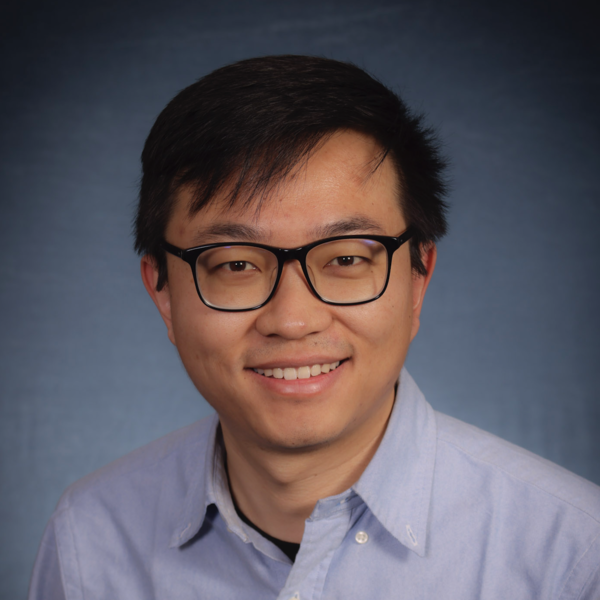
Professor Wing-Keung Wong is a distinguished academic at the Department of Finance, Asia University . With over 187 scholarly papers and 638 citations, his work spans critical areas in financial economics and quantitative finance. Current affiliation: Asia University, Department of Finance Past affiliations: National University of Singapore, Chinese University of Hong Kong, Erasmus University Rotterdam Research Themes include: Portfolio optimization and stochastic dominance theory Market efficiency analysis across diverse financial instruments Behavioral finance and investor decision-making models Risk measurement with VAR and CVaR frameworks International financial market integration studies Quantitative trading system development Key Article Trends reveal consistent focus on empirical finance, mathematical modeling, and decision science applications in portfolio management and market anomalies.
Professor Eleni Vasilaki holds the Chair in Bioinspired Machine Learning at the University of Sheffield's School of Computer Science, where she serves as Head of the Machine Learning research group and member of the Complex Systems Modelling research group. She joined as Lecturer in 2009 and became Professor in 2016. Education includes: Bachelor's in Informatics and Telecommunications from University of Athens Master's in Microelectronics from University of Athens DPhil in Computer Science and Artificial Intelligence from University of Sussex Research focuses on developing novel machine learning techniques inspired by biological principles, particularly in reinforcement learning and reservoir computing methods. Her team collaborates with material scientists and engineers to design neuromorphic computing hardware. Publications demonstrate strong emphasis on neuromorphic computing, machine learning applications in neuroscience, reservoir computing systems, and computational modeling of biological processes. Recent work addresses device-agnostic modeling, physical neural networks, and stochastic computing platforms. Significant grants include: MARCH: Magnetic Architectures for Reservoir Computing Hardware (£936,815, Co-PI) ActiveAI - active learning and selective attention for robust AI (£953,584, Co-PI) Modeling probabilistic reinforcement learning in Drosophila (Google, £50,769, PI) CausalXRL: Causal explanations in Reinforcement Learning (£309,915, PI) Brains on Board: Neuromorphic Control of Flying Robots (£2,128,934, Co-PI) Leads the Machine Learning research group and collaborates with the Complex Systems Modelling group, focusing on brain-inspired computing architectures and neuromorphic hardware design.
Marie Davidian is the J. Stuart Hunter Distinguished Professor of Statistics at North Carolina State University (NC State) and Director of Faculty Grants. She holds an adjunct position at Duke University's Department of Biostatistics and Bioinformatics. Her primary research focuses on statistical methods for dynamic treatment regimes, clinical trial design, longitudinal data analysis, and handling missing/mismeasured data. Davidian earned her Ph.D. in Statistics from the University of North Carolina at Chapel Hill in 1987 under Raymond J. Carroll. She has led significant training initiatives, including co-directing the Integrated Biostatistical Training Program for CVD Research (2006–2021) and the Summer Institute in Biostatistics (SIBS, 2004–2019). These programs emphasized cardiovascular disease research collaboration and biostatistical methodology. Her educational contributions include courses on longitudinal data analysis, missing data methods, and precision medicine. Her research interests span statistical methodologies for personalized medicine, causal inference, and pharmacokinetic modeling. She has been recognized with the Dr. D. D. Mason Award (2011–2012) and contributed to high-impact studies in oncology, HIV treatment, and chronic disease management. Davidian’s work bridges methodological innovation with practical applications in healthcare, emphasizing translational research and interdisciplinary collaboration.
Jonathan Duggins is an Associate Teaching Professor in the Department of Statistics at North Carolina State University. He holds a Ph.D. in Statistics from Virginia Polytechnic Institute and State University (2010). His research focuses on statistics education methodologies, nonparametric analysis, and simulation-based inference. He is a co-author of Fundamentals of Programming in SAS: A Case Studies Approach , a textbook emphasizing practical SAS programming through real-world applications. Dr. Duggins has received the 2020-2021 Dr. Cavell Brownie Mentoring Award for his contributions to student development. His work spans educational program design, statistical software optimization, and agricultural student pathway analysis. His technical expertise includes advanced SAS programming techniques such as PROC REPORT customization, attribute map creation, and web scraping. Recent research explores agricultural student enrollment patterns and publishing methodologies for technical conferences like SESUG. His applied projects include developing simulated clinical research data frameworks and optimizing data manipulation efficiency across hardware/software systems. Ph.D. in Statistics (2010) — Virginia Tech Co-developed SAS programming curriculum for higher education Active contributor to SESUG conference proceedings His work bridges statistical theory with practical applications, emphasizing pedagogical innovations in technical education. Current projects include refining simulation-based teaching methods and advancing data visualization techniques in SAS environments.
Changbo Zhu is an Assistant Professor in the Department of Applied and Computational Mathematics and Statistics at the University of Notre Dame, part of the College of Science. He is also a Fellow of the Lucy Family Institute for Data & Society. His office is located at 101H Crowley Hall, and he can be reached at czhu4@nd.edu. Dr. Zhu holds a Ph.D. from the University of Illinois at Urbana-Champaign (2020), an M.S. and B.S. from the National University of Singapore (2016 and 2014, respectively). He completed a postdoctoral fellowship at the University of California, Davis from 2020 to 2022. His research focuses on the intersection of statistics, geometry, and optimization, with key interests in optimal transport, functional and object data analysis, time series analysis, high-dimensional statistical inference, and statistical machine learning. His work addresses challenges such as longitudinal data analysis, change point detection, and distance covariance methodologies. Zhu’s recent publications emphasize advancements in optimal transport theory, including barycenter optimization and autoregressive models, as well as applications in neuroimaging and high-dimensional data analysis. He collaborates with leading researchers such as Hans-Georg Müller and Jane-Ling Wang on topics ranging from spherical autoregressive models to brain volume trajectory studies. He advises Kaheon Kim, a Ph.D. candidate focusing on statistical optimal transport. His teaching portfolio includes courses on optimization algorithms for machine learning, computational statistics with R, and statistical computing methods. Zhu is affiliated with the Lucy Family Institute for Data & Society, contributing to interdisciplinary data science initiatives.
Roles and Affiliations: Liang Hua is a Professor of Statistics and Director of Doctoral Programs at the Department of Statistics, The George Washington University. He previously held positions at the University of Rochester Medical Center, St. Jude Children's Research Hospital, and Humboldt University as an Alexander von Humboldt Fellow. Education: Hua holds two Ph.D.s: one in Statistics from Texas A&M University (2001) under Raymond J. Carroll, and another in Mathematical Statistics from the Chinese Academy of Sciences (1992) under Ping Cheng. Professional Service: He serves as an Associate Editor for multiple journals including JASA, Journal of Nonparametric Statistics, and Biostatistics. His expertise spans partially linear models, high-dimensional modeling, and HIV/AIDS clinical trial design. Research Interests: Hua focuses on statistical methodology development, including model averaging, longitudinal data analysis, and measurement error models. His work bridges theoretical advancements and practical applications in biostatistics and public health. Awards and Recognition: Hua is a Fellow of the ASA, IMS, and Royal Statistical Society, and an elected member of the International Statistical Institute. He also received the prestigious H. O. Hartley Award from Texas A&M University. Grants and Advising: While specific grants are not detailed, his extensive editorial roles and high-impact publications reflect significant research leadership. He has advised numerous students through doctoral programs at GWU.
Yuejiao Cindy Fu is a Full Professor in the Department of Mathematics and Statistics at York University's Faculty of Science. Her office is located in the Ross Building. Research specializes in mixture models, empirical likelihood, density ratio models, and statistical analysis of high-dimensional spatial, genetic, and DNA methylation data. Methodologies include homogeneity testing, dimension reduction techniques, and robust inference for genomic applications. Education: Ph.D. in Statistics from University of Waterloo (2004). Contact: (647) 831 1208.
Martin Bilodeau is a full professor in the Department of Mathematics and Statistics at Université de Montréal. He holds a Ph.D. from the University of Toronto (1986) and is an Associate of the Society of Actuaries (ASA) since 1993. His research focuses on multivariate statistics, statistical decision theory, asymptotic methods, and robust statistics. Bilodeau has authored a notable textbook, *Theory of Multivariate Statistics* (Springer, 1999), co-authored with David Brenner, which provides a rigorous treatment of modern multivariate statistical theory. His work emphasizes foundational topics such as multivariate regression, principal components analysis, and robust statistical methods. Bilodeau has also contributed to computational statistics through R packages like *groc* and *IndependenceTests*, which implement advanced statistical techniques for regression analysis and independence testing. Recent publications include methodological advancements in variance component models (2021), independence testing across scales (2017), and applications of meta-elliptical distributions (2014). Bilodeau's research integrates theoretical developments with practical applications, spanning fields from ecology to actuarial science. His work on nonparametric independence tests (2007) and robust SUR models (2000) demonstrates his commitment to both statistical methodology and real-world problem-solving. He maintains an active academic profile with contributions to statistical education and ongoing collaborations in multivariate analysis.
Yining Chen is an Associate Professor in the Department of Statistics at the London School of Economics and Political Science (LSE). He holds a PhD in Statistics from the University of Cambridge (2014). His research focuses on statistical methodology, particularly in change-point detection, nonparametric estimation, and computational aspects of statistical methods. He also explores shape-constrained estimation and time series analysis. Dr. Chen has taught courses such as ST444 Computational Data Science and ST304 Time Series and Forecasting at LSE. He has contributed to interdisciplinary research in medical statistics, including work on kidney and liver transplantation outcomes. His software contributions include R packages like 'not', 'scar', and 'Sshaped', which implement his methodological advancements in statistical computing. His research has been published in top-tier journals such as the Journal of the Royal Statistical Society and Biometrika. Key areas of application span econometrics, actuarial science, and biomedical research. He actively engages in collaborative projects addressing practical data challenges across disciplines.
Michael McDermott, PhD, is a Professor of Biostatistics, Neurology, and the Center for Health + Technology at the University of Rochester Medical Center. He holds an academic appointment in the Department of Biostatistics and Computational Biology. His research focuses on statistical methodology including order-restricted inference, clinical trial design, diagnostic test evaluation, and meta-analysis. Dr. McDermott has collaborated extensively on neurological disorders such as Parkinson’s, Huntington’s, and multiple sclerosis, and has a joint appointment with the Department of Neurology. Educated at the University of Rochester (PhD, 1989), his work bridges statistical theory and clinical application. He has authored influential papers on hypothesis testing under order constraints and developed methods for verification bias correction in diagnostic studies. McDermott serves on editorial boards for journals like International Statistical Review and Movement Disorders , and has held leadership roles in professional societies. His research interests span statistical theory (e.g., multivariate analysis, ROC curves) and applied biostatistics (e.g., dose-response modeling, clinical trial optimization). McDermott’s methodological contributions address challenges in medical research design, including adaptive trial phases and missing data imputation techniques. He has been recognized as a Fellow of the American Statistical Association and an Elected Member of the International Statistical Institute. Collaborative efforts include leading national/international groups studying neurological diseases and serving as an advisor for the T32 Training Grant in Biostatistics. His lab focuses on advancing statistical tools for translational medical research while maintaining active involvement in neurology-related clinical studies.
Kenichi Nagasawa is an Assistant Professor in the Department of Economics at the University of Warwick. He specializes in econometrics with a focus on bootstrap-assisted inference, treatment effect estimation, and asymptotic theory. His research develops methodologies for statistical inference in complex econometric models. He teaches EC226: Econometrics 1 and has secured funding through the BA/Leverhulme Small Research Grants (2024-2026). His work frequently involves collaborative research with institutions globally. Research Focus: Development of robust inference techniques for econometric models, particularly using bootstrap methods for nonstandard distributions and treatment effect estimation with imperfect data.
Orimar Sauri Arregui is an Associate Professor in the Department of Mathematical Sciences at Aalborg University's Faculty of Engineering and Science, Denmark. His research lies at the intersection of mathematical statistics, stochastic processes, and financial modeling. Research Interests: His work focuses on ambit fields , trawl processes , Lévy and infinite divisible random fields , and nonparametric estimation in continuous time. He investigates asymptotic behavior, limit theorems, and statistical inference for complex stochastic models, with applications in financial market microstructure and energy flux modeling. The analysis of his recent publications reveals a strong trend in theoretical statistics and probability, particularly in developing and analyzing models driven by non-Gaussian noise and long-range dependence. His work often involves high-frequency data and contributes to the foundations of spatiotemporal modeling. Scientific Contributions: Developed mathematical frameworks for financial market microstructure. Advanced theory for nonparametric estimation of trawl processes. Derived asymptotic error distributions for numerical schemes in stochastic delay equations. Proved local limit theorems for energy fluxes in random fields. Advising and Research Activity: He has been involved in PhD supervision and maintains an active research output, primarily through preprints on arXiv and SSRN. His collaborations span topics in financial econometrics and statistical physics. Though specific grants are not listed, his consistent publication record suggests ongoing research funding. Laboratory and Teams: While no formal lab is mentioned, his work is part of the broader research network in mathematical statistics and financial mathematics at Aalborg University, with notable collaborations in stochastic modeling and econometrics.
Paul Schneider is a Full Professor in the Faculty of Economic Sciences at the University of Italian Switzerland (USI), where he has been a faculty member since 2012. He is affiliated with the Institute of Finance (IFin) and the Euler Institute (EUL), contributing to interdisciplinary research in quantitative finance and econometrics. His research focuses on financial econometrics, asset pricing, and statistical methods in finance, with an emphasis on extracting latent market information under minimal assumptions. He integrates techniques from engineering, mathematics, and data science to develop robust models for financial markets. His work spans risk premia, ambiguity in investment decisions, nonlinear pricing, and model-free recovery methods. His recent publications (2023–2024) in journals such as Review of Finance , Management Science , and SIAM Journal on Mathematics of Data Science highlight trends in adaptive learning, empirical scenario generation, constrained likelihood estimation, and optimal investment under ambiguity . These reflect a strong focus on data-driven, computationally efficient, and theoretically sound approaches to financial modeling. Adaptive joint distribution learning Fast empirical scenarios Optimal Investment under Ambiguity Constrained polynomial likelihood Dispersion of Beliefs and Sentimental Recovery Scientific Awards: No specific awards or fellowships are mentioned in the provided text. Advising and Grants: While no formal list of advisees is provided, Paul Schneider has collaborated extensively with researchers such as Damir Filipovic, Fabio Trojani, and Christian Wagner, suggesting a strong mentorship and collaborative role. He has contributed to funded research projects, particularly in financial modeling and econometrics, though specific grant names are not detailed. Labs and Research Teams: He is actively involved with the Institute of Finance (IFin) and the Euler Institute at USI, which support interdisciplinary research in finance, mathematics, and data science. He has also developed computational tools such as the KDM R package for kernel density machines, indicating engagement with data science and open research practices.
Vanesa Guerrero Lozano is an Associate Professor in the Department of Statistics at Universidad Carlos III de Madrid, affiliated with the Flores de Lemus Institute and the UC3M-Santander Big Data Institute. Her work bridges mathematical optimization, statistical modeling, and data science, with applications across disciplines including biomedicine, fluid mechanics, and sustainable development. Her research focuses on developing advanced statistical methodologies using mathematical optimization. Key interests include shape-constrained regression, P-splines smoothing, sparse modeling, clustering of categorical data, and interpretable machine learning. She applies these techniques to complex datasets in turbulence modeling, biological age imputation, and pandemic forecasting. The recent publications reveal a strong trend in integrating optimization techniques with statistical learning, particularly in nonparametric and semiparametric models. There is a consistent emphasis on interpretability, robustness, and scalability, especially for high-dimensional and dynamic datasets. Applications span from fluid dynamics to public health, demonstrating interdisciplinary impact. Scientific Awards and Recognition: Ayuda adicional within the Juan de la Cierva Incorporación Program (2020), awarded by the State Research Agency (AEI) Research Leadership and Advising: She has served as principal investigator on multiple competitive research projects funded by national and regional agencies, including the State Research Agency (AEI), the Jacques Hadamard Mathematical Foundation, and the Community of Madrid. Her projects cover topics such as constrained additive models, machine learning for sustainable fishing, turbulence control, and ADHD diagnosis using data science. She has supervised at least one doctoral thesis on constrained smoothing models, indicating active mentorship in methodological statistics and optimization. Laboratories and Research Groups: She is a member of the Energy Analytics research group and conducts her work within the UC3M-Santander Big Data Institute, which supports interdisciplinary data science research. Her affiliation with the Flores de Lemus Institute further underscores her engagement with advanced statistical and computational methodologies.
Eero Pätäri is a Professor in Finance at the School of Business and Management, Lappeenranta University of Technology (LUT University), where he has been employed since March 2003. He is affiliated with the Business Studies department and actively contributes to research in quantitative finance and investment strategies. His research interests center on value investing , momentum strategies , portfolio optimization , and performance evaluation in equity markets. He applies quantitative models and empirical analysis to examine anomalies, trading rules, and financial decision-making, with a focus on Finnish, German, Russian, and U.S. stock markets. The recent trend in his publications shows a strong emphasis on combining financial ratios, multicriteria decision-making (e.g., data envelopment analysis), and technical trading rules to enhance portfolio performance. His work bridges finance and operations research, particularly in evaluating hedge funds and mutual funds, and synthesizing the value premium literature. Scientific Awards: No awards explicitly mentioned. Dr. Pätäri has not listed any formal advisees or students in the provided texts, but his extensive collaboration with researchers such as Timo Leivo, Pasi Luukka, and Sheraz Ahmed suggests a strong advisory or mentoring role in research. There is no mention of external grants in the text. While no specific lab or research team is named, his consistent output in finance journals indicates leadership in a research group focused on empirical asset pricing and investment strategies.