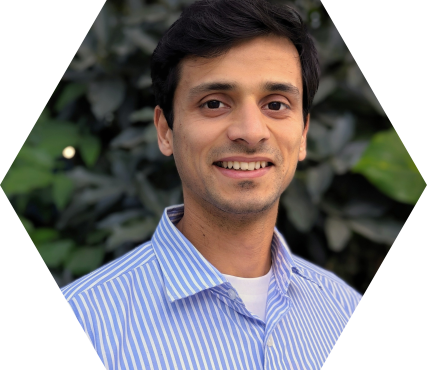
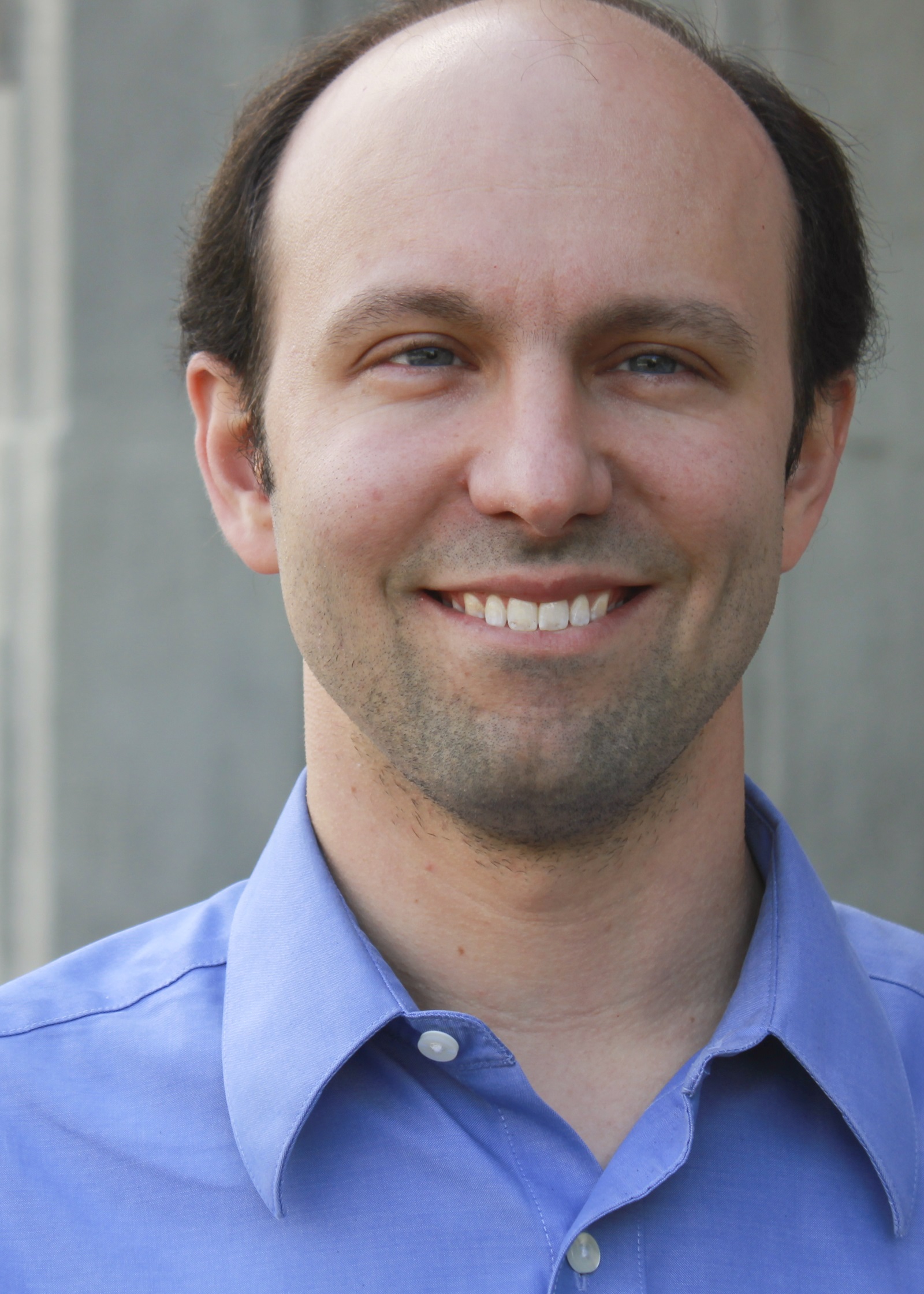
Dan Kowal is an Associate Professor in the Department of Statistics and Data Science at Cornell University, joining in 2024. His research focuses on Bayesian models for large/dependent data, mixed data modeling, and interpretable uncertainty quantification. Key areas include public health, environmental justice, epidemiology, and economics. He holds a PhD from Cornell University (2017) and previously served as an Assistant Professor at Rice University. Awards include the Blackwell-Rosenbluth Award (2021), Army Research Office Young Investigator Award (2020), and Lindley Prize Honorable Mention (2024). Notable grants include NSF funding for adaptive dependent data models (2022–2025) and Army Research Office support for Bayesian prediction methods (2020–2022). His work addresses racial inequities in statistical modeling and has been published in top journals like JASA and Bayesian Analysis. He advises multiple PhD students and develops R packages (e.g., SeBR, countSTAR) for Bayesian regression and data synthesis. Teaching roles include Bayesian Statistics at both undergraduate and graduate levels.
Pragya Sur is an Assistant Professor of Statistics at Harvard University and currently on leave as a Visiting Professor at MIT’s Laboratory for Information and Decision Systems (LIDS). Her research focuses on high-dimensional statistics, machine learning, and artificial intelligence, particularly in overparametrized models, causal inference, and learning under distribution shifts. She has held postdoctoral positions at Harvard’s Center for Research on Computation and Society (hosted by Cynthia Dwork) and was a Simons Institute Long-Term Participant at UC Berkeley. She earned her Ph.D. in Statistics from Stanford University under Emmanuel Candès, and completed her B.Stat and M.Stat at the Indian Statistical Institute, Kolkata. Sur’s work has been supported by NSF awards, the Eric and Wendy Schmidt Fund, and the William F. Milton Fund. She was named an International Strategy Forum (ISF) Fellow (2023) and led the Institute of Mathematical Statistics (IMS) New Researchers Group (2022–2024). She serves as an Associate Editor for Statistical Science and Guest Co-Editor for a special issue on AI and statistics. Her research contributions span theoretical guarantees for machine learning, transfer learning, and debiasing techniques in high-dimensional inference. Awards: NSF CAREER Award, Theodore W. Anderson Dissertation Award, Ric Weiland Fellowship Education: Ph.D. in Statistics (Stanford, 2019); M.Stat (ISI Kolkata, 2014); B.Stat (ISI Kolkata, 2012) Professional Roles: Associate Editor, Statistical Science ; ISF Fellow (2023); former IMS New Researchers Group Lead Her current research emphasizes statistical theory for modern machine learning, including foundational work on overparametrized models and robust inference across heterogeneous environments.
Karthik Menon serves as an Assistant Professor with a joint appointment in the Woodruff School at Georgia Institute of Technology and the Coulter Department of Biomedical Engineering. His research integrates fluid mechanics, computational modeling, and data-driven methodologies to address critical challenges in healthcare, renewable energy, and bio-inspired engineering systems. His academic credentials include: Ph.D. in Mechanical Engineering, Johns Hopkins University (2021) M.S. in Mechanical Engineering, Johns Hopkins University (2019) B.E. in Mechanical Engineering, Birla Institute of Technology and Science, Pilani, India (2015) Menon's research program centers on three interconnected domains: cardiovascular flows for personalized treatment of heart disease, fluid-structure interactions in biological systems like heart valves and bio-mimetic robots, and vortex-dominated flows for renewable energy applications. His approach combines high-fidelity computational modeling with machine learning to uncover fundamental physics and develop clinical solutions, such as cardiovascular digital twins for non-invasive risk assessment. Current projects focus on patient-specific hemodynamics using CT imaging and uncertainty quantification to improve surgical planning. Analysis of his 15 most recent publications (2023-2025) reveals a dominant focus on advancing multi-fidelity computational frameworks for cardiovascular applications. Key trends include Bayesian uncertainty quantification, zero-dimensional solver development, and integration of clinical imaging data to create predictive digital twins. His work bridges fluid dynamics with clinical cardiology, targeting improved outcomes in coronary artery disease and Kawasaki-related complications through physics-informed machine learning. Menon's scholarly contributions have been recognized through competitive awards: WCCM-PANACM 2024 Travel Award, U.S. Association for Computational Mechanics (2024) Future Faculty Symposium Travel Award, Society of Engineering Science Conference (2023) Mark O. Robbins Prize in High-performance Computing, Johns Hopkins University (2021) Corrsin-Kovasznay Outstanding Paper Award, Johns Hopkins University (2020) Prosperetti Travel Award, Johns Hopkins University (2017) Mechanical Engineering Departmental Fellowship, Johns Hopkins University (2016) As principal investigator of the ComBiNE Fluid Dynamics Lab, Menon mentors graduate students in developing computational tools for fluid-structure interaction problems. His collaborative projects with cardiologists at Stanford and Emory hospitals translate engineering principles into clinical applications for cardiovascular disease management. Current grant activities focus on NSF and NIH-funded initiatives for uncertainty-aware cardiovascular modeling and bio-inspired flow energy harvesting. The ComBiNE Fluid Dynamics Lab operates as an interdisciplinary hub where engineers, clinicians, and data scientists collaborate on fluid mechanics challenges. Current lab initiatives include developing real-time hemodynamic simulators for surgical planning, creating reduced-order models for cardiac device optimization, and investigating vortex dynamics in fish schooling for underwater vehicle design. The lab maintains strong partnerships with Children's Healthcare of Atlanta and the Parker H. Petit Institute for Bioengineering and Bioscience.
Richard A. Davis is the Howard Levene Professor of Statistics at Columbia University's Faculty of Arts and Sciences. He is affiliated with the Data Science Institute (DSI) and the Financial and Business Analytics Center. His research focuses on applied probability, time series analysis, stochastic processes, and extreme value theory, with applications to financial data and spatial modeling. He co-founded the Space-Time Aquatic Resources Modeling and Analysis Program (STARMAP), supported by an EPA-STAR grant. Education details are not explicitly provided in the text, but his academic roles indicate advanced qualification in statistics. His work combines theoretical advancements with practical applications, such as analyzing financial time series models (e.g., GARCH) and spatial environmental data. Recent research emphasizes high-dimensional extremes, sparsity, and privacy-preserving methods. His articles explore cutting-edge topics like kernel PCA for multivariate extremes, quantile treatment effects, and goodness-of-fit testing for time series. He has also contributed to applications in healthcare imaging and disaster economics. His collaborative projects aim to bridge statistical theory with environmental and societal challenges. Key contributions include the STARMAP initiative and grants focused on extreme value analysis. His work often integrates advanced statistical techniques with real-world data challenges, reflecting a commitment to both methodological innovation and interdisciplinary impact.
Byung-Jun Kim is an Assistant Professor in the Department of Mathematical Sciences at Michigan Technological University, where he joined as a tenure-track faculty in August 2020. His research focuses on statistical methodologies for complex observational data, particularly in nonparametric/semiparametric regression frameworks under high-dimensional and measurement error scenarios. PhD in Statistics from Virginia Tech (2020) BS/MS in Statistics from Chung-Ang University Research Expertise: Multivariate data analysis Covariance matrix estimation and graphical modeling Kernel regression in machine learning Statistical inference with measurement errors
Dr. Changyou Chen is an Associate Professor in the Department of Computer Science and Engineering at the University at Buffalo, State University of New York. His research focuses on Multi-Modal Learning Foundation Models Deep Generative Models Large-scale Bayesian Sampling with applications in document understanding, music-AI integration, and molecular representation learning. Research Trends revealed through his recent publications include Optimizing Multimodal Large Language Models Developing Novel Retrieval-Augmented Generation Frameworks Creating Benchmark Datasets for Visual Text Understanding Advancing Diffusion Models with Domain-Specific Constraints across domains from music sheets to biomedical documents. Scientific Contributions : UB Young Investigator Award (2020) Architect of LoCAL Framework for Long Document Understanding Co-developer of MusiXQA Benchmark Pioneering Work in Probability Contrastive Learning Academic Leadership includes mentoring 10+ graduate students and serving as Area Chair for major AI conferences (ICML, NeurIPS, AAAI, IJCAI). His Labs develop scalable solutions for multimodal reasoning, with recent work demonstrating practical GPU memory optimization through LoRA adapter sharing.
Haipeng Shen is a Professor of Innovation and Information Management at HKU Business School, The University of Hong Kong, serving as Associate Dean (EMBA and IMBA) and holding the Patrick S C Poon Professorship in Analytics and Innovation. He chairs the Business Analytics and Innovation program and joined HKU in 2015 after previously holding a professorship at the University of North Carolina at Chapel Hill. His academic credentials include: PhD in Statistics, The Wharton School of Business, University of Pennsylvania, 2003 MA in Statistics, The Wharton School of Business, University of Pennsylvania, 2000 BS in Mathematics, School of Mathematical Sciences, Peking University, 1998 Professor Shen's research focuses on data-driven decision making under uncertainty, with expertise spanning big data analytics, business analytics, healthcare analytics, and service engineering. He develops advanced statistical and machine learning methodologies to solve complex operational problems in call centers, optimize stroke care protocols, and enhance financial risk modeling, emphasizing real-time applications in high-stakes environments. Analysis of his recent publications reveals a consistent interdisciplinary approach bridging operations research, statistics, and domain-specific knowledge. His work demonstrates strong methodological innovation in time-series forecasting for service systems, risk assessment frameworks for medical complications, and covariance structure analysis for financial markets, with direct translational impact on business operations and clinical outcomes. His scientific contributions have been recognized with prestigious awards including: Most Influential Publication Award from China Stroke Association (2018) Fellow of the American Statistical Association (2015) Best Advisor of the Year Award from Academy of Asian Business (2018) Elected Member of International Statistical Institute (2015) Cluster Chair for Big Data Analytics at INFORMS International (2015) As an academic leader, Professor Shen has secured significant research funding from organizations including The Xerox Foundation and National Institute on Drug Abuse. He serves as Associate Editor for Management Science, Journal of the American Statistical Association, and Technometrics, while mentoring graduate students in statistical methodology and applied analytics. His current initiatives position HKU Business School at the forefront of healthcare innovation through big data analytics, driving collaborations with medical institutions to transform stroke care and hospital operations in Asia.
Tianxi Li is an Assistant Professor in the Department of Statistics at the University of Minnesota, Twin Cities, within the College of Science and Engineering. Their research integrates statistical methodology with applications in network science, data privacy, and biomedical data analysis. Their research interests lie at the intersection of statistics and network science, focusing on statistical modeling of complex networks , data privacy , network security , and biomedical applications such as neuroimaging and genomics. They develop adaptive and scalable methods for network estimation, community detection, and differential correlation analysis. The recent publications demonstrate a consistent focus on advancing statistical tools for network-structured data, with increasing applications in neuroscience and cancer genomics. The work spans theoretical development (e.g., network growth models) and practical applications (e.g., glioblastoma gene modules), reflecting a balance between methodology and real-world impact. Tianxi Li leads an active research program funded by the National Science Foundation, indicating recognition and support for their innovative work. Principal Investigator, Statistical tools for network security protection: from data privacy to threat detection , NSF (2024–2025) They advise graduate students in statistics and data science, though specific advisees are not listed. Their collaborative network includes researchers in biostatistics, computer science, and machine learning, as evidenced by co-authorships and interdisciplinary projects. Li's work contributes to the UN Sustainable Development Goals, particularly through advancements in data-driven solutions for secure and ethical data analysis.
Halina Frydman is a Professor in the Department of Statistics and Operations Research at the Leonard N. Stern School of Business, New York University, where she has been a faculty member since 1978. Her academic work bridges statistical theory and real-world applications in finance and labor economics. Institution: New York University School: Leonard N. Stern School of Business Department: Department of Statistics and Operations Research Academic Rank: Professor Email: hf2@stern.nyu.edu Education: Ph.D. in Mathematical Statistics, Columbia University, 1978 M.A. in Mathematical Statistics, Columbia University, 1974 B.S. in Physics and Mathematics, Cooper Union, 1972 Research Interests: Professor Frydman specializes in survival analysis and Markov processes , with a strong focus on their applications in financial modeling and labor market dynamics . Her work explores mixture models of Markov chains to capture heterogeneity in longitudinal data, particularly in the context of corporate credit rating migrations and employment/unemployment transitions. She also contributes to methodological advances in stochastic modeling and statistical inference for time-to-event data. Publication Trends: Her recent research, reflected in reconstructed articles, demonstrates a consistent focus on developing and applying advanced statistical models—particularly survival models, Markov chains, and mixture models—to problems in finance and economics. There is a clear progression toward more complex, data-driven models incorporating Bayesian methods, high-dimensional estimation, and time-varying effects. Scientific Awards: No awards explicitly mentioned in the source text. Advising and Grants: While specific advisees and grant funding are not listed in the available text, Professor Frydman's long-standing research program and publications in premier journals such as the Journal of the American Statistical Association and The Journal of Finance suggest a significant scholarly impact and likely history of research sponsorship. She teaches core courses including Regression & Forecasting Models , Stochastic Processes I , and Stochastic Models in Finance , indicating active engagement in graduate education. Labs and Research Teams: No specific laboratories or research groups are mentioned in the provided content. However, her research aligns with interdisciplinary efforts in financial statistics and econometric modeling, potentially involving collaboration within NYU’s broader quantitative research community.
Keming Yu is a Professor and Chair in Statistics at the Department of Mathematics, Brunel University London, within the College of Engineering, Design and Physical Sciences. He is also the Impact Champion for REF in Mathematical Sciences. He joined Brunel in 2005 after holding positions at the University of Plymouth, Lancaster University, and The Open University. He earned his PhD from The Open University and earlier degrees in Mathematics and Statistics from Chinese institutions. PhD in Statistics – The Open University, UK MSc in Statistics – China BSc in Mathematics – China His research centers on quantile regression, Bayesian modeling, survival analysis, and statistical methods for big data . His work spans applications in health, finance, environment, and social sciences. He has made significant contributions to robust and flexible regression methods, including expectile, mode, and censored quantile regression. His recent publications (2023–2025) show a strong focus on streaming data, spatiotemporal modeling, high-dimensional data, and Bayesian methods . He frequently publishes in top-tier journals such as the Journal of the Royal Statistical Society Series A, B, and C , Statistica Sinica , and Computational Statistics and Data Analysis . His work often involves collaboration with international researchers, especially in China and Europe. He has contributed to methodological discussions in leading statistical journals, demonstrating active engagement with the academic community. His work on financial risk, environmental statistics, and health data analysis reflects interdisciplinary impact. Reviewed and contributed to discussions on safe testing, confidence sequences, and betting-based inference. Active in developing methods for nonignorable missing data, censored models, and functional covariates. He supervises PhD students and is involved in teaching and curriculum development, including as Course Director for the MSc Statistics with Data Analytics. His research is supported by extensive publication output and academic service. He leads or contributes to research on Bayesian models, robust regression, and scalable methods for big data , often involving collaborations in interdisciplinary teams. His lab or research group focuses on statistical methodology development with real-world applications.
Daniel B. Neill is a Professor of Computer Science, Public Service, and Urban Analytics at New York University (NYU), jointly appointed across the Courant Institute of Mathematical Sciences, Robert F. Wagner Graduate School of Public Service, and the Center for Urban Science and Progress (Tandon School of Engineering). He also serves as the Director of the Machine Learning for Good Laboratory (ML4G) and is affiliated with NYU's Center for Data Science and Tandon Department of Computer Science and Engineering. Education: Ph.D. in Computer Science, Carnegie Mellon University M.S. in Computer Science, Carnegie Mellon University M.Phil. in Computer Speech, Cambridge University Research Interests: Dr. Neill's research focuses on developing novel machine learning methods for social good, with applications in disease surveillance (e.g., early outbreak detection), healthcare (e.g., anomalous care patterns), and urban analytics (e.g., predicting citizen needs). He also explores algorithmic fairness , causal inference , and pre-syndromic surveillance using unstructured data. His work bridges theoretical machine learning with real-world policy challenges, collaborating with health departments, hospitals, and city governments to deploy data-driven tools that enhance public health, safety, and security. Scientific Awards & Honors: NSF CAREER Award NSF Graduate Research Fellowship IEEE Intelligent Systems' "Top Ten AI Researchers to Watch" Yelp Dataset Challenge Winner Hidden Signals Challenge Runner-Up (DHS) Grants & Funding: He has received significant funding from the National Science Foundation (NSF), including grants on fairness in AI (IIS-2040898), bias in urban analytics (IIS-1926470), and others. He also acknowledges support from UPMC, MacArthur Foundation, and Richard King Mellon Foundation. Laboratory & Leadership: He directs the Machine Learning for Good Laboratory (ML4G) at NYU, focusing on AI for social impact. He previously co-directed NYU's Urban Initiative (2019-2022) and led the Event and Pattern Detection Laboratory at Carnegie Mellon University.
Prof. Rama Cont is a Statutory Professor of Mathematics at the University of Oxford and a Professorial Fellow at St Hugh's College . He serves as Director of the Centre for Doctoral Training in Mathematics of Random Systems , Faculty Member of the Stochastic Analysis Group , and Senior Research Fellow at the Institute for New Economic Thinking . Additional roles include Director of the Oxford Martin Programme on Systemic Resilience , Principal Investigator at the Oxford Suzhou Centre for Advanced Research , and Editor-in-Chief of Mathematical Finance . His research interests span pathwise methods in stochastic analysis, rough analysis, functional Ito calculus, mathematical modeling in finance, systemic risk, and data-driven decision systems. Recent publications focus on causal transport, rough volatility, and deep residual networks, reflecting his interdisciplinary approach to mathematics and finance. Functional Ito calculus and pathwise integration Rough volatility and financial market dynamics Systemic risk in financial networks Deep learning applications to finance and stochastic processes He has received prestigious awards including the Louis Bachelier Prize , SIAM Fellowship, Royal Society APEX Award, and IMA Fellowship. His editorial roles and seminar leadership underscore his influence in mathematical finance and stochastic analysis.
Sung Hoon Choi is an Assistant Professor in the Department of Economics at the University of Connecticut, part of the College of Liberal Arts and Sciences. His research focuses on developing econometric tools for analyzing big data, machine learning applications, and forecasting using high-dimensional panel datasets. He holds a Ph.D. in Economics from Rutgers University (2021), an M.A. in Applied Statistics from Yonsei University (2016), and a B.A. in Statistics from the University of California, Berkeley (2013). His research interests include econometric theory, financial econometrics, and high-frequency data analysis. Notable areas of concentration are large panel data and factor models, high-dimensional data techniques, and volatility matrix analysis. He teaches courses such as Econometrics I and III for Ph.D. students, and Python programming for economists at undergraduate and master's levels. Recent publications focus on volatility modeling using factor structures, high-frequency financial data, and panel data econometrics. His work addresses challenges in structural information analysis, standard errors for clustered panels, and feasible generalized least squares methods. He collaborates with researchers like Donggyu Kim and Jushan Bai, contributing to leading journals like the Journal of Econometrics and Econometric Theory .
Ben Bloem-Reddy is an Assistant Professor in the Department of Statistics at the University of British Columbia (UBC), Vancouver Campus. His research focuses on statistical theory and applications in machine learning, particularly in causal inference, Bayesian methods, neural networks, and probabilistic models. He advises current students Quanhan (Johnny) Xi, Kenny Chiu, and Gian Carlo Diluvi. His work bridges foundational statistical theory with practical machine learning challenges, including causal discovery, model identifiability, and uncertainty quantification. Recent research explores topics such as latent variable models, generative processes, and symmetry in data and algorithms. His contributions span interdisciplinary areas like particle physics applications and information theory-based compression techniques. Ben’s research trends emphasize advancing theoretical guarantees for modern machine learning systems while addressing real-world problems. His publications frequently intersect with algebraic topology (e.g., cocycles in causal inference) and nonparametric methods. He maintains an active lab within the Department of Statistics, fostering collaborations across UBC’s academic ecosystem. No scientific awards are explicitly listed in the provided information. His advising and grant activities focus on statistical methodology development, as evidenced by his student supervision and published work. His office is located in ESB 3168, and he can be reached at benbr@stat.ubc.ca.
Prabir Burman is a Professor in the Department of Statistics at the University of California, Davis, with a career spanning over three decades. His research focuses on nonparametric function estimation, model fitting/selection, image analysis, time series, and discrete data. Education: Ph.D. (1982) and Master of Statistics (1977) from University of California, Berkeley; Bachelor of Statistics (1976) from Indian Statistical Institute, Calcutta. His work bridges theoretical statistics and applied problems, including ecological studies (e.g., coyote parasites, mountain lion tracking), biomedical research (e.g., metabolic syndrome in bipolar patients), and time series forecasting. He has secured multiple NSF and NSA grants for projects on multivariate analysis, shape modeling, and covariance estimation. Recent publications highlight his expertise in predictive model fitting, stock return analysis, and stroke survivor studies. While not explicitly listing awards, his editorial roles (e.g., Journal of Multivariate Analysis) and collaborative grants underscore his academic leadership.