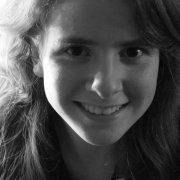
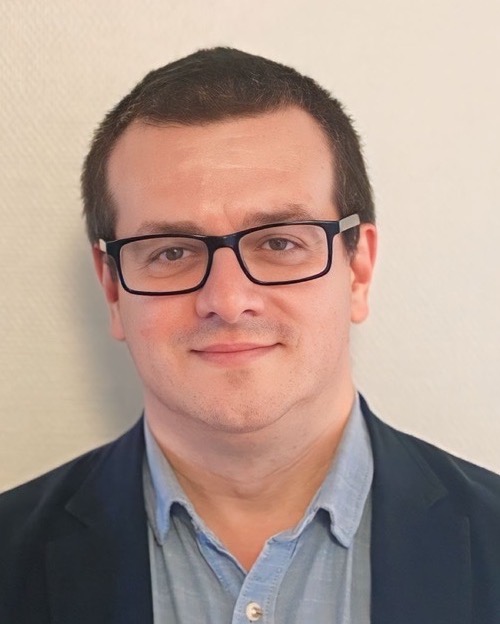
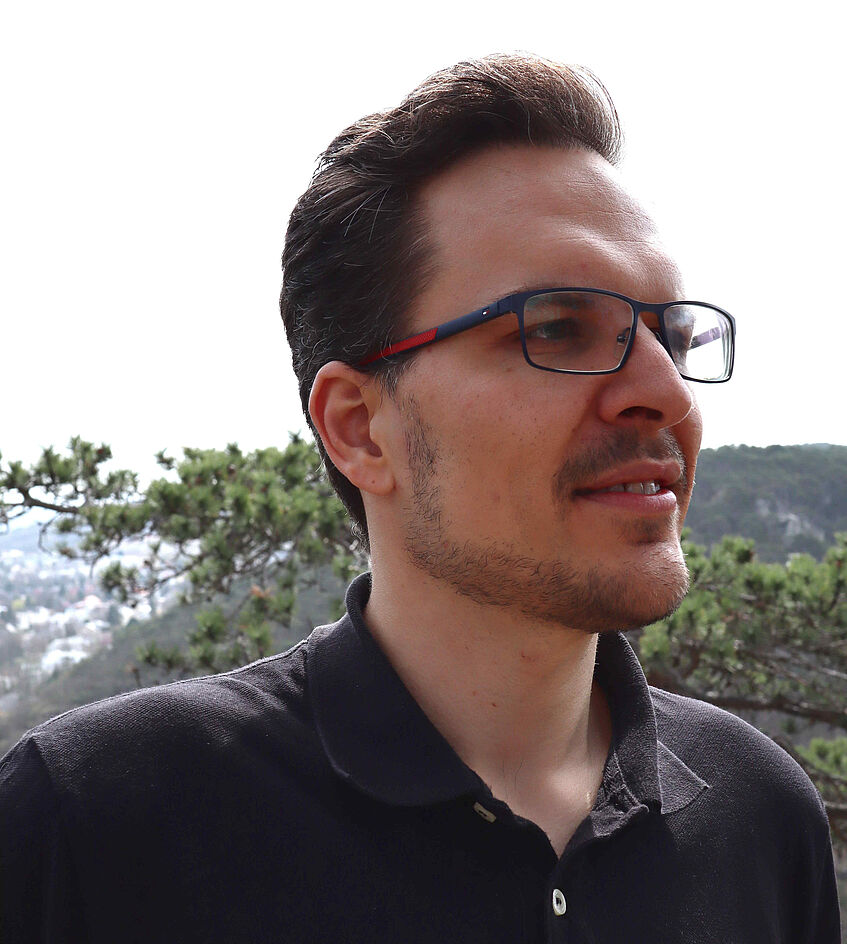
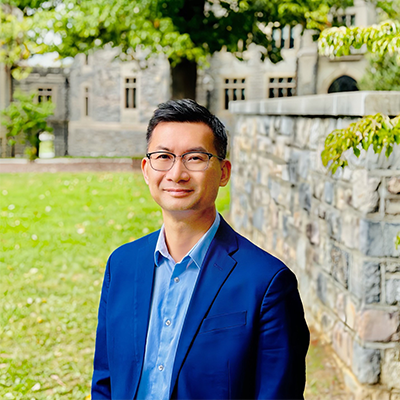
Emilia Siviero is a Post-doctoral Researcher at Università Ca' Foscari, Venezia in the Department of Environmental Sciences, Informatics and Statistics (DAIS) , working on Spatial Statistics and Extreme Value Theory under the supervision of Ilaria Prosdocimi and Carlo Gaetan. Previously, she earned her PhD at Télécom Paris with a thesis titled Statistical Learning for Spatial Data: Theory and Practice , focusing on spatial statistics and spatio-temporal Hawkes processes. Her research spans theoretical and applied work in Spatial Statistics , Nonparametric Covariance Estimation , Spatio-temporal Hawkes Processes , and Extreme Value Theory . Recent publications address parametric inference for Hawkes processes, Kriging from a machine learning perspective, and stochastic algorithms in optimal transport. She has presented at international conferences such as COMPSTAT and CAp, and organized events like the Chaire DSAIDIS day. Her teaching experience includes courses on Statistical Learning , Machine Learning , and Probability for Télécom Paris and Mines ParisTech students. She is actively involved in computational statistics and climate data analysis projects, with software tools available on GitHub.
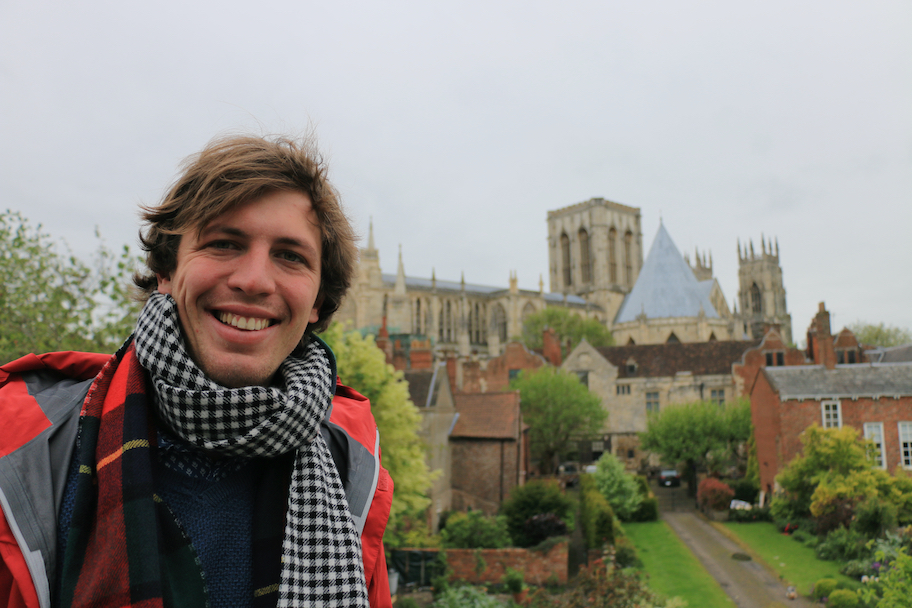
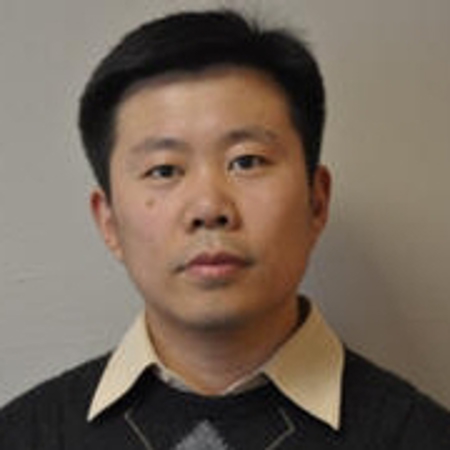
Jae-Kwang Kim is a Professor in the Department of Statistics at Iowa State University's College of Liberal Arts and Sciences. He holds Fellow status in both the American Statistical Association (ASA) and Institute of Mathematical Statistics (IMS), was named LAS Dean's Professor (2020-2022), and currently serves as President of the Korean International Statistical Society (KISS) for 2023-2024. His educational background includes: PhD in Statistics, Iowa State University (2000) MS in Statistics, Seoul National University (1993) BS in Computer Science and Statistics, Seoul National University (1991) Professor Kim's research spans survey sampling, missing data analysis, semiparametric estimation, and causal inference. He has pioneered methods for handling nonignorable nonresponse, developed fractional hot deck imputation techniques, and advanced data integration approaches combining probability surveys with big data sources. His work bridges theoretical statistics with practical survey methodology challenges. His recent publications (2022-2025) reveal a concentrated focus on semiparametric imputation using Gaussian mixture models, functional calibration under non-probability sampling, and bootstrap inference for complex survey designs. Key themes include handling multivariate missing data, addressing selection bias in voluntary samples, and developing robust estimation techniques under informative sampling frameworks. His major recognitions include: Gertrude M Cox Award (2015) LAS Dean's Professor (2020-2022) Fellow of the American Statistical Association Fellow of the Institute of Mathematical Statistics Professor Kim has held academic appointments at Hankook University of Foreign Studies (2002-2003), Yonsei University (2004-2008), and KAIST (2016-2018), alongside his primary position at Iowa State University (2008-present). His pre-academic career included roles as Mathematical Statistician at the US Census Bureau (1999-2000) and Senior Statistician at Westat (2000-2001).
Michel Besserve is a Full Professor in the Department of Empirical Inference at the Max Planck Institute for Intelligent Systems in Tübingen, Germany. His research bridges artificial intelligence, causal inference, and neuroscience to develop trustworthy and interpretable AI systems for understanding complex phenomena in artificial, physical, and socioeconomic systems. Dr. Besserve completed his PhD dissertation titled Analyse de la dynamique neuronale pour les Interfaces Cerveau-Machine : un retour aux sources at Université Paris-Sud 11 in November 2007. His academic journey has led him to become a leading researcher in causal machine learning, collaborating extensively with Bernhard Schölkopf and other prominent scientists in neuroscience and AI. Professor Besserve's research centers on causal machine learning, with a focus on understanding and anticipating changes in complex systems. He investigates principles like the Independence of Causal Mechanisms (ICM) to improve causal model identifiability and develop more robust AI. His work spans theoretical foundations of causal inference to practical applications in neuroscience, brain function analysis, and socioeconomic systems. He has made significant contributions to understanding brain networks through causal inference and machine learning, with publications in major journals including Nature, PLOS Biology, and Neuron. His publication record reveals a clear trajectory from theoretical causal inference toward developing frameworks for real-world applications. Recent work focuses on building Causal Computational Models (CCMs) that integrate data, domain knowledge, and causal structure to improve robustness and interpretability of complex system models. His research shows increasing integration of causal machine learning with applications to neuroscience and socioeconomic systems, particularly in developing causal AI that can address real-world complexity while producing interpretable outcomes for decision makers. Through his leadership in the Department of Empirical Inference, Professor Besserve has established a research program that bridges theoretical machine learning with practical applications in neuroscience and complex systems. His team develops novel causal machine learning tools that uncover internal structure and transformations of complex systems, with potential applications ranging from brain function analysis to sustainable economic modeling.
Jack B. Muir is a Marie Skłodowska-Curie Fellow at the University of Oxford's Department of Earth Sciences and Junior Research Fellow at Wolfson College. His research integrates advanced mathematics with seismology to address inverse problems in Earth imaging and hazard assessment. Education: PhD in Geophysics, Caltech Seismolab (2021) Research focuses on physics-informed neural networks for seismic wavefield simulation (TerraPINN project), nonparametric seismicity rate modeling using deep Gaussian processes, geologically-constrained tomography, and Bayesian methods for wavefield reconstruction. His work targets applications from near-surface structures to Earth's core, emphasizing machine learning acceleration and uncertainty quantification in inverse problems. Recent projects include Distributed Acoustic Sensing (DAS) optimization and seismic swarm analysis. Publication trends (2022-2025) reveal strong emphasis on machine learning integration (PINNs, Gaussian processes) with geophysical inverse problems, particularly for DAS data processing, deep Earth imaging, and probabilistic hazard assessment. Key themes include multi-scale analysis, instrument response calibration, and computational efficiency. Scientific Awards: Marie Skłodowska-Curie Fellowship John Monash Scholarship Junior Research Fellowship at Wolfson College, Oxford Grant-funded projects include TerraPINN for physics-based seismic hazard assessment and collaborations leveraging Caltech's Community Seismic Network. He actively develops open-source tools for core-mantle boundary modeling and DAS data processing. Labs and teams involve Oxford's Seismology group (Tarje Nissen-Meyer), Caltech (Zach Ross), Australian National University (Hrvoje Tkalčić), and JAMSTEC (Satoru Tanaka), with fieldwork utilizing ocean-bottom seismometers and urban sensor networks.
Søren Wengel Mogensen is an Associate Professor at the Department of Finance, Copenhagen Business School, Denmark. His research focuses on developing advanced statistical and machine learning methodologies for complex systems analysis. Research Interests: Dr. Mogensen's work spans causal inference, stochastic processes, survival analysis, and time-series modeling. Key themes include: Causal discovery algorithms for industrial and biological systems Graphical representations of dependencies in high-dimensional data Time-varying mediation in survival contexts Bayesian networks for cascade modeling Publication Trends: His recent articles (2021-2025) demonstrate a strong emphasis on theoretical-statistical innovation with applications in healthcare, industrial monitoring, and computational finance. Dominant methodologies include kernel-based independence tests, continuous-time Bayesian networks, and constrained stochastic process modeling.
Rong Zheng serves as an Associate Professor of Decision Sciences within the Economics and Decision Sciences department at Western Illinois University's College of Business and Technology. She joined WIU in August 2017 following completion of her Ph.D. at the University of Alabama, maintaining her office in Stipes Hall 430F. Her academic credentials include: Ph.D. in Applied Statistics, University of Alabama (2017) M.S. in Applied Statistics, University of Alabama B.S. in Mathematics and Applied Mathematics, Henan University, China Dr. Zheng's research centers on advanced statistical methodologies with emphasis on Statistical Quality Control and Nonparametric Statistics. Her work in Finite Mixture Models and Model-based Clustering bridges theoretical frameworks with practical applications in Data Mining, Text Mining, and complex data analysis. She actively develops innovative approaches for data classification and statistical modeling under real-world constraints. Her publication record demonstrates consistent contributions to statistical methodology, particularly in adapting clustering techniques for measurement inconsistencies (2020) and advancing distribution-free quality control charts (2016). These works reflect her dual focus on theoretical rigor in nonparametric statistics and practical implementation in industrial quality management systems. Dr. Zheng engages students through applied projects and academic competitions while teaching courses including DS303 (Applied Business Forecasting), DS490(G) (Statistical Software in R/SAS), DS503 (Business Statistics), DS533 (Forecasting), and DS560 (Categorical Data Analysis), utilizing integrated lecture-lab formats to develop practical analytical skills.
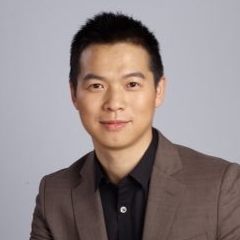
Lei Li is an Associate Professor in the Department of Computer Science at the University of California, Santa Barbara (UCSB), where they serve as Co-Director of the UCSB NLP Group. Their research focuses on developing algorithms and systems for machine learning, natural language processing, machine translation, reasoning, and AI-powered drug discovery. Dr. Li received their PhD from Carnegie Mellon University and completed their undergraduate studies at Shanghai Jiao Tong University. Dr. Li's research spans multiple critical areas in artificial intelligence and machine learning. Their work in natural language processing encompasses machine translation, speech translation, multilingual NLP, large language models, text generation, program synthesis, reasoning, privacy, and watermarking. Additionally, they have made significant contributions to AI applications in drug design and efficient machine learning techniques. Their research bridges theoretical foundations with practical applications, particularly in the emerging field of AI for biological discovery. Analysis of Dr. Li's recent publications reveals a strong focus on advancing natural language processing capabilities while addressing critical challenges in model efficiency, security, and evaluation. Their work spans machine translation systems that handle hundreds of languages, techniques for improving large language model capabilities in zero-shot settings, methods for evaluating text generation quality, and novel approaches for protecting intellectual property in language models. Notably, they've also made significant contributions to applying AI to biological problems, particularly in antimicrobial peptide discovery and protein sequence design. Dr. Li has received notable recognition for their research, including: Best Paper Award at ACL 2021 for "Vocabulary Learning via Optimal Transport for Neural Machine Translation" Dr. Li actively advises PhD and Master's students in computer science at UCSB, with recent advisees working on topics including antimicrobial peptide discovery, protein sequence design, diffusion models, speech translation, and language model watermarking. Their research group, the UCSB NLP Group, appears to be well-funded and productive, with consistent publications in top-tier conferences including ACL, EMNLP, ICML, KDD, and NeurIPS. The group has developed several influential frameworks and benchmarks, including MTG (Multilingual Text Generation benchmark) and SEScore2 (text generation evaluation metric). The UCSB NLP Group, co-directed by Dr. Li, maintains an active research agenda with multiple ongoing projects spanning natural language processing, machine learning, and their applications to scientific discovery. The group collaborates with researchers across disciplines, particularly in the biological sciences for drug discovery applications.
Diego Parente Paiva Mesquita serves as a Visitor (Faculty) in the Department of Computer Science under Professor Samuel Kaski's research group. His work bridges theoretical and applied machine learning with emphasis on scalable probabilistic systems. His academic credentials include: Doctor of Technology in Computer Science (awarded December 16, 2021) Bachelor of Computer Science from the Brazilian Ministry of Education (awarded August 23, 2016) Mesquita's research focuses on advancing graph neural networks, Bayesian inference, and incomplete data handling. His fingerprint reveals strong contributions to probabilistic modeling (60% Approximates), random variable analysis (53%), and machine learning systems (50%), with particular innovation in neural network architectures (44%) for complex data structures. Recent publications (2022-2024) demonstrate a cohesive trajectory toward parallelizable machine learning frameworks. Key themes include temporal graph representation learning, embarrassingly parallel Monte Carlo methods, and thin/deep Gaussian process hybrids—addressing critical scalability bottlenecks in probabilistic AI while maintaining theoretical rigor.
Vlad Stefan BARBU is an Associate Professor of Mathematics (Statistics) at the Laboratory of Mathematics Raphaël Salem UMR 6085, University of Rouen - Normandy (URN) - CNRS, France. He serves as Director of the Research Federation Normandy-Mathematics, Scientific Secretary of the Romanian Society of Probability and Statistics, and Vice-president of the Romanian Society of Applied and Industrial Mathematics. His research focuses on stochastic processes, particularly semi-Markov models and their applications in reliability, survival analysis, and biostatistics. Education: HDR (Habilitation to Conduct Research) in Statistics (2017) PhD in Statistics (2005) Master in Applied Statistics and Optimization (1997-1998) BA in Mathematics (Bac + 5) (1992-1997) Barbu's research interests center on semi-Markov and Hidden semi-Markov processes, Markov models, statistical inference for stochastic processes, and nonparametric estimation. His work extends to reliability and survival analysis, biostatistics with applications in DNA modeling, entropy and divergence measures, and model selection. He has developed several R packages for semi-Markov modeling, demonstrating his commitment to translating theoretical advances into practical tools for researchers and practitioners. Analysis of his recent publications reveals a consistent focus on advancing semi-Markov theory with applications across diverse domains. His work spans theoretical developments in estimation methods, hypothesis testing, and reliability analysis, while maintaining strong connections to practical applications in reliability engineering, biostatistics, and risk modeling. The interdisciplinary nature of his research is evident in publications spanning statistics journals, mathematics journals, and applied fields. Research Grants: Coordinator of project 'Reliability and Survival Analysis of Multi-State Random Systems' (2024-2025) Team leader for LMRS in ANR project 'Hidden Semi Markov Models: INference, Control and Applications' (2022-2025) Participant in ANR project 'Swimming and Para-swimming: All United for our Champions' (2020-2024) Participant in multiple regional and international research projects Barbu has supervised numerous PhD students and served on doctoral committees in France and abroad. His research leadership extends to coordinating significant research projects and organizing international conferences. He maintains active research collaborations across Europe, with frequent visits to institutions in Greece, Romania, and other countries. His work bridges theoretical statistics with practical applications, particularly in reliability engineering and biostatistics. As Director of the Research Federation Normandy-Mathematics, Barbu leads a substantial mathematical research network. His international engagement is further evidenced by his leadership roles in Romanian statistical societies and his participation in European research networks and projects.
Abhishake Abhishake is a Postdoctoral Researcher at the Department of Computational Engineering, LUT School of Engineering Sciences, focusing on inverse problems and statistical learning. His research spans mathematics, machine learning, and computational optimization. 2023–present: Postdoctoral Researcher, LUT University, Finland 2021–2022: Postdoctoral Researcher, Technische Universität Berlin, Germany 2018–2021: Postdoctoral Researcher, University of Potsdam, Germany His research interests include inverse problems, regularization methods, and machine learning. He has published extensively on Tikhonov regularization, nonparametric testing, and multi-penalty strategies. His work bridges mathematical theory with applications in pharmacometrics and statistical learning. Key trends in his publications (16 total) include inverse problems in Hilbert scales, regularization techniques for nonlinear statistical learning, and multi-task learning frameworks. Subfields cover oversmoothing penalties, manifold regularization, and convergence analysis.
Dr. Qing Lu is an Adjunct Professor at the BioMolecular Science Gateway Faculty of Michigan State University, affiliated with the Genetics & Genome Sciences Program. Their methodological research focuses on statistical genetics and machine learning innovations for high-dimensional data analysis, including tree-based methods, U-statistics, and deep learning frameworks. Key research trends from publications include: Statistical genetics methodology (U-statistics, kernel neural networks, mixed-effects models) Machine learning applications in genomic data analysis (deep learning, transfer learning, functional networks) Environmental health investigations (bisphenols, metals, parabens) Public health methodologies (network scale-up, population estimation) Dr. Lu's work bridges computational methods with biomedical applications, particularly in: Genetic interaction analysis Multi-omics data integration Exposure-genotype-phenotype relationships Development of open-source bioinformatics tools
Lukas Steinberger serves as Associate Professor for Statistical Machine Learning in the Department of Statistics and Operations Research at the University of Vienna's Faculty of Business, Economics and Statistics. He is also affiliated with the university's Data Science research network. Prior to his current position, he was a post-doctoral researcher with Angelika Rohde at the University of Freiburg and held a temporary Full Professorship in the Department of Mathematics at the Technical University of Munich. Steinberger's research program centers on statistical inference under differential privacy, high-dimensional data analysis, and uncertainty quantification in statistical learning. His work bridges theoretical statistics with practical machine learning applications, particularly focusing on how to perform valid statistical inference while preserving data privacy. His research has significant implications for fields requiring sensitive data analysis including healthcare, finance, and social sciences where privacy constraints are paramount. His publication record demonstrates consistent contributions to top-tier statistics journals including multiple papers in the Annals of Statistics. His recent work shows a clear trajectory toward developing theoretically sound methods for privacy-preserving data analysis that maintain statistical efficiency. The research themes across his publications reveal strong connections between differential privacy mechanisms, high-dimensional statistical theory, and practical machine learning applications. Scientific Awards: Award for dissertations in the field of theoretical statistics (2016) Steinberger maintains an active research agenda with numerous conference invitations and seminar presentations internationally, reflecting his standing in the statistical community. His current research project "Classification - Preprocessed and high-dimensional data" (2021-2025) indicates ongoing funding and research direction. He serves as Vice-Director of Studies for the Business, Economics and Statistics program and teaches courses including Statistics 2, Computational Statistics, and Classification, Clustering and Discrimination at the master's level. As part of the Data Science research network at University of Vienna, Steinberger collaborates with interdisciplinary teams working at the intersection of statistics, computer science, and domain-specific applications. His research group focuses on developing theoretically grounded approaches to statistical machine learning problems under privacy constraints.
Dr. Damiano Varagnolo is a Senior Lecturer at the Control Engineering Group, Luleå University of Technology, Sweden. His research focuses on distributed optimization, control systems for data centers and HVAC, and biomedical engineering applications. Current affiliation: Luleå University of Technology Primary research areas: Distributed optimization, Newton-Raphson Consensus methods, networked systems, energy-efficient control Selected applications: Smart building systems, biomedical modeling of pain responses, data center thermal management His work on distributed optimization explores asynchronous protocols and robustness in networked systems. Recent publications demonstrate applications in peer-to-peer networks, biomedical engineering, and energy-efficient computing infrastructure. Key collaborative projects include IEEE Transactions publications on data center cooling, European Control Conference contributions on sensor calibration, and IFAC symposium presentations on biomedical modeling. His distributed Gaussian regression methods appear in TPAMI publications.
Professor Marlene Müller serves as Professor of Applied Statistics at Beuth University of Applied Sciences Berlin within the Department of Mathematics, Physics, and Chemistry in the School of Engineering. Her academic career spans over two decades with significant contributions to nonparametric and semiparametric statistical methods, particularly applied to financial data analysis and credit scoring. Her research interests center on Nonparametric Statistics , Semiparametric Models , and Statistical Computing , with a strong emphasis on practical applications in finance. She has developed numerous R implementations for statistical methods, making complex techniques accessible to practitioners. Her work bridges theoretical statistics with real-world financial applications, particularly in credit risk modeling and portfolio analysis. Professor Müller's publication record shows a consistent focus on applying advanced statistical techniques to financial problems. Her work evolved from foundational theoretical contributions in the 1990s to more applied financial modeling in the 2000s, with a particular emphasis on credit scoring systems under regulatory frameworks like Basel II. She has maintained a strong focus on developing computational tools, especially through the R programming language, to implement these statistical methods. She is co-author of the influential textbook Nonparametric and Semiparametric Models (Springer Series in Statistics, 2004) with Härdle, Sperlich, and Werwatz, which has become a standard reference in the field. Her teaching portfolio includes advanced statistics courses with a strong computational component, and she has developed extensive educational materials for teaching nonparametric methods. Professor Müller maintains an active consultation schedule, with office hours listed through the summer semester of 2025, indicating her ongoing engagement with students and academic work. Her contributions to statistical computing through R package development and teaching materials demonstrate her commitment to advancing both theoretical and applied statistics education.
Le Wang is the David M. Kohl Chair and Professor in the Department of Agricultural and Applied Economics at Virginia Tech. He holds roles such as co-editor of China Economic Review and Journal of Labor Research , and associate editor of Econometric Reviews . He serves on the Board of Trustees of the Southern Economics Association, the Human Capital and Economic Opportunity Global Working Group at the University of Chicago, and the Institute for Labor Studies (IZA) in Germany. As director of the Young Scholars Program of the Global Labor Organization (GLO), he promotes interdisciplinary research and academic collaboration. He earned his Ph.D. in Economics from Southern Methodist University in 2006 and a B.A. in International Finance from Jinan University in 2001. His research focuses on applied econometrics, including causal inference and machine learning applications, as well as policy issues in energy economics, public policy, food and health systems, development economics, and labor markets. Notable contributions include studies on intergenerational mobility, gender earnings gaps, and the impact of food aid on civil conflict. Awarded the Kuznets Prize (2018) and multiple Outstanding Professor Awards, his work has been recognized for advancing methodological innovations and policy-relevant insights. Recent accolades include the 2023 Emerald Literati Award for his chapter on “Women’s Potential Earnings Distributions” and the VPR and Partnerships Award for Excellence in Transdisciplinary Research (2023). Le Wang’s expertise extends to editorial leadership and academic administration, reflecting his commitment to advancing rigorous research and equitable policy solutions.