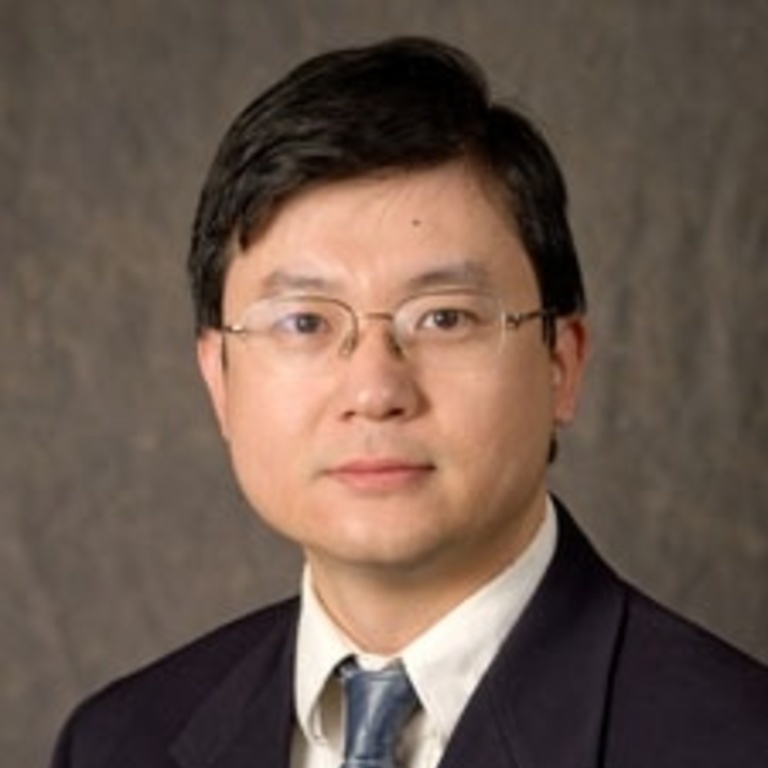
Badr-Eddine Chérief-Abdellatif is a CNRS Researcher at Sorbonne Université , affiliated with the Laboratoire de Probabilités, Statistique et Modélisation (LPSM) . His research spans mathematical statistics and machine learning theory , focusing on generalized Bayesian inference , robustness , and variational inference . He previously held a postdoctoral position at the University of Oxford and earned his PhD in 2020 from Institut Polytechnique de Paris under Pierre Alquier. His work addresses robust statistical methods using Maximum Mean Discrepancy (MMD) , PAC-Bayesian theory , and kernel techniques . Recent publications explore meta-learning , VAE reconstruction guarantees , and missing data analysis . He received the Best Student Paper Award at AISTATS 2022 and a Best Paper Award at ACML 2019. Chérief-Abdellatif contributes to online learning , copula estimation , and sparse deep learning . His theoretical results on variational inference have been published in top venues like NeurIPS , JASA , and JMLR . He also co-invented a patent for proportions determination in biological ensembles (2024). Scientific Awards : Best Student Paper Award, AISTATS 2022 Best Paper Award, ACML 2019 Travel Award for Academic Conferences
Manfred Opper serves as Professor of Computer Science at the School of Electrical Engineering and Computer Science (School IV EECS) of Technische Universität Berlin and holds a Fellowship at the Berlin Institute for the Foundations of Learning and Data (BIFOLD), a joint research institute with the Hasso Plattner Institute. His research program integrates statistical physics with machine learning, focusing on Bayesian nonparametric models, statistical learning theory, and stochastic dynamics on complex networks. Key themes include data assimilation for nonlinear systems, optimal stochastic control applications, and information-theoretic approaches to inference. This interdisciplinary framework bridges theoretical physics and computational intelligence. His recent publication analyzes stochastic control techniques for Bayesian neural network training, reflecting his signature approach of applying statistical physics principles to modern machine learning challenges. This work demonstrates convergence between control theory and probabilistic deep learning. Opper's recognition includes the German Physical Society's Physics Award for early-career contributions. Physics Award of German Physical Society (1992) As a BIFOLD Fellow, he contributes to foundational research in learning systems and data science. The available text does not specify advising activities, grant funding, or laboratory infrastructure details. His professional engagement extends to the German Physical Society (DPG), where he maintains active membership in theoretical physics and statistical mechanics communities.
Josh Patrick serves as a Senior Lecturer at Baylor University, where he maintains an active research program spanning theoretical statistics and applied biostatistics. His core research domains include: Theoretical statistics: Matrix quadratic forms, Wishart distributions, and covariance matrix structures Time series analysis: Functional-coefficient autoregressive models and forecasting methodologies Biostatistics: Trauma research, survival analysis for ECMO patients, and combat casualty care Spatio-temporal modeling: Applications in renewable energy data such as solar irradiance Publication trends from 2009-2021 reveal consistent methodological innovation, with recent work (2020-2021) emphasizing matrix distributions and medical applications, while earlier contributions (2013-2016) focus on time series and environmental modeling. His approach integrates semiparametric techniques, Bayesian inference, and simulation-based validation across disciplines. No scientific awards or honors were documented in the source materials. Details regarding graduate student supervision, research funding, or laboratory affiliations remain unspecified in available information.
David Ginsbourger is a Professor and Head of Research Group at the Institute of Mathematical Statistics and Actuarial Science (IMSV) within the University of Bern, Switzerland. He maintains dual affiliations through his role at IMSV and as a member of the Multidisciplinary Center for Infectious Diseases (MCID), reflecting interdisciplinary engagement across statistical methodology and applied domains. His research program centers on advanced statistical methodologies with emphases on Gaussian process modeling, uncertainty quantification, and experimental design for computer experiments. Key contributions include novel kernel constructions for equivariant systems, sequential design strategies for excursion set estimation, and efficient computational frameworks for spatial distributional modeling. His work bridges theoretical statistics with practical applications in agriculture, chemoinformatics, environmental science, and risk assessment, demonstrating consistent innovation in handling complex prediction problems under uncertainty. Analysis of his 15 most recent publications (2024-2025) reveals persistent methodological development in Gaussian process theory alongside expanding application domains. Recurring themes include integration-free kernel design for structured data, rare event probability estimation, and multivariate forecast calibration. His research exhibits strong continuity in addressing computational challenges for large-scale inverse problems while increasingly incorporating domain-specific constraints from fields like molecular chemistry and agricultural science. Ginsbourger leads a dedicated research group at IMSV focused on advancing statistical frameworks for computer experiments and uncertainty quantification. The group maintains active collaborations across disciplines, particularly evident in recent work connecting statistical methodology to infectious disease modeling through MCID affiliations and agricultural optimization projects.
Prof. Dr. Wolfgang Schmid is a distinguished Professor of Quantitative Methods, especially Statistics at the Faculty of Business Administration and Economics of the European University Viadrina in Frankfurt (Oder), Germany. He has held this position since October 1995 and serves as Chairman of the Doctoral Committee of the Faculty of Economics. His research spans multiple domains including financial statistics, statistical process control, environmental statistics, and spatial statistics. Prof. Schmid has built an extensive academic career with significant contributions to both theoretical and applied statistics. Mathematics studies at University of Ulm (1977-1982) PhD (Dr. rer. nat.) at University of Ulm in 1984 Habilitation at University of Ulm in 1991 Prof. Schmid's research focuses on the intersection of statistics with finance, quality control, and environmental science. His work on statistical process control has advanced methodologies for monitoring complex processes in finance and manufacturing. In financial statistics, he has made significant contributions to portfolio optimization, volatility modeling, and asset pricing. His environmental statistics research applies sophisticated spatial and temporal modeling techniques to analyze environmental data. His work bridges theoretical statistical development with practical applications across multiple domains. Prof. Schmid's publications reveal a strong trend toward high-dimensional statistical methods, particularly in financial applications. His recent work focuses on spatial and spatiotemporal volatility models, portfolio optimization under uncertainty, and advanced control chart methodologies for complex data structures. The interdisciplinary nature of his research connects statistics with finance, environmental science, and machine learning, demonstrating his ability to develop statistical methodologies that address real-world challenges across multiple domains. Newcomer Award of the State of Brandenburg 2008 (awarded to two of his doctoral students) Chairman of the German Statistical Society (DStatG) from 2012-2020 Deputy Chairman of the DStatG (2020-2024) Prof. Schmid has been instrumental in mentoring the next generation of statisticians and econometricians, serving as first supervisor for 28 dissertations and five habilitations. Twenty of his former students now hold professorships at universities across Europe. His research has been supported by nine DFG-funded projects totaling approximately 1.6 million euros. He has organized numerous international conferences and has served on the editorial boards of multiple statistical journals, significantly contributing to the advancement of statistical science through collaborative research and academic leadership. His work has established him as a leading figure in applied statistics with particular expertise in financial and environmental applications.
Yong Chen serves as a Professor in the Department of Industrial and Systems Engineering within the College of Engineering at the University of Iowa. His academic appointment centers on advancing methodologies in industrial engineering with emphasis on system reliability and optimization across diverse applications. Chen's research spans Industrial Engineering, Reliability Engineering, and Maintenance Optimization, with significant contributions to Statistical Process Control, Bayesian Statistics, and Machine Learning applications. His work develops novel frameworks for condition-based maintenance, multi-component system optimization, and IoT-enabled industrial analytics, addressing critical challenges in manufacturing quality control and system reliability. The integration of stochastic modeling and data-driven approaches characterizes his methodological innovations. Analysis of his 15 most recent publications (2016-2025) reveals a dominant research trajectory in Markov decision processes for maintenance optimization (35% of publications), Bayesian modeling for process monitoring (27%), and IoT/data analytics applications (13%). His work demonstrates increasing interdisciplinary expansion from traditional manufacturing systems into healthcare (dementia care analysis) and renewable energy sectors, while maintaining core focus on reliability engineering fundamentals. Scientific awards: No scientific awards were mentioned in the provided text. Advising and grants: The available documentation contains no information regarding doctoral students, postdoctoral researchers, or research funding sources. His academic profile focuses exclusively on research outputs and methodological contributions without reference to mentoring activities or sponsored projects.
Prof. Dr. Christian Aßmann holds the Chair of Survey Statistics and Data Analysis at the Otto-Friedrich University of Bamberg (since 2020) and serves as Head of Department 3 Research Data Center and Method Development at the Leibniz Institute for Educational Trajectories . His work bridges statistical methodology with educational and public health research. Education: PhD in Economics (2009, Kiel University) Key Affiliations: Otto-Friedrich University of Bamberg, Leibniz Institute for Educational Trajectories, DFG Priority Programme SP2431/SP1646 Research focuses on Bayesian estimation techniques for handling missing data in longitudinal studies, particularly in educational assessment and human growth analysis. His methodological innovations include factor analysis , multiple imputation , and network-based modeling . He contributes to survey methodology for large-scale educational panels and public health statistics through anthropometric studies. Scientific contributions span Bayesian econometrics , educational transition analysis , and community-based health research . His 2024-2025 work addresses automated statistical data editing and corona effects on educational outcomes . Collaborative projects with institutions like DFG and Springer highlight his interdisciplinary impact. Awards: Involved in Springer BestMasters 2014 thesis evaluation Committee Roles: Expert committee for Good KiTa Act monitoring (2019-2024) Students explore topics like Bayesian deep learning , economic forecasting , and missing data techniques . His methodological workshops cover data editing , factor rotation , and panel nonresponse , reflecting his commitment to training future researchers.
Norm Matloff is a Professor in the Department of Computer Science within the College of Engineering at the University of California, Davis. His interdisciplinary work bridges computer science, statistics, and social policy, with significant contributions to machine learning theory, parallel computing, and technology labor economics. His primary research domains include: Algorithmic Fairness and Bias Mitigation in Machine Learning Statistical Methods for Data Science Education Parallel and Distributed Computing Systems Social Network Analysis and Community Detection Immigration Policy Analysis in Technology Sectors Recent publications demonstrate a pronounced shift toward ethical AI, featuring novel debiasing frameworks like TowerDebias and socially conscious statistical tools. His 2024 textbook The Art of Machine Learning exemplifies his commitment to accessible technical education, while changepoint analysis research (2025) extends classical statistical methods for modern data streams. Matloff uniquely integrates rigorous methodology with societal impact assessment, particularly in algorithmic fairness where his work challenges conventional parity metrics. He maintains an influential research bibliography on H-1B visa impacts, analyzing labor market effects through empirical data rather than industry narratives. This critical perspective on technology workforce dynamics complements his technical contributions, establishing him as a distinctive voice at the intersection of computer science and social policy.
Dr Michael Smith is a Research Fellow at the University of Sheffield , affiliated with the Machine Learning research group within the School of Computer Science . His research bridges Gaussian Processes , Differential Privacy , and International Development , with a focus on Air Pollution Modeling in Kampala and Bumblebee Tracking using retroreflective tags. Education: PhD in computational neuroscience from the University of Edinburgh (2010-2014) Previous Affiliation: Lecturer at Makerere University in Kampala (2014) His work includes probabilistic sensor calibration for air pollution monitoring and adversarial attack analysis in Gaussian Process models. Current projects involve low-cost environmental sensor networks and mobile unit calibration systems for policy-driven predictions. Awarded grants include the BEE-TRACK project (Eva Crane Trust, 2025-2027) and the Pollinator Behavior AI grant (BBSRC, 2024-2025). Smith leads outreach initiatives like 20's Plenty Sheffield , advocating for urban speed limit reforms to reduce road collisions and air pollution.
Thierry Klein is a Professor of Statistics at École Nationale de l'Aviation Civile (ENAC) and a member of the Toulouse Institute of Mathematics. His research spans statistical methodology with applications in diverse fields including aviation safety, environmental science, and computational mathematics. Dr. Klein's research focuses on advanced statistical methods, particularly in sensitivity analysis, probability theory, and machine learning. His work on Sobol indices has contributed significantly to variance-based sensitivity analysis, while his research on Wasserstein spaces has advanced the understanding of probability distributions in metric spaces. He has developed innovative methods for Gaussian process regression and has applied statistical techniques to problems in aviation safety, coastal flooding prediction, and paleoenvironmental reconstruction. His recent publications demonstrate a strong focus on sensitivity analysis methods, particularly Sobol indices, with applications across multiple domains. He has also made significant contributions to the theory of Wasserstein spaces and their applications in statistical learning. His work bridges theoretical statistics with practical applications in engineering, environmental science, and aviation. Dr. Klein is currently involved in three major funded projects: the PEPR PDE-AI project (2023-2028) on Partial Differential Equations for Artificial Intelligence, the ANR GATSBII project (2025-2029) as project leader, and the ANR MBAP-P project (2025-2029) as a member. These projects reflect his interdisciplinary approach, combining statistical theory with applications in artificial intelligence, engineering, and environmental science.
Antonio Cuevas González is a Professor of Statistics and Probability at the Department of Mathematics, Faculty of Sciences, Autonomous University of Madrid. His office is located in Building 17, Room 503 at the university campus in Madrid (28049). He maintains an active research program in statistical methodology and has supervised numerous PhD students throughout his career. Professor Cuevas González specializes in several advanced areas of statistical theory, with primary research interests in set estimation, statistics with functional data, classification methods, and geometric approaches to statistical problems. His work bridges theoretical statistics with practical applications, particularly in high-dimensional and functional data settings. Over his career, he has developed novel methodologies for shape analysis, boundary estimation, and nonparametric classification that have become influential in the statistical community. An analysis of his recent publications reveals a strong focus on functional data analysis, with particular emphasis on regression models, classification techniques, and geometric approaches to statistical problems. His research increasingly integrates machine learning concepts with traditional statistical methodology, particularly through the use of reproducing kernel Hilbert spaces and other advanced mathematical frameworks. The trend shows growing interest in high-dimensional problems, dimensionality reduction techniques, and the development of computationally efficient statistical methods for complex data structures. SEIO-BBVA Foundation Award 2022 to the Best Methodological Contribution in the Statistics Field Medalla de oro 2025 de la Sociedad de Estadística e Investigación Operativa (SEIO) Professor Cuevas González has supervised numerous PhD students including Paloma Sanz (1988), Amparo Baíllo (2000), Alberto Rodríguez-Casal (2003), Alejandro Cholaquidis (2014), José L. Torrecilla (2015), Beatriz Bueno (2018), Luis A. Rodríguez (2024), and Antonio Coín (current). He is currently principal investigator for the research project 'Statistical techniques in high-dimensional spaces' (grant code PID2023-148081NB-I00) funded by the Spanish Ministry of Science, Innovation and Universities from September 2024 until September 2027, with Amparo Baíllo and Javier Cárcamo as main collaborators. As an active member of the statistical research community, Professor Cuevas González serves as Associate Editor for the journal ALEA and contributes to various research collaborations centered around functional data analysis, set estimation, and geometric statistics. His work often involves interdisciplinary collaborations, particularly with researchers in biomedical fields as evidenced by his publication on metabolic changes in mouse hearts.
Charles Geyer is a Professor at the School of Statistics, University of Minnesota . His work spans computational statistics, spatial statistics, and statistical genetics, with applications to endangered species conservation and stochastic process modeling. Research Interests: Spatial statistics, Markov chain Monte Carlo methods, likelihood inference in exponential families, constrained optimization, and statistical software development. Software Contributions: Developed R packages mcmc , aster , rcdd , and trust for Monte Carlo methods, life history analysis, computational geometry, and optimization. Teaching: Instructs graduate and undergraduate courses including Stat 5101, Stat 5102, Stat 5421, Stat 5601, and advanced seminars on computational statistics. Publications: Notable works include research on maximum likelihood estimation in exponential families, fuzzy P-values, geometric ergodicity in MCMC, and computational methods for conservation genetics.
Krzysztof Podgórski is a Professor and Head of the Department of Statistics at Lund University School of Economics and Management (LUSEM). His research spans applied probability, statistics, and interdisciplinary applications in engineering, finance, and environmental sciences. Key Research Areas: Multivariate non-Gaussian stochastic models Statistical analysis of spatio-temporal random fields Distributions at random crossing events Applications: Mechanical engineering (road modeling) Ocean engineering (wave/ship reliability) Financial econometrics (market linkages, risk analysis) Actuarial sciences (non-Gaussian claims) Methodological Contributions: Include ergodic theory of stochastic processes, extreme value theory, and computational statistics. His recent work explores functional data analysis with periodic splines and matrix variate distributions. Collaborative Networks: Extensive partnerships across theoretical and applied disciplines, with projects involving road dynamics, stochastic fields, and uncertainty quantification.
Dr. Shirin Moghaddam is an Associate Professor and Lecturer in Statistics and Data Science at the University of Limerick , within the Department of Mathematics and Statistics . She is also an active member of the Limerick Digital Cancer Research Centre and the Mathematics Applications Consortium for Science and Industry (MACSI) . Her work bridges advanced statistical methodologies with real-world medical applications, particularly in oncology and neurodegenerative disease research. Education: BSc in Statistics – University of Tehran MSc in Mathematical Statistics – University of Tehran PhD in Statistics – University of Galway (NUIG) Research Focus: Dr. Moghaddam's research centers on survival analysis , Bayesian modeling , and machine learning , with a strong emphasis on translational cancer research . She develops predictive models for time-to-event outcomes in prostate cancer and other diseases, integrating genomic and clinical data to improve diagnostic and prognostic accuracy. Her work often involves interdisciplinary collaboration, combining statistics with bioinformatics, clinical oncology, and molecular biology. Scientific Contributions & Trends: Her recent publications reflect a consistent trajectory in applying advanced statistical techniques—especially Bayesian imputation and machine learning—to high-dimensional biomedical data. A recurring theme is the use of mRNA and protein biomarkers to enhance prediction of survival outcomes in prostate cancer patients, both pre- and post-operatively. Her 2024 and 2023 papers in PLoS ONE and Cancers highlight this focus, while her 2023 Molecular Neurobiology paper extends similar methodologies to Parkinson’s disease biomarkers. Leadership & Service: Chair, Young Statisticians Section – Irish Statistical Association (2023–present) Member – Cancer Trials Ireland Collaborations & Networks: Dr. Moghaddam collaborates extensively within Ireland and internationally, contributing to national cancer research initiatives and statistical modeling consortia. Her affiliations with MACSI and the Limerick Digital Cancer Research Centre position her at the intersection of applied mathematics, data science, and clinical research.
Azeem M. Shaikh is the Ralph and Mary Otis Isham Professor and Chairman of the Department of Economics at the University of Chicago. He co-directs the Big Data Initiative at the Becker Friedman Institute. His research spans econometric theory, causal inference, and experimental design, with applications to early childhood education and economic mobility. B.S. in Mathematics, Duke University Ph.D. in Economics, Stanford University (2006) His research interests include: Randomization and resampling methods (bootstrap, subsampling) Multiple hypothesis testing and partial identification Design and analysis of experiments with matched pairs Evaluation of social programs like the HighScope Perry Preschool Recent publications focus on: Advances in randomization inference and stratified experiments Ranking methodologies for political parties and neighborhoods Handling imperfect compliance in experimental settings Software tools like csranks for statistical inference Scientific awards include: Dennis J. Aigner Award for Applied Econometrics Hoover National Fellowship Alfred P. Sloan Fellowship Elected Fellow of the Econometric Society (2018) Elected Fellow of the International Association for Applied Econometrics (2018) Grants from the National Science Foundation, Stanford Institute for Economic Policy Research, and the Hoover Institution supported his work. He held editorial positions at Journal of Political Economy , Econometrica , and Journal of Econometrics .