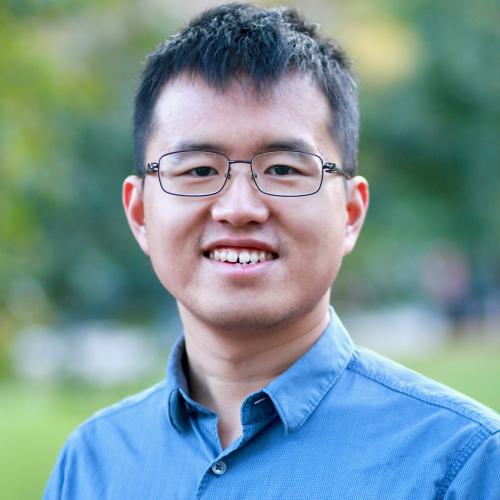
Derek Aguiar is an Associate Professor in the Computer Science & Engineering Department at the University of Connecticut . His research focuses on integrating probabilistic machine learning with graph-theoretic algorithms to analyze genomics and genetic data for complex disease studies. He is also engaged in interdisciplinary collaborations in computational immunology, history education via AI, and STEM outreach for high schoolers. B.S. in Computer Engineering and Computer Science from University of Rhode Island Ph.D. in Computer Science from Brown University (advised by Sorin Istrail) Postdoctoral work at Princeton University (with Barbara Engelhardt) His research interests span: Probabilistic and Bayesian machine learning Combinatorial algorithms and graph theory Computational genomics and transcriptomics AI-driven immunology and population genetics Polyploid haplotype assembly Identity-by-descent tract inference Key scientific awards include: NSF CAREER Award NIH Grant ($200k, 4 years) Bushnell Performing Arts Center Foundation Grant His software tools include: HapCompass : Haplotype assembly algorithms BIISQ : Isoform discovery from RNA-seq DELISHUS : Deletion polymorphism detection Tractatus : IBD tract inference CYRENE : cis-Regulatory genome browser He mentors PhD students and high schoolers through programs like Explore Engineering and Advanced Research Mentorship. Current projects include modeling genetic variation in cardiovascular disease and AI-based historical education tools.
Søren Feodor Nielsen is a Professor in the Department of Finance at Copenhagen Business School, Denmark, holding an active ORCID profile (0000-0002-9399-4918). His academic work spans finance, statistics, and international business with significant contributions to econometric methodology. Research interests center on Finance and Financial Econometrics , particularly volatility modeling and corporate default analysis. His statistical expertise focuses on Missing Data Analysis and Survival Analysis , including coarsening at random mechanisms and imputation techniques. Additional work explores International Business dynamics such as economic sanctions and R&D globalization. This interdisciplinary approach bridges theoretical statistics with real-world financial applications. Publication trends reveal an evolution from foundational statistical methods (2000-2010) toward applied finance and international business (2015-2023). Recent work integrates econometric rigor with contemporary issues like economic sanctions and fintech, while maintaining core contributions to missing data theory. The research demonstrates consistent methodological innovation across finance, statistics, and business disciplines. Advising: Nielsen has supervised 5 students according to institutional records, though specific details of these supervisions are not publicly documented in available sources.
William Holmes Finch is the George and Frances Ball Distinguished Professor of Educational Psychology at Ball State University, with a career spanning over two decades. His work bridges statistics, psychometrics, and educational psychology, focusing on advanced methodologies like structural equation modeling, item response theory, and robust multivariate inference. Ph.D. in Educational Psychology and Research (2002, University of South Carolina) M.Ed. in Educational Research (1990, University of South Carolina) B.A. in History (1987, University of South Carolina) Finch's research explores nonlinear growth modeling, differential item functioning, and multilevel modeling applications across disciplines. He collaborates with experts in neuropsychology and exercise physiology, emphasizing methodological rigor in educational data analysis. His recent work includes grant-related investigations into immigrant student performance during the pandemic and nonlinear growth modeling for accurate identification rules. As a prolific author, Finch has published books on multilevel modeling and applied psychometrics, alongside numerous journal articles. His collaborations with Maria Hernandez Finch, including the Parent Play Lab grant project, highlight his interdisciplinary impact. He mentors students in research methodologies, fostering their involvement in funded projects and publications.
Veronika Rockova is the Bruce Lindsay Professor of Econometrics and Statistics in the Wallman Society of Fellows at the University of Chicago Booth School of Business. She joined Booth after postdoctoral training at the Wharton School and has been internationally recognized for her work at the intersection of statistics and machine learning. Her research focuses on developing decision-centric statistical tools for large datasets, specializing in Bayesian computation Variable selection High-dimensional decision theory Hierarchical modeling Uncertainty quantification for generative AI Recent publications highlight trends in Bayesian CART mixing rates Generative posterior sampling Deep learning integration with Bayesian frameworks Tree-based bandit approaches for ABC Quantile methods for credible sets Scientific recognition includes COPSS President's Award (2024) COPSS Emerging Leader Award (2023) NSF CAREER Award (2020) She currently serves on editorial boards for Annals of Statistics Journal of the American Statistical Association Journal of the Royal Statistical Society (Series B) and mentors PhD students in econometrics and statistics.
Professor Qingyuan Zhao is a University Assistant Professor in Statistics at the Department of Pure Mathematics and Mathematical Statistics, University of Cambridge. He previously held a postdoctoral fellowship at the Wharton School, University of Pennsylvania, and is currently affiliated with the Statistical Laboratory at Cambridge. Born in Wuhan, China, Zhao earned his BSc in Mathematics from the University of Science and Technology of China and a PhD in Statistics from Stanford University. Research Focus: His work centers on causal inference, particularly using Mendelian randomization and graphical models to analyze complex relationships in biomedical and social sciences. He develops statistical methodologies for observational studies, adaptive experiments, and high-dimensional data analysis. Publications: Zhao's recent research explores causal mediation analysis, off-policy evaluation, confounder selection, and sensitivity analysis in Mendelian randomization. His methodological contributions include matrix algebra for graphical models and iterative graph expansion techniques. Academic Roles: He serves as a Fellow and Director of Studies in Mathematics at his college, contributing to education and academic governance in mathematics and statistics.
Linda Zhao is a Professor of Statistics and Data Science at the Wharton School of the University of Pennsylvania. She has been a faculty member at Wharton since 1994, bringing extensive expertise in statistical methodology and data science applications. Her work bridges theoretical statistics with practical applications across diverse domains including business, healthcare, and public policy. Linda Zhao obtained her BS degree from the Mathematics department of Nankai University, China, followed by a Ph.D. in Mathematics/Statistics from Cornell University. After completing her doctoral studies, she taught at UCLA for one year before joining the Wharton School in 1994. BS in Mathematics, Nankai University, China Ph.D. in Mathematics/Statistics, Cornell University One year teaching position at UCLA Professor Zhao's research spans a broad range of statistical methodology and applications. Her primary interests include statistical machine learning, data-driven decision-making, bandits, reinforcement learning, crowdsourcing, post-selection inference, network analysis, nonparametric Bayes, revenue management, equity ownership, and education in data science. She is particularly known for her work on statistical inference after model selection and applications of statistical methods to business and economic problems. Current ongoing projects focus on equity networks, inference for high-dimensional data, data with measurement errors, and post-model selection inferences. Her research often involves collaborations across disciplines, addressing complex real-world problems with sophisticated statistical approaches. Professor Zhao's publications demonstrate a consistent focus on advancing statistical methodology while addressing practical applications. Her early work focused on theoretical aspects of nonparametric statistics and Bayesian methods, while more recent publications emphasize post-selection inference, statistical learning, and applications to business and economic problems. A notable trend is her increasing focus on high-dimensional data analysis and network structures, particularly in the context of Chinese state ownership and equity networks. Her collaborative work, often with prominent statisticians like Lawrence Brown, Richard Berk, and Andreas Buja, has significantly contributed to the development of valid post-selection inference methods. Additionally, her applied work spans diverse areas including call center analysis, medical diagnosis, and reinforcement learning applications. Professor Zhao's contributions to statistics and data science have been recognized with several prestigious honors: Wharton MBA Teaching Excellence Award, 2021 Fellow, Institute of Mathematical Statistics, 2017 While specific details about Professor Zhao's advising and grant history aren't explicitly provided in the text, her extensive publication record suggests significant mentorship of graduate students and postdoctoral researchers. Her involvement in multiple collaborative research projects indicates successful grant funding from various sources to support her research agenda. Professor Zhao's teaching portfolio includes advanced courses in data mining and statistical methodology, suggesting she plays an important role in training the next generation of data scientists. Though specific laboratory affiliations aren't mentioned in the provided text, Professor Zhao appears to be actively involved in multiple research collaborations. Her work on Chinese equity networks suggests collaboration with economists and business researchers, while her statistical methodology work involves collaborations with leading theoretical statisticians. She may be affiliated with research centers at Wharton focused on data science and business analytics.
Tony Cai is the Daniel H. Silberberg Professor and Professor of Statistics and Data Science at The Wharton School, University of Pennsylvania. He also holds appointments as Professor in the Applied Mathematics & Computational Science Graduate Group and Associate Scholar in the Department of Biostatistics, Epidemiology, & Informatics at the Perelman School of Medicine. Education: PhD from Cornell University (1996) Research Interests: Statistical machine learning High-dimensional statistics Large-scale inference Functional data analysis Statistical decision theory Nonparametric function estimation Applications to genomics and financial econometrics His recent research focuses on federated learning, differential privacy, and high-dimensional covariance estimation. He has developed adaptive algorithms for optimal estimation under communication and privacy constraints. Scientific Awards: AAAS Fellow (2024) Institute of Mathematical Statistics (IMS) President (2023-2025) Noether Distinguished Scholar Award (2023) Frontiers of Science Award (2023) Laplace Lecturer (2021) ICSA Distinguished Achievement Award (2019) Peter Whittle Lecturer (2018) ICCM Best Paper Award (2018) COPSS Presidents' Award (2008) Fellow, IMS (2006) Tony Cai serves on the editorial boards of leading journals, including the Annals of Statistics, Journal of the Royal Statistical Society (Series B), and the American Statistical Association. He is also a member of professional societies such as IMS, IEEE, ASA, ICSA, and AAAS.
Mark G. Low is the Walter C. Bladstrom Professor of Statistics and Data Science at the Wharton School of the University of Pennsylvania, where he has been on faculty since 1991. He co-advises the Statistics and Data Science Undergraduate Concentration and Minor and has held visiting appointments at the University of California, Berkeley, and the University of Illinois. Education: PhD from Cornell University (1989), ScB from Brown University (1983) Research Interests: His work focuses on decision theory, nonparametric function estimation, and statistical inference, with recent publications addressing adaptive confidence bands, sparse normal mixtures, and risk trade-offs in nonparametric regression. He emphasizes methodologies that balance global and local statistical guarantees. Teaching: He teaches courses such as Stochastic Processes, Probability, and Advanced Statistical Inference, covering topics from Markov Chains to Bayesian credible sets. His pedagogical approach integrates mathematical rigor with interdisciplinary applications in economics and physics. Scientific Awards: Wharton Teaching Excellence Award (2020) Wharton Undergraduate Teaching Award (2013) Medallion Lecturer, Institute of Mathematical Statistics (2011, 2013) Fellow, Institute of Mathematical Statistics (2008) NSF Mathematical Sciences Post-Doctoral Fellow (1991)
Jeremy Oakley is Professor of Statistics and Head of the School of Mathematical and Physical Sciences at the University of Sheffield. His work spans Bayesian statistics, uncertainty quantification for complex computer models, expert elicitation of probability distributions, and health-economic applications. Research Interests Bayesian statistics and inference Uncertainty quantification (UQ) for computer models Expert elicitation of probability distributions Health-economic modelling He co-developed the Sheffield Elicitation Framework (SHELF) , a widely-used set of protocols and software tools for structured expert judgement. Teaching & Supervision Professor Oakley teaches undergraduate and postgraduate statistics modules and supervises PhD students within SoMaS and in collaboration with other departments, focusing on UQ and expert-elicitation topics. Contact Email: j.oakley@sheffield.ac.uk
Christoph Breunig is a Professor at the Department of Economics, University of Bonn, with research focused on Econometrics. He is affiliated with the Institute for Financial Economics & Statistics at the university. His primary research interests include Econometrics, Statistics, Nonparametric Methods, Instrumental Variables, Treatment Effects, and Missing Data Analysis. Professor Breunig's work demonstrates a strong focus on methodological developments in econometric theory with applications to economic questions. His publication record shows a consistent output of high-quality research in top econometrics journals including Econometrica, Journal of Econometrics, and Quantitative Economics. His research trajectory demonstrates progression from foundational work on nonparametric methods and instrumental variables toward more complex problems involving treatment effects, missing data, and high-dimensional settings. Professor Breunig has established himself as a contributor to the field of econometric theory with particular expertise in nonparametric and semiparametric methods. His work often addresses identification and estimation challenges in complex economic models.
Hassan Maatouk is a Lecturer at the University of Perpignan, affiliated with the UFR SEE (Science, Economics, and Engineering) faculty, specifically within the MATH-INFO Department. He is a member of the LAMPS (Multidisciplinary Modeling and Simulation Laboratory) where he conducts research in applied mathematics and statistics. His primary research interests include: Data Science and Statistical Learning Nonparametric and Bayesian Statistics High-dimensional Statistical Modeling Computational Statistics and Gaussian Processes MCMC Methods and Uncertainty Quantification Dr. Maatouk's research focuses on non-parametric statistics and high-dimensional modeling with structured constraints such as monotonicity, bounds, and convexity. His work aims to improve prediction models based on Gaussian processes and quantify uncertainties in simulations, with applications spanning econometrics, microbiology, chemistry, and industrial contexts. His recent publications demonstrate a strong emphasis on constrained Gaussian processes, truncated multivariate normal distributions, and scalable Bayesian methods for large datasets, with increasing citation impact (65 citations in 2025 alone). His scholarly impact is evidenced by 362 total citations and an h-index of 8. His most influential works include 'Gaussian process emulators for computer experiments with inequality constraints' (123 citations) and 'Kriging of financial term-structures' (70 citations). Dr. Maatouk collaborates with researchers across France including Xavier Bay from École des Mines de Saint-Étienne, Areski Cousin from the University of Strasbourg, and Yann Richet from IRSN. His interdisciplinary approach extends to materials science as shown by his co-authored work on ZnO nanoparticles' antibacterial properties.
Will Handley is an Associate Professor at the Institute of Astronomy , University of Cambridge, and a Royal Society University Research Fellow. His work bridges cosmology , Bayesian statistics , and machine learning to address fundamental questions about the Universe's origin and fate. Faculty member at the University of Cambridge Co-investigator on the REACH radio telescope project Convenor of the GAMBIT cosmology working group Research Interests : Specializing in Bayesian machine learning and nested sampling , Handley develops tools to analyze complex astrophysical datasets. His group's algorithms enable constraints on dark matter , dark energy , and inflationary models , with applications to gravitational wave detection , exoplanet discovery , and even protein folding . Recent Publications highlight a focus on 21cm cosmology , cosmological tensions , and AI-driven inference . His work spans high-dimensional parameter estimation , nonparametric dark energy modeling , and machine learning for parity violation detection in large-scale structure. Scientific Awards : Royal Society University Research Fellowship Advising & Collaborations : PhD student: Wei-Ning Deng Collaborations: REACH , GAMBIT , Flatiron Institute Labs & Teams : Leads the Handley Research Group , which develops open-source tools like PolyChord , anesthetic , and GLOBALEMU . Actively involved in 21cm signal extraction and gravitational wave data analysis .
Stefan Sperlich is a Full Professor and Director of the Research Institute for Statistics and Information Science at the University of Geneva's Geneva School of Economics and Management. He holds dual appointments in the Department of Econometrics and Statistics, with affiliations in both the Research Institute for Statistics and Information Science and the Institute of Economics and Econometrics. Dr. Sperlich earned his diploma in mathematics from the University of Göttingen and completed his PhD in economics at Humboldt University of Berlin. His academic career includes professorships at University Carlos III de Madrid (1998-2006) and the University of Göttingen (2006-2010), before joining the University of Geneva in 2010. Professor Sperlich's research spans nonparametric and semiparametric statistics , small area estimation , and impact evaluation methods . His work bridges theoretical econometrics with practical applications in development economics, policy evaluation, and poverty measurement. He has made significant contributions to specification testing, causal inference methodologies, and the development of robust statistical techniques for small area estimation. His research often addresses real-world problems through collaborations with international institutions and development programs. His recent publications reveal a strong focus on advancing methodological frameworks for small area statistics, causal inference, and nonparametric estimation. Key themes include developing robust inference techniques for linear mixed models, improving bandwidth selection methods, and creating model-free approaches to difference-in-differences estimation. His work increasingly integrates computational statistics with traditional econometric methods to address challenges in big data analysis and distributed data environments. Professor Sperlich has received numerous accolades including: Tjalling C. Koopmans Econometric Theory Prize (2000-2002) Augusto Gonzalez Linares award (2014) for attracting international talent Elected member of the International Statistical Institute (since 2025) Special rewards from the Economics Department at University Carlos III de Madrid (2004-2005) Grants from the Institute Flores de Lemus (2001-2003) As an advisor and researcher, Professor Sperlich has supervised numerous graduate students and led significant research initiatives. He co-founded the research center 'Poverty, Equity and Growth in Developing Countries' at the University of Göttingen and serves as a research fellow at the Center for Evaluation and Development in Mannheim, Germany. His consultancy work spans regional, national, and international institutions, with participation in development programs like EUROSOCIAL and UN assessment reports. He has secured multiple research grants supporting his work in statistical methodology and economic applications. Professor Sperlich leads research teams focused on nonparametric methods, small area statistics, and impact evaluation. His research group develops innovative statistical approaches for poverty mapping, causal inference, and composite indicator construction. The team maintains strong connections with statistical offices and international organizations, ensuring their methodological advances have practical applications in policy development and evaluation.
Derek Cole Aguiar serves as an Assistant Professor in the Computer Science and Engineering Department at the University of Connecticut's School of Engineering. His academic journey includes B.S. degrees in Computer Engineering and Computer Science from the University of Rhode Island, a Ph.D. in Computer Science from Brown University under Professor Sorin Istrail, and postdoctoral research at Princeton University with Professor Barbara Engelhardt. University of Rhode Island: B.S. Computer Engineering & Computer Science Brown University: Ph.D. Computer Science Princeton University: Postdoctoral Research Dr. Aguiar's research focuses on developing probabilistic machine learning models and combinatorial algorithms for analyzing high-dimensional genomic data, with applications to complex diseases. His work bridges theoretical computer science with practical biological applications, particularly in genomics, transcriptomics, population genetics, and immunology. He develops foundational methods for haplotype assembly, isoform discovery, variant calling, and cis-regulatory element analysis. Analysis of his publication record reveals a consistent trajectory in computational genomics, beginning with haplotype assembly algorithms and expanding into RNA-seq analysis, variant detection, and regulatory genomics. His work demonstrates a progression from algorithmic development to increasingly sophisticated probabilistic modeling approaches applied to complex biological problems. The tools he develops (HapCompass, BIISQ, Tractatus, DELISHUS, CYRENE) have become established methods in their respective subfields. Dr. Aguiar actively seeks motivated PhD students interested in foundational research at the intersection of statistics, probabilistic machine learning, and algorithms applied to genomics and related fields. His teaching portfolio includes advanced courses in Bayesian Machine Learning (CSE5825) and Algorithms & Complexity (CSE3500), where he emphasizes the three fundamental components of probabilistic modeling: model specification, inference algorithms, and model checking. His laboratory develops several widely-used bioinformatics tools including HapCompass for haplotype assembly, BIISQ for isoform discovery, Tractatus for identity-by-descent analysis, DELISHUS for variant calling, and CYRENE for cis-regulatory element visualization. These tools represent significant contributions to the computational genomics community and demonstrate his lab's focus on developing practical, scalable solutions to challenging biological problems.
Professor Mario Fifić at Grand Valley State University's Psychology Department specializes in Systems Factorial Technology (SFT) to decode cognitive architectures in decision-making and perception. His work bridges mathematical psychology , computational modeling , and experimental design . Ph.D. in Cognitive Psychology from Indiana University Developed diagnostic tools for mental architectures (serial, parallel, coactive) Focus on age-related attentional control and face perception His NSF-funded research (SES-1854762/1854763) examines how humans combine multiple information streams during decisions. The R. Duncan Luce Outstanding Paper Award (2020) recognized his work on attentional capacity in aging . Collaborations span institutions like Max Planck Institute , National Cheng Kung University , and Indiana University , focusing on cognitive synthesis between architectures, random-walk processes, and decision-bound theories. Key SFT applications include: Visual and memory search organization Integral-separable dimension processing Face perception holisticity Reading process architecture Decision strategies under bounded rationality His methodology addresses double jeopardy in cognitive inference through nonparametric analysis and factorial designs . The DecideLab at GVSU trains students in adaptive experimental design and Bayesian cognitive modeling , with applications from airline pilot cognition to clinical population diagnostics .