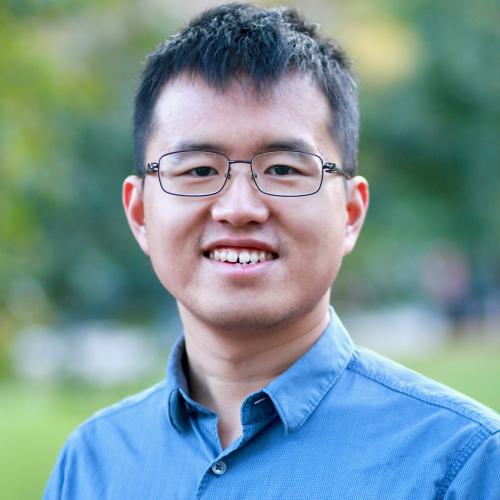
Professor Qingyuan Zhao is a University Assistant Professor in Statistics at the Department of Pure Mathematics and Mathematical Statistics, University of Cambridge. He previously held a postdoctoral fellowship at the Wharton School, University of Pennsylvania, and is currently affiliated with the Statistical Laboratory at Cambridge. Born in Wuhan, China, Zhao earned his BSc in Mathematics from the University of Science and Technology of China and a PhD in Statistics from Stanford University. Research Focus: His work centers on causal inference, particularly using Mendelian randomization and graphical models to analyze complex relationships in biomedical and social sciences. He develops statistical methodologies for observational studies, adaptive experiments, and high-dimensional data analysis. Publications: Zhao's recent research explores causal mediation analysis, off-policy evaluation, confounder selection, and sensitivity analysis in Mendelian randomization. His methodological contributions include matrix algebra for graphical models and iterative graph expansion techniques. Academic Roles: He serves as a Fellow and Director of Studies in Mathematics at his college, contributing to education and academic governance in mathematics and statistics.
Linda Zhao is a Professor of Statistics and Data Science at the Wharton School of the University of Pennsylvania. She has been a faculty member at Wharton since 1994, bringing extensive expertise in statistical methodology and data science applications. Her work bridges theoretical statistics with practical applications across diverse domains including business, healthcare, and public policy. Linda Zhao obtained her BS degree from the Mathematics department of Nankai University, China, followed by a Ph.D. in Mathematics/Statistics from Cornell University. After completing her doctoral studies, she taught at UCLA for one year before joining the Wharton School in 1994. BS in Mathematics, Nankai University, China Ph.D. in Mathematics/Statistics, Cornell University One year teaching position at UCLA Professor Zhao's research spans a broad range of statistical methodology and applications. Her primary interests include statistical machine learning, data-driven decision-making, bandits, reinforcement learning, crowdsourcing, post-selection inference, network analysis, nonparametric Bayes, revenue management, equity ownership, and education in data science. She is particularly known for her work on statistical inference after model selection and applications of statistical methods to business and economic problems. Current ongoing projects focus on equity networks, inference for high-dimensional data, data with measurement errors, and post-model selection inferences. Her research often involves collaborations across disciplines, addressing complex real-world problems with sophisticated statistical approaches. Professor Zhao's publications demonstrate a consistent focus on advancing statistical methodology while addressing practical applications. Her early work focused on theoretical aspects of nonparametric statistics and Bayesian methods, while more recent publications emphasize post-selection inference, statistical learning, and applications to business and economic problems. A notable trend is her increasing focus on high-dimensional data analysis and network structures, particularly in the context of Chinese state ownership and equity networks. Her collaborative work, often with prominent statisticians like Lawrence Brown, Richard Berk, and Andreas Buja, has significantly contributed to the development of valid post-selection inference methods. Additionally, her applied work spans diverse areas including call center analysis, medical diagnosis, and reinforcement learning applications. Professor Zhao's contributions to statistics and data science have been recognized with several prestigious honors: Wharton MBA Teaching Excellence Award, 2021 Fellow, Institute of Mathematical Statistics, 2017 While specific details about Professor Zhao's advising and grant history aren't explicitly provided in the text, her extensive publication record suggests significant mentorship of graduate students and postdoctoral researchers. Her involvement in multiple collaborative research projects indicates successful grant funding from various sources to support her research agenda. Professor Zhao's teaching portfolio includes advanced courses in data mining and statistical methodology, suggesting she plays an important role in training the next generation of data scientists. Though specific laboratory affiliations aren't mentioned in the provided text, Professor Zhao appears to be actively involved in multiple research collaborations. Her work on Chinese equity networks suggests collaboration with economists and business researchers, while her statistical methodology work involves collaborations with leading theoretical statisticians. She may be affiliated with research centers at Wharton focused on data science and business analytics.
Tony Cai is the Daniel H. Silberberg Professor and Professor of Statistics and Data Science at The Wharton School, University of Pennsylvania. He also holds appointments as Professor in the Applied Mathematics & Computational Science Graduate Group and Associate Scholar in the Department of Biostatistics, Epidemiology, & Informatics at the Perelman School of Medicine. Education: PhD from Cornell University (1996) Research Interests: Statistical machine learning High-dimensional statistics Large-scale inference Functional data analysis Statistical decision theory Nonparametric function estimation Applications to genomics and financial econometrics His recent research focuses on federated learning, differential privacy, and high-dimensional covariance estimation. He has developed adaptive algorithms for optimal estimation under communication and privacy constraints. Scientific Awards: AAAS Fellow (2024) Institute of Mathematical Statistics (IMS) President (2023-2025) Noether Distinguished Scholar Award (2023) Frontiers of Science Award (2023) Laplace Lecturer (2021) ICSA Distinguished Achievement Award (2019) Peter Whittle Lecturer (2018) ICCM Best Paper Award (2018) COPSS Presidents' Award (2008) Fellow, IMS (2006) Tony Cai serves on the editorial boards of leading journals, including the Annals of Statistics, Journal of the Royal Statistical Society (Series B), and the American Statistical Association. He is also a member of professional societies such as IMS, IEEE, ASA, ICSA, and AAAS.
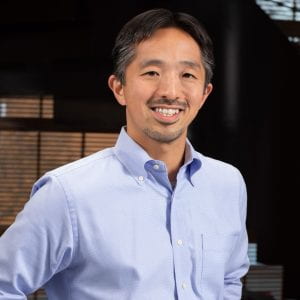
Mark G. Low is the Walter C. Bladstrom Professor of Statistics and Data Science at the Wharton School of the University of Pennsylvania, where he has been on faculty since 1991. He co-advises the Statistics and Data Science Undergraduate Concentration and Minor and has held visiting appointments at the University of California, Berkeley, and the University of Illinois. Education: PhD from Cornell University (1989), ScB from Brown University (1983) Research Interests: His work focuses on decision theory, nonparametric function estimation, and statistical inference, with recent publications addressing adaptive confidence bands, sparse normal mixtures, and risk trade-offs in nonparametric regression. He emphasizes methodologies that balance global and local statistical guarantees. Teaching: He teaches courses such as Stochastic Processes, Probability, and Advanced Statistical Inference, covering topics from Markov Chains to Bayesian credible sets. His pedagogical approach integrates mathematical rigor with interdisciplinary applications in economics and physics. Scientific Awards: Wharton Teaching Excellence Award (2020) Wharton Undergraduate Teaching Award (2013) Medallion Lecturer, Institute of Mathematical Statistics (2011, 2013) Fellow, Institute of Mathematical Statistics (2008) NSF Mathematical Sciences Post-Doctoral Fellow (1991)
Jeremy Oakley is Professor of Statistics and Head of the School of Mathematical and Physical Sciences at the University of Sheffield. His work spans Bayesian statistics, uncertainty quantification for complex computer models, expert elicitation of probability distributions, and health-economic applications. Research Interests Bayesian statistics and inference Uncertainty quantification (UQ) for computer models Expert elicitation of probability distributions Health-economic modelling He co-developed the Sheffield Elicitation Framework (SHELF) , a widely-used set of protocols and software tools for structured expert judgement. Teaching & Supervision Professor Oakley teaches undergraduate and postgraduate statistics modules and supervises PhD students within SoMaS and in collaboration with other departments, focusing on UQ and expert-elicitation topics. Contact Email: j.oakley@sheffield.ac.uk
Remo Kretschmann is a Postdoctoral Researcher at the Institute of Mathematics , University of Potsdam, specializing in Uncertainty Quantification . He is associated with project A04 of the collaborative research centre SFB 1294 Data Assimilation . His academic journey includes doctoral studies at Universität Duisburg-Essen and a master’s/bachelor’s at Technische Universität München. Education Doctorate in Mathematics (2019), Universität Duisburg-Essen Master of Science in Mathematics (2012), Technische Universität München Bachelor of Science in Mathematics (2009), Technische Universität München His research focuses on statistical inverse problems with high-dimensional parameter spaces, non-Gaussian noise models , and Bayesian hypothesis testing . He investigates regularization methods in nonparametric Bayesian inference and Gaussian approximation of posterior distributions for inverse problems. Selected research trends include: Bayesian hypothesis testing for inverse problems Optimal regularization techniques in statistical inference Laplace approximation error analysis Posterior mode characterization Applications in imaging and deconvolution He has contributed to open-source software for sampling in inverse problems and numerical simulations for regularized hypothesis testing.
Christoph Breunig is a Professor at the Department of Economics, University of Bonn, with research focused on Econometrics. He is affiliated with the Institute for Financial Economics & Statistics at the university. His primary research interests include Econometrics, Statistics, Nonparametric Methods, Instrumental Variables, Treatment Effects, and Missing Data Analysis. Professor Breunig's work demonstrates a strong focus on methodological developments in econometric theory with applications to economic questions. His publication record shows a consistent output of high-quality research in top econometrics journals including Econometrica, Journal of Econometrics, and Quantitative Economics. His research trajectory demonstrates progression from foundational work on nonparametric methods and instrumental variables toward more complex problems involving treatment effects, missing data, and high-dimensional settings. Professor Breunig has established himself as a contributor to the field of econometric theory with particular expertise in nonparametric and semiparametric methods. His work often addresses identification and estimation challenges in complex economic models.
Hassan Maatouk is a Lecturer at the University of Perpignan, affiliated with the UFR SEE (Science, Economics, and Engineering) faculty, specifically within the MATH-INFO Department. He is a member of the LAMPS (Multidisciplinary Modeling and Simulation Laboratory) where he conducts research in applied mathematics and statistics. His primary research interests include: Data Science and Statistical Learning Nonparametric and Bayesian Statistics High-dimensional Statistical Modeling Computational Statistics and Gaussian Processes MCMC Methods and Uncertainty Quantification Dr. Maatouk's research focuses on non-parametric statistics and high-dimensional modeling with structured constraints such as monotonicity, bounds, and convexity. His work aims to improve prediction models based on Gaussian processes and quantify uncertainties in simulations, with applications spanning econometrics, microbiology, chemistry, and industrial contexts. His recent publications demonstrate a strong emphasis on constrained Gaussian processes, truncated multivariate normal distributions, and scalable Bayesian methods for large datasets, with increasing citation impact (65 citations in 2025 alone). His scholarly impact is evidenced by 362 total citations and an h-index of 8. His most influential works include 'Gaussian process emulators for computer experiments with inequality constraints' (123 citations) and 'Kriging of financial term-structures' (70 citations). Dr. Maatouk collaborates with researchers across France including Xavier Bay from École des Mines de Saint-Étienne, Areski Cousin from the University of Strasbourg, and Yann Richet from IRSN. His interdisciplinary approach extends to materials science as shown by his co-authored work on ZnO nanoparticles' antibacterial properties.
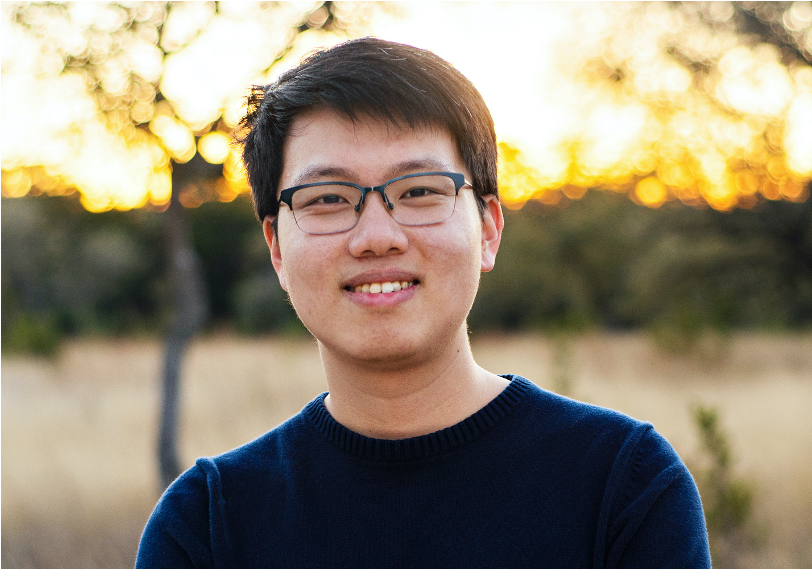
Kevin Tian is an Assistant Professor in the Department of Computer Science at the University of Texas at Austin. His research focuses on fundamental algorithmic problems in modern data science, particularly in continuous optimization and high-dimensional statistics. He also has broad interests in trustworthy machine learning, including robustness, privacy, and fairness. Dr. Tian completed his Ph.D. in Computer Science at Stanford University from 2016-2022, where he was advised by Aaron Sidford. Prior to that, he earned his B.S. in Mathematics and Computer Science at MIT from 2012-2015. From 2022-2023, he was a Postdoctoral Researcher in the Machine Learning Foundations group at Microsoft Research. Dr. Tian's research spans several areas of theoretical computer science and machine learning. His work primarily focuses on developing efficient algorithms for high-dimensional statistical problems, with particular emphasis on continuous optimization methods. He has made significant contributions to areas such as robust statistics, differential privacy, and graph algorithms. His research often bridges the gap between theoretical guarantees and practical applicability, developing algorithms that are both theoretically sound and practically efficient. His recent publications demonstrate a strong focus on developing algorithms that address challenges in modern data science, including robustness against adversarial contamination, efficient methods for high-dimensional statistics, and privacy-preserving computation. His work frequently appears in top theoretical computer science conferences such as STOC, FOCS, and COLT, as well as leading machine learning venues like NeurIPS and ICML. Dr. Tian has received numerous honors and awards for his research, including: 2021 Simons-Berkeley VMware Research Fellowship 2021 Google Ph.D. Fellowship 2019, 2020, 2021 Oral presentations at Neural Information Processing Systems 2018 SICOMP Special Issue invite, Foundations of Computer Science 2016 NSF Graduate Research Fellowship Arthur Samuel Award for Best Doctoral Thesis in Computer Science (2022) Dr. Tian advises multiple Ph.D., M.S., and B.S. students at UT Austin, with research spanning theoretical computer science and machine learning. His current Ph.D. students include Anming Gu, Syamantak Kumar (co-advised with Purnamrita Sarkar), Chutong Yang, and Yusong Zhu (co-advised with Eric Price). His research has been generously funded by prestigious fellowships including the NSF Graduate Research Fellowship, Google Ph.D. Fellowship, and VMware Research Fellowship. At UT Austin, Dr. Tian teaches courses including CS 331: Algorithms and Complexity and CS 395T: Continuous Algorithms. He is actively involved in the theoretical computer science community, serving on program committees for conferences such as COLT, STOC, and ICML.
Will Handley is an Associate Professor at the Institute of Astronomy , University of Cambridge, and a Royal Society University Research Fellow. His work bridges cosmology , Bayesian statistics , and machine learning to address fundamental questions about the Universe's origin and fate. Faculty member at the University of Cambridge Co-investigator on the REACH radio telescope project Convenor of the GAMBIT cosmology working group Research Interests : Specializing in Bayesian machine learning and nested sampling , Handley develops tools to analyze complex astrophysical datasets. His group's algorithms enable constraints on dark matter , dark energy , and inflationary models , with applications to gravitational wave detection , exoplanet discovery , and even protein folding . Recent Publications highlight a focus on 21cm cosmology , cosmological tensions , and AI-driven inference . His work spans high-dimensional parameter estimation , nonparametric dark energy modeling , and machine learning for parity violation detection in large-scale structure. Scientific Awards : Royal Society University Research Fellowship Advising & Collaborations : PhD student: Wei-Ning Deng Collaborations: REACH , GAMBIT , Flatiron Institute Labs & Teams : Leads the Handley Research Group , which develops open-source tools like PolyChord , anesthetic , and GLOBALEMU . Actively involved in 21cm signal extraction and gravitational wave data analysis .
Kosuke Imai is a Professor in the Department of Government and Department of Statistics at Harvard University . He is also an affiliate of the Institute for Quantitative Social Science . Previously, he was a faculty member at Princeton University for 15 years, where he founded the Program in Statistics and Machine Learning. During the 2024-2025 academic year, he is on sabbatical at Nuffield College, University of Oxford. Education: PhD in Political Science from Harvard University (2005) Appointment: Professor (2018-present) at Harvard Imai specializes in statistical and machine learning methods for social science research. His work spans causal inference , computational social science , survey methodology , and policy learning . Recent focuses include heterogeneous treatment effects with high-dimensional data, algorithmic redistricting , and fairness analysis using generative AI. His research has produced 15+ recent articles in top journals like the Proceedings of the National Academy of Sciences , Journal of the American Statistical Association , and Political Analysis . Topics include AI-assisted decision-making , racial disparity estimation , and spatiotemporal causal modeling . He also develops open-source software tools such as FindIt and redist for causal analysis. Scientific Awards: Clarivate Highly Cited Researcher (2024) Political Analysis Editors' Choice Award (2011) Tom Ten Have Memorial Award (2013) Contact: imai@harvard.edu | Office: CGIS Knafel Building, Room 306, 1737 Cambridge Street, Cambridge, MA 02138
Martin J. Wainwright is the Cecil H. Green Professor at the Massachusetts Institute of Technology (MIT) , affiliated with the Department of Electrical Engineering and Computer Science (EECS) and the Department of Mathematics . He is also associated with the Statistics and Data Science Center , the Laboratory for Information and Decision Systems , and the Institute for Data, Systems and Society . His research bridges machine learning , high-dimensional statistics , and information theory , with a focus on theoretical guarantees for algorithms in reinforcement learning, optimization, and graphical models. Books : High-Dimensional Statistics: A Non-Asymptotic Viewpoint (2019, Cambridge University Press), Statistical Learning with Sparsity: The Lasso and Generalizations (2015, CRC Press). Research Themes : Statistical and computational trade-offs, robustness in adaptive learning, posterior contraction rates, and decentralized estimation. His recent work explores non-asymptotic analysis , stochastic approximation , and instance-dependent guarantees in reinforcement learning and optimization. Key contributions include minimax optimality in value estimation, variance-reduced Q-learning , and adaptive inference under elliptical constraints. Awards : IMS Medallion Lecturer , COPSS Presidents' Award , Loève Prize in Probability , Fellow of the Institute of Mathematical Statistics , NIPS Outstanding Paper Award .
Stefan Sperlich is a Full Professor and Director of the Research Institute for Statistics and Information Science at the University of Geneva's Geneva School of Economics and Management. He holds dual appointments in the Department of Econometrics and Statistics, with affiliations in both the Research Institute for Statistics and Information Science and the Institute of Economics and Econometrics. Dr. Sperlich earned his diploma in mathematics from the University of Göttingen and completed his PhD in economics at Humboldt University of Berlin. His academic career includes professorships at University Carlos III de Madrid (1998-2006) and the University of Göttingen (2006-2010), before joining the University of Geneva in 2010. Professor Sperlich's research spans nonparametric and semiparametric statistics , small area estimation , and impact evaluation methods . His work bridges theoretical econometrics with practical applications in development economics, policy evaluation, and poverty measurement. He has made significant contributions to specification testing, causal inference methodologies, and the development of robust statistical techniques for small area estimation. His research often addresses real-world problems through collaborations with international institutions and development programs. His recent publications reveal a strong focus on advancing methodological frameworks for small area statistics, causal inference, and nonparametric estimation. Key themes include developing robust inference techniques for linear mixed models, improving bandwidth selection methods, and creating model-free approaches to difference-in-differences estimation. His work increasingly integrates computational statistics with traditional econometric methods to address challenges in big data analysis and distributed data environments. Professor Sperlich has received numerous accolades including: Tjalling C. Koopmans Econometric Theory Prize (2000-2002) Augusto Gonzalez Linares award (2014) for attracting international talent Elected member of the International Statistical Institute (since 2025) Special rewards from the Economics Department at University Carlos III de Madrid (2004-2005) Grants from the Institute Flores de Lemus (2001-2003) As an advisor and researcher, Professor Sperlich has supervised numerous graduate students and led significant research initiatives. He co-founded the research center 'Poverty, Equity and Growth in Developing Countries' at the University of Göttingen and serves as a research fellow at the Center for Evaluation and Development in Mannheim, Germany. His consultancy work spans regional, national, and international institutions, with participation in development programs like EUROSOCIAL and UN assessment reports. He has secured multiple research grants supporting his work in statistical methodology and economic applications. Professor Sperlich leads research teams focused on nonparametric methods, small area statistics, and impact evaluation. His research group develops innovative statistical approaches for poverty mapping, causal inference, and composite indicator construction. The team maintains strong connections with statistical offices and international organizations, ensuring their methodological advances have practical applications in policy development and evaluation.
Derek Cole Aguiar serves as an Assistant Professor in the Computer Science and Engineering Department at the University of Connecticut's School of Engineering. His academic journey includes B.S. degrees in Computer Engineering and Computer Science from the University of Rhode Island, a Ph.D. in Computer Science from Brown University under Professor Sorin Istrail, and postdoctoral research at Princeton University with Professor Barbara Engelhardt. University of Rhode Island: B.S. Computer Engineering & Computer Science Brown University: Ph.D. Computer Science Princeton University: Postdoctoral Research Dr. Aguiar's research focuses on developing probabilistic machine learning models and combinatorial algorithms for analyzing high-dimensional genomic data, with applications to complex diseases. His work bridges theoretical computer science with practical biological applications, particularly in genomics, transcriptomics, population genetics, and immunology. He develops foundational methods for haplotype assembly, isoform discovery, variant calling, and cis-regulatory element analysis. Analysis of his publication record reveals a consistent trajectory in computational genomics, beginning with haplotype assembly algorithms and expanding into RNA-seq analysis, variant detection, and regulatory genomics. His work demonstrates a progression from algorithmic development to increasingly sophisticated probabilistic modeling approaches applied to complex biological problems. The tools he develops (HapCompass, BIISQ, Tractatus, DELISHUS, CYRENE) have become established methods in their respective subfields. Dr. Aguiar actively seeks motivated PhD students interested in foundational research at the intersection of statistics, probabilistic machine learning, and algorithms applied to genomics and related fields. His teaching portfolio includes advanced courses in Bayesian Machine Learning (CSE5825) and Algorithms & Complexity (CSE3500), where he emphasizes the three fundamental components of probabilistic modeling: model specification, inference algorithms, and model checking. His laboratory develops several widely-used bioinformatics tools including HapCompass for haplotype assembly, BIISQ for isoform discovery, Tractatus for identity-by-descent analysis, DELISHUS for variant calling, and CYRENE for cis-regulatory element visualization. These tools represent significant contributions to the computational genomics community and demonstrate his lab's focus on developing practical, scalable solutions to challenging biological problems.
Sanjeev R. Kulkarni is the William R. Kenan, Jr., Professor of Electrical and Computer Engineering and Professor of Operations Research and Financial Engineering at Princeton University. He serves as Dean of the Faculty and is affiliated with the Department of Philosophy and the Center for Statistics and Machine Learning. His career spans roles as Dean of the Graduate School (2014-2017), Director of the Keller Center (2011-2014), and Master of Butler College (2004-2012). His research intersects machine learning , information theory , and wireless networks , focusing on statistical pattern recognition, nonparametric estimation, and econometrics. He has pioneered work in universal information estimation , energy-efficient wireless communication , and distributed learning in sensor networks. Recent publications highlight his work in forecast aggregation , robust geometric fitting , and variational Bayesian methods . These span communications , machine learning , and signal processing applications. Scientific awards include the ARO Young Investigator Award , NSF Young Investigator Award , and IEEE Fellowship . He has received Princeton's President's Award for Distinguished Teaching and multiple Undergraduate Engineering Council Excellence Awards . Prof. Kulkarni has advised 19 PhD students, including notable alumni at IBM, Google, Amazon, and RAND Corporation. His teaching spans four departments and includes courses like Learning Theory and Epistemology (cross-listed with Philosophy) and Wireless Revolution (telecom policy).