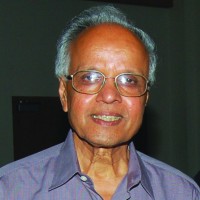
J.N.K. Rao is a Distinguished Research Professor in the Department of Mathematics & Statistics at Carleton University. A leading expert in survey sampling and statistical inference, he has made groundbreaking contributions to small area estimation (SAE) and data integration methodologies. Research Focus: Specializes in survey methodology, poverty mapping, Bayesian inference, and empirical likelihood techniques. Honors: Gold Medal of the Statistical Society of Canada (1993), Fellow of the Royal Society of Canada (1991), Waksberg Award (2005), SAE Outstanding Achievement Medal (2017). His recent work explores model-based SAE, combining probability and non-probability samples, and improving inference validity through robust calibration. Awards highlight his decades-long impact on statistical theory and practice. Email: jrao@math.carleton.ca
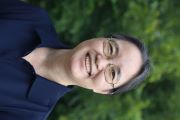
Grace Yi is a Professor at the University of Western Ontario and holds a Tier I Canada Research Chair in Data Science. She is affiliated with the Departments of Statistical and Actuarial Sciences and Computer Science. Her research focuses on statistical methodology addressing challenges in measurement error, causal inference, missing data, and machine learning. Yi has authored influential works, including the monograph Statistical Analysis with Measurement Error or Misclassification and co-edited Handbook of Measurement Error Models . She has served as Co-Editor-in-Chief of The Electronic Journal of Statistics and President of the Statistical Society of Canada. Her accolades include the CRM-SSC Prize (2010), Fellowships from the IMS and ASA, and leadership roles in professional societies. Education: Ph.D. in Statistics (University of Toronto, 2000), M.A. in Statistics (York University, 1996), M.Sc. and B.Sc. in Mathematics (Sichuan University, China). Research Interests: Measurement error models, causal inference, high-dimensional data analysis, statistical machine learning. Yi’s work bridges theoretical advancements and practical applications, particularly in handling noisy data across disciplines like epidemiology and public health. Her recent studies include analysis of COVID-19 data dynamics and quarantine strategies. She has supervised numerous students and contributed to software development, including R packages like augSIMEX and swgee .
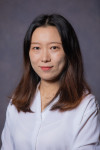
Liqun Diao is an Associate Professor (Tenured) in the Department of Statistics and Actuarial Science at the University of Waterloo. He holds affiliations with the Health Data Science Lab and the Waterloo Artificial Intelligence Institute. His research focuses on developing statistical methods and machine learning algorithms for applications in medicine, public health, and insurance. Education: B.Econ. in Statistics, Renmin University of China (2007) M.Math. in Statistics (Biostatistics), University of Waterloo (2009) Ph.D. in Statistics (Biostatistics), University of Waterloo (2013) Research Interests: Recursive partitioning and tree-based methods for survival and health data Causal inference and missing data methodologies Bayesian nonparametric models and copula dependence structures Mortality forecasting and actuarial science applications Awards: 2013 Pierre Robillard Award (best doctoral thesis in Canadian statistics) 2024 Outstanding Performance and Teaching Awards at UW Professional Activities: Led research groups in health data science and AI Recipient of multiple grants from NSERC and industry partners Advises graduate students in statistics and actuarial science Labs/Teams: Active contributor to the Health Data Science Lab and Waterloo AI Institute, focusing on applying statistical innovations to real-world health and insurance challenges.
Hugh Chipman is a Professor in the Department of Mathematics and Statistics at Acadia University , Canada. He holds a BScH (Acadia), MMath and PhD (University of Waterloo), and is a P.Stat. member of the Statistical Society of Canada. Education: BScH, Acadia University MMath, University of Waterloo PhD, University of Waterloo P.Stat. (Professional Statistician) Research Interests: Dr. Chipman specializes in statistical learning and data mining with applications to complex data structures. Key areas include Bayesian ensemble methods , tree-based models , design of experiments , network analysis , and high-dimensional data problems. He has contributed to drug discovery and functional data monitoring through computational statistics. Recent Talks: His 2024 presentation at UNC Chapel Hill focused on simulation studies for experimental design. Earlier work (2015) addressed big data education at Dalhousie University, while 2011-2014 talks covered active learning and network data mining at institutions like Harvard and MITACS. Scientific Awards: Co-organizer of NSERC-funded workshops Contributed to major statistical learning summer schools (e.g., AARMS 2014) Teaching: Courses include Statistics I and Design and Analysis of Experiments . He maintains software tools like BART (Bayesian Additive Regression Trees) and hybrid hierarchical clustering algorithms.
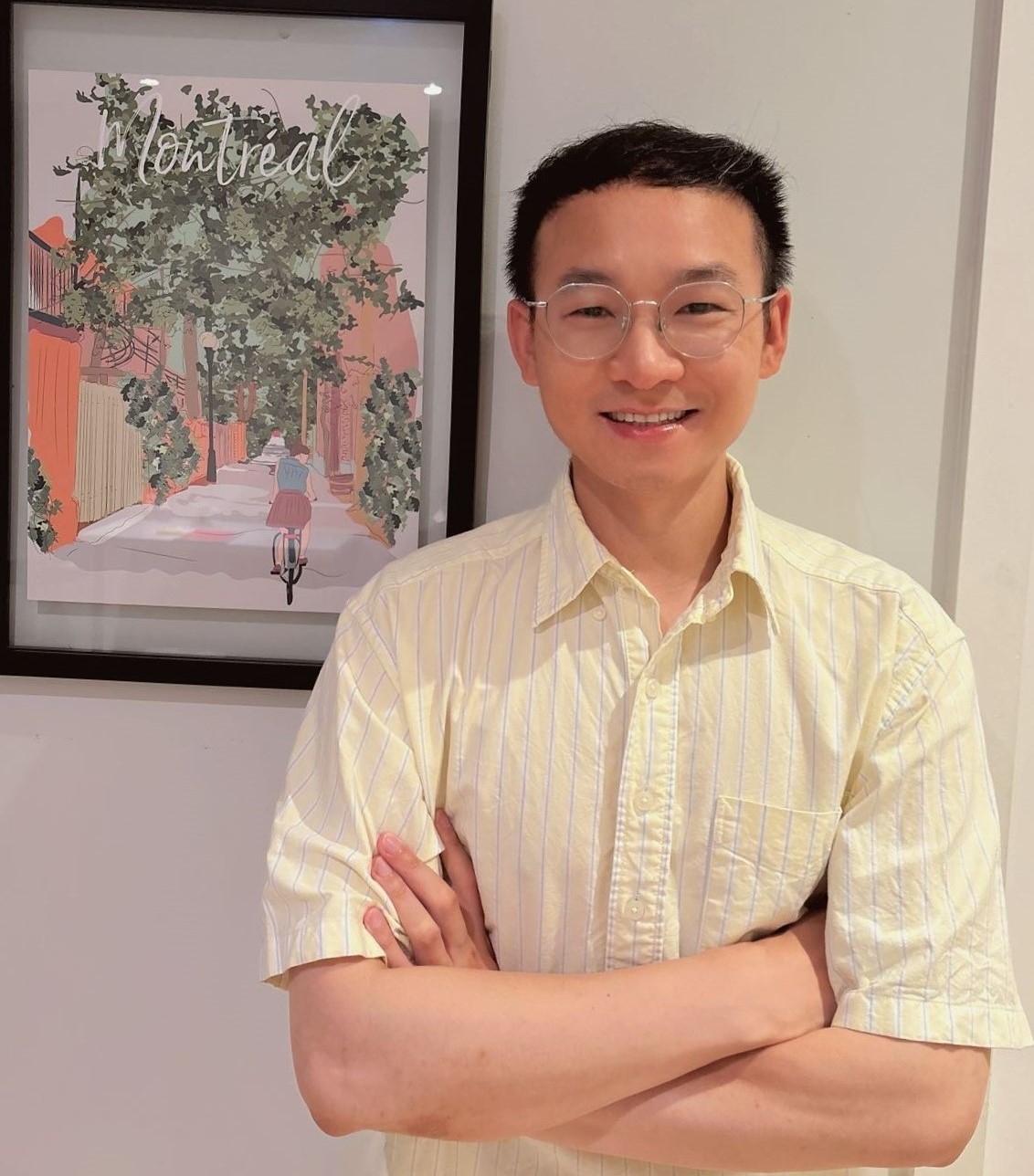
Junxi Zhang is an Assistant Professor in the Department of Mathematics & Statistics at Concordia University (Montreal, Canada). His research focuses on Bayesian nonparametric models, fairness in machine learning, and reinforcement learning. He holds a PhD in Statistics from the University of Alberta and has previously served as a postdoctoral fellow at the same institution. Education: PhD (Statistics, University of Alberta), MS (Mathematics, University of Kansas), BS (Statistics, Huazhong University of Science and Technology) Research interests include: Bayesian nonparametric models: asymptotic analysis, random measures, hierarchical models Fairness in machine learning: fair prediction models, bias measurement, health science applications Reinforcement learning: optimal control problems, temporal resolution trade-offs Additional interests: foundation models, time series analysis, survival analysis His recent publications address fairness in precision medicine, social bias in labor market text generation, and mathematical foundations of Bayesian nonparametric models. He is actively seeking graduate students in Mathematics and Statistics at the MA, MSc, and PhD levels for collaborative research.
Harry Joe is a Professor in the Department of Statistics at the University of British Columbia (Vancouver Campus). His primary research focuses on dependence modeling, copula theory, multivariate analysis, and applications in biostatistics, finance, and psychometrics. He has advised students including Xiaoting Li, Xinyao Fan, and Pavel Krupskiy. Research Interests: - Advanced copula constructions (e.g., vine copulas) - Extreme value theory and tail dependence - Applications in financial risk, biomedical research, and educational measurement - Multivariate time series analysis and non-Gaussian models Publications highlight contributions to copula-based classification methods (2024), factor copula models (2015), and dynamic dependence modeling (2020). His work bridges theoretical developments with practical applications across disciplines. Teaching and advising emphasize methodological innovation. Current research explores high-dimensional dependence structures and computational methods for complex data. No lab/team affiliations explicitly noted in provided materials.
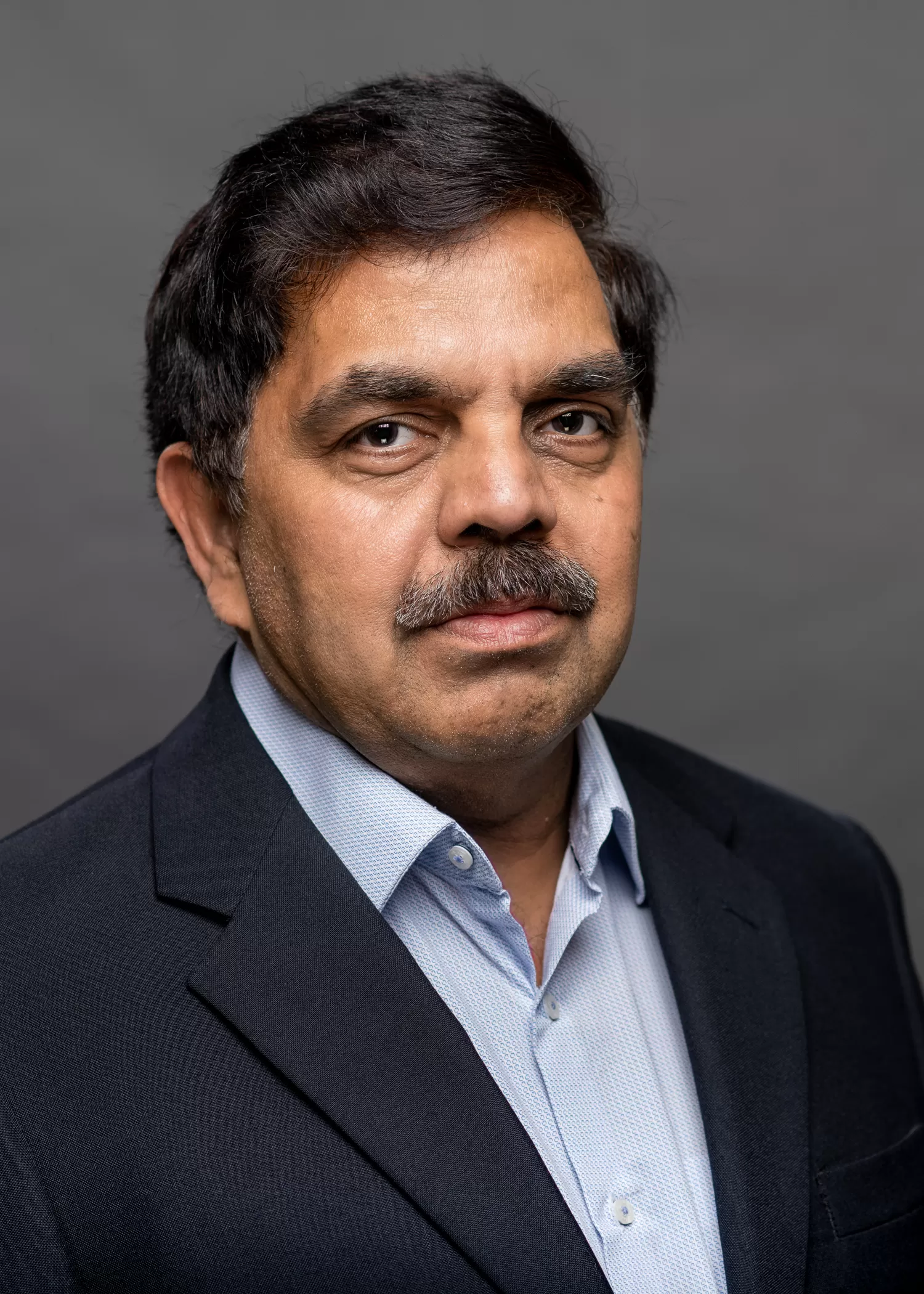
Asokan Variyath is a Professor of Statistics at Memorial University of Newfoundland, specializing in experimental design, statistical process control, and educational statistics. Education: Ph.D. in Statistics, University of Waterloo (2006) S.D.P Fellow (SQC & OR), Indian Statistical Institute (1991) Post Graduate Diploma in SQC & OR, Indian Statistical Institute (1988) M.Sc. Agricultural Statistics, Kerala Agricultural University (1987) Research Interests: Develops novel statistical methods in experimental design, quality control, and multivariate analysis. Applied research spans fisheries management, reliability engineering, and computational statistics. Created educational statistical applets to enhance student learning. Publication Trends: Recent publications focus on Bayesian methods, statistical education tools, and applications in fluid dynamics. Methodological work emphasizes variable selection, longitudinal data analysis, and nonparametric techniques. Leadership: Director of Statistical Consultancy Centre since 2010. Former Chair of Master of Data Science program and Deputy Head for Graduate Studies. Received Dean's Service Awards in 2023 and 2024.
Dr. Angelo J. Canty is an Associate Professor in the Department of Mathematics and Statistics at McMaster University, Canada. His research focuses on computational statistics, genetic data analysis, and resampling methods. B.Sc. (1989) from University College Cork, Ireland M.Sc. (1991) and Ph.D. (1995) from the University of Toronto Postdoctoral work at University of Oxford and EPFL, Lausanne Assistant Professor at Concordia University (1998–2001) before joining McMaster His research spans computational statistics, with key contributions to: Markov Chain Monte Carlo convergence diagnostics Bootstrap and resampling techniques Saddlepoint approximations in statistical inference Efficient algorithm implementation for survey data analysis Genetic data analysis (microarrays, GWAS) His publications highlight a focus on automating convergence assessment (1994–1999), resampling for labor statistics (1999), and saddlepoint approximations in resampling (1996–1999). He developed an influential S-Plus library for resampling methods. Teaching includes: Statistics 4C03/6C03: Generalized Linear Models (Undergraduate/Graduate) Statistics 752: Linear Models and Experimental Design (Graduate)
Andrei Volodin is a Professor in the Department of Mathematics and Statistics at the University of Regina, Canada. He serves as the Co-op Work/Study Coordinator and has an extensive publication record spanning probability theory, statistical inference, and applied statistics. His research focuses on limit theorems, bootstrap methods, and distributional analysis with applications to quality control and healthcare economics.
Jun Zhao is a tenure-track Assistant Professor of Economics at York University's Department of Economics, affiliated with the Faculty of Liberal Arts & Professional Studies. Her research focuses on micro-econometrics, empirical industrial organization, causal inference, and political economy. She holds a Ph.D. in Economics from Vanderbilt University, alongside MA and BA in Economics and a BS in Mathematics from Renmin University of China. Education: Ph.D. Economics, Vanderbilt University MA and BA Economics, Renmin University of China BS Mathematics, Renmin University of China Her research explores topics such as campaign financing effects on U.S. elections, nonparametric identification in Bayesian games, and causal inference methodologies. Recent work includes contributions to Journal of Econometrics . No awards listed. No advising or grant details provided beyond her research focus areas.
Saifuddin Syed is a Florence Nightingale Bicentennial Fellow in computational statistics and machine learning at the University of Oxford’s Department of Statistics. He is also a member of the Algorithms and Inference Working Group for the Next Generation Event Horizon Telescope (ngEHT). His research focuses on developing robust and scalable algorithms for statistical inference and generative modeling, with applications in astrophysics, computational biology, and nuclear fusion. Syed holds a PhD in Statistics from the University of British Columbia (2022), an MSc in Mathematics (2016), and a BMath in Pure & Applied Mathematics from the University of Waterloo (2014). His research interests include parallel tempering, annealing algorithms, scalable Bayesian inference, and AI-driven scientific discovery. He has contributed to high-impact projects such as imaging black holes (e.g., Sagittarius A* and M87), modeling genetic variations in malaria, and analyzing plasma dynamics in nuclear fusion reactors. Syed’s work has been recognized with awards like the Pierre Robillard Award and the Cecil Graham Doctoral Dissertation Award. Syed’s methodologies, such as non-reversible parallel tempering (NRPT), have been implemented in software like Pigeons.jl, enabling distributed sampling for complex statistical problems. He collaborates with interdisciplinary teams, including the Event Horizon Telescope collaboration, to advance computational methods for challenging scientific problems. Awards: Pierre Robillard Award, Cecil Graham Doctoral Dissertation Award, Savage Award Honourable Mention Key Projects: Black hole imaging, malaria genetics modeling, plasma dynamics inference Software: Pigeons.jl (distributed sampling framework)
Syed Ejaz Ahmed is a Professor of Mathematics and Statistics at Brock University, holding academic leadership roles including Dean of the Faculty of Mathematics and Science. His research focuses on high-dimensional data analysis, predictive modeling, and statistical machine learning, with applications across disciplines. He has held professorships at multiple institutions, including the University of Windsor and University of Regina, and has extensive editorial roles in journals like Technometrics. Education: PhD, Carleton University MSc, University of Guelph MSc, University of Karachi BSc (Honors), University of Karachi Research Interests: Dr. Ahmed’s work spans big data analytics, statistical inference, and applied statistics. He emphasizes developing methodologies for high-dimensional datasets and has contributed to fields like health data analysis, econometrics, and environmental statistics. His research has been funded by NSERC, CIHR, and industry collaborations. Awards: Fellow, American Statistical Association Fellow, Royal Statistical Society Bualuang ASEAN Chair Professorship Grand Prize Advancement Award (2019) Advising/Grants: He has supervised numerous PhD/Master’s students and postdoctoral fellows. Notable grants include continuous NSERC funding since 1987, including an OOO-ranked Discovery Grant (2017–2022). He also leads initiatives like the International Workshop on Perspectives on High-dimensional Data Analysis. Labs/Teams: Founded the Statistical Consulting and Research Center at the University of Windsor and contributed to programs like the Master of Science in Statistics at the University of Regina. He is a key figure in establishing actuarial science and data analytics programs in Canada.
Saman Muthukumarana is a Professor and Head of the Department of Statistics at the University of Manitoba. He joined the department in 2010 as an Assistant Professor, was promoted to Associate Professor in 2016, and became a full Professor in 2022. He holds a BSc (Honours Special) in Statistics from the University of Sri Jayewardenepura, an MSc from Simon Fraser University, and a PhD from Simon Fraser University under Dr. Tim Swartz, focusing on Bayesian methods and applications. His research emphasizes Bayesian methodologies for complex models, with applications in social networks, health studies, sports analytics, environmental science, and machine learning. He has secured over $8.4M in research funding from NSERC, Mitacs, CIHR, and other organizations. His work has been published in journals such as the Canadian Journal of Statistics, Machine Learning with Applications, and IEEE Open Journal of Instrumentation & Measurement. Dr. Muthukumarana’s research spans Bayesian computation, biostatistics, data science, and environmental statistics. He has contributed to anomaly detection in buildings, predictive modeling for public health (e.g., Long COVID), and ecological studies like salmon stock recruitment. His collaborative projects include developing statistical tools for microbiome analysis and improving machine learning approaches for imbalanced datasets. He also leads the Data Science Nexus, fostering interdisciplinary research. His grants and collaborations highlight his role in advancing statistical methodologies for real-world challenges, including health, energy efficiency, and ecological conservation. While no specific awards are listed, his extensive funding and publication record reflect his scholarly impact. He currently supervises graduate students and actively participates in academic leadership roles.
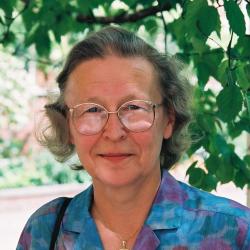
Constance van Eeden (1927–2021) was an Honorary Professor at the University of British Columbia (UBC) and held academic positions at institutions such as the University of Minnesota, Université de Montréal, and Université du Québec à Montréal. She contributed significantly to statistical theory, particularly in estimation in restricted parameter spaces, decision theory, and nonparametric methods. Her career spanned over five decades, during which she supervised numerous PhD and MSc students. Van Eeden was recognized with prestigious awards, including the 1990 Gold Medal from the Statistical Society of Canada and Fellowships from the Institute of Mathematical Statistics and American Statistical Association. Her research interests included foundational statistical problems such as parameter estimation under constraints, selection procedures, and robust estimation. She played a pivotal role in developing statistical programs in Canada and contributed to the establishment of the Constance van Eeden Endowment Fund at UBC, supporting statistical education and research initiatives. Van Eeden's work also involved editorial roles in journals like the Annals of Statistics and Canadian Journal of Statistics . Her legacy includes over 70 publications, including influential books and articles on estimation theory. The van Eeden Fund continues to support distinguished lectures, summer schools, and student awards, reflecting her commitment to advancing statistical science.
Lawrence Widrow is a Professor in the Department of Physics, Engineering Physics & Astronomy at Queen's University, where he leads research in theoretical astrophysics and cosmology. He earned his PhD from the University of Chicago under Michael Turner and held postdoctoral positions at Harvard-Smithsonian Center for Astrophysics and Canadian Institute for Theoretical Astrophysics. Research focuses on galactic dynamics, dark matter, and cosmic structure formation. Key contributions include: Galactoseismology (studying galactic disk perturbations via SEGUE/Gaia data), equilibrium modeling of the Milky Way, orbital torus imaging techniques, dark matter substructure analysis, and simulations of disk-halo interactions. Recent work explores pulsar-based dark matter detection, phase mixing theory, and fuzzy dark matter dynamics. Methodological innovations include the GalactICS code for equilibrium initial conditions, discrete spectral analysis of phase space, and MilkyWay@home distributed computing for stream reconstruction. No scientific awards, students, or laboratory affiliations are detailed in the provided information.