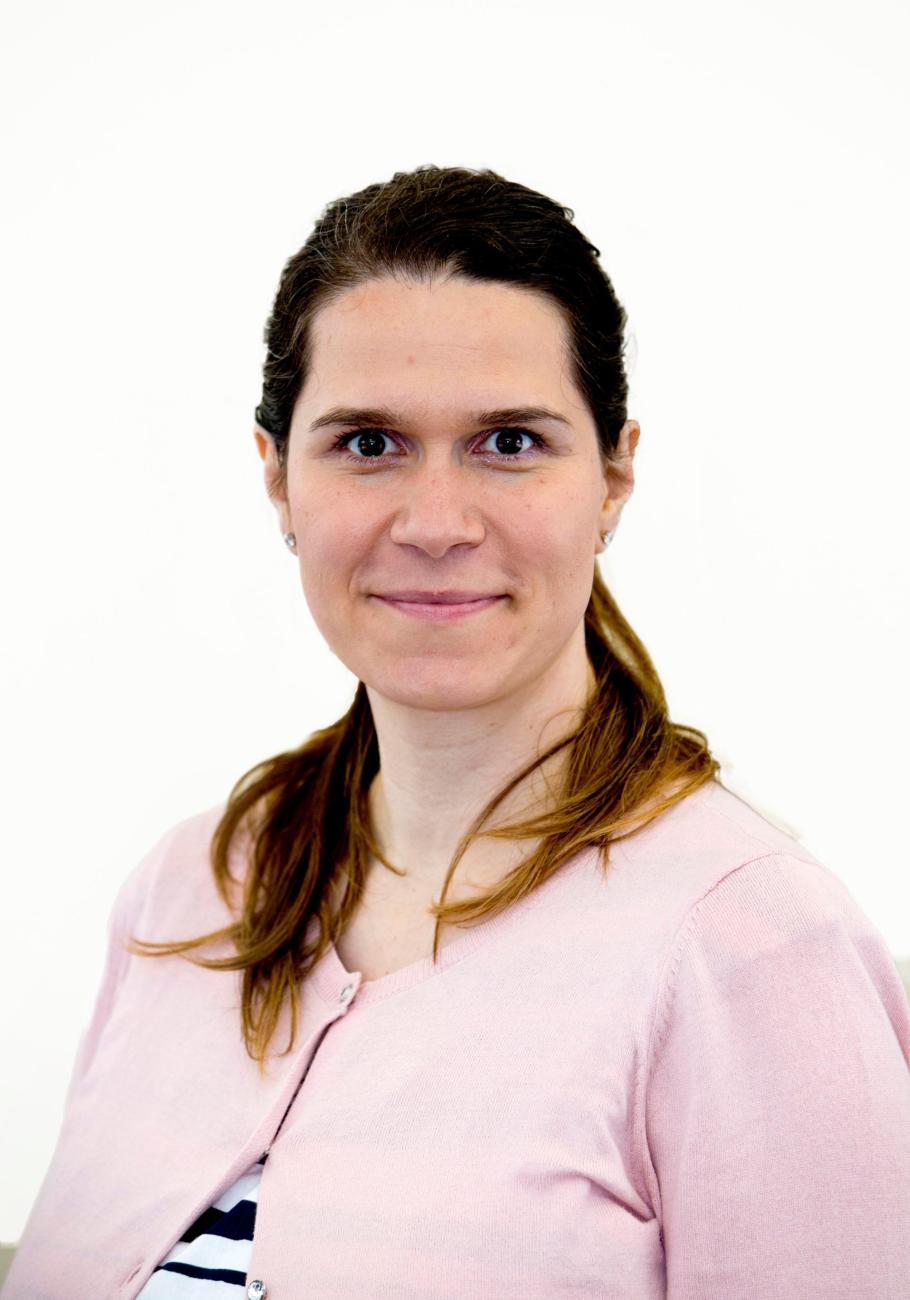
Dr. Marija Bezbradica serves as Associate Professor and COMBUS Programme Board Chair at Dublin City University's School of Computing. Her research bridges computational finance, educational analytics, and complex systems modeling. Key research areas include financial risk modeling using Bayesian methods, educational data mining for programming courses, and healthcare analytics for infection control. She holds affiliations with ADAPT (FinTech research), ARC-SYM (complex systems modeling), and Lero (software engineering). Recent publications demonstrate cross-disciplinary applications, spanning cryptocurrency market analysis, hospital readmission prediction, and synthetic data generation for medical conditions. Work frequently employs machine learning, graph-based methods, and advanced statistical modeling. No information is available regarding awards, supervised students, or specific laboratory facilities.
Trambak Banerjee is an Assistant Professor in the Analytics, Information, and Operations academic area at the University of Kansas School of Business. His research focuses on developing rigorous statistical methods for analyzing modern high-dimensional data where issues such as unobserved heterogeneity and noise accumulation impede inferences using standard methods. Education: Ph.D. in Business Administration (Statistics), Marshall School of Business, University of Southern California, 2020 M.S. in Mathematical Finance, University of Oxford, 2015 M.S. in Statistics, Indian Statistical Institute, Kolkata, 2006 B.S. in Statistics, St. Xavier's College, University of Calcutta, 2004 Dr. Banerjee's research interests span multiple domains including Shrinkage Estimation, Empirical Bayes Prediction, High Dimensional Penalized Likelihood Methods, and statistical applications in Virology, Consumer Behavior, and Marketing. His industry experience in financial services has significantly influenced his research approach, often connecting methodological development to concrete applied problems. His work bridges theoretical statistics with practical applications in health, marketing, and finance. His publication record demonstrates expertise in developing novel statistical frameworks for complex data problems, with a particular focus on nonparametric methods, empirical Bayes estimation, and testing procedures for heterogeneous data. His recent work includes significant contributions to statistical methods for single-cell virology, shrinkage prediction under complex covariance structures, and joint modeling approaches for user behavior in digital platforms. Dr. Banerjee has developed several software packages to implement his methodological contributions, including truh for nonparametric two-sample testing under heterogeneity, cezij for constrained zero-inflated joint modeling, and several R packages for adaptive shrinkage and clustering procedures. His work combines theoretical rigor with practical implementation, making his methods accessible to researchers across multiple disciplines.
Farzana Nasrin is an Assistant Professor in the Department of Mathematics at the University of Hawaiʻi at Mānoa, joining in 2020. She holds a Ph.D. in Mathematics from Texas Tech University (2018). Her research focuses on algebraic topology, Bayesian statistics, and their applications in interdisciplinary domains like genomics, materials science, and biomedical engineering. She develops novel methodologies for topological data analysis, integrating statistical inference with geometric insights to solve complex problems in biology and engineering. Her work bridges pure mathematics and applied sciences, with notable contributions to Bayesian topological learning for classifying biological networks, material microstructure analysis, and corneal disease diagnosis. Her website at math.hawaii.edu showcases her research and teaching activities, including courses in advanced mathematics and statistical methods. She is based in Keller 309 on campus. Recent research trends include advancing topological deep learning frameworks, exploring stochastic topology for material science, and applying Bayesian methods to microbiological systems. Her articles reflect a strong emphasis on computational topology, interdisciplinary collaborations, and methodological innovation. While no awards are explicitly listed, her active publication record and academic contributions highlight her academic impact. She advises graduate students in mathematical sciences and has contributed to grant-funded projects in applied topology and statistics.
Maiying Kong, PhD, is a Professor in the Department of Bioinformatics and Biostatistics at the University of Louisville’s School of Public Health and Information Sciences (SPHIS). She holds the Wendell Cherry Chair in Clinical Trial Research and directs the Biostatistics Core at the Brown Cancer Center. Her expertise spans biostatistical methods for clinical trials, causal inference, and high-dimensional data analysis. Education: B.S. and M.S. in Computational Mathematics, Xian Jiaotong University, China Ph.D. in Statistics, Indiana University (2004) Postdoctoral Fellowship in Biostatistics at MD Anderson Cancer Center Research Interests: Dr. Kong focuses on developing statistical methods for clinical trials, observational healthcare data (Medicaid/EHR), high-dimensional datasets (e.g., mass cytometry), and machine learning applications. Her work emphasizes causal inference, longitudinal modeling, and biomarker discovery. Recent Article Trends: Her publications highlight advancements in observational study design, cost-effectiveness analysis, and personalized treatment selection. Key themes include ordinal outcome modeling, drug interaction assessment, and Bayesian approaches for complex biological systems. Awards: Elected Member of the International Statistical Institute (2023) Trainee Excellence Award, MD Anderson (2006) William B. Wilcox Mathematics Award (2002) Advisees & Grants: She has mentored 11 PhD graduates and currently advises 5 students. Leads cores for major grants (e.g., LCTRC, CIEHS) and collaborates on NIH-funded projects on cancer disparities, immunology, and cardiovascular disease. Teams & Labs: Oversees the Biostatistics Core at Brown Cancer Center and collaborates with interdisciplinary teams in pediatrics, oncology, and environmental health.
KB Kulasekera is a Professor and Chair in the Department of Bioinformatics & Biostatistics at the University of Louisville , where he joined in July 2012. He previously served as a full professor and graduate coordinator at Clemson University from 1988. His research focuses on Survival Analysis , Multivariate Methods , Nonparametric Inference , and Group Testing . Education : PhD in Statistics (University of Nebraska, 1988), MA in Statistics (University of New Brunswick, 1983), BS in Mathematics and Statistics (University of Sri Jayawardenepura, 1980) His recent work includes advancements in personalized treatment selection using multivariate outcomes, adaptive quantile regression, and group testing methodologies. Collaborative projects span Medicaid data analysis for alcohol use disorders and mental health conditions. Notable awards include: Fellow of the American Statistical Association Elected Member of the International Statistical Institute His funded research includes grants from NIH, ONR, NSF, and the State University Partnership (SUP) program in Kentucky.
Professor Nabendu Pal is a faculty member in the Department of Mathematics at the University of Louisiana at Lafayette. His research focuses on decision theory, reliability and life testing, multivariate analysis, and biostatistics. He holds a Ph.D. in Statistics from the University of Maryland Baltimore County (1989), and M.S./B.S. degrees from the Indian Statistical Institute, Calcutta. His work includes contributions to statistical inference, parameter estimation, and applications in environmental science and health studies. Notable achievements include grants from the National Science Foundation and leadership roles in statistical associations. He has advised multiple Ph.D. students and authored/co-authored textbooks such as Handbook of Exponential and Related Distributions for Engineers and Scientists and Statistics: Concepts & Applications . Education: Ph.D. 1989 (UMBC), M.S./B.S. 1986/1984 (Indian Statistical Institute) Research Grants: Includes NSF-funded projects on population modeling and environmental impact assessments Professional Roles: Editor for Calcutta Statistical Association Bulletin , past Louisiana Chapter President of ASA His awards include Phi-Kappa-Phi membership and recognition for statistical contributions.
Boris Hejblum is a Researcher at the Inserm Bordeaux Population Health Research Center (U1219), co-directing the SISTM team affiliated with INRIA and INSERM. He holds a Research Faculty position, focusing on longitudinal analysis of high-dimensional biomedical data. Previously, he was a tenured Associate Professor (2015–2021) at the Bordeaux School of Public Health, University of Bordeaux, and completed his Ph.D. in Biostatistics at ISPED (Bordeaux) in 2015 under Professors François Caron and Rodolphe Thiébaut. He earned his Master's from ENSAI (France’s National School of Statistics) in 2011. His research spans Bayesian nonparametric methods, optimal transport, single-cell data analysis, and vaccine surrogate markers. Notable contributions include tcgsaseq (RNA-seq differential analysis), CytOpT (flow cytometry analysis), and epidemiological modeling tools like EpidemiOptim. He collaborates widely, with projects in genomics, immunology, and public health. Education: Accreditation to Supervize Research (HDR), 2024, Université de Bordeaux PhD in Biostatistics, 2015, Université de Bordeaux Engineer in Statistics, 2011, ENSAI (Rennes) MSc Statistics, 2011, Université de Rennes Research Interests: Longitudinal data analysis High-dimensional biomedical data integration Optimal transport applications in cytometry Vaccine efficacy and surrogate markers Electronic health record analytics Grants & Teams: Leads the SISTM team (INRIA/INSERM), involved in projects like AI4scMed and SMATCH. Collaborates with institutions globally on HIV vaccine trials and pandemic modeling. Labs/Teams: Co-directs SISTM team at INRIA/INSERM, affiliated with Bordeaux Population Health Center.
George Mohler is Daniel J. Fitzgerald Professor and Chair of Computer Science at Boston College, specializing in machine learning applications for spatial, urban and network data science. His research develops statistical methods for crime forecasting, overdose prediction, and analysis of coupled online-offline systems. Key research directions include: Hawkes process models for social harm event prediction Fairness and interpretability in criminal justice algorithms Deep learning approaches for anomaly detection in mobility data Point process methods for epidemic tracking Professor Mohler has led projects funded by AFOSR, CDC, NIJ and NSF, including a $1.2M MURI grant on 'Learning Dynamics and Detecting Causal Pathways in Coupled Online-Offline Systems'. His team won first place in nine categories of the NIJ Real-time Crime Forecasting Challenge and developed software for spatiotemporal point process analysis used by law enforcement agencies.
Neill D. F. Campbell is a Professor of Visual Computing and Machine Learning at the University of Bath, Department of Computer Science. He holds an honorary Associate Professor position at University College London. His research focuses on shape modeling, machine learning, and their applications in computer vision and graphics. Campbell directs the CAMERA research centre and co-leads the Centre for Mathematics and Algorithms for Data (MAD). He leads the MyWorld project, a £46M creative hub in the Bath-Bristol region. Education: PhD in Engineering (Automatic 3D Model Acquisition from Uncalibrated Images) from the University of Cambridge (2011), MEng in Engineering from the University of Cambridge (2006). Research Interests: Modeling shape and appearance using machine learning, Bayesian nonparametric models, generative models, uncertainty quantification, and applications in entertainment, health, and sports science. Active in developing structured uncertainty prediction networks (SUPN) and exploring generative models for inverse problems. Key Projects: MyWorld (Strength in Places Fund), CAMERA, EPSRC CDT in Statistical Applied Mathematics, and collaborations with industry partners. Recent work includes anomaly detection, depth estimation, and conditional sampling techniques. Awards: Royal Society Industry Fellow (2017–present). Over 54 research outputs spanning CVPR, ECCV, SIGGRAPH, and NeurIPS, focusing on structured uncertainty, generative models, and vision applications. Labs/Teams: Director of CAMERA, co-director of MAD, and collaborator in UKRI CDT in Responsible AI. Active in organizing workshops on uncertainty quantification in computer vision (UNCV).
Mengyang Gu is an Assistant Professor in the Department of Statistics and Applied Probability at the University of California, Santa Barbara. His research focuses on uncertainty quantification, Gaussian process emulation, statistical calibration, and machine learning for computational science and materials physics. He has developed open-source packages like RobustGaSP, RobustCalibration, and FastGaSP for R and MATLAB. Education: PhD in Statistical Science from Duke University (2016) Research: Uncertainty Quantification, Gaussian Processes, Materials Science, Dynamical Systems Grants: NSF awards for computer model calibration, BioPACIFIC MIP funding Awards: Scialog Fellow, Hellman Fellowship, SIAM Early Career Prize, ACM Best Paper Students: Mentored PhD graduates including Xubo Liu, Yue He, Hanmo Li, and Xinyi Fang His group collaborates with materials scientists, physicists, and biologists to develop statistical methods for complex systems. Recent projects include physics-informed ML for polymer phase identification, inverse Kalman filtering, and AI-enabled materials exploration.
Rao Jammalamadaka is a Distinguished Professor in the Department of Statistics and Applied Probability at the University of California, Santa Barbara. His research focuses on mathematical statistics, probability, and their applications to circular data analysis, Bayesian methods, and survival analysis. He holds a PhD from the Indian Statistical Institute. Education : PhD in Statistics, Indian Statistical Institute. Research Interests : Dr. Jammalamadaka’s work spans foundational and applied statistical theory. Key areas include circular statistics, Bayesian model selection, hypothesis testing for directional data, multivariate analysis, and applications in biostatistics and actuarial science. He has pioneered methods for analyzing circular data using von Mises and wrapped stable distributions, with applications to wind direction modeling, medical imaging (e.g., OCT data), and survival analysis in pandemic studies. Advising & Grants : While specific advising details are not listed, his extensive publications suggest mentorship in statistical methodology and interdisciplinary research. Grants and funding information are not explicitly mentioned in the provided text. Labs/Teams : No specific laboratories or research groups are detailed here, though his work implies collaboration with interdisciplinary teams in biostatistics and data science.
Paulo Serra is an Assistant Professor at the Mathematics Department of the Faculty of Science at Vrije Universiteit Amsterdam. He holds additional roles including Board Member of the MSc Internship Board for Business Analytics, Examination Board Mathematics and Business Analytics, and the Mathematical Statistics section of VVSOR. Previously, he served as Assistant Professor at Eindhoven University of Technology and held postdoctoral positions at the University of Amsterdam, University of Goettingen, and UNINOVA in Portugal. Education: PhD in Mathematical Statistics (Eindhoven University of Technology, 2009–2013) MSc in Mathematical Sciences (Utrecht University, 2006–2008) Licenciatura in Applied Mathematics (New University of Lisbon, 2000–2005) Research Interests: Focus on non-parametric mathematical statistics, including Bayesian non-parametrics, spline estimators, statistical tracking of time-varying parameters, quantile regression, and Markov processes. His work bridges theoretical foundations with practical applications in algorithm design and implementation, particularly in biomedical and engineering domains. Teaching: Teaches courses in Stochastics, Statistics for Business Analytics, and Stochastic Processes for Finance at VU Amsterdam, as well as the Mastermath Bayesian Statistics course. Provides introductory materials on Probability and Statistics using Python and Jupyter Notebook. Supervision: Currently co-supervises three PhD students, one MSc student, two BSc students, and one MSc internship. Offers thesis projects in areas aligned with his research expertise. Key Themes in Publications: Recent work emphasizes medical applications (e.g., perioperative patient deterioration prediction) and methodological advancements in robust estimation, nonparametric Bayesian techniques, and adaptive algorithms. Earlier contributions include fuzzy logic systems for spacecraft thermal monitoring and network dimension estimation in inhomogeneous graphs.
Runze Li is the Eberly Family Chair Professor of Statistics and Chair of Graduate Studies at Penn State University, with joint appointments in Food Science and Technology and Nutrition. He obtained his PhD from the University of North Carolina at Chapel Hill in 2000. Research Focus: Li specializes in high-dimensional data analysis, developing methodologies for variable selection, feature screening, and nonparametric modeling. His work has applications in bioinformatics, environmental science (e.g., carbon exchange modeling), and finance. Notable contributions include the distance correlation learning method for feature screening and one-step sparse estimation in nonconcave penalized likelihood models. Honors: Recipient of the UN World Meteorological Organization Gerbier-Mumm Award (2012), ICSA Distinguished Achievement Award (2017), and NSF Career Award (2004). He is a fellow of IMS, ASA, and AAAS, and has been a Highly Cited Researcher since 2014. Teaching: Instructs graduate and undergraduate courses including Multivariate Analysis (Stat 565) and Statistical Foundations of Data Science (Stat 597). Professional Service: Served as Editor of Annals of Statistics (2013-2015) and associate editor for Journal of the American Statistical Association.
Joe Austerweil is an Associate Professor in the Department of Psychology at the University of Wisconsin-Madison. His research focuses on computational models of decision-making, learning, and knowledge representation, leveraging advances in computer science and statistics. He leads the Austerweil Laboratory, which investigates how people construct flexible feature representations and make decisions using semantic networks. His work bridges cognitive psychology and machine learning through empirical studies and theoretical modeling. He has contributed to open-source projects like the snafu-py library for semantic network analysis and maintains repositories for Bayesian modeling tools. Recent professional activities include planning to co-found a new Design and Science graduate school at Chiba Tech in Japan starting June 2025. Key research interests include semantic fluency, nonparametric Bayesian inference, and the application of optimal foraging theory to human cognition. His empirical work combines online and laboratory experiments to validate computational predictions, with notable publications in journals like Psychological Review and Cognitive Psychology .
Jee-Seon Kim is a Professor in the Department of Educational Psychology at the University of Wisconsin-Madison, specializing in quantitative methods. She holds a BS and MS in Statistics from Ewha Womans University and a PhD in Quantitative Psychology from the University of Illinois at Urbana-Champaign. Her research focuses on developing statistical methods for social and behavioral sciences, including multilevel modeling, latent variable modeling, causal inference, and machine learning applications with clustered data. Key areas include treatment effect estimation, longitudinal data analysis, and unobserved heterogeneity. Dr. Kim has contributed to over 50 peer-reviewed publications, with recent work addressing hybrid machine learning models for heterogeneous treatment effects and causal inference strategies in clustered observational data. Her work bridges methodological innovation and practical applications, such as improving opioid use disorder treatment policies and healthcare provider capacity. Awards: Vilas Faculty Mid-Career Investigator Award (2019) Fellow, National Academy of Education/Spencer Foundation (2004) Grants & Advising: Extensive grants focused on causal inference methods, substance use disorder policy, and educational measurement. Advised graduate students on multilevel modeling and latent variable applications. Labs/Teams: Active in interdisciplinary collaborations, including opioid treatment research and psychometric method development.