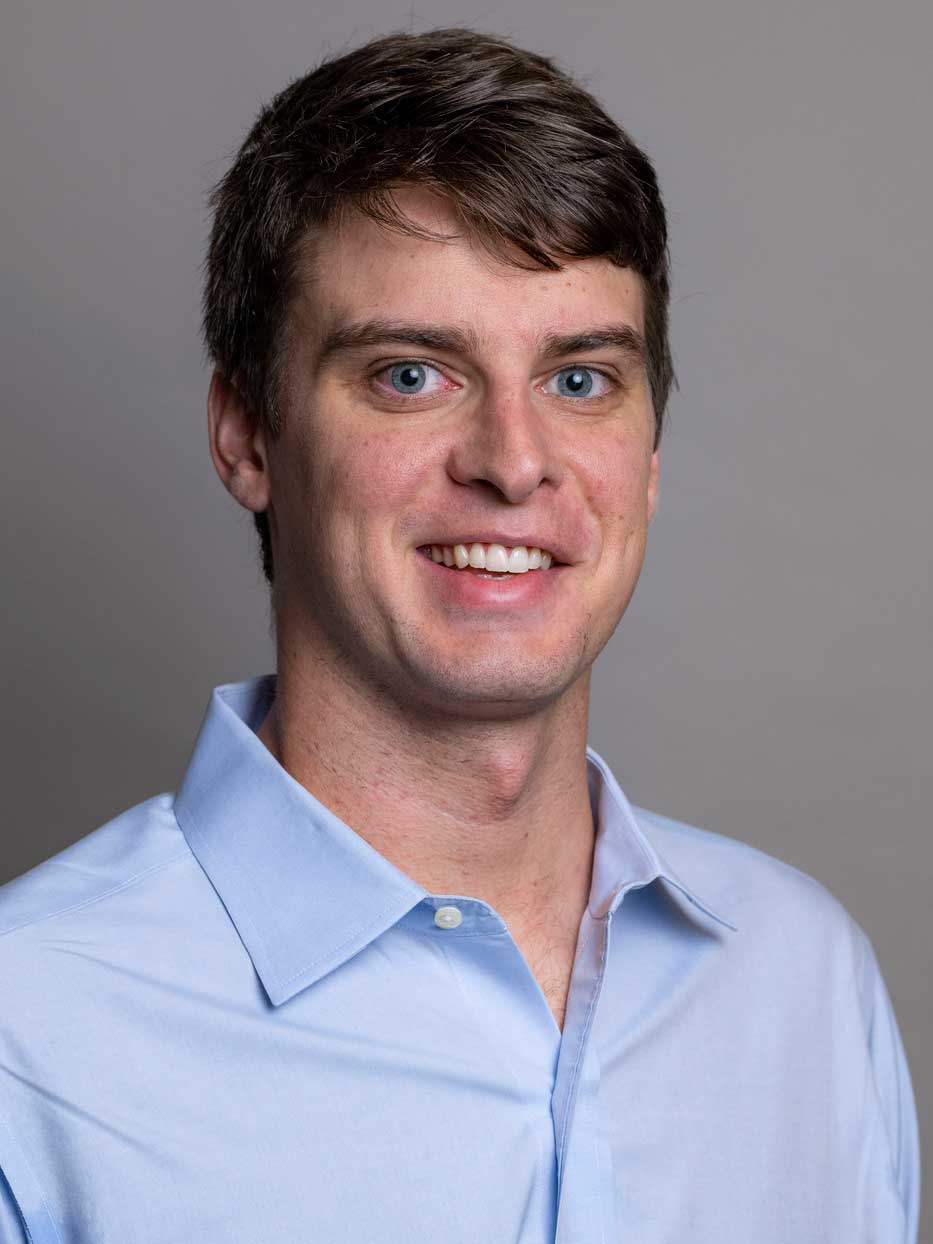
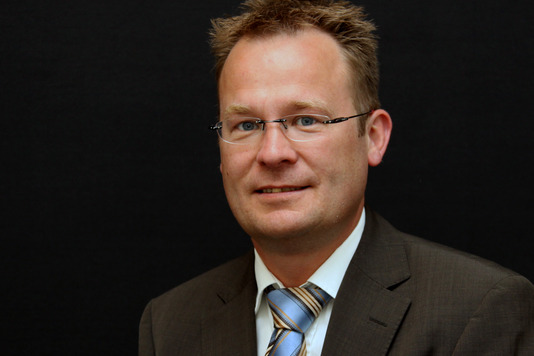
Damian Grela is a Lecturer in the Department of Automation and Computer Science at the Faculty of Electrical and Computer Engineering, Cracow University of Technology. His work spans two distinct research domains: software engineering (focusing on BPEL processes, web services, and fault injection testing) and environmental engineering (specializing in diatomite-based biogennic pollutant removal, rain gardens, and surface water quality monitoring).
Sebastien Nicolas Gros is a Professor at the Department of Engineering Cybernetics, Norwegian University of Science and Technology (NTNU). His research focuses on safe reinforcement learning (RL) and data-driven model predictive control (MPC), with applications in energy systems, biomedical engineering, and autonomous vehicles. Institution: Norwegian University of Science and Technology Department: Engineering Cybernetics His work emphasizes AI-driven optimization for domestic energy storage, battery integration, and smart building management. Collaborations include Equinor, DNV, Kongsberg, Volvo, and CorPower Ocean. Key themes in his publications include: Control theory for renewable energy systems (wave energy converters, buildings) Biomedical applications (artificial pancreas, glucose monitoring) Transportation systems (electric vehicles, autonomous ships) Machine learning integration with physical models He supervises 6 PhD students and co-supervises projects on multi-rotor wind turbines and industrial PhD collaborations. The articles demonstrate a convergence of RL, MPC, and uncertainty quantification across energy, biomedical, and transportation domains.
Gabriele Liga is an Assistant Professor at the Department of Electrical Engineering, Eindhoven University of Technology (TU/e), affiliated with the Signal Processing Systems (SPS) Group. He holds a Marie Curie Eurotech Fellowship focusing on signal shaping techniques for nonlinear optical fiber channels. His academic journey includes a Ph.D. in optical communications from University College London, followed by postdoctoral research in digital signal processing and nonlinearity compensation. Education: B.Sc. in Telecommunications Engineering from Università degli Studi di Palermo (2005), M.Sc. in Telecommunications Engineering from Politecnico di Milano (2011), and a Ph.D. in Optical Communications from University College London (2017). Research Interests: Digital communications, information theory, fiber-optic systems, nonlinearity compensation, channel coding, and multi-user optical communication theory. His work emphasizes achieving transmission limits through signal shaping and advanced signal processing techniques. Projects: Active roles in NESTOR (Next-gen optical networks), QuNEST (quantum communication security), Fun-NOTCH (nonlinear optical channel fundamentals), and SSTOC (signal shaping tailored to optical channels). Collaborations span institutions globally, focusing on optical fiber communication challenges. Awards: 2023 ACP/POEM Best Student Paper Award and 2019 OECC Best Paper Award. Serves as a reviewer for IEEE journals and OSA publications. Labs/Teams: Core member of the SPS Group and involved in interdisciplinary projects blending theory and experimental validation.
Yves Rosseel is a Professor at Ghent University (UGent) specializing in Structural Equation Modeling (SEM) , Psychometrics , and Statistical Methodology . With over 15 recent publications (2024-2025), he focuses on small-sample SEM solutions, factor score regression, measurement error, and Bayesian extensions. His work bridges Statistics with applications in Psychology , Education , and Neuroimaging . Research Trends Developed Mixture Multigroup SEM for cross-group comparisons Proposed Information-Theoretic Hypergraphs in psychometrics Advanced Two-Stage Estimation for round-robin data Created blavaan R package for Bayesian SEM Investigated Measurement Error in hypothesis testing Scientific Contributions Published 84 Social Sciences papers, 37 Statistics works, and 11 Neuroimaging studies Promoted 8 PhDs including Sara Dhaene and Julie De Jonckere Co-authored 12+ works with Marijke Welvaert and 10+ with Stijn Vanheule
Dr. Patrick W. C. Ho is a Lecturer in the Department of Electrical & Computer Systems Engineering (ECSE) at Monash University Malaysia School of Engineering. He holds a PhD in Electronics Engineering from the University of Nottingham Malaysia Campus (2016), with research focusing on non-volatile FPGA architectures using memristors. His academic journey includes roles as a Scholarly Teaching Fellow and unit coordinator for courses like ECE2131 Electrical Circuits and ECE4063 Large Scale Digital Design. He has industry experience with Intel Microelectronics and Altera Corporation, alongside teaching A-level Physics at Methodist College Kuala Lumpur. Education: BEng (First Class Honours) in Engineering (2009) MSc in Science (2012) PhD in Electronics Engineering (2016) Research Interests: Dr. Ho specializes in memristor-based non-volatile memory systems, VLSI design, and FPGA architectures. His work bridges hardware design with emerging materials, as seen in his Q1 journal article on memristive LUTs. Collaborations with CAD-IT expand his focus into AI, image processing, and object recognition. Recent projects include studies on memristor substrate performance (2023–2026) and UAV communication reliability (2021–2024). Teaching and Industry Engagement: As ECSE’s Industrial Training Advisor and IAP representative, he actively connects academic curricula with industry needs. His teaching spans foundational engineering courses and advanced digital design modules. Labs and Collaborations: Active in CAD-IT partnerships for student FYP co-sponsorship. Research groups focus on nanotechnology, machine learning integration in UAV systems, and memristor material analysis.
Professor Wang Li-Lian is a faculty member in the Division of Mathematical Sciences at Nanyang Technological University (NTU), Singapore. He holds the rank of Professor of Applied Mathematics and has been affiliated with NTU since 2006, progressing through roles including Assistant and Associate Professor before his current position. His research focuses on spectral methods, computational acoustics/electromagnetics, and PDE-based image processing. He has supervised multiple PhD and Master's students, including Zhang Jing, Gu Ying, Yang Zhiguo, and others. Education and career highlights include a Postdoctoral Research Associate at Purdue University (2002-2003), followed by a Visiting Assistant Professorship (2003-2005). His academic work spans spectral element methods, fractional differential equations, and high-order numerical techniques for wave scattering problems. Notable contributions include advancements in spectral-Galerkin methods for nonlocal operators and exact nonreflecting boundary conditions for Maxwell's equations. Research interests emphasize high-accuracy numerical schemes, with applications to fractional PDEs, metamaterial simulations, and image processing. His publications (over 100+ articles) reflect expertise in spectral methods, computational physics, and mathematical modeling. Teaching responsibilities include courses on partial differential equations, numerical analysis, and scientific computing.
Dr. Mehrdad Moallem is a Professor and Graduate Student Supervisor in the Department of Mechatronic Systems Engineering at Simon Fraser University (SFU). He holds a Ph.D. in Electrical & Computer Engineering from Concordia University (1997), an M.Sc. from Sharif University (1988), and a B.Sc. from Shiraz University (1986). His research focuses on control systems in sustainable energy, power electronics, energy harvesting, robotics, and embedded systems. He has authored/co-authored four technical books and serves on editorial boards for journals like IEEE/ASME Transactions on Mechatronics. Dr. Moallem has held academic roles at Duke University and the University of Western Ontario. His teaching includes courses on real-time control systems, mechatronics design, and microprocessors. Research interests span embedded control systems, nonlinear dynamics, and applications in renewable energy and robotics. Recent work includes IoT-enabled lighting systems for agriculture, RF cavity control, and smart energy harvesting. He emphasizes hands-on student projects and industry collaboration, such as the Siemens Certification Program and Industry 4.0 bootcamps. Dr. Moallem's lab develops innovative solutions for energy efficiency and automation, with a focus on sustainable systems and smart manufacturing. He actively advises graduate students on advanced topics like grid-connected inverters, motor drives, and vibration control.
Michael Everett is an Assistant Professor at Northeastern University with a joint appointment in the Department of Electrical & Computer Engineering and the Khoury College of Computer Sciences. He directs the Autonomy & Intelligence Laboratory, focusing on certifiable learning machines at the intersection of robotics, deep learning, and control theory. His research emphasizes safety, reliability, and efficiency in robotics applications like off-road navigation and social environments. Education: PhD in Mechanical Engineering, Massachusetts Institute of Technology (2020) SM in Mechanical Engineering, MIT (2017) SB in Mechanical Engineering, MIT (2015) Research Interests: Robotics and motion planning Control theory and neural network verification Reinforcement learning applications Certifiable safety guarantees for autonomous systems Navigation in dynamic/human environments Awards: Runner-Up: Best Paper Award (ICML 2022) Winner: Best Student Paper (IROS 2017/2023) Editors’ Top 5 Published Articles (IEEE Access 2021) Lab & Contributions: The Autonomy & Intelligence Lab develops algorithms for high-speed off-road autonomy, socially aware navigation, and neural feedback verification. His work includes the RAMP planning pipeline and Evora traversability learning framework. He collaborates with Google’s PAIR team on trustworthy AI.
Max Fathi is a Professor of Mathematics at Université Paris Cité, affiliated with the Laboratoire Jacques-Louis Lions (LJLL) and Laboratoire de Probabilités, Statistique et Modélisation (LPSM). He concurrently holds a part-time teaching position at the Department of Mathematics and Applications (DMA) at École Normale Supérieure (ENS). Since 2023, he has been a member of the Institut Universitaire de France (IUF), a prestigious national research fellowship in France. He completed his PhD in 2013 at Université Pierre et Marie Curie under Cédric Villani, followed by a postdoctoral position at the University of California, Berkeley with Lawrence C. Evans and Fraydoun Rezakhanlou. Previously, he was a CNRS researcher at the Institut de Mathématiques de Toulouse before joining Université Paris Cité. His habilitation thesis (2019) focuses on optimal transport applications in analysis and probability. Fathi's research centers on optimal transport theory, particularly its applications to analysis, probability, and statistical physics. Key topics include interacting particle systems, functional inequalities (e.g., Poincaré, log-Sobolev), high-dimensional phenomena, Ricci curvature in discrete/continuous spaces, Stein's method, concentration of measure, and numerical methods for stochastic dynamics. His work is supported by the ANR project 'Conviviality.' He has delivered courses on functional analysis at ENS and participated in summer schools, including an MSRI course on functional inequalities and localization techniques. His teaching materials include lecture notes on optimal transport and stochastic processes. His contributions have been recognized through awards such as the IUF membership. Notable research collaborations include work with Thomas Courtade, Matthias Erbar, and Gabriel Stoltz on topics ranging from stability estimates of inequalities to hypocoercivity and numerical analysis of stochastic systems.
Fabio Pierella is an Associate Professor at the Technical University of Denmark (DTU), affiliated with the Department of Wind and Energy Systems Flows, specializing in Wind Turbine Design Division. His research focuses on offshore wind energy systems, fluid dynamics, and structural engineering. He has contributed to projects like OC6 Phase IV and the DeRisk database, validating numerical models for floating offshore wind structures and extreme wave loads. Key research interests include computational fluid dynamics (CFD), hydrodynamic load modeling, and the design of large-scale floating wind turbines. His work spans numerical simulations, experimental validation, and database development for extreme sea states. Pierella has presented at international conferences on topics like wave-structure interaction and turbine control systems. He received the Best Poster Presentation Award (2024) and contributed to datasets such as the DeRisk Database, which provides critical wave data for offshore wind turbine design. His research emphasizes practical applications, including monopile structural integrity under extreme loads and control strategies for floating platforms. Pierella's activities include conference presentations on ultra-large floating turbines (EMULF2 project) and the impact of wave shape on 15MW turbine loads. His interdisciplinary approach integrates computational models with experimental results to address challenges in offshore renewable energy systems.
Katrin Rabitsch is an Associate Professor of Economics at Vienna University of Economics and Business (WU Vienna), affiliated with the Department of Economics. Her research focuses on International Macroeconomics/Finance, Quantitative Macroeconomics, Business Cycles, and Monetary Economics. She has published extensively in top journals like European Economic Review , Journal of International Economics , and Macroeconomic Dynamics . Her work explores topics such as monetary policy transmission channels, fiscal multipliers, macroprudential policies, and asset pricing dynamics. Notable recent contributions include analyzing nonlinear inflation dynamics, firm entry costs in asset pricing, and agent-based economic forecasting models. Rabitsch also engages in policy-oriented research, examining the effects of borrower heterogeneity on financial stability and the role of imperfect information in monetary policy design. Her teaching and research are supported by affiliations with institutions like the Department of Economics at WU Vienna. Rabitsch’s methodologies often involve advanced DSGE modeling, VAR analysis, and computational simulations to address complex macroeconomic questions.
Philip Cardiff is a Professor in Computational Mechanics at the School of Mechanical and Materials Engineering, University College Dublin. He holds a BE (2008) and PhD (2012) in Mechanical Engineering from UCD. His research focuses on computational mechanics, machine learning, and their integration, with expertise in finite volume methods, fluid-solid interaction, and biomechanics. He leads the Bekaert University Technology Centre and contributes to editorial roles in the Journal of Open Source Software and OpenFOAM Journal . Cardiff has secured grants from ERC, I-Form, and the UCD Energy Institute, addressing challenges in offshore energy, advanced manufacturing, and cardiac xenotransplantation. Education: BE in Mechanical Engineering, University College Dublin (2008) PhD in Development of the Finite Volume Method for Hip Joint Analysis, University College Dublin (2012) Professional Diploma in University Teaching & Learning, University College Dublin Research Interests: Computational mechanics, finite volume methods, and machine learning integration Fluid-solid interaction, biomechanics, and materials science Applications in additive manufacturing, energy systems, and biomedical engineering Grants & Awards: ERC Consolidator Grant (2020–2025) Funded Investigator in I-Form and UCD Energy Institute Principal Investigator in UCD Centre for Biomedical Engineering Teaching & Leadership: Programme Director for MEngSc in Materials Science and Engineering (2018–2023) Coordinates modules in computational mechanics and advanced materials processing Advocates constructivist teaching approaches with active learning strategies Labs & Collaborations: UCD Centre for Mechanics Bekaert University Technology Centre MaREI and I-Form Research Centres
Dr. Randa Herzallah is an Associate Professor at the University of Warwick with interdisciplinary expertise spanning control systems, quantum engineering, and machine learning. Her research develops probabilistic frameworks for complex systems control. Research interests focus on probabilistic control methods applied to energy grids, quantum systems, and biomedical applications. Recent work integrates machine learning with control theory for smart grid optimization and quantum system management. Publication analysis shows consistent focus on probabilistic control frameworks, with recent expansion into quantum applications and deep learning for industrial applications. Research funding includes EPSRC and Leverhulme Trust grants supporting quantum control and energy systems projects. Leads research in probabilistic control methodologies with industrial applications.
Dr. Dierck Hillmann is an Associate Professor at the Faculty of Science, Department of Biophotonics and Medical Imaging, Vrije Universiteit Amsterdam. He holds a PhD in Holoscopy from Luebeck University (2013). His research focuses on advanced optical imaging techniques, particularly Optical Coherence Tomography (OCT), with applications in retinal imaging, functional signal analysis, and computational imaging. He is affiliated with the LaserLaB - Biophotonics and Microscopy research group. Key research areas include improving OCT resolution through holographic methods, functional imaging of retinal neurons and photoreceptors, and developing computational adaptive optics to enhance imaging quality. His work addresses challenges like speckle reduction, aberration correction, and real-time data processing in biomedical imaging. Dr. Hillmann’s contributions span over 37 publications, including innovations in full-field OCT, optoretinography, and phase-sensitive measurements. He teaches courses such as Computational Optical Imaging and Light-Tissue Interaction. His current project explores imaging individual retinal cells and their functions using advanced techniques. No scientific awards are explicitly listed, but his extensive publication record reflects significant academic impact. Students advised are not specified in the provided materials.
Prof. Dr.-Ing. habil. Gerd Terörde is a Professor of Electrical Drive Technology at Osnabrück University of Applied Sciences, affiliated with the Faculty of Management, Culture and Technology. He holds a Diplom in Electrical Engineering from RWTH Aachen and a Dr.-Ing. habil. from TU Berlin. His career includes research at RWTH Aachen, KU Leuven, and TU Berlin, as well as industry roles as a project leader at Atlas Copco Airpower in Belgium. Education: 1989–1996: Diploma in Electrical Engineering (RWTH Aachen) 2002: PhD in Electrical Engineering (KU Leuven) 2008: Habilitation in Electrical Drive Technology (TU Berlin) Research focuses on electrical drives, power electronics, and control systems, with emphasis on sensorless control, renewable energy integration, and high-performance drive systems. He teaches courses on electrical machines, power electronics, control theory, and regenerative energy systems. Publications include a textbook on electrical drives and numerous patents/contributions to international journals and conferences. His work addresses topics like inverter systems, motion control algorithms, and energy-efficient drive solutions. Labs/Teams: Active in university research groups focusing on electrical drives and energy systems within the Faculty of Management, Culture and Technology.