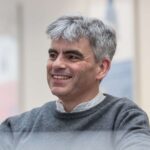
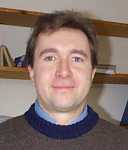
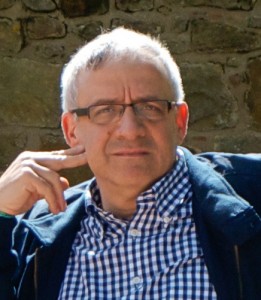
Peter Gingell is a Researcher at the University of Warwick's Physics Centre for Fusion, Space and Astrophysics. His work focuses on plasma dynamics in fusion and space environments, particularly ion-gyro-scale blobs in magnetically confined plasmas. He developed a 2D hybrid code for simulating plasma blob evolution, combining kinetic ion treatments with electron fluid models. His research addresses coherent plasma structures critical to understanding energy transport in fusion devices like tokamaks. Funded by the Engineering and Physical Sciences Research Council (EPSRC), his project is supervised by Prof Sandra Chapman and Prof Richard Dendy. He has published in Plasma Physics and Controlled Fusion , contributing to advancements in plasma simulation methodologies. His office is PS143, and he can be reached at p.gingell@warwick.ac.uk.
Dr. Juan Alvaro Gallego is a Senior Lecturer (equivalent to Associate Professor) in the Department of Bioengineering at Imperial College London's Faculty of Engineering. He leads the Behaviour and Neural Dynamics Lab (Be.Neural), a multidisciplinary team focused on understanding neural mechanisms underlying motor control and spinal cord learning, with applications in developing neural interfaces to restore movement in conditions like Parkinson’s disease and paralysis. His research integrates behavioral experiments, neural recordings, data analysis, and computational models, funded by the ERC, EPSRC, ARIA, and industry partners like InBrain Neuroelectronics and Meta Reality Labs. Research interests include motor control, neural dynamics, and clinical applications of neural engineering. The lab collaborates across systems neuroscience and biomedical engineering, aiming to translate fundamental discoveries into therapeutic technologies. Key areas of focus include neural manifolds, synaptic plasticity in motor learning, and closed-loop neuroprosthetics for tremor management. Funding sources include the European Research Council, Engineering and Physical Sciences Research Council, and industry collaborations. The Be.Neural Lab’s work is showcased on their dedicated website (https://beneural.ic.ac.uk).
Manuel Del Pino is Professor at the University of Bath's Department of Mathematical Sciences and Royal Society Professor specializing in nonlinear partial differential equations. His research focuses on singularity formation, geometric evolution equations, and asymptotic analysis in fluid dynamics and mathematical physics. His investigations encompass blow-up phenomena in heat equations, vortex dynamics in Euler flows, and minimal surface theory. Current projects examine infinite-time singularity formation in parabolic equations and asymptotic properties of vortex configurations. Del Pino has received the Royal Society Professorship and leads multiple grants including 'Asymptotic patterns in nonlinear evolution problems' (EPSRC). He maintains collaborations with researchers globally through projects on singularity formation in PDEs.
Professor Emilio Artacho is a faculty member in the Department of Physics at the University of Cambridge, based at the Cavendish Laboratory. He transitioned from the Department of Earth Sciences in 2011, where he was granted a Professorship in 2006. His research focuses on computational simulations of non-equilibrium processes in condensed matter, particularly using first-principles molecular dynamics and density-functional theory. He co-developed the SIESTA program for linear-scaling electronic structure calculations, widely utilized in computational materials science. Artacho’s work spans far-from-equilibrium phenomena in irradiated matter, multiferroics, nanoconfined water systems, and surface chemistry. His contributions include studies of electronic stopping power in materials, 2D electron gas formation at ferroelectric interfaces, and the structural dynamics of water under confinement. His academic roles include adjunct positions at Ikerbasque (Nanogune, Spain) and visiting professorships at institutions like the University of California, Berkeley, and École Normale Supérieure de Lyon. Research interests are anchored in theoretical condensed matter physics, with applications to nanomaterials, radiation effects, and interfacial phenomena. His computational methods bridge quantum mechanics and classical dynamics, enabling insights into complex systems like proton-irradiated solar cells and confined water films.
Professor Gary Gibbons is a distinguished academic at the University of Cambridge, holding the position of Professor of Theoretical Physics within the Department of Applied Mathematics and Theoretical Physics (DAMTP), part of the Faculty of Mathematics. His research focuses on general relativity, quantum gravity, cosmology, and black hole physics. He is a core member of the Relativity and Gravitation Group, known for contributions to gravitational wave theory, black hole thermodynamics, and geometric methods in physics. His work intersects with areas such as the memory effect of gravitational waves, Carroll symmetry, and the mathematical structure of spacetime. Prof. Gibbons collaborates internationally, publishing extensively in top journals like Physical Review D and Classical and Quantum Gravity . His research also extends to applied mathematics, including studies on abrasion processes and shape evolution in geosciences. He maintains an active role in theoretical physics, advising graduate students and contributing to the academic community through lectures and seminars.
Mike Grimble is a Research Professor in the Department of Electronic and Electrical Engineering at the University of Strathclyde, Faculty of Engineering. His work is centered on advanced control systems with applications across automotive, aerospace, marine, and industrial domains. He is actively involved in theoretical and applied research, particularly in nonlinear and robust control methodologies. Research Interests: Theory and application of nonlinear and robust control for multivariable systems Adaptive control and estimation methods Benchmarking and performance assessment of control systems Condition monitoring and industrial applications Real-time control and embedded systems His recent publications highlight a strong trend in applying predictive and adaptive control techniques to electric vehicles, battery systems, underwater robotics, and industrial machinery. These works emphasize real-time implementation, energy optimization, and robustness—critical for modern sustainable and autonomous systems. Scientific Recognition and Activities: Invited speaker on the benefits and challenges of advanced control in industrial applications (2013) Contributor to UN Sustainable Development Goals, particularly in sustainable industry and innovation Active research output with over 158 publications, including journals, conferences, and book chapters Research Leadership and Funding: Principal Investigator on multiple EPSRC and RSE-funded projects Co-investigator in interdisciplinary initiatives such as the Medical Devices Doctoral Training Centre Organizer of international workshops on hybrid and predictive control Labs and Research Teams: He is associated with the Industrial Control Centre at the University of Strathclyde, a leading hub for control engineering research. His collaborations span departments and institutions, involving real-time LabVIEW implementations, hardware demonstrations, and partnerships with industry players like National Instruments and Quanser Inc.
Xiaocheng Shang is an Associate Professor in Mathematical Optimisation and Data Science at the University of Birmingham's School of Mathematics. His research focuses on numerical methods for stochastic differential equations, with applications in computational mathematics, statistics, physics, and data science. He is affiliated with the Optimisation and Numerical Analysis Group, Statistics and Data Science Group, and the Institute for Data and AI. Shang holds a PhD in Applied and Computational Mathematics from the University of Edinburgh (2016) and completed postdocs at the University of Edinburgh, Brown University, and ETH Zurich before joining Birmingham in 2019. His academic achievements include fellowships from The Alan Turing Institute, the LMS Emmy Noether Fellowship, and the EUniWell Leadership Fellowship. He has secured funding from EPSRC, the Royal Society, and the Isaac Newton Institute. Shang is actively involved in supervising PhD students and co-organizing research initiatives such as the Data Science and Computational Statistics Seminar. Research interests include structure-preserving integrators, Bayesian sampling techniques, and machine learning applications in dynamical systems. His work bridges numerical analysis, probability theory, and multiscale modeling in materials science. Recent projects involve neural networks for complex dynamical systems and numerical algorithms for deterministic/stochastic systems.
Richard Walsh is Professor in the Department of English and Related Literature at the University of York, where he leads the Interdisciplinary Centre for Narrative Studies and founded the British and Irish Association for Narrative Studies. His research bridges literary theory, cognitive science, and complex systems, examining narrative as a fundamental mode of human cognition. His research focuses on three interconnected domains: The rhetorical theory of fictionality and its cultural manifestations Interdisciplinary approaches to narrative cognition and sensemaking Complexity science applications to narrative structures across media This work extends to innovative fiction, digital narratives, and cross-cultural storytelling. Analysis of Walsh's recent publications reveals strong emphasis on narrative cognition, interdisciplinary methodologies, and emerging topics in AI storytelling. Thematic clusters include: Foundational studies in fictionality and rhetorical frameworks Complexity theory applications to narrative dynamics Interdisciplinary intersections with cognitive science and digital media His scholarly recognition includes the distinguished Institute of Advanced Study Research Fellowship at Durham University (2016) Walsh directs multiple research groups including the Narrative and Complex Systems Group (NarCS) and supervises doctoral projects on narrative theory. He leads collaborative initiatives like the RIDERS project on emergent narrative and the Threshold Worlds project on dream cognition.
Pierre Raphaël is the Herchel Smith Professor of Pure Mathematics at the Department of Pure Mathematics and Mathematical Statistics (DPMMS) at the University of Cambridge, where he joined in 2019. His academic career spans prestigious institutions including École Polytechnique, University of Cergy-Pontoise, Princeton University, and various research positions in France before his appointment at Cambridge. Professor Raphaël's research lies at the border between physics and pure mathematics, focusing on understanding energy concentration mechanisms and singularity formation during the propagation of non-linear waves. His work is deeply connected to fundamental nonlinear structures occurring in electromagnetism, astrophysics and turbulent fluid flows. He has made significant contributions to the mathematical analysis of nonlinear partial differential equations, particularly in understanding blow-up phenomena and singularity formation. His publications reveal a consistent research trajectory focused on nonlinear wave phenomena, with particular emphasis on energy concentration mechanisms and singularity formation across various mathematical models. His work spans multiple areas including nonlinear Schrödinger equations, heat equations, Korteweg-de Vries equations, and harmonic heat flows, demonstrating his expertise in analyzing critical and supercritical regimes where singularities may form. Grand Prix Alexandre Joannides 2014 from the French Academy of Sciences Royal Society Wolfson Fellowship 2019 Invited Speaker at International Congress of Mathematicians 2014 ERC Advance Grant recipient Professor Raphaël has secured significant research funding including European Research Council grants, demonstrating his leadership in the field. His research group at Cambridge focuses on singularity formation for nonlinear PDEs, as evidenced by the conference he organized at St Catharine's College in September 2024. His work bridges pure mathematics with physical applications, particularly in understanding extreme regimes of nonlinear wave propagation.
Professor Steve G Burrow is a faculty member at the School of Civil, Aerospace and Design Engineering at the University of Bristol. His research focuses on energy harvesting, vibration control, and environmental sensing, particularly in aerospace and glaciological contexts. Professor of Aircraft Systems Member of the Cabot Institute for the Environment Active in Dynamics and Control research themes His work in energy harvesting emphasizes electromagnetic transducers and nonlinear resonant structures, while environmental sensing involves deploying sensors under ice sheets to study glacial hydrology. Recent articles highlight inerter-based suspension systems, vibration absorber optimization, and broadband energy harvesting techniques. Collaborations span nonlinear mathematics, glaciology, and structural dynamics. No scientific awards were explicitly mentioned, but his research outputs demonstrate extensive contributions to power electronics and sustainable technologies.
Professor Yongcheol Shin is a faculty member in the Department of Economics at the University of York. His academic background includes a BA (Hanyang University), MA (Hanyang University), and PhD (Michigan State University). He specializes in applied and theoretical econometrics, focusing on financial and macroeconomic modeling. Education: BA (Hanyang University), MA (Hanyang University), PhD (Michigan State University) His research spans econometric theory and applications in finance and macroeconomics. Key areas include nonlinear panel data modeling, cointegrating VAR models, regime-switching models, and statistical hypothesis testing for time series. Recent work addresses interactive effects in panel data and multilevel factor models. Recent publications (2023) focus on panel data analysis, canonical correlation, and unit root testing. These studies reflect his expertise in econometric methodology and its application to financial economics, macroeconomics, and trade dynamics. Scientific awards include: 2018 Maekyung-KAEA Economist Award He leads the ESRC-funded project 'New Cross-Sectionally Dependent Panel Data Methods for the Analysis of Macroeconomic and Financial Networks' (2020-2024), collaborating with researchers like J. Chen and W. Wang.
Professor Oscar Dias is a faculty member in the Department of Mathematical Sciences at the University of Southampton. His research focuses on Einstein's gravity, black holes, holographic dualities, and gravitational aspects of string theory. He actively supervises PhD students in mathematical sciences and holds grants from the Science and Technology Facilities Council (STFC), including projects like 'New Frontiers in Particle Physics, Cosmology and Gravity.' His work explores topics such as cosmic censorship, black hole dynamics, and numerical general relativity, with recent contributions published in journals like Physical Review Letters and Journal of High Energy Physics . Key research interests include the study of black hole binaries in de Sitter space, the stability of charged black holes, and the interplay between holographic dualities and quantum field theories. His projects often involve collaborations with leading institutions, addressing foundational questions in theoretical physics and cosmology. Professor Dias is a member of the Southampton Theory Astrophysics and Gravity (STAG) Research Centre and the String Theory and Holography group. His articles highlight advancements in understanding gravitational wave phenomena, quasinormal modes, and the behavior of black holes under various physical conditions. He currently accepts PhD applications and can be contacted via O.J.Campos-Dias@soton.ac.uk.
Joe Pitt-Francis is Associate Professor of Computer Science and Tutorial Fellow in Computer Science at St Edmund Hall, University of Oxford . Since 1999 he has tutored Oxford computer-science students and formally became a Tutorial Fellow of St Edmund Hall in 2024. His research lies at the intersection of computational biology and mathematical biology . Using sophisticated numerical techniques he constructs and analyses models of the heart , cancer and blood flow . A central strand of his work is software development for biological simulation; he is an active contributor to Chaste ( Cancer, Heart and Soft-Tissue Environment ), a large-scale C++ library that supports multiscale computational models in physiology and medicine. Across more than 60 peer-reviewed publications since 1998, his work has progressively advanced from foundational software-engineering papers describing Chaste’s architecture to highly-cited studies on cardiac electrophysiology , tumour-induced angiogenesis , microvascular haemodynamics and cell-cycle dynamics under hypoxia . The 2024-2025 corpus shows strong emphasis on multiscale frameworks , open benchmarking , and radiotherapy-induced vascular remodelling , positioning his group at the forefront of translational in-silico oncology. Contact: Email: Joe.Pitt-Francis@seh.ox.ac.uk
Oleg Kozlovski is an Associate Professor at the University of Warwick. His research focuses on dynamical systems, ergodic theory, mathematical physics, and financial mathematics. He has held an EPSRC Advanced Fellowship (2001–2006) for research in Complex Dynamics and Fast Dynamo Theory. His work combines pure mathematical analysis with applications to economics and physics. Teaching responsibilities include MA132 Foundations. His research explores hyperbolicity, rigidity phenomena, and bifurcation theory in dynamical systems. Notable contributions include studies on unimodal maps' density in C^k topologies and rigidity of real polynomials. Grants include £1.9M EPSRC funding for foundational dynamical systems research. His work bridges pure mathematics with applied fields like economic modeling and nonlinear dynamics.
Gian-Luca Oppo is Professor of Computational and Nonlinear Physics at the University of Strathclyde and Director of the Institute of Complex Systems. His research spans nonlinear photonics, quantum cavity solitons, Bose-Einstein condensates, and optical pattern formation. Oppo develops theoretical models for laser dynamics, quantum correlations in light sources, and soliton formation in microresonators. Recent work (2024-2025) explores topological photonics applications in frequency combs, polarization symmetry breaking for optical Ising machines, and optomechanical quantum droplet dynamics. He has made fundamental contributions to understanding spontaneous symmetry breaking in Kerr resonators and control of extreme optical events. Oppo's group collaborates internationally on experimental implementations of photonic computing architectures and quantum sensing technologies. Honors include the Occhialini Medal (2011), Royal Society-Leverhulme Senior Research Fellowship (2003), and fellowships from the Royal Society of Edinburgh, OSA, and Institute of Physics.