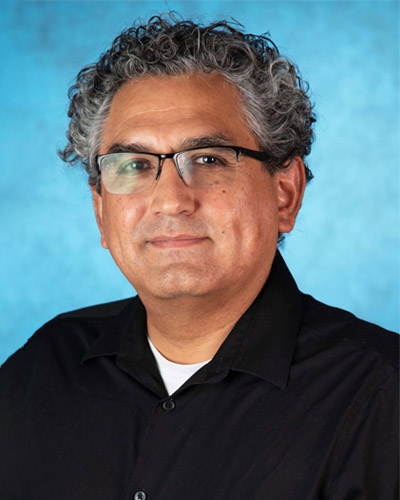
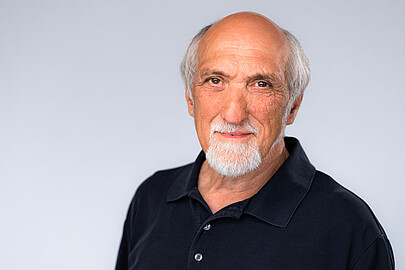
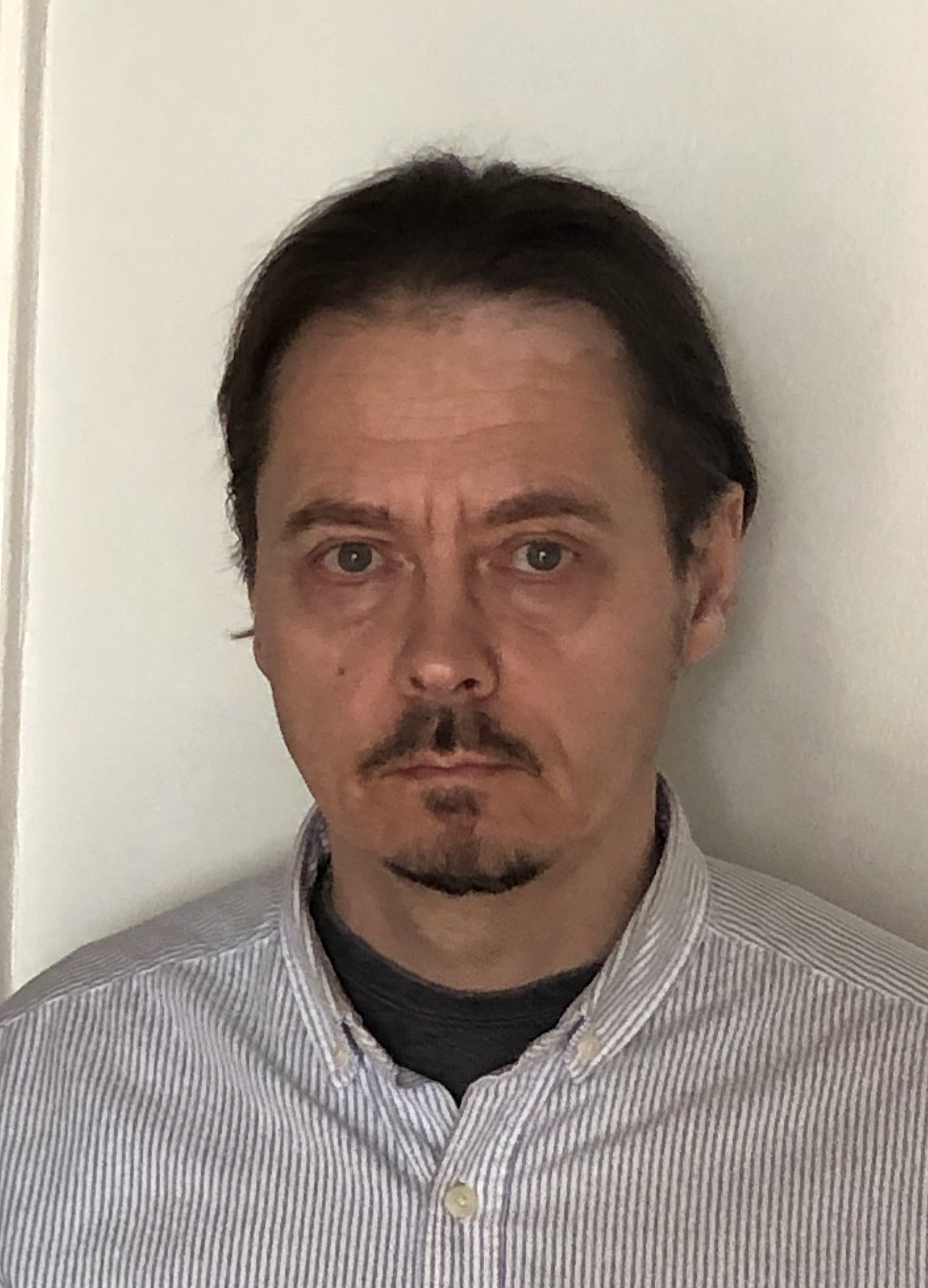
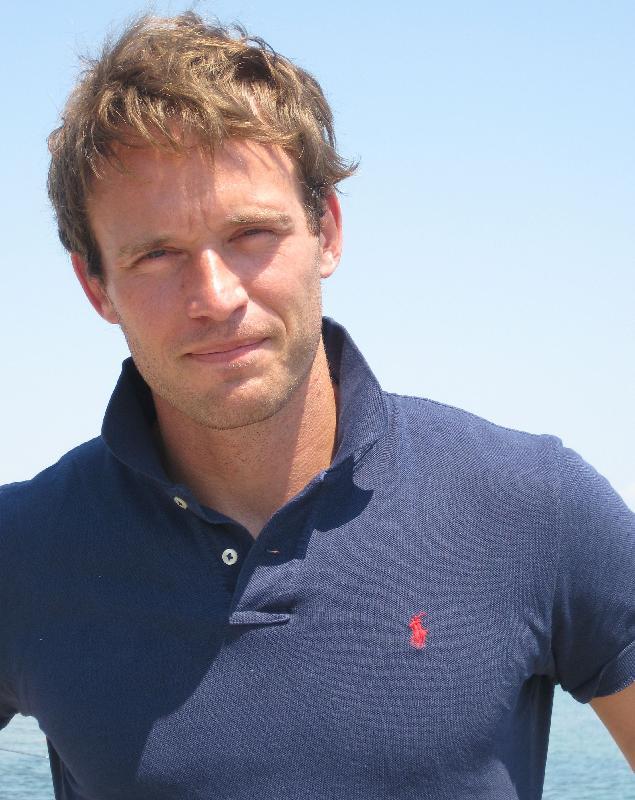
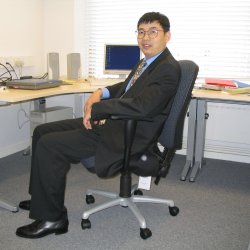
Thomas Weber is a Full Professor at the École Polytechnique Fédérale de Lausanne (EPFL) , holding the Chair of Operations, Economics, and Strategy (OES) within the College of Management (CDM) . He serves as Director of the Doctoral Program in Management of Technology and contributes to academic governance through roles in committees such as the CDM Academic Evaluation Committee. PhD Students: Zhang Ru, Han Jun, Mark Michael, Razeghian Jahromi Maryam Email: thomas.weber@epfl.ch His research spans behavioral economics, risk analysis, and optimization in dynamic systems, with a focus on sharing economy applications, inventory management, and cryptocurrency market dynamics. Recent publications address robust decision-making frameworks, self-exciting point processes, and economic implications of information endogeneity. Key teaching activities include: Information: Strategy & Economics Innovation & Entrepreneurship in Engineering Microeconomics
Prof. Dr. Sebastian Mentemeier is a permanent Professor (W2) in the Department of Mathematics 2 at the Institute for Mathematics, Mathematics Education and Computer Science Education, University of Hildesheim, Germany, a position he has held since October 2019. He also holds significant administrative roles as Vice Dean and Dean of Studies in Faculty 4 (Mathematics, Natural Sciences, Economics & Computer Science), and is a member of the Institute's Board and the Central Commission for Studies and Teaching. His research is centered on advanced probability theory, with a focus on branching processes, products of random matrices, and extreme value theory for time series. His research interests include: Non-Gaussian limit theorems Branching processes, particularly Multitype Branching Random Walks Products of random matrices Extreme value theory for time series Heavy-tailed random variables Conditional limit theorems His recent publications, spanning from 2012 to 2022, demonstrate a consistent and high-impact research trajectory in theoretical probability. The articles reveal a strong trend in analyzing the asymptotic behavior of complex stochastic systems, particularly those defined by recursive equations and random matrix products. His work frequently intersects with statistical mechanics and time series analysis, often investigating the tail behavior and limit laws of solutions to stochastic fixed-point equations, with a particular emphasis on heavy-tailed and multivariate settings. Prof. Mentemeier has been a Principal Investigator on two major DFG projects: 'Nonlinear stochastic fixed-point equations with applications in statistical mechanics' (2017-2023) and 'Products of Random Matrices, Noncommutative Branching Random Walks, and Multitype Branching Random Walks in Random Environments' (since 2021). He is an active member of the academic community, serving as a referee for journals such as Stochastic Processes and their Applications and Journal of Theoretical Probability , and has co-organized international conferences on recursive stochastic processes and branching models. He supervises PhD and Master's students, although specific names are not listed on his profile. He has led a research group within the Department of Mathematics 2 and is a key member of the Institute's academic board. His work is conducted within the broader context of the Faculty of Mathematics, Natural Sciences, Economics & Computer Science at the University of Hildesheim.
Jaap Molenaar is a Professor at the Mathematical and Statistical Methods - Biometris group, affiliated with PE&RC (Plant Research International). As an external employee, he specializes in systems biology, mathematical modeling, and computational methods, with a focus on plant growth and dynamic control systems. His work bridges theoretical and applied research across ecology and agricultural sciences. PhD Promotor for 5 projects (2010–2024) Active in interdisciplinary collaborations (e.g., water distribution systems, plant meristem patterning) Research Interests include uncertainty quantification, nonlinear systems, and cellular/molecular pattern formation. His publications highlight applications of spectral expansion methods, sensitivity algorithms, and dynamic modeling in plant physiology and control theory. 2024: Prediction uncertainty in systems biology 2023: Leaf-level photosynthesis modeling 2022: Structural identifiability in control systems Science Communication : Featured in national media (e.g., EenVandaag , 2023) discussing EU policies to protect bees and agricultural ecosystems.
Fidel Santamaria is a Professor in the Department of Neuroscience, Developmental and Regenerative Biology at the University of Texas at San Antonio (UTSA), within the College of Sciences. His research integrates experimental, computational, and theoretical approaches to study cerebellar function, learning and memory, and the role of biological complexity in neural computation. Education: Ph.D. in Neuroscience, California Institute of Technology B.S. in Physics, National Autonomous University of Mexico His research focuses on history-dependent dynamics across biological scales, employing fractional-order differential equations to model memory effects from molecules to behavior. He investigates intrinsic excitability and synaptic plasticity in cerebellar Purkinje cells, combining electrophysiology, multi-photon imaging, and biophysical modeling. His work extends into neuromorphic engineering , where he develops circuits with memory elements like mem-capacitors to emulate biological learning rules. Recent publications reveal a strong trend in modeling non-Markovian processes in neurons, information coding in networks with memory, and the biophysical basis of plasticity. This interdisciplinary approach bridges neuroscience, physics, and engineering. Scientific Contributions: Developed a unified framework using fractional calculus for history-dependent neural activity Demonstrated coupling between synaptic and intrinsic plasticity in Purkinje cells Explored calcium dynamics changes post-plasticity Advanced neuromorphic circuits with memory components Studied cerebellar excitability in autism models Santamaria actively mentors students through his research lab, where he supervises projects involving computational modeling, electrophysiology, and imaging. His work is supported by research grants (implied by lab activity and NCBI profile). He leads a multidisciplinary research team focused on understanding how biological complexity enables efficient neural computation. The lab combines experimental neuroscience with advanced mathematical modeling and engineering principles to explore fundamental questions in brain function.
Dr. Theo Scholtes is a researcher in the Quantum Systems department at the Leibniz Institute for Photonics (Leibniz-IPHT), specializing in quantum magnetometry and dark matter detection. He leads the Quantum Magnetometry working group and has developed advanced optically pumped magnetometer (OPM) systems for ultrasensitive magnetic field measurements. Key research areas: Quantum magnetometry, dark matter detection, sensor technology Notable collaborations: Global Network of Optical Magnetometers for Exotic physics searches (GNOME) His work focuses on overcoming technical limitations in OPMs, including dead zones, heading errors, and transient phase responses. He has pioneered innovations like the light-shift dispersed Mz mode, omnidirectional magnetic field sensitivity, and passivated gold mirror integration in alkali vapor cells. Recent publications (2023-2025) address vector magnetometry in Earth's magnetic field, dead-zone-free sensors, and domain wall detection for dark matter. Earlier work (2016-2020) includes laser stabilization techniques and magnetorelaxometry in biomedical contexts.
Mehmet Kenan TERZİOĞLU is a Professor at Trakya University, Faculty of Economics and Administrative Sciences, Department of Econometrics as of 2024. His academic journey includes undergraduate studies in Statistics at Hacettepe University (thesis on Renewal Process in Stochastic Processes), Master's studies in Actuarial Sciences at Hacettepe University (thesis on Valuation Approaches in Life Insurance), and doctoral studies in Econometrics at Gazi University (thesis on The Effects of Inflation Uncertainty on Economic Performance and Policy Variables). Dr. TERZİOGLU's primary research interests span several key areas of economics and quantitative methods: Econometrics methodologies and applications Actuarial science and insurance valuation Inflation uncertainty and economic policy Financial risk management and value at risk Migration economics and tourism impacts Oil price shocks and exchange rate dynamics His research output demonstrates a strong focus on applying advanced statistical and econometric techniques to economic and financial problems, with particular emphasis on Turkish economic conditions. His work often employs sophisticated modeling approaches including Markov-switching models, stochastic volatility models, and error correction frameworks. Dr. TERZİOGLU has contributed significantly to academic literature through numerous journal publications, conference presentations, and book chapters. His work appears in reputable journals including the European Actuarial Journal and various economics publications. He has also contributed to academic publishing through editorial work, having edited books on econometrics methods and current topics in econometrics.
Vedat Akgiray is a Professor at Bogazici University, holding a Ph.D. from Syracuse University. His teaching and research areas focus on Derivatives , Portfolio Management , Probability , and Financial Markets , with a particular emphasis on Mathematical Finance . He has published extensively on topics such as FinTech, corporate governance, pension systems, and risk management. Education : Ph.D., Syracuse University Email: akgirayv@bogazici.edu.tr
Wolfgang Mathis is a Lecturer at Leibniz University Hannover within the Faculty of Electrical Engineering and Computer Science , specifically affiliated with the Department of Didactics of Electrical Engineering and Computer Science . His academic work bridges theoretical electrical engineering with historical and pedagogical perspectives. Email: mathis@tet.uni-hannover.de Phone: +49 511 762 3403 Web: https://www.dei.uni-hannover.de His research spans two primary domains: theoretical electrical engineering and historical analysis of scientific disciplines . Key areas include nonlinear circuit analysis, electromagnetic field theory, and the interdisciplinary legacy of engineers like Johannes von Kries. He frequently employs Carleman linearization for modeling nonlinear systems and contributes to educational frameworks for electrical engineering. Wolfgang Mathis' recent publications reflect a dual focus on circuit design methodologies and historical studies . Articles on Kirchhoff's laws, Wilhelm Cauer, and Heinrich Hertz highlight his interest in the evolution of engineering concepts. Simultaneously, his technical work explores RF mixer circuits, LC tank oscillators, and bifurcation-based amplifiers, often integrating mathematical rigor with practical applications. Position: Lecturer Institution: Leibniz University Hannover Department: Didactics of Electrical Engineering and Computer Science He leads the Didactics of Electrical Engineering and Computer Science Section, focusing on educational materials and interdisciplinary studies. His work on stochastic waveguides and power amplifier design demonstrates a commitment to both foundational and applied research.
Dr. Tomislav Plesa is a Lecturer and Fellow at Peterhouse, University of Cambridge. His research bridges mathematics and biology, focusing on synthetic biology and the construction of deterministic/stochastic dynamical systems for biological substrates. He completed his PhD at the University of Oxford (2018) and postdoctoral work at Imperial College London (2021). Education: Doctoral Research, Mathematical Institute, University of Oxford (2018) Postdoctoral Research, Department of Bioengineering, Imperial College London (2021) Research Interests: Dr. Plesa investigates design principles of living systems and challenges in biochemical system design. His work includes integral feedback mechanisms, stochastic approximations, noise utilization in molecular computing, and chemical reaction network dynamics. He explores both theoretical and applied aspects of synthetic biology, with a focus on deterministic/stochastic modeling and mathematical approximations. Publication Trends: Recent works (2023–2024) emphasize chemical reaction networks, integral feedback, and stochastic control. Earlier publications (2016–2021) address noise dynamics, bistability, and homoclinic bifurcations. His research spans nonlinear dynamics, biomathematics, and computational biology, often integrating synthetic biology with theoretical frameworks.
Professor Peter Grassberger is a distinguished researcher at the Jülich Supercomputing Centre (JSC) within the Jülich Research Centre, one of Germany's leading national research institutions. His work spans multiple decades in theoretical physics and computational science, with a particular focus on complex systems and statistical mechanics. His research has significantly advanced our understanding of critical phenomena and phase transitions in various physical systems. Grassberger's research interests center around statistical physics and complex systems, with specializations in percolation theory, self-organized criticality, and random walk models. His work explores the universal properties of phase transitions, critical phenomena, and the behavior of complex networks. His theoretical contributions have provided fundamental insights into how simple local rules can lead to complex global behavior in physical systems. His recent work continues to push boundaries in understanding extreme-value statistics, entropy estimation methods, and the dynamics of interface models. Through his extensive publication record spanning over 40 years, Grassberger has established himself as a leading authority in computational statistical physics. His work shows consistent focus on understanding universal properties of critical systems while developing innovative computational methods to analyze complex phenomena. His research bridges theoretical physics with practical computational approaches, making significant contributions to both fundamental understanding and methodological development in the field. Grassberger's scientific impact is evident through his numerous influential publications and his development of important computational techniques like the Grassberger-Procaccia algorithm for estimating fractal dimensions. His work on self-organized criticality, particularly his 2022 review "Self-Organized Criticality, Three Decades Later," demonstrates his enduring contribution to this important field. His recent publications continue to explore cutting-edge questions in statistical physics, showing active engagement with contemporary research challenges.
Riku Linna serves as a Senior University Lecturer in the Department of Computer Science at Aalto University, contactable via riku.linna@aalto.fi and +358505124356. His research spans: Dynamical systems Stochastic processes Nonlinear dynamics Computational physics Statistical physics Machine learning methods Analysis of his 25+ publications (1996-2020) reveals a dominant focus on polymer dynamics in biophysical contexts, particularly translocation/ejection mechanisms in viral capsids and semiflexible polymers. Recent work integrates machine learning with dynamical systems for brain state modeling using Kuramoto oscillators, while earlier research examines thermal conduction in nanoscale systems and DNA elasticity. His methodological approach consistently combines computational physics with statistical mechanics to solve complex biophysical problems. No scientific awards were documented in the source material. While his faculty role implies teaching responsibilities, no student advisement records or research grants were specified in the provided text.
Prof. Michael Hintermüller is the Director of the Weierstrass Institute (WIAS) and holds a professorship in Applied Mathematics at Humboldt-Universität zu Berlin. He serves as Founding Coordinator of BR50, Spokesperson of the Mathematical Research Data Initiative (MaRDI), and Board Member of the MATH+ Cluster of Excellence. His research focuses on nonsmooth optimization, PDE-constrained control, mathematical image processing, and quasi-variational inequalities. Leadership Roles: Director of WIAS; Founding Coordinator of BR50; Spokesperson of MaRDI; Board Member of MATH+ Key Research Areas: Mathematical image processing, optimization under uncertainty, PDE-constrained optimization, shape/topology optimization, learning-informed constraints Recent Applications: Image deblurring/denoising/demodulation, energy network modeling, gas dynamics on pipeline networks, thermoforming simulations, strained photonic device design. His work combines analytical rigor with numerical methods for inverse problems, including adaptive regularization and physics-informed neural networks. Scientific Leadership: Active in mathematical modeling for biomedical imaging (e.g., quantitative MRI) and industrial applications (e.g., semiconductor design, gas flow optimization). Develops novel algorithms for nonsmooth PDE systems and contributes to the theoretical foundations of quasi-variational inequalities and generalized Nash equilibrium problems.
Professor Martin Rypdal is a faculty member at the Faculty of Science and Technology , UiT The Arctic University of Norway, where he has served as Professor and Head of Department of Mathematics and Statistics since 2017. He holds a PhD in mathematics (2008) and a Cand. Scient. in mathematics (2004) from the University of Tromsø. Research Focus: Climate modeling, long-range dependent climate variability, stochastic processes, complex systems, multiscale analysis, and applications in public health (e.g., juvenile idiopathic arthritis, dengue dynamics). Leadership: Leads UiT's initiative on "The Dynamics of the Climate in the Arctic" and co-manages projects funded by the Norwegian Research Council. Outreach: Active science communicator with media appearances on climate and health research, including articles in Science Advances , Nature , and Ecology Letters . His recent publications (2025-2018) span climate science, public health, and statistical physics, emphasizing deep learning applications in paleoclimatology, Arctic sea ice loss, pandemic dynamics, and nonlinear climate responses. Scientific Awards: Recipient of the Faculty Teaching Price (2007, 2015). Supervises 3 PhD students and co-supervises 2, with 16 completed master's students.
Zhongmin Qian is a Professor of Mathematics at the University of Oxford and an Official Fellow in Mathematics at Exeter College . His primary affiliation is with the Mathematical Institute in Oxford, where he focuses on advanced research and teaching in mathematical disciplines. Qian’s research spans multiple domains within stochastic analysis , including: Diffusion processes and their probabilistic properties Rough path analysis for modeling irregular stochastic signals Backward stochastic differential equations (SDEs) and their applications Stochastic partial differential equations (SPDEs) Ricci curvature and associated PDEs Applications to general relativity and quantum field theory His recent work examines fluid dynamics through Navier-Stokes equations and Oberbeck-Boussinesq flows , with a focus on boundary vorticity and entropy estimates for degenerate SDEs. Earlier contributions include foundational research on Ricci flow and rough path theory . Qian has co-authored significant publications such as the Oxford Mathematical Monographs book System Control and Rough Paths (2002), which bridges control theory and stochastic analysis. He has taught courses like B8.1 Martingales Through Measure Theory and the CDT Foundation course on Measures and Probability Theory , demonstrating expertise in advanced probability and mathematical finance fundamentals. The Mathematical Institute at Oxford houses Qian’s research group, which explores stochastic analysis and its applications, frequently organizing workshops such as the Oxford Workshop on Probability and its Applications (2014, 2015).
Øyvind Wiig Petersen is an Associate Professor at the Department of Structural Engineering, Norwegian University of Science and Technology (NTNU). His research focuses on bridge dynamics, wind and wave loading, inverse force identification, structural monitoring, and machine learning applications in structural mechanics. He works extensively with long-span suspension bridges and floating bridge systems. Current research areas include vortex-induced vibrations, Kalman filter applications, wind tunnel testing, and finite element model updating. He has published in leading journals like Journal of Wind Engineering, Mechanical Systems and Signal Processing, and Engineering Structures. His work integrates experimental data with computational models for structural condition assessment and load estimation.